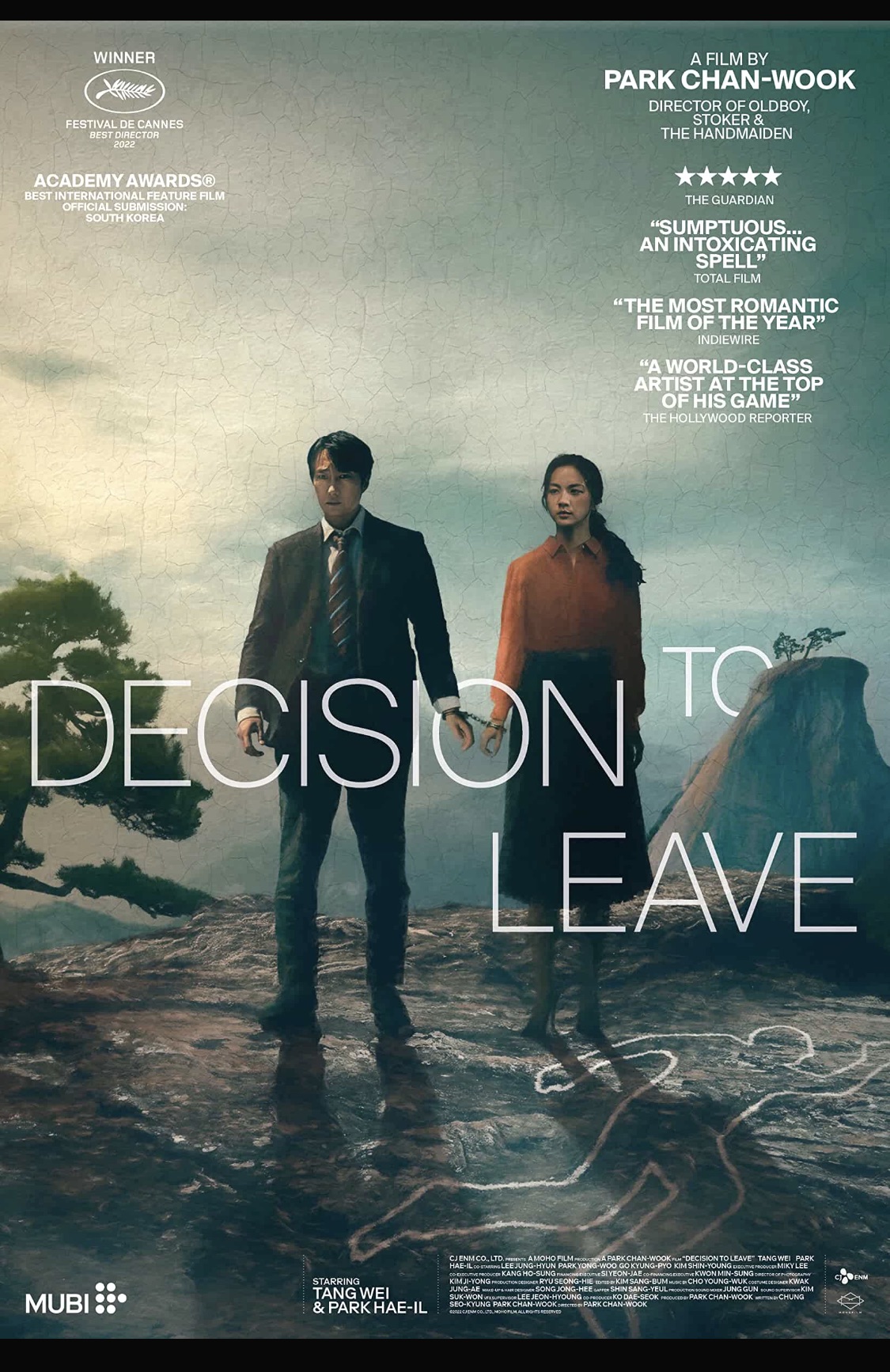
 Greetings again from the darkness. For the first half hour, we can’t help but think, “we’ve seen this all before.” A straight-as-an-arrow police detective falls hard for a suspect in a murder case. Sure, the familiar story line is often fun to watch, but we are initially a bit disappointed since this is the work of writer-director Park Chan-wook, the filmmaker behind OLD BOY (2003) and THE HANDMAIDEN (2016). Of course, we worried needlessly. The masterful director then begins twisting and turning characters and events in this homage to Hitchcock’s VERTIGO.
A crime thriller built upon fatalistic romanticism is the foundation of the best film noirs in history, and that is exactly how Park and co-writer Jeong Seo-Kyeong construct this story. Park Hae-il stars as Hae Jun, a married Busan police detective who suffers from insomnia and withdrawals from the cigarettes his wife (Jung Yi-seo) prohibits him to smoke. As with many detectives, Hae Jun obsesses over his unsolved cases, but things change quickly when the mangled body of a married man is found at the foot of a mountain. Did he fall? Did he jump? Was he pushed? The victim’s wife Seo-rae (a phenomenal Tang Wei) is suspected, but Hae Jun defends her as not capable.
The best love stories involve obsession, and Hae Jun becomes obsessed with Seo-rae, or is it she who becomes obsessed with him? The number of twists and turns director Park throws at us are nearly impossible to track … and we aren’t sure which are pertinent and which are distractions. The tiresome cell phone trope comes into play, only this time it plays a vital role and is not just used as a tech cop out. At times we are led to believe Seo-rae, despite being a beloved caregiver for the elderly, is the devil in disguise. Other times we aren’t sure if she is the clever one, or whether that’s Hae Jun. His “daydreams” of being in the same room and spending time with her are well played.
The script is well-written and the score works perfectly. Some of the dialogue is sharp and serious, while some carries subtle humor. My three favorites were the best ever use of “shattered”, a man introducing himself as “the next husband”, and this line: “Killing is like smoking. Only the first time is hard.” For those who enjoy noir crime thrillers with a dark romantic undertone, you’re very likely to appreciate this film from director Park Chan-wook and the mesmerizing performance by Tang Wei.
***NOTE: this is South Korea’s official submission for Best Foreign Language Oscar.


 Posted by David Ferguson
 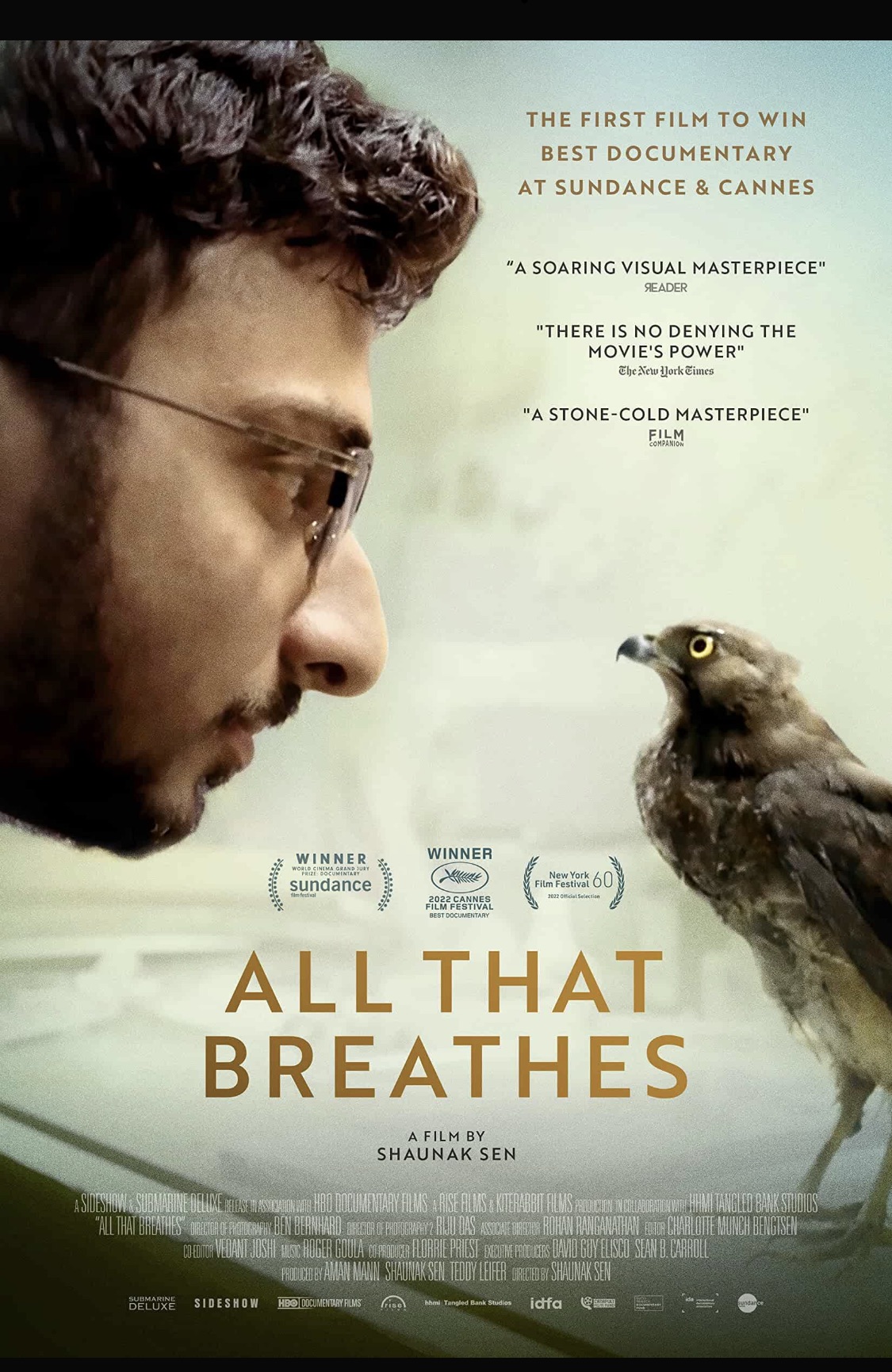 Greetings again from the darkness. The expert photography and artistic approach taken by Shaunak Sen in his documentary is quite something to behold, even as the message may be a bit heavy-handed. His opening shot perfectly captures all of this, as a sea of rats scrounges for food through the trash while the headlights of an approaching car drive home the point that it’s the humans who have thrown things out of balance.
 Greetings again from the darkness. Many filmmakers mine their own lives for projects, making their work personal, revealing, and sometimes invasive. It’s easy to label these works as narcissistic, and by definition, that would be accurate. However, some of the finest films from our most interesting writer-directors fall into the autobiographical (or semi-autobiographical) category. Examples include Fellini’s 8 ½ (1963), Cameron Crowe’s ALMOST FAMOUS, and Woody Allen’s STARDUST MEMORIES. This time it’s Oscar winner Alejandro Inarritu looking inward. Inarritu won his Oscars for THE REVENANT (2015), and his previous nominations include BIRDMAN (2014) and BABEL (2006), and those are in addition to his other standouts: BIUTIFUL (2010), 21 GRAMS (2003), and AMORES PERROS (2000). He’s joined on this project by his BIUTIFUL and BIRDMAN co-writer, Nicolas Giacobone.
 Greetings again from the darkness. There has been no shortage of conspiracy theories, either recently or historically, that have left non-believers bewildered at how ‘the other side’ held firm. Writer-director Arthur Harari and his co-writers Bernard Cendron and Vincent Poymiro bring the remarkable struggle of Hiroo Onoda to the screen. Onoda was a Japanese soldier who refused to believe WWII ended, and instead, continued his mission of resistance by spending thirty years in a Filipino jungle.
 Greetings again from the darkness. Most of us are quick to judge others. Often too quick. This superb (and bleak) feature film debut from writer-director Gaysorn Thavat reminds us that our initial judgments might just be an easy “out” for us so that we may go on about our way, oblivious to the struggles of others. There is observational commentary here on what it means for a parent to love their kids so deeply, for someone to believe in themselves whole-heartedly, and for the pain an institution can cause under the guise of doing the right thing.
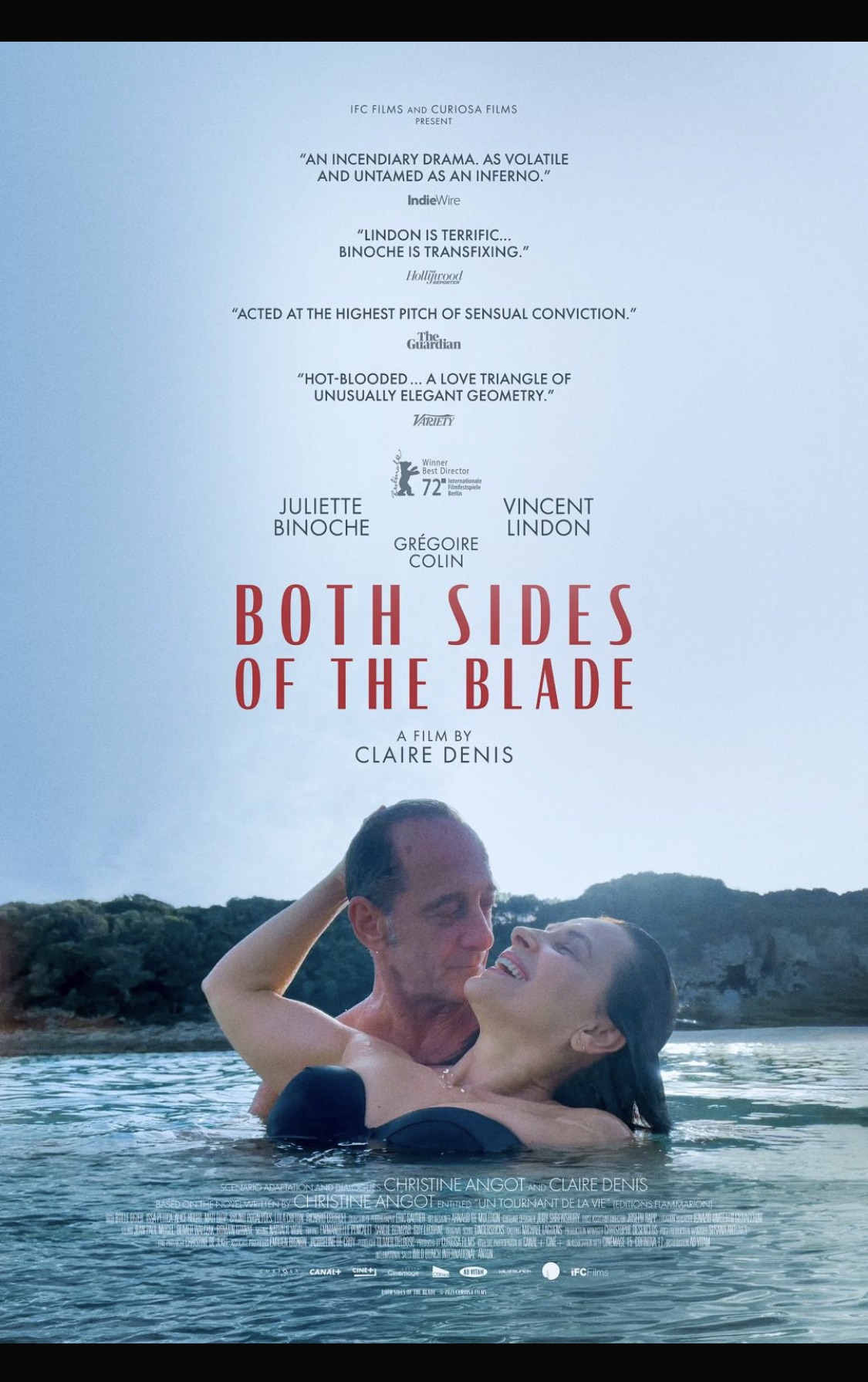 Greetings again from the darkness. If you are one of the many who need someone to cheer for – a nice person – in order for a movie to work for you, then this latest from renowned French director Claire Denis (BEAU TREVAIL, 2019) is going to be a challenge. Ms. Denis co-wrote the script with Christine Angot (they previously collaborated on LET THE SUNSHINE IN, 2017), an adaptation of Ms. Angot’s novel.
 Greetings again from the darkness. Satire is one of the most challenging cinematic genres to get right. The script and performances are crucial, and the director must walk a fine line between too subtle and over-the-top. The long-time collaborative filmmaking team of co-writers and co-directors Mariano Cohn and Gaston Duprat, along with co-writer Andres Duprat, strike just the right chord and deliver a gem that is funny, insightful, and quite entertaining. The film was well received at last year’s Venice Film Festival, but is only now getting distribution.
 Greetings again from the darkness. Norwegian filmmaker Eskil Vogt wrote the screenplay for last year’s terrific THE WORST PERSON IN THE WORLD, and that’s just one of his collaborations with fellow countryman Joachim Trier. The two seem to enjoy, or at least have a knack, for creating films that take viewers out of their comfort zone. This is Vogt’s second feature as director, and you will likely find yourself questioning your ideals of the complexities of childhood and debating what makes a kid “good” or “bad”.
 Greetings again from the darkness. Barely five minutes in, we have concluded that Anais is a whirlwind of activity. She’s behind on her rent and yet turns the conversation with her landlord to fruit juice and a smoke alarm. This is the first feature film from writer-director Charline Bougeois-Tacquet who benefits greatly with the presence of lead actor Anais Demoustier. I have no idea if the name is a coincidence or whether this was written with her in mind, but we quickly realize that Anais is a mess … a charming mess and one for which hope remains.
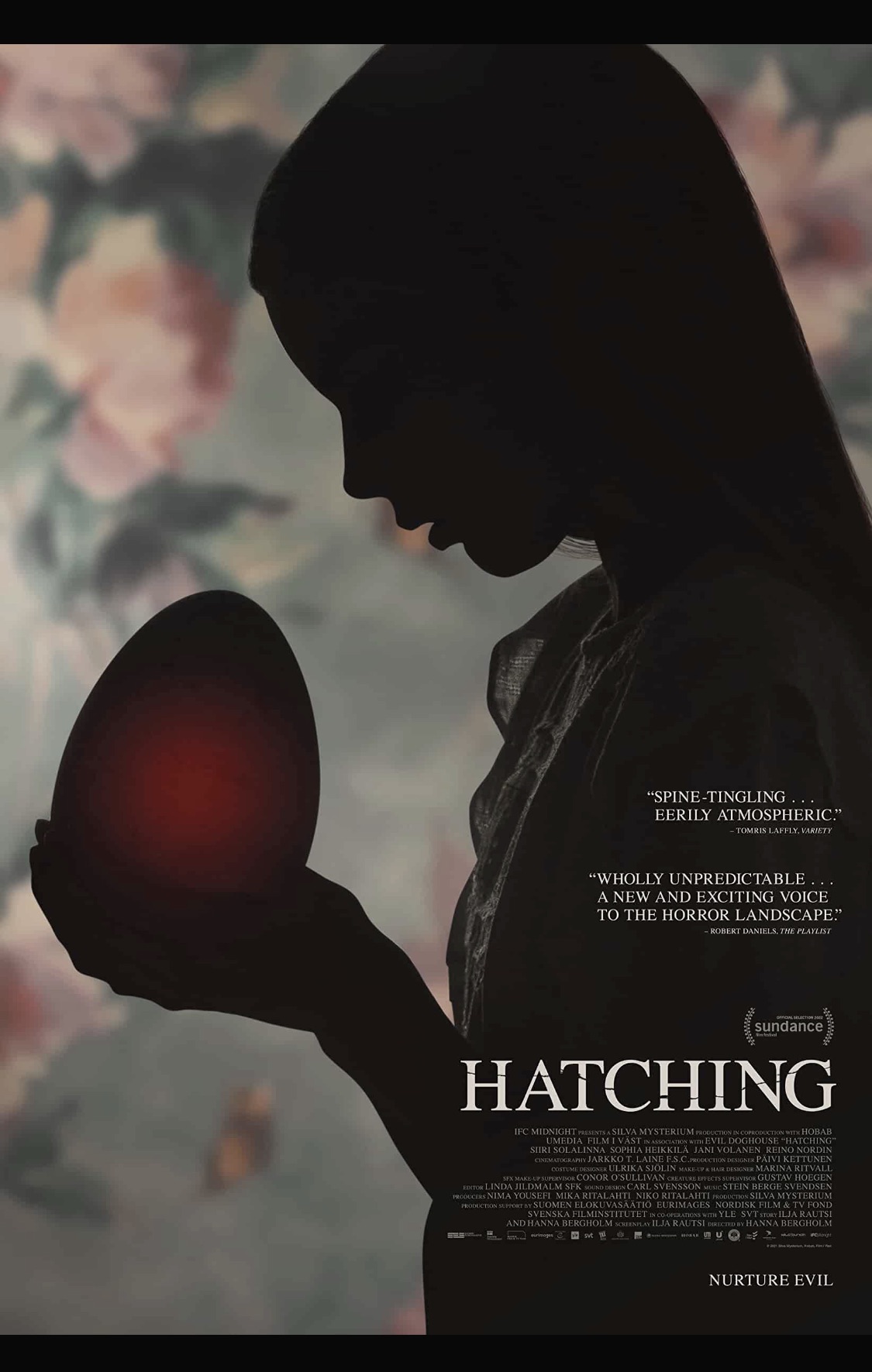 Greetings again from the darkness. The exceptionally creepy creature leads us to believe this could be a terrific new addition to the creature feature genre. However, director Hanna Bergholm and screenwriter Ilja Rautsi expend so much time and energy on the metaphor aspect that we feel a bit bludgeoned by the end. Despite some wonderful horror elements, we find ourselves thinking, ‘alright, already … just stick with the creepy stuff!’
 Movie Reviews from the Dark