 Every year I find myself with more appreciation for the Slamdance Film Festival. Celebrating innovative independent filmmaking, the lineup always features creative and unconventional movie projects – often from filmmakers just beginning their journey. Below are brief reviews on some of the films I caught virtually through this year’s festival.
BRANDO WITH A GLASS EYE
 This story from writer-director Antonis Tsonis is based in Greece, where we find two brothers in dire need of funds. Luca (Yiannis Niarros) is a talented actor who has just received notice that he has been accepted into a prestigious method acting program based in New York City. He needs money for the trip, the tuition, and living expenses. Alekos (Kostas Nikoulis) has a dream of starting his own business. The two come up with the not-so-brilliant idea of a heist to secure the necessary funds.
Predictably, the heist goes bad for these two (previously) non-criminals, and in the ruckus, an innocent bystander gets shot in the stomach. The brothers manage to get away without being caught or identified. Already burdened with the guilt of his mother’s passing, Luca tracks down the gunshot victim, Ilias (Alexandros Chrysanthopoulos) and visits him at the hospital. These visits are a bit funny and quite uncomfortable – making them intriguing to watch. Soon, Luca and the well-to-do Ilias have formed a strange bond of unexpected friendship.
One of the entertaining pieces here is the Luca is always playing a role. Famed method actor Dustin Hoffman is referenced a few times via MARATHON MAN and DOG DAY AFTERNOON, as is the titular Marlin Brando (thankfully no scenes with butter). Luca’s acting exercises make for good entertainment, as both Nikoulis and Chrysanthopoulos are excellent in their roles. We are told that theater is about giving everything to art, and Tsonis has done that with his first feature-length film.
DARLA IN SPACE
 Original with a big “O” (wink-wink, nudge-nudge), this zany film from co-writers and co-directors Eric Laplante and Susie Moon is offbeat and humorous while making a statement about money and ethics. It also manages to make orgasms as unsexy as possible.
Darla (Alex E Harris, director Laplante’s wife) is on her 18th business. This serial entrepreneur has cut a commercial for her Kitty Kasket, an artsy, customized product for the remains of deceased pet cats. We see the commercial and it’s as cringeworthy as you would imagine. A trip to the CPA reveals Darla owes a tax lien of a staggering (and unusual) $349,002 thanks to the selfish actions of her overbearing and irresponsible mother (Constance Shulman).
In a most head-scratching turn of events, while mopping in the required figure 8 motion, Darla stumbles on a ‘sentient orgasm-granting kombucha scoby’ named Mother (voiced by JS Oliver) that’s been hidden in a warehouse container. Picture a huge flapjack or pancake and then visualize Darla covering up with it and being treated to a Timothy Leary-inspired orgasm. Darla and Mother cut a deal so that Mother will help Darla raise the money to pay off the tax lien, while Darla will assist Mother fulfill the inexplicable dream of going to space.
Of course, we recognize Mother’s speech pattern as a nod to HAL9000 of Kubrick’s classic 2001: A SPACE ODYSSEY, but that’s about all we recognize here. Another character, Dr Brittney St Clair (Jenn Lyon) seems to always be on TV and is Darla’s inspiration, along with the “Yeah, OK” book. For those of us who respect creativity and risk-taking, filmmakers Laplante and Moon deliver a whopper.
THE ACCIDENT
 How do we react when it seems the world is conspiring against us? Do we seize the opportunity to cheat the system if it means gaining an advantage that has eluded us? Does it matter if we are a kind and gentle person just trying to stay afloat? Italian filmmaker Giuseppe Garau delivers a film that offers one set of answers, while asking other questions, and reminding us that there is always a price to pay when our decisions skirt the bounds of ethics.
Marcella (a wonderful Giulia Mazzarino) is a stressed-out woman. Separated from her husband, the demands on her time cause her to be late picking up her daughter and ultimately losing her job. She possesses what we used to call a doormat personality – one who just seems to get walked on and taken advantage of at every turn. In hopes of digging herself out of a hole, Marcella goes into debt to purchase a used tow truck. Unprepared for the backlash from fellow “rescuers”, things turn ugly as her truck is vandalized and she is assaulted. Her claim that Italy is a “civilized country” clearly doesn’t apply to all citizens.
Mr. Garau’s unconventional storytelling is accompanied by an even more unconventional shooting style. Much (probably three-fourths) of the movie is shot inside the truck cab with the lens aimed at Marcella’s profile. We as viewers are literally riding shotgun on her daily adventures. We have such empathy for kind Marcella … right up until the tone changes. An opportunity pops up and she can’t resist, despite knowing this crosses a line of morality that she would have never previously dreamt of crossing. Does this decision prove her mettle, or does it cast her in a true light? We want people to be inherently good, and when they prove they aren’t, we can’t help but be disappointed. However, in Marcella’s situation, we (and she) can’t help but wonder if these actions are forgivable … until the moment we (and she) know they aren’t. It’s a terrific thought-provoking film with one of the best final lines you could ever ask for. The film won the Narrative Feature Grand Prize at Slamdance 2024.
INVISIBLE NATION (documentary)
 The festival’s closing night film selection was this penetrative documentary by Vanessa Hope (granddaughter of producer Walter Wanger and classic film actress Joan Bennett). Given the state of global geopolitics at the moment, this inside glimpse of Taiwan through the eyes of its first female President, Tsai Ing-wen couldn’t be more timely.
It’s tough to decide which is more heartbreaking: watching high school students proclaim their identity through a Taiwan they view as an independent nation, or China President Xi Jinping stating, “Taiwan is China”, and that reunification is inevitable. Taiwan has been a democracy for decades, but it’s also a de facto country, one that isn’t even allowed to use their own name at the Olympics (Chinese Taipei).
We immediately gain respect for President Tsai Ing-wen as an exceptionally smart and wise and tough leader. On a daily basis, she deals with suppression from China, and has to walk a fine diplomatic line between supporters and detractors. We learn a bit more about The Sunflower Movement, a student-led rebellion and what role that has played in recent history. Unfortunately, this well-made and informative documentary reinforces the dread we feel towards the future of Taiwan as an independent nation.
 Greetings again from the darkness. One of the unheralded roles movies can play is to help us better understand various cultures around the world. It’s important to grasp the challenges others face based on where they live. The first feature film from writer-director Zarrar Kahn takes us to Pakistan and elegantly lays out cultural traditions that may have even outlasted laws that have passed.


 Posted by David Ferguson
  Greetings again from the darkness. I do not cook and have never had an interest in learning to. Still, I do understand how some are drawn to it as an art form … creating new dishes and new flavors, while generating such pleasurable sensations across the palettes of others. It’s a passion like many professions (or hobbies), and it’s one that is best shared with others.
 Greetings again from the darkness. For most folks, life is a constant battle each and every day as we attempt to avoid the chaos stemming from work, health, friends, family, and overall stress. Sometimes we kid ourselves into thinking we have things under control, but inevitably, a sharp reminder pops up letting us know “control” is a mirage, and life is meant to be more rollercoaster than smooth sailing. Longtime (and always interesting) writer-director Wim Wenders and co-writer Takuma Takasaki have teamed up for this Oscar nominated film (Best International Feature) depicting one man’s attempt to control his life.
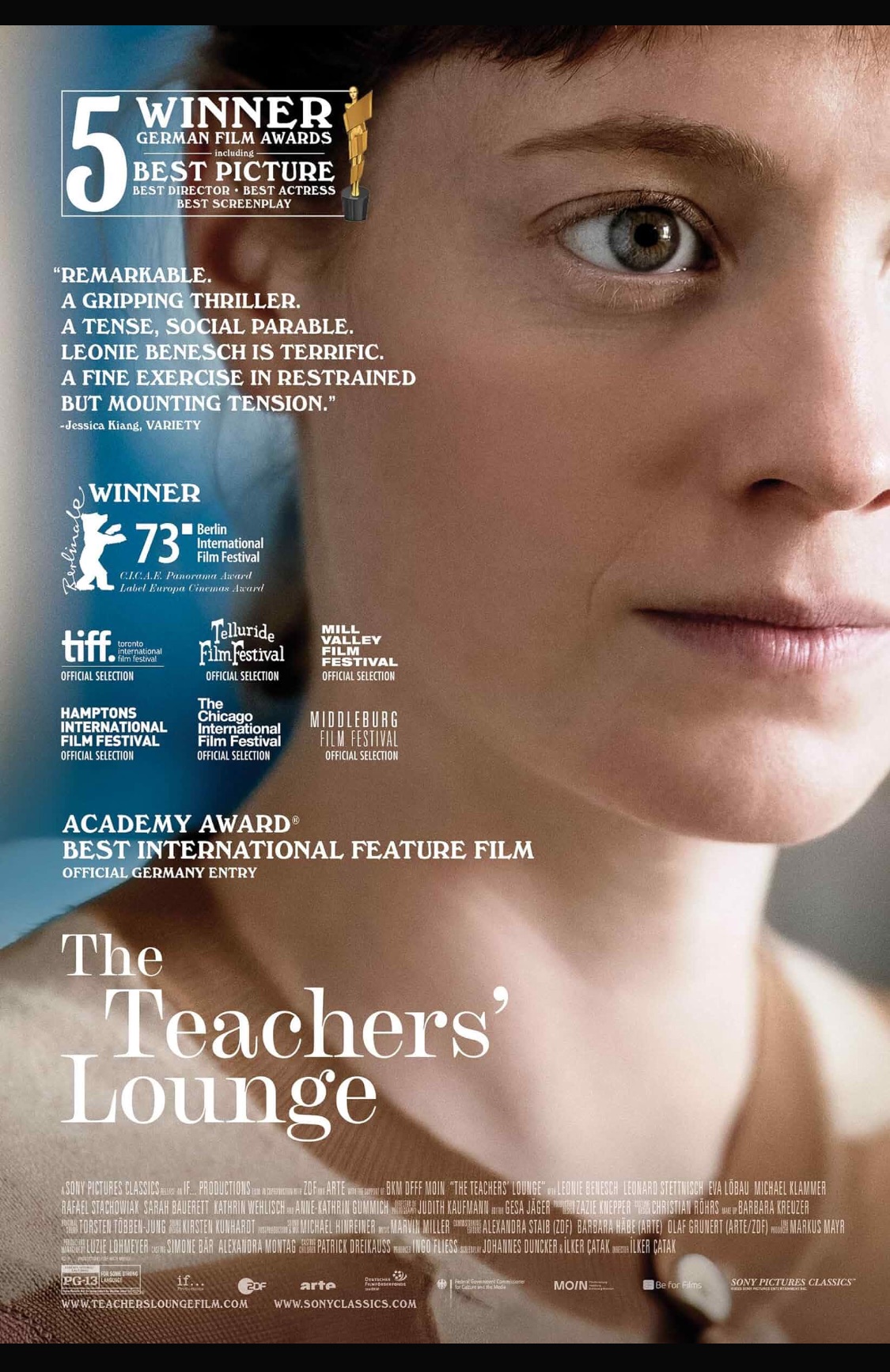 Greetings again from the darkness. The intensity and stress of everyday life and of everyday people are on full display in this film from writer-director Iler Catak and co-writer Johannes Duncker. They have brilliantly crafted a terrific suspense thriller from the most unexpected setting and group of characters … a junior high school and the faculty and students.
 Greetings again from the darkness. This film surprised me with two clear and valuable reminders. First, with a bit of effort, we can always have a positive impact on others – sometimes to the degree that we change their life. Second, everyone has a life story, and we only learn it if we take the time to ask and listen. Writer-director Christian Carion is known for THE GIRL FROM PARIS (2001) and the superb Oscar nominated JOYEUX NOEL (2005). With co-writer Cyril Gely, Carion delivers a heartfelt story of two people with seemingly nothing in common, crossing paths and making a difference.
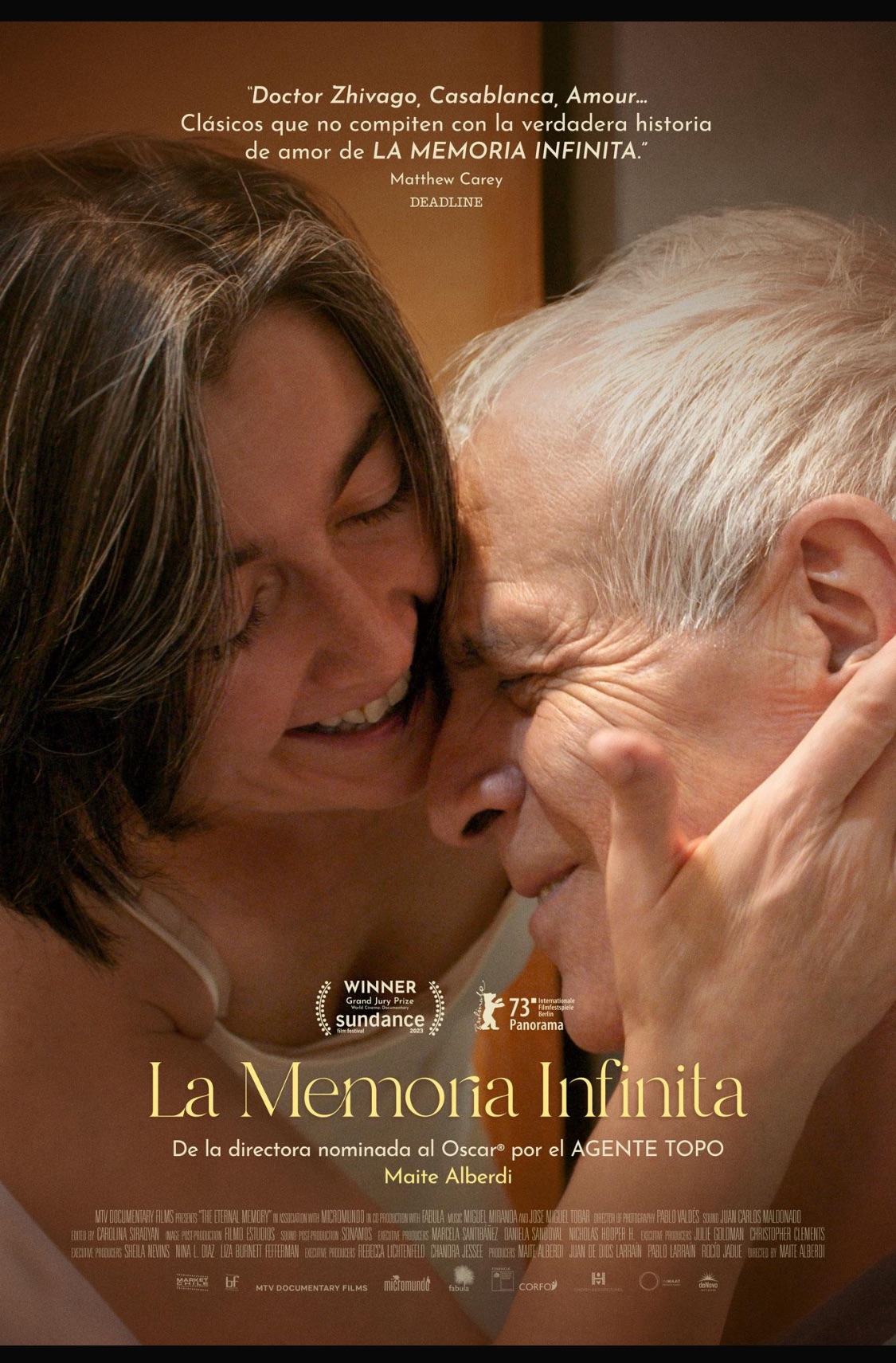 Greetings again from the darkness. Augusto and Paulina are a real couple facing real challenges in the real world. Their challenges aren’t related to where to head for dinner or whether Augusto will leave the toilet seat up or down. No, their daily challenges are whether Augusto will wake up and recognize his wife, or even know his own name. Chilean Documentarian Maite Alberti climbs inside this relationship to show us the real impact of Alzheimer’s Disease, and does so expertly and intimately.
 Greetings again from the darkness. I’ve always had an issue with movies that portray the human or “normal” side of Nazis. Of course, we understand these were human beings – many caught in a no-win situation of self-preservation; however, we just find it so difficult to accept that decent people could carry out these orders of atrocities. Writer-director Jonathan Glazer (UNDER THE SKIN, 2013, SEXY BEAST, 2000, and numerous music videos) has loosely adapted the screenplay from the 2014 novel by Martin Amis, who passed away the same day the movie premiered at Cannes.
 Greetings again from the darkness. Fast approaching his 83rd birthday, legendary Japanese animator Hayao Miyazaki claims this is the final film of his illustrious career. In 2015, he was presented with an honorary Oscar, and he has had three films nominated for Best Animated Feature: THE WIND RISES (2013), HOWL’S MOVING CASTLE (2005), and Oscar winner SPIRITED AWAY (2002). His career in animation dates back to the early 1960’s and this latest, which took six-plus years to complete, proves he is still amongst the best.
 Greetings again from the darkness. Dropping ordinary people into extraordinary circumstances is sure to generate some interesting cinematic results, and that’s what writer-director Tae-Hwa Eom and co-writer Lee Shin-ji do in South Korea’s official submission to this year’s Academy Award for Best International Feature Film. The film opens with a devastatingly powerful earthquake in 2020 Seoul.
