Greetings again from the darkness. A phone call from her divorce attorney awakens Rachel. She’s already running late for work and for dropping her son Kyle at school. Her estranged husband is being ruthless in the negotiations, while her mother’s health is deteriorating. Her hairdressing gig is falling apart, and the financial strain is becoming too much. Rachel is having what most of us would agree is a bad day. But when she lays on her horn at the truck in front of her at a signal light, the man confronts her. She refuses to apologize for not offering up “a courtesy tap”, and the man’s demeanor immediately shifts as he spouts, “I don’t even think you really know what a bad day is.”
Thanks to the prologue, we see the man in the truck (Russell Crowe) pop some pills, break into a house, severely beat a man, and proceed to set the house on fire. This human wrecking ball is the same man Rachel (Caren Pistorius) refuses to apologize to. Her morning has been hectic and stressful, but his has been disastrous. Her bad day is about to get much worse. Imagine if “Mayhem” from the Allstate commercials was in a bad mood and ready to seek vengeance. Crowe plays the menacing man in a menacing truck.
Director Derrick Borte (THE JONESES, 2009) and writer Carl Ellsworth (the underrated horror thriller RED EYE, 2005 and DISTURBIA, 2007) have created an extremely volatile dangerous cat and mouse between Rachel and The Man. As he proceeds to destroy those in her life, she fights to save her son by using her wits. During the film, we see some vicious acts of violence and some spectacular car crashes. There is also a lesson about cell phones – the remarkable handheld computers that we run our lives from – in a battle of convenience versus security risk.
Over the opening credits we see and hear a montage of road rage episodes of real people “losing it”, and the corresponding commentary. It sets the stage, but not for what our initial impressions tell us. While a statement is made about de-funding or under-funding the police, the filmmakers avoid turning this into a giant political agenda. Instead, it’s a good old fashioned manic-thriller in the vein of Spielberg’s underrated DUEL (1971), THE HITCHER(1986), and FALLING DOWN (1993). Extreme stress can generate anger which results in a loss of control, and that’s what we witness here in extreme form.
20 years ago Russell Crowe won the Oscar for GLADIATOR, and his current bloated face and body are picture perfect for a man who has slipped over the edge. Two scenes allow him to flash some of that extraordinary talent: the initial interaction with Rachel and son Kyle (Gabriel Bateman), and then again in the diner with Rachel’s attorney played by Jimmi Simpson (“Westworld”). Caren Pistorius holds her own as the frantic, perpetually late mother, but that’s not surprising given her excellent work in the underrated SLOW WEST (2015). Keep Shelly in Athens offers up a nice remake of “Don’t Fear the Reaper”, as we are reminded to always keep an eye on your candy cane scissors.
This was the first film to open wide in theatres since the pandemic began.
Greetings again from the darkness. This is the next entry in my “Revisited” series, where I re-watch and then write about (not a traditional review) a classic movie. “City Slickers” could have been an apt name for this 1972 film, though it would have forced a new title for Billy Crystal’s 1991 comedy. DELIVERANCE was directed by John Boorman, and the script was adapted from James Dickey’s 1970 novel by the writer himself. Many have referred to this as a man-against-nature film, and it certainly works as an adventure tale; however, I find the psychological elements just as fascinating – the primal instincts and the personal transformations.
Those nine notes are every bit as iconic as the JAWS theme. “Dueling Banjos” always sends a chill up my spine, as I recall certain scenes from the film that are forever etched into my memory. We don’t even have to wait long to hear the song. It’s the first real sequence after the opening credits which feature only the banter of four buddies animatedly discussing their weekend canoe trip down the Cahulawassee River before a dam is built and the area flooded for a hydro-electric plant. During the banter, in a bit of foreshadowing, we hear Ned Beatty’s character ask, “Are there any hillbillies” where they are headed. The first glimpse of the four men occurs as they stop for gas and interact with the locals.
The personalities of each are quickly established. Lewis (Burt Reynolds) is the alpha male, and the one pushing the group to take the trip. Ed (Jon Voight) is Lewis’ friend who wants to be like him, though he lacks the confidence. Bobby (Ned Beatty) is an insurance salesman, who looks down on the locals and would rather be playing golf. Drew (Ronny Cox) is a nice guy, and the one who connects musically for the guitar and banjo picking with the local boy (Billy Redden) perched on the porch. It’s a fun, yet unsettling, scene to watch as the two pick away on their instruments. Their smiles end abruptly when the boy turns away in disgust as Drew tries to shake his hand. It’s not the last time the outsiders will be rebuffed.
These are suburban men, settled in life, being pushed outside their comfort zone by wannbe-adventurer Lewis, who is the epitome of 1970’s machismo. His angry proclamation that “they’re drowning a river” is followed up with “because it’s there”, as an answer to why they are taking the trip. Lewis’ life vest flaunting his arms and chest, and his aggressive oratory (including the ironic, “You can’t judge people by the way they look, Chubby”) contrast with the conservative dress and mannerisms of the other men: Ed smoking a pipe, Drew strumming a guitar, and Bobby’s squishy body. For the first half of the film, Reynolds mesmerizes as the cocky Lewis.
As the men make their way down the river, they experience the sudden adrenaline rush that Lewis promised. Shooting the rapids on the river is truly man-against-nature, and the adventure that director Boorman and writer Dickey want us to initially believe is at the heart of the story. One of the key exchanges occurs at the campsight that night as Lewis acknowledges Ed’s “nice life, nice job, nice wife, nice kids”, and then asks him directly, “Why do you come on these trips with me, Ed?” It’s clear Ed is happy with his life, but he desperately wants to feel the power of being a survivalist and “real man”. It’s because of this exchange, that we find Ed’s hunting trip and face-to-face with a deer the next morning so gut-wrenching.
The second day finds some truly peaceful times with nature, and some stunning camera work and shots of nature courtesy of cinematographer Vilmos Zsigmund. It’s in these shots where we “get it” – the appeal of becoming one with nature. Of course, it’s once things seem so right, that things go so wrong. A drastic shift occurs. Ed and Bobby are confronted by local hillbillies in the most despicable way. Fear fills the screen and our minds. The menacing mountain men are played by Herbert “Cowboy” Coward (not really an actor) and Billy McKinney (whom you’ll recognize from FIRST BLOOD, THE OUTLAW JOSEY WALES, and many other roles). Still today, the sequence is terrifying and difficult to watch, and it’s when “squeal like a pig” entered our lexicon, while “He got a real purdy mouth” became seared into our brain.
Immediately following the nightmare sequence with the hillbillies, comes one of those psychological exchanges that elevate the film to greatness. Four frantic and desperate men debating “the law”, when in actuality, they are debating self-preservation. The close-up of Ned Beatty’s face says as much as any line of dialogue, and, as is often the case, a moral dilemma is resolved by choosing the path of least resistance. The day presents more horror, as Lewis and Drew meet with disaster, while Ed’s transformation takes place. It should be noted that the film’s budget was so tight, the actors performed their own stunts – including Jon Voight’s tense (and impressive) climb up the face of the rock cliff.
Director John Boorman was a 5-time Oscar nominee, including HOPE AND GLORY (1987). He also helmed one of my sleeper favorites, THE EMERALD FOREST (1985), as well as coming right out of the gate with his first feature (and cult favorite) POINT BLANK (1967), starring Lee Marvin and Angie Dickinson. Writer James Dickey wrote the 1970 novel and adapted his own novel for the screen. He was a novelist, poet, and college professor, as well as being named U.S. Poet Laureate. My favorite Dickey quote is, “The poet is one who, because he cannot love, imagines what it would be like if he could.”
For Ned Beatty and Ronny Cox, it was their feature film debut. Mr. Beatty had a 40 year acting career (he retired in 2013), and notched an Oscar nomination for NETWORK (1976), while seemingly appearing in most every movie in the 1970’s and 1980’s. He may be best remembered as Lex Luthor’s bumbling henchman in SUPERMAN (1978) and SUPERMAN II (1978), and kids today would recognize his voice as Lotso in TOY STORY 3 (2010). He also became good friends with Burt Reynolds, and was cast in many of Reynolds’ later films. His career allowed him to play a widely diverse roster of characters, and one of his often-forgotten best was in THE BIG EASY (1986). Mr. Cox is approaching a 50 year acting career, and he is also a talented singer-songwriter. His best known roles are as the Police Lieutenant in BEVERLY HILLS COP (1984) and BEVERLY HILLS COP II (1987), and as a corporate executive in both ROBOCOP (1987) and TOTAL RECALL (1990). In addition to his many movie roles, Cox appeared in numerous TV series throughout the years, and one of my favorites was a small town family drama entitled “Apple’s Way”, which ran for two seasons, 1974-75.
Jon Voight is an actor every movie lover is familiar with. As he approaches his 60th year in the business, the highly decorated actor has been nominated for four Oscars, winning for COMING HOME (1978), starring opposite Jane Fonda. His other nominations were for playing a gigolo in MIDNIGHT COWBOY (1969), a bad guy in the thriller RUNAWAY TRAIN (1985), and as Howard Cosell in ALI (2001). More recently he has been recognized for his stellar work in the superb cable TV series “Ray Donovan”. His daughter is Oscar winner Angelina Jolie, and Mr. Voight has had such memorable roles as boxer Billy Flynn in THE CHAMP (1979), Jim Phelps in MISSON: IMPOSSIBLE (1996), a sleazy hunter in ANACONDA (1997), and President Franklin Roosevelt in PEARL HARBOR (2001). And of course, we must mention the classic Jon (“John”) Voight episode of “Seinfeld.” JAWS fans might be surprised to know that he turned down the Hooper role that ultimately went to Richard Dreyfuss.
A remarkable 60 year career ended when Burt Reynolds passed away in 2018. Reynolds was a star running back for Florida State University before an injury ended his pro aspirations and caused him to pursue acting. For an extended period of time in the 1970’s and 1980’s, Reynolds was the biggest box office draw among actors. Some of his most popular films during the streak included: THE LONGEST YARD (1974), the SMOKEY AND THE BANDIT franchise (1977, 1980, 1983), SEMI-TOUGH (1977), SHARKY’S MACHINE (1981), THE CANNONBALL RUN (1981) and II (1984), and THE BEST LITTLE WHOREHOUSE IN TEXAS (1982). Most of these films played off of Reynolds’ extraordinary charm and good looks (and iconic cackle), while he often strutted tongue-in-cheek as he worked extensively with a close group of friends. He later experienced some personal relationship issues, financial difficulties, and extreme health scares. Although he continued to work during the late 80s and early 90s, it was his excellent supporting work in STRIPTEASE (1996) and BOOGIE NIGHTS (1997) that really vaulted him back into the Hollywood scene. The latter of those two movies nabbed him the only Oscar nomination of his career. Reynolds continued to work right up until the end of his life, spanning a career of almost 200 credits (TV and movies). Some of you fellow old-timers out there might recall Reynolds’ first recurring role was as Quint in “Gunsmoke”, the longest running TV series until eclipsed by “The Simpsons” (and by “Law and Order” in seasons, though it has about 150 fewer episodes). In DELIVERANCE, Reynolds’ Lewis is “a man’s man” – the kind of guy the other suburban dads aspired to. His on screen magnetism is obvious, and stardom followed. Reynolds spent most of his adult life in front of a camera – either movies, TV, paparazzi, or talk shows. And lest we forget, though he claimed to have tried, Reynolds became the first male centerfold for “Cosmopolitan” magazine in 1972, the same year this movie hit. That smirk, cigar and bear rug created quite a sensation at the time – brilliant marketing from editor Helen Gurley Brown.
While the Cahulawassee River is fictional, the filming location was most decidedly real. Cinematographer Vilmos Zsigmund captured the stunning beauty of Tallulah Gorge and the Chatooga River in northeastern Georgia. His camera work leaves no doubt as to nature’s double edge sword of beauty and danger. Mr. Zsigmund was a 4 time Oscar nominee, winning the award for CLOSE ENCOUNTERS OF THE THIRD KIND (1977). He was also responsible for THE DEER HUNTER (1978), HEAVEN’S GATE (1980), THE TWO JAKES (1990), and THE BLACK DAHLIA (2006). Editor Tom Priestley received his only Oscar nomination for his work on this film. Mr. Priestley also served as Editor on THE GREAT GATSBY (1974), TESS (1979), and 1984 (1984), and is the son of English writer John Boynton Priestley.
Ned Beatty’s wife and John Boorman’s son have brief appearances as Ed’s family, and writer James Dickey has a small but key role as the hulking Sheriff of Aintry, who doesn’t buy the men’s recap of events. Reynolds dominates the screen for the first half of the movie, and Mr. Beatty shines in his degradation, but it’s Voight’s transformation into a semblance of Lewis that proves most remarkable. Rarely have primal instincts and survival mode been more effectively presented on the silver screen than in this film. This “guys’ weekend” turned nightmare received 3 Oscar nominations (Best Picture, Best Director, Best Editor), but this was the same year that CABARET beat out THE GODFATHER in a couple of categories, so DELIVERANCE took home no awards … although we will always have those 9 notes.
*Note: “Dueling Banjos” was credited to Eric Weissberg and Steve Mandel, but there was a lawsuit filed by Arthur “Guitar Boogie” Smith, who wrote “Feudin’ Banjos” in 1955.
As a bonus for reading this far, here is a short video of Steve Martin and Kermit the Frog performing “Dueling Banjos”:
Greetings again from the darkness. This is another addition to my “revisited” series where I re-watch and then write about a classic movie. Why are “creature features” so appealing, and why was Universal so good at producing these movies that mesmerized me during childhood (and yes, still to this day)? The Universal Monsters of the 1930’s and 1940’s included such classics as Dracula, Frankenstein, The Mummy, The Wolf Man, The Invisible Man, and The Phantom of the Opera. Many cinematic iterations of these characters/creatures exist including sequels, remakes and contemporary re-boots, and there is something magical about the mystique and legend and lore behind each of the monsters. By the 1950’s, Universal was looking to revive the genre.
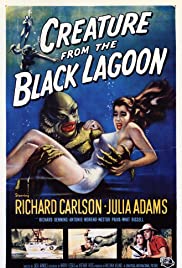
William Alland is credited with the idea for CREATURE FROM THE BLACK LAGOON. It’s a twist on the 1740 fantasy classic “Beauty and the Beast” from French novelist Gabrielle-Suzanne Barbot de Villeneuve. Mr. Alland is the film’s Producer, and years earlier he played reporter Jerry Thompson in Orson Welles’ CITIZEN KANE (1941). Maurice Zimm is credited with the story, and the screenplay was co-written by Harry Essex (IT CAME FROM OUTER SPACE, a Ray Bradbury story) and Arthur A Ross (an Oscar winner for BRUBAKER, 1980).
Quite similar to KING KONG, the story from Edgar Wallace and Merian Cooper, this movie follows a scientific expedition down the Amazon River where a prehistoric “Gill-man” (half man, half amphibian) is discovered and captured. The creature seems enraptured by Kay, the fiancé of one of the scientists – much like Kong was drawn to Ann Darrow. There is the expected battle between science and commerce: the value of marine life research vs the chance to make a pot of money. The feuding scientists also have to remain focused on the ongoing concern for the safety of those on the expedition … especially Kay.
Jack Arnold is remembered today as one of the great sci-fi movie directors of the 50’s. His work included THE INCREDIBLE SHRINKING MAN (1957), IT CAME FROM OUTER SPACE (1953) TARANTULA (1955), and the excellent Audie Murphy western NO NAME ON THE BULLET (1959). He also directed many episodes of some of the top TV shows of the1950’s, 60’s, 70’s, and 80’s. For this one, he deserves a great deal of credit for generating sympathy for the creature, by positioning him, not as the villain, but rather as the victim of a home invasion by the humans. Director Arnold also does a nice job early on of teasing us with footprints and fossils, and letting us hear about the legend, prior to actually seeing the creature.
For a movie that spends most of its time on a small boat named Rita, the cast is deep and talented. Richard Carlson (LITTLE FOXES, 1941) plays David Reed, the scientist engaged to Kay. Mr. Carlson dreamed of being a playwright, and had many guest starring roles on TV; however, “I Led 3 Lives” was his only starring role in a successful series. It was reportedly Lee Harvey Oswald’s favorite show. Co-starring here was Julie Adams (billed as Julia at the time) as Kay Lawrence, personal favorite of both David and creature. In the film she is stalked by the creature, even while she’s out for a leisurely swim in the Amazon (not recommended). Ms. Adams was a favorite on the cult movie circuit, and she died in 2019 at age 92. Having been crowned Miss Little Rock at age 19, she acted regularly into her 80’s, and even had a role at age 91, the year before she passed.
Richard Denning plays Mark Williams, the money man behind the expedition, and David’s boss and nemesis. He’s the one who sees dollar signs while capturing the creature. Mr. Denning served on a submarine in the US Navy during WWII. He starred with Cary Grant and Deborah Kerr in AN AFFAIR TO REMEMBER (1957), and then in the late 1960’s took an acting job as Governor on the original “Hawaii Five-0”, since he already lived in Hawaii. Mr. Denning’s wife, actress Evelyn Ankers, was known as “Queen of the Screamers” for her work as damsel in distress in many thrillers in the 1940’s (Wolfman, Frankenstein, Dracula movies).
Other cast members include familiar face Whit Bissell as Dr. Thompson. Mr. Bissell was a frequently working character actor from 1940 -1984 in TV and movies. He had over 300 credits, including I WAS A TEENAGE WEREWOLF (1958) with Michael Landon. Nestor Paiva plays Lucas, the Captain of the Rita, as a kind of Walter Brennan type. Mr. Paiva also appeared in more than 300 projects, and his wife was once employed as personal secretary to Howard Hughes. Antonio Moreno plays Carl Maia. Mr. Moreno had a huge career from 1912 to 1959, and was a rival of Rudolph Valentino for many “Latin lover” roles. The film’s narrator, Art Gilmore, became known for his narration and voice acting in shows such as “Dragnet”, “The Waltons”, “Adam-12”, “The Red Skelton Hour”, “The Roy Rogers Show”, and many more.
Of course everyone who watches the movie wants to know more about the creature. Well, two actors were involved. Ben Chapman, who was a Marine during the Korean War, played the creature on land, while Ricou Browning played the Gill-man we see in the water. Mr. Browning was also the co-creator of the popular TV series “Flipper” (1964-67), and directed the iconic underwater scenes in the James Bond classic THUNDERBALL (1965). Also involved here were a young Henry Mancini as uncredited composer and cinematographer William E Snyder. Mr. Mancini was a 4 time Oscar winner best known for his iconic “Pink Panther” theme, and Mr. Snyder achieved 3 Oscar nominations
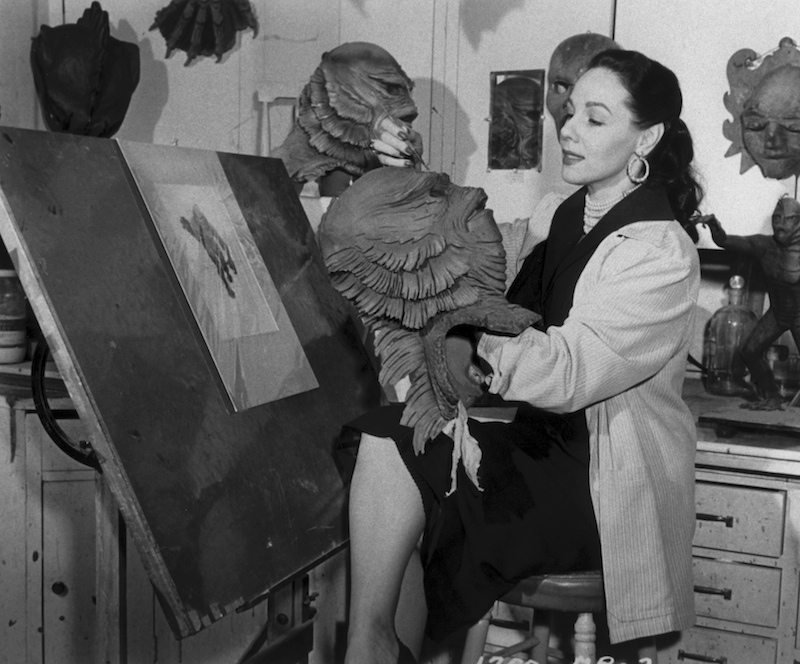
Director Arnold insisted on shooting the film in 3-D, despite its low budget, and over the years, it became quite a cult classic (with its’ own festivals). There is even a scandal associated with the film. For many years, Hollywood make-up legend Bud Westmore took credit for the design of the creature. It took more than 50 years, but Mallory O’Meara’s book, “The Lady from the Black Lagoon: Hollywood Monsters and the Lost Legacy of Millicent Patrick”, finally allowed Ms. Patrick (pictured, left) to receive due credit for her design work. Sequels to the film included: REVENGE OF THE CREATURE (1955), and THE CREATURE WALKS AMONG US (1956), but it was perhaps director Guillermo del Toro’s stunning THE SHAPE OF WATER (2017) winning the Oscar for Best Picture, that brought CREATURE FROM THE BLACK LAGOON back into prominence. This allowed a new generation of movie lovers to behold the classic sequence of the creature’s synchronized swimming just below Kay in the murky Amazon water. What a sight!
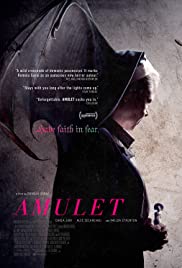
Greetings again from the darkness. Horror films tend to serve up relatively simple plot points so that viewers are controlled by emotions rather than deep thinking. The exceptions typically use multiple story lines and atmosphere to build up suspense that often ends with a twist or surprise ending. You might recognize Ramola Garai as an actress from SUFFRAGETTE (2015) or the TV series “The Hour”, and this is her first feature film as writer-director. She definitely chose the latter plot path, and the result is likely a film that will be divisive amongst the horror crowd.
Tomaz (Alec Secereanu, GOD’S OWN COUNTRY) is a former soldier with such a horrid case of PTSD that he must bind his own hands when he sleeps. He’s now homeless and adrift, merely surviving day-to-day. We see flashbacks to his time as a soldier working a checkpoint deep in the forest. The war is never identified, but one day he decides to help a frantic woman (Angelika Papoulia) rather than shoot her (as we assume his orders dictate). This story and their time together pop up periodically through the movie to the point where we start to believe we have an understanding of Tomaz’s background.
While squatting with other homeless folks, the building where they sleep catches fire, and soon after Tomaz is taken in by Sister Claire (Imelda Staunton), a caring nun who gives him a purpose – helping out a woman who is dealing with a sick, elderly mother. Magda (Carla Juri, BLADE RUNNER 2049 seems withdrawn and initially not particularly happy that Tomaz is living in her house. And, oh my, that house. Dilapidated is too kind as a description. So in addition to a bed, and Magda’s cooking, Tomaz begins repairing the house. And while you may have your own renovation stories to tell, did you ever pull an albino bat out of the toilet? Tomaz has.
Magda does not allow Tomaz to see her mother. He (and we) only hear the confrontations and see the bite marks on Magda’s arms. Clearly something is amiss. The flashbacks to Tomaz as a soldier with Miriam make for a stark contrast between the forest and Magda’s creepy house. It’s in the forest where Tomaz finds the titular amulet buried. If you’ve always thought of an amulet as a good luck charm, your definition will likely change.
It’s interesting to watch the shifts in the relationship between Tomaz and Magda, culminating with a night out dancing, where she reminds us a bit of Elaine Benis at the company party … although Magda’s is a pure emotional release, rather than a comedic effect. As you might expect, the film is at its best when Imelda Staunton is on screen. Unfortunately, these moments are too rare. The “old school” gothic graphics for the opening credits do make for a terrific stage-setter. While Magda’s locked-away mother provides some mystery, the tension of the story never really matches the creepy atmosphere of the house. Ms. Garai includes some excellent moments of horror images, but the deliberately slow pace doesn’t deliver a satisfying payoff.
Greetings again from the darkness. Anyone who has a friend or relative afflicted with dementia knows it’s often like living in a real life horror film. It’s frustrating and claustrophobic and guilt-inducing and above all, frightening. The first feature film from director Natalie Erika James deals with dementia, amongst other topics, in the guise of a horror film. Is it a haunted house movie? Is it a demonic presence movie? Well, yes to both. The script from Ms. James and Christian White blends multiple familiar aspects of horror films into something that ends up quite original.
“Ends up” is the key, because the first two-thirds of the story moves slower than a glacier in the middle of winter. Don’t get me wrong, the film looks great – the house and the atmosphere are ultra-creepy. It’s just that almost nothing happens during that span, and that’s an eternity for set up. Kay (Emily Mortimer) receives a call that a neighbor hasn’t seen her mother in a while. Kay and her 20ish daughter Sam (Bella Heathcote, PRIDE AND PREJUDICE AND ZOMBIES, 2016) take the drive over the hills and through the woods to grandmother’s house. Their initial measured walk-thru of the house tells them (and us) much. Post-it notes are stuck everywhere, including one that says “Don’t follow it”. Spoiled fruit on the counter, a favorite chair moved, and food for a pet long ago passed, are all indicators that something is off. If that’s not enough, the house that grandma is missing from has mold on the walls and ceiling, and strange locks on doors.
After an unsuccessful search party through the nearby woods, Grandma Edna (Robyn Nevin) reappears with no recollection of where she’s been. Of course, this doesn’t really improve things for anyone. We sense that workaholic Kay and her mother have never really been close, and the same can be said for Kay and Sam. Generational disconnect is on display. And poor Edna has lost her husband, her pet dog, and most of her essence … except for the few moments when she snaps back to lucidity.
Dread and impending doom dominate every scene for the first hour. Kay has dreams of an old cabin from her past, and Edna has an unexplained bruise on her chest. The stained glass window on the front door is a key, and the sounds coming from the walls are unable to be tracked down. As disoriented as Edna is, the house itself has that impact on us and Sam. Is it the house that’s haunted, or the characters?
The cinematography from Charlie Sarroff plays well off the stillness and unknown, and the sound design and music (Brian Reitzell) work hand-in-hand in establishing the creepy atmosphere. The three actresses are superb, and I especially enjoyed Ms. Nevin and her piercing eyes, as she is known mostly for her live theatre work (and also as Councillor Dillard in The Matrix movies). For her first feature, Ms. James has delivered a high-concept Australian horror/suspense film with a very original (and weird) ending. Others may be a bit higher on the film, but we likely all agree that Ms. James is an intriguing filmmaker.
IFC Films will have this available VOD beginning July 10, 2020
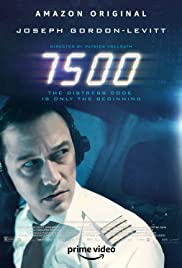
Greetings again from the darkness. The first airplane hijacking movie I remember seeing was AIRPORT (1970, with Burt Lancaster and Dean Martin). Since then, it’s been a recurring, relatively common cinematic topic blending our natural fears (flying and terrorism) with our love and admiration of heroic people, as seen in such films as EXECUTIVE DECISION (1996) and AIR FORCE ONE (1997). Writer-Director Patrick Vollrath (first feature length film, Oscar nominated for his excellent 2015 Live Action Short EVERYTHING WILL BE OK/ Alles Wird Gut) and co-w Sanad Halibasic use some of the familiar tropes we’ve come to expect, but do so with a unique twist … the camera never leaves the cockpit (at least until the very end).
Joseph Gordon-Levitt stars as Tobias Ellis, the co-pilot to Captain Michael Lutzman (Carlo Kitzlinger) on this scheduled short flight from Berlin to Paris. Tobias is an American based in Berlin, living with his Turkish girlfriend Gokce (Aylin Tezel) and their young son. Gokce is also a flight attendant on the flight, and the two have attempted to keep their relationship a secret from their co-workers and employer.
The film opens with a quote usually attributed to Gandhi, “An eye for an eye leaves the whole world blind.” We then get a couple minutes of Berlin Airport security footage as passengers and their carry-ons proceed through security lines. We hear no dialogue or sound. The first actual scene puts us inside the cockpit as the flight crew arrives.
Not long after a smooth takeoff, the terrorists rush the cockpit when the flight attendant is delivering water to the pilots. A fight ensues resulting in injuries, including to both pilots. The crisis quickly escalates as Tobias has to take over flying the plane, while dealing with the pressure of a life-altering dilemma: does he follow protocol and keep the door shut, or does he hopefully save passenger lives by opening the door? The tension mounts as Tobias (and us) views the actions of the terrorist through the small cockpit monitor.
The film’s title is derived from the pilot’s Squawk code of 7500, which notifies the Air Traffic Controller of a hijacking-in-progress. As we learn, these aren’t the usual hijackers. These are extremists who are “avenging the deaths of Muslims.” These terrorists prove they aren’t afraid to kill, and proclaim they are “not afraid to die.” Well, all except one of them. Nineteen year old Vedat (Omid Memar) is the terrorists’ translator, and he’s left frantically trying to make the best of a bad situation, despite no real plan. His clouded-thinking exacerbates the situation as he tries to deal with the police negotiator.
What gives the film appeal is the ‘camera in the cockpit’ trick and the tension of the moment. The space is cramped and claustrophobic. Showing the crew going through the pre-flight checks allows us to get our bearings in an unfamiliar setting. To this non-pilot, the sequence delivers a very authentic look and feel. Spending the entire time in a confined space recalls such films as BURIED (2010), LOCKE (2013), and Hitchcock’s LIFEBOAT (1944). Joseph Gordon-Levitt carries most of the film with his performance, as he’s rarely off camera. His temperament during chaos is fun to watch, but the final act is just a bit overwrought, and some of the good from the first two acts unravels a bit. Still, the close-quarters of a cockpit makes a unique viewing experience, and one that has us asking how we would react in this situation.
Greetings again from the darkness. Filmed in Canada with a mostly Canadian cast by a Canadian director, we are reminded how challenging it is to make a low budget action-thriller. Writer-director Brent Cote delivers a masterclass in genre clichés, yet there’s enough here to keep anyone initially interested around for 90 minutes.
Alan Van Sprang (SAW III) stars as Lance, the rare Neo-Nazi with ties to both the Aryan Brotherhood and Russian mafia who is also the good guy in the story. Lance has recently been released after serving 15 years in prison, and he’s just trying to live out a quiet life by surrounding himself with pictures of beautiful scenery as he dreams of escaping the world he’s known. He clocks in and out at work, and mostly avoids chit-chatting with others, except for his friendly neighbor Anna (Sara Waisglas), who happens to sing at the local lounge where Lance periodically buys a bottle.
Of course, it’s only a matter of time (maybe 10 minutes) before Lance’s old world catches up with his new one. Gregor (John Ralston, READY OR NOT, 2019), his old Russian handler, needs him to kill a few guys that have been infringing on the meth business. So, are you keeping score on clichés? We have an ex-con trying to start over. We have ‘one last job’. We have a girl caught in the middle … there’s always a girl! We have the Aryan Brotherhood versus the Russian mob. Plus, we have the underling trying to earn his stripes. In this case, it’s Gregor’s nephew Malik (Aaron Poole). There’s even an imposing Russian mobster named Vladimir (John Rhys-Davies from two huge franchises – Lord of the Rings and Indiana Jones).
The film begins with a Pope Francis quote about evil and violence, but ironically, the film’s best segments involve neither evil nor violence. Despite his past, Lance is a brooding type who listens to blues music, and serves up inspiring words to Anna. The film offers a new and very quick (though surely indescribably painful) method for removing swastika tattoos from one’s chest, although you should know the violent scenes are few in number and brief in runtime. Gregor’s philosophy towards Lance is that “a fighter needs to fight”, but we actually enjoy Lance’s time with Anna more than the gangster bits. Filmmaker Cote may follow the checklist for this genre, however, we do hand it to him for a twist at the end.
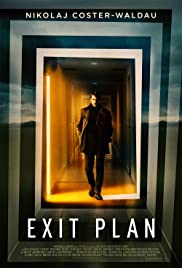
Greetings again from the darkness. Euthanasia, ‘Dignity in Death’ or assisted suicide. Whatever you prefer to call it, those against the idea have likely never been in the situation where medical treatment provides no hope. Max Isaksen (Nikolaj Coster-Waldau, “Game of Thrones”) is an Insurance Investigator. After his most recent scan, the doctor informs him that his brain tumor is growing and surgery is not an option. His bodily functions will slowly and mercilessly dissolve until death takes him.
Max is a non-descript kind of guy. The usually dashing Coster-Waldau is hidden behind old style wire-rimmed glasses and a mustache. He’s happily married, but can’t bring himself to tell his lovely wife Laerke (Tuva Novotny, ANNIHILATION, 2018) about the tumor or his inner thoughts. He’s frustrated that the special diet and app monitor didn’t ‘save’ him, so now he’s suffering with speech issues, headaches, and other ailments that serve as a reminder of the ultimate outcome.
While working with one of his clients, Max learns about the choice her husband made – Hotel Aurora, which promises “a beautiful ending.” It’s an enterprise that excels in secrecy and efficiency. Their sales pitch is an end to life that fulfills your fantasy. Just know that once you execute the agreement, there is no changing your mind. Instead, you are immediately given a sedative and put on a private plane where you are whisked away to the Danish-modern hotel in a remote, stunning setting. Support work is provided by Kate Ashfield (SHAUN OF THE DEAD, 2004) as the fake mother, and Jan Bijovet as Frank, the director of Aurora.
Denmark-born director Jonas Alexander Arnby and writer Rasmus Birch worked together on WHEN ANIMALS DREAM (2014) and here they explore an existential question about life and death, and whose choice it is. There is also the question of saying goodbye to loved ones and choosing the terms at the end. It’s a somber story that twists reality and dreams, and we can’t help but find some similarities to Yorgos Lanthimos’ THE LOBSTER (2015), although that one was infinitely more bizarre. There are a couple of moments of levity – such as asking for tips on tying a noose, and we do learn that Poppy Tea tastes best with lemon. Speaking of beverages, I lost count at the number of scenes featuring wine, juice, water or some other ingestible liquid. Sometimes it’s a bonding experiencing with a toast, while other times, it’s a biological need. Whatever the reason, taking a sip is somehow tied into the circle of life. As The Eagles sang in “Hotel California”, ‘you can check out any time you like, but you can never leave.” Welcome to the Aurora, where we never have to ask, ‘how was your stay?’
Greetings again from the darkness. Actress Lulu Wilson is not yet 15 years old (13 when filming this one), and yet her resume is already quite impressive, featuring roles in such high profile projects as “The Haunting of Hill House” (2018), “Sharp Objects” (2018), and ANNABELLE: CREATION (2017). She’s clearly on the path to stardom, so seizing the lead role in a low budget ultra-violent home invasion flick provides her some fun and shows off her range.
If you are going to have a young teenage girl go full ‘Rambo’, you might as well have her facing off against some neo-Nazi escaped convicts. You might question the casting of Kevin James as the gang leader – a dead-eyed hulk with shaved head, long beard, and swastika tattoos (on his scalp). James typically plays a funny schlub like Paul Blart or a loveable simpleton like his character on “The King of Queens.” Not this time. His Dominick is relentless and lacking all compassion in his quest for the key – a key that we never really learn the purpose of or the reason it’s hidden where it is.
Co-directors and Design School buddies Jonathan Milott and Cary Murnion bookend the story with scenes of Becky being interrogated by the Sheriff after all the audacious events. So we know going in that Becky will survive – we just don’t know about the others. Some fancy editing trickery has us bouncing between Becky at school and Dominick in the prison yard. The escape of he and his three buddies is chronicled alongside Becky’s dad (Joel McHale, “Community”) taking her and their two dogs to the family lake house. She’s happy until Kayla (Amanda Brugel, “The Handmaid’s Tale) and her young son Ty (Isiah Rockcliffe) pull up.
Becky is still grieving her beloved mother who died of cancer. We see flashbacks of their final days together. Becky is not ready for her dad to re-marry, and when she envisions the merged family, she bolts from the dinner table into the woods. Soon after Dominick and his boys knock on the door and take everyone else hostage. Becky dons what appears to be a knitted chipmunk cap (it’s her nickname), and arms herself for battle. It doesn’t take long for us to see that this is a rare, ultra-violent gore-fest featuring a rampaging teenage girl. One might compare to Kevin in HOME ALONE, but it’s more similar in tone to READY OR NOT(2019) and THE HUNT (2020).
The script was written by Nick Morris and the husband and wife team of Ruckus Skye and Lane Skye. While there are some memorable moments, we do find ourselves wishing that the film veered a bit more in one direction – either more ominous or more tongue-in-cheek/outlandish. Perhaps a bit of background on Dominick, or some prep work on how Becky turns so quickly from angry teenager to murderous psychotic with an instinct for violence and mayhem. Dominick admits “Becky is a little more than we bargained for”, and she’s probably a bit more than we can accept.
Still, the scenes between Kevin James and Lulu Wilson are enough to keep us watching, and the cinematography from Greta Zozula (the excellent LIGHT FROM LIGHT, 2019) delivers the visuals to keep us cringing. For those who enjoy violence and gore served in bulk, you’ll likely be satisfied.
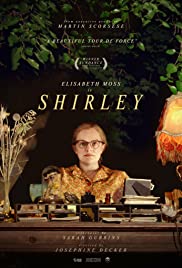
Greetings again from the darkness. “Thrillingly awful”. That’s how Rose describes the feeling she had from reading Shirley Jackson’s 1948 short story “The Lottery.” It’s also a likely reaction many will have to watching director Josephine Decker’s (MADELINE’S MADELINE, 2018) mostly fictionalized biography of the author known for her widely diverse novels, short stories and articles. The film is uncomfortable to watch and challenging to process, yet thanks to the performances and fascinating interactions, we remain enthralled the entire time.
As the film opens, Rose (Odessa Young, ASSASINATION NATION, 2018) is on the train reading Jackson’s divisive story. We gain some insight into her personality as she allows a sly grin to cross her face, and then gets frisky with her husband Fred (Logan Lerman) in a train cabin. Soon they arrive at the home of Ms. Jackson (Elisabeth Moss) and her husband Stanley Edgar Hyman (Michael Stuhlbarg), a professor and literary critic. Shirley is suffering through a bout of depression brought on by writer’s block, and though she’s initially against the young couple staying with them, she slowly finds a use for Rose. It doesn’t take long for us to realize everyone here wants something from the others. Stanley is worried about Shirley’s mental stability, so he convinces Rose to take on the domestic chores. Fred hopes Stanley will bless his thesis so that Bennington College will hire him. Stanley seizes on Fred’s ambition by having him take over some of his teaching load. Rose endures some harshness from Shirley, but the two ladies end up with an awkward bond which has Rose serving as a quasi-muse for Shirley’s new novel.
The new novel is “Hangsaman”, which Shirley actually wrote years before this story is set. It’s about the disappearance of a college student named Paula, and it’s at this point where the visions and/or projections begin. Things get a bit hazy for us … and for Rose. At times, Shirley is downright creepy. Are we watching something supernatural? Is she a good with or a bad witch … or something else altogether? At times, Shirley appears to be unraveling – and possibly bringing Rose down with her. But then we hear another of the razor sharp verbal sparring matches between Shirley and Stanley. These are works of art. Stanley needling her just enough to inspire more writing. Shirley fires off cutting remarks as brutal as any wounds a knife fight might cause. It’s an advanced course in the creative mind vs the pompous academic. Stanley understands that allowing her to become unhinged is all part of the process, and will likely lead to her best work.
Multiple dynamics between characters creates chaos for viewers. Shirley and Stanley have their gamesmanship, while Shirley and Rose are going down an entirely different twisted path. And then there is odd relationship between pregnant Rose and husband Fred, and again between Fred and Stanley. And we haven’t even gotten to what the outside world thinks of Shirley, and how Stanley’s disclosed infidelities keep a fire burning inside Shirley, despite her humiliation. There is a lot to take in – domestic life in the era of “little wifey”, the strains of starting and maintaining a career, and the inner-demons of the creative mind. One of the key elements that sticks out is how each character is striving desperately to establish their own identity, and given the times, this should be much easier for the men.
Sarah Gubbins’ first feature film screenplay is based on the 2014 novel “Shirley” by Susan Scarf Merrell. Again, this is mostly fiction, albeit with nuggets of Shirley Jackson’s real life mixed in. Of course Shirley’s and Stanley’s four kids are nowhere to be found, allowing for more focus on the contrasting featured couples. In fact, Ms. Young’s Rose is the perfect “opposite” for Ms. Moss’ Shirley, both in looks and demeanor. It’s impossible to miss the similarities between this and director Mike Nichols’ classic WHO’S AFRAID OF VIRGINIA WOOLF? (1966) starring Richard Burton and Elizabeth Taylor. That one had more yelling, but this one cuts just as deeply. One of the best ever onscreen jabs occurs when Stanley sourly describes Fred’s thesis as “terrifically competent”, and then adds in a disgusted tone, “There’s no excuse for that.”
Special notice should be made for the music and cinematography. Composer Tamar-kali (MUDBOUND, 2017) pierces us with music often limited to plucks of cello and/or piano, adding a near-horror element to the frightening interactions we are watching. And with most of the film taking place in the creaky, book-filled house, cinematographer Sturla Brandth Grovlen (WENDY, 2020 and VICTORIA, 2015) expertly captures the harrowing glares of Shirley and the bemused smirks of Stanley in close quarters. The camera work adds to the constant immediacy of each moment.
Shirley Jackson’s most famous full-length work was “The Haunting of Hill House” (1959), which was adapted into director Robert Wise’s 1963 film THE HAUNTING, as well as another version in 1999. Most recently, it was the source material for the very popular Netflix limited series in 2018. Ms. Jackson did suffer with anxiety issues and agoraphobia, and her writing influenced many who came along later. While Mr. Lerman is a bit short-changed, the other three leads are superb in this film that likely will have very little appeal to the masses … you know … those people who can’t find pleasure in almost two hours of misery and a head-scratching ending. The end result is a story about Shirley written in a manner that we can envision it as one of Shirley’s own.
Neon will release SHIRLEY on Hulu, VOD, Virtual Cinemas and participating Drive-Ins June 5th, 2020
 Greetings again from the darkness. A phone call from her divorce attorney awakens Rachel. She’s already running late for work and for dropping her son Kyle at school. Her estranged husband is being ruthless in the negotiations, while her mother’s health is deteriorating. Her hairdressing gig is falling apart, and the financial strain is becoming too much. Rachel is having what most of us would agree is a bad day. But when she lays on her horn at the truck in front of her at a signal light, the man confronts her. She refuses to apologize for not offering up “a courtesy tap”, and the man’s demeanor immediately shifts as he spouts, “I don’t even think you really know what a bad day is.”


 Posted by David Ferguson





 Movie Reviews from the Dark