ONE NIGHT IN MIAMI (2020)

January 10, 2021

 Greetings again from the darkness. Four grown men hanging out in a Miami motel room may not strike you as a promising premise for a must-see movie, but this wasn’t just a group of random buddies. Inspired by what actually happened on February 25, 1964, the film takes us behind the closed door that sheltered newly crowned heavyweight boxing champion Cassius Clay, pro football superstar Jim Brown, singer-songwriter-entrepreneur Sam Cooke, and activist Malcolm X, as they met to discuss their burgeoning roles as leaders in the Black community.

Each of the four main characters gets their own introductory prologue so that we have a feel for them prior to their motel rendezvous. We watch as Sam Cooke, smooth voice and all, bombs at the Copacabana Club simply because most of the rich white folks in the audience don’t want to be entertained by a black singer. In London, we are plopped into the ring of the first Cassius Clay – Henry Cooper fight, so we can witness Clay’s remarkable athleticism and showmanship … and also the rare instance of his being knocked down. We then head to St. Simons Island, Georgia, an historic spot for both the American Revolution and the Civil War. Local football hero Jim Brown is invited to iced tea on the front porch by a local rich man (Beau Bridges) and his daughter (real life daughter Emily Bridges). They fawn over his prowess as a sports figure, but after a friendly chat, state matter-of-factly why Brown is not allowed into the main house. Lastly, we pick up with Malcolm X as he disagrees with Elijah Muhammed, and the subsequent conversations with his wife about the ramifications of leaving the Nation of Islam.

These vignettes set the stage for the four men to meet in Malcolm X’s motel room after Clay’s historic defeat of Sonny Liston for the Heavyweight Championship of the World. Clay is portrayed by Eli Goree (RACE, 2016), who does a nice job of capturing the champ’s moves in the ring, as well as his charm, braggadocio, and intellect outside it. Cooke is played perfectly by Tony Award winner Leslie Odom Jr (Aaron Burr in both the stage and film version of HAMILTON), while Aldis Hodge (CLEMENCY, 2019) is Jim Brown and Kingley Ben-Adir (“The OA”) is a standout as Malcolm X.

Cooke and Brown are under the impression that this is going to be a wild Miami party, while Clay is in a celebratory mood, even though he knows the real reason the four men have gathered. Rather than a bash, Malcolm X has arranged an evening of “reflection” for the four men he envisions as leading the revolution of blacks against the devil known as the white man. What follows are multiple discussions – some deep, some angry, some both – about how the men view their position in society and culture. What Malcolm terms “The Struggle”, they each relate to, but have found their own personal ways of dealing. Brown wants to transition into acting as something less physically demanding, and Cooke is building his record label and buying cars to flaunt his success. Clay is young. He just turned 22 the month prior, and he is somewhat reluctantly buying into the Muslim Faith … quite the coup for Malcolm X’s plan.

The fun here is derived from the terrific interactions between four very different personalities, each with varying degrees of comprehension on their budding power. How best to utilize that power is the dilemma, and each man has their own opinions and perspectives. Cooke is on one extreme wanting to succeed in a capitalistic society, while Malcolm X is on the other extreme pushing activism and a full revolution (“blow it up”). The exchanges and conflict between these two are the highlights of the film, as Odom and Ben-Adir shine.

This is the feature film directorial debut of Oscar and Emmy winning actress Regina King, and while a screen adaptation of a stage play may be a risky first in the director’s chair, Ms. King handles the material expertly … as does the cast. Kemp Powers adapted his own stage production for the big screen, and he’s also a co-writer on the latest Pixar gem, SOUL. Supporting roles are covered by Lance Reddick (as Kareem X), Michael Imperioli (as Angelo Dundee), and Joaquina Kalukango (as Betty X). Sam Cooke was murdered later that same year. Malcolm X was assassinated by a Nation of Islam member one year later, and Cassius Clay of course changed his name to Muhammad Ali and passed away in 2016 at age 74. Jim Brown is still alive at age 84. These men each made their mark as leaders in the Black community, and even though we will never know what they talked about that night in Miami, the film digs in to personalities and leaves out the hero worship. Ms. King’s debut film will likely appeal more to history buffs and cinephiles, but it’s one that deserves attention.

Amazon Studios will release ONE NIGHT IN MIAMI… in Miami theaters December 25th, 2020, in select US theaters on January 8th, 2021 and on Prime Video January 15th, 2021

WATCH THE TRAILER


GRIZZLY II: REVENGE (1983/2021)

January 6, 2021

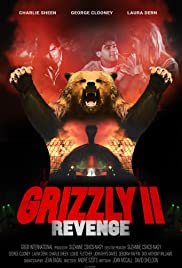
 Greetings again from the darkness. The slate of movies I review each year leans heavily towards serious and dramatic material, but is there anything more serious than an 18 foot tall grizzly bear seeking revenge for the poaching of her cubs? And is there a better springboard to success for actors than the sequel to a cheesy land-based riff on JAWS? OK, I sense your skepticism. What if I told you that sequel featured three Oscar winners, and the original was one of the most profitable ROI films of the year? Starting to come around, aren’t you?

Well, before you get overly excited in anticipation of this film’s release, please allow me to explain … or come clean. This 1983 film has its own special place in cult film lore. Some even doubted its existence (or at least the actual title). But now, after all these years and rumors, the legend comes to life, and has not only been “completed”, but is getting a semblance of release. If you love schlock horror where nature-goes-awry, with the added bonus of ‘spot the actor’ (now almost 40 years older), then there is the possibility you are worthy of watching this … this … abomination (meant here as a term of endearment).

You should know that there are very few sightings of the enormous grizzly bear; although we do get an opening sequence with some quality camera work featuring grizzlies in the wild. Even though we don’t see much of the titular beast, she does dominate the story. The earliest sequence features three young campers ignoring bear warning signs. These three campers are why we are all here. A pre-“E/R” George Clooney (21 years old) sports a denim vest before climbing in a sleeping bag with a partially clothed 16 year old Laura Dern, who has somehow managed to complete the hike wearing sandals and whining the entire time. The third wheel is played by a 17 year old with hair hanging in his eyes and acne on his face. You’ll recognize him as Charlie Sheen, although here he looks very much like brother Emilio. If you show up for this trio, hold off on the potty break, because there’s an angry grizzly lurking.

There are other pieces to the story … and I use ‘pieces’ in a manner similar to what one sees in an intersection after a couple of cars collide. A group of drunk poachers roam the woods looking to collect grizzly gall bladders, which evidently have value on the black market. The Park Rangers are preparing for an upcoming rock concert where 100,000 attendees are expected. A concert promoter played by Louise Fletcher (an Oscar winner as Nurse Ratched in ONE FLEW OVER THE CUCKOO’S NEST, 1975) bullies the newest Park Ranger played by Steve Inwood (who also appeared in STAYING ALIVE that same year, reaching world class clunker status twice in 1983) into “the show must go on” despite the grizzly killings.

This was director Andre Szots’ second and final feature film as a director, though he did have a career as a producer. The husband and wife writing team of David Sheldon and Joan McCall ‘crafted’ the screenplay. He was also a co-writer on the original GRIZZLY (1976), while she appeared on screen in it. Continuing our game of ‘spot the actor’, we can’t help but notice Deborah Foreman as the lead Ranger’s wide-eyed daughter. Ms. Foreman was a very popular actor in the 1980’s, including a starring role in VALLEY GIRL (1983). Unfortunately her career never hit the heights many predicted, although she does have one of the best lines in this film when she proudly states her skill at working a phone – both dial and push-button! Fans of either the “Lord of the Rings” or “Indiana Jones” franchises will surely get a kick out of John Rhys-Davies as a lumberjack-American Indian, who is renowned for his expertise in hunting “the devil bear”. Other familiar faces include a young Timothy Spall (MR TURNER), Deborah Raffin (rumored to be the second choice for Sandy in GREASE), Ian McNiece (ACE VENTURA: WHEN NATURE CALLS, 1995), Dick Anthony Williams (a hard-working actor from the 1970’s until his death in 2012), Jack Starratt (actor in FIRST BLOOD, 1982, director of RACE WITH THE DEVIL, 1975), and Charles Cyphers, who played the Indians’ General Manager in MAJOR LEAGUE (1989).

The joy in seeing these folks in one place is compromised (to say the least) by the horrendous 1980’s pop music being performed by those on stage attired in just about any outrageous 80’s fashion you can recall. Initially comical, the musical acts quickly evolve into something stomach-churning to watch. The kindest description of the production quality is “low-budget”, but there is simply no term for the effects. A Darth Vader breathing sound is heard when the grizzly is near, a speeding Ranger jeep on a dirt path is used to create suspense (the same shot is used multiple times), the day-night inconsistencies could be their own drinking game, and fireworks and a forklift prove to be a bad mix with our grizzly. Finally, for reasons we never really understand, a US Senator is a guest at the concert, and these days a Senator would likely be considered a greater threat than an 18 foot grizzly. You’ve heard the adage, “so bad it’s good”, well this one is simply so bad it’s bad. William Girdler directed the original GRIZZLY in 1976, and he tragically died at age 30, just two years later.

Available On Demand January 8, 2021

watch the trailer


SOUL (2020)

December 30, 2020

Greetings again from the darkness. With their first 22 feature films, Pixar excelled at balancing the eye candy and action kids favor with the second level intellect needed to simultaneously keep adults entertained. As proof, one need only think of such classics as TOY STORY, CARS, and THE INCREDIBLES. Surprisingly, film number 23 is the first Pixar film aimed directly at adults. It’s a marvelous companion piece to the brilliant INSIDE OUT (2015), but be forewarned, there is simply nothing, or at least very little, for kids to latch onto.

The film is co-directed by 2 time Oscar winner Pete Docter (INSIDE OUT 2015, UP 2009) and Kemp Powers (the screenplay and stage production of ONE NIGHT IN MIAMI, 2020), and they were joined on the screenplay by Mike Jones. And yes, it’s a brilliant script to go along with the always stunning Pixar visuals and effects. Brace yourself for a metaphysical exploration of the meaning of life and finding one’s purpose. As we’ve come to expect on Pixar projects, the voice cast is deep and filled with well-known folks such as Graham Norton, Rachel House, Alice Braga, Richard Ayoade, Phylicia Rashad, Angela Bassett, Questlove, Daveed Diggs, Wes Studi, and June Squibb. Leading the way is the dynamic duo of Jamie Foxx and Tina Fey.

Mr. Foxx plays Joe, a junior high band teacher still chasing his dream of performing jazz and experiencing the feeling that only music can provide … “the zone”. Instead, the school offers him a full-time teaching job, and his mother demands he seize the stability (and insurance) and give up his silly dream of jazz. As seen in the preview, shortly after an audition lands him his dream jazz gig, a freak accident occurs and Joe finds himself in “The Great Beyond”, where a conveyor belt takes those souls whose time has come to that giant bug zapper in the sky. Joe’s not willing to accept his plight and finagles his way into being a mentor for Soul 22 (Tina Fey) in “The Great Before” where unborn souls search for their “spark”. It’s all very existential.

After a look back at his life, Joe takes 22 to “The Hall of Everything”, which is the one segment in the film which felt underplayed … much could have been done with 22 looking for a reason to live. Instead, it’s a few great punchlines, including a Knicks gag that will surely play well among basketball fans. We learn of the fine line separating “lost souls” from those “in the zone”, and mostly we take in the banter between Joe and 22, as purpose and passion become the subjects of chatter.

As with most Pixar movies, multiple viewings are required to catch all the sight-gags, one-liners, and Easter eggs, however, the first viewing is like unwrapping a giant Christmas present. The opening Disney theme is hilariously played by a junior high school band, and the score is courtesy of Oscar winners Trent Reznor and Atticus Ross (THE SOCIAL NETWORK, 2010). Director Docter claims Pixar good-luck charm John Ratzenberger makes a vocal appearance, but I didn’t catch it. The film leaves us with the message that the meaning of life is simply living life … and keep on jazzing.

Available on Disney+

WATCH THE TRAILER


WONDER WOMAN 1984

December 26, 2020

 Greetings again from the darkness. Some of the key elements that make Wonder Woman appealing is that she’s smart, she’s nice, she’s dedicated to doing good, she’s grounded in her history, and her use of her powers makes sense (in a comic book kind of way). Most of that holds true in filmmaker Patty Jenkins’ sequel to her 2017 blockbuster WONDER WOMAN. So why did that one work so well, while this one falls short? It’s not an easy question to answer, though it could be as simple as having the wrong target.

Gal Gadot returns as Diana Prince, and this time she’s plopped into 1984 (the year, not the novel). This creates a cornucopia of opportunity for social commentary and satire from Ms. Jenkins and her co-writers Geoff Johns and Dave Callaham. After all, it was the era of atrocious popular music, outlandish fashion, and a relentless pursuit of greed by the “me” generation. The film pounces on each of these by using the return of Diana’s main squeeze, Steve Trevor (Chris Pine), as a device for highlighting the absurdity of belly bags and pastel tank tops for men. In the first movie, the WWI pilot wakes up in Themyscira, and this time, he just kind of materializes in the year of GHOSTBUSTERS, shopping malls, and President Ronald Reagan. While this certainly qualifies as extreme culture shock, the parade of outfits and Steve’s wide-eyed tour through the city are over-the-top, even for their attempted comedic effect.

Over-the-top also describes the film’s two main villains. Pedro Pascal (“Game of Thrones”) plays TV hypester and con man Maxwell Lord. He’s a greedy, self-centered man willing to do anything to get “more”. Kristen Wiig is Barbara Minerva, a bumbling, forgettable klutz who works at the same museum as Diana. She simply wants to be cool like Diana and have people acknowledge her existence. Things shift quickly thanks to the Dreamstone sitting in Barbara’s in-box waiting for research. What follows is more than two hours of seeing the fallout of people having their wishes come true. If you’ve learned anything about human nature during this pandemic year, then you won’t be surprised at how people react to gaining power.

Maxwell Lord is not dissimilar to Lex Luthor in SUPERMAN (1978), as his goal is ultimate power and control – though to what end, he’s not sure. Barbara Minerva was never really power hungry, but a taste of it was much to her liking, and she transitions to The Cheetah for Wonder Woman’s biggest fight scene. There is also a message about what one sacrifices to have their wishes come true. This aspect of the film could be psychoanalyzed were one so inclined. Lord’s relationship with his son is convoluted, and the early Barbara is a mess … making their “sacrifices” a bit less obvious than that of Diana.

The opening sequence is the one this viewer most enjoyed. Spectacular camera work takes us to a competition on Themyscira, as a very young Diana (Lilly Aspell returns) goes against the grown warriors, while Antiope (Robin Wright) and Hippolyta (Connie Nielsen) look on and teach hard life lessons. Not only do these actors return, but most of Ms. Jenkins’ WONDER WOMAN crew is back, including cinematographer Matthew Jensen. The changes include Film Editor Richard Pearson and Hans Zimmer provides the new score. Some of the dialogue is tough to take. As an example, Diana says “I don’t know what to think, Steve. I only hope I’m wrong.” And later, Steve explains, “Flying is easy. It’s only wind and air.” Dialogue like this makes us want to renounce our own wishes. It may be one film later than it should have been, but Ms. Jenkins does deliver a much-appreciated cameo at film’s end, and if nothing else, it leaves us wondering, ‘what would you give up for a wish?’

watch the trailer


MANK (2020)

December 3, 2020

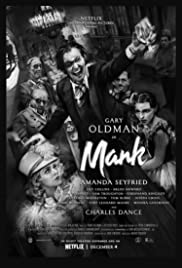
 Greetings again from the darkness. “Just a writer.” The line made me laugh. How many times have writers not received the recognition they deserved, or were underestimated, only to have their words create a lasting impact? Hollywood often likes to portray writers as socially-awkward, loner types who rarely contribute much during conversations. Not this time. The subject is Oscar winning screenwriter Herman J Mankiewicz, who was as quick with a dinner table zinger as he was writing the script to CITIZEN KANE (1941) while bedridden.

More than 20 years in the works, this is director David Fincher’s first film since GONE GIRL (2014), and it’s based on a screenplay written by his late father, Jack Fincher. Dad receives sole writing credit here, though David and producer Eric Roth (Oscar winner for FORREST GUMP, 1994) admit to some polishing. It’s a film seemingly designed for us film nerds, but likely entertaining and interesting enough for expanded appeal. CITIZEN KANE is often regarded as the “best” movie of all-time, though the origin of the film is much debated. We do know that struggling RKO Pictures gave 24 year old wunderkind Orson Welles free reign over his first film, and the result was something quite special. Director Fincher’s film offers up three distinct aspects here: a look at Mankiewicz’s writing process for ‘Kane’, some background on Mankiewicz’s career, and a somewhat fictionalized dissection of 1930s Hollywood politics.

Oscar winner Gary Oldman (DARKEST HOUR, 2017) stars as Herman J “Mank” Mankiewicz, an international correspondent-turned NYC cultural critic-turned playwright-turned screenwriter. Herman was the older brother of Joseph L Mankiewicz, a four time Oscar winning writer-director (ALL ABOUT EVE, 1950), and grandfather to Ben Mankiewicz, a well-known host of Turner Classic Movies. Herman was also renowned as a boozer and gambler, and in 1940 (where this movie begins), he was a bedridden mess recovering from a car accident. Herman was part of the sphere of the infamous Algonquin Round Table, and in most of this film, he talks like he’s still at one of those gatherings.

Mank is taken to a desolate ranch house in Victorville, California, along with his assistant Rita Alexander (Lily Collins), his nurse (Monika Gossman) and his handler John Houseman (Sam Troughton). Orson Welles (Tom Burke) has given Mank 60 days to finish the script, and his only guidance seems to be “write what you know”, and don’t drink. The result was a controversial, yet brilliant script that Welles and his crew (Oscar winning Cinematographer Gregg Toland, Editor Robert Wise, a 4-time Oscar winner) turned into a classic film that still holds up 80 years later.

We immediately start seeing flashbacks, as noted by old style on-screen typing. Ten years prior, Mank was the Head Writer at Paramount, where his staff included Ben Hecht, George S Kaufman, and Charles Lederer … writers whose work would later include NOTORIOUS (1946), multiple Marx Brothers movies, and GENTLEMEN PREFER BLONDES (1953), respectively. Lederer was also the nephew of starlet Marion Davies (played here by Amanda Seyfried), who was the long time mistress of media mogul William Randolph Hearst (Charles Dance). Are you starting to see how this wicked web all fits together? Of course, Hearst was the model for Charles Foster Kane in Welles’ classic movie, while Ms. Davies was supposedly the inspiration for Kane’s wife, Susan. Other key players in these flashbacks are Producer David O Selznick (Toby Moore), Irving Thalberg (Ferdinand Kingsley, son of Oscar winner Ben), MGM founder Louis B Mayer (Arliss Howard), Mank’s brother Joseph (Tom Pelphrey), and Mank’s wife “Poor” Sarah (Tuppence Middleton).

Director Fincher’s masterful film features a couple of standout sequences. The first involves the initial meeting between Mank and Hearst, while Marion Davies is filming a scene on the grounds of San Simeon (Xanadu in CITIZEN KANE). Rapid fire dialogue, multiple characters, and terrific editing with Mank keeping pace as Hearst overlooks the filming. Much later there is a scene following Mank and Marion as they stroll through the manicured gardens with the nearby exotic animals on display. The scene is fascinating to watch, while also reinforcing the kindred spirits of Mank and Marion – both talented, yet not quite allowed in the “club”. Beyond those two sequences, we also get a quite funny segment where Mank and his Paramount writers are improvising a pitch to Selznick and director Josef von Sternberg, plus a telegram sent by Mank to Lederer that states, “Millions to be made here and your only competition is idiots” (a sentiment some believe still holds true today).

Quite a bit of the film is focused on Hollywood politics of the 1930s, both in the studios and nationally. In particular, the 1934 Governor’s race focuses on the campaign of writer and socialist Upton Sinclair (played by Bill Nye, the Science Guy), and the concerted efforts by Hearst and studio capitalists to prevent Sinclair from being elected. The symmetry and contrasts of modern day Hollywood and politics cannot be overlooked. Also made abundantly clear is the disconnect between studio heads, directors, and writers – quite the mishmash of disrespect.

The brilliance of Fincher’s movie is that it can be relished from multiple perspectives. Is Mank attempting to salvage a near-dead career or is he settling a grudge against Hearst? Did Welles intend to hold firm to Mank’s contract and prevent him from receiving a screenwriting credit? And then there is the filmmaking side. Superb performances from Oldman and Seyfried highlight the terrific cast. It’s filmed in black and white by cinematographer Erik Messerschmidt (“Mindhunter”), but not the razor-sharp images we are accustomed to these days, rather soft and hazy in keeping with the look of the times. The production design from Donald Graham Burt takes a couple of viewings to fully appreciate, and the music from Trent Reznor and Atticus Ross is spot on, as usual. Even the opening credits provide nostalgia, as does the 1942 Academy Awards ceremony, which neither Mank nor Welles attended. Netflix delivers another winner, and one likely to receive awards consideration.

watch the trailer


SYNCHRONIC (2020)

October 23, 2020

 Greetings again from the darkness. Innovative filmmakers Justin Benson and Aaron Moorhead are frequent collaborators, as evidenced by such films as SPRING (2014) and THE ENDLESS (2017). Their films teeter between science-fiction, horror, fantasy, and personal drama, and this latest easily slides into the mind-bending and time-warping space they excel in … and all without the mega-budget we’ve come to expect from such films (I’m looking at you INCEPTION).

The film opens on a couple sharing a motel room and what appears to be an acid trip. Strange hallucinations hit them both. We soon flip to an emergency call performed by best buddy New Orleans paramedics Steve (Anthony Mackie) and Dennis (Jamie Dornan). Their overdose victim is located in a setting where something is just a bit off, and “Time is a lie” is written on the wall. When Steve and Dennis are called to the motel of the first scene, we all start to understand something bizarre is happening.

Dennis is married to his wife Tara (Katie Aselton), who has recently given birth, and their headstrong 18 year-old daughter Brianna (Ally Ioannides) lives with them. Steve’s days consist of one-night stands, more booze than any person should ingest, and time with his loyal dog Hawking (an obvious reference to the elements of time at play here). Dennis is bored and Steve is a mess, and things get worse when Steve is diagnosed with a brain tumor by his pineal gland, and Dennis’s daughter Brianna disappears.

A clue to the increasingly bizarre overdose and death scenes that Steve and Dennis run into is the “Synchronic” packaging. It’s a synthetic/designer drug that has dramatic and lethal effects, and a packet was found where Brianna was last seen. Steve decides to test the drug in an effort to “bring back” his friend’s daughter. As Steve videos his 7 minute trips to the past, and then kindly spells out everything he discovers, we viewers are spoon fed the details that would typically require some effort. Beyond the reference to Stephen Hawking, we also get plugs for French composer Claude Debussy and a rare James Bond- Charlie Sheen joke.

Time travel has long been a fun topic for movies, and the ideas behind this one are quite promising. The only downsides are that it too obviously guides us through what’s happening, and the trips back in time aren’t as structured or interesting as we would hope … although the idea of having the past be in the identical spot as the future is terrific. Benson and Moorhead are ambitious and creative filmmakers, and their shot at appealing to mainstream audiences is appreciated, as is the atmosphere and camera work. However, many of us would rather a bit more be left to our imagination.

watch the trailer


THE GLORIAS (2020)

October 1, 2020

 Greetings again from the darkness. Who hasn’t dreamt of having a conversation with their younger self in hopes of instilling some wisdom to improve the forthcoming life decisions? Writer-director Julie Taymor (FRIDA, 2002) and co-writer Sarah Ruhl have adapted Gloria Steinem’s autobiography, “My Life on the Road”, and use cross-country bus trips as a vehicle allowing Ms. Steinem to chat with herself at four different stages of life.

The feminist icon and activist is played by four actors: Oscar winner Julianne Moore, Oscar winner Alicia Vikander, Lulu Wilson (“The Haunting of Hill House”), and Ryan Kiera Armstrong as the youngest Gloria. Childhood is called the formative years for a reason, and we do get a taste of how Gloria’s nomadic hustler of a father Leo (Timothy Hutton), and her mother Ruth (Enid Graham) influence the woman she became. Her father (referring to himself as Steinomite) explained that travel is the best education, while her mother struggled with mental instability after being forced to give up her writing career.

Bucking the male-dominated world began in the era portrayed by Ms. Vikander, and it takes up most of the first half of the film. Discrimination and harassment were commonplace as she fought to be taken seriously as a journalist and writer. This portion includes her trip to India, where she was heavily influenced by the philosophy of Mahatma Gandhi. In addition, we see Gloria’s time as a (undercover) Playboy bunny, and the reactions that her corresponding article caused.

Ms. Moore is on screen much of the second half, including the founding of “Ms.” magazine, and her affiliation with other activists like Dorothy Pitman Hughes (Janelle Monae), Flo Kennedy (Lorraine Toussaint), Wilma Mankiller (Kimberly Guerrero, “Seinfeld”), and of course, Bella Abzug (Bette Midler). There’s a moment on the bus when Ms. Moore’s Gloria tells her younger self, Ms. Vikander’s Gloria, “Speaking your mind will get you into trouble.” It sounds like a warning, but in fact, it’s motivation for what’s to come.

Ms. Taymor’s film cuts between periods of Steinem’s life with the multiple Glorias in action. The bus rides are an interesting choice as looking out the windows we (and Gloria) sees the streets of New York, the palette of India, miles of nature, and even her own father on the road in his car. Outside is filled with the colors of life, while inside the bus, the colors are muted, often black and white. We see actual clips of the 1963 March on Washington DC, including Mahalia Jackson, and the 1977 National Women’s Conference. It just feels like something’s missing here – like the movie doesn’t have the heft Ms. Steinem deserves.

Sometimes Ms. Taymor’s approach is a bit too artsy for the story, and there is only a brief mention of Ms. Steinem’s nemesis, Phyllis Schlafly … despite much attention to abortion and women’s rights. Gloria’s passion for issues is clear, and we note her motivation to transform an environment that stifled her mother. The film’s music comes from Oscar winner Eric Goldenthal, and the cinematography from Rodrigo Prieto, frequent collaborator of Martin Scorsese and other elite directors. The timing is spot on for the film given contemporary issues, including the opening on the Supreme Court created by the passing of Ruth Bader Ginsburg. Despite this, the film might just be a bit too nice, or too lightweight given the history, accomplishments and impact of Gloria Steinem (who has a cameo appearance on the bus).

watch the trailer


I’M THINKING OF ENDING THINGS (2020)

September 3, 2020

 Greetings again from the darkness. We should never look to Charlie Kaufman to pull us out of the pandemic doldrums, although he is an absurdly talented writer who specializes in unusual plots and oddball characters. Mr. Kaufman is also an over-thinker and a non-stop thinker – I would imagine his brain rarely goes quiet. This time out, he directs his own adaptation of Iain Reid’s novel, and the result is a mind and time bending existential crisis that leaves us feeling a bit down. Yet, as always, Kaufman’s work keeps our minds racing.

Jessie Buckley, who was so terrific in WILD ROSE (2019), stars as The Young Woman going on a blizzardy road trip with Jake (Jesse Plemons, THE IRISHMAN, 2019), her boyfriend of the last six weeks or so. They are headed to visit Jake’s parents who live in a “farmy” and remote area. Act 1 is spent in the car as the wipers flap, and the woman and Jake hold awkward conversation. We, as the audience, listen to her inner thoughts, including, “I’m thinking of ending things.” She is truly an outstanding actress, and carries much of the weight with this one.

The woman is not really unnamed, in fact, throughout the movie, she has multiple names including Lucy and Louisa. And character names aren’t the only fluid piece of Kaufman’s puzzle. She is variously labeled as studying Quantum Physics, a writer of poetry, and an artist. Are you confused yet?  If not, you will be.

Act 2 takes place at the farm house where Jake’s parents live, and it shifts the film from awkward to bizarre. Toni Collette (HEREDITARY, 2018) and David Thewlis (“Fargo”) play his mother and father, both excited for the visit, but unconventional, to say the least, in their social graces. Ms. Collette over-laughs just beyond the point of perplexing and nudges the beginning of downright weird. She and Thewlis are exceptional in their ability to keep Lucy off-balance, and Jake hyper-annoyed. We aren’t sure what to make of what we are seeing … and neither is Lucy. While none of these folks takes a single bite of the dinner spread, the tone turns to surreal. Overlapping time lines of past, present, and future become haunting and hypnotic.

The film itself is disorienting, and Act 3 does little to help us regain our equilibrium. Jake and Lucy finally start their drive back, as the snow begins falling even harder. Throughout the production, Kaufman includes references to William Wordsworth, Pauline Kael, Andrew Wyeth, Mussolini, and more. He also inserts clips of a high school janitor (played by Gus Boyd) as he goes about his duties. This janitor is part of a finale featuring an animated pig and a dance number … both of which occur after Jake and Lucy have debated the importance of Cassevetes’ A WOMAN UNDER THE INFLUENCE, and the performance of Gena Rowlands.

Oklahoma plays a role as both a setting and a reference musical, and a stop for ice cream at Tulsey Town, adds to the oddity and the feeling of dread that encompasses us for much of the movie (when we aren’t chuckling at the absurdities). Kaufman mixes genres with glee – horror, comedy, and psychological thriller all lead us to a dance scene and many unanswered questions about what is real and what is only in Lucy’s mind. We never see what attracted these two to each other, but we do wallow in their misery and discomfort. Charlie Kaufman’s previous screenplays include such brilliance as ETERNAL SUNSHINE OF THE SPOTLESS MIND, BEING JOHN MALKOVICH, and ADAPTATION, although this one may have more in common with his SYNECHDOCE, NEW YORK – a film that can wrestle with this one over which is his least accessible. An existential film where past, present, and future mingle and bizarre observations are made on aging and memory, can only fit into Charlie Kaufman’s oeuvre. It will surely make you think, though it may end with you asking ‘why?’

Netflix September 4

watch the trailer:


THE PERSONAL HISTORY OF DAVID COPPERFIELD (2020)

August 27, 2020

 Greetings again from the darkness. One need not be a Dickens expert to enjoy this re-imagining of his “The Personal History, Adventures, Experience and Observation of David Copperfield the Younger of Blunderstone Rookery (Which He Never Meant to Publish on Any Account)”. Yes, that’s the novel’s actual title, so there is little wonder it’s typically referred to by only the main character’s name.

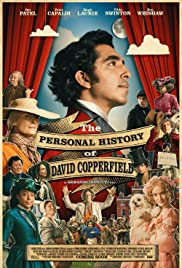
The film opens with David Copperfield (Dev Patel, SLUMDOG MILLIONAIRE) reading his autobiography to a mesmerized audience in a beautiful theatre. Yes, we hear the iconic opening line, “Whether I shall turn out to be the hero of my own life …”, and then Copperfield turns and walks into the backdrop which comes alive as he, in fact, steps into his own life. The film is episodic in structure as we are presented with segments of Copperfield’s life that shaped his writing – from his birth at The Rookery, to his inquisitive nature as a young boy, through his cruel banishment to factory work, on to his life living with his eccentric aunt and his time at boarding school, and finally, with his time as a proctor, courting Dora, and focusing on writing. It’s a fascinating life, with many elements pulled (or enhanced) from Dickens’ own.

Director Armando Iannucci (IN THE LOOP, creator of “Veep”) and co-writer Simon Blackwell are frequent collaborators renowned for their expertise in satire. Iannucci is an admitted fan and student of Dickens, and he’s assembled quite a sterling cast for his take on the classic story. In addition to Patel as the older Copperfield, we have Jairaj Varsani in his first film as young David, rising star Morfydd Clark (PRIDE AND PREJUDICE AND ZOMBIES, 2015) in dual roles including the enchanting Dora Spenlow, Hugh Laurie as the King Charles (and his head) obsessed Mr. Dick, Aneurin Barnard (DUNKIRK) as David’s friend Steerforth, Darren Boyd and Gwendoline Christie as the wicked Murdstones, Peter Capaldi (“Doctor Who”) as the dodgy Mr. Micawber, Daisy May Cooper as trusted handmaid Peggotty, Nikki Amuka-Bird as the concerned Mrs. Steerforth, Benedict Wong as the sherry-loving Mr. Wickfield, and Ben Whishaw is a standout as conniving Uriah Heep. And if somehow that’s not enough, the brilliant and eclectic Tilda Swinton shines as Aunt Betsey Trotwood.

Each of the segments brings something different to the party – some of it bleak, and some of it cheery. Of course the dialogue has dashes of humor, but much of the comedy comes courtesy of the talented cast. It’s been said of writers that they should write what they know, and David Copperfield literally writes what he lives … through piles of scraps of paper, each holding a moment of life or the essence of a character. Watching this is a bit like camping out in a writer’s head and twisting through their thoughts … Mr. Dickens would be proud.

Opens wide in theaters on August 28, 2020

watch the trailer:


THE SECRET GARDEN (2020)

August 6, 2020

 Greetings again from the darkness. In the years since Frances Hodgson Burnett’s novel was first published in 1911, “The Secret Garden” has become one of the most popular and oft-read children’s books. Previous film adaptations include the 1949 version with Margaret O’Brien and Dean Stockwell, and the 1993 version with Kate Maberly and Maggie Smith. Additionally, the novel has been adapted numerous times for the stage and television. Director Marc Munden is working with the screenplay adapted by Jack Thorne (WONDER, 2017), and the two had previously collaborated on the BBC series “National Treasure”. Readers of the beloved novel will certainly recognize the changes and differences within this version, both in characters and theme.

As the film begins, we are told it’s “the eve of Partition”, which was the 1947 division of British India into two separate states: India and Pakistan. This timing is, of course, quite a bit later than Ms. Burnett’s setting, but the effect is the same – young Mary Lennox (Dixie Egerickx) is orphaned when her parents die, and left alone when the servants desert her. She is shipped off to live with an uncle (Oscar winner Colin Firth) she doesn’t know. Accompanied to massive Misselthwaite Manor by the housekeeper, Mrs. Medlock (Julie Walters), Mary quickly understands that Uncle Archibald Craven is a grieving widow (his wife was Mary’s mother’s sister) who is not to be disturbed, and his hunchback is not to be stared upon. Mary soon learns that her spoiled brat manner will not be tolerated, though her natural spunk will prove advantageous. The young girl is one who is accustomed to be waited on, while also wanting to prove her independence.

Mary’s imagination is extraordinary and she often asks, “Do you want to hear a story?” CGI effects allow us to see what she has envisioned, whether it’s the wallpaper coming to life, or her mother and aunt frolicking through the halls or swinging in the garden. Mary soon befriends Martha the maid (Isis Davis), and then happens upon “Jemima” the dog while wandering the estate grounds. It’s here where the fantastical and supernatural meet reality, and a helpful Robin leads Mary to the key that unlocks the gates of the gardens that have been locked away since Uncle’s wife died. Mary and her new friend Dickon (Amir Wilson) go on adventures through the garden – a garden which has mystical powers.

One evening Mary hears cries echoing in the halls of Misselthwaite. Despite being forbidden from exploring, she discovers her cousin Colin (Edan Hayhurst) locked away in a far off bedroom. Colin is a sickly child, supposedly stricken with a spinal problem that keeps him from going outside. Mary continues to visit Colin, and soon she and Dickon are sneaking Colin into the secret garden, where the magical healing powers begin to take hold. The titular garden doesn’t make an appearance until about one hour in, but its beauty and wonder are on full display.

This is a story about the power of loss and grief and depression, and it offers the life lesson that the things we care for blossom and grow and thrive. This version has some elements of such classics as “Peter Pan” and “The Chronicles of Narnia” in that fantasy and magic play a much larger role than in the novel. Director Munden employs a darker approach and seems to emphasize self-discovery. Young actress Dixie Egerickx was a standout in the recently watched SUMMERLAND, and she is terrific here – despite the changes to the story that some fans might not embrace. The film seems a bit disjointed at times, but it’s always a feast for the eyes, and offers up one of the year’s best scores, courtesy of Oscar winner Dario Marianelli (ATONEMENT, 2007).

Available Video on Demand August 7, 2020

watch the trailer: