DIFF 2017: Day Five

April 6, 2017

The Dallas International Film Festival runs March 31 – April 9. 2017


It’s “Two For Tuesday” and I welcome the first of two straight evenings with only two films on my schedule. Addtionally, neither Tuesday nor Wednesday features a documentary, so my odds of re-gaining faith in humanity are increased a bit. The two movies I watched on Tuesday April 4 are recapped below:


A QUIET PASSION

We open with a young woman standing strong during a critical moment at seminary school. It’s kind of a clunky start in an overly-dramatic and stagey sense for the film, but Emma Bell sets the standard for the future behavior of Emily Dickinson. What follows is a period drama with minimal costuming effects, but rather a fitting onslaught of language and words – much of which comes courtesy of Ms. Dickinson’s mighty pen.

I’ve often viewed Emily Dickinson as an early feminist whose beliefs and intentions were stifled by the era in which lived, as well as the depression that seemed to cloak most of her days. She clearly stood for women’s equality at a time when her own poems were published anonymously to avoid scandal and backlash for the paper. Writer/director Terence Davies (The Deep Blue Sea, 2011) has no interest in glamorizing either the times or the writer, and Cynthia Nixon seizes the opportunity to capture the essence of a gifted woman who at best, could be described as a societal misfit.

The terrific cast also includes Keith Carradine as Emily’s proud father, Jennifer Ehle as her sister Vinnie, and Duncan Duff as brother Austin. Emily’s rare forays beyond familial boundaries are mostly via garden strolls with her wise-cracking friend Miss Buffum, played with zeal by Catherine Bailey. There is also a tremendous 3:00am scene between Emily and her sister-in-law Susan (Jodhi May), which provides the best possible self-analysis by Ms. Dickinson (outside of her writings). She confesses to her new family member, “You have a life, I have a routine.” This insightful line seems to carry no sadness for Emily.

The first third of the film features some low-key zingers that rival anything from Whit Stillman’s superb Love & Friendship, though the balance of the film takes a turn towards the serious and focuses more on Faith and Death and Emily’s controversial stances. She embraces the description of “no-hoper” and continues on with her observations of a life she barely leads. While the language and words are the stars here (along with Ms. Nixon), there is a very cool effect as the characters seamlessly age before our eyes in a series of portraits, vaulting the timeline headfirst into Emily’s descent into self-imposed isolation. It’s a very well done biopic that requires your ears be in prime form.

MR. ROOSEVELT

The most pleasant surprise of the festival so far comes courtesy of writer/director/actress Noel Wells (“Master of None”). It’s a wonderful little gem filmed in Austin, Texas and it somehow only gets better after an excellent and very funny opening sequence.

Ms. Wells plays Emily, a Los Angeles-based editor who receives an emergency call from her ex-boyfriend Eric (Nick Thune) requiring her to return to Austin. Her lack of liquidity, and still-simmering flame for Eric, result in her accepting an invitation to stay at the home of Eric and his seemingly perfect and passive-aggressive girlfriend Celeste (Britt Lower). Varying situations and interactions lead to some uncomfortable and awkward moments that deliver a new style of humor.

Support work and additional fun is provided by Andre Hyland and Bina Chauhan as Emily’s new friends and support system. Their hijinx include time at Hippie Hollow, a rowdy house party, and some sexual freelancing jumpstarted by the phrase “You’re funny” … Emily’s ultimate turn-on.

The film is shot on 16mm Kodak film (announced pre-credits) and it clearly establishes Ms. Noel as a filmmaker to watch, reminding a bit of the underrated Miranda July. Not only does she have skills as a director and actress, the line “You’re a good person with bad execution” proves she has a real knack as a comedic writer. Good stuff from an exciting new face.


DIFF 2017: Day Three

April 4, 2017

The Dallas International Film Festival runs from March 31 – April 9, 2017

 This was my first 5 movie day since last year’s festival, and it comes on the heels of the four from yesterday. Sometimes a film festival can be an endurance challenge, but the Dallas International Film Festival offers such a diverse selection of films, it feels like a mistake to miss an opportunity to view unique films, some of which might struggle to get distribution. Below is a recap of the five films I watched on Sunday April 2, 2017:

SCORE: A FILM MUSIC DOCUMENTARY (documentary)

Admittedly, this is one of the films that jumped off the schedule when first going through the programming for this year’s DIFF. The magic of music in movies has always fascinated me, and many movies and their scores are so inter-connected that you simply can’t think of one without the other: Jaws; Star Wars; The Magnificent Seven; The Good, The Bad, and The Ugly; Psycho; Gone with the Wind; James Bond; Batman; Titanic; Chariots of Fire; Jurassic Park … chances are, just reading that list caused you to hear the themes!

Director Matt Schrader, in his directorial debut, takes us back to the beginning to explain that silent films weren’t ever really silent. There was invariably live or recorded musical accompaniment to help muffle the sound of the projector. But it was Max Steiner’s score for King Kong in 1933 that really changed the game. His music transformed the film from schlocky special effects B-movie into a tense, thrilling cinematic experience.

This is so much more than a history of important and beautifully written scores. Director Schrader interviews most of the well-known film composers working today. He gains insight into their writing process, commentary on the ground-breakers who came before them, and a look at how technology, new instruments, new styles, and a different approach are always in the works.

Some of those interviewed include Rachel Portman (the only female included here), Randy Newman, Danny Elfman, Atticus Ross and Trent Reznor, and Thomas Newman (son of Alfred). There is also a well-deserved segment reserved entirely for the great John Williams, and we get reminders of the revolutionary composers like Jerry Goldsmith (Planet of the Apes, Chinatown) and Bernard Hermann (Psycho), as well as Henry Mancini (The Pink Panther), Monty Norman (Bond), and Ennio Morricone (westerns). A quick segment that proves quite entertaining is Mark Mothersbaugh (formerly of Devo) telling the story of how he used a toy piano for the score of Rugrats, but somehow no longer has possession of the little piano anymore.

Oscar winning composer Hans Zimmer is a recurring voice throughout and provides some structure to the numerous interviews and segments. It’s pretty funny to see this highly accomplished, world-renowned composer in his early days as a keyboardist for The Buggles’ “Video Killed the Radio Star” (the first video played on MTV). More importantly, Mr. Zimmer discusses the insecurities and pressures that go along with the job, and how change (such as his aggressive sounds) isn’t always welcomed openly.

The technical aspects of creating the score are certainly not ignored. We get a glimpse inside Abbey Road Studios, and how thrilling it is for the composer to hear the live orchestra bring the music to life that first time. It also serves as a reminder that film composing employs a significant number of the live orchestral musicians working today, and that we all hope technology doesn’t replace that imperfect beauty of the real thing.

If there is a disappointment in the film, it’s that the recently deceased James Horner seems woefully short-changed, with only a brief post credits segment featuring director James Cameron who, as usual, spends the time talking more about himself than the impact of Horner. Adding a scientific perspective was a nice touch. Hearing that our brains respond to movie music in a similar manner to chocolate and sex made a great deal of sense; as I’ve often wondered if film scores are more manipulative or complementary in nature. This documentary is a must for movie lovers, and on a personal note, made me miss my friend Adam very much. He would have certainly enjoyed this one and had a great deal to say about it.


THE SECRET LIFE OF LANCE LETSCHER (documentary)

Most documentaries with an artist as the subject offer little more than a retrospective of the work. It’s rare that we get to explore the mind and creative process in a way that brings us a little closer to their world, while also magnifying the gap. This is Sandra Adair’s first foray into directing, though she is an Oscar nominated Film Editor (Boyhood), and she works wonders in getting Lance Letscher to open up and share his ideas, insecurities and reactions.

The first question we might ask is, why does he do this? Working in solitude with an Exacto knife and surrounded by piles of books, album covers, board games, signs and magazine pages, Mr. Letscher creates some amazingly detailed collages out of everyday materials – most of which have been discarded by previous owners.

Much of the film revolves around a commissioned project for a large outdoor piece to hang on the building that houses a book store on South Congress Avenue in Austin. Having not typically worked with metal, Letscher lets us in on some of the frustrations he has – which leads to a form of artistic procrastination. When things do finally click, it’s enthralling to see how quickly his vision comes to life.

Also fascinating is seeing how his right brain and left brain work in conjunction to create these diagrams of thought. He claims his subconscious mind is responsible for much of his creations, but we slowly come to realize Letscher is a rare blend of art and engineering. This blend results in such unusual projects as gliders/planes and motorcycles, in addition to his customary collage work.

Director Adair does not limit the framework to art. We get to know part of what makes Letscher the man tick. He jokes about his childhood nickname “Trance”, while later coming clean on his father’s depression and suicide – and how that has impacted him as a father, husband and artist. He acknowledges his tendency to take the “path of greater resistance” even during the process of layout-revision-glue-press. The use of music and intimate camera work create a polished documentary on a man who is doing more than keeping Austin weird – he is keeping it beautiful and interesting.


A BAD IDEA GONE WRONG

With all of the documentaries I have scheduled during the festival, it was important to mix in a comedy here and there. This little indie shot in Ft Worth is directed by Jason Headley and stars Matt Jones (“Breaking Bad”), Will Rogers, and Eleanore Pierta. It’s a pretty humorous look at a couple of bumbling house burglars with different objectives, who find themselves in what looks like a no-win situation.

Mr. Jones has a certain stoner quality that makes most everything he says seem like a punchline – even when it’s kind of brilliant. Mr. Rogers captures the essence of guy who is stuck holding on to a past relationship and being unable/unwilling to let go. He finds meaning to seemingly innocuous details that lead him to believe his ex-fiancé still pines for him.

The real fun begins when these two doofuses manage to set the house alarm that effectively locks them in the house they are robbing. Oh, and then they stumble on sleeping Darcy, the housesitter/pet taxi driver who may or may not be as welcome in the home as are the boys themselves.

Niagara Falls and a hide-a-key rock are key players in this comedy that’s good for a few laughs, while also providing a bit of romance-under-stress.


BERLIN SYNDROME

A well-made intense, suspense-filled thriller is about as much fun as one can have watching a movie. Director Cate Shortland (Lore, 2012) delivers just that with this hostage-psychopath saga based on the novel from Melanie Joosten. It also features a best-yet performance from Teresa Palmer.

Clare (Ms. Palmer) is touring Berlin alone (with her camera and backpack) as she seeks life experiences away from her Australian homeland. She spends her days enjoying the culture and architecture of the city and one day crosses paths with Andi (Max Riemelt). He charms her through broken English and they end up with a passion-filled evening. Of course, thanks to the film score, we know something is rotten in Berlin – and in particular with Andi. His innocent looks mask a true psychopath, and he ends up imprisoning Clare in the remote apartment while he goes about his daily life as a teacher. In fact, his outside-the-apartment life could have used a bit more definition. How does this guy fit in? We get only glimpses.

If this sounds like Brie Larson’s Room without the kid, you would be on the right path. The difference being, Clare has only herself to think of – along with survival and escape. In Room, the mother had the well-being of her son to consider. This makes for a more mano y mano situation – a true battle of wits. It’s brutal to watch at times, and is one of those films that forces you to ask, what would you do? At what point do you give up hope of escaping and concentrate on making the best of a situation? The frustrations and anger are palpable, and it shows how difficult it is to use rational thought when combating psychotic behavior.


MUSTANG ISLAND

This low budget Texas indie from director Craig Elrod is based on his 2014 short film Molly. The unorthodox pacing and deadpan delivery provide some quirky and funny moments, in spite of what seems to be a film full of sad characters.

Bookend close-up shots of the two female characters who are key to the story open and close the film. What happens in between probably seemed kind of lame on the written page, but actually works in the hands of a cast that executes most every scene.

Macon Blair plays Bill, and when we first see him, he’s crying while driving his car right into a parked boat. Bill’s a bit of a sad sack and there isn’t much grace to how he handles Molly (Molly Karrasch) breaking up with him. In fact, he’s a bit irrational when he talks his brother John (John Merriman) and simpleton friend Travis (Jason Newman) into tracking Molly to her family beach house on Mustang Island.

Of course, Molly isn’t there, so the boys break in and make themselves at home. What follows is more wrecks, a stolen truck, and an encounter with a bizarre and hilarious “Dance Party” dude (Byron Brown). More importantly, a connection between Bill and a local waitress named Lee (an excellent Lee Eddy) helps him forget the original reason for the trip … at least until Molly shows up!

The movie is plodding at times, but the good parts make up for it – provided you are a fan of deadpan humor and offbeat pacing. Shot in Galveston rather than Mustang Island, the local feel of the beach community is evident and crucial to the tone of the film – as is the spot on score from composer Benjamin Prosser.


DIFF 2017: Day One

April 2, 2017

The 2017 Dallas International Film Festival runs March 30-April 9

 The usual excitement of festival Day One was tempered somewhat by this incessant cough that I can’t seem to shake, and the realization that I will be a nuisance to others in the theatre. However, my goal of 30 movies in 10 days will not be stopped so I loaded up on Robitussin, cough drops and a giant bottled water, and headed off to my first scheduled movie. Of course, it was Friday afternoon so Dallas traffic forced me to into a fall-back plan before I had even seen one movie. Pulling off to the Angelika rather than continue creeping on Central expressway towards the Magnolia ended up as a fortuitous turn of events. The three movies I watched are recapped below.

WAKEFIELD

While I wasn’t a big fan of Robin Swicord’s directorial debut (The Jane Austen Book Club, 2007), she bounces back nicely with this Bryan Cranston vehicle with one of the more creative scripts featuring internal dialogue that I’ve ever seen. Cranston is showing a knack for selecting interesting interesting projects, and he excels here as the high-powered attorney who spontaneously decides to drop out of society in a most unusual manner.

There is a ton of social commentary on display here with targets including married life, suburban living, career pressures, and self-doubt … substantially summed up with a line from Cranston’s character, “Most everyone has had the impulse to put their life on hold.” As he proceeds through his new ‘unshackled’ and ‘primal’ lifestyle while observing unnoticed through the stained glass window in his garage attic, much of his focus seems to be on discovering just who he is at his core, and what is the truth behind his relationship with his wife (Jennifer Garner). It’s as if he is asking “What am I?” while staying close to his previous life in a voyeuristic way. The score is in the style of a 1980’s Brian DePalma movie, which just adds to the unique cinematic experience.


TOMMY ‘S HONOUR

Jason Connery (Sean’s son) directs this story about old Tom Morris and his son Tommy written by Pamela Martin from the book by Kevin Cook. It’s a bit surprising that the story focuses as much or more on the melodrama and personal story of the younger Tommy than the historical influences, but there is links action to give us a feel for the times.

Jack Lowden and his dimples portray Tommy, while Ophelia Lovibond plays his love interest Meg. Their relationship drives the story, and we are reminded that small-minded people were every bit as prevalent 140 years ago as they are now. Tommy’s mother, their community, and even the minister of the Church pass harsh judgment on Meg and her unfortunate past. Combine that with the element of “Gentlemen”, which are anything but, and we get an understanding of how Tommy’s actions changed not just the game of golf, but also influenced the softening of the class difference. His push to bring respect and fairness to professional golfers erased the similarities with how race horses and golfers were treated the same from a wagering perspective.

This was the time of the original “13 Rules of Golf”, and when rowdy crowd hovered right next to the golfers as they played. Other than the closing credit graphics, Old Tom Morris (Peter Mullan) isn’t really given his due as a course designer, but this is really the story of his son, and though the film is a bit too long, it’s a story that deserves to be told.


CITY OF GHOSTS (documentary)

Oscar nominated director Matthew Heineman delivered the stunning documentary Cartel Land in 2015, and here he once again proves his expertise as the messenger of important stories that need to be told.

The film begins in the Syrian city of Ragga in 2012, and we see the beginning of the revolution against the Assad regime. The sayings “Death is Death” and “Danger has a special taste” come into play, and by the end of the film, there is a clarity that is devastating.

The courageous and dedicated Citizen Journalists are divided into two groups: the internal who risk their lives in Ragga uploading news stories and videos of ISIS actions and, the external who are based in Turkey and Germany and post regularly to social media outlets. Their combined efforts and risk taking allow the real story to be told from their home city mostly cut-off from the outside world – as evidenced by the satellite graveyard.

RBSS (Ragga is Being Silently Slaughtered) is the movement spreading the truth about ISIS atrocities – including public beheadings, shootings, and bombings. It’s a terrifying story, never more so than during the professionally produced recruiting ISIS videos featuring young children. These brave folks have had friends, family and neighbors slaughtered which inspires them to continue fighting the guns and bombs with the power of words. It’s breathtaking.


THE ZOOKEEPER’S WIFE (2017)

March 30, 2017

 Greetings again from the darkness. Heroes come in all shapes and sizes. Director Niki Caro (North Country, Whale Rider) introduces us to the story of zookeeper Jan Zabinski and his wife Antonina. The couple is a stunning example of heroism and bravery and compassion – both in cuddling with tiger cubs and in assisting approximately 300 Jews escape to freedom during the Nazi invasion of Warsaw in 1939. You might think of this as Schindler’s Zoo.

We first see Antonina (Jessica Chastain) as an angelic figure pedaling her bike through the zoo during morning rounds with a trotting young camel alongside, and soon thereafter helping rescue a newborn elephant from peril. It’s an idealistic image that appears shattered as soon as the German bombs begin dropping on Warsaw and the zoo. But the true story of what actually happened is more heartwarming and inspiring than a dozen fuzzy bunnies or peach-eating hippos.

Diane Ackerman’s 2007 book was based on the diaries of Jan and Antonina Zabinski, and is adapted for the screen by Angela Workman. Yes, that’s right … a woman director and woman writer collaborating on a film version of a book written by a woman about another woman! Some may say the film is too glossy and skips over the brutality of the Nazi’s, but this is the story of a brave, compassionate woman and how she and her husband risked their lives to save others. There is no shortage of films that depict the horrific tragedies that occurred in concentration camps, so it seems we should certainly celebrate the kind and courageous who did all they could in rescue efforts, as they used the Warsaw Zoo as a way to hide Jews in plain sight.

In addition to Ms. Chastain, who sports an unusual Russian accent throughout, Johan Heldenberg plays her husband, and Daniel Bruhl plays Lutz Heck – Hitler’s Chief Zoologist at the Berlin Zoo. The scenes between Heck and Antonina are excruciating as he first charms her with his love of animals, and then later frightens her with his unwanted advances and desire to cross-breed animals in hopes of creating superbeasts (sound familiar?).

One of the key messages seems to come from an early monologue delivered by Antonina where she compares the purity of animals (their eyes tell you everything) with the propensity to deceive and commonplace of ulterior motives in humans. While she prefers one approach over the other, it’s obvious that Antonina values all life and will pay whatever price necessary to save others. She has her chance to run, but chooses to stay and fight evil in the only way she knows how. Here’s hoping the film doesn’t begin a fad of pet skunks, but its message of compassion and courage is never out of place. The story runs from 1939 through 1946 and reminds us that heroes are amongst us always, and their journey can be both stressful and inspiring.

watch the trailer:


MEAN DREAMS (2017)

March 30, 2017

 Greetings again from the darkness. It was one month to the day since the shocking news that Bill Paxton had died when I sat down to watch one of his final two movies (the other being The Circle, which hits theatres in a few weeks). His searing performance in this low-budget drama made me realize just what a gaping hole he leaves in the film world … and how fitting that his character is the antithesis of Paxton’s real world nice guy persona.

Director Nathan Morlando opens with a shot of a peaceful stroll through rural prairie land, providing no indication of the quietly intense misery that is coming. Jonas (Josh Wiggins) is a teenage boy working daily on the family ranch when he meets Casey (Sophie Nelisse), the new girl in town. The two quickly hit it off, and connect in a way neither has before. Jonas soon realizes that Casey’s cop dad (Paxton) abuses her, and spontaneously can shift between country charm and frightening intimidator.

Writers Kevin Coughlan and Ryan Grassby do a nice job of using minimal dialogue and subtle interactions to round out these characters. Paxton plays a corrupt cop who is an alcoholic and abusive dad, and a man overly protective of his daughter and distrusting of outsiders. Casey is played by Sophie Nelisse, who was so good in The Book Thief (2013). She is a smart girl who fears not just her father, but also a life that may prevent her from ever seeing the ocean. Josh Wiggins plays Jonas as a strong-willed young man who believes people should do the right thing, especially for their loved ones. Wiggins made a terrific film debut in 2014’s Hellion.

There is a lot going in this little independent feature. It’s a coming of age story, and a reminder of the anxiousness of youth and the power of first love. It’s also a disturbing story of a rotten-to-the-core man who has lost his way (if he ever had it). Lastly, it’s a chase movie that features a blend of beautiful and harsh scenery – filmed mostly in Sault Ste. Marie in Ontario. There is a tremendously tense sequence shot with the limited perspective offered by the covered bed of a pickup truck; and it’s a contrast between two youths trying to escape their situation, and two bad cops with little redeeming value. Maybe we’ve seen similar type movies, but never one with two excellent young actors and a menacing performance from the late great Bill Paxton.

watch the trailer:


KONG: SKULL ISLAND (2017)

March 25, 2017

 Greetings again from the darkness. I enjoy creature movies. Even as a kid I enjoyed creature movies (as distinguished from monster movies, which I’m also fond of). From the classics to the (very) low budget ones on late night TV to the fear-mongering from Japan … I enjoy them all. Of course the most fascinating of the bunch is King Kong, and this version arrives 84 years after the still magnificent 1933 version from Merian C Cooper and featuring Fay Wray.

This time there is no shootout on The Empire State Building, and the connection between Kong and the girl is limited to a few knowing glances. Most of the film takes place on Kong’s island … one he shares with some other creatures (not rodents) of unusual size. Unlike Spielberg in Jaws, who teased us for half the movie before finally revealing the shark, we get a glimpse of the imposing Kong very early on.

The cast is the best yet for a creature feature. John Goodman and Corey Hawkins play scientists/conspiracy theorists; Tom Hiddleston plays the world’s only mercenary with perfect hair and skin; Brie Larson is a self-described anti-war photographer; while Samuel L Jackson, Shea Whigham, Thomas Mann and Toby Kebbell play military men on their last mission at the end of the Vietnam War. The most colorful character is played by John C Riley – an eccentric WWII survivor who has been living on the island since 1944.

Jordan Vogt-Roberts directs this version, and his resume of The Kings of Summer and mostly TV work begs the question of how the heck did he get this gig? Fortunately he has cinematographer Larry Fong alongside, and his significant big action picture experience is obvious in the breath-taking helicopter scene (as well as many others). It’s impossible not to notice the extreme love shown to Apocalypse Now and even Jurassic Park. Some of the shots and tone seem as if pulled directly from those films … even moreso than the original King Kong. We even get Samuel L Jackson recycling his “hold onto your butts” line.

There is plenty here to satisfy us lovers of creature features, though this version certainly lacks the emotional impact of Fay Wray and Naomi Watts connecting with Kong … not much Beauty, but plenty of Beast. It’s certainly recommended that you stay for the post-credits scene that sets the stage for 2020.

watch the trailer:


T2 TRAINSPOTTING (2017)

March 23, 2017

 Greetings again from the darkness. Sequels are big business in Hollywood these days. In fact, it’s not unusual for sequels to be announced even before the premiere of the first! At the other end of the spectrum we have cult films which carry the added pressure of not disappointing (or worse) their rabid fan base. Such is the case with Trainspotting from 1996. So the big question is … can the much anticipated follow up generate the frenetic pace and enjoyable discomfort of the first?

Director Danny Boyle (and his Oscar from Slumdog Millionaire) is back at the helm, and re-joining him is writer John Hodge who is once again working with the main characters from Irvine Welsh’s source novels. Of course what has the fans excited is the reunion of Ewan McGregor as Mark Renton, Ewen Bremner as Spud, Jonny Lee Miller as Sick Boy Simon, and Robert Carlyle as Begbie. Despite high expectations and fear of disappointment, it’s difficult to imagine the fans not having a blast with this second go round. Sure, the boys are a bit older – but to say they are much wiser, would be stretching things farther than these off-kilter blokes already do.

For reasons never really made clear, Mark returns to face the fellows he left high and dry some twenty years ago. Perhaps it’s guilt and he accepts that he deserves a good ass-kicking, or perhaps he simply realized he didn’t belong anywhere else. Simon has an attractive new partner named Veronika (Anjela Nedyalkova), who seems to be the one generating whatever income the couple has. Spud is still struggling mightily with his addiction, while Begbie is planning a quite painful escape from prison.

The reunions happen separately and slowly throughout the film, and each carries its own awkwardness. These guys are all similar to the guys we know, yet nobody’s quite the same. It’s not until near the end when all four share a scene. However, getting to that point involves everything we could hope for: flashbacks, quirky camera angles, flash-cut edits, familiar music blasting, and exaggerated sound effects … in other words, all of the style from the original (only with a higher budget).

Also making return appearances are Kelly McDonald as Diane (only one scene), novelist Irvine Welsh (this time buying stolen goods from Begbie), and the always great Shirley Henderson as Gail, whose single line of dialogue is pitch perfect. It’s nice that Ewen Bremner gets such an interesting and unexpected path in this sequel, and we can’t help but smile at director Boyle’s tributes to David Bowie, Stanley Kubrick, and of course, his original Trainspotting. You may ask why and in what form, but it’s clear all four main characters have decided to “choose life”. The next cult favorite up for sequel treatment is 1982’s Blade Runner, which likely faces an even more challenging journey to satisfy fans from 35 years ago.

watch the trailer:


CHIPS (2017)

March 23, 2017

 Greetings again from the darkness. In a Hollywood self-congratulatory world that considers sequels, reboots and remakes as creative projects; and imitation as the most sincere form of flattery … not to mention the safest hedged bet … it’s not in the least surprising that we now have a film version of “CHiPs”, a lightweight and popular TV show that ran from 1977 through 1983. What should be surprising is that a studio entrusted Dax Shepard with the ultimate slash role of Director/Writer/Producer/Actor for this contemporary version.

Of course, as with film versions of “21 Jump Street” and “Starsky and Hutch”, the target audience isn’t really those who watched the original TV series, but rather the group of big-spending millennials who seem to thrive on raunchy humor, while placing minimal value on a coherent or interesting story. Buddy cop films that blend tense drama, wise-cracking partners and eye-widening action have long been popular, with the jewel of the genre being Lethal Weapon. This latest entry does nothing to threaten the now 30 year reign of Mel Gibson and Danny Glover.

Dax Shepard stars in his own film as Jon Baker, now reinvented as a former X-games motorcycle champ who is attempting to save his long-fizzled marriage by becoming a cop. The rookie’s partner is undercover FBI Agent Frank “Ponch” Poncherello played by Michael Pena. Each has their own personal issues: Jon is addicted to prescription painkillers, and Ponch struggles to control certain urges … and unfortunately for viewers, the two spend an inordinate amount of time discussing these issues.

The crime wave they are attempting to bust involves a corrupt cop. Seeing that Vincent D’Onofrio is in the cast immediately takes away any mystery about the bad guy’s identity, but were there any doubt, the film exposes him in the first action sequence. After that comes the onslaught of verbal sparring, explosions, gunplay and one especially gory moment.

With Dax Shepard at the helm, we understand going in that the raunchy humor faucet will be fully open. Topics covered in one-liners, gags and recurring themes include: homophobia, sexting, masturbating, bowel movements, marriage therapy, d**k jokes, prescription drugs, paparazzi, and yoga pants. But seriously, how many “eating a**” jokes does one movie need? It’s a topic that goes from uncomfortable to unnecessary pretty quickly.

Cars and bikes are vital here, though it seems that the motorcycle stunts could have been jazzed up a bit, and we certainly expected more cameos than the mandatory one near the end. The original series thrived on being ‘tongue in cheek’, and Mr. Shepard’s version brings new meaning to the phrase. The opening credits state “The California Highway Patrol does not endorse this film. At all.” It’s an understandable stance.

watch the trailer:


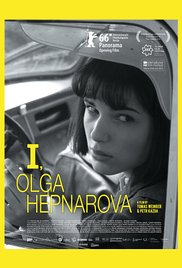
I, OLGA HEPNAROVA (2017)

March 23, 2017

 Greetings again from the darkness. Most youngsters have executed a perfect eye roll on at least one occasion after receiving a dose of parental advice that seemed irrelevant to them at the time. An early scene in this biopic finds teenage Olga listening as her mother says, “To commit suicide you need a strong will, my child. Something you certainly don’t have. Accept it.” This is a warning shot fired at the audience to be cautious when judging the actions of the last woman executed in Czechoslovakia.

Co-directors Petr Kazda and Tomas Weinred seem to believe that most viewers will be familiar with Olga’s story, and presume the film’s austere look, lack of flow, and structure of seemingly unrelated scenes will provide a sense of the choppiness and isolation that might explain her otherwise inexplicable actions. Based on Olga’s true story and the book from Roman Cilek, the film will have you questioning whether her behavior was the result of horrible parenting, or more closely related to her psychological issues – perhaps even schizophrenia.

Michalina Olszamska (The Lure) delivers a committed performance as Olga, the 22 year old woman who in 1972 drove a truck into a group of people in Prague, killing 8 (all between the ages of 60 and 79). A year later she was hanged, becoming the last woman executed in Czechoslovachia.

The movie focuses on the various elements and key moments of her life – father’s abuse, mother’s iciness, attempted suicide, treatment in asylum, rejection by a lover – that led to her isolation and feelings of alienation. We sense her internal rage building over time, and her inability to cope or even connect with others; though at times we question whether her troubles are by choice or a result of her treatment … it’s kind of a twist on the nature vs. nurture debate.

There have been other fine movies that have dealt with a similar theme: There’s Something About Kevin, The Omen, The Bad Seed. Each of these deal with the whole good vs evil idea … are some kids born “bad” or are they pushed that way? Either way, it’s a parent’s worst nightmare. This black and white presentation allows us to keep our emotional distance from Olga, and the no frills approach provides a quite chilling reenactment of how Olga ended up sending a letter to the local newspaper announcing her intention to seek “revenge” for the hatred that society had heaped upon her for years.

watch the trailer:


THE SENSE OF AN ENDING (2017)

March 16, 2017

 Greetings again from the darkness. In 1967 Cat Stevens wrote “The First Cut is the Deepest” and the song has since been recorded by many artists (including Rod Stewart and Sheryl Crowe). The song’s title is also an apt description of director Ritesh Batra’s film version of the popular 2011 novel from Julian Barnes. It’s one man’s look back at the impact of his impulsive actions more than 50 years ago.

When we are young, we want emotions to be like what we read in books”. So says the narrator and lead character Tony Webster (as played by Jim Broadbent). Tony runs a tiny second hand camera store (specializing in Leica models) while leading a mostly benign life – rising daily at 7:00am, coffee with his ex-wife, and periodic errands for his pregnant daughter. One day a certified letter arrives notifying him that he has been named in the Last Will and Testament of the mother of a girl he dated while at University. And so begins the trek back through Tony’s history and memories.

Of course, a film version can never quite cut as deeply as a novel, but this preeminent cast works wonders in less than two hours. Curmudgeonly Tony is accessible and somewhat sympathetic thanks to the stellar work of Mr. Broadbent, who always seems to find the real person within his characters. Harriet Walther (“The Crown”) turns in a tremendous performance as Margaret, Tony’s most patient and quite wise ex-wife. Michelle Dockery (“Downton Abbey”) is their pregnant 36 year old daughter Susie, and just these three characters could have provided a most interesting story. The film’s best scenes feature the comfort and familiarity of a once-married couple, as Tony and Harriet talk through previously never mentioned topics. However, there is so much more to explore here as Tony’s thoughts bring the past splashing right smack dab into the present.

Billy Howle does a nice job as young Tony, an aspiring poet, who falls hard for the enigmatic Veronica (Freya Mavor). Complications arise when Tony spends a weekend with Veronica at her parents’ estate. It’s here that Emily Mortimer energizes things (and clouds thoughts) with minimal screen time as Veronica’s mother. It’s also around this time where new student Adrian Finn (played by Joe Alwyn of Billy Lynn’s Long Halftime Walk) captures Tony’s imagination and a friendship bond is formed … only to be later shattered in a most painful manner.

There is so much going on that director Batra’s (The Lunchbox, 2013) low-key approach is often misleading. Looking back on one’s life can lead to the twisted version that our mind has edited/revised in order to make things seem better or worse – definitely more colorful – than they likely were at the time. Tony’s distorted view of history crumbles when documented proof of his actions is presented at his first face to face meeting with Veronica (the great Charlotte Rampling) in five decades. It’s at this point that regret and guilt rise up, and the only question remaining is whether this elderly man can overcome his repressed emotions and self-centeredness in order to make the best of what time he has left. Each of us has a life journey, and though few of us ever actually tell the story, there are undoubtedly numerous lessons to be had with an honest look back.

watch the trailer: