UNDER THE GUN (doc, 2016)

May 11, 2016

under the gun Greetings again from the darkness. Filmmaker Stephanie Soechtig and journalist Katie Couric, who brought us the 2014 documentary Fed Up about childhood obesity, re-team to deliver a “20/20” type presentation billed as a “balanced look at the gun debate”.  It’s a polarizing topic and we hear from the families of victims, experts in the field, and gun rights advocates.  Supplemented by some startling statistics, it seems incomprehensible that some common ground has yet to be found.

The opening credits play over a video timeline of gun law highlights and news clips of shooting events such as Martin Luther King, Jr, Bobby Kennedy and Ronald Reagan. It then hits us with the first mind-numbing stat … during the run time of the film, 22 people will be shot in America, and 6 will die. It’s at this point where we realize the “balanced” approach is really not likely since it’s an emotional debate as much as (or more) than an intellectual one. It’s the stricter gun law faction vs. Second amendment purists.

There is simply no comparison to the personal stories of parents who have had a child killed at Sandy Hook School in Newtown, Connecticut or at the movie theater in Aurora, Colorado. Regardless of where you stand on gun rights, these stories are heart-breaking and devastating. There is also a segment with Gabby Giffords, who is still recovering from her 2011 gunshot wounds, and along with her husband astronaut Mark Kelly, has joined the fight for gun control laws. ( sidenote: It did seem odd that Kelly’s rip of the Cub Scouts made the final cut).

Much of the film is spent on the issues of background checks and the infamous Gun Show loophole. It’s here that we begin to understand the strength of the NRA. Founded in 1871, the NRA was originally designed to fine-tune the “aim” of those wishing to shoot firearms. It is now a political powerhouse and one of the most pervasive lobbyists in Washington, DC. The film is quite fair in distinguishing between the NRA senior executives, and the rank-and-file members who are fed a steady dose of propaganda that borders on fear-mongering. Though most NRA members stand in favor of background checks to prevent felons, terrorists, and the underage from obtaining fire arms, the NRA continues to preach that ‘they are going to take away your guns’ and that ‘it takes a good guy with a gun to defeat a bad guy with a gun’.

It doesn’t seem that the filmmakers set out to change anyone’s mind on the topic, but rather to highlight the importance of some type of compromise or common ground in light of the 32,000 people who die in America from gunshots each year. And seriously, does it make sense that there are more gun stores in the U.S. than McDonalds and Starbucks combined? The most honest and direct moment of the film comes when one of the parents of a victim states, “we don’t want your sorry’s or prayers … we want your action.”

watch the trailer:


HARRY BENSON: SHOOT FIRST (doc, 2016)

May 8, 2016

USA Film Festival 2016

harry benson Greetings again from the darkness. There are many talented photographers, but not many that are well known. Quite a few photographers have shot famous folks, but few are famous themselves. These days we tend to think of photography as the barrage of celebrity privacy invasion shots courtesy of the paparazzi cameras. Co-writers/co-directors Justin Bare and Matthew Miele remind us … with this sturdy portrait of Harry Benson … that true photography is an admirable and respected art form.

Mr. Benson is now 86 years old and retains his heavy Scottish accent and ambitious work ethic. An illustrious career was kick-started in 1964 when he was assigned to cover The Beatles’ inaugural trip to the United States. His behind-the-scenes work included the infamous shot of the four lads blowing off a bit of stress with a hotel pillow fight in their hotel.

The film acts as a retrospective of Mr. Benson’s work, and it’s wonderful to hear him tell his own stories. Not many can claim to have been right in the middle of five decades of history, entertainment, politics and cultural events. This is a man whose work had him standing next to Bobby Kennedy in 1968 on the night he was assassinated. Elizabeth Taylor so trusted him, that she allowed him to photograph her just after her brain surgery.  World class recluse and chess champion Bobby Fischer posed for Benson, as did Muhammad Ali, Winston Churchill, Martin Luther King, Jr and Michael Jackson … to name just a few. It’s also fascinating to see his spontaneous shots of Greta Garbo swimming, and he literally went 50 plus years between photos of The Queen. His work on the front lines of Somalia is breath-taking … this from a man who has photographed the last eleven U.S. Presidents (every one since Eisenhauer).

In addition to Benson’s own recollections, the filmmakers also include observations and insight from such a diverse group as Dan Rather, Ralph Lauren, Bryant Gumbel, James L Brooks, Sharon Stone, Betty Buckley and Winston Churchill’s granddaughter. We get the impression that Mr. Benson fully comprehends his impact, but it’s his commitment to the job … to the shot … that has earned him the trust and reputation for integrity. Not everyone gets this shot …

harry benson2


THE LIBERATORS (doc, 2016)

May 8, 2016

Dallas International Film Festival 2016

liberators Greetings again from the darkness. The story of how art was treated during WWII is fascinating: Himmler devised the plan to hide/store the valuable art in a cave to protect it from the bombings (they weren’t as worried about citizens); much of it was stolen by soldiers from both sides; and the decades of effort to recover and return the displaced works. Those recovery efforts have been chronicled on screen in The Monuments Men (2014) and the far superior documentary The Rape of Europa (2008).

First time director, and Denison Texas native, Cassie Bryant narrows her focus to one specific case … the Quedinburg Treasures – a collection of medieval artifacts with tremendous religious and historical value. Her interest stems from the connection to the small town of Whitewright, Texas just outside of her hometown. In what could be described as a mixture of research, mystery and crime, Ms. Bryant follows the work of Will Korte. He has spent a career tracking down missing/stolen WWII art, and considers the Quedinburg Treasures the most important case of his career.

The film avoids the use of a narrator, and instead utilizes first person interviews and news clips. Much of this occurs in regards to the research … both Mr. Korte and those local to Whitewright, including the Meador family, friends and neighbors. The trail leads to Joe Tom Meador, and ultimately to the recovery of a substantial portion of the treasure.

When the focus shifts to the trial, the film loses a little steam, as by this time, much of the mystery has been solved. The interviews with super attorney Dick DeGuerin have some interest due to his philosophy about good people doing bad things, as well as his humorous perspective on how the case never should have gone to trial.

There is little argument in the adage that artistic relics provide much of the cultural heritage for any society or era, and this story carries an odd twist in that the motivation may never be determined so that we might classify as either the spoils of war or outright theft. It’s also dumbfounding to think that a Goodwill Store might have played a key role in the missing pieces (if one is to believe the family).

watch the trailer:

https://vimeo.com/156908676


TOWER (doc, 2016)

May 6, 2016

Dallas International Film Festival

UT Tower3 Greetings again from the darkness. As a UT alumnus, the numbers are etched in memory. August 1, 1966. The 27th floor. 16 dead. 32 wounded. 8 months pregnant. 96 minutes. But thanks to director Keith Maitland, the story he tells is what lies behind those numbers … the innocent people involved that tragic day almost 50 years ago on the campus of the University of Texas at Austin.

A beautifully creative approach blends archival news footage, on-site live radio reports, amateur photography, rotoscopic animation, and the captivating recollections of the survivors in their own words (as read by actors). Given the use of animation, it’s more of a reconstruction than a reenactment, and it’s incredibly intense as we are transported to the day a lone gunman shattered more than the peacefulness of a sunny, hot August day in Austin. It was a day that shook the country, and caused terror, confusion and panic … and also acts of heroism.

By focusing on the victims and those who had no choice but to be involved that day, director Maitland makes little mention of the shooter (a name I won’t publish here). We hear the words of Clare Wilson, the first shooting victim who was 8 months pregnant at the time. We also hear the words of Allen Crum, the University Co-op manager, whose heroic actions helped put an end to the tragic events of the day. Of course, police officers Ray Martinez and Houston McCoy are credited with ascending 27 floors and taking down the bad guy, and it’s mesmerizing to hear their recollections of that day.

It was also fascinating to hear the replays of the on-site reporting from Neal Spelce of KTBC radio as he made his way around campus – reporting live to the nation. We also learned many details about how the police responded, how citizen vigilantes jumped in to help with their deer rifles (it is Texas after all), and how some acted so valiantly in the face of horror, while others understandably went ducking for cover. There is also the extremely moving mass assembly of quiet support as the ordeal finally ended.

Political commentary is minimal and confined to the very end as we are informed that, quite ironically, August 1, 2016 will mark the 50th anniversary of this event … and it’s also the day that the new Texas campus carry law goes into effect. There are also reminders of more recent mass shootings: Columbine, Virginia Tech, Sandy Hook, and the Aurora, Colorado movie theater.

In the post film Q&A, director Maitland addressed, what he called the disruption of public space and how it leads to various responses by ordinary people … some quite heroic and selfless. Much of the film follows the extraordinary Texas Monthly article by Pamela Colloff entitled “96 Minutes”. It’s a must read and the perfect complement to this exceptionally well made and emotional documentary (which will air on PBS later this year).

watch the extended trailer:

https://vimeo.com/88257777


NORMAN LEAR: JUST ANOTHER VERSION OF YOU (doc, 2016)

May 4, 2016

Dallas International Film Festival 2016

norman lear Greetings again from the darkness. Very few people have achieved the level of career success of Norman Lear. Very few people have had the impact on culture as Norman Lear. Very few people have led a life as interesting as Norman Lear. And if all of that somehow doesn’t impress you … Norman Lear is 93 years old and still working!  It’s no wonder that co-directors Heidi Ewing and Rachel Grady decided to tell his stories.

This is a man who served in WWII and flew 52 combat missions. He also purchased a copy of the U.S. Constitution so that it could tour the country and citizens could see it up close. He is regarded as the most influential TV producer ever. His roster of hit shows includes: “All in the Family”; “Maude”; “Good Times”; “The Jeffersons”; and “Mary Hartman, Mary Hartman”. These weren’t just popular or funny shows. They were ground-breaking and controversial … they changed TV and they changed society.

At one point, Mr. Lear was producer on 6 of the Top 10 shows on television. His “Good Times” series was the first to put an African-American family front and center. “Maude” was the first TV show to seriously discuss abortion, while “All in the Family” brought Archie Bunker (the great Carroll O’Connor) and the generation gap with changing societal mores right into our living rooms.

The film features a great deal of interview time with Mr. Lear, but also with others who worked with him and/or were influenced by him. The Mel Brooks and Carl Reiner segment is especially poignant, as it’s three comedy trailblazers who made such a difference in how we are entertained. At one point, Lear states “I never lost my childlike view of the world”, and he says that contributed to always having a fresh approach.

Frances Lear, the feminist activist, is the perfect life partner for Norman, and the film captures their magic. They make such an impressive team committed to their causes, yet still maintaining a solid marriage. In fact, a documentary focusing on Frances would also be quite interesting.

In the world of television programming, there is BN (Before Norman) and AN (After Norman), and the timeline is not only obvious, but also important. Norman says he worked to deliver “serious people comedy … we had something on our mind”. The proof of his influence is that he was able to inspire TV viewers to further discuss and consider the issues he found important.


A SONG FOR YOU: THE AUSTIN CITY LIMITS STORY (doc, 2016)

May 1, 2016

Dallas International Film Festival 2016

a song for you Greetings again from the darkness. It’s difficult to believe now, but Austin City Limits was once “the little engine that could” … and now it’s the longest running music program on television. Willie Nelson played the 1974 pilot, and the rest – as they say – is history … and continues to be history in the making.

This is a show about music.” That simple quote from the film says a great deal. There is no place to hide on the small stage in the small studio with the audience right on top of you. These aren’t music videos, but rather these are the artists performing their songs live in an intimate setting (with the ever-present TV cameras).

Director Keith Maitland, who also presented his powerful documentary Tower at the festival, spends a great deal of time allowing producer Terry Lickona to reminisce and tell stories about how the show has always walked a fine line between success and the threat of cancellation … what’s also known as life in public television.

Much of the structure of the film is around the show’s 40th anniversary and the formulating of the initial class of the ACL Hall of Fame. As interesting as it is to listen to Mr. Lickona and ACL founder Bill Arhos, it’s the music that shines here. There are too many clips to name here, and certainly some of the choices speak to the age of the director, but the highlights include a soulful Townes Van Zandt in 1976, a spirited Lightnin’ Hopkins in 1979, Ray Charles (and a shot of my head in the crowd) in 1980, the infamous Stevie Ray Vaughn show in 1983, and the always smooth and debonair Leonard Cohen from 1989. There are also clips of The Pixies, Radiohead, Dolly Parton, Buddy Guy and, well, just too many to name … yet somehow not enough.

We also see Lyle Lovett’s show which was the final filming in the original Studio 6A, before ACL got a building/studio designed just for them (one a bit more fire code friendly). It’s a wonderful trip down Memory Lane for someone like me who spent many a night in the old studio, and for those of us who have so appreciated the straightforward approach to music that the TV show has maintained through the years.

http://www.asongforyoufilm.com/

a song for you2


HONKY TONK HEAVEN: LEGEND OF THE BROKEN SPOKE (doc, 2016)

May 1, 2016

Dallas International Film Festival 2016

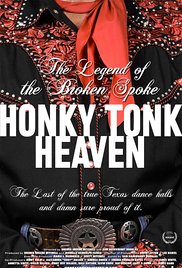
honky tonk Greetings again from the darkness. “The last of the true Texas dance halls and damn sure proud of it.” If you have ever stepped booted foot into The Broken Spoke on South Lamar in Austin, you have likely heard silver-tongued owner James White rattle off this intro. Co-directors Sam Wainwright Douglas and Brenda Mitchell deliver the ultimate tribute … actually a good old fashioned love letter … to this iconic Austin landmark.

At its core, The Broken Spoke is about the music and the dancing, but since Mr. White (built and) opened the doors in 1964, it’s now part of Austin and country music history. Over those 50 years, George Strait played in the house band, Willie Nelson sang with short hair and no beard, Bob Wills actually showed up for his gig, and that low-rise stage under a low-hanging roof has been played by a ‘who’s who’ of performers (Jerry Jeff Walker, Gary P Nunn, Ray Benson, Roy Acuff, Ernest Tubbs) … all under the loving care of Mr. White.

The real story goes beyond music. It’s the family business run by James and Annetta White, and their daughters who were raised under the leaky roof as the dancing couples waltzed their way around the oval floor. One of the daughters now teaches newcomers how to 2-step, while the other hand-stitches each rhinestone onto Daddy’s signature glitzy western shirts. Annetta can be found pouring drinks from behind the bar or cooking up a batch of chicken fried steak from her own recipe … she says “napping makes you lazy”. Husband James makes the nightly rounds greeting customers, and even occasionally joining the band for a song. Theirs is a family and business success and these two deserve every bit of respect that industry insiders and loyal customers offer up.

As Mr. White parks his immaculate white classic Cadillac under the giant oak tree, it provides the perfect visual for his earlier statement that The Broken Spoke took off once the hippies and rednecks realized they shared common ground with dancing to country music. While urban creep threatens the “old” Austin feel, it only takes Dale Watson’s colorful description of the difference between a honky tonk and a dance hall, to bring it right back.

You probably don’t want to ask Mr. White for a recommendation on a local roofer, and you best remember the house rule … “Don’t stand on the dance floor!” What the film does is answer the question “Where did you come from?” and has us dreading the day when we ask “Where did you go?” about The Broken Spoke.

film website:

http://www.brokenspokefilm.com/


THE ANTHROPOLOGIST (2016)

May 1, 2016

Dallas International Film Festival 2016

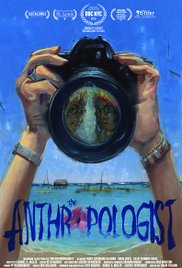
anthropologist Greetings again from the darkness. Following an anthropologist around for 5 years will either sound interesting to you or not. The hook here is that the filmmakers draw a parallel between acclaimed anthropologist Margaret Mead and her granddaughter Mary Catherine Bateson, and modern day anthropologist Susie Crate and her teenage daughter Katie.

It’s unclear how the three co-directors – Seth Kramer, Daniel A Miller, Jeremy Newberger– split the duties or shared contributions in telling this story over 5 years, but we follow Susie and Katie to Siberia, Kiribati (South Pacific), Peru, and Virginia. We witness how the melting permafrost is destroying wheat fields and slowly starving out communities. We watch as Susie goes glacier ice gathering in the Andes, and how the local community bonds over the haul.

One of the director’s half-jokingly referred to the film as the “Coming of Age Climate Change comedy” … saying that’s their pitch as they push for distribution. While that’s a catchphrase of which to be proud, I didn’t find much humor here. In fact, as Katie ages from 14 through 18 during filming, I found her to be a bit of a drag on the pacing of the film … not nearly as interesting as she seems to find herself. Clearly her mother is a dedicated and intelligent professional, but the mother/daughter theme came across a bit forced.

The film informs us that anthropology is the study of learned behavior which defines different cultures. Most of what they do is observe and record different cultures, and the changes that occur. There is also Susie’s observation, “we don’t change the world, we change ourselves”, which is quite a profound thought from someone in her line of work.


IN PURSUIT OF SILENCE (doc, 2016)

April 25, 2016

Dallas International Film Festival 2016


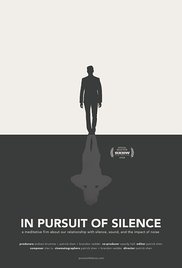
in pursuit of silence Greetings again from the darkness. “Silence is a sound of many qualities.” Director Patrick Shen explores this sentiment as he reminds us what an important role silence (or at least quiet) can play in our lives.

There are many interviews and insights from experts (like author George Prochnik) … each in agreement that the benefits to silence are many. To be clear, we are speaking to the silence associated with things like rustling leaves, flowing water, and rolling waves. We are talking about the process invoked in Japanese Tea Houses, and the steps for meditation.

We are informed that silence has a positive influence on four areas: Physiological, Psychological, Cognitive and Physical. In fact, deep forest walks are used as treatments and prevention, and have shown signs of improving immune systems.

Most of us have noticed how uncluttered our mind becomes as we relax by the shore or on a mountain. Mr. Shen’s film has plenty of quiet time around the interviews, and even in a movie theatre, these peaceful times have quite an impact.

The point is made that we have substituted technology for human interaction … even in place of interaction with our own self. We have left only the tiniest space for reflective thought … the kind of thought that reduces stress and results in clarity within life.

For those who have never experienced it, the film offers a display of composer John Cage’s infamous 4’33” (4 minutes, 33 seconds) piece with three movements … each with complete silence from the orchestra. The idea sprang from his Zen lessons, and now for more than 60 years has been startling audiences into a pleasant state of appreciation. The film drives home the point that we should all find time to quiet our soul.


FARMER / VETERAN (doc, 2016)

April 17, 2016

Dallas International Film Festival 2016

farmer veteran Greetings again from the darkness. Alex Sutton served 3 tours of Iraq and is now considered fully disabled due to PTSD. He is the subject of this film from co-directors Alix Blair and Jeremy Lange, and we are privy to glimpses of his life over the span of a few years. Alex is trying to heal by working on a farm where he lives with his protective fiancé. It’s neither a glamorous nor productive life, but it presents the challenges faced by so many veterans.

Over the course of the film, we get a pretty good feel for the muddled perspective Alex lives with, due in part to a staggering number of prescribed drugs he ingests daily. Blending this diet of meds with his fascination and comfort with the arsenal of firearms he maintains, provides scenes like the one where he compares the hatching of a baby chick to the killing he did during the war – both providing God-like powers.

The film takes us through their daily lives on the farm (chickens, goats, a donkey, a horse, and a peacock), and then to their wedding day and the birth of children. Alex is a likable guy, but one who can never really focus for long periods or put a plan together to organize the farm activities. In fact, he seems closest to happy when firing shots from one of his weapons … even if for no apparent reason.

Our views change quickly during a reading of Alex’s medical records. Where we had previously accepted his account of the med-evac after injuries that “tore him apart”, we soon realize the PTSD has a deeper impact than the daily struggles on the farm. The closing credits detail the 400,000 cases of PTSD stemming from the wars in Iraq and Afghanistan, and it’s a reminder of the need for better care for this mental health challenge facing so many. A world of isolation is no solution. The filmmakers provide an intimate look at this growing issue, and it’s a reminder that the VA is ill-equipped in its present state. Kudos for excellent use of music throughout … especially the “Jubilee” song over the end credits.

watch the trailer:

https://vimeo.com/71373272