DRIVING WHILE BLACK: RACE, SPACE, AND MOBILITY IN AMERICA (2020, doc)

October 13, 2020

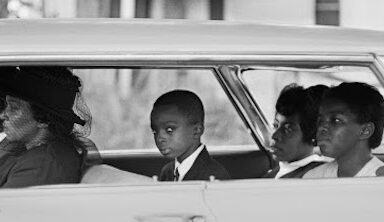
Greetings again from the darkness. When I was a kid, our family vacations consisted of loading up the car (with stuff and people) and hitting the road. Airline travel was not in the budget, and, at night, we typically piled everyone into one room at a low cost roadside motor inn (motel). We always had an ice chest, which allowed us to prepare most meals while on the trip … eating in a restaurant or café was a luxury that might happen once or twice on a trip. Why do I tell you this? Well because this is pretty much exactly how black people in this movie describe their long ago vacations. However, the few differences were substantial, to say the least. As a white family, we always had options for places to stop, while the black families were always concerned for their safety, and certainly never had the number of options we did. That anxiety and horror felt by blacks on the road in a racist society still exists today, and the history is expertly examined in this PBS documentary from author Gretchen Sorin and Ric Burns (brother of Ken).

We are told that the phrase, “Driving while black” covers much more than the time behind the wheel. It’s the constant concern for safety – while eating, sleeping, and living. The advent of affordable cars opened up the opportunity for blacks to answer the call of the road, and make memories with their families, but the constant fear never left. Mobility is emblematic of freedom, and the film goes back to the ‘forced mobility’ of slave ships and takes us through many progressions: slaves needing a note from their owner to cross the street, the Underground Railroad, the Fugitive Slave Act (the lit fuse to start the Civil War), the 1863 Emancipation Proclamation that freed blacks but left them nowhere to go, Reconstruction as a hopeful era, cotton and tobacco sharecropping, the rise of the KKK and the Jim Crow era, the booming Interstate Highway era – with the sacrifice of black neighborhoods, the Great Migration (north and west), how integration impacted Black culture, history, and heritage, and finally, how the cell phone age has opened many eyes.

Since this is a detailed history lesson, Ms. Sorin and Mr. Burns include terrific interviews with historians, writers, and journalists. Some of the archival video and photographs are stunning, and the film includes pertinent quotes from such dignitaries as Thurgood Marshall, W.E.B. Dubois, Richard Writer, James Baldwin, and Frederick Douglass. The photographs of actual lynchings are tough to look at, and the statistics provided are soul-crushing. As we hear people recount history with actual stories, it becomes very personal, rather than just title chapters in a social studies textbook.

Many “Black travel guides” existed, but it’s (NYC postal worker) Victor Green’s “The Negro Motorist Green Book” that is most well-known and the longest lasting. It contained “safe places” for blacks to stay, eat, and stop. The book could be found at many Esso stations, and we learn that it was published for more than 30 years. The fallout of integration meant that many black businesses failed as families moved to the suburbs … leaving only a very small percentage of ‘Green Book’ businesses with open doors.

An interesting segment on how the automobile industry, and Henry Ford in particular, led to the Great Migration of blacks from the south to the north (specifically Detroit). The promise of a job, decent pay, and independence were quite the draw. On the other hand, we see the many Chevrolet ads touting how the open road allows one to control their own destiny … but the folks in those ads were always white. This is a remarkable history lesson, and it’s very well documented. Today’s readily available cell phone footage has opened the eyes of the rest of us, so that we can understand the meaning of ‘Driving while black’.

The film premieres on PBS nationwide on October 13, 2020

watch the trailer on CNN:

https://www.cnn.com/videos/us/2020/10/08/driving-while-black-pbs-trailer.cnn


TIME (2020, doc)

October 8, 2020

 Greetings again from the darkness. “Our prison system is nothing more than slavery, and I’m an abolitionist.” So states Fox Rich, a successful business woman, and the mother of six boys. Director Garrett Bradley brings us the story of this woman who devoted 20 years to the mission of getting her husband’s prison sentence reduced. It was 1997, and the desperate Shreveport couple were arrested for armed bank robbery. Fox took the plea bargain, while husband Rob did not.

Fox served less than 3 years for her involvement in the robbery, while a Louisiana judge sentenced Rob to 60 years (the maximum sentence was 99), with no allowance for parole. Fox was pregnant with twins when Rob was sentenced. She named the twins Freedom and Justus. Director Bradley expertly weaves clips from the home videos Fox recorded for Rob with ‘in the moment’ discussions and observations of her attempts to get someone in the system to hear the case.

What we witness over the course of the film is a proud, strong, fierce woman who, as a single mother, raises 6 kids while she works – at her job and to get Rob released. Twice per month visits is all that she’s allowed with Rob, which leads one of the sons to comment that hiding behind the strong family image is a lot of pain. Fox discusses how her mother taught her to believe in the American Dream, but desperate people do desperate things … although we never get an explanation of just why Fox and Rob were so desperate to rob a bank. Fox’s mother states, “Right don’t come to you doing wrong”, and then she turns around and compared incarceration to slavery.

There are some mixed messages delivered here, which is understandable given how complicated life can get. Perhaps the most vivid message is the impact incarceration has on a family. Fox is an extraordinary woman devoted to raising her sons as strong and smart young men. But she also decries that her boys have never had a father and don’t even know the role one plays. While Fox displays the ultimate in polite phone decorum despite her frustrations with an uncaring, inefficient system, we do see her sincerity as she stands in front of her church congregation asking for forgiveness of her poor choices.

The film was highly acclaimed and talked about at Sundance 2020, and that’s likely because it strikes hard at family emotions and societal issues. A prime example is the phone call between Fox and Rob just prior to his re-sentencing hearing. From a filmmaking perspective, the black and white images are terrific, and as previously stated, the home movies and “live” filming are expertly blended. On the downside, the sound mix is horrible at the beginning, and the music (beautiful piano playing) often overpowers the dialogue throughout. It’s a film meant to create discussion amongst viewers, and it’s sure to do so.

watch the trailer


THE WALRUS AND THE WHISTLEBLOWER (2020, doc)

October 8, 2020

 Greetings again from the darkness. Is this Canada’s answer to the ground-breaking documentary BLACKFISH (2013), which destroyed SeaWorld’s status as wholesome family entertainment?  Well, kinda sorta. MarineLand is the popular amusement park located in Niagara Falls, Canada. It was founded in 1961 by John Holer, a former circus animal trainer, and has a catchy jingle known by most Canadians: “Everyone loves MarineLand!”

This is the first feature length documentary for director Nathalie Bibeau, and rather than structure as an expose’ (like BLACKFISH), this comes across as more of a psychological profile of Phil Demers, a former trainer at MarineLand, and the titular “whistleblower”. In 2012, he quit his job at the park and began going public with reports of the mistreatment of animals, in particular a walrus named Smooshi that Demers personally trained. He took to social media to make his case, and garnered thousands of followers as @WalrusWhisperer.

The park’s owner, John Holer, is referred to as ‘The King of Niagara’ and is cast as the villain to Demers’ crusading hero. As Demers’ social media generated more attention and he became involved with anti-captivity protesters outside the park, MarineLand filed a $1.5 million lawsuit against Demers, claiming he was “plotting to steal a walrus”. Now I’m no legal expert, but I would guess the number of lawsuits that mention a walrus is actually quite low, and it would be a bit humorous were it not for the ongoing mistreatment of animals.

Director Bibeau includes some archival footage of Demers and Smooshi inside MarineLand, and throughout the film there are clips showing animals and other trainers, although we are never really sure of the timeline. A significant portion of the time is spent with Demers (seen jogging and eating ice cream?) and his partner Christine, also a former MarineLand trainer, as they worry about the media attention and the financial implications of this legal battle.

Canadian politics and the economic impact of the fight against MarineLand collide, and we see and hear some of the dialogue that occurs between lawmakers and activists. We are also witness to an interesting conflict between the anti-captivity protesters and Demers, as he admits to not being a Vegan (eating steak makes him feel good). So he’s both an insider and outsider, as his passion for saving the park animals from drugs and food deprivation for training is admired, while his dietary preferences are most assuredly not.

MarineLand did not participate in the film, so what we have are Demers’ statements and passion, and the video clips. There is little doubt that animal abuse is occurring at the park, and director Bibeau does allow a most interesting comparison: thousands of paying customers vs the hand full of protesters. An often emotional Demers keeps our attention for most of the movie, but whether he’s enough for a full length documentary that lacks a true finale, is questionable. What would he do if granted custody of Smooshi? And why is his approach lacking in structure and organization? It often plays as one guy trying to correct a wrong while lacking a plan. To its credit, the film references the Lewis Carroll poem, The Walrus and the Carpenter, “The time has come, the Walrus said, to talk of many things.” Animal rights is an ongoing issue, and … #SaveSmooshi

Theatrical release on October 9, 2020 and On Demand November 24, 2020

watch the trailer


THE PHENOMENON (2020, doc)

October 6, 2020

 Greetings again from the darkness. One has to hand it to documentarian James Fox. He is nothing if not persistent. And persistency is a requirement for anyone involved with researching and reporting UFO sightings that now date back more than 70 years. To give you an idea of Mr. Fox’s commitment to the cause, he also directed OUT OF THE BLUE (2003, which was also narrated by Peter Coyote) and I KNOW WHAT I SAW (2009), and produced (with his father Charles) UFO’S: 50 YEARS OF DENIAL (1997).

Peter Coyote is back as narrator for Mr. Fox’s latest project, apparently inspired by the 2017 New York Times report of the secret Pentagon UFO program called Advanced Aerospace Threat Identification Program (AATIP), which details US Navy Pilots’ multiple encounters with Unidentified Flying Objects. And just this year (2020), the US Defense Department confirmed encounters classified as ‘unconfirmed’.

For many years now, we have heard the claims that, “We are not alone in the Universe”, and “There is something else out there.” This film lays out the photographic evidence and the eyewitness testimony, as well as researching the secretive nature of the government on this topic for so long. We hear from some of those affiliated with Project Blue Book, the UFO investigative initiative formulated by the US Air Force. Many pilots and crew have documented what they’ve seen, and there is even a 1998 interview with Astronaut Gordon Cooper, providing more credibility to the sightings and encounters.

The film somewhat works as a timeline, but director Fox chose to bounce around in time, which provides some structure, while also working against a chronological perspective. It goes back to 1947, when pilot Kenneth Arnold reported an encounter with multiple flying saucers in formation near Mount Rainier, and then details more sightings that occurred over the next few decades, including: 1952 invasion of secure airspace, 1955 military pilot William Coleman, 1957 Levelland, Texas sheriff, 1966 landing in Michigan, and the 1966 Congressional hearings. We learn of “The case that changed everything”, a 1964 New Mexico encounter with Officer Lonnie Zamora, which left evidence such as landing gear imprints, footprints, and a burn area.

As you would expect, Dr. Jacques Vallee and Dr. J Allen Hynek are included here. They are two of the foremost experts on UFO research, and Dr. Vallee was the inspiration for Francois Truffaut’s Dr. Lacombe in Steven Spielberg’s classic CLOSE ENCOUNTERS OF THE THIRD KIND (1977). Director Fox does a nice job mixing the interviews with experts, historians, military personnel, intelligence officers, and eye witnesses – interviews that have taken place over many years. For skeptics, plenty of international work is blended in, as we learn of the students in 1966 Australia, the 1982 Ukrainian nuclear site, and in the “Contact” section, we hear of 1959 New Guinea where the aliens “waved” back, and 1994 Zimbabwe, where students reported being communicated with telepathically.

watch the trailer


THE RINGMASTER (2020, doc)

October 6, 2020

 Greetings again from the darkness. I’ve just finished reading an article proclaiming “addict” is now an offensive term, but since Zach Capp refers to himself as a gambling addict at the beginning of this movie, I guess it’s alright here. Let’s start by saying it’s not unusual for a documentary project to shift gears or change tracks during production. Sometimes a better story or topic pops up, and the filmmaker goes with it. But that’s not what this is. This is more ‘Mutiny on the Documentary’ and the result is a unique mess that still manages to hold our attention.

Zach discusses his 2015 stint in rehab (“it saved my life”) and subsequent inheritance from his grandfather. These two events led him to quit his very good job and pursue documentary filmmaking. His first subject? Onion rings. The onion rings he calls “a big part of my childhood”. After we hear numerous customers rave about these onion rings, we meet Larry Lang, the man responsible for the immensely popular tasty treats. Mr. Lang lives in Worthington, Minnesota, and we quickly realize he’s not the guy you would likely select as the centerpiece for a film. Well, we realize that, but Zach Capp never does.

We do learn that Zach had a vision, and this was to be the first in a series entitled “American Food Legends”. Following Larry around is somewhat less than stimulating, and we try to decide if he is simply socially awkward, or if he falls somewhere on the spectrum. His onion ring recipe is kept secret, and he brings the ingredients to work in a brown paper bag. Larry’s sister, Linda, acts as a kind of handler for him during the filming process with Zach and the crew. As a viewer, I often felt like they were intruding on this poor man, yet Zach and everyone involved treated Larry and Linda with respect.

The real cluster involves a garage band named Dead Man’s Party performing “Larry’s Song”, and continues on to the King Turkey Day Parade,  Badland’s Pawn – known for ‘Guns, Gold, and Rock ‘n Roll”, and ultimately, Badlands’ Speedway, where Larry’s onion rings are to be featured. Of course, most of Zach’s plans to “improve” Larry’s life fall flat because Larry is only happy when he’s in the kitchen he knows making onion rings for the locals who know him. It could be viewed as an intrusion with the best intentions … or it could be viewed as manipulation for selfish reasons.

However you view it, the aforementioned ‘mutiny’ occurs when the crew realizes Zach’s pursuit of the “Lord of the Onion Rings” (the original title) is more of a story than Larry Lang. Director Dave Newberg and his girlfriend Molly Dworski are called in to salvage a project that dragged out 3 years. The film is bookended with 2018 Las Vegas, as the onion rings are entered into a tasting as “Raider Rings” … an offering of the newly transplanted NFL Raiders from Oakland to Las Vegas. This ties in the long-time Las Vegas restaurant Piero’s, and its owner. It would be nice to report a happy-ending or even bittersweet finale, but life tends to deliver in whatever manner fits. By the time this one ends, we are mostly confused and concerned. What a strange experience, and one that I’ll recall anytime onion rings hit my plate.

watch the trailer


HERB ALPERT IS … (2020, doc)

October 1, 2020

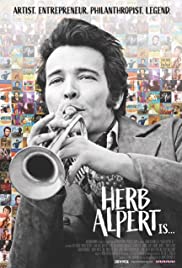
 Greetings again from the darkness. Herb Alpert’s music was played frequently in my home as I was growing up, so I became a fan early on. His impact on the music industry seems not to be celebrated or remembered today the way it should, and documentarian John Scheinfeld seeks to change that with this thorough and detailed look at the man and his career. By the time the end credits roll, we are in awe of not just the musical accomplishments, but also the humanity of Herb Alpert.

The film’s opening sequence shows Alpert working the canvas with a brush. For those who know him only as a trumpet player, this might catch you off guard. In fact, Alpert is quite an accomplished abstract painter, sculptor, musician, producer, businessman, and philanthropist. He’s also consistently described as “humble”, “gracious”, and “kind”. Such is the Herb Alpert we come to know during this nearly two hour profile.

An exploration of his life includes a timeline of events accompanied by interviews with those who know him well: songwriter and composer Paul Williams, Sting, QuestLove, Producer Lou Adler, Burt Bachrach, and journalist Bill Moyers. Additionally, we hear directly from Herb (now 85 years old) and his wife of nearly 50 years, singer Lani Hall. In fact, Ms. Hall-Alpert serves up one of the most insightful descriptions of her husband when she says, “He doesn’t work creatively. He lives creatively.”

Alpert was a working musician from an early age, and things really took off for him after he and Jerry Moss co-founded A&M Records (Alpert & Moss) in 1962. He explains his approach as a record label executive: he listens with his soul, and the music must touch him. That approach made A&M hugely successful, signing such popular and talented acts as Cat Stevens, Carole King, The Carpenters, Peter Frampton, Quincy Jones, Janet Jackson, and The Police, among others.

Beyond that gut instinct, Alpert’s career as a musician was remarkable. He won 9 Grammy’s, had 15 Gold and 14 Platinum albums, and sold over 72 million records. We learn that his Tijuana Brass band outsold the Beatles two to one in 1966, and of course we get to hear such megahits as “The Lonely Bull” (1962), “A Taste of Honey” (1965), “Tijuana Taxi” (1965), “This Guy’s in Love with You” (1968), and “Rise” (1979). We see clips of the band on The Andy Williams Show and The Ed Sullivan Show, as well as some of their early music videos.

Director Scheinfeld has made a nice career of profiling talented folks like: John Coltrane, Harry Nilsson, Bing Crosby, Bob Hope, Bette Midler, Dean Martin, Frank Sinatra, and the Marx Brothers. However, I’m not sure any of his subjects have had the many talents and passions of Herb Alpert. We learn of his commitment to making a positive impact on the world each and every day, and his work as a philanthropist includes resurrecting the Harlem School of Arts, and inspiring those students to reach new heights.

The sale of A&M Records in 1990 to Polygram for $500 million combined with his successful music career has allowed Alpert to continue with his philanthropic pursuits, yet he remains one of the most humble superstars you’ll ever find. In an early sequence, he jokes about sneaking maple syrup into his oatmeal – he says it’s “cheating” his strict diet. We see some early home movies, and Alpert revisits both his childhood school and home, which contrasts with his own show at an elite art gallery. Alpert recounts stories involving Sonny Bono and the great Sam Cooke, and goes back to the old campus of A&M Records (once a movie studio where Charlie Chaplin worked), now the home for the Jim Henson Company.

I’d be remiss in not mentioning (and thanking) Herb Alpert for the greatest album cover of all time: “Whipped Cream and Other Delights”, a visual favorite of so many throughout the years. Herb Alpert had his music played by the Apollo VIII crew, and he recalls with pride that the great Miles Davis once remarked, “You hear 3 notes and you know it’s Herb Alpert.” Despite all the brilliance he’s displayed in his life, Herb is noted for always being “humble and gracious” … and he’s still “the coolest guy in the room”. Not many can supply the soundtrack to their own life story! The film ends with Alpert himself saying he is “very grateful”, and we can only hope he knows that we are the grateful ones.

In theaters and VOD October 2, 2020

watch the trailer


THE GIRL WHO WORE FREEDOM (doc, 2020)

September 29, 2020

Boston Film Festival (2020, virtual)

 Greetings again from the darkness. I watch dozens of documentaries each year, and I always learn something from the best ones. However, I don’t recall ever being so emotional over a documentary as I was while watching this one from Christian Taylor. Ms. Taylor confesses that she always considered herself a proud Patriot (her son serves in the US Army), but this is her film of “the D-Day that changed me” and where she “truly learned about freedom”.

The film initially focuses on Ms. Taylor’s trip to Normandy for D-Day, and she comments on how the progression of the day bounces between “celebration” and “memorial” back-to-back. As the trip unfolds, it becomes something akin to a spiritual awakening for her. She mingles with the French citizens who have such vivid recollections of June 6, 1944. One lady is a particular standout: Dany Patix Boucherie. Dany was a 5 year old child that day 76 years ago, and we see the photograph of her wearing the American flag dress that her mom sewed from parachute scraps. To this day, Ms. Boucherie leads the cheers for the U.S. soldiers who liberated her town and country.

We hear numerous personal stories from French citizens who were either kids at the time of the invasion, or they are re-telling the stories they’ve heard over the years from their friends and families. 20,000 French civilians died so why are they so grateful and respectful to the American soldiers who fought? Well we hear the answer directly from these folks, and the sincerity and heartfelt emotions are surely to hit you hard. At the heart of all the tragedy and destruction is an undeniable truth – the Americans were not there to conquer, but rather to liberate. That’s the French perspective … young Americans arriving in their country and fighting fiercely and courageously to prevent France from falling to the Germans.

We see photographs of displaced French kids eating meals with soldiers at American camps, and smiling kids draped all over massive tanks to have their picture taken. Stories are told of the thunderous and destructive bombings, and of lost parents, but somehow the sadness was turned to gratitude after so many years.

The Utah Beach museum was founded by a man who was shot by Americans. His son tells the incredible story and shows us a clip of the father telling it in his own words. Rather than hold animosity towards those who shot him, he is instead most appreciative and understanding. Director Taylor then follows Florent Plana, who has dedicated his time and energy to meeting with and documenting the stories of WWII veterans. This was yet another segment that was almost too affecting for me to keep my vision clear (if you get my drift).

We watch a memorial service for veteran Jim Reid, who requested his ashes be spread on the sands of Utah Beach. His friends and family, as well as some locals join in for the tribute. Toward the end, we are informed how crucial it is to keep the French kids involved and informed, so that the era doesn’t pass with the last of the survivors. American soldiers are identified as “superheroes”, and even those who have carried guilt all these years, find themselves liberated by the Normandy visit. The French people will have it no other way. The film only touches on the amazing story of General Theodore Roosevelt, Jr, who despite walking with a cane and being the oldest soldier to take part in the invasion (56), led troops onto Omaha Beach. Also included is a brief interview with Helen Patton, General George Patton’s granddaughter. As a finale, we get yet another look at the flag dress of young Dany Patix Boucherie, and as the film comes full circle, our understanding feels more complete. Such a touching tribute to the good that remains in humanity, and it’s a lesson that has remained intact for three-quarters of a century.

watch the trailer:


25 – TONY CONIGLIARO (doc, 2020)

September 29, 2020

Boston Film Festival (2020, virtual)

 Greetings again from the darkness. Fairy Tales traditionally have happy endings so that our kids form an optimistic view of the world. Unfortunately, director John Ippolito brings us a real life baseball fairy tale with a tragic ending. Tony Conigliaro and his brothers Billy and Richie, grew up in Lynn, Massachusetts, just a few miles from historic Fenway Park, and two ended up wearing the Red Sox uniform – only it was Tony that was the legend … the can’t miss prospect who was presumed to be a future Hall-of-Famer.

It’s highly likely that Tony’s Little League baseball coach taught him to play the game “one pitch at a time”. The irony in the lesson here is that a single pitch vaulted Tony into the Major League spotlight, while another pitch (just 3 years later) basically put an end to the fairy tale. We see a clip from April 17, 1964. It’s Kennedy Memorial Day at Fenway Park (the first home game since President Kennedy was assassinated). Nineteen year old Tony Conigliaro swings at the first pitch he sees in the ballpark he worshipped growing up. Famed announcer Curt Gowdy makes the call as the towering Home Run leaves the yard. What an incredible moment for Tony, his family, and the Boston fans.

 Tony C became the youngest AL player to reach 100 career Home Runs, and he was an all-star in 1967, the year his Red Sox faced Bob Gibson’s St. Louis Cardinals in the World Series. Unfortunately for Tony, he didn’t play in that series. On August 18, 1967, when facing the Angels’ Jack Hamilton, a pitch hit Tony squarely in face, shattering the cheekbone below his left eye. Teammates and fans in attendance that day recall the horrifying sound of the collision of ball and bone. The on-deck hitter, Rico Petrocelli and Red Sox pitcher Jim Lonborg (the 1967 Cy Young Award winner) rushed to Tony, who was crumpled in the dirt by home plate. Carted off by stretcher, the next time most saw Tony was the infamous cover of “Sports Illustrated” highlighting his purple eye swollen shut. It was a punch in the gut to see this rising young star in such a state.

Joe Malone (former Massachusetts State Treasurer) is our narrator and host, and he conducts the interviews with former teammates, family members, fans, and New England sports experts such as museum curator Richard Johnson. Each reminisces about Tony and his legendary status as a hometown hero signed by his hometown professional team. Former Red Sox executive Dan Duquette compares Tony C to today’s most exciting young baseball star, Juan Soto, while Luis Tiant, Petrocelli, and Lonborg recall a great teammate and player.

In Boston, 1964 is remembered as the year of The Beatles, Cassius Clay, and the debut of Tony Conigliaro. We learn that he said, “I want to be better than Ted Williams”, and since he remains the youngest AL player to reach 100 career Home Runs, we can’t help but wonder ‘what might have been’. Ippolito’s film is only about 45 minutes long, and along with the piano music courtesy of Sarah Hale Folger, it plays very much like a warm tribute to Tony C’s memory. Very few MLB clips are shown, and we do learn of his 1982 heart attack, subsequent coma, and 8 years of being bedridden before dying in 1990 at age 45. To put that in perspective, another New England sports legend, Tom Brady, is still going strong at age 43).  Tony Conigliaro is the embodiment of “life’s not fair”, and a reminder to take it one pitch at a time.

watch the trailer:


OTTOLENGHI AND THE CAKES OF VERSAILLES (doc, 2020)

September 24, 2020

 Greetings again from the darkness.  Food, art, and history. There may not be a connection at your local McDonalds, but there certainly is among the world’s most renowned chefs. Director Laura Gabbert (CITY OF GOLD, 2015) documents the story beginning with Yotam Ottolenghi receiving an email from the Metropolitan Museum of Art asking him to curate a culinary presentation in conjunction with the museum’s 2018 “Visitors to Versailles” exhibit, covering the years 1682-1789, just prior to the French Revolution.

Ottolenghi is an accomplished chef (with a test kitchen in London), restauranteur, and described as the most influential cookbook author. Born in Israel, he’s our charming and exceedingly intelligent guide through this global process. Ottolenghi toured The Met and Versailles, and explains his rationale for focusing on desserts – a beautiful and colorful symbol of wealth and excess from the era. He then sets out to assemble a pastry “Dream Team” consisting of: Dominique Angel, the French pastry chef who invented the Cronut; Dinara Kasko, a trained Ukrainian 3D architectural design expert-turned-chef who now builds her own 3D molds for food; Ghaya Oliveira, born in Tunisia and now the pastry chef at NYC’s elite Daniel restaurant; Bompas and Parr, the British chefs known for technology and jellies – though only Sam Bompas takes part in the project; and Janice Wong, a Singapore chef who specializes in ‘edible art’.

We learn the inspirations for each of the chefs, from the gardens and fountains of Versailles to the particular flavors of the era. Ottolenghi takes us into the kitchens, as well as allowing access to the strategy sessions with managers at The Met. Ms. Gabbert’s film offers a glimpse at the craftsmanship, creativity, and artistry of these chefs as they work towards the big night. The final presentations are dazzling works of art themselves, and ironically (or maybe not) are enjoyed by the elites in attendance at the event. Marie Antoinette’s beheading may have been ‘a just dessert’ for an era of decadence, but the beauty of what these modern day artists have created is quite something to behold … and a nice respite from the world’s turmoil.

watch the trailer:


ALL IN: THE FIGHT FOR DEMOCRACY (2020, doc)

September 8, 2020

 Greetings again from the darkness. Stacey Abrams is a generational spokesperson, and may very well be the future of the Democrat Party. This despite being recently passed over as Joe Biden’s running mate. Ms. Abrams is a producer on this film co-directed by Lisa Cortes (HIP HOP X FASHION, 2019) and Liz Garbus (nominated for 2 Oscars: WHAT HAPPENED MISS SIMONE?, 2015 and THE FARM: ANGOLA, USA, 1998). She also appears on camera numerous times speaking to us about voter suppression – something which impacted her directly.

The film provides an historical look at the different ways voters have been suppressed and elections manipulated over the years – dating back to 1789, when the film informs, only 6% of the population was eligible to vote: white male property owners. We hear from many historians, authors, politicians, and activists, yet it’s Ms. Abrams who stands out. She takes us through her personal background and describes in detail the influence her parents had on her. We also learn much about the 2016 Georgia Governor’s race, where Ms. Abrams faced off against Brian Kemp. In one of the more startling statistics, we are told that as Georgia Secretary of State, Mr. Kemp purged 1.4 million voters from the Georgia registry.

A true history lesson on voter suppression is provided, with much of the lesson and commentary provided by Ms. Abrams and author Carol Anderson, who wrote the 2018 book, “One Person, No Vote: How Voter Suppression is Destroying Democracy”. We also hear from others, including 88 year old Andrew Young, one of the leaders of the Civil Rights movement, and a former Mayor of Atlanta and former US Ambassador to the United Nations.

So many aspects of United States elections are discussed, and these include the Reconstruction era after the Civil War, the 19th Amendment, President Lyndon Johnson and Voting Rights Act, Gerrymandering, Voter ID requirements, Poll taxes and literacy tests, and the landmark 2013 case, Shelby County v Holder, resulting in a US Supreme Court decision that has impacted voter access. We see clips of the 30th anniversary of the Walk across the Edmund Pettus Bridge in Selma, Alabama, and it’s clear Civil Rights and Voting Rights are forever bound.

The documentary is important as it connects history with the modern day issues resulting in voter suppression. Ms. Abrams and Ms. Armstrong are vital voices on a topic that should have been laid to rest many years ago; yet as long as the thirst for political power exists, manipulation of the system will be attempted. So, it’s important that every citizen understand how this happens and what to be aware of.

Premieres at Telluride Film Festival September 2, 2020 and in select theaters on September 9, 2020, and on Amazon Prime beginning September 18, 2020

watch the trailer: