Greetings again from the darkness. The previous movie version of William Shakespeare’s play “Much Ado About Nothing” was directed in 1993 by Kenneth Branagh, who also directed Thor (2011). This modernized, much simpler version is directed by Joss Whedon, who also directed The Avengerslast year. It’s difficult to imagine a more oddball movie symmetry than that! Whedon’s production plays almost like a home movie, and in a way it is. Filmed at the director’s Santa Monica house with a cast featuring mostly a close group of his friends … those that frequently gather for Shakespeare dinner parties … this one exudes a certain joy and love of the material from all involved, with a live theatre feel.
I have always been more attracted to Shakespeare’s comedies than his more famous tragedies. His startling wordsmithing is always filled with an edge and is borne of real personalities we all recognize. Combine that with director Whedon’s love of rapid-fire, wise-cracking dialogue and we get something from the ilk of Preston Sturges or Howard Hawks screwball comedies.
The banter and battle of wits between Beatrice (Amy Acker) and Benedick (Alexis Denisof) are at the heart of the story. Their flirtations are recognizable as two who doth protest too much … as if it could hide their mutual attraction. In one of the most pure comedic roles from the pen of Shakespeare comes Dogberry, the detective on the case of the dark conspiracy occurring right under the noses of most characters. Nathan Fillion(“Castle”) plays Dogberry in such a manner that he steals every scene in which he appears … both verbally and physically. He provides some laugh out loud moments.
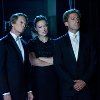
You will recognize some of the others in Whedon’s acting troupe: Reed Diamond plays Don Pedro, Clark Gregg as Leonato, and Fran Kranz as Claudio. Newcomer Jillian Morgese plays Hero, the falsely-accused bride-to-be, whose misfortunes lead to the great Dogberry scenes.
The temptation here is to say that a very entertaining movie can be made simply, cheaply and quickly (12 days filming). Of course, as wonderful as Amy Acker is, the real star is the story and words from William Shakespeare … even in this modernized setting. As we all know, “A rose by any other name would smell as sweet”. Whedon and his cronies prove this. I’m not sure this is the best indoctrination to Shakespeare, but I believe only the most traditional of Shakespeare devotees will not find some joy in this version.
SEE THIS MOVIE IF: you are a fan of The Bard and enjoy seeing varying visual interpretations of his fantastic work
SKIP THIS MOVIE IF:you are the firm traditionalist who believes Shakespeare only belongs on stage or on paper
Greetings again from the darkness. All the critics are raving about it. Love abounds for the latest from director Noah Baumbach and his co-writer and leading lady Greta Gerwig. What makes my ambivalence even more confounding is that I’m a fan of Baumbach (The Squid and the Whale) and Gerwig (Greenberg). The expert level of filmmaking and acting is obvious, the script details and dialogue are exceptional, and the situations and setting are realistic. So why aren’t I more excited about this one? That’s what I’ve spent the past few days wondering.
It seems Frances Hadelivers everything I look for in an indie film. The problem is that I find almost every character to be annoying and self-absorbed. The first act finds Frances (Gerwig) sitting on top of the world. She has a boyfriend, a BFF/roomie, and is a dance company apprentice with the expectation of a dance career. Soon enough she watches Strike Three go by and her world is in a tailspin. We then watch Frances trudge on through uncertainty and instability in living arrangements, personal relationships and career path. It plays like a road trip that really never hits the highway.
Frances moves in with Lev (Adam Driver) and Ben (Michael Zegen) and she is oblivious to Ben’s interest as she obsesses about her former BFF Sophie (Mickey Sumner). See, Sophie is trying to grow up while Frances wants to stay in her dream land where she and Sophie remain “the same person with different hair“. Frances then crashes at the apartment of a fellow dancer played with all seriousness by Grace Gummer (Meryl Streep’s daughter). The two dancing opposites attend an awkward dinner party at which Frances manages to spew an endless stream of absurd remarks that advertise her lack of maturity. Her response to this is to take a spontaneous trip to Paris … charged to a new credit card.
Make no mistake. Frances is a very energetic and sincere free-spirited twenty-seven year old. The kind that is only charming in the movies. If her quirk wins you over, you will find yourself rooting for her to get her life together. That would put you in the same corner as most other film critics. On the other hand, if you recognize the optimism, but are unmoved by the immaturity and self-absorption, then you are banished to the corner of those who “just don’t get it”. And I’ll be right there with you.
SEE THIS MOVIE IF: you can revel in the quirky world of Greta Gerwig and Noah Baumbach and find joy in a flirtateous take on Lena Dunham’s “Girls”
SKIP THIS MOVIE IF: annoyingly self-centered people talking a lot about themselves and other things of which they know little, inspires you to request a refund.
Greetings again from the darkness. As I sat in a theatre with approximately 80 others, it took me awhile to realize that the only audible laughs were coming from a couple of teenagers near the back. Until that point, I had just assumed that my grumpy old man syndrome had reared its head as I managed only a couple of chuckles.
The best comparison I have for this “comedy” from director Don Scardino (“30 Rock”) are the Will Ferrell sports-themed spoofs Blades of Gloryand Semi-Pro. If you found those to be hilarious, then this one might provide you some laughs. Rather than picking on a sport, the movie focuses on the world of Las Vegas magic shows … big-budget stage productions (David Copperfield, Siegfried & Roy) vs. streetwise illusionists (Criss Angel, David Blaine).
Childhood friends Albert and Anton evolve into Vegas superstars Burt Wonderstone (Steve Carell) and Anton Marvelton (Steve Buscemi). The influence of Siegfried and Roy are obvious, right down to the costumes, hair and tans. After 10 years of the exact same act, Wonderstone is a pompous womanizer who cares little for the magic act, and Anton is the epitome of the invisible sideman. Casino owner Doug Munny (James Gandolfini) threatens to end the act if the duo doesn’t come up with something new to compete against the daring and popular street illusionist Steve Gray (Jim Carrey).
Gray’s “Brain-rape” act is supposed to compare to Criss Angel’s “Mind-freak”. Instead, Gray comes across more like cheap reality TV with masochistic tendencies. Of course, Burt and Anton collapse under the pressure and their friendship and act splatters to a painful end. Burt spirals out of control and ends up performing in a nursing home … a fortuitous turn that introduces him to his childhood idol (Alan Arkin).
All you really need to know is that this comedy offers few laughs and only shows a pulse when Arkin and Carrey are on screen. Carell seems miscast as a pompous womanizer, so neither trait plays particularly well. Additionally, his bounce back is not believable since his rock bottom lasts about 30 seconds. Buscemi’s only real gag is his poke at celebrity humanitarian crusades. Otherwise, he and Olivia Wilde are bystanders with little to do, which is a shame. Really would have liked to see Carrey’s character with a better, more believable act so that the rivalry might have proved more interesting.
There is an underlying message of friendship and maintaining a passion, but this is no message movie. Heck, it’s barely even a comedy … unless you are one of those teenagers in the back row.
SEE THIS MOVIE IF:you long for a glimpse of the past from Jim Carrey or the scene-stealing wonder known as Alan Arkin
SKIP THIS MOVIE IF: you are seeking an insightful, funny comedy that takes advantage of a strong cast
Greetings again from the darkness. It’s been more than a decade since writer/director Don Coscarelli added quirky humor to his toy box with the wonderful Bubba Ho-Tep. Previously Coscarelli was known for his classic horror franchise that started in 1979 with Phantasm (and three sequels). Coscarelli has a real knack for oddball humor and along with the source material from David Wong’s book, he delivers a comical, cross-dimension, alternative universe, “alien”-fighting, time travel buddy film that draws recollections to Men in Black 3, Big Trouble in Little China, and Bill & Ted’s Excellent Adventure.
Coscarelli has had his opportunities to join “big budget” Hollywood, but has always chosen to remain true to his roots in horror/fantasy for his loyal followers, resulting in many cult films and midnight movie favorites. In this newest story, Dave (Chase Williamson) and John (Rob Mayes) are slacker buddies who end up feeling the effects of a new street drug called soy sauce. The story is told in semi-flashback form as Dave meets with a reporter played by the great Paul Giamatti. As Dave tells the story, we get the visuals as if they were currently happening. This works because it’s never really clear when we are in the present, past or future.
This is one big fun and entertaining ride if you let it be. Terrific characters are provided by Clancy Brown (Shawshank Redemption) as Marconi, some type of powerful mystic (or something else); Glynn Turman as a relentless, yet beaten down detective; Doug Jones (Pan’s Labrynth) in yet another creepy role; and Fabianne Therese as Amy, whose missing limb plays a vital role.
Further analysis would prove meaningless as the sole purpose of this film is to entertain and engage. It’s escapism at its finest and yet another creative gem from Don Cascarelli.
**NOTE: cult favorite Angus Scrimm does make an appearance as a “Priest”
**NOTE: special thanks to Paul Giamatti who not only appears in the film, but also produced. Gotta love when a major star keeps the “little” films alive.
SEE THIS MOVIE IF: you are a fan of Bubba Ho-Tep OR you are open to quirky, alt-universe fantasies
SKIP THIS MOVIE IF: the “Men in Black” movies are as far out as your imagination prefers to venture
Greetings again from the darkness. Any movie lover with a sense of history has to get at least a little excited hearing about a star vehicle featuring Al Pacino, Christopher Walken, and Alan Arkin. These three screen legends together prove the adage … worth the price of admission. And that’s a good thing, because there is little else that works for this movie.
The movie unfolds like a tribute to its three stars. That’s not a compliment. First time screenwriter Noah Haidle and character actor-turned director Fisher Stevens simply lack the chops to provide material worthy of the cast. So we get Pacino doing a Tony Montana growl and A Scent of the Womandance; Walken doing his deadpan delivery and even a quick little soft shoe; and Arkin falls back into his half-crazed,moment-seizing act. What we don’t see is a story line that pushes any of them to a “wow” moment.
Pacino plays Val, and we meet him on the day of his release after 28 years in prison. He’s picked up by Doc, his old partner in crime, or crime partner if you prefer (played by Walken). There are a couple of not so secrets twists that try to keep it interesting, but the best part comes when they spring their old driver Hirsch (Arkin) from his nursing home and oxygen mask.
The night on the town allows for plenty of female interactions: a brothel run by Lucy Punch, a nurse played by Julianna Marguiles, another brothel visit, revenge for a female victim played by Vanessa Ferlito, and multiple chats with a young diner waitress (Addison Timlin). Unfortunately, this big night also provides entirely too much consumed alcohol, numerous penis jokes, an extended (so to speak) Viagra sequence and attempts at laughter thanks to hyper-tension and insurance co-pays.
The old guys do their best to uphold the code from the good ol’ days – both as gangsters and actors. It’s just inexcusable that the script wasn’t improved to take advantage of this talent. Despite that, there was a certain sense of nostalgia that proved enjoyable watching these guys on screen together.
SEE THIS MOVIE IF: for no other reason than the nostalgia of seeing Pacino, Walken and Arkin on screen together.
SKIP THIS MOVIE IF: you don’t share my sense of nostalgia and prefer movies that have a script worthy of the cast and your time
Greetings again from the darkness. The latest entry into the gray cinema genre is also the directorial debut of Dustin Hoffman. Oddly, Mr. Hoffman chose a British play for his first film. Ronald Harwood adapted his own play for the big screen and it certainly benefits from some giants in the acting world.
Beechum House is a retirement home for retired musicians and performers. It’s a beautiful home with a stunning property ideal for long nature walks, croquet or simply taking tea on the patio. Many details of the movie probably worked better on stage, but Tom Courtenay, Billy Connolly, Maggie Smith and Pauline Collins are wonderful as renowned singers famous for their rendition of Verdi’s “Rigoletto”.
In a convoluted plot mechanism, Beechum House needs a cash infusion to keep its doors open, and the answer comes from a hoped for reunion of the above mentioned quartet in this year’s fundraising gala. Convoluted seems like the right word because, of course, the house gets “saved”, but there can’t be more than 50 people in the audience … some of which are the students Mr. Courtenay teaches in his music class. It seems doubtful this crowd would have generated enough money to save the house from financial ruin.
Anyway, this isn’t meant to be an in-depth character study. It’s just a simple, sentimental, and even sweet story of some aging, talented performers who are struggling with the pains and insecurities of old age. Michael Gambon wonderfully captures the pomposity of a once-great director who still thrives on what little power can be grasped at Beechum House.
This one is not near the level of last year’s The Best Exotic Marigold Hotel, though it’s enjoyable enough for light-hearted and well-meaning entertainment. The gala also features a wonderful aria performed by famed opera singer Gwyneth Jones. Take this one for what it is … a pleasant movie experience.
SEE THIS MOVIE IF: a pleasant, light-hearted movie with likable characters is what you are after
SKIP THIS MOVIE IF: you are seeking something with a bit more insight into the aging process
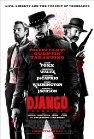
Greetings again from the darkness. Well, after two viewings and endless analyzing, it’s time to commit thoughts to the page. Over the years, it has become very clear that a Tarantino movie generates a first reaction, and then proceeds to slither through your mind and morph into something else entirely. It would be very easy to accept this latest as an outrageous peek at slavery disguised as a spaghetti western. For most filmmakers, that would be plenty. The “whole” here is exceedingly impressive, but the real joy for cinephiles is in the bits and pieces.
One need not be a Quentin Tarantino expert to enjoy his movies, but there are a couple of things that help. First, he is at heart, a true lover of cinema and quite the film historian, showing sincere respect to the pioneers of this art form. Second, he loves to bring visibility to issues (large and small) by poking a bit of fun at the evil doers who wield unnecessary influence and control over weaker parties. Morality, vengeance, revenge and come-uppance invariably play a role in his story-telling … a bonus this time is the inclusion of the Brunhilde/Siegfried legend from Norse mythology and the Wagner operas.
In his two most recent films, QT has been on a kick for creative revisionist history. Inglourious Basterdsmade a strong statement against the Nazi’s, while this latest goes hard after slave owners. As you might expect, historical accuracy is less important to him than are the characters involved and the tales they weave. And to that point, it seems quite obvious that where in the past, Tarantino would center his attention on crackling dialogue and searing one-liners, he now offers up much more complete characterizations … these are people we understand, even if we don’t much like them.
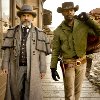
The obvious love he has for Sergio Corbucci and Sergio Leone, the driving forces behind spaghetti westerns, is plastered on the screen. We even get the beautiful camera work through the snow as a tribute to Corbucci’s The Great Silence(1968). While this is not a remake or sequel or prequel, Franco Nero’s “I know” response to “The D is silent” generates a laugh and memories of a 25 year old Nero in the titular role of Django (1966). The Blaxploitation genre plays a significant role here as well since JamieFoxx plays Django, a freed slave who buddies up with a German dentist-turned-bounty hunter, so that Django can get revenge on those responsible for the torture and mistreatment of his wife.
The details of the stories will not be exposed here, however, I would encourage you to pay close attention to the moments of film brilliance. There is a running gag with townspeople and slaves alike struggling to accept the sight of Django on a horse. You’ll laugh again when Django is offered the opportunity to pick out his own clothes and we next see Foxx in a velvet Little Lord Fauntleroy outfit straight out of The Blue Boy painting from Gainsborough. There is hilarious banter between Big Daddy (Don Johnson) and Betina as he tries to give guidance on how to give Django a tour of the plantation. The phrenology sequence is not just unusual, but an incredibly tense scene and fun to watch. Watching the final shootout reminds me of Peckinpah’s The Wild Bunch… only ten times as violent!
Some of the best moments occur when we recognize the actors in the vital foundation scenes. Don’t miss: bad guy Bruce Dern, Don Stroud (the drummer in The Buddy Holly Story) as the ill fated sheriff, Tom Wopat as a patient Marshal (“Dukes of Hazzard”), father and daughter Russ and Amber Tamblyn, Jonah Hill who struggles with the eye holes in his “bag”, the eyes of Zoe Bell, Ted Neeley (Jesus Christ Superstar), “Dexter” dad James Remar in two roles, Walton Goggins as a gunslinger, Michael Parks (multiple roles in Kill Billand Grindhouse), and of course, Mr Tarantino himself (as an explosive cowpoke from down under).
While each of these provide wonderful moments, the real bingo occurs courtesy of the main performances of Jamie Foxx (Django), Christoph Waltz (Dr King Schultz, bounty hunter), Leonardo DiCaprio (Calvin Candie, plantation owner), and Samuel L Jackson (Stephen, Candyland house slave). Any combination of these characters in any scene could be considered a highlight. It’s especially enjoyable to see DiCaprio cut loose after so many uptight characters recently. Samuel L Jackson has long been a Tarantino favorite, and his delivery as the diabolical Uncle Tom house slave who has some secrets of his own, will bring the house down when he first sees Django and, in a much darker way, when his suspicions are confirmed. Power is a big player in the story, and even as a slave, Stephen knows what to do with power when he has it. Mr. Waltz won an Oscar for his Inglourious Basterdsperformance, and his dialogue here is every bit as rich. It’s obvious how much Tarantino enjoys hearing his words spoken by Waltz. Foxx’ performance could be easily overlooked, but it’s actually the guts of the film. He is quiet when necessary and bold when required.
We must also discuss the soundtrack. Franco Migiacci‘s original “Django” theme is featured, as are classics and a new song from the great Ennio Morricone. If you doubt the originality of the soundtrack, try naming another western that utilizes a mash-up of James Brown and Tupac Shakur. How about a spot-on use of Jim Croce’s “I’ve Got a Name”? The film is beautifully shot by Robert Richardson, and Fred Riskin takes over for Tarantino’s long-time editor Sally Menke, who sadly passed away in 2010.
It should also be noted that the script puts hip-hop to shame by using the “N-word” more than 100 times. It is a bit disconcerting, and you can google Spike Lee’s comments if you care to read more on the topic. Otherwise, dig in to the latest gem from Tarantino and appreciate his approach and genius … either that, or stay away!
**NOTE: I have purposefully avoided the scandal associated with the film. If you are interested in reactions from the African-American community, there is no shortage of published reports on those who support the film and those who are outraged.
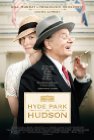
Greetings again from the darkness. It’s a bit of a curiosity why the only four-times-elected US President has been portrayed so few times on screen. Without putting much thought into it, the most memorable non-documentary occurrence may have been by Jon Voight during Michael Bay’s Pearl Harbor. Bring on Bill Murray as Franklin Delano Roosevelt during the 1939 first ever US visit by British monarchs … King George VI(“Bertie” played by Samuel West) and Queen Elizabeth (Olivia Colman) … and the stage is set for a behind-the-scenes political tale of the “social” meeting that led to the US and England joining forces in WWII. Unfortunately, that’s not really what we get.
Director Roger Michell (Morning Glory, Venus) and noted playwright and screenwriter Richard Nelson (Ethan Frome) just can’t seem to make up their mind which story they want to tell. Is it the historical meeting between FDR and the King? Is it the fling between FDR and his 6th cousin Daisy (Laura Linney), whose relationship was uncovered through the diaries and letters left behind when she passed in 1991? Is it the ongoing manipulations by Mrs Roosevelt (FDR’s mother, played by Elizabeth Wilson) and the cagey Eleanor (Olivia Williams)? Is it a political statement that all powerful men have insecurities and needs? The film is narrated and mostly told through the viewpoint of Daisy, a local 47 year old spinster, who gets dragged wide-eyed into the FDR mayhem. Mrs Roosevelt, Eleanor and FDR’s assistant Missy (Elizabeth Marvel, The Bourne Legacy) all understand the President’s reason for allowing Daisy into their inner sanctum. Daisy, a bit slow on the take, learns why once FDR stops the car in a meadow during one of their private, scenic drives. The running story of Daisy is probably the least interesting within the film, and it often deflates whatever momentum might get started.
The best and most interesting portion involves the private meeting between FDR and the King that takes place in the study after hours. The two bond as men who are in positions of power, share the same insecurities, and who both curse their afflictions … the King and his stuttering, and the President with his polio. The best line of the film occurs during this meeting when the President asks “Can you imagine the disappointment when they find out what we really are?” It’s a reminder that all great men are just that … men.
This barely qualifies as a historical drama, and the far more interesting personal topic (rather than Daisy) would be the ongoing power struggle between Eleanor and Mrs Roosevelt. FDR does have to remind them that HE is the President! There is acknowledgment of Eleanor’s sexual preference, as well as her acceptance of FDR’s extra-marital desires and needs.
Much is made of the famous American picnic where the King and Queen are served hot dogs, and this story highlights the Queen’s paranoia that this is yet another slap in the face meant to dishonor their presence. In fact, it is presented as a shrewd move by FDR to introduce the British royalty as people to be embraced by the American public.
It must be noted that though the film plays much like a made for TV movie, Bill Murray does a solid job portraying FDR as a man filled with humor, mischief and in full command of the burden he carries. His need for “me” time is understandable and his agreement with the press photographers explains why so few pictures exist of his wheelchair or other challenges in living with the polio. Unfortunately, the film just doesn’t keep up with Murray’s performance or with the powerful subject he portrays. Sound familiar Mr. Voight?
**Note: stay for the credits and see footage of the infamous “hot dog picnic”
SEE THIS MOVIE IF: you enjoy Hallmark-style movies dwelling on interpersonal relationships OR you still need proof that Bill Murray is a legit actor.
SKIP THIS MOVIE IF: you are looking for a historical drama centered around Franklin Delano Roosevelt
Greetings again from the darkness. The film is exactly what you would expect from a screwball romantic comedy steeped in drama based on bipolar disorder, depression, OCD, Philadelphia Eagles fanatics, a ballroom dancing contest, adultery, Hemingway, and a lead character who jogs while wearing a trash bag. Maybe not exactly what you would expect, but likely much more.
If you were told instead that the story is based on two damaged souls who help heal each other through dancing, you would have every reason to skip this one. However, as written and directed by David O Russell (The Fighter) and based on Matthew Quick‘s novel, this story is a frenetic, emotional roller coaster ride that provides a glimmer of hope for the two damaged lead characters, while reminding that each of us may be a bit off-center in some way. Now add in the best young actress working today (Jennifer Lawrence just turned 22), a rare performance from Robert DeNiro where he seems fully engaged, a pulling back the curtain on Bradley Cooper as much more than a pretty face, and one of the best and most pointed soundtracks in recent history …and you have one of the best films of the year.
What you notice very early on is that what could be considered a trite story line, is instead pounding you with sharp, witty dialogue that pulls no punches in directness. The many aspects of family and emotional support are given time thanks to Pat (Bradley Cooper) being released after 8 months in a mental institution. He was sent there when he snapped after finding his wife in a compromising position with another man. Perfectly understandable if you ask me, but clearly he is the explosive one despite his claims to the contrary. An uncomfortable dinner party introduces him to Tiffany (Ms. Lawrence) whose husband has recently died and her coping skills have been shared with most of those in her workplace. This odd couple spark immediately and the wild ride begins.
Pat’s wife Nikki (Brea Bee) has issued a restraining order and his strategy to win her back consists of a positive attitude and maintaining control of his emotions. His supporters include his mother (Jacki Weaver, who was so great in Animal Kingdom), his OCD father (DeNiro) who so wants to re-connect with his son, his friend (John Ortiz) whose own marriage (to icy Julia Stiles) is a messy mess, his buddy from the asylum (a funny and not over the top Chris Tucker), and of course, Tiffany. The only real problem is that each of these supporters are teetering in their own way – just like Pat.
The brilliance of this movie is the balance struck between the near violent emotional outbursts and the sharp, exacting words spouted by each of the characters. Director Russell once again shows his flair for working class northeasterners. He understands these tough as nails people who wear their emotions on their sleeves. These people are as likely to punch you as hug you … both being acts of love.
The soundtrack deserves special mention. It is very unique and varied, with each song serving an exact purpose. Especially keen are Stevie Wonder’s “My Cherie Amour”, Led Zeppelin’s “What is and What Should Be”, and “The Girl from the North Country” a Bob Dylan and Johnny Cash duet. When the music strikes a harmony with the scene, the movie is all the stronger. Rarely do we get the perfect storm of script, direction, acting, music and relevance.
SEE THIS MOVIE IF: complex relationships between characters facing life’s daily battles carries a certain artistic symmetry for you OR you just want to see acting of the highest quality led by a fabulous Jennifer Lawrence, a resurgent Robert DeNiro and a surprisingly talented Bradley Cooper
SKIP THIS MOVIE IF:you prefer your Rom-Com’s to be lightweight and light-hearted for easy laughs
DR. STRANGELOVE OR: HOW I LEARNED TO STOP WORRYING AND LOVE THE BOMB
Greetings again from the darkness. Difficult to decide if it’s more shocking that this film is almost 50 years old, or that it ever got released in the first place. No other black comedy satire on such a sensitive political issue has ever had its theatrical release right smack dab in the middle of the ongoing issue. The cold war between Russia and the US was in high gear and the Cuban Missile crisis had just occurred. In fact, President Kennedy’s assassination caused the film’s opening to be delayed.
Stanley Kubrick only directed eleven feature length films, and ten of them can be considered classics (A Clockwork Orange, 2001: A Space Odyssey, The Shining, to name a few). Dr. Strangelove is regarded as one of the greatest comedies of all-time, though it’s difficult to imagine anyone under 30 really “getting” much of the humor – unless they happen to be a history buff. The movie could come across as one big “inside joke” to those unfamiliar with the times.
Loosely based on Peter George‘s “Red Alert” novel, Kubrick decided to take the source material and turn it into satire. He brought in Terry Southern (“The Magic Christian”) to help with the script, and then he turned the incomparable Peter Sellers loose in 3 roles (originally 4, but he broke his leg and gave up the Commander King Kong role). Stories abound with Sellers causing multiple takes and significant editing due to his ad-libbing cracking up other cast members (and even Kubrick).
The structure of the film involved three separate, yet intertwined sequences. We see Burpelson Air Force Base Commander General Jack D Ripper (Sterling Hayden) issuing the order to Group Captain Mandrake (Sellers) to lock down the base. It turns out, Ripper has gone a bit loony and somehow issued the strike first command against Russia. Mandrake spends much of this segment trying to calmly obtain the Recall Codes from Ripper. We also meet the crew of one of the multiple B-52 bombers in route to Russia. Led by Commander “King” Kong (Slim Pickins), they are on the way to deliver two nuclear bombs. One of his crew is played by James Earl Jones in his screen debut. Lastly we go inside the War Room where President Merkin Muffley (Sellers) is meeting with his Joint Chiefs of Staff and advisors. A key player here is General Buck Turgidson (George C Scott) in full kill and be killed mode.
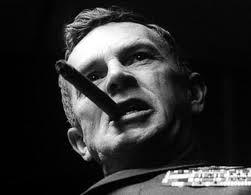
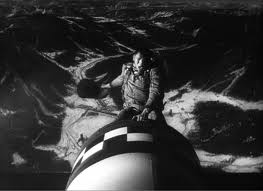
There are so many interesting bits to discuss, but let’s limit to just a few. Watch the camera angles that Kubrick uses to film Hayden. He is made to look both powerful and nuts. Hayden (so great in Kubrick’s The Killing) has the voice and tough guy stance to make us believe he could start a war due to a Russian plot to pollute the “precious body fluids” of Americans. Sellers plays two roles in the War Room, but his straight man performance as the President allows George C Scott to really shine in one of his few comedic turns as an actor. Scott’s performance is somehow over the top AND right on the button (so to speak). When watching Slim Pickins in the iconic final image, keep in mind that he was a real life rodeo cowboy prior to breaking into acting.
Obviously the character names are outlandish (Keenan Wynn plays Col. Bat Guano), but it should be noted that the character of the President was based on real life politician and Presidential candidate Adlai Stevenson. The General Turgidson character is based on real life General Curtis LeMay who was infamous for his kill ’em first attitude. Also, General Ripper was based on General Thomas S Power, who was LeMay’s protégé and ultimate replacement as Joint Chief of the Air Force. It should also be noted that Tracy Reed is the only female character who appears … and yes, that is her in the Playboy magazine that Commander Kong is perusing.
There are so many classic lines and sight gags in the film that it’s challenging to keep up on the first viewing. Also, it’s been a few years since a pay phone and coke machine played such vital roles. When Kubrick killed the original pie fight ending, he added more frightening images and the poignant closing song – “We’ll Meet Again” by Vera Lynn. Director Sidney Lumet did a film version of this same basic story told in a straight-forward and thrilling manner. His Fail-Safewas released less than a year after Dr. Strangelove.
**NOTE: While it’s now common to refer to the film as “Dr. Strangelove”, the actual title is Dr. Strangelove or: How I Learned to Stop Worrying and Love the Bomb. It is the longest title of any film nominated for a Best Picture Oscar. The film received four total nominations, but it turned into the year of My Fair Lady(Best Picture), George Cukor (Director), and Rex Harrison (Actor).
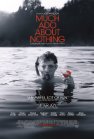 Greetings again from the darkness. The previous movie version of William Shakespeare’s play “Much Ado About Nothing” was directed in 1993 by Kenneth Branagh, who also directed Thor (2011). This modernized, much simpler version is directed by Joss Whedon, who also directed The Avengers last year. It’s difficult to imagine a more oddball movie symmetry than that! Whedon’s production plays almost like a home movie, and in a way it is. Filmed at the director’s Santa Monica house with a cast featuring mostly a close group of his friends … those that frequently gather for Shakespeare dinner parties … this one exudes a certain joy and love of the material from all involved, with a live theatre feel.
 always filled with an edge and is borne of real personalities we all recognize. Combine that with director Whedon’s love of rapid-fire, wise-cracking dialogue and we get something from the ilk of Preston Sturges or Howard Hawks screwball comedies.
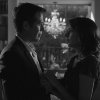 You will recognize some of the others in Whedon’s acting troupe: Reed Diamond plays Don Pedro, Clark Gregg as Leonato, and Fran Kranz as Claudio. Newcomer Jillian Morgese plays Hero, the falsely-accused bride-to-be, whose misfortunes lead to the great Dogberry scenes.


 Posted by David Ferguson






















 Movie Reviews from the Dark