THUNDERBOLT AND LIGHTFOOT (1974) revisited

September 10, 2016

thunderbolt Greetings again from the darkness. The 1970’s brought a wave of new filmmakers who not only changed the way films were made, but also the type and style of stories for the big screen. Due to the abundance of interesting movies from this era, it’s easy to see how, over time, a few gems can slip and fall into the ‘forgotten’ category. One of these is this personal favorite from the infamous writer/director Michael Cimino, who passed away just a couple of months ago (July 2016).

The opening shot has a car in the distance kicking up dust on a country road as it approaches a small rural church seemingly plopped in the middle of pasture. Once parked, the driver of the car steps inside the church and begins spraying bullets throughout the intimate wooden structure – his target being a bespectacled slow talking preacher played by Clint Eastwood who ducks out a side door.

As you might guess, John Doherty, nicknamed The Thunderbolt, (Eastwood’s character) is no real preacher. The man shooting at him is one of his old partners in crime, and he’s seeking revenge on Doherty for stealing the gang’s money from their last job. While Eastwood is dodging bullets in the pasture, a young wise-cracking Jeff Bridges is stealing a car from a local dealership. In short order Bridges (Lightfoot) has run over the guy shooting at Eastwood, and Clint is hanging onto the car for dear life as Bridges speeds off. And that’s how this inauspicious titular partnership begins.

What follows is a blend of buddy flick, road trip and heist movie. It’s spiced up with Thunderbolt’s other partners (played by George Kennedy and Geoffrey Lewis) first chasing them down, and then reluctantly agreeing to partner up again to repeat their previous robbery. In the process, we travel through Hell’s Canyon along the Snake River in Idaho and listen to a lot of tough talk between the four key players. Kennedy’s character is especially hard on the young Bridges, and that’s what kicks off the pseudo father-son relationship at the core of the film – tough guy and loner Thunderbolt genuinely grows to like the fast-talking Lightfoot, who manages to quell a bit of Thunderbolt’s world weary bitterness.

The dialogue is filled with put-downs, smack-downs and threats, and is accompanied by some unusual visuals. In addition to the stunning countryside, seeing Kennedy and Lewis co-occupy a small ice cream truck is itself entirely worth the effort of tracking this one down. But that’s not all … how about Jeff Bridges in full dress, wig, heels and make-up? It’s all for his part in the heist, but it certainly nails down the closeness of he and Eastwood and they hide as a couple at a drive-in movie theatre … that is, until they are forced into a high-speed chase scene over the familiar speed humps that anyone from the drive-in era will recall. We also get the colorful wardrobe – Eastwood and Bridges spend much of the film in disco-type clothes stolen from the back of a car. Other standout visual moments include a woman on a motorcycle using a hammer to pound on Bridges’ van while both are driving over a bridge; comedian Don Rickles on TV; and a woman exposing herself to Bridges through a sliding glass door as he works his manual labor job.

These fabulous moments all fit perfectly into 1970’s cinema and are courtesy of the terrific cast, as well as the vision of writer/director Michael Cimino in his first feature film. Cimino’s story is the ultimate fall-from-grace. As a Yale graduate, he became a Madison Avenue advertising star with his unique and creative TV commercials. His script polishing of Magnum Force (the second Dirty Harry movie) so impressed Eastwood, that it led to the two collaborating on Thunderbolt and Lightfoot. With the success of this first film, Cimino moved on to the Vietnam picture The Deer Hunter, released in 1978. That film won 4 Oscars including Best Picture and Best Director (for Cimino). This propelled him to the top of the Hollywood mountain, and the rare opportunity for full control of his next project. The result was the legendary critical and box office flop Heaven’s Gate. It’s the flop by which all others are measured, and very nearly destroyed United Artists (a studio founded in 1919 by Mary Pickford, Charlie Chaplin, Douglas Fairbanks and DW Griffith). Cimino’s reputation and career never fully recovered and though he only made five more films, he did write two successful novels. Upon hearing of his passing, many of those he worked with had nothing but praise for Cimino as a writer, director and artist … especially Eastwood and Robert DeNiro.

Even casual movie watchers are somewhat familiar with the long (more than 60 years) and decorated career of Clint Eastwood. His impact on the entertainment world has come via acting, writing, directing, producing and composing. He has won four Oscars (two each for Million Dollar Baby and Unforgiven), while being nominated eleven times. His last acting role was Trouble with the Curve (2012), but he continues to direct films … including the recently released Sully, with Tom Hanks playing Captain Chesley Sullenberger who piloted the “miracle on the Hudson”. Eastwood’s big break came with the TV show “Rawhide”, which led to the spaghetti westerns of the 1960’s, and then to the 1970’s-80’s tough guy and action star Dirty Harry, before mixing in action/comedy with Every Which Way But Loose (1978) and the like. Although he continued to act, it seemed Eastwood’s passion lay behind the camera, where he has been able to make the films he wanted and include some of his personal views (not always popular with the Hollywood elite). Given the two high profile lawsuits, he probably wishes he had never met Sondra Locke, but Eastwood’s influence and legacy stretches across decades and multiple genres in the movie world.

In 1974, Jeff Bridges was still known mostly as the son of Lloyd Bridges, though he had also made a name for himself with a Best Supporting Oscar nomination for The Last Picture Show (McMurtry, Bogdanovich, 1971). As Lightfoot, Bridges dons leather pants and a brash attitude while flaunting his acting style of just making everything look so darn easy … and receiving another Best Supporting Oscar nomination. Since then, Bridges has received Oscar nominations for Starman (1984), The Contender (2001), True Grit (2010) and of course for his Oscar winning performance in Crazy Heart (2009). Beyond these, Bridges has brought life to some incredibly unique and interesting characters: Kevin Flynn/Clu in Tron (1982), former NFL’er Terry Brogan in Against All Odds (1984), Preston Tucker in the underrated Tucker: The Man and his Dream (1988), with brother Beau in The Fabulous Baker Boys (1989), another lost gem The Fischer King (1991), the “highly” popular Dude in The Big Lebowski (1998), the suspicious neighbor in Arlington Road (1999), Tony Stark’s nemesis Obadiah Stone in Iron Man (2008), and most recently as the retiring Texas Ranger in Hell or High Water … one of the best films of 2016. And yes, he did appear in Cimino’s Heaven’s Gate.
george-kennedy In addition to Eastwood and Bridges, another key to why the film works is the presence of George Kennedy as Red, the grumpy, burly, hayfever-stricken guy who trusts no one. Prior to acting, Kennedy served under General George S Patton and was awarded 2 bronze stars. Like Eastwood, he broke in during the era of Westerns and moved on to tough guy roles in the 1960’s. The difference, of course, was that Eastwood was one of the biggest movie stars on the planet, while Kennedy was simply one of the best character actors in Hollywood history. He won a Best Supporting Oscar for his memorable work opposite Paul Newman in Cool Hand Luke (1967). In the 1970’s Kennedy appeared in the popular disaster films (the “Airport” franchise, Earthquake, etc), before turning his career on its ear by jumping into the Naked Gun spoof films. Never one to shy away from work, whether TV or movies, Kennedy appeared in 74 episodes (1988-91) of the immensely popular TV series “Dallas”. His role of Carter McKay breathed new life into the series. As a rancher/oilman from Colorado who bought a ranch from viewer favorite Ray Krebbs, Kennedy’s McKay became the ultimate nemesis for J.R. Ewing. Watching Kennedy and Larry Hagman go head-to-head was some of the best TV viewers could ask for. In fact it was Kennedy’s character who tricked J.R. into losing control of Ewing Oil. Kennedy also appeared in the two CBS “Dallas” movies that followed the end of the series. His final role was that of Mark Wahlberg’s grandfather in The Gambler (2014). Mr. Kennedy died in February 2016 at the age of 91, after more than 50 years of acting and nearly 200 screen credits. Fans of his work may remember his often gruff persona, but those who worked with him claim Kennedy was just about the nicest guy they had known.

The fourth cog in this Thunderbolt and Lightfoot wheel was Eddie played by familiar face Geoffrey Lewis. In the film, he was the good-hearted guy who seemed to be out of place, which allowed for the perfect contrast with hard-nosed George Kennedy. Mr. Lewis appeared in many movies with Clint Eastwood, and TV audiences may remember his as part of the series “Flo” (1980). Lewis, who is the father of actress Juliette Lewis, died in 2015 after more than 200 acting roles … including Heaven’s Gate.

The rest of Cimino’s first film is literally filled with one scene appearances by faces we either recognized at the time, or would come to know very well in the near future. These include: a 20 year old Catherine Bach, known also as Daisy Duke in “The Dukes of Hazzard”; Gary Busey in a quick scene with Bridges; Burton Gilliam of Blazing Saddles fames; Dub Taylor (appeared in multiple films by both Sam Peckinpah and Robert Zemekis) is the gas station attendant who rants about US economics; Bill McKinney (much too memorable in Deliverance, numerous films with Eastwood) is the crazy driver who, along with his pooping raccoon, picks up a hitchhiking Eastwood and Bridges; Claudia Lennear (the inspiration for The Rolling Stones “Brown Sugar”, part of Twenty Feet from Stardom) is the secretary who asks Eastwood for his social security number; Jack Dodson (Howard Sprague on “The Andy Griffith Show”) plays the vault manager and home invasion victim; Roy Jenson (in Chinatown, he’s the guy holding Nicholson when Polanski slices his nose) is Dunlop, the early church shooter; Gregory Walcott (Plan 9 From Outer Space) is the car salesman who Bridges dupes; Scott Eastwood (Clint’s kid) is the 5 year old boy at the ice cream truck; and Vic Tayback and Beth Howland, known for their work as Mel and Vera on “Alice”. Should you need more, that’s Paul Williams singing the theme song (that he wrote).

Admittedly, Michael Cimino’s directorial debut Thunderbolt and Lightfoot does not rank among the best of the truly great films released during the 1970’s: The Godfather I and II, Jaws, Chinatown, Taxi Driver, All the President’s Men, Annie Hall, One Flew Over the Cuckoo’s Nest, Star Wars … just to name a few. However, it does belong on a list of forgotten gems – movies from the 1970’s that are still worth watching today. Where else can you watch Clint Eastwood preaching the gospel or George Kennedy bullying Jeff Bridges?

***This is part of theDarlin’ Dallas Blogathanrunning September 21-23, 2016 at https://weegiemidget.wordpress.com/

darlin-dallasers


STAGECOACH (1939) revisited

August 21, 2016

stagecoach Imagine you are 25 year old Orson Welles, and you are obsessed with creating cinematic history with your next film. You have spent hour after hour studying the best and most creative works of the finest filmmakers from all over the world. You come across a particular John Ford western, and are so inspired by its technical precision that you watch it at least three dozen times while working on your masterpiece … Citizen Kane (1941). Such is the influence of Ford’s Stagecoach. It may or may not be the greatest western film of all-time (a matter of preference), but it’s inarguably the most influential.

More than 75 years later, it’s difficult to imagine a time when John Ford and John Wayne were not joined at the swaggering hip making movies together. By 1939, Ford had won an Oscar for The Informer (1935) but had not directed a western in more than a decade, while John Wayne’s career to this point consisted of bit parts and B movies. The “firsts” here include: John Ford’s first movie with John Wayne, the first movie filmed in Monument Valley, Ford’s first talkie-western, and the first starring role in a major motion picture for John Wayne

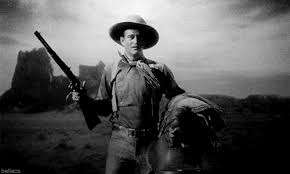
It’s difficult to think of a more iconic star-making screen introduction than that first shot of John Wayne twirling and cocking the rifle as the camera zooms in on his face (see photo below). It should be noted that The Duke (as he was often referred) was 32 years old in the film and is wearing his own cowboy hat – one he would wear in many movies over the years (until it finally was in such bad shape, it was placed in a glass display case at Mr. Wayne’s home).

The film hit while the industry was still experiencing some of the pains of leaving the “silent” world behind and taking advantage of “talkies”. Additionally, the technology of color film was just beginning to be used more frequently, but many studios and directors were clinging to the traditional black and white look. As a genre, westerns had never been able to make that step into the mainstream … that is, until Ford and Wayne came stampeding to the forefront with Stagecoach.

Dudley Nichols (Oscar winning screenwriter for Ford’s The Informer) adapted the original story from Ernest Haycox (a prolific writer who helped elevate westerns from dime story pulp to respectability and box office profitability) into a screenplay that examines the early attempts at transitioning the “wild west” into a more civilized society. Social commentary abounds as several characters from disparate background are crammed into a confined space (the titular stagecoach) for an extended period of time. Some viewers may complain about the use of clichés, but in fairness, what we have come to label as cliché, was anything but at the time.

Adding their own special touch to the wide range of characters were some of the finest actors of the era. Claire Trevor was the best known star in the cast at the time, and she plays Dallas, the good-hearted woman whose past/profession causes her to be treated as an outcast by most in the group. Ms. Trevor would go on to accept the unofficial title of Film Noir Queen, win a Best Supporting Oscar for Key Largo (1948), and have the School of Arts at UC-Irvine named for her. Donald Meek plays the meek (yes his name often fit his character) travelling salesman ironically named Peacock. Contrary to what one would guess given his diminutive physical stature, Mr. Meek fought in the Spanish-American War. John Carradine is perfectly cast as Hatfield, the elegant gambler carrying a secret. Mr. Carradine is the father of the acting Carradine brothers (including David and Keith), and enjoyed a 65 year career with more than 350 projects. Drunken Doc Boone is played by Thomas Mitchell, who many will recognize as memory-challenged Uncle Billy in It’s a Wonderful Life. He also appeared in such top shelf films as Gone with the Wind, High Noon and Lost Horizon. Louise Platt plays Lucy Mallory, the pregnant wife who is on a mission to reunite with her soldier husband. The villainous banker is played with gusto by Berton Churchill, and the only thing he’s missing is a twirly mustache. Mr. Churchill was a co-founder of the Screen Actors Guild (SAG) in 1933. Law Enforcement is represented by Marshal Wilcox, played by George Bancroft, and the stagecoach is driven by the great Andy Devine (as Buck). Mr. Devine manages to create a bit of comedy relief by the use of his trademark high-pitched raspy voice, as well as his underrated physical acting movements. Other notables making an appearance are Tom Tyler (once known as the strongest man in America) whose initial shaky transition from silent film to talkies is readily apparent in his few scenes; Woody Strode (one of the saloon patrons) who is known best for his fight scene in Spartacus; and Tim Holt who brings the charging Calvary to the rescue, and is best known as one of the prospectors in The Treasure of the Sierra Madre (1948).

Of course, it’s John Ford and John Wayne who draw most of the attention when this film is discussed. Born Marion Morrison, The Duke played football at USC before turning his full attention to acting. Here he plays bad-guy-with-a-heart Ringo Kid, and gets to show a pretty full spectrum of machismo, humanity, dignity and sensitivity. His extraordinary physical screen presence led him to the top of the film world with roles in some of the most popular films over the next 4 decades, capped by a Best Actor Oscar for True Grit (1969). John Ford, who was 45 years old at the time of Stagecoach, won 4 Best Director Oscars (plus two special Oscars for his WWII documentaries): The Informer (1935), The Grapes of Wrath (1940), How Green was my Valley (1942), and The Quiet Man (1952).

Two others deserve special mention. Stuntman extraordinaire Yakima Canutt (a World Champion rodeo cowboy) was seemingly involved in just about every risky stunt in Hollywood during the 1920’s, 30’s and 40’s. Stagecoach provided the opportunity for what may be his best and most daring stunt – leaping onto the moving stagecoach and its 6 horse team and then sliding down under the carriage and out the back … all at breakneck speed! It’s fascinating to watch, and in this age of computerized special effects, it demands a level of awe and respect. While this film provided the first on screen glimpse of Monument Valley, it was Cinematographer Bert Glennon who figured out the best ways to take advantage of this breathtaking setting. Mr. Glennon was nominated for 3 Oscars (including Stagecoach), and was a frequent collaborator with both John Ford and Cecil B DeMille. The second half of his career was devoted mostly to TV series, rather than movies.

Stagecoach received 7 Oscar nominations including wins for Thomas Mitchell as Best Supporting Actor and Best Music (score) for Richard Hagerman, W Frank Harling, John Leipold, and Leo Shuken. The other nominees were for Best Picture, Best Director (Ford), Best Cinematographer, Best Art Direction and Best Editing. While it might seem implausible that such a ground-breaking film could only win two Oscars, it’s a reminder why 1939 is considered by many to be the best ever year for movies. Check out this list of other releases that same year: Gone with the Wind; Mr Smith Goes to Washington; Wuthering Heights; Goodbye, Mr Chips; Ninotchka; The Wizard of Oz; Of Mice and Men; The Hunchback of Notre Dame; Young Mr Lincoln.

Despite being the first movie to feature the “dead man’s hand” – a pair of black aces and a pair of black eights (the hand Wild Bill Hickok was holding when he was gunned down), this film continues to live on in cinematic lore. Often included in the discussion of the best westerns of all-time – along with High Noon, Shane, Unforgiven, Once Upon a Time in the West, The Wild Bunch, The Good The Bad and the Ugly, and The Searchers – it was a joyful experience to finally get to see this one on the big screen in a theatre setting (thanks to Dallas Film Society and Chris Vognar). It’s clear how this film elevated the western genre, and it certainly deserved recognition by the National Film Registry in 1995.

stagecoach2


OAK CLIFF FILM FESTIVAL 2016 Preview

June 10, 2016

June 16 – June 19, 2016

OCFF16 For anyone who still believes Dallas is all concrete and glass, take note that it’s almost time for the 5th annual Oak Cliff Film Festival. Founded by local folks who are committed to the independent creative spirit of film, music and art; the festival is based in the historic Texas Theatre, and showcases multiple venues along Jefferson Boulevard and in the Bishop Arts Districts.

The diversity and rare opportunities afforded by this festival is difficult to explain, but intoxicating to experience. The unusual film programming includes documentaries, student films, shorts, reparatory films, a narrative competition, and even workshops for students. Additionally, those behind the festival are quite serious about the parties – live music and DJ’s are often tied into the themes of the screenings from that evening.

Including the Texas Theatre, this year’s events are spread out over ten different venues: Kessler Theatre, Bishop Arts Theatre Center, Oak Cliff Cultural Center, Turner House, Spinster Records, The Majestic Theatre, 29 Pieces, Basement Gallery, and the ultra cool Wild Detectives (bookstore/coffee shop/bar/patio). The incredible range of films goes from Brian DePalma’s 1974 Phantom of the Paradise to the new documentary Author: The JT Leroy Story. On a personal note, I’m especially excited for the Opening Night screening of the restored film version of Last Night at the Alamo (1983). This is being presented by SXSW co-founder Louis Black, who was a T.A. in a film class I took at the University of Texas so many years ago.

If you are a lover of independent film and community events, this is the festival for you. While Cannes, Toronto and Sundance can be a bit overwhelming and intimidating, the Oak Cliff Film Festival is welcoming to all and easy to navigate. Plus … it’s the FIFTH year and that’s a reason to celebrate!

Scheduling, Festival Passes, and individual tickets can be found at: http://oakclifffilmfestival.com/


BEAUTIFUL: THE CAROLE KING MUSICAL (Theatre Review, 2016)

June 9, 2016

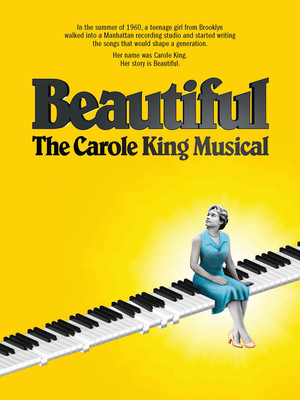
beautiful A piano sits center stage under a low beam spotlight. No other set decorations are present. The simplicity is symbolic of the public image of Carole King – a grounded artist whose prolific songwriting skills weave a tapestry of hit songs that began in the late 1950’s. In a somewhat awkward opening, Abby Mueller takes the stage as Ms. King and sheepishly admits that, as a Brooklyn girl, she feels like she is ‘home’ and breaks into her mega-hit “So Far Away”. The song sets the feel good tone for the audience, and by the end of the evening, we learn that’s her on stage at Carnegie Hall, and the rest of the story is in flashback form.

This is opening night at the Dallas Winspear Opera House as the national tour continues for the production of the 2014 Broadway hit … one that ended with Abby’s sister Jessie Mueller winning a Tony Award. The house is full, and the audience is as friendly as they come – ready to be reminded of the happy life times when Ms. King’s songs spoke for their emotions. The sound glitch present in that opening number is quickly resolved, and for the rest of the evening there is no shortage of toe-tapping and lip-synching.

Playwright and filmmaker (Emma, Bullets over Broadway, Nicholas Nickelby) Douglas McGrath follows the familiar path of another recent jukebox musical and mega Broadway hit “Jersey Boys”. He keeps the steady rain of hit songs coming, while mixing in just enough backstory for us to appreciate the artistic struggles and understand the times. We see the humble beginnings of a very smart teenage Carole Klein (later King) and her festering dream of becoming a professional songwriter – conflicting with the wishes of her mother who deemed teaching to be the profession of choice. Her early meetings at 1650 Broadway (not the Brill Building!) with music producer Don Kirshner (played by Curt Kouril) make it clear that female composers were mostly non-existent during the late 1950’s, and that Carole was a somewhat below-the-radar groundbreaker.

Rather than skim through Ms. King’s now more than 50 year career, the focus remains mostly on those early years writing with her wordsmith husband Gerry Goffin (played by Liam Tobin). The challenges of marrying young, having a daughter, and working multiple jobs are all touched upon, but it’s Carole’s long fight to keep her marriage to Goffin together that takes up most of the non-song time … this in despite of his drugs, philandering, and extreme mood swings. Goffin is portrayed as the tortured artist, while Ms. King is presented as a dowdy do-gooder who also happens to be an immensely talented composer. For much of the production, she looks similar to Elisabeth Moss during the first couple of seasons of “Mad Men”.

Between Goffin/King and their friendly rivalry with Barry Mann (a terrific Ben Fankhauser) and Cynthia Weil (Becky Gulsvig), the hit songs just keep coming. Many are performed by the writers themselves, while others evolve into full production numbers featuring numerous talented ensemble performers in the role of such acts as Neil Sedaka, The Shirelles, The Drifters, Little Eva and The Righteous Brothers. The latter group has one of the audience-favorite moments as they sing “You’ve Lost that Lovin’ Feeling” (John Michael Dias is a standout vocalist as Bobby Hatfield).

The emotional sincerity of the times is captured by these writers and their songs, but Mr. McGrath does toss in plenty of cornball comedy to make sure everyone is paying attention between musical numbers. Barry Mann and Cynthia Weil could be considered comic relief were it not for their own prodigious writing talent: “On Broadway”, “You’ve Lost that Lovin’ Feeling”, “Walking in the Rain”, and “We Gotta Get Out of This Place”.

The Goffin/King numbers included here are numerous and impressive: “Will You Love Me Tomorrow?”, “Up on the Roof”, “One Fine Day”, “Pleasant Valley Sunday”, “Take Good Care of my Baby”, “Loco-Motion”.

The real story here is the blossoming of a shy woman into an artist who trusts her talent and believes she has something to sing about. Once her marriage to Goffin finally ended, Ms. King moved to Los Angeles and worked with super producer Lou Adler (known today as Jack Nicholson’s Lakers buddy). Her 1971 solo album Tapestry featured such hits as “So Far Away”, “You’ve Got a Friend” (a huge hit for James Taylor), “It’s Too Late”, “(You Make Me Feel) Like a Natural Woman”, and this show’s title track and finale, “Beautiful”.

Unlike many musicals, this show doesn’t have a true “showstopper”, but the sheer number of hit songs familiar to the crowd provide the feel-good atmosphere that leaves those attending feeling joyous and well entertained. A very nice performance from Abby Mueller allows us to take in the music, while also respecting the long road and accomplishments of the great Carole King … winner of Grammy awards, and inductee into both the Songwriter Hall of Fame, and Rock and Roll Hall of Fame. The production is also a reminder that nice people can succeed in an industry that thrives on ‘bad boys’ and artists with an edge.


DALLAS INTERNATIONAL FILM FESTIVAL 2016 recap

April 25, 2016

DIFF2016 It’s Monday April 25th … the day after the eleventh of eleven days of the 10th Annual Dallas International Film Festival. My eyes and rear end are in recovery mode. I am 18 reviews behind – a situation that normally causes major anxiety; however, rather than sweating the mountain of writing on my “to do” list, I am instead reflecting on the more than two dozen movies that made up my weekends and post-work evenings over the past week and a half … as well as the horrible tragedy that shook the local movie community.

This past Friday evening, while on his walk back to the Angelika Theatre after attending the DIFF Awards ceremony at The Highland, local movie blogger Gary Murray was struck and killed by a hit-and-run driver who ran a red light. I didn’t know Gary well, but it was obvious we shared a passion and love for movies. His is a tragic and unnecessary loss, and one made worse by the cowardice of someone who cares so little for others, that stopping to take responsibility was secondary to their own well-being. A good life stolen by a despicable one.

The DIFF management group demonstrated their class by including a tribute to Gary prior to each screening on Saturday and Sunday.

For the festival, the movie lineup was one of the deepest I can recall. There seemed to be only one entry that most agreed was a true clunker, and even that one was placed in the “Maverick” category – a group of films that can best be described as experimental or highly creative and outside the box.

Short films, documentaries, narratives, animation, Texas-based films, Maverick directors, Latino showcase, World films, Family friendly flicks, Student films, parties, celebrities and filmmakers … the festival has something for everyone. The lineup is designed to expand our boundaries just a bit – take in something that we wouldn’t normally give a chance, or even more likely, never have the opportunity to see. Not many do this better than DIFF, and in fact, it’s simply a well-run festival with wide-ranging films, friendly volunteers, and a schedule that works (with a shout-out to the Angelika Film Center and Alamo Drafthouse).

The list of winners is available at www.dallasfilm.org and for anyone looking to attend next year, I’d be happy to offer some tips … protect your eyes and your “seat”.

DIFF2016 c


POINT BLANK (1967) revisited

January 31, 2016

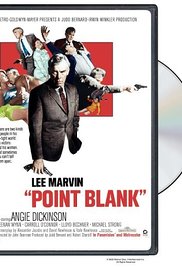
point blank Greetings again from the darkness. In the not-inconsequential sub-genre of 1960’s tough guy crime thrillers, it’s tough to beat this neo-noir that carries the lineage of a fine wine, but the taste of a stout beer. Familiar faces are everywhere, bullets fly, double-crossing is expected, Angie flaunts, and revenge is the mission.

While not a box office hit on its release in 1967, the film grew into a cult classic and is now appreciated as one of the era’s best. The set-up is certainly not too complicated. During a heist (filmed at Alcatraz), one of the gang members shoots another at “point blank” range and takes off with both the money and the poor guy’s wife. The shot guy survives and seeks his money ($93,000) and revenge on those who wronged him.

Sure it sounds simple and common, but it’s made special thanks to top notch work from the writer, director, cinematographer, composer and cast. The story (adapted by Alexander Jacobs, David Newhouse, Rafe Newhouse) is based on “The Hunter” from acclaimed crime novelist Donald Westlake (as Richard Stark). The book was also the source material for Mel Gibson’s 1999 movie Payback. Oscar nominated director John Boorman (Deliverance 1972, Hope and Glory 1987) works with Oscar nominated cinematographer Philip H Lathrop (Earthquake 1974) to create a stylish and gritty look and feel, while Oscar winning composer Johnny Mandel (The Sandpiper, MASH theme) adds just the right musical touch.

If that’s not enough for you, Lee Marvin commands attention as the revenge-obsessed tough guy who won’t get fooled again. To call Lee Marvin a tough guy seems redundant and unnecessary, as his screen presence oozed dominance. He was coming off an Oscar win for Cat Ballou and one of his best performances in The Dirty Dozen. In other words, he was an actor at the peak of his Hollywood power.

Joining Mr. Marvin on screen is a prestigious group led by Angie Dickinson and Carroll O’Connor. With a career that spanned more than 50 years, Ms. Dickinson starred in such films as the original Ocean’s 11 and Brian DePalma’s homage to Hitchcock, Dressed to Kill. Of course, she also starred in one of the biggest TV shows of the 1970’s “Police Woman”. And speaking of 1970’s TV, few were more jarring to the culture than “All in the Family” with Carroll O’Connor as Archie Bunker. In this film, Ms. Dickinson plays the sister of Marvin’s double-crossing wife and she gets to flail away in anger at him before the two fall into bed together … a terrific piece of editing. Mr. O’Connor plays Brewster, one of the three heads of “the Organization”, and one of the targets that Marvin chases to retrieve his money.

Playing another of the three heads is Lloyd Bochner, who capitalized on his smooth demeanor and velvety voice during a 7 decade career in TV and movies. Mr. Bochner is the father of Hart Bochner, who (as Ellis) tried to out-smart Hans Gruber in Die Hard. Keenan Wynn appears as a mysterious figure feeding information to Marvin’s character to assist in his quest of taking down the organization. Mr. Wynn is the son of legendary entertainer Ed Wynn who was known for his work in vaudeville, Ziegfeld Follies, TV and movies (Mary Poppins). Keenan also appeared in many TV shows and movies, with Dr. Strangelove: Or How I Learned to Stop Worrying and Love the Bomb being his most famous. Appearing as Lynn, the two-timing wife, Sharon Acker was on the verge of movie stardom … only that stardom never came. By choosing to focus on TV roles, she had a nice long career, but never reached the superstar status many had predicted. Sandra Warner plays the waitress that Marvin talks to, and Ms. Warner simply walked away from the business after this role … despite a successful career that started when she was 18 years old. Yet another familiar face in the cast belongs to John Vernon, who was making his feature film debut. Here he plays the guy pulling the trigger at point blank range, and many will recognize him as Dean Wormer in Animal House. James Sikking plays the sharpshooter employed by the organization, and fans of “Hill Street Blues” will remember him as the slightly annoying Howard.

There are a few other notes of interest regarding actors in the movie … though you’ll have to look quickly. Sid Haig plays a henchman at the hotel. Mr. Haig has had a prolific career as a heavy, bad guy, villain, horror film staple, and even Tarantino favorite. Barbara Feldon, the beloved Agent 99 in “Get Smart” makes an appearance on a Ponds face cream commercial as Marvin watches TV, and Lauren Bacall is seen/heard quickly on a TV set as well. Also, Felix Silla has one scene as a hotel guard. The diminutive Mr. Silla also starred as Cousin Itt in “The Addams Family”. As a final note and shout out to “the Chevies”, it must be noted that Angie Dickinson and Keenan Wynn would also appear together in the deliciously twisted 1971 film Pretty Maids all in a Row from that lover of the female form, director Roger Vadim.

It’s pretty easy to see how all of these factors came together to create this cult favorite. From a filmmaking perspective, the use of flashbacks, editing and sound effects (footsteps) all add to the experience, as does Brewster’s stunning home – which in real life, now belongs to Drew Barrymore. If you are a fan of 1960’s film, it’s one you probably already have seen a few times, but if not, it’s one to watch if for no other reason that Lee Marvin firing shots into an empty bed … I’m still not sure how that was supposed to help him obtain his $93,000, but he really wants his money!

watch the trailer (it’s a hoot!):


BEST OF 2015 is up!

January 4, 2016

best of 2015 The “BEST OF 2015” page is up and ready for your review and comments. It can be reached on the home page in the right-hand side bar or by going directly to the link:

Best of 2015

Even though I reviewed 234 new releases in 2015, there were still a few that I simply wasn’t able to work in. Just in case you have these on your list of favorites, just know that since I didn’t see them, they won’t be included in my post: Best of Enemies, Ex Machina, Mommy, Straight Outta Compton, The Peanuts Movie
Of course, many of last year’s movies won’t be mentioned in the annual recap, and you can always search the site for my review. Just drop me an email or leave a comment if you have any questions.

Readership for the site continues to grow … THANK YOU for taking the time to read and comment, and am very appreciative of you passing along the site to any other movie lovers.

Many of my reviews also show up on http://www.RedCarpetCrash.com where I am a regular contributor.


ELEVATOR TO THE GALLOWS (1958) revisited

October 4, 2015

Ascenseur pour l’echefaud (France)

elevator to gallows For an introduction to the French New Wave, the first feature film from director Louis Malle is a good place to start. The neo-realism in this crime drama (based on the novel from Noel Calef) was new to film goers at the time, and even more startling was the natural lighting and minimal make-up used to photograph lead actress Jeanne Moreau. Beyond that, the haunting score from the legendary Miles Davis has been best described as “the loneliest trumpet”.

The film jump starts with an emotional and desperate phone call between lovers shown in extreme close-up: Florence (Ms. Moreau) and Julien (Maurice Ronet). The two have plotted to kill her husband (his boss) – war profiteer Simon Carala (played by Jean Wall) – so that they can be together. The details of the perfect murder plan are carried out with the intention of making it appear like a suicide. Unfortunately for Julien, a frantic attempt to hide some evidence leaves him trapped in an elevator. The fallout from this bad break finds Florence believing he has deserted her, and creates a secondary story line involving the theft of his car by a couple of youngsters out for a good time.

It’s here that the film bounces between the three sequences and really capitalizes on Malle’s expertise with a camera. Julien’s frustration in trying to escape the elevator generates the necessary tension, while the exploits of the young couple Louis and Veronique (Georges Poujouly, Yori Bertin) find them in a bad-situation-gone-worse when their impromptu party with a German couple (Ivan Petrovich, Elga Andersen) turns tragic. It’s easy to see how Jean Luc Godard was influenced by this young couple for his classic Breathless (1960). But best of all is the wandering woman of despair … we follow Florence as she tries to track down Julien on the rainy late night city streets.  These shots of Ms. Moreau are truly spectacular thanks not just to the lighting, but also the realistic emotions of her facial expressions … we never doubt her feeling of resignation.

Mr. Malle was only 26 when he directed this film, and the follow-up (also with Ms. Moreau) entitled The Lovers, also released in 1958. He had worked as an underwater photographer for Jacques Costeau and referenced this in the film. Malle had a long time marriage to Candice Bergen, and an incredible career that featured three Academy Award nominations (including Atlantic City, 1980). This was Ms. Moreau’s breakthrough film and led to her best known role in Francois Truffaut’s 1962 film Jules and Jim. She is still working today at age 87.  She also had a successful singing career, as well as numerous love affairs (Malle, Truffaut, Pierre Cardin, and Miles Davis).

Although there are some details and plot points that might annoy those who pay close attention, it doesn’t take away from the groundbreaking work of a young director who helped change the tone of movies. It’s interesting to note that Florence and Julien don’t share a scene in this film, outside of the opening phone call split scene. Additionally, the contemporary influence lives on through the line “Never leave photos lying around” (or on social media).  A special thanks goes out to The Texas Theatre in Dallas for bringing this classic back to the big screen.

Rather than post a clip or trailer, below is a video showing a young Miles Davis playing along to the film:


OAK CLIFF FILM FESTIVAL 2015 recap

June 19, 2015

OCFF15 And they said it wouldn’t last. OK, I don’t think anyone actually said that about The Oak Cliff Film Festival, and we are quite thrilled to report that this fourth year may be the best yet.

One of the (many) things that make this festival unique is the new “theme” each year brings. The 2015 OCFF celebrated the “No Wave Movement” of the late 1970’s/early 1980’s … the perfect tie-in to today’s independent filmmakers who find a way to create their films in spite of Hollywood’s “Blockbusters rule” philosophy. Short films, digital handheld cameras, and now even iPhones are acceptable formats and valuable tools for realizing a filmmaker’s vision.

It’s probably more accurate to describe this as a Film and Party Festival, as the organizers take as much pride in their party-throwing acumen as they do in their film programming … and for good reason. The festival featured no fewer than 8 parties and events – everything from a live performance by The Sonics to a group bike ride through the city.  Panels and workshops were held for filmmakers and those who hope to be, and an actual film was produced during the weekend. These events turn the festival into a participatory event for those who wish to fully engage.

As for movie watching, I caught 8 features and a couple blocks of shorts. The festival’s programming featured 9 narrative features, 4 feature length documentaries, 4 repertory films (homage to the theme), and 36 short films (student, narrative, documentary). Unfortunately, my schedule forced me to miss the festival closing film, but I can report that my favorite narrative film of the festival was Tangerine, a film director Sean Baker shot entirely on iPhones on the streets of Hollywood and Los Angeles.  My favorite documentary was Made in Japan, the story of Tomi Fujiyama (the first female Japanese Country and Western musician to perform on The Grand Ole Opry).  A couple of actresses stood out: Mickey O’Hagan (Tangerine) and Helen Rogers (Body), and I look forward to following as their careers develop.

One last point of difference for this festival must be mentioned. The number and diversity of venues is quite something to behold. At least 9 Oak Cliff venues play a significant role in the festival. The key screening locations include the historic Texas Theatre, The Bishop Arts Center, and the Kessler Theater (normally a music venue), and each bring their own unique viewing experience. Additionally, it’s the smaller venues that really add the local flavor to the festival proceedings.

The festival is highly recommended for lovers of independent film and the creative process, while the large number and highly diverse group of event sponsors exemplify the widespread support and interest in this terrific cultural event. Year 4 is a wrap … can’t wait to see what these folks come up with for next year’s Oak Cliff Film Festival.

http://thetexastheatre.com/

http://oakclifffilmfestival.com/


CHRISTOPHER LEE (1922-2015) remembered

June 11, 2015

christopher lee Usually when a screen icon passes, we spend time reminiscing about the characters they played in the movies we loved. For Christopher Lee, this goes much deeper. When I first began an infatuation with movies, he was almost 20 years into his acting career. He truly has been an active part of my movie-watching for my entire life. So when I see today’s headlines labeling him as a “Movie Villain”, I cringe and think what an injustice and simplification that is. Christopher Lee has always been there – from 13 inch B&W television sets to 40 foot theatre screens – inspiring me to love movies.

This was a fascinating man … so much more than a beloved and talented actor. By the time he was 23 years old, he was decorated for his distinguished WWII service for the Royal Air Force and Special Services. He then moved into acting, and now leaves us with a remarkable 281 screen credits to his name.

Lee’s acting career was incredibly diverse, and certainly not limited to villainous roles, even if that’s how he is most frequently remembered. His screen time ranged from playing Frankenstein, Dracula, and The Mummy in traditional monster movies (many from Hammer films), to his iconic clash with James Bond as The Man with Golden Gun (1974). He also played Sherlock Holmes, Fu Manchu, and Rochefort in 3 – Three Musketeers films,  utilizing his expert real life fencing skills.

In 1977, Lee’s autobiography was published … “Tall, Dark and Gruesome”. He embraced his image, while working non-stop at broadening his roles. Many know him from the 1973 cult classic The Wicker Man, and how could we forget his hosting of “Saturday Night Live” in 1978 (musical guest, Meat Loaf)? This man embraced both horror and comedy – he was courageous enough to appear in one of the Police Academy movies!

christopher lee2 Lee experienced a career renaissance thanks in part to having a huge fan in filmmaker Tim Burton, who cast him in Sleepy Hollow, Charlie and the Chocolate Factory and Sweeney Todd: The Demon Barber of Fleet Street. Additionally, younger film fans know him from Peter Jackson’s Lord of the Rings trilogy, two “Hobbit” films, and of course three “Star Wars” films.

Of course, it’s Mr. Lee’s voice that always announced his presence with authority. A deep, booming resonance could spark fear or respect; however, he also used that voice for singing – opera, a Broadway tunes album, and two Heavy Metal albums. He was married (yes, to the same woman) for more than 50 years. A life well lived may be the highest honor man can achieve, and it is personified in Sir Christopher Lee … much more than a villain.

Here is a taste of Metal Christmas from Christopher Lee: