Christmas movie mash-up

December 13, 2012

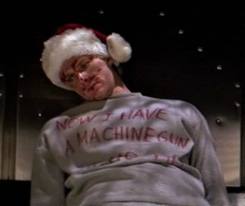
die hard “Ho-Ho-Ho.  Now I have a machine gun.”  Those words appear in a most creative manner, and jolt us back with a violent reminder  that the action in Die Hard is actually taking place during an office Christmas party!  The Christmas holiday … and all that entails … has played a role in countless movies over the years.  Some of these are sweet, some are funny, some are action-packed, some play to our family emotions and insecurities, some are downright crass, and many are blatant reminders of what’s really important in life.

The following Christmas movie mash-up was posted to YouTube and does a pretty interesting job of capturing the many approaches we have seen in this genre.  It starts nice and easy with Bing Crosby singing, and ends with the glorious sound of Judy Garland.  In between you will see a bit more action within the holiday spirit!

http://www.youtube.com/watch?v=hnqe0_z2UAk&feature=youtu.be


PULP FICTION (1994) revisited

December 9, 2012

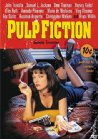
pulp5 Greetings again from the darkness. Typically, I don’t get too serious about a film’s place in history until at least 20 years pass since release. Cinemark presented Pulp Fiction in its Classic Film Series, so the timing seems right … despite it being only 18 years (1994) since Quentin Tarantino’s film won the Palm d’Or (best film) at Cannes Film Festival.  While challenging today to understand the buzz created as it made the festival rounds, there is no question it solidified Mr. Tarantino as the next generation’s auteur … though some would argue that occurred with Reservoir Dogs two years prior.

The lasting impact of some classic films stems from the emotional connection of their loyal viewers.  Casablanca and The Sound of Music are two examples. Others, like Citizen Kane and 2001: A Space Odyssey made their mark through technical achievements.  Adapting a classic novel was the key for To Kill a Mockingbird and The pulp2Godfather.  Still others reached the classic level via spectacle and by becoming an event unto themselves … Jaws and Star Wars.  Pulp Fiction is one of the few films that has so clearly defined a generational change in filmmaking style by influencing and motivating writers and directors.

When asked, I never really answer the “What’s your all-time favorite film?” question. I can name my favorite car, my favorite boss, and even my favorite dessert.  I can’t name my favorite kid or my favorite film … for much different reasons.  Without a doubt, there are numerous films that belong to the “list” of my all-time favorites, but not one is clearly THE best or most favorite on every single day.  There are a few that fall into the elite category AND also into ‘must stop’ category – should they happen to pop up on a movie channel.  Pulp Fiction is one of the chosen few for me.  I realize this opens me up for less-than-flattering judgment, but sometimes we don’t choose the movie … the movie chooses us.

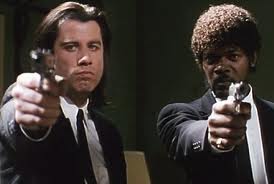
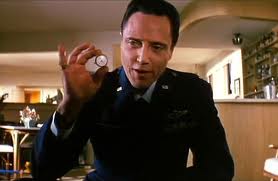
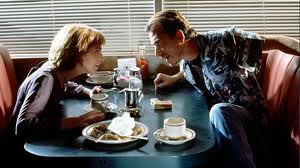
pulp3 Unfortunately, this movie proved to be the end of the highly creative partnership between Tarantino and Roger Avary.  Former video store co-workers, these two had a nice run with True Romance, Reservoir Dogs and Pulp Fiction (for which they won the Best Original Screenplay Oscar), but ego conflict messed up The Beatles and had no less effect on these two writers.  Still, the stars aligned and provided us a non-linear collision of multiple story lines and dialogue unlike we had previously heard on screen. Additionally, it proved to be the career defibrillator for John Travolta, and allowed Samuel L Jackson to deliver one of the most powerful non-biblical bible verses ever.  For most us, it was the first time we had ever seen the plunging of an adrenaline filled syringe through a comatose woman’s breastplate. Quentin Tarantino made no effort to hide his fascination with Uma Thurman’s bare feet … a fetish we would again experience in Kill Bill. We were reminded of the cool effect provided by the “trunk shot” and baffled by the MacGuffin (the glowing briefcase). Vincent Vega (Travolta) taught us that due to the metric system, we would need to order a Royale with Cheese while visiting France, and Christopher Walken explained the, um, depths some would go to pass along a gold watch to a soldier’s son.  The debate of what constitutes a miracle was no less than interesting than watching The Wolf (Harvey Keitel) take charge of a messy situation.  It’s kind of funny to watch Steve Buscemi as Buddy Holly the Waiter since as pulp4Mr. Pink in Reservoir Dogs, he refused to tip for food service.  While Tim Roth and Amanda Plummer discovered the brilliance of holding up restaurant patrons, we were also shown the possible downside to such a plan.  However, the key lesson we all learned, and all hope to avoid ever needing, was that if you are dumb enough (Bruce Willis) to double-cross a gangster (Ving Rhames), you sure as heck better rescue that same gangster from Deliverance-style pawn shop owners.

Tarantino showed us how multiple viewings are rewarded by keeping track of the numerous pop culture homage’s and by realizing just how perfect were his choices of single songs (no film score) for particular scenes.  Listening to Dick Dale strum “Misirlou” over the opening credits still gets me going!  In fact, the only two things I picked out that show a bit of aging are Vincent’s disbelief in a $5.00 milkshake and when Jules calls one of Big Brain Brad’s team “Flock of Seagulls”.  So if you are taken aback by Pulp Fiction as one my all-time classics, my only response is … “Say ‘what?’ again”.

here is a video of Dick Dale playing “Misirlou” in 1963:

http://www.youtube.com/watch?v=ZIU0RMV_II8


FRANKENSTEIN (1931) BRIDE OF FRANKENSTEIN (1935)

October 26, 2012

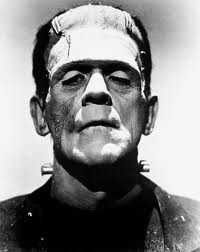
 Greetings again from the darkness. It’s pretty easy to underestimate the importance of a couple of monster movies from 80 years ago.  Since TCM and Cinemark teamed up for this double-feature, it seemed worth revisiting and discussing.  Most people are aware of Mary Shelley’s 1818 novel (published when she was 21) and have probably seen some of the many screen versions throughout the years. It is interesting to note that while the brilliant (and often misunderstood) novel was the source, it was really these two films that jolted the monster film genre to life … and careers for many actors, directors, make-up artists and set designers.

When Carl Laemmle, Jr assumed control (from his father, the legendary producer and studio founder) of struggling Universal Studios in 1928, he was very aware that something special and different was needed to save the business. A string of Universal horror movies soon followed: Dracula (1931), Frankenstein (1931), The Mummy (1932), The Old Dark House (1932), The Invisible Man (1932) and Bride of Frankenstein (1935).  Two driving forces of this period were director James Whale and actor Boris Karloff. While Dracula with Bela Lugosi hit theatres first, it was Karloff as “The Monster” who really captured the interest of the movie-going public.

Frankenstein was Karloff’s 81st film and he was only cast because Lugosi turned down the non-speaking role.  Wearing over 60 pounds of make-up, prosthesis and padding … including 26 pounds of shoes to make him over 7 feet tall …Karloff still managed to bring personality to the creature created by Dr. Henry Frankenstein (Colin Clive).  Yes, HENRY.  Though named Victor in the novel, the name was “softened” for the film.  In the film, Dr. Frankenstein is on a mission to create life from body parts and organs of the dead. His stated goal of a man-made race at his beck and call was a clear indication that his God complex was out of control.  His fiancé is played by Mae Clarke.  Ms. Clarke went on to Hollywood infamy when she took a grapefruit in the face from James Cagney in Public Enemy.

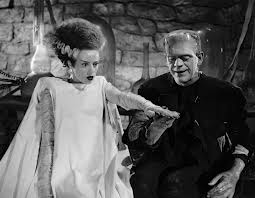
 The enormous success of Frankenstein begged for the first real sequel.  Bride of Frankenstein was released in 1935 with Karloff and Clive reprising their roles. Elsa Lanchester was cast as Mary Shelley (the writer of the Frankenstein novel), and we even get a scene with characters representing her husband (the poet Percy Shelley) and Lord Byron.  Of course, Ms. Lanchester became famous for her Bride’s iconic hairstyle, as well as her hissing and screaming.  Taking Mae Clarke’s place as Elizabeth was Valerie Hobson. Ms. Hobson later became famous as the stand-by-her-man wife of disgraced British Secretary of War John Profumo. Profumo lied to the House of Commons about his relationship with Christine Keeler, the mistress of a Soviet Spy. The “Profumo Affair” forced his resignation in 1963 and was the source of the 1989 British film Scandal.  Bride of Frankenstein is also renowned for the mad scientist Dr. Pretorius played by Ernest Thesiger. Much was made at the time of his “probable” homosexuality and, combined with the multiple crucifix imagery, the film was banned in some markets. It should also be noted that the film utilized a full score … just the second film after King Kong to do so. Previously, film music was thought to be distracting to viewers.

 When discussing these early monster movies, revolutionary make-up artist Jack Pierce must be noted. He created the bolts/electrodes and flat head look for the monster, and even came up with the now-famous green make-up that looked ash gray in Black & White films. Mr. Pierce is easily the most famous of the early movie make-up artists and made his mark during the Universal horror period of the 1930’s-40’s.  Director James Whale turned to monster movies after tiring of war films. His impact was felt as he turned the Frankenstein monster into a sympathetic character, and later added much humor to Bride of Frankenstein.  Unfortunately, once he tired of monster movies, his career and life took a dark turn, and he took his own life in 1967.

Numerous remakes, spin-offs and spoofs have been released over the years and, tip of the cap to Abbott and Costello, the most famous is probably Mel Brooks’ Young Frankenstein. It is a brilliant tribute and spoof, while also standing on its own as one of the best all-time comedies. With such creative works based on her writings, Ms. Shelley would surely be impressed to know that nearly 200 years after her novel; this can still be said about her monster …. “It’s Alive! It’s Alive!”

watch the trailer to Bride of Frankenstein:

http://www.youtube.com/watch?v=r9t6NHlPJHA&feature=related


AURORA: Freedom, Pain, Responsibility (July 20, 2012)

July 20, 2012

 It is a dark day for Americans.  The Aurora, Colorado theatre shooting is a horrifying reminder of the dark side to freedom.  The price we pay for living with few boundaries is that the best of us will sometimes cross paths with the worst of us.

Chances are good that I spend more time in movie theatres than you.  I have already been asked multiple times today if today’s violence will impact my movie going. The answer is a resounding ABSOLUTELY NOT.

Very few of us live our lives as hermits … locked away in a Safe Room or shelter. What makes our society so wonderful is our ability to hop in our car and head off to a sporting event, a musical production, a religious ceremony of our choice, a restaurant of our choosing, and even a grocery store with its endless supply of fresh produce.  Every morning, we pack our kids’ lunches and send them off to learn in a building with a few hundred or thousand other kids.  We do these things because we live in a society with freedom of movement and freedom of choice.  We trust the society will work as it is designed.

There is inherent risk in a free society.  We depend on others to do the right thing and make proper decisions.  The vast majority of us do.  Most of the time, this system of trust works beautifully. When it doesn’t, and some lunatic snatches our freedom in an instant, it frightens us beyond belief … sometimes crushing our spirit. We can’t believe the horror of another person making the decision to purposefully hurt others, for no apparent reason.

Inevitably, someone who knows this accused shooter, will state that something just didn’t seem “right” with him.  This is the responsibility we have to each other.  Your parents probably taught you to trust your “gut feeling” about people.  We owe it to each other to pay attention and do something when our internal alarm is alerted … or would you rather be the one on TV saying “I knew something wasn’t right about that guy.”?

The documentary filmmaker Michael Moore issued a statement today saying that “historians will look back on us and simply conclude that we were a violent nation”.  I for one, vehemently disagree with him.  We are a nation of citizens who sometimes forget the responsibility that comes with our freedom … a freedom that allows the rare lunatic amongst us to make a horrible decision that jolts and pains us.  We are also a resilient lot who will now pay a bit more attention to the guy who “just doesn’t seem right”.   So, yes, it is a dark day.  A very dark day. But know that each of us is responsible for bringing back the light.


2012 – FIRST HALF RECAP

July 13, 2012

Greetings again from the darkness. The halfway point of 2012 has just passed, so it’s time to take note of any significant movies released between January and June.  This mid-year analysis is an annual feature because it’s so easy for first half films to be forgotten once the 4th quarter Oscar marketing campaigns start rolling. 

Beginning in late 2010, the experts were calling 2012 the year of the blockbuster thanks to the inordinate number of big name franchises, and many of those tentpoles are finding some success at the box office.   Unfortunately, as we have learned many times through the years, a big budget does not guarantee a rewarding movie experience.   A perfect example is Disney’s John Carter, which is among the biggest box office flops in history.  Since my focus is not on tickets sold, let’s discuss which of these early-in-the-year movies are really worth seeing.

By leaps and bounds (sorry), The Avengers is the runaway success of the first half. Not only did it play to packed theatres, but director Joss Whedon assembled (sorry again) a nice cast and an interesting script, delivering a very impressive comic book all-star action fest.  The Hunger Games seemed to satisfy its huge (mostly teenage) fan base, while sci-fi lovers were split over Ridley Scott’s Prometheus.   We also had a duel between Snow White films with Kristen Stewart’s version being superior to Julia Roberts’ cackling wicked queen.

Actually, independent films provided a wealth of entertainment across a wide variety of genres, including Moonrise Kingdom, the latest gem from Wes Anderson, who is now a genre unto himself.  Fortunately, my hometown of Dallas has a few theatre options for indie films, and I take advantage as often as possible.  For those who miss the limited theatrical releases of these films, they make really nice evenings for Netflix, Redbox, cable or streaming.

The most enjoyable part of my first half movie-going this year has been the number of classic films that I have taken in on the big screen. In 6 months, I have been treated to theatrical showings of thirteen movie classics including The Godfather I and II, Cool Hand Luke, Double Indemnity, and Wings (from 1927, the first Best Picture winner).  Though it’s an unfair comparison, it does bring light to the fact that I sit through many “non-classics” each year in the never-ending hope that the next one might be an instant classic at the level of one of the true greats.

Here is a breakdown of the first half of 2012 (each category is in alphabetical order):

HIGHLY RECOMMENDED:

The Avengers (the best and most fun action movie)

The Intouchables (an engaging indie from France)

Marley (best documentary so far)

Moonrise Kingdom (a gem from Wes Anderson)

RECOMMENDED MAINSTREAM:

Dark Shadows, The Grey, The Hunger Games, Prometheus, Ted*

RECOMMENDED INDIES and/or WORLD CINEMA:

Bernie, The Best Exotic Marigold Hotel, Footnote (Israel), Headhunters (Norway), My Way (Korea), The Kid with a Bike (Belgium), Safety Not Guaranteed, Salmon Fishing in the Yemen

CRINGE-INDUCING (not in a good way):

Carnage, Mirror Mirror, Rock of Ages, This Means War, Ted*

*Depending on your tastes, Ted fits into one of these two categories


Here is a quick PREVIEW of upcoming movies for the second half.  Get your popcorn ready:

Anna Karenina

(Keira Knightley in many costumes for Tolstoy classic )

The Bourne Legacy

(Jeremy Renner beats up people while Matt Damon rests)

The Campaign

(Will Farrell and Zack G run opposing political campaigns. Not a Documentary)

Cloud Atlas

(Tom Hanks and Wachowski bros, and Hugh Grant as a killer)

Cosmopolis

(more Cronenberg creepiness)

The Dark Knight Rises

(Batman by Nolan and Bales.  The End in IMAX)

Django Unchained

(Quentin Tarantino for Christmas)

Dredd

(futuristic, ultra-violent chaos … this time without Stallone)

The Expendables 2

(Action film sponsored by AARP)

Frankenweenie

(Tim Burton’s classic short had me in stitches)

Gangster Squad

(period mafia drama, great cast)

The Great Gatsby

(DiCaprio plays Redford… wait)

The Hobbit

(Tolkien by the creator of Lord of the Rings)

Hope Springs

(Meryl Streep and Tommy Lee Jones get marriage counseling )

Hyde Park on Hudson

(Bill Murray as FDR cheating on Eleanor. Surprise!)

Kathryn Bigelow’s unnamed film on the Bin Laden siege

(not a mystery or comedy)

Lawless

(bootlegging brothers battle corrupt authorities)

Les Miserables

(lots of sad songs from Wolverine, Catwoman, and Maximus)

Life of Pi

(another Ang Lee head-scratcher)

Lincoln

(Spielberg and Daniel Day-Lewis, no vampires)

Looper

(sci-fi with Bruce Willis playing  Joseph Gordon-Levitt and vise-versa)

The Master

(Philip Seymour Hoffman as L Ron Hubbard, no Cruise cameo)

On The Road

(Kerouac’s beatniks search for “It”)

The Paperboy

(Cusack on death row. McConaughey drawls)

Seven Psychopaths

(great title, cast, director)

Silver Linings 

(who is more nuts? David O Russell or Bradley Cooper)

Skyfall

(Bond, James Bond … plus Bardem!)

Taken 2

(more particular skills from Liam Neeson)

This is 40

(Judd Apatow and cronies laugh about getting older)

Total Recall

(sci-fi remake without Ah-nuld or Sharon Stone)

Twilight Saga: Breaking Dawn Part 2

(end of the road! Until the reboot)

GET YOUR POPCORN READY!!!


ANDY GRIFFITH remembered (1926-2012)

July 3, 2012

 It was announced today that Andy Griffith (1926-2012) had passed away.  Tributes that come too late are kind of sad, but it’s important to discuss what a multi-talented, beloved and influential performer he was for over 57 years.  Very few entertainers are talented enough and fortunate enough to have success in one category, much less many.  Andy (it just feels right to call him that) had success in comedy, with music, on Broadway, in movies, and of course, on TV.

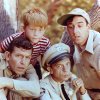
 Thanks to syndication, most everyone recognizes him as Mayberry Sheriff Andy Taylor in “The Andy Griffith Show”, which ran from 1960-68.  Not only was the theme song iconic … you are probably whistling it now … but Andy taught life lessons to many of us through his folksy, down home wisdom.  He was a surrogate father for us as he taught his son Opie (played by Ron Howard, the successful movie director) right from wrong, and how to treat people.  Andy also recognized the comic greatness of Don Knotts’ Deputy Barney Fife (one of TV’s best ever characters), so he made the artistic decision to play the straight man as Knotts received the accolades.  The show (itself a spin-off from “Make Room for Daddy”) was responsible for numerous spin-offs and Griffith remained lifelong friends with both Howard and Knotts.  Howard is one of the few surviving actors from the show, along with Betty Lynn (Thelma Lou), Jim Nabors (Gomer), and Clint Howard (Ron’s brother).

The other TV show many know Andy from is “Matlock”, which ran from 1986-95.  He played the titular character, who was a colorful, folksy, frumpy old time attorney who had an amazing ability to win cases against all odds … all while sporting a wrinkled, sky-blue seersucker suit.  The ratings were huge as viewers embraced the man who seemed to have a knack for justice … doing the right thing.  Sound familiar? This persona is why Griffith was always so popular.  He made us believe we knew the real him … that’s an audience connection most performers never experience.

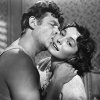
 What many don’t know is that Andy got his start with music and stand-up comedy on early TV shows like “The Steve Allen Show” and “The Ed Sullivan Show”.  His comic routine “What it was, was Football” was an early comedy classic and had success on the charts.  He also was a Tony nominated performer on Broadway for “No Time for Sergeants”.  He later reprised his role for the film version, and on the set is where he first met Don Knotts.  Griffith’s film debut was for A Face in the Crowd (1957, pictured left), directed by Elia Kazan (A Streetcar Named Desire, On the Waterfront, East of Eden).  Many who see this film for the first time are stunned at the Griffith performance.  The familiar folksy style that we immediately recognize, actually hides a power-mongering personality that was used to highlight the power and danger of TV, when used by the wrong people (still an issue all these years later). I believe TCM will include this film in its day of tribute to Andy Griffith later this month, so if you haven’t seen it, please give it a look.

 Andy Griffith once said that Sheriff Andy Taylor was “a better man than I am”.  This humble statement sells himself and his influence quite short.  Most of his career was spent playing characters whom we could trust and learn from.  We trusted him so much that when he told us everything tastes great on a Ritz cracker, we believed him… and sales spiked.  The ultimate test of a man is his loyalty to his friends.  Despite his own personal challenges, Griffith found his way clear across the country for one last visit with his friend Don Knotts, before Knotts passed away in 2006.  While it’s an unfair burden to place on anyone, I will remember Griffith as a very talented performer, but more importantly, as one who taught me some basic tenets in being a better man.

There were just too many classic scenes to choose from, so will close with this:


NORA EPHRON remembered (1941-2012)

June 27, 2012

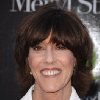
 Nora Ephron passed away yesterday from complications related to Leukemia.  She was 71.  Ms. Ephron will be mostly remembered for her success in the Romantic Comedy genre thanks to the brilliant When Harry Met Sally … (1989), and others like Sleepless in Seattle (1993), and You’ve Got Mail (1998).  That description would be selling her talents short.

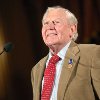
Born to two screenwriter parents, Ephron’s career included time spent as a reporter, essayist, novelist, screenwriter, playwright, and film director.  She was a famed humorist and described by her friends as very generous with her time and advice, and clearly a confident person as she succeeded in a male-dominated industry.  She was thrice-married: to novelist/screenwriter Dan Greenburg, to Watergate investigative reporter Carl Bernstein, and for the past 20 years to writer Nicholas Pileggi (pictured left, known for Goodfellas, Casino).  It was well known within the film industry that Ephron was often asked to help fine tune scripts … and she always refused screen credit.  She was especially likely to offer career guidance and assistance to women trying to make it in the business.  Katie Goodman wrote a blog entry just yesterday discussing Ephron’s recent generosity to her.

Her film career is what made her famous and When Harry Met Sally … was her crowning achievement.  The script is brilliant and insightfully captured the male/female struggle with friendship vs. relationship.  She worked closely with director Rob Reiner and the actors Billy Crystal and Meg Ryan to ensure we could relate to the ongoing struggles of these two everyday people. The script was one of the three Oscar nominations she received.

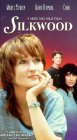
 Ephron wrote the screenplay for Silkwood (1983) and it remains one of her most underrated efforts. Based on a powerful, true story, it’s a film I highly recommend almost 30 years later and is another example of how she was attracted to strong women – both real and imagined.  I have always had a bit of a problem with Ephron’s next two biggest hits.  Sleepless in Seattle was really an updated version of An Affair to Remember (1957) and You’ve Got Mail was a re-working of The Shop Around the Corner (1940). Proper credit was never really given to the original works.  Her directing career never really matched her writing success, but her final film Julie & Julia (2009) was well made and captured Ephron’s lifelong love of food … which she often wrote about in her essays.

So when you hear the name Nora Ephron, remember that she was more than queen of the Rom-Com.  She was a multi-talented, creative and generous woman who influenced the life and career of many others.

In what may be her best written sequence – the last 5 minutes of When Harry Met Sally … – she captures the essence of male and female psyche.  If you have never seen the film, make a point to.  If you have seen it, re-visit those glorious last 5 minutes:


BIZARRO STEPFORD: No Town Left Behind

June 3, 2012

Note: this is quite a detour from the movie commentary one normally finds on this site.  Recent personal experiences and observations provided the motivation to veer from the typical content.

 Rural America is often fodder for entertainment writers.  The best, such as Harper Lee’s To Kill a Mockingbird, provide such clear insight that we find ourselves connected to the characters and believe we understand the fabric of the community.  “The Andy Griffith Show” ran for more than a decade, stressing the humanity, humor and nuances of small town life.  Movies such as Deliverance, Texas Chainsaw Massacre and Children of the Corn offer a glimpse into the dark side of those who are shut off from mainstream society.  The results, though often exaggerated by Hollywood, are often quite grisly.

My son recently lost his campaign bid to become District Attorney in a rural Texas community.  This is not a rant about his loss … it was a close race … but rather some observations about the wide chasm that exists with the citizenry, and why “community” is a misnomer when describing this area.  While our largest cities are celebrated for their convergence of varying cultures and multitudes of special interest groups, small towns thrive only if the community strives to keep up with the times, and not remain isolated from societal advancements.  To paraphrase … No Town Left Behind.

There are plenty of colorful debates to be had on whether a District Attorney, or even a Judge, should be a populace-elected position.  At the core, these are positions designed to uphold the existing laws, not draft or amend.  Logically, the optimal choice would be the best qualified candidate, not necessarily the best known.

Logic, objectivity and reasonableness seem to be the factors that divide this particular rural community.  There is certainly the group that pays attention to things such as experience, personality, endorsements, campaign platform and overall approach and vision.  This is the group that consists of individuals with whom most of us would enjoy conversing, even debating issues of substance.  Unfortunately, this group doesn’t make for interesting observatory writing.

 The “other” group is the one that so fascinates me.  What matters to these people, and why? Above all else, “one of us” is the top priority in selecting a candidate.  This was most evidenced in the State Representative race which had four candidates.  The local candidate dominated voting in this, his home county.  After all, he is “one of us” … as is his dad and his dad’s dad.  Despite his local landslide, this candidate received almost no support in the sixteen other counties that comprise this district, and did not qualify for the run-off.

What’s next on this community’s priority list?  Try church membership. Forget what you think you know about separation of church and state.  The strongest campaigning and political fundraising occurs within the church. This unspoken sphere of political influence could be exposed with minimal effort, and the sham of tax-free status would be gone for the offending church. How strong is the church bond?  When a local woman was arrested for murdering an infant by violent shaking, her fellow church members came out in mass support during the trial claiming she was a “good Christian woman”, and attended church regularly.  Of course, the jury also included some of her church members.  Do you think those jurors were strong enough to stand up to that almighty peer pressure?  Hardly.

 Surely experience and campaign issues are up next, right?  Stop thinking logically.  Next up would be marital status and procreation success.  In this area, you dare not be over age 18 and still single, lest the whispers begin about your sexual preference.  Unmarried translates into some type of character flaw to this side of the chasm. It matters not if you spent 7 frivolous years in college and law school.  The winning candidate in the DA race actually ran with his family as his campaign platform … well that, and a Dr. Seuss quote.  His obedient wife (by his side, one step behind) and four daughters were on public display and all the evidence many needed to determine he was worthy of a vote.  This despite his quoted importance of offering “a helping hand” to criminals who sometimes make a mistake.  Oh, I failed to mention that this is a FELONY-only DA position.   Second chances are fine for those with speeding tickets, but how many of us are in favor of lending “a helping hand” to those who sexually molest our child or murder our brother?

This area is filled with tough, strong people.  People who have survived tough times caused by the collapsed economy, the wrath of Mother Nature, the loss of farming and ranching income, and just an overall “land that time forgot” feeling.   Some in the area have found success by selling oil and mineral rights to their land.  Others manage to scrape out a living one way or another … or even multiple ways.  There is a group that has managed to maintain an ability to think and make mature decisions, while this other side wallows in closed-mindedness and refuses to consider any hint of progress. Drugs, especially Meth, have created an economy of their own. Luckily for those dealers, “a helping hand” is on the way.  It appears some small towns actually vote to be left behind … as long as it’s with one of their own.


THE GODFATHER (1972) revisited

March 3, 2012
 Black screen. Cue the lone trumpet’s haunting opening notes of Nino Rota‘s theme.  Close up of a suffering man.  “I believe in America.” That, my friends, is a powerful opening to a truly great film.
 
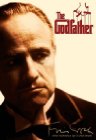
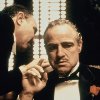
It’s been 40 years since it’s original release, and this latest remastering looked and sounded amazing on Cinemark’s largest screen. Following those opening moments, we get our first look at Marlon Brando as Vito Corleone. On this screen, it was almost like seeing him for the first time … a disquieting figure that oozes power and commands respect.
 
There is no need for another review of this truly classic American film.  Instead, this will offer a few observations (possible spoilers) and notes of interest … combined with the highest possible recommendation to watch this one again!
 
At its core, author Mario Puzo‘s story is about power, loyalty, trust and family.  We witness what happens when one is viewed as having too much power. Loyalty is rewarded, and disloyalty brings the harshest possible penalty.  Trust is gained over time, but lost in a flash. And family is the most complex subject of all.
 
 Over the years, there have been a few movies with more star-studded casts, but it’s difficult to imagine a more perfectly selected cast: Marlon Brando, James Caan, Robert Duvall, Al Pacino, John Cazale, Sterling Hayden, Richard Conte, Diane Keaton, Talia Shire, Abe Vigoda.  Each of these actors have graced the screen in numerous roles, but for this three hour film, they become Corleones, associates, enemies, etc.  
 
There were a few things that jumped out at me during this viewing.  The use of oranges (the fruit) contradicts the health benefits preached by the medical profession. Every time we see a bowl of fruit, a fruit stand or someone peeling, eating, or selecting an orange, a scene of doom (usually quite violent) is soon to follow.  Carlo is even wearing an orange suit when Sonny (James Caan) shows up and paints the sidewalk with him. Don’t miss the billboard featuring oranges that Sonny drives by just before he pulls up to the toll booth. Brando’s final scene is preceded by him playfully scaring his grandson with an orange peel.  I understand the importance of Vitamin C, but I think I’ll stick with supplements!
 
 It’s very interesting to note the camera angles throughout the movie.  In an unusual approach, director Francis Ford Coppola uses an “eye-level” camera almost exclusively.  This gives the viewer the feeling of being part of the scene, especially during the small group meetings within Corleone’s dimly lit office.  The few exceptions are the overhead shot of Corleone being gunned down, the Los Angeles cityscape, and a couple of shots at the wedding to emphasize the scale of the event.
 
The famous “Mattress Sequence” was put together by George Lucas (Star Wars fame) for his friend Coppola.  This is the segment after the Louis Restaurant shooting where we get a montage of B&W crime photos and newspaper headlines. These are real life crime photos and one of the shots is of Frank Nitti, Al Capone’s trusted enforcer.
 
It’s quite fascinating to recognize how many “classic” lines of dialogue sprung from the movie, especially when you notice the minimalistic approach to dialogue used by Puzo and Coppola.  Much of the communication is non-verbal body language, glances, nods and shrugs … Brando, especially, is a master at this.
 
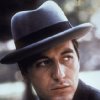
 One of the more remarkable facets of the film is the transformation of Michael (Al Pacino).  We first see him as a dashing war hero relaxing at the wedding with his girlfriend (a baby-faced Diane Keaton). He is very laid back and kind of cocky with the thought that he can rise above the dirty family business. He sees himself as better than that. Watch the subtle changes in his appearance … his hair, his posture, his eyes, even his hat!  As great as Brando is as the Don, it’s Pacino’s performance that really takes the film to an unprecedented level.  It’s really fun to compare Michael’s even-keeled, calm processing approach to the high-strung, act-now-think-later approach of his brother Sonny.
 
 The final note involves actor John Cazale. Here (and in part 2) he plays Fredo as a frightened, insecure puppy who is desperate to find his place.  Imagine your father being Vito Corleone and your brothers are Sonny and Michael.  It’s to be expected that you might be overlooked and overpowered in conversation. The really interesting note about Cazale is that this was his feature film debut.  He went on to make 4 more films before cancer took his life in 1978.  Cazale made 5 films and all 5 were nominated for Best Picture (both Godfather films, The Conversation, Dog Day Afternoon, The Deer Hunter).  He was engaged to Meryl Streep at the time of his death.
 
So the real point here is that if you ever doubt the magic and power of movies … shut off your phone, close the blinds, take the cannoli, and let The Godfather absorb your thoughts.  While you are at it, remember … it’s not personal, it’s business (only you shouldn’t really believe that).
 
Thanks to Cinemark for making me an offer I couldn’t refuse.

THE MONKEES – a tribute

March 1, 2012

 Hey, Hey … When the announcement came down that Davy Jones had passed away on Wednesday, fond memories flooded back for many in my age group (the optimal demographic of 20 to 85).  For the last 4-5 years, my “ideas” list has included writing a tribute to The Monkees, and I feel guilty that it took this sad event to motivate me to finish.  Despite my procrastinating, this story deserves to be told, as their impact should not be ignored (yes, I am serious).

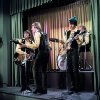
Going back to the mid-60’s, there was an entertainment revolution occurring that impacted TV and music.  In 1964, the Beatles while at their chart-topping peak, released their first movie … A Hard Day’s Night.  Caught up in Beatle-mania, producers Bert Schneider and Bob Rafelson were inspired to capture that same frenetic pace for a TV show, with comedic elements enveloped by pop songs.  Schneider later produced Easy Rider, and Rafelson directed the 70’s classic Five Easy Pieces.  With this idea, the “pre-fab four” was born as The Monkees, what some people call the first boy band.  After a huge casting call, three Americans (Mike Nesmith, Micky Dolenz, Peter Tork) and one Englishman (Davy Jones) were cast as the musical group.

 The series had strong ratings and ran for three years (1966-68) in Monday primetime.  Re-runs then became a fixture on Saturday morning TV until 1973, keeping the group in front of an audience for eight total years.  James Frawley directed 28 of the 58 episodes, and the series would lead to 11 albums (over 65 million sold), a TV special, a feature film (Head 1968), and numerous reunion tours.  It all began with the ground-breaking TV series that really clicked with kids.  The offbeat series seemed to prove that different personalities could do more than co-exist.  Mickey was the class clown.  Mike was the quiet, soulful one.  Peter was the hyper-dork.  Davy was the cool popular one.  This disparate group managed to have fun as friends and make great sounding music together.  Kids could relate to these misfits and it provided hope, as well as some  popular music.

Ahh … the music.  The music is what caught everyone by surprise. The four lads had limited musical backgrounds, so the plan was to use mostly studio musicians.  What music producer Don Kirshner discovered was that, at least vocally, there was plenty of talent in the group.  With harmony groups very popular at the time (The Beatles, Beach Boys, Crosby Stills Nash, The Hollies), The Monkees created a smooth, distinctive sound without the edge or political statements that were all over the radio. Despite being surrounded by the constant claims that they weren’t real musicians, their first album “The Monkees” (1966) stayed number one for 13 weeks, and was the first of four consecutive number one albums for the group.  Here is a brief recap of the four actors:

 DAVY JONES was born in England and at 5’3, had intentions on become a jockey.  He stumbled into stage acting and was nominated for a Tony, as The Artful Dodger in a Broadway production of “Oliver!”.   As a matter of fact, when The Beatles made their U.S. debut on “The Ed Sullivan Show” on February 9, 1964, Davy Jones was also on that same show as a member of the acting troupe performing a scene from “Oliver!”   Jones had four daughters and continued acting and singing throughout his life.  He had performed just two nights prior to his fatal heart attack.

 MICKY DOLENZ was a child star on the TV series “Circus Boy” (1956-58).  When he was cast in The Monkees, he learned the drums well enough to play on some of their albums.  He has since managed to grind out a pretty successful showbiz career with acting, singing, voice acting (cartoons), directing, and even as a radio DJ.  Toni Basil’s 1982 hit “Hey Mickey” was named after Dolenz, as she had choreographed The Monkees’ movie Head (1968).

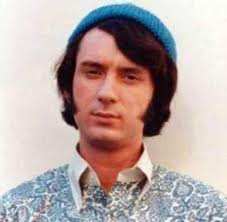
 MICHAEL NESMITH was a self-described “do-nothing” teenager. He was very involved in the production of music for The Monkees, and was the driving force behind the group’s break with music producer Don Kirshner. After leaving the group, Nesmith invented and sold the concept of 24-hour Music Television to Time Warner, and it eventually evolved into MTV.  His mother, Bette, invented Liquid Paper, from which stemmed a $50 million inheritance for Michael when she passed away.  Nesmith has stayed active in music production and has even written a couple of novels.

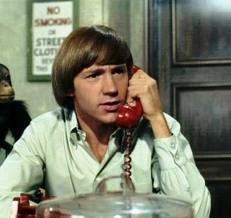
 PETER TORK – was a Greenwich Village folk musician and Stephen Stills’ roommate prior to being cast in The Monkees.  He was the most gifted musician of the four and played multiple instruments across various music styles.  Peter was diagnosed with a rare form of head and neck cancer, and in 2009 had successful surgery to remove the growth from his tongue.

After the series ended, Rafelson teamed with Jack Nicholson (credited as co-writer) to create a feature film with The Monkees.  Head was released in 1968 and featured cameo/pop-in performances by such well known personalities as Annette Funicello, Dennis Hopper, Teri Garr, Victor Mature, Sonny Liston and Frank Zappa. Though not a box office success, the film has developed quite a cult following, and the soundtrack has fared very well with critics over the years.  Nesmith still claims the movie was designed to “kill off” The Monkees.

 Throughout the years since, there have been numerous incarnations of reunion tours and special appearances that featured 2-4 of the original group.  The 1996 “Justus” album was the first since 1968 on which all four members performed, produced, wrote and played all instruments (thus the name Justus = Just Us).

The Monkees’ music remains a staple on “oldies” radio, and has been recorded and covered by numerous bands over the years, including: Run DMC, Smash Mouth (for Shrek), The Replacements, and Susan Boyle.  Many of their songs were written by the Boyce-Hart team, but also such well known songwriters as Neil Diamond, Carole King and Harry Nilsson.  Despite all the controversy, the group has numerous songs that have held up well over 45 years.  Their influence is clear and they deserve a place in TV and musical history.

**NOTE: The rumor that Charles Manson auditioned for the show was false, as he was in prison at the time.

Here is a list of some of The Monkees’ finest songs.  Some of these are live links so you can see the early music videos while you listen to the pleasant sounds of The Monkees:

A Little Bit Me, A Little Bit You

Daydream Believer

Girl

I’m a Believer

I’m Not Your Steppin’ Stone

Last Train to Clarksville

Listen to the Band

Look Out (Here Comes Tomorrow)

Mary Mary

Monkees theme

Pleasant Valley Sunday

Shades of Grey

She

Sometime in the Morning

The Day We Fall in Love

Valleri

When Love Comes Knockin’ at Your Door

Your Auntie Grizelda – Ok, not one of their best, but certainly one of the funniest

Your Auntie Grizelda