COME PLAY (2020)

October 28, 2020

 Greetings again from the darkness. Hopes are always high this time of year for a creative new horror film. As each Halloween approaches, we search for new movies that will frighten us in an entertaining way, or at least be creepy enough to make us sleep with the lights on! Looking to be this year’s horror breakout, writer-director Jacob Chase has expanded his own 2017 5-minute short film LARRY into a full-length feature film.

Azhy Robertson (the young son in Noah Baumbach’s Oscar nominated MARRIAGE STORY, 2019) stars as Oliver, a dead-ringer for Danny Torrance in THE SHINING (1980). Oliver is an autistic, non-verbal boy who has no friends and depends on his electronic devices to communicate and entertain (he loves “SpongeBob SquarePants”). His parents, Sarah (Gillian Jacobs, “Community”) and Marty (John Gallagher Jr, SHORT TERM 12, 2013) constantly argue, which exacerbates Oliver’s hyper-sensitivity. When Dad moves out, an overwhelmed mother does her best to follow the advice of Oliver’s therapist. What she doesn’t know initially is that some being or creature named Larry is tracking her son through an online story called “Misunderstood Monsters” that pops up on his mobile devices.

Larry just wants a friend.” As the story slowly unfolds on the tablet Oliver’s dad found in the lost & found in the parking lot booth where he works, we come to understand exactly what is happening, and who and what Larry really is. The theme has some similarities to Jennifer Kent’s excellent film, THE BABADOOK (2014), with a dose of THE RING (2002), but the suspense never builds to that level despite a nice performance from young Mr. Robertson.

A clever twist actually ends up lessening the fright factor here. The monster can (mostly) only be seen via the mobile devices, which means the visuals are often limited by the size of the screen, although I’m a fan of the practical effects. Because of this, sound effects are critical, as are the reactions of Oliver and his parents … as well as the classmates unfortunate enough to get volunteered for a sleepover.

It seems only fitting that in 2020, loneliness is the real monster, and technology is the conduit for its impact. Additionally, all parents will relate to the extremes Sarah and Marty go to protect Oliver, and the final scene does offer an all-knowing moment that reverts to a simpler time … one that Larry wouldn’t appreciate.

watch the trailer


FISHBOWL (2020)

October 28, 2020

 Greetings again from the darkness. In the not so distant past, folks who lived in small towns felt like there were no secrets – everyone in town knew each other and what they were up to. Thus, the proverbial “fishbowl” of the title. Of course, these days, people in towns and cities of all sizes voluntarily advertise their every waking moment on social media, making privacy and gossip relics of a bygone era. Brother-sister co-directors Alexa Kinigopoulos and Stephen Kinigopoulos (first feature for both), working with a script by writers Piero S Iberti, Maria Stratakis, and (co-director) Stephen Kinigopoulos serve up a taste of small town life in the good ‘ol days.

“In Bishop, you either talk or you’re talked about.” So says our narrator Belle over the slow-motion opening montage. She’s the oldest of three sisters who live with their father and attend a local Catholic school. All members of this family are broken in their own way, and it’s made clear this is due to the beloved mother/wife no longer being around (though initially we aren’t sure what happened). Belle (newcomer Belle Shickle) is the rebellious one, though not quite as self-assured as she likes to think. The middle girl, Rachel (Emily Peachey), is sensitive and stunned when her friend tells her they can’t hang out anymore – even for her birthday. The youngest, Jessa (newcomer Caroline Coleman) hasn’t spoken a word in the 4 months (actually 118 days) since mom has been gone. Their dad (longtime stuntman-actor Rick Kain) is a mess, bouncing from over-zealous religious fanatic to forsaking it altogether, and then back again.

We see the family faced with hostile reactions in the community, at school, and even at church, where the priest suggests it would be better for everyone if they stayed away. Dad is drawn in by Tele-Evangelist Ron Peltz (Bobby J Brown) who is hocking his $1000 “Save Me Now” program as protection from The Rapture, which he proclaims will arrive on September 29. Close to foreclosure on their house, the dad plops down the grand, and forces his daughters to go door-to-door trying to “save” the neighbors from the end of the world.

A countdown to the final days also includes the teenage sisters trying to find their way in this new world. We get flashbacks to when they were younger and family life with mom (Judith Hoag, TEENAGE MUTANT NINJA TURTLES) was pleasant, despite dad’s alcoholism at the time. The three sisters cling to each other, but grow more concerned for their father and themselves. A particularly telling sequence has them defying their father and attending a costume party dressed as a devil, a nun, and a princess. It doesn’t end well, and sets up the finale.

The Kinigopoulos filmmakers give the movie a dreamy/surreal look and feel, and perhaps Jeff Nichols’ far superior 2011 TAKE SHELTER is the closest comparison. The four lead actors are fine (especially Ms. Shickle), but the background actors are exaggerated and distracting – perhaps this is done on purpose to help us understand what the family is going through. Pretty significant observations are offered up on small towns, parenting, church-goers, faith as a crutch, and alcoholism. It’s not an easy watch, and one that will probably not have mass appeal. It’s the type of movie that fits easily into the line-up of many film festivals, as that’s the environment where it is most likely to find appreciation.

Available VOD October 27, 2020

watch the trailer


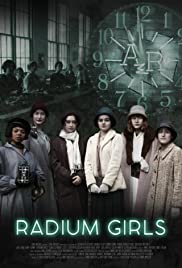
RADIUM GIRLS (2020)

October 23, 2020

 Greetings again from the darkness. A huckster or carnival barker is spouting off the many uses and health benefits of radium. He even hails it as “liquid sunshine”. That’s how this film from co-directors Lydia Dean Pilcher (A CALL TO SPY, 2020) and Ginny Mohler kicks off. Ms. Mohler co-wrote the screenplay with Brittany Shaw, and it’s presented as a historical dramatization – some of the names have been changed to protect both the innocent and guilty.

Joey King (“Fargo”) stars as Bessie, younger sister to Josephine (Abby Quinn, I’M THINKING OF ENDING THINGS). Josephine is the more studious of the two, as Bessie dreams of becoming a Hollywood star. Both girls work as dial painters at American Radium (re-named from the actual United States Radium Corporation). Josephine wins awards for being the most productive, while Bessie gets scolded and has her pay docked due to shoddy work. See, Bessie refuses to lick the brush to create the fine tip needed for precise work. So what’s a dial painter? Well, it’s 1925, and these women are applying a radioactive liquid to the faces of watches to create the popular glow-in-the-dark effect. Marie Curie’s discovery from twenty years prior has been found to have many uses, including shrinking cancerous tumors. However, the story finds the dial painters who lick-dip-paint, are getting sick and dying at an ever-increasing rate.

Mary, older sister to Bessie and Josephine and also a dial painter, had previously died after being diagnosed with syphilis. Bessie’s outrage and curiosity starts to build when the company doctor passes along the same diagnosis to (virgin) sister Josephine when her teeth start falling out, her joints ache, and her skin breaks out in a rash. We witness the transformation of Bessie from teenybopper to activist. She’s helped along by love interest Walt (Collin Kelly-Sordelet) who introduces her to the socialist movement, as well as Wiley Stephens (Cara Seymour, “The Knick”), the real life founder of the Consumers League.

Many dial painters refused to believe the connection and were frightened to lose their job. A few came forward, though they struggled to find a legal counsel willing to go against the giant corporation led by the arrogant Mr. Roeder (John Bedford Lloyd). It’s interesting to see the pieces come together for the 1928 court case. Another real life player in this chain of events was Dr Katherine Drinker (played her by Veanne Cox), the scientist who conducted the confidential study that concluded radium produced harsh effects, including physical deterioration – just as Josephine has experienced.

The courtroom scenes may not have the dramatic impact that we are accustomed to seeing in cinema, but this is a remarkable story of some incredibly strong women who stood up, not just for themselves, but for those who wouldn’t or couldn’t come forward. Their court case led to changes in workplace safety laws, while also reminding us of an era when women were given so little power, and giant corporations and the government ruled the roost and couldn’t be trusted. The filmmakers blend some vintage clips throughout, and use the discovery of King Tut’s tomb only three years prior to give the feel of this era nearly 100 years past. Rosamund Pike starred as Marie Curie in RADIOACTIVE earlier this year, and there have been a couple of books written on this topic: “The Radium Girls: The Dark Story of America’s Shining Women” by Kate Moore (2016), and “Radium Girls: A Play in Two Acts” by DW Gregory (2000). It’s a story of courageous women that deserves a wider audience.

watch the trailer


SYNCHRONIC (2020)

October 23, 2020

 Greetings again from the darkness. Innovative filmmakers Justin Benson and Aaron Moorhead are frequent collaborators, as evidenced by such films as SPRING (2014) and THE ENDLESS (2017). Their films teeter between science-fiction, horror, fantasy, and personal drama, and this latest easily slides into the mind-bending and time-warping space they excel in … and all without the mega-budget we’ve come to expect from such films (I’m looking at you INCEPTION).

The film opens on a couple sharing a motel room and what appears to be an acid trip. Strange hallucinations hit them both. We soon flip to an emergency call performed by best buddy New Orleans paramedics Steve (Anthony Mackie) and Dennis (Jamie Dornan). Their overdose victim is located in a setting where something is just a bit off, and “Time is a lie” is written on the wall. When Steve and Dennis are called to the motel of the first scene, we all start to understand something bizarre is happening.

Dennis is married to his wife Tara (Katie Aselton), who has recently given birth, and their headstrong 18 year-old daughter Brianna (Ally Ioannides) lives with them. Steve’s days consist of one-night stands, more booze than any person should ingest, and time with his loyal dog Hawking (an obvious reference to the elements of time at play here). Dennis is bored and Steve is a mess, and things get worse when Steve is diagnosed with a brain tumor by his pineal gland, and Dennis’s daughter Brianna disappears.

A clue to the increasingly bizarre overdose and death scenes that Steve and Dennis run into is the “Synchronic” packaging. It’s a synthetic/designer drug that has dramatic and lethal effects, and a packet was found where Brianna was last seen. Steve decides to test the drug in an effort to “bring back” his friend’s daughter. As Steve videos his 7 minute trips to the past, and then kindly spells out everything he discovers, we viewers are spoon fed the details that would typically require some effort. Beyond the reference to Stephen Hawking, we also get plugs for French composer Claude Debussy and a rare James Bond- Charlie Sheen joke.

Time travel has long been a fun topic for movies, and the ideas behind this one are quite promising. The only downsides are that it too obviously guides us through what’s happening, and the trips back in time aren’t as structured or interesting as we would hope … although the idea of having the past be in the identical spot as the future is terrific. Benson and Moorhead are ambitious and creative filmmakers, and their shot at appealing to mainstream audiences is appreciated, as is the atmosphere and camera work. However, many of us would rather a bit more be left to our imagination.

watch the trailer


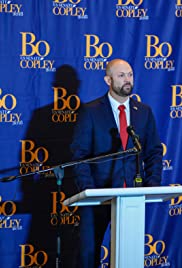
THE CAMPAIGN OF MINER BO (2020, doc)

October 19, 2020

 Greetings again from the darkness. During her campaign for the presidency, Hillary Clinton appeared at an Ohio Town Hall meeting, and while pushing green energy alternatives said, “We are going to put a lot of coal miners and coal companies out of business.” It’s the kind of statement that makes headlines, and it did. Of course, Hillary went on to say that it was important we don’t forget about the people that work and depend on the coal industry, but that never became part of the story. Director Todd Drezner does include it here, while mostly focusing on how West Virginian native Bo Copley, a former mining company employee, became a candidate for U.S. Senate.

As a refresher, we see Hillary’s Town Hall statements, and we also see the clip of the roundtable where Bo Copley handed a family photograph to Hillary, confronting her with the real life impact of shutting down coal production.  That simple gesture turned Bo Copley into a “coal miner celebrity”, ultimately pushing him towards the campaign that inspired this documentary. The film opens in June 2017 in Williamson, West Virginia, as Bo rehearses his announcement speech. He’s neither polished, nor confident, and admits, this is “not my natural habitat”.

One thing that quickly becomes clear – Bo is a good dude. He’s a family man and a man of faith. Another thing that’s just as clear – Bo is in over his head for this process. He’s a well-intentioned nice buy, but his platform seems to be, “I think an everyday person should represent everyday people.” This happens to be a highly contested Republican primary featuring five other candidates, two of which are skilled politicians, and a third is a mining company owner who served prison time for a tragedy that killed 29 miners.

The film is structured as a countdown to the primary, and it follows Bo on some of his campaign stops – most of which reinforce that he’s not equipped for this race. He is the prime example of a guy who wants a change in politics and is willing to step up, but simply doesn’t have the understanding … or the funds … to actually compete. He believes if people like him, they’ll vote for him; so there’s no need to ask for votes, even as he’s coaching a kids’ soccer team.

Bo’s wife Lauren is also included here, and she’s supportive of his run, though not initially. Their Christian beliefs are on full display. Director Drezner’s and Bo’s best moment occurs during a talk show interview when the candidate answers the obvious question, “Why start your political career running for the U.S. Senate.” Bo’s answer is spot on and thought-provoking, and goes to the heart of the flaw in our system. The film should be watched by anyone looking to dive into a political run, as it excels as a how-not-to guide.

watch the trailer


MEMORIES OF MURDER (2003, South Korea)

October 19, 2020

 Greetings again from the darkness. Between 1986 and 1991, 10 women were raped and brutally murdered in the province of Gyeong-gi outside Seoul. Considered South Korea’s first serial killer case, the crime went unsolved until 2019. The case was the inspiration for writer-director Bong Joon Ho’s second feature film, as was Kwang-rim Kim’s play, “Come to See Me”. Director Bong Joon Ho co-wrote the screenplay with Sung-bo Shim, and of course, went on to win an Oscar for PARASITE (2019), in addition to providing other popular features such as OKJA (2017), SNOWPIERCER (2013), and THE HOST (2006). This early film can be compared to David Fincher’s ZODIAC (2007), although this one is a blend of murder mystery, crime thriller, black comedy, and political commentary.

Kang-ho Song (PARASITE) stars as Park, a local detective called to the scene of the first victim. Almost immediately we can tell Park and the police force are borderline incompetent. Park is convinced he has “Shaman eyes” and can identify the guilty party simply by looking at them. Of course, this is ridiculous and is proven so on a few occasions. Park’s partner, Detective Cho (Roe-ha Kim), is a hothead who takes a heavy-handed approach to interrogation (though he later experiences true karma). When a second victim is discovered, a more seasoned professional, Detective Seo (Sang Kyung-Kim), arrives from Seoul. In contrast to Park’s gut-feeling approach, Seo puts faith in evidence, proclaiming, “Documents never lie”. These two detectives are at the core of the story and we watch as each evolves.

The film begins on October 23, 1986 as the body of the first victim is found. We witness how the crime scene is immediately corrupted by both cops and local kids. This is also our indoctrination to how the filmmaker is treating this much differently than most crime dramas. A stream of suspects Park refers to as “punks” are paraded through the station, but true chaos ensues at the scene of the second body. We can’t help but be relieved when a professional, big city detective arrives. Bits of evidence are slowly assembled – red clothes, rainy nights, a song on the radio – each may play a role in the actions of the killer. Frustration builds as more murders occur and the detectives are unable to pin down the perpetrator.

The mental and physical toll that detectives endure with such a case are on full display. The obsession with finding the murderer never ends and the fantastic ending proves that even a career change doesn’t erase the failure. We are inundated with crime thrillers these days, but it’s difficult to grasp how this masterpiece was put together by a director whose career was just getting started. Certainly today we recognize the brilliance of Bong Joon Ho, but this was 17 years ago! It plays as a time capsule of South Korea socially and politically in 1986, and it works on that level every bit as much as a crime thriller. Cinematographer Hyung Koo Kim (THE HOST) balances the crime scenes with the police station, as well as the telling facial expressions of the characters. Last year’s solving of these horrific crimes pushed this classic into release, and it’s well worth a watch.

watch the trailer


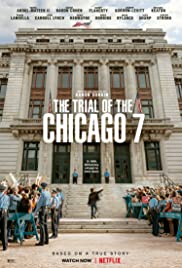
THE TRIAL OF THE CHICAGO 7 (2020)

October 15, 2020

 Greetings again from the darkness.  Tom Hayden, Alex Sharpe, Abbie Hoffman, Jerry Rubin, David Dellinger, Bobby Seale, Lee Weiner, and John Froines. Those were the defendants charged with conspiracy and inciting a riot at the 1968 National Democrat Convention in Chicago. So why were there 8, when they are known as the Chicago 7? Well, writer-director Aaron Sorkin (Oscar winner for THE SOCIAL NETWORK, 2010) not only answers that question, but also fills in many of the blanks for those of us who have known only the highlights of the story.

This story has been told many times before in books, articles, and other movies, but it’s never before had Sorkin’s focus on the spoken word and the transcripts pulled from the 1969 trial. For those familiar with Sorkin’s work, his penchant for absurdly rapid and a bit too on-the-nose chatter is renowned. Here, he has assembled a truly superb cast that revels not just in the words, but in the historical aspect and the modern day relevance. There are a lot of characters to get familiar with, and Sorkin doesn’t delay in introducing each of them by name and affiliation.

Tom Hayden (Eddie Redmayne, Oscar winner for THE THEORY OF EVERYTHING, 2014) and Rennie Davis (Alex Sharp) represent Students for a Democratic Society (SDS) and are focused on the lives being lost in the war. Abbie Hoffman (Sacha Baron Cohen) and Jerry Rubin (Jeremy Strong) are the leaders of the Youth International Party (the Yippies) and their goal is to disrupt the system through chaos. Actual Boy Scout leader David Dellinger (John Carroll Lynch) is a conscientious objector and part of the National Mobilization Committee to End the War in Vietnam, aptly nicknamed “The Mobe”. Bobby Seale (Yahya Abdul-Mateen II) is the leader of the Black Panthers, while Lee Weiner (Noah Robbins) and John Froines (Danny Flaherty, “The Americans”) were protesters, but can’t understand why they are lumped in with the more recognizable group leaders.

William Kunstler (Oscar winner Mark Rylance, BRIDGE OF SPIES, 2015) and Leonard Weinglass (Ben Shenkman) are the attorneys for all except Bobby Seale, whose attorney was unable to attend due to a medical emergency. Richard Schultz (Joseph Gordon-Levitt) is the hand-picked prosecutor for the Justice Department, while Julius Hoffman (Frank Langella) is the presiding judge. Other key players include Kelvin Harrison Jr as Fred Hampton, leader of the Chicago Black Panthers, and the always great Michael Keaton as former U.S. Attorney General Ramsey Lewis.

There is a lot going on here for a courtroom drama. The diverse personalities alone make this a must watch. Flashbacks to the violence and the interactions between police and protesters are mixed in between testimonies. We are also taken into the Conspiracy House, where conversations and debates between the accused get quit colorful. There are also glimpses of Abbie Hoffman’s college campus speeches/performances which illuminate his thinking, and some of the best conflicts occur when Abbie and Hayden are going at each other in such contrasting manners. Langella’s Judge Hoffman is a true lightning rod in the courtroom. Is he biased or incompetent … or both? His behavior is what drives attorney Kunstler, the ultimate believer in the law, to finally understand what Abbie had said all along … this was a political trial – a show of governmental power, and an attempt to quash anti-war activists. This trial occurred mere months after Nixon was elected, and though they never share a scene, the sword-fight between newly appointed Attorney General John Mitchell (John Doman) and outgoing AG Ramsey Lewis (Keaton) is a thing of beauty. Keaton especially shines in his two scenes.

“The Whole World is Watching” became a common protest chant as the government worked to shut down the movement to end the Vietnam War. Netflix and Sorkin have capitalized on the current political and social environment to demonstrate what happened 50 years ago … the more things change, the more they stay the same. Abbie Hoffman states, “I’ve never been on trial for my thoughts before”, and that ties in brilliantly with the desire for Cultural Revolution. Hayden’s intellect in on display here, and Rylance is the real standout as Kunstler, though Langella (the Judge) and Abdul-Mateen (Bobby Seale) aren’t far behind. The scene where Seale is bound and gagged in an American courtroom is one of the most uncomfortable moments I can recall. There may be some questionable directorial choices, but the story and performances make this one to watch.

Premiers on Netflix on October 16, 2020

watch the trailer


LA RESTAURACION (2020, Peru)

October 15, 2020

 Greetings again from the darkness. We don’t typically look to Peru for observant black comedy filmmaking; however this first feature film from writer-director Alonso Llosa (story co-written with Gustavo Rosa) is one of those pleasant surprises we usually only get from film festivals or a spontaneous streaming selection. It’s yet another reminder that an entertaining film doesn’t require a massive budget or a mega-movie star. A terrific story with relatable characters and heartfelt performances will do just fine.

Shots of Lima’s towering and shiny new skyscrapers open the film as we hear from the narrator who describes the booming economy, as well as Peru being “a country of builders that peaked during the Inca period”. That narrator is Tato Basile (played by Paul Vega), a 50-ish failure at life. He dropped out of school which kept him from pursuing his preferred career as an architect. His marriage didn’t last. He has no job, lives with his mother, is addicted to cocaine, and claims he is ‘psychologically incapable of working”. His mother Rosa (Attilia Boschetti) is bedridden and near death, and is fairly disgusted with her grown man son who should have figured out life by now. Still, she grudgingly gives him money for his habit. Her long-time trusted housekeeper and personal assistant Gloria (Delfina Peredes) has protected Rosa from the fact that the family funds are nearly depleted … and the once glorious mansion is crumbling.

One day Tato runs into old friend Raymond (Pietro Sabille), who is now a real estate tycoon cashing in on Lima’s boom market. Their conversation leads Tato to concoct an ingenious and devious plan that requires the assistance of Gloria, as well as Eladio (Luis Fernando Ananos Raygada), the family friend-gardener-handyman-driver, and Inez (Muki Sabogal), Rosa’s young caregiver. The idea is to sell the family house to Raymond for top dollar, and to keep the transaction a secret from Rosa by telling her the family home is being renovated. To pull this off, the co-conspirators will re-create her bedroom in a remote location, and pipe in construction noise and the familiar aroma of the neighbor’s stew. Of course the plan is ludicrous, but desperation for money often leads to poor decisions.

Llosa includes humorous moments and memorable characters, in addition to the life lessons that Tato learns about 3 decades later than he should. Rosa has a recurring acute punchline about disliking “social climbers”, and the score has a 1980’s “Miami Vice” vibe that complements the retro look and feel of the film (including the credits). Llosa’s film is sweet, funny, and sad, and is an example of excellent story-telling. Mr. Vega perfectly captures adult Tato as he finds the soul and love that he’s been lacking. This one might take some effort to track down, but you’ll likely find it worthwhile and entertaining. I sure did.

watch the trailer


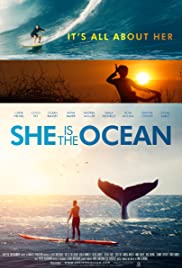
SHE IS THE OCEAN (doc, 2020)

October 15, 2020

 Greetings again from the darkness. “My soul is full of longing for the secret of the sea. And the heart of the great ocean sends a thrilling pulse through me.” That quote from William Wadsworth Longfellow sums up much of what makes the nine women (OK, 8 women and one younger girl) the subject of director Inna Blokhina’s fascination. The film takes us around the globe to meet these women who are drawn to the sea.

It’s a beautiful film to look at, and why wouldn’t it be? Most of it occurs on beaches, underwater, or on surfboards as the waves come in. Two key elements are in play here. First is the spiritual connection to the ocean, and second is women pursuing their passion and dreams as they relate to the ocean.

Cinta Hamsel is the youngest of those featured here, and her aging acts as a framing structure for the film. Her name translates to “Love” in Indonesia, and the filmmaker catches up with her over the years, including her “first big wave”. Cinta flashes a luminous smile from a very early age, and it’s a treat to watch her energy grow and change over the years.

The other women featured here get their own segments – some more expansive than others – and there is probably a 40 or 50 year range in ages. Coco Ho is a 20-something year old pro surfer and the daughter of professional surfer champion surfer Michael Ho. She has many surfing titles to her name all over the world, and is a proud icon for the power of women. Ocean Ramsey swims with sharks – not in the business sense, but rather in the real world. She is knowledgeable and protective of the species, and even educates tourists on what sharks are actually like in comparison to JAWS. Anna Bader is a world famous cliff diver, often executing dives from 24+ meters. She hails from Germany and is the daughter of an Olympic gymnast. Ms. Bader thrives on independence, and she opens up about how her life perspective changed when she got pregnant. Rose Molina is a spiritual vagabond. She has lived all over the world and she thrives on her alone time with yoga and meditation. Her dance and ballet training combined with her free diving, lends itself to her freedom and safety in the sea. Keala Kennelly grew up in Hawaii and became a professional surfer. She discloses how she tried to fit into the feminine model the sponsors wanted, but now she just focuses on being herself – especially after a severe facial injury. Andrea Mollen loves distance paddling in the ocean and surfing big waves. She gushes over her love for her daughter and her work as an EMT. Jeannie Chesser is a bit older than those previously mentioned. She has lost her husband and her professional surfer son Todd, who drowned. Ms. Chesser discusses her cancer diagnosis and how she uses surfing for healing. Finally, we have Sylvia Earle, who despite being the most interesting of all of these woman, receives the shortest segment. As the first female Chief Scientist of the U.S., Ms. Earl is a Marine Botanist who spreads the message that the history of life is in the ocean, and we must respect and protect it. She also inspires by encouraging us to re-discover that child explorer that we once were … embrace the sense of wonder.

If the film has a flaw, it’s that the focus is so concentrated on surfing, and underplays the message and accomplishments of Sylvia Earle. Filmmaker Blokhina opts to give each woman their own song/music (some work better than others). And of course, while each story is inspiring and interesting, it’s the shots of Hawaii’s Pipe Line and Jaws waves that literally take our breath away. Jacques Cousteau said, “The sea, once it casts its spell, holds one in its net of wonder forever.” These women certainly agree.

watch the trailer


2 HEARTS (2020)

October 15, 2020

 Greetings again from the darkness. We’ve seen it before. Two stories, seemingly unrelated, yet parallel. Only this time it’s based on a true story, and the 2017 book “All My Tomorrows” by Brian Gregory. Director Lance Hool and co-writers Veronica Hool and Robin U. Russin serve up a touching and inspirational story of how the lives of families can intersect, and how triumph can come from tragedy.

Admittedly, the film has a bit of Lifetime Movie Channel look and feel. It even begins with some conventional philosophy on life courtesy of our narrator: it’s either a miracle or it’s not, and life either happens to us or for us. These are neither particularly thought-provoking nor deep, however, they do set the stage well enough for the story. We first see an unconscious Chris Gregory (Jacob Elordi, THE KISSING BOOTH) being wheeled on a gurney into the surgical area of a hospital. His loved ones are obviously concerned. We then cut to a period many years earlier as a young Cuban boy passes out on a soccer field. We learn Jorge Bolivar has a lung disease, and has been told at various stages that he wouldn’t live past 12, 20, or 30 years old.

Despite the different time periods, we see the symmetry with the romantic interests of the men. Modern day college student Chris (also the film’s narrator) literally bumps into Sam (Tiera Skovbye, “Riverdale”), and the two become ‘Safety Buddies’ on campus – offering a ride to those students in need. An older Jorge (Adnan Canto, “Designated Survivor”) locks eyes with flight attendant Leslie (Radha Mitchell), which kicks off a whirlwind globe-trotting romance. Chris is a middle-class boy whose parents (Kari Matchett, Tahmoh Penikett) are loving and demanding. Jorge is part of a wealthy Cuban family forced to relocate to Miami due to political pressures under Castro.

Keeping up with the time period for Jorge and Leslie involves spotting the clothing styles and technology hints, and very few viewers won’t know where this is headed well before it gets there. The two staged weddings provide all kinds of cuteness, as does goofy, easy-going Chris. Life perspective is one of the key takeaways here, as is a fact that most people should already be well aware: organ donors make a difference and mean the world to those impacted. The film ends with a note on the Gabriel House of Care, a non-profit worth researching.

watch the trailer