Greetings again from the darkness. “How was your day?” It’s a question we have each asked and been asked thousands of times. In 1974, writer Linda Rosenkrantz thought the answer to the question would make a fascinating book … considering her plan was to talk to her New York City artist friends. She had already written her best-selling book “Talk” (1968), and her idea with this new project was to discover how people fill up their day.
Director Ira Sachs (LITTLE MEN, 2016) opens the film with a note explaining that the recorded tapes of the conversation between Linda and famed photographer Peter Hujar on December 19, 1974, were misplaced. It wasn’t until 2019 when the typed transcript of their conversation was recovered that the idea of publication and a dramatized film version gathered strength. Ben Whishaw (WOMEN TALKING, 2022) plays Peter Hujar and Rebecca Hall (CHRISTINE, 2016) portrays Linda. These two, along with a tape recorder and Linda’s apartment, are the key characters in what, perhaps even more effectively, could have been a stage presentation. Although it’s not textbook cinema to film two characters having a long conversation, there is no denying the artistry to this film.
Still, this is a full run of two friends basically hanging out as one recounts the minutiae of his previous day. With Hujar being a well-known photographer, his name-dropping is probably more impressive than yours or mine. Susan Sontag and William Burroughs come up, and Hujar’s contract with the ‘New York Times’ to photograph Allen Ginsburg takes up much of the day’s energy. Whishaw’s take on Hujar’s oversharing can be interesting to watch – especially when he loses his train of thought and Hall’s Linda is there to rein him back in. The film surely works best as a time capsule of 1970’s artsy NYC, but tell me more about this “Topaz Caucasian”.
Opening in NYC and Los Angeles on November 7, 2025
Greetings again from the darkness. You never want to be the ex-partner who causes a panic attack for another person … especially after 22 years apart. Writer-director Andrew Semans puts a face to whatever you call the opposite of a dream partner or role model by casting Tim Roth as David Moore. However, before we first glimpse Roth’s David, we meet Margaret (Rebecca Hall), a woman who seems to have seized control over every part of her life. Her apartment is immaculate. Her business attire classy. Her glass-paned manager’s office efficient. Her married-co-worker-with-benefits at her beck and call. Her speedy runs through town keep her focused and fit. Her about-to-turn 18-year-old daughter is prepped for college. Yep, every aspect of Margaret’s life is under control.
Most of us know what happens when we are arrogant enough to believe we are in control – life usually slaps us with a dose of reality. For Margaret, the hints are there. A tooth found in her daughter’s wallet. A bike ride gone wrong. A glimpse across the room at a seminar. Another at the shopping mall. And finally, a confrontation in the park. This is how, after 22 years, David drops back into her life – a stalker creating turmoil, doubt, and anxiety. By this point, we’ve seen Margaret doling out advice to young intern Gwyn (Angela Wong Carbone) on how to handle a manipulative boyfriend – one she deems sadistic. Margaret appears strong and is counseling Gwyn on how to be strong and find someone worthy of her love. It’s this conversation, along with how Margaret hovers over her daughter Abbie (Grace Kaufman), that tells us Margaret has a past that’s not as perfect as her present.
Margaret’s backstory is told via a single-shot extended monologue where she recounts her relationship with David. It’s a stunning bit of acting by Ms. Hall, and filmmaking that not only explains the emotional baggage weighing down Margaret, but also makes her relatable. The moment is so taut with emotion that it ends with a kinda-sorta punchline from Gwyn. The first two acts build tension and hint at the bizarre nature of the long-ago David/Margaret relationship, and the “kindnesses” (twisted shows of loyalty and devotion) involved, but we simply can’t prepare ourselves for the ‘off-the-rails’ occurrences in the final act.
Wyatt Garfield’s cinematography and the muted colors of every scene and set, enhance the feeling of suspense and pending trauma. The film provides an excellent example of the long-reaching impact of mind-control, gaslighting, and sadistic manipulation as one person tries to control another. Since Margaret refuses to come clean with her daughter, Abbie is convinced her heading off to college is causing her mother’s breakdown. Instead, the psycho-thriller goes much deeper in showing just how Margaret’s vulnerability at a young age has stuck with her more than two decades later, and no amount of Helen Reddy’s “I am Woman” can break the spell … it requires action to stifle a diabolical jerk like David.
Ms. Hall is outstanding and believable in the role, and without her performance, the story would seem like a parody of the genre. She has quite a career of playing the victim, which seems to come naturally to her, as she’s proved in such films as CHRISTINE (2016). Mr. Roth is a multi-talented actor and doesn’t shy away from becoming a despicable face of evil. Both are ‘all-in’ for these characters, as is Grace Kaufman, who has worked consistently as an actor since the age of nine, mostly in TV roles. While I’m not a huge fan of the third act or the ending, there is plenty here to admire.
Greetings again from the darkness. “We’re all passing for something or other.” Irene (played by TessaThompson) speaks the line that cuts to the quick of Nella Larsen’s 1929 novel, adapted here by first time writer-director Rebecca Hall. We are familiar with Ms. Hall’s many film projects as an actor, and her debut as a director shows immense promise. Ms. Larsen’s novel was inspired by her own life as a mixed-race woman.
It’s Irene whom we first see as ‘passing’ as white as she visits a retail store and takes tea at a fancy restaurant that most assuredly would not serve her if her light complexion and drawn-down hat were not hiding her true self. Cinematographer Eduard Grau has the camera track Irene’s darting eyes that are trained to notice potential trouble. Her gaze stops on a woman seated alone. There is a familiarity between the two and soon, Clare (Ruth Negga) has joined her long-ago childhood friend, Irene, at her table. While Irene “passes” when it’s necessary, she clearly identifies and lives as an African-American – married to Harlem doctor Brian (Andre Holland). Clare, on the other hand, is living a lie. She has permanently “passed” as a white woman, marrying John (Alexander Skarsgard).
The film’s best scene occurs when Clare takes Irene home and introduces her to husband John. His vile, racist nature immediately shows, creating a tense moment filled with excruciating and subtle exchanges of knowing glances between Clare and Irene. It’s a dangerous moment and we aren’t sure where it’s headed. What is clear is that a childhood bond may exist between the two ladies, but there is now a void that can never be filled. But what happens is that Clare finagles her way into the lives of Irene and Brian (and their kids). What we see is that Clare finds the ‘honest’ life quite enticing. Allowing herself to be who she is … dropping the façade … energizes her. Racial identity and sexuality are at stake here, and so are class and culture.
Bill Camp plays a pompous writer named Hugh who always seems to be hanging around the same parties and events as Irene. One of the best lines of the film occurs after Bill asks someone why they are hanging around. The answer is brief and insightful, and cuts to the quick. It’s a strong debut film from director Hall. It has a dreamlike look and excellent performances from the two leading ladies. The grey area in life is teased, and we do wish the dive had been a bit deeper on Irene and Clare, but that ending is one that will stun you – even if you’re expecting it.
Greetings again from the darkness. Oscar nominated writer/director Oren Moverman (The Messenger, 2009) takes the source novel from Herman Koch and turns it into a checklist of items and people to detest. Rather than a cynical look at humanity, we endure a shrill commentary on white privilege, entitlement, misguided parenting, social media for millennials, and mental illness. If somehow the world and local news doesn’t feature quite enough ugliness for you, then Mr. Moverman’s movie should fill the gap – making Roman Polanski’s Carnage (2011) look like a light-hearted comedy by comparison. It’s definitely no Who’s Afraid of Virginia Woolfor even My Dinner with Andre.
Dinner for four at an over-the-top ostentatious restaurant is the setting, and aggravation is the sauce for each course – labeled on screen for our convenience as Aperitif, Appetizer, Main course, Cheese, Dessert, and Digestif. Richard Gere is Congressman Stan Lohman, a candidate for Governor and a slick politician in the midst of a battle to get the necessary votes for approval on his sponsored bill. He is joined by his second (yes it matters) and much younger wife Katelynn, played by Rebecca Hall. Rounding out the foursome is Stan’s estranged (and strange) brother Paul (Steve Coogan) and Paul’s wife Claire (Laura Linney), who is every bit as off-center as her husband.
These four have no real interest in sharing dinner time conversation, but the horrific actions of their teenage sons have brought them together for a strategy session. Michael (Charlie Plummer) is Paul and Claire’s son, while Rick (Seamus Davey-Fitzpatrick) is Stan’s son with first wife Chole Sevigny. Video of their despicable and unforgivable act has been posted on YouTube, and now the four “adults” are convening to decide the best step for these “good kids” who just need help getting back on track. At least that’s what Claire would have us believe. In fact, if satire exists at all in this script, it surely would be in the fact that the politician is the only one to exhibit any semblance of moral fortitude in this situation. We even hear the incident described as “an unfortunate chain of events” … further emphasizing the film’s theme that EVERYTHING is political these days.
The film itself is often too-congested and convoluted. The flashbacks are messy and unnecessary, and the dialogue ill-timed and seemingly written for shock value rather than with situational purpose. No one does droll like Steve Coogan, yet his character spends the film sermonizing (with his running narration of a Gettysburg analogy) and showing no signs of humanity. The big reveal with his character is borderline shameless and insulting. Somehow we are left to ponder who shows the worst judgment – the teenagers or the adults. Evidently we are supposed to feel the moral outrage that all of society is now driven by politics, and in politics, “someone always gets hurt”. Personally, if I have outrage, it is directed at a manipulative film that stole valuable time from me.
Greetings again from the darkness. On July 15, 1974, television news reporter Christine Chubbuck read a prepared statement and then committed suicide on-air by putting a gun to her head and pulling the trigger. You may not recognize her name, but you have likely heard the story … it’s no urban legend. Director Antonio Campos and writer Craig Shilowich offer up a biopic with some insight into Ms. Chubbuck’s personal and professional life so that we might better understand what drove her to such a public and tragic end.
Rebecca Hall takes on the titular role (don’t mistake this for the 1983 John Carpenter/Stephen King film), and despite her usual stilted on screen mannerisms, she delivers what is an emotionally raw and nuanced performance that is the best of her career … and one that keeps us glued to a story of which we already know the ending. We see a woman dedicated to her vision of the profession, while being maddening to those who know her, love her, and work with her. She has an awkward intensity that compounds her lack of social skills and an ongoing struggle with depression. Somehow, Ms. Hall allows us to understand the personal and professional struggles and how things could have spiraled into hopelessness for Christine.
The commentary on the early days of tabloid journalism (“If it bleeds, it leads”) is especially interesting given how the current Presidential campaigns have been covered more than 40 years after the film is set. One might also note the parallels to the character of Howard Beale in Network (1976) … though Christine Chubbuck was less vociferous and never took to yelling “I’m mad as hell, and I’m not going to take it anymore” while on camera (though she evidently felt that way).
Support work comes from Tracy Letts as the frustrated news director, Michael C Hall as the mixed-signals anchorman on whom Christine has a quiet crush, J. Smith-Cameron as her mother and housemate, Maria Dizzia as her friend and co-worker, and Timothy Simons as the misunderstood and ignored weatherman.
The film clearly makes the point that Christine was a misfit in her work and personal life, and though some of the timeline and known specifics are either re-worked or ignored for artistic purposes, Ms. Hall must be commended for highlighting the effects of depression. Even the best meaning friends and family can unintentionally make things worse. We see a clip of Walter Cronkite’s actual report of her death, and Christine’s own words – “The latest in blood and guts” – were actually ahead of her time.
Greetings again from the darkness. If I find myself three minutes into a movie and have already executed a couple of eye-rolls, any hopes for a decent little Romantic-Comedy-Drama would ordinarily be dashed. However, having Rebecca Hall’s character narrate her writing efforts as she taps away on the keyboard, actually does serve the story. The first feature from director Sean Mewshaw and his screenwriting wife Desiree Van Til takes advantage of a beautiful setting, a slew of contrasts, and some heartfelt music to keep us interested in how things plays out.
Ms. Hall plays Hannah, the grieving young widow who has stashed herself away in a lakefront cabin located in the rural Maine community in which she was raised. Her grief remains burdensome some two years after the tragic death of her husband Hunter Miles – a folk singer whose only album (and subsequent death) created a public mystique and a defensiveness on the part of Hannah to protect and control his legacy.
As a Ph.D from Brown, periodic contributor to the local newspaper, and soul mate of Hunter, Hannah undertakes the writing of his biography in the shadow of the studio monument that continues to expand with trinkets left at his gravesite by a cult of fans paying respect. Griffin Dunne plays her friend and owner of the local bookstore and publisher of the newspaper. His less than enthusiastic critique of her early pages of the biography correspond with the vigorous pursuit by a Hofstra Pop Culture Professor with a book publishing deal who wants to make Hunter a key element of his new project.
Jason Sudeikis plays Andrew, and his fast-talking big city mannerisms don’t initially mesh so well with the hyper-sensitive and protective grieving widow. The two spar like brother and sister, and the initial adversarial relationship means only one thing in the movie world … romance is in the air. Fortunately, the focus on telling the story of Hunter acts as a form of grief therapy for Hannah and a bit of redemption of spirit for Andrew. Of course, the path to enlightenment is not simple for either. Hannah’s “friend with benefits” is a hunky local power company worker played by Joe Manganiello (“True Blood”), and Andrew’s big city music industry girlfriend is played by Dianna Agron (“Glee”). But as you would expect, the biggest obstacle faced by the two leads is their own stubbornness.
We learn the most about Andrew and Hannah when they are around others. An Easter luncheon with Hannah’s family is especially insightful. Her parents are played by Blythe Danner and Richard Masur, and as viewers we long for more scenes featuring these two characters (and terrific actors). We sense that these parents see right through Andrew and Hannah. Can Hannah let down her guard so that she can move on with life? Can Andrew quell his ambition so that the emotional connection takes place?
Beautifully shot (with British Columbia substituting for Maine), the aspect of nature plays a role in contrasting country girl with city boy, and it’s the accidental discovery of a long lost song that highlights the stark difference in motives … while also being the impetus for change. Hunter’s original music is heard throughout the film, and it’s actually Damien Jurado whose singing and songwriting add an element of intrigue and realism. Hannah, as narrator, states “In the middle, we feel like it’s never going to end.” While that may be true for many romance movies, the filmmakers here avoid the “too cute” moments that spoil most in this genre … and impressively overcome those early eye-rolls.
Greetings again from the darkness. Joel Edgerton has become one of the more interesting actors working today. His projects range from indies like Warrior and Animal Kingdomto award winners like Zero Dark Thirtyand big budget releases like The Great Gatsby. He has written screenplays, and now comes his feature length directorial debut … and an impressive debut it is.
Simon (Jason Bateman) and Robyn (Rebecca Hall) are seeking a fresh start as they relocate to Los Angeles from Chicago. A new house and new job are an attempt to put an unfortunate situation regarding an unborn child behind them. Things get off to a great start for them as they buy a beautiful house, and Simon is put up for a promotion. An encounter with Gordo (played by Edgerton) leads to some awkward social interactions and some downright creepy stalking.
The film will work best the less you know about it. The psychological thriller aspects never devolve into the slashfest we have come to expect. Instead the film blurs the lines between good guys and bad guys. In fact, it brings into debate what makes a good person … it even states “you may be through with the past, but the past isn’t through with you”. Do our past misdeeds ever totally fade? What about high school bullies … do they mature? Can the proverbial zebra change its stripes? All of these questions and themes are touched.
While you may struggle to identify the protagonist and antagonist, the performances of both Edgerton and Bateman are fun to watch. And it’s Ms. Hall who is the grounding force who initially trusts both men, before questioning everything. There is also a very nice, understated performance from Allison Tolman as an understanding neighbor. Ms. Tolman was terrific in the first year of the “Fargo” series.
Don’t allow anyone to tell you much about this before you see it … just know that it will remind you of the importance of the Golden Rule. Treat others how you would like to be treated … or know that bygones are never bygones.
Greetings again from the darkness. I try to spend very little time re-hashing movies that deliver very little … I prefer to move on to the next one with a clear head. This one frustrated me because it could have – even should have – been so much more.
Director John Crowley was responsible for the very entertaining Michael Caine film Is Anybody There? and writer Steven Knight penned three scripts that I very much enjoyed: Dirty Pretty Things, Eastern Promises, and Amazing Grace. The cast is very talented with Eric Bana, Jim Broadbent, Ciaran Hinds, and … well … also Rebecca Hall and Julia Stiles. So why does it feel so empty?
The movie begins with a horrible act of terrorism – a suicide bomb in London that we view through a grid of 12 closed circuit screens. You would be incorrect if you think there is a payoff for frantically scanning all screens looking for clues. This device is nothing more than a reminder (over and over again) that we are constantly being monitored while in public.
The ensuing trial provides a peek at the British legal system, but the most interesting sub-plot … the young son of the accused terrorist … is minimized in favor of the generic romance between two legal defense attorneys (Bana and Hall). Additionally, Ciaran Hinds’ character is simply too easy to read and Ann-Marie Duff is totally miscast. My favorite moments were the all-too-rare exquisite verbal diatribes from the great Jim Broadbent.
Chalk this one up as a forgettable would-be/should-be political legal thriller that just doesn’t thrill. It’s of little comfort to know that I was probably being watched on the theatre security cameras as I longed for something worth watching on the screen. They may be watching, but you shouldn’t.
SEE THIS MOVIE IF: you have an ongoing wager with your friends that you must see every Eric Bana movie
SKIP THIS MOVIE IF:you prefer your political and legal thrillers to actually have some thrills and not concentrate on some absurd secret romance that everyone knows about
Greetings again from the darkness. My initial reaction upon seeing this opening day was that some fanboys are not going to be happy. Of course, this happens every time Hollywood makes changes to the original comic book material in hopes of attracting massive box office numbers. While I recognize many of the “flaws”, I found this to be an interesting and entertaining turn on the Tony Stark/Iron Man series.
Shane Black was brought in to direct and help write the script. Mr. Black is best known for his crackling buddy dialogue in movies like Lethal Weaponand Kiss Kiss Bang Bang(also with Robert Downey Jr), but doesn’t have significant directorial experience (his most recent effort was KKBB 5 years ago). My belief has always been that what sets this franchise apart is Robert Downey Jr’s take on Tony Stark. A wise-cracking billionaire playboy technology and mechanical genius searching for his true identity. Mr. Black re-focuses the story on Stark. In fact, he basically takes everything away and has him start over.
Regardless of the story, many line up for these movies to see the special effects and the bad guys. The special effects are everywhere … and loud … and massive. The trailer shows a clip of Stark’s Malibu mansion being destroyed, but the entire segment is quite impressive. The number of Iron Man suits seems unlimited at times and the big finale gave me the same feeling of a 4th of July fireworks display when it ends with so many clumps of fireworks being fired at once, that the impact is dulled. As for the bad guys, The Mandarin is one of the most fierce opponents faced by Iron Man in the comics. His portrayal here by Ben Kingsley is a blast to watch, but will undoubtedly upset the true fanboys. Guy Pearce plays Aldrich Killian, a demented mastermind, once snubbed by Stark – in a scene we witness in flashback.
My preference here is to focus on the fun elements since that’s clearly what Marvel and Black are shooting for. Jon Favreau directed the first two entries in the franchise and here takes on a slightly bigger acting role as head of security for the Stark corporation … and he provides some comic relief. Pepper Potts (Gwyneth Paltrow) finally gets to do more than roll her eyes, but she still has her damsel in distress moments. Don Cheadle returns as Col. Rhodes … or War Machine … now re-branded as Iron Patriot, but mostly he is just waiting for his own movie. Rebecca Hall has some screen time as a smart woman who is not so wise in her choosing of partners. No comment. Ty Simpkins plays Harley, a country boy who helps Stark in his time of need. James Badge Dale, Miguel Ferrer, William Sadler, and Dale Dickey all have strong moments, but therein lies what may be the film’s biggest weakness.
It’s an incredibly impressive film to watch … giant visuals, really good actors and quick, witty dialogue. But there seems to be an overload of each of these things. Guy Pearce’s character is woefully underdeveloped. I so wanted more of his backstory and motivation. Same with Harley, the boy. Much could have been done with that. Miguel Ferrer, always a worthy opponent, must have had his best scenes left in editing. The scene with Ben Kingsley, Don Cheadle and Robert Downey Jr, may have been the best in the movie simply because we got a real peak at each of these character’s personality. That’s way more fun that another explosion!
The film pummels us with action, probably has too much Tony Stark and too little Iron Man for the fanboys, throws in a hard-to-swallow sub-plot regarding Anxiety issues for Stark (thanks to his Avengers escapades), and underutilizes Guy Pearce in what could have been a world class evil doer. Still, despite all of that, it’s fun to watch and Robert Downey Jr will always be Iron Man!
*NOTE: the expected Stan Lee cameo occurs during the Beauty Contest scene (he plays a judge)
SEE THIS MOVIE IF:you are fan of the Iron Man franchise … it delivers what we want and what we expect
SKIP THIS MOVIE IF: you are expecting something wildly different from the first two Iron Man movies – the tweaks are minor and mostly effective
Greetings again from the darkness. Seeing this film back-to-back with Mel Gibson‘s The Beaver was a mistake. Following up manic depression with severe alcoholism and mild depression is just a bit too much weight in such a short time. But I guess that’s the point of this one. Will Ferrell stars as Nick. He loses his job, punctures his boss’ tire, and finds out his wife not only left him, but also locked him out of the house with all his belongings in the front yard. That’s in the first 8 minutes of the film.
Ferrell proceeds to get drunk … while sitting in his La-Z-Boy in the front yard. He clearly has hit bottom and shows no signs of recovering. At least not until he partners with a lonely, young, bike riding boy named Kenny (Christopher Jordan Wallace, son of Notorious B.I.G.). This partnership consists of Kenny doing most of the work for the yard sale while Ferrell sleeps and drinks.
Rebecca Hall plays a pregnant woman who is moving in across the street. “What kind of man makes his wife move across country alone?“. That’s the question Ferrell asks Hall … and along with the viewer, these two characters understand the answer would be a man just like Ferrell.
What I like about the film is that there are numerous signs of real human emotion throughout, yet none of the main characters overplay their part. If you are unaccustomed to seeing Mr. Ferrell in anything but slapstick comedies, I encourage you to see Stranger Than Fiction. He really does have dramatic acting skills on top of his amazing comedic talent.
The film comes from first time director Dan Rush and short story writer-extraordinaire Raymond Carver. The script does capture much of the emotion that goes with feeling rejected and searching for numbness in a bottle … or in this case, a Pabst beer can. Supporting work from Stephen Root, Laura Dern and Michael Pena are solid, but the best scenes are between Ferrell, Wallace and Hall. Don’t show up expecting to laugh much. This is a serio-drama that makes you think … there but for the grace of God …
SEE THIS MOVIE IF: you want to see Will Ferrell bring humanity to a gut-wrenching situation OR you are just looking for some ideas on how to live in your front yard
SKIP THIS MOVIE IF: you are expecting Step Brothers or Anchorman
 Greetings again from the darkness. “How was your day?” It’s a question we have each asked and been asked thousands of times. In 1974, writer Linda Rosenkrantz thought the answer to the question would make a fascinating book … considering her plan was to talk to her New York City artist friends. She had already written her best-selling book “Talk” (1968), and her idea with this new project was to discover how people fill up their day.


 Posted by David Ferguson
 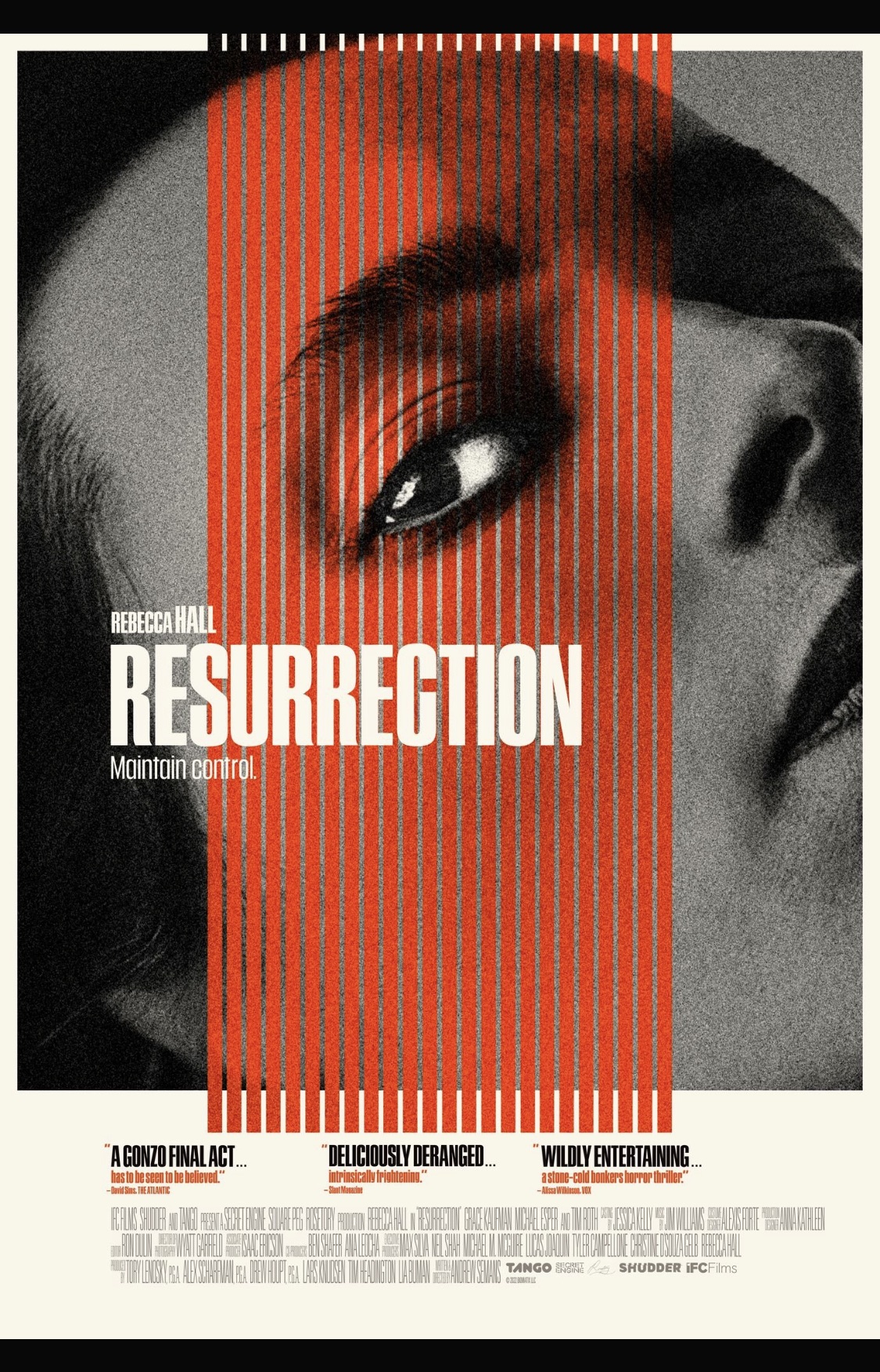 Greetings again from the darkness. You never want to be the ex-partner who causes a panic attack for another person … especially after 22 years apart. Writer-director Andrew Semans puts a face to whatever you call the opposite of a dream partner or role model by casting Tim Roth as David Moore. However, before we first glimpse Roth’s David, we meet Margaret (Rebecca Hall), a woman who seems to have seized control over every part of her life. Her apartment is immaculate. Her business attire classy. Her glass-paned manager’s office efficient. Her married-co-worker-with-benefits at her beck and call. Her speedy runs through town keep her focused and fit. Her about-to-turn 18-year-old daughter is prepped for college. Yep, every aspect of Margaret’s life is under control.
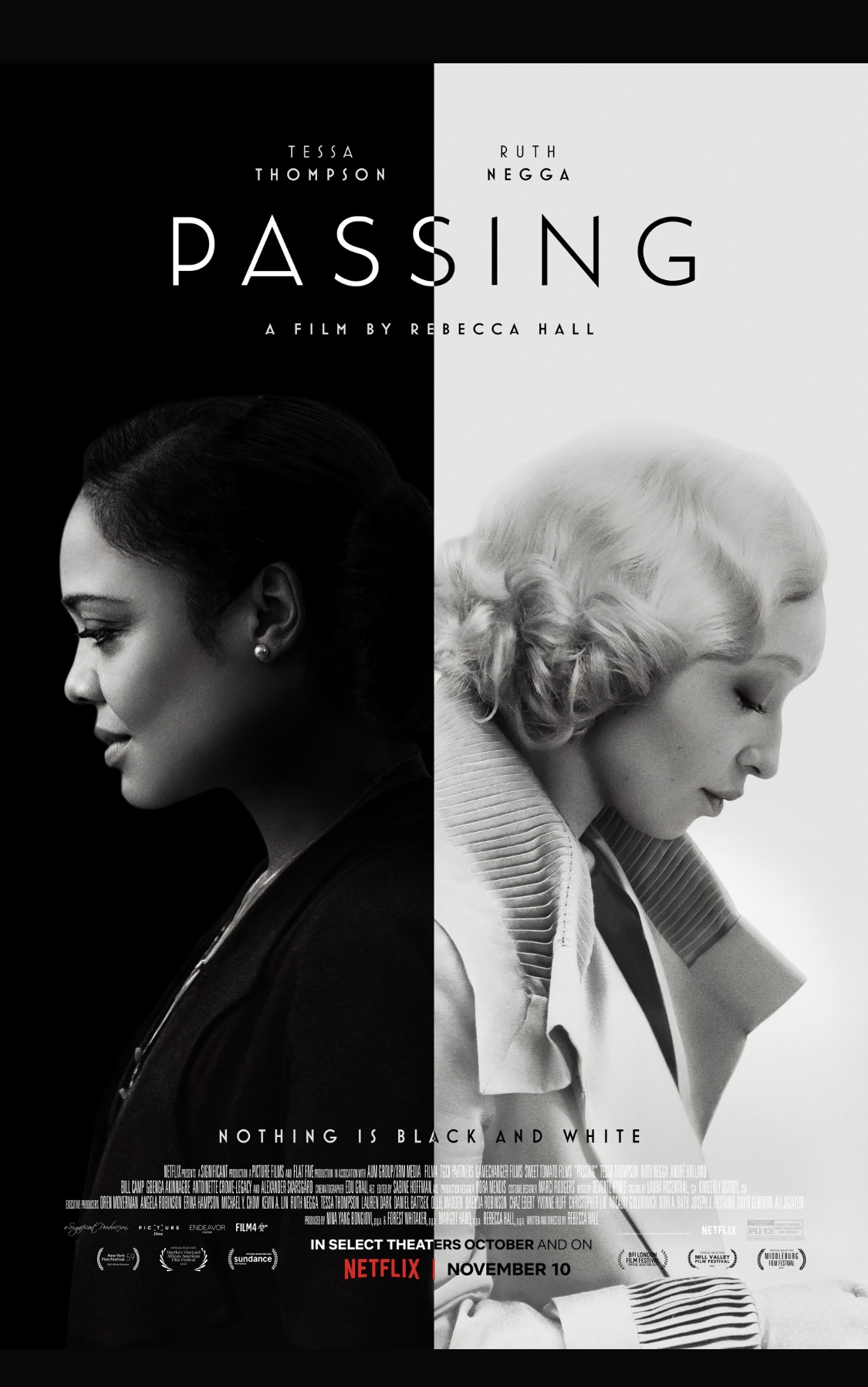 Greetings again from the darkness. “We’re all passing for something or other.” Irene (played by Tessa Thompson) speaks the line that cuts to the quick of Nella Larsen’s 1929 novel, adapted here by first time writer-director Rebecca Hall. We are familiar with Ms. Hall’s many film projects as an actor, and her debut as a director shows immense promise. Ms. Larsen’s novel was inspired by her own life as a mixed-race woman.









 Movie Reviews from the Dark