 Greetings again from the darkness. Too many view WWII as just another page in history books, when in fact, so much changed around the globe because of that war. Almost 80 years later, the war continues to provide stories for filmmakers, and when it comes to storytelling, few do it better than this latest from writer-director (actor-turned-filmmaker) Brady Corbet and his co-writer (and romantic partner) Mona Fastvold. The two had previously collaborated on THE CHILDHOOD OF A LEADER (2015) and VOX LUX (2018).
This is an old-fashioned epic on a grand scale with a few specific features that deserve to be highlighted. At 3 hours and 35 minutes in run time, Corbet included a throwback intermission (with a 15 minute countdown on screen). The opening credits run right-to-left horizontally, while the closing credits run diagonally. For true film geeks, the film is shot in VistaVision to capture the period feel. Part 1 covers 1947 through 1952, while Part 2 covers 1952 through 1960, and the Epilogue takes us to Venice in 1980.
Oscar winner Adrien Brody stars as Laszlo Toth, a Hungarian architect who arrives in post-WWII America after using heroin “for the pain” on the boat ride over. Due to administrative and governmental red tape, Laszlo had to go ahead of his wife and niece, to whom he writes regularly. A familiar face from home greets him upon his arrival. Attila (Alessandro Nivola, FACE/OFF, 1997) has already been Americanized to the point where he’s married and running a custom furniture business. He offers Laszlo a room to sleep and a chance to help design furniture. When Harry Lee Van Buren (Joe Alwyn, THE FAVOURITE, 2018), the son of a wealthy Pennsylvanian tycoon, contracts for a re-design of dad’s library, Laszlo gets a chance to show his brilliance. It turns out, Harrison Lee Van Buren Sr (Guy Pearce) does not like surprises and tosses the workers out.
Soon, a cooler head prevails for the tycoon, and he tracks down Laszlo for a project of much larger scale – a massive memorial on a hill overlooking the city. The project builds an odd connection between rich Harrison and brilliant Laszlo – although the rich guy remains anything but stable, and his son flaunts his own arrogant annoying tendencies (an Alwyn specialty). Laszlo maintains one true friendship. He bonds with Gordon (Isaach de Bankole) after meeting him in the food shelter line. Despite the new World, Laszlo continues to struggle with poverty; however, one of Van Buren’s lawyers is amenable to assisting with the paperwork for bringing Laszlo’s family to the states.
Part two brings wife Erzsebet (Felicity Jones, THE THEORY OF EVERYTHING, 2014) and mute niece Zsofia (Raffey Cassidy, THE KILLING OF A SACRED DEER, 2018) to America. Erzsebet is wheelchair bound after nearly starving to death due to the war. She’s a smart woman married to a creative genius, and yet the land of opportunity continues to toss hurdles in their path (not the least being Laszlo’s continued use of drugs). The moments of hope include a trip to the stunning Carrara quarry to locate the perfect piece for Van Buren’s project.
It should be noted that, despite the lead character’s name, this is a fictional account of the period, and the journey is both physically and emotionally draining. That’s also true for viewers, as I was exhausted by the end. Corbet uses the Epilogue to take us to Venice in 1980 for the first Architectural Biennal. It’s a fitting end after watching the battles of Jews versus Christians, and Immigrants versus American born, all while the United States is booming. I wasn’t ever able to understand the message Corbet was sending by exaggerating footsteps throughout, but I do recognize that Cinematographer Lol Crawley and Production Designer Judy Becker worked some magic along with Corbet and Fastvold … and yes, Adrien Brody, who along with Guy Pearce, deliver some of the finest acting we’ve seen all year. This is not a film so much about the brutalist style of architecture, but rather a film about character and personality during brutal times – and finding a way to utilize one’s true talent, while also remaining true to one’s roots. This is a complex story and one that fully captured me right from the unconventional opening credits.
Opens in limited theaters on December 20, 2024 and wide in January 2025


 Posted by David Ferguson
 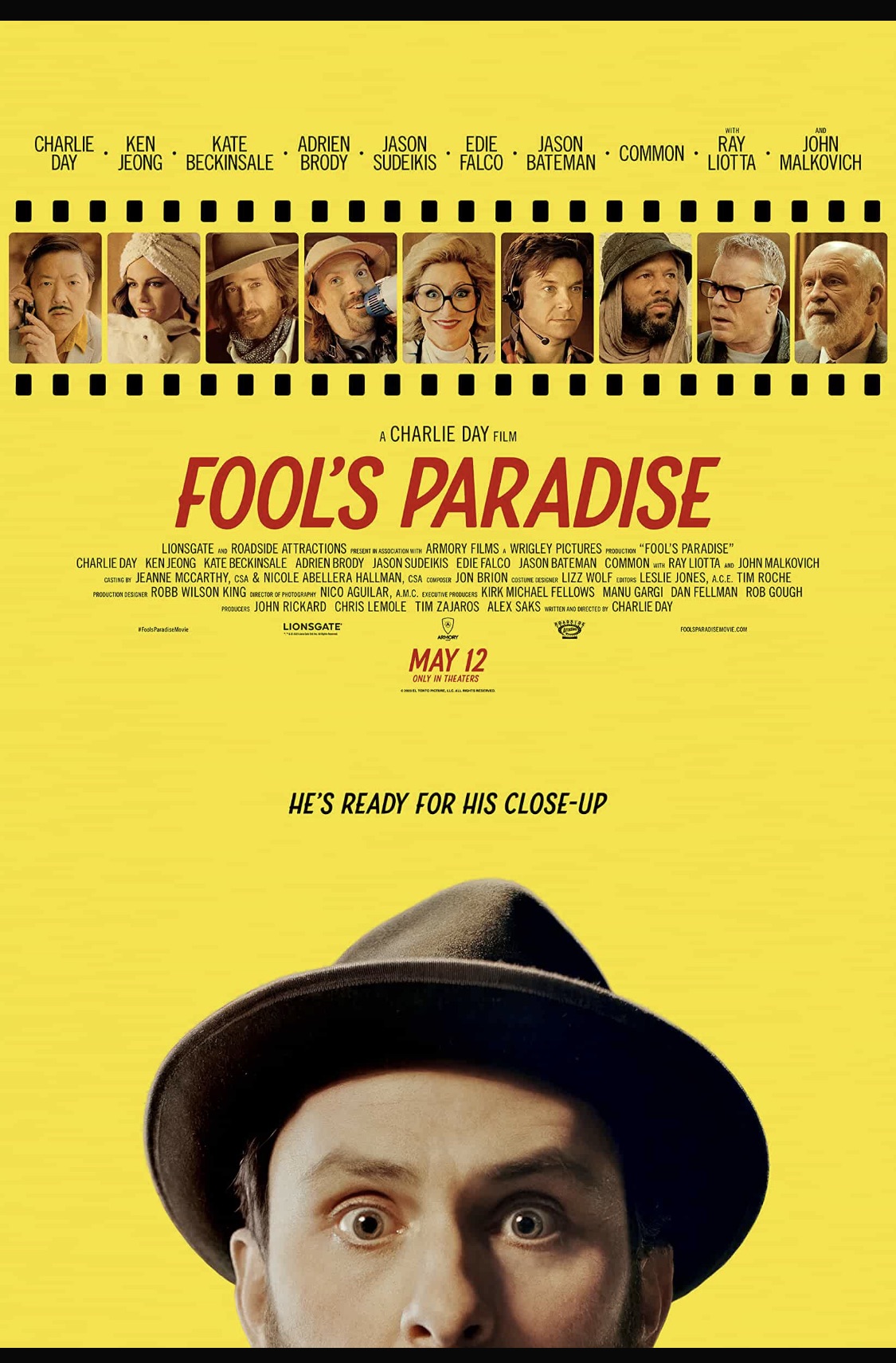 Greetings again from the darkness. “It’s Always Sunny in Philadelphia” is in its 18th year, having aired 165 episodes, not counting endless reruns in syndication. A huge part of the series’ success is the comedic talent and writing ability of Charlie Day. That success has put him in a position to direct his first feature film, and how does he proceed? By attempting to skewer and mock the same Hollywood system that has made him rich and famous. Fortunately for Day, many of his friends have joined in, and most of the mocking falls pretty flat. So, he hasn’t jeopardized the likelihood that he will, in fact, work in this town again.
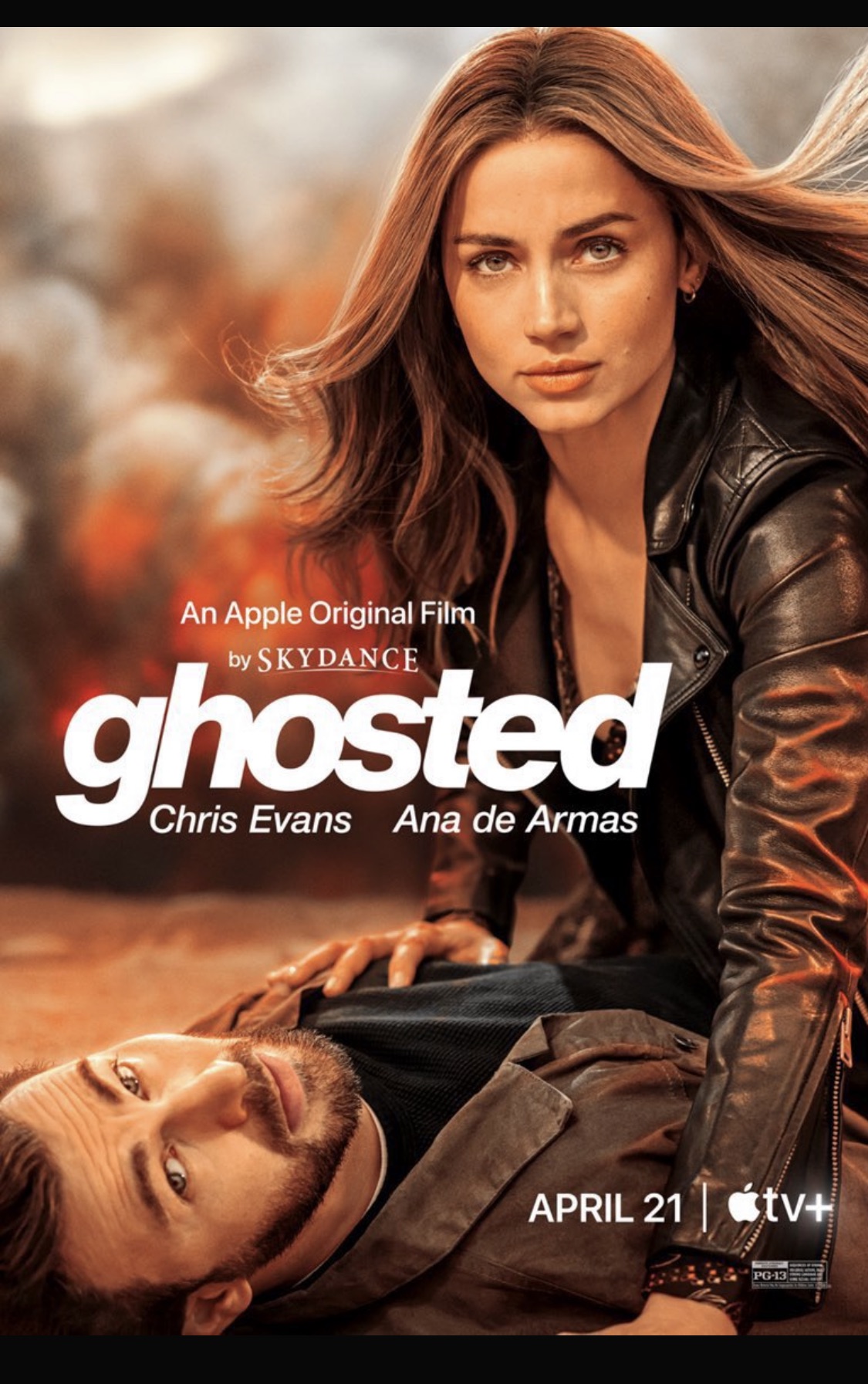 Greetings again from the darkness. I am often accused of taking movies too seriously rather than just sitting back and enjoying the entertainment value. Well, this latest from director Dexter Fletcher (ROCKETMAN 2019, EDDIE THE EAGLE 2015) is textbook ‘popcorn entertainment’ made for those who prefer to sit back and enjoy. There is plenty to like here and it did generate a few laughs, yet it’s still a movie that doesn’t hold up to much thought or post-viewing discussion. SPIDER-MAN collaborators Chris McKenna and Erik Sommers, and DEADPOOL collaborators Rhett Reese and Paul Wernick have joined forces on a script that somehow doesn’t have the dialogue zings that can keep pace with the action sequences.
 Greetings again from the darkness. For those who have studied Marilyn Monroe’s personal and professional life, writer-director Andrew Dominik’s (first feature film since KILLING THEM SOFTLY, 2012) interpretative adaptation of the 2000 novel by Joyce Carol Oates may send them into the early stages of shock. In fact, regardless of one’s level of knowledge of the details of Marilyn’s background, shock and bewilderment are likely reactions. It should be made clear for all viewers that it’s a fictionalized account of her life, not a true biography. One should also know that this is cinematic artistic mastery to complement an incredibly in-depth and revolutionary performance from Ana de Armas (KNIVES OUT, 2019, NO TIME TO DIE, 2021).
 Greetings again from the darkness. It’s 1953 in London’s West End and the cast of “The Mousetrap” is celebrating its 100th performance. Of course, Agatha Christie’s play with the twist ending would go on to be the all-time longest running show in the West End, interrupted only by COVID restrictions in 2020. This is the first feature from director Tom George, and the screenplay by Mark Chappell involves a murder mystery wrapped around the murder mystery play.
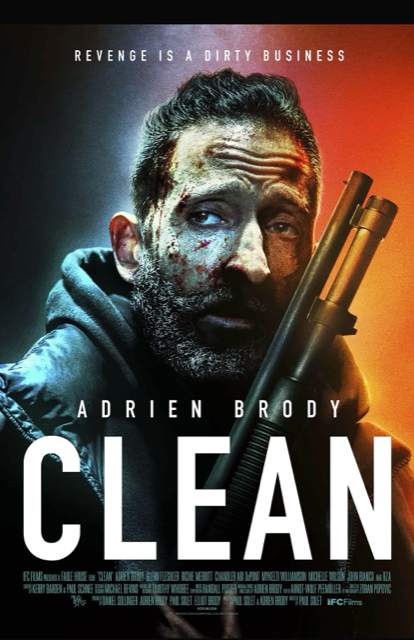 Greetings again from the darkness. “The trash man wasn’t always a trash man.” Writer-director Paul Solet re-teams with his BULLET HEAD (2017) star, Oscar winner Adrien Brody, who not only has the lead, but also co-wrote the script, produced the film, and gets a “Music by” credit. Following in the cinematic footsteps of John Wick or most any recent Liam Neeson character, this trash man is the lone beacon of hope possessing a particular set of skills that he uses to escape peril, save the innocents, and generally rid the world of bad guys. He’s the avenging angel of Utica.






 Movie Reviews from the Dark