THE MYSTERY OF D.B. COOPER (doc, 2020)

November 24, 2020

 Greetings again from the darkness. Nearly 50 years have passed and it remains the only unsolved Air Piracy case in America. For HBO, documentarian John Dower (MY SCIENTOLOGY MOVIE, 2017) chronicles the investigation and four main suspects in the mystifying D.B. Cooper case. It’s a case that has fascinated people and frustrated authorities for five decades.

On November 24, 1971 – Thanksgiving Eve – a man using the name Dan Cooper (a communication mix-up caused him to be later identified as D.B. Cooper) boarded a Northwest Airlines flight in Portland. Once in the air, he handed Flight Attendant Tina Mucklow a note informing that he had a bomb and was hijacking the plane. His demands were simple: $200,000 in cash and 4 parachutes. In Seattle, his demands were met. He released the passengers, keeping only the crew on board. At an altitude of 10,000 feet, Cooper jumped from the Boeing 727 under the cover of darkness and rain over a heavily forested area. As far as authorities are concerned, he’s never been seen again.

Some presume he died on the jump, while others turned him into a folk hero. He was credited with an act of defiance during times of economic hardships for many. The “Cult of Cooper” was born, as was one of the great mysteries of the 20th century. Director Dower interviews some key folks and shows clips of interviews and statements of interested parties who have since passed. The structure of the film revolves around the four main suspects … those who have not been ruled out. Segments are devoted to each of the four: Duane Weber, Robert/Barb Dayton, LD Cooper, and Richard McCoy.

Personal testimony and recollections from relatives and associates of these four leave us with little doubt that a case can be made for each, and those going on camera absolutely believe “theirs” is the infamous DB Cooper. We hear from Duane Weber’s wife who states her husband confessed, “I’m Dan Cooper” on his death bed. Robert/Barb Dayton was one of the first me to have a sex change operation, and his neighbors provide details on Dayton’s own confession, “I am Dan Cooper”. Marla Cooper was 8 years old when the hijacking even took place, and she recalls specifics of her Uncle LD Cooper, and being told “We hijacked the plane” and “We’re rich!” Lastly, Richard McCoy was arrested 5 months later for a copycat hijacking. His pattern was quite similar and his facial features almost identical to the DB Copper sketch.

Tina Mucklow was the flight attendant on the hijacked flight and she provides details of that fateful event, as do other members of the flight crew, a passenger who observed most of what happened on the first flight, and a retired FBI agent who worked the case. Two authors, Bruce Smith (“DB Cooper and the FBI: A Case Study of America’s Only Unsolved Skyjacking”, 2016) and Geoffrey Gray (“Skyjack: The Hunt for DB Cooper”, 2011) provide significant insight into the research they have conducted into the investigations. There seems to be plenty of criticism of the FBI in regards to lost evidence (cigarette butts from the flight, fingerprints), and a delayed ground search that gave Cooper a 40 hour head start.

Some reenactments are used here, but a significant portion is filmed interviews with those who have something to say about the investigation, or who DB Cooper might be. The 1980 discovery of 3 bundles of cash with matching serial numbers on the banks of the Columbia River is discussed, and a possible explanation is provided in one of the segments. It’s likely you’ll come away from this as baffled as the authorities have been for 50 years, but also loaded with some good fodder for holiday conversation (via Zoom, of course).

Premieres November 25, 2020 on HBO

watch the trailer


STARDUST (2020)

November 24, 2020

 Greetings again from the darkness. Traditionally, an “unauthorized biopic” will contain some of the less-desirable, and often more entertaining aspects of its subject; however, writer-director Gabriel Range (with co-writer Christopher Bell) admit up front that this is mostly “fictional”. Since David Bowie’s son, filmmaker Duncan Jones, announced that the family was not participating in the project, we somehow miss out on both the personal “dirt” and the actual music of the icon. What remains is an odd couple road trip representing Bowie’s first American tour in 1971.

Johnny Flynn stars as a young (early 20’s) David Bowie. Flynn is a musician-actor recently seen as Mr. Knightley in this year’s excellent EMMA. He’s very talented, but certainly bears little physical resemblance to the androgynous waif of early-1970’s Bowie. We first see Flynn’s Bowie through his dream during an airplane flight. The riff on 2001: A SPACE ODYSSEY is our first clue that the film will track Bowie’s transformation from David Jones to David Bowie to Ziggy Stardust. It plays as a search for his identity … though he mostly just seems to desire being hailed as a star, rather than a musical genius.

Jena Malone appears as Bowie’s first wife, Angie. She’s presented as quite controlling and eager to bask in the success she expects from her husband. We also see her teasing their open marriage, and pregnant with Duncan. When Bowie lands in America, he’s put through the ringer with U.S. Customs and Immigrations – his flowing dress doesn’t help. Bowie is disappointed that Mercury Records has sent Ron Oberman (an excellent Marc Maron) as his station-wagon driving publicist – not exactly the red carpet he envisioned.

Bowie and Oberman on the road is the highlight of the movie. Bowie is relegated to playing the worst imaginable gigs … like a Eureka vacuum salesman conference, while Oberman preaches practicality. Beyond that, Bowie seems self-defeating at every opportunity and we never quite understand his motivation. Miming during an interview with a rock publication can’t seem wise to anyone, no matter how offbeat they perceive themselves. On top of the disastrous American trip, Bowie is dealing with the “family curse”, as his mother describes it. Bowie’s brother Tony (Derek Moran) is shown battling a mental illness, likely schizophrenia. Of course, given his gene pool, David is concerned for his own well-being.

Recent biopics of Elton John (ROCKETMAN, 2019) and Freddie Mercury (BOHEMIAN RHAPSODY, 2018) are perfect examples of what this film is not. This is more of an exploration of identity before Bowie became an iconic theatrical rocker. The influences of Iggy Pop and Marc Bolan (played by James Cade) are hinted at, but mostly the birth of Ziggy Stardust just seems to happen. Commencing countdown to a biopic of a musician before he’s famous, and being handicapped by not having access to his original music, is quite a challenge, and considering those things, even if it’s watchable, it’s likely to be crucified by Bowie devotees.

watch the trailer


HILLBILLY ELEGY (2020)

November 23, 2020

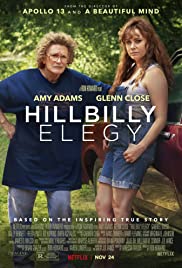
 Greetings again from the darkness. “We don’t use that word.” That is law school student JD’s reaction when someone refers to those like his family as hillbillies. He’s understandably defensive, despite his daily navigations between two distinct worlds. Oscar winning director Ron Howard (A BEAUTIFUL MIND, 2001) presents the true story of JD Vance, a young man who earns his way out of his Appalachian background to gain admittance to Yale Law School, only to get dragged back into the life he worked so hard to escape. Vanessa Taylor (Oscar nominated for THE SHAPE OF WATER, 2017) adapted the screenplay from Vance’s own memoir.

The first thing noticed about this film is that it stars Amy Adams (6) and Glenn Close (7), who between them, have 13 Oscar nominations for acting. That’s a pretty distinguished pedigree for a cast. Ms. Adams has been seen recently in the TV mini-series “Sharp Objects” and as Lynn Cheney in Adam McKay’s VICE (2018). Ms. Close was most recently nominated for her performance in THE WIFE (2018). Other notables in the cast include Haley Bennett (excellent in SWALLOW earlier this year), Freida Pinto (SLUMDOG MILLIONAIRE), and Gabriel Basso (THE KINGS OF SUMMER, 2013).

As the film begins in 1997, we find a young JD (Owen Asztalos) in a tough spot, and we quickly get a feel for the chaos commonplace around his family in Jackson, Kentucky … and also the bond that comes with being a family in the hills. The obligatory family photo ends the segment. We then skip ahead 14 years as the family has 3 houses on the same street in Middletown, after some of them find a way out of Jackson. In this blue collar town hit hard by a financial downturn, they admit to missing only “hope”. The story is told from the perspective of an older JD (Basso), who struggles with the emotional turmoil that his mother Bev (Adams) constantly creates. Remarkably, it’s Mamaw (Close) who provides the strength and stability in the family, and yet, she always seems one small step from exploding at the universe. There is an odd grounded nature and tough-mindedness to Mamaw that Ms. Close radiates on screen. It’s an interesting performance, that some may call over-the-top … a phrase also likely to be used for Ms. Adams as she displays the desperation of an addict, and the broken spirit of one whose shot at life disappeared early on.

For such a stereotypical “simple” family, the complexities of the story and characters are sometimes difficult to appreciate. JD’s sister Lindsay (Bennett) does her best to raise her own family while also managing her mother and grandmother, so that JD can pursue law school. She understands he has possibilities, whereas she has few. And JD’s law school girlfriend Usha (Pinto) truly has no concept of his childhood and family. Class differences are on full display not just with Usha, but also at the dinner where JD (a former Marine) is maneuvering to secure a summer internship that keeps him teetering in the balance of moving forward or falling back.

It’s at this point where JD receives a call from Lindsay informing that mother Bev has overdosed on heroin. It’s yet another example of his own mother inadvertently subverting his efforts to make a new life for himself. Addiction, relapse, financial struggles, family abuse, and untold secrets are the pieces that make up JD’s family pie. When his “old” life collides with his “new” life, will it drag him back down? He periodically faces decisions that are legal and/or morality based, and given his circumstances, it’s never as straightforward as it should be.

Without the power of Glenn Close and Amy Adams, director Howard likely would have had the film slide into the maudlin mode so common with Hallmark or Lifetime Channel movies, and while it’s not the Oscar bait Howard aims for, Netflix has yet another watchable film in their stable. Mr. Howard’s decision to bounce back and forth between 1997 and 2011 does provide the history we need to understand JD’s dilemma, but the see-saw approach is at times distracting. Home movies provided by JD Vance are shown over the closing credits, and it’s here where we realize just how closely Ms. Close physically resembles the real Mamaw. We walk away easily seeing how the circle of this life becomes perpetual, and just how challenging it can be to break free.

Premieres on Netflix November 24, 2020

watch the trailer


SOUND OF METAL (2020)

November 19, 2020

 Greetings again from the darkness. Many of us have attended concerts and experienced a ringing in our ears for a while afterwards. Have you ever thought about the musicians who are playing that music night after night? It’s a risk requiring precautions … and even then, disaster can occur. The first narrative feature from writer-director Darius Marder uses the hearing loss of a heavy metal drummer to explore what happens when the life we know is suddenly snatched away.

Riz Ahmed (TV mini-series “The Night Of”) stars as Ruben, the aforementioned drummer. The film opens with Ruben drumming on stage as his lead singer/girlfriend Lou (underrated Olivia Cooke, THOROUGHBREDS, “Bates Motel”) screams out the lyrics punk-style for their band, Blackgammon. We witness Ruben’s euphoria in the moment, with his “Please Kill Me” tattoo visible across his chest. Afterwards, we see the couple in their RV living a happy life of veggie juice, yoga, and slow dancing between gigs. The first crack in the armor is Lou’s scratching her arm from anxiety, and the next is devastating for Ruben and the couple.

Ahmed is terrific in the most important moments, and he’s assisted by top notch sound design from Nicolas Becker (GRAVITY, 2013). This allows us to feel and experience the moment Ruben realizes he has a problem, and how he begins to process this. Director Marder utilizes subtitles/closed captioning throughout, both for the deaf community and to make Ruben’s situation visceral for viewers. When the doctor explains hearing loss, frustration and defiance kick in for Ruben. He becomes focused on the $40-80,000 cochlear implant option, and views it as a way to maintain his normal life.

Lou becomes worried for Ruben’s well-being, and we learn he’s a recovering heroin addict. He reluctantly agrees to a remote deaf community/rehab facility run by Joe (Paul Raci). It’s here that Ruben learns sign language and begins to adjust to his new reality. Joe is a very patient and sage advisor, and preaches that being deaf is not a handicap – it’s not viewed as something to fix. Implants are considered an affront to the deaf culture, and the film neither shies away from this conflict, nor magnifies it.

The clash between Joe’s patience and guidance, and Ruben’s desire to get his normal life back comprise much of the film. The final scene between the two is gut-wrenching thanks to extraordinary acting from Ahmed and especially Raci. Supporting work in the film is provided by Lauren Ridloff (a hearing-impaired actor) and Mathieu Amalric as Lou’s dad. The final act is quite something to watch. The director says the film is about the finality of life changes, and letting go of what we can’t fix. Joe urges Ruben to appreciate the stillness, and we also see a love story that served its purpose and run its course. Will the distortion lead Ruben to find peace in the stillness? Depending on your stance in regards to the debate within the deaf community, the ending either works for you or it doesn’t. Either way, it’s well done and well-acted.

Amazon Studios will release this in theaters November 20, 2020 and on Prime Video December 4, 2020

watch the trailer


THE LAST VERMEER (2020)

November 19, 2020

 Greetings again from the darkness. Knowing the film is based on Jonathan Lopez’s 2008 book, “The Man Who Made Vermeers” removes some of the mystique from the story; however Dan Friedkin’s (stunt pilot on DUNKIRK) directorial debut is an enticing look at a blending of art history and world history. The screenplay was co-written by John Orloff, Mark Fergus, and Hawk Ostby.

It’s May 29, 1945, three weeks after the fall of Hitler’s Reich, and the Dutch military is on a mission to reclaim valuable art and collectibles confiscated by the Nazis during the war. Some of these were hidden in Austrian salt mines by order of Hermann Goring, actions also depicted in the 2014 film, THE MONUMENTS MEN. After serving in the war, Captain Joseph Piller (Claes Bang, “Dracula” 2020) is tasked with tracking down those who stole the art, and those who sold the art to Germans. It’s a task meant to preserve his country’s culture. One particular piece, “Christ with the Adulteress” held special significance, as it was billed as ‘the last Vermeer’, a long lost painting by Dutch master Johannes Vermeer (“The Girl with the Pearl Earring”), for which Goring had paid a record price.

Investigation on this painting led Piller and his assistant Minna (Vicky Krieps, PHANTOM THREAD 2017) to Han Van Meegeren (played with panache by Guy Pearce and his stylish eyebrows). Piller is also helped by his friend Esper Vesser (Roland Moller, ATOMIC BLONDE 2017) who supplies a bit of muscle and brawn. Van Meegeren has a fancy manner of speech, and Piller determines he’s the key to the case, and to unlocking what occurred and how. At the same time, the Ministry of Justice (August Diehl, INGLORIOUS BASTERDS 2009) is after Van Meegeren for conspiracy, and the parties end up in court.

Piller and Van Meegeren existed in real life, and though some dramatic license is taken, much of what we see actually happened. Art experts and politics collided. And it’s not surprising that egos ruled the day (not unlike today). The twist may or may not be a shocker to those who know the story, but it’s still fascinating that folks would risk their lives in such a manner during the darkest of times. It seems opportunists exist regardless of the era. Mr. Bang and Mr. Pearce are both excellent here, and it’s quite fun to watch their verbal wranglings. Director Friedkin adds an Epilogue that will surely bring a smile to most viewers.

Opening in theaters November 20, 2020

watch the trailer


HEARTS AND BONES (2020)

November 19, 2020

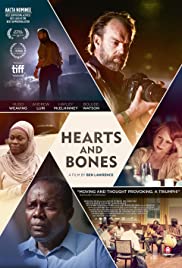
 Greetings again from the darkness. How would you feel if someone photographed the worst moment of your life, and then exhibited it for the world to see? That question is at the heart of this drama, the first narrative feature from writer-director Ben Lawrence. His co-writer is Beatrix Christian, who also wrote the screenplay for JINDABYNE, an excellent 2006 film directed by Ben’s father, Ray Lawrence.

Daniel Fisher (Hugo Weaving, “The Matrix” and “The Lord of the Rings” franchises) is a renowned war photographer, and we first see him on assignment in 2018 Iraq. When he returns home to the Western Sydney suburbs, his longtime partner Josie (Hayley McElhinney, THE BABADOOK 2014) surprises him with news that she’s pregnant. They still struggle with the pain of losing their previous daughter, Eve. On top of that, Fisher’s work is scheduled to be the centerpiece of a high profile exhibit coming soon. The stress manifests itself physically through shaking hands and fainting spells.

Fisher is a bit of a mess when he’s tracked down by Sebastian Ahmed (the screen debut of Andrew Luri), who requests that Fisher not include photographs of the massacre which occurred in his south Sudan village 15 years prior. Sebastian says the memories are too painful, as he lost his family during that time. He’s now a refugee building a new life for his pregnant wife Anishka (Bolude Watson) and their young child. Sebastian works as a taxi driver and in a commercial laundry, and when he pushes Anishka to let him buy a house for their family, she says matter-of-factly, “We work. That is our life. It’s all we do.” It’s a frustrating dose of reality for Sebastian who sees a house as confirmation that they belong.

There is so much going on in what, on the surface, appears to be a quiet little film where two men form an unlikely friendship. PTSD is a factor for both men, as war has left its mark, as it so often does. Sebastian has kept his past life a secret from his wife, but that’s only part of the story when it comes to why he doesn’t want the photographs exhibited. Fisher is described as “documenting human pain and misery”, while his work is labeled “misery porn”. Is that fair? We get both sides of the gray area associated with that question noted in my first paragraph above.

Filmmaker Lawrence benefits from four terrific performances, and though the ending is a bit shaky, the stress and emotional turmoil that those four characters endure is extremely well handled. “Who are you?” is a question Anishka asks her husband, and by the end it can be asked of all four characters. There is little wonder why this has been so warmly received on the film festival circuit … it’s thought-provoking and emotional.

In theaters and On Demand November 20, 2020

watch the trailer


COLLECTIVE (2020, doc)

November 19, 2020

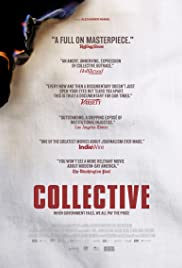
 Greetings again from the darkness. You likely recall seeing the horrific video. It was 2015 when a fire swept through a Bucharest club where a band was performing live. Captured on a cell phone, the video shows the crowd desperately trying to escape through the main door. 27 people died that night and more than 100 others suffered injuries and burns. It was a terrible tragedy, and yet more tragedy unfolded over the next few weeks, and that’s the beginning of the story told here by director Alexander Nanau.

As recovering patients filled the burn wards and Intensive Care Units at Romania’s hospitals, something horrible began to happen. 37 more people died. These were not folks that were admitted with a life-threatening status, instead it was bacterial infections that were responsible. What is the one thing we take for granted at hospitals? Yes, cleanliness. As the media began to question this death spree, Romania’s Health Minister, Nicolae Banicioiu, a Social Democrat, began boasting about the country’s medical facilities. It’s at this same time that Catalin Tolontan, the editor of “Sports Gazette”, was investigating the cause of these deaths. What we witness is investigative journalism at its best … in the midst of despicable actions by those people we should be able to trust.

Mr. Tolontan and his team slowly peel back the layers, and discover massive fraud and corruption. A whistleblower leads the reporters down a trail towards Hexi Pharma and its owner, Dan Condrea. Protests and social upheaval follow, as the current politicians continue to spew lies. When tests prove unsterile hospitals due to diluted disinfectants, and that patients were denied or delayed transfers to proper facilities in Vienna or Germany due to pride and greed, outrage ensues … leading to the ouster of Banicioiu and others.

Former patients’ rights activist Vlad Voiculescu is named temporary Health Minister, and he permits total transparency by allowing director Nanau unfettered access to meetings and phone calls. The camera follows as reforms are instituted and Tolontan’s research continues. It’s stated with deep regret that, “Our healthcare system is rotten”, and “We doctors are no longer human life. We only care about money.” As more corruption and deception is uncovered, it’s clear this was all about money, rather than healthcare.

Nanau’s film would be powerful and memorable and important if he had remained focused on the work by the new Health Minister and the journalists, but it’s elevated to brilliance by his inclusion of pieces on burn victims, especially Tedy Ursuleanu. Her severe burns left her head scarred and took one of her hands, yet she refused to cower or hide … choosing instead to be photographed for all to see. It’s such an affecting segment, and one that our mind won’t soon forget.

This is the rare documentary that also works as a political thriller. Rather than talking heads and a stream of interviews, we are invited into the world of journalists and reformists looking to right the wrongs. It’s tense and emotional, and the outrage felt at the end is quite unpleasant and will stick with you. Those behind the corruption are described as “a nest of unscrupulous mobsters”, and we can’t help but wonder what happened to medical ethics and human morals. We witness these stories as they unfold and there may not be a better tribute to the importance of investigative journalism.

In theaters and On Demand November 20, 2020

watch the trailer


A CRIME ON THE BAYOU (doc, 2020)

November 19, 2020

 Greetings again from the darkness. Debates over whether ‘systemic racism’ exists are ongoing today. What can’t be denied is that it existed in 1966 when a young man was arrested for touching the arm of white boy while attempting to prevent a fight from breaking out at a recently-integrated high school. Director Nancy Buirski (producer on LOVING, 2016) chronicles this incredible story that reached the U.S. Supreme Court and resulted in an unexpected lifelong friendship.

A Tolstoy quote kicks things off: “Since corrupt people unite amongst themselves to constitute a force, then honest people must do the same.” It’s a chilling quote and one that fits this story perfectly. Because of its Gulf coast location, Plaquemines Parish in Louisiana has been battered by numerous hurricanes over the years, and we see archival footage of the destruction caused by Hurricane Betsy in 1965. The following year is when 19 year old Gary Duncan got out of his car to see why a couple of his cousins were being confronted by a group of white high school boys. As he diffused the situation, Duncan touched one of the white boys on the elbow … a simple act that resulted in him being arrested for cruelty to a juvenile. When the charge was dropped, a new charge of assault was immediately filed and Duncan was taken to jail.

Enter Richard Sobol, a young Jewish attorney, committed to justice and fairness under the law. To understand the impact of Mr. Sobol taking on Mr. Duncan’s case, one must first absorb the utterly fascinating (and disgusting) story of “Political Boss” Leander Perez. Director Buirski provides an overview of the tremendous power wielded by Perez in his more than 40 years controlling the area, but it would require a dedicated project to fully grasp the depths of his racism and corruption. A clip of Perez being chewed up by William F Buckley on “Firing Line” is plenty to establish his stature as a racist scumbag. Fortunately, more time is spent on the commitment and courage of Sobol and Duncan than on the despicable actions of Perez, although the result is a real life head-on collision between good and evil.

Included here are interviews with Sobol, Duncan, Civil Rights Attorney Armand Derfner, Civil Rights Attorney Lolis Elie, and Mr. Elie’s son, a writer and journalist. The court case segments are drawn directly from transcripts, and it’s interesting to learn that Mr. Duncan’s mother was a driving force in his continuing to fight. Director Buirski devotes an entire section to Mr. Sobol, and rightfully so. This is a piece of history that he and Gary Duncan share. The clips of Ruby Bridges and Angela Davis come across as a bit forced, but the ‘white people in control of black people’ era is itself maddening to watch.

Archival footage and photos and interviews blend together with an excellent use of music to paint a picture of the times. And hearing Mr. Sobol discuss being a 29 year old lawyer making his case to the US Supreme Court is inspirational. This is a true crime drama so ridiculous we can’t help but shake our heads. But the crime wasn’t the touch of the arm by Duncan. The crime was the environment created by the likes of Leander Perez. The epilogue tells us more of Perez’s story, and also that Duncan and Sobol remained friends long after their place in history was set.


THE ORANGE YEARS: THE NICKELODEON STORY (doc, 2020)

November 16, 2020

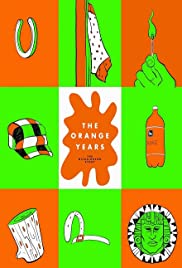
 Greetings again from the darkness. Slime. Perhaps that word conjures images of the 1984 film GHOSTBUSTERS, but for many who were kids in the 1980’s and 1990’s, slime is synonymous with Nickelodeon, and specifically the network’s game show, “Double Dare”. This documentary from co-directors Scott Barber and Adam Sweeney traces the history of the still popular network, and visits with those who helped build the foundation.

The Nickelodeon network was officially launched in 1979, however the film teaches us how it was inspired by the TV show “Pinwheel”, and tested on QUBE, the interactive cable network whose pushbutton controller allowing immediate feedback from viewers was revolutionary. It’s difficult to imagine the days when there existed no network dedicated to entertainment for kids, yet the programming challenges faced in those early years are shocking. Nickelodeon was named after the original indoor moving picture theaters from the early 1900’s (cost was 5 cents to watch), and the naming of Geraldine Laybourne as President in 1980 marked the beginning of explosive growth for the upstart “First Channel for Kids”.

Ms. Laybourne is interviewed here, and is worshipped by those who describe her as a progressive thinker and exemplary teacher. Her role in those early years was clearly crucial to the network, although after 16 years, she left to join rival Disney. The founding days are so thoroughly discussed that we learn Pantone 21C is the color used for the familiar orange logo … simply because orange is a “happy” color. With a goal to “Let kids be kids”, it’s quite obvious that those involved understood what kids liked and didn’t like. NickToons was established in 1991 with three gems: “Rugrats”, “Doug”, and “Ren & Stimpy”. Jim Jinkins was the creator of “Doug” and we learn much about him. In fact, interviews are included from numerous members of the talent roster. Marc Summers, host of “Double Dare”, Melissa Joan Hart, star of “Clarissa Explains it All”, and Kenan Thompson of “Kenan and Kel”, who of course, has gone on to spend many years as a featured player on “Saturday Night Live”. These folks reminisce about the early years and how they understood they were changing the landscape of TV for kids.

This isn’t just about the stars. We learn about the opening of the Nickelodeon Studio in Orlando, and how it became a featured attraction on the Universal Studios tour. We also hear from the writers, producers, and creators, so that we get the full picture of how things came together and then developed. Some names we wouldn’t expect to be associated with Nickelodeon include: Iggy Pop, Magic Johnson, Chris Farley, and Coolio. We see how each fit in. We learn about ‘middle-age kids’, the beginnings of SNICK (with “Are You Afraid of the Dark?”), as well as the initial resistance to merchandising – termed ‘exploiting kids’. Of course, all of that changed with Nickelodeon Magazine, “SpongeBob SquarePants” (1999) and “Dora the Explorer” (2000).

The magazine and merchandising became a physical manifestation of the network’s programming, and of course, a substantial addition to the revenue stream. What’s most impressive with the backstory is how those behind the programming were so energized and committed to changing the world of children’s TV. There may have been game shows, slime, and Gak, but the real impact resulted from their understanding of kids … kids that are now adults and admit to growing up watching Nickelodeon. It’s a legacy that continues today.

Available On Demand beginning November 17, 2020

watch the trailer


THE TEST AND THE ART OF THINKING (doc, 2020)

November 16, 2020

 Greetings again from the darkness. “And you may begin.” Thanks to this documentary feature film from Michael Arlen Davis, we now know that 3.5 million high school students graduate each year, and 80% of them have taken a standardized college admission test at least once. The vast majority of those students experience anxiety and feel the pressure that comes with needing a certain score to have any chance at gaining admission to the school of their choice.

Why do these tests exist? What do they measure? How are scores used in the admissions process? How accurate are they in predicting academic success at the next level? These topics are discussed during the film through interviews with academics, tutors, parents, and students. Surprisingly, the professional tutors – or testing coaches – provide the most insight. Each has their own philosophy, but the key takeaway is that standardized tests don’t evaluate what you know, but rather how you think and how well-prepared you are to take such a test.

Carl Brigham, a Princeton Professor of Psychology and member of the advisory council of the American Eugenics Society, is credited with creating the original SAT, though it’s been re-designed a few times since. We hear from John Katzman, who founded the Princeton Review in 1986 as a business to teach and tutor students on how to best prepare for standardized tests. From there, many others, including private for-hire tutors have become part of this ever-expanding industry. This goes to the core of just how important test scores are viewed in the college admission process.

In 2001, Dr. Atkinson of the University of California system announced they were looking to drop the SAT from the admissions evaluation, and this year’s COVID environment has pushed other systems and schools to consider alternative methods as well. It’s pointed out that the tests are not dissimilar to IQ tests, yet most agree a test score is not an accurate measure of intelligence. Standardized tests are described as a “get the answer” test, and the better students hone this skill, the less anxiety or stress they feel, and the more options they’ll have for advanced education … or all of the above.

Available on streaming platforms beginning November 17, 2020

watch the trailer