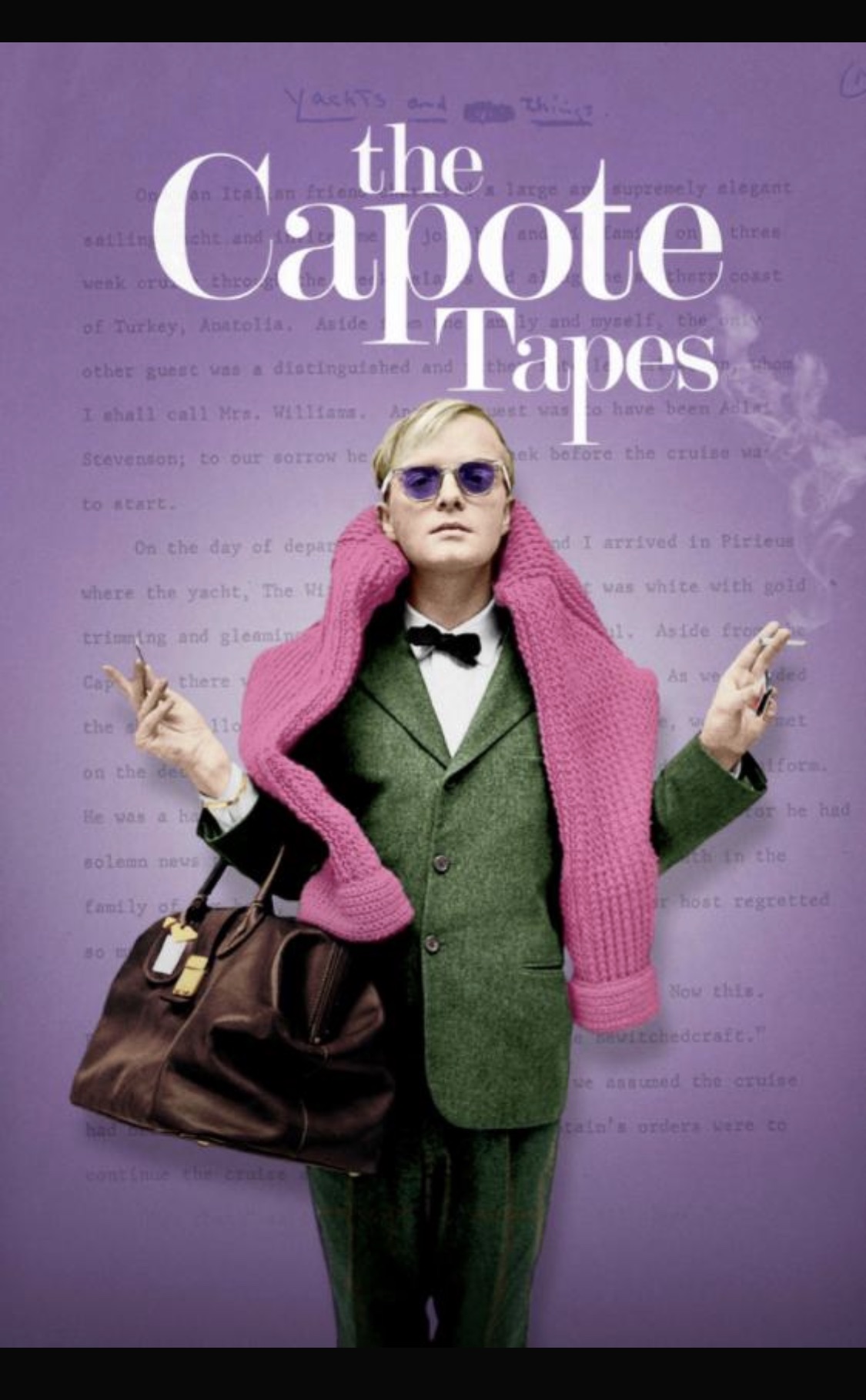
THE CAPOTE TAPES (2021, doc)

September 9, 2021

Greetings again from the darkness. The audio tapes of interviews George Plimpton conducted for his 1997 biography, “Truman Capote: In Which Various Friends, Enemies, Acquaintances, and Distractors Recall his Turbulent Career”, serve as the foundation for this documentary by Ebs Burnough, once a Senior Advisor to former First Lady, Michelle Obama. As fascinating as the tapes are, it’s the archival footage, photographs, and additional on-camera interviews that turn this into a well-rounded profile of the enigmatic Truman Capote.

We hear those who knew him describe Capote as seductive, a freak, sleazy, brilliant, fun, and naughty. He’s also the author of two literary classics, “Breakfast at Tiffany’s” (1958) and “In Cold Blood” (1966). It’s the latter which some claim kicked off the celebrity culture (the one that’s out of control today), as Capote capitalized on his fame and high society standing to become bigger than the work (insert Norma Desmond line here). Burnough uses the long-standing rumors of Capote’s scandalous manuscript, “Answered Prayers” as the structure of his story-telling. For more than 10 years, Capote teased with his anticipated answer to Proust’s “In Search of Lost Times”. The closest it came to publication was a couple of chapters in Esquire Magazine in 1975. We hear this described as “excerpts of a novel that doesn’t exist”.

Whether the manuscript exists or not, has little bearing on Burnough’s ability to help us understand Capote. Those providing insight include author Jay McInerney (“Bright Lights, Big City, 1984), Capote’s long-time partner Jack Dunphy, Pulitzer Prize winning author Norman Mailer (claims Capote “wrote the best sentences”), and Kate Harrington, Capote’s adopted daughter (he had a relationship with her father). Ms. Harrington’s recollections are quite personal and add a welcome dimension to an otherwise focus on celebrity.

The segment on Capote’s 1966 “Black and White” ball at New York’s swanky Plaza Hotel is likely the best snapshot of how many remember him. The guest list was truly a who’s who among New York high society, intellects, celebrities, and even royalty. By this time, we’ve learned of Capote’s “Swans” – the beautiful and elegant society ladies who constantly escorted him in public. Of course, gay life in those days was quite a bit more challenging, so appearances were crucial.

CAPOTE (2005) with Philip Seymour Hoffman and INFAMOUS (2006) with Toby Jones, stand as the main cinematic depictions of Truman Capote for younger generations. For those of us a bit older, we vividly recall the talk show appearances by this funny little man with the baby voice and effeminate mannerisms. He was an oddity to most of us, in that he looked and sounded quite different, but it was clear he was intelligent and funny. What we didn’t know was that drugs, alcohol, and self-absorption were slowly killing him. Capote became a caricature of himself, and by the end in 1984 at age 59 had betrayed many of his friends. Burnough’s documentary is all we hoped it would be.

Opens in New York and Los Angeles theaters on September 10, 2021

WATCH THE TRAILER


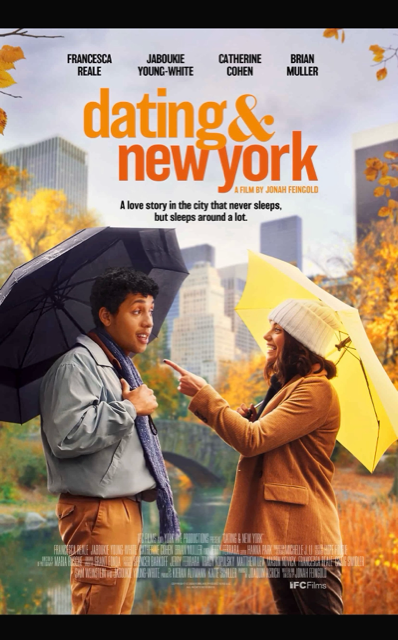
DATING & NEW YORK (2021)

September 9, 2021

Greetings again from the darkness. One must presume that many Millennials in their mid-to-late 20s will recognize and relate to the characters and situations in this indie Romantic Comedy from writer-director Jonah Feingold. For those born prior to 1980, that’s likely to be more challenging, and in fact, some of the conversations may more closely resemble a foreign language than familiar human exchanges. We can almost picture the emoji’s as these characters speak.
Milo (Jaboukie Young-White) and Wendy (Francesca Reale) are two single New Yorkers who match on the cleverly-named dating app, “Meet Cute”. Of course, that’s also the cinematic description for most every Rom-Com initial introduction since the days of Howard Hawks, Frank Capra, and Ernst Lubitsch. After a perfect first date-turned one-night stand, Milo and Wendy ghost each other. Three weeks later they have a café meeting where Wendy presents a “Best Friends with Benefits” contract. He wants more, while she just wants this. BFWB is a step beyond FWB since it’s more than sex. The two will regularly hang out and offer each other life and relationship advice – but definitely no “I love you” or PDA. Even their friends Hank (Brian Muller) and Jessie (Catherine Cohen) recognize this for the bad idea it is … but Hank and Jessie are too distracted developing their own bond to care too much.

Feingold utilizes some very cool water colors over the opening credits, and Grant Fonda’s score is spot on throughout. There will be comparisons to FRIENDS WITH BENEFITS and NO STRONGS ATTACHED, two movies released in 2011. However, a better and more interesting connection is to see how Feingold was influenced by WHEN HARRY MET SALLY… (1989) and ANNIE HALL (1977), two of the very best romantic comedies. Just keep in mind that this film is for those born in this modern era, where the rules of dating are determined by social media and dating (hook-up) apps. We are told that Millennials are “cursed with choices”.

Feingold’s characters discover break-up email templates (these people can’t subject themselves to face-to-face conflict), the real world expense of wedding planners, the confusing dynamics of haggling over who pays for dinner and drinks, and of course, the importance of guacamole. The characters are believable and seem like folks we could know … except when they speak. Jerry Ferrara (Turtle in “Entourage”) plays doorman Cole and also serves as the film’s narrator, a welcome guide through the reasons behind the actions.

Cinematographer Maria Rusche effectively captures the familiar sites of NYC, as well as the food and drink moments that go with dating. Director Feingold comes up short in his cameo, although in a humorous way. The four lead actors are not yet household names, and probably won’t be recognized by most viewers – though expect them to be part of the next wave. Mostly Feingold keeps things light and cutesy, and whether intentionally or not, reminds us that social media can be manipulative and controlling. Those pushing 30, especially New Yorkers, will likely enjoy seeing their life on screen, while the rest of us simply wonder how hooking up and hanging out isn’t considered a serious relationship.

In select theaters and available on digital beginning September 10, 2021

WATCH THE TRAILER


THE ALPINIST (2021, doc)

September 9, 2021

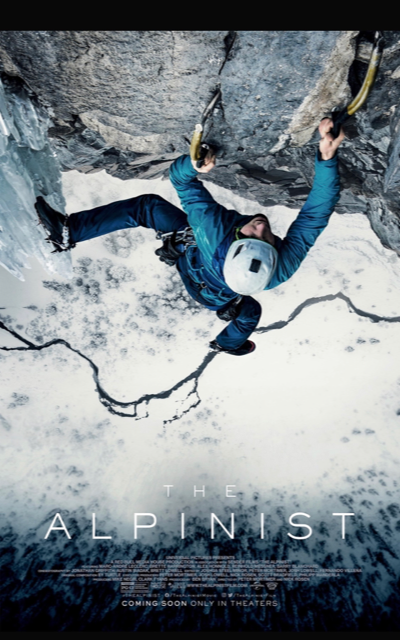
Greetings again from the darkness. I nearly opted to pass on this since I assumed it would be similar to watching Alex Honnold climb in Best Documentary Oscar winner FREE SOLO (2018), and that was a visceral viewing experience that should not be messed with. To ease my concerns, the filmmakers Peter Mortimer and Nick Rosen interview Honnold early on, and Alex makes it abundantly clear how impressed he is with the solo climbing of Marc-Andre LeClerc, the focus of this film. 
The opening sequence is truly breathtaking as we watch LeClerc climb. The filmmakers followed him, or at least attempted to, for the better part of two years. Honnold explains that LeClerc never sought adulation or recognition, and purposefully remained under the radar – a form of purity (and elusiveness). But even climbers have a grapevine, and over time the stories of LeClerc’s solo climbs became somewhat legendary.

Two things are well known about free climbing: these folks are a different breed – beating to their own drum, and the risk of death is extraordinary (we see a roster of some who have perished). Somehow LeClerc is even more extreme than this community of extremists. He owned neither a cell phone nor a vehicle. He had no home, and in fact, he and his girlfriend Brette Harrington recounted sleeping in a stairwell (for warmth, not comfort). As kindred spirits, LeClerc and Brette would sometimes climb together, while other times, he would take off on a new adventure.

As elusive and private as he remained, LeClerc’s own time on camera endears him to us – whether he’s climbing or just talking. For such a young man, his thoughts seem clear and deep. He understands what makes him tick, and his mother admits a 9-to-5 job was never a possibility. LeClerc recalls his hard partying phase, and how climbing helped him recover. The filmmakers panic about halfway through when their star goes AWOL and they struggle to track him down.

The photography is stunning at times, and there are drone shots that capture the spectacle of a lone climber dwarfed by nature. Just when our nerves are frazzled to bits, the ante gets upped with LeClerc displaying his ice climbing ability, and his trip to Patagonia to take on Torre Egger, the most challenging climb in the western Hemisphere. Other climbers provide some insight into the mindset, as well as LeClerc’s accomplishments. Brette and LeClerc’s mother also provide perspective, and while we may have some comprehension of alpinism and solo climbing, it’s Marc-Andre LeClerc’s natural habitat, and the only place he could quiet his mind.

In U.S. theaters on September 10, 2021, following a September 7 nationwide Fathom Events premiere, featuring exclusive bonus content (and an interview with directors Peter Mortimer and Nick Rosen)

WATCH THE TRAILER


CINDERELLA (2021)

September 2, 2021

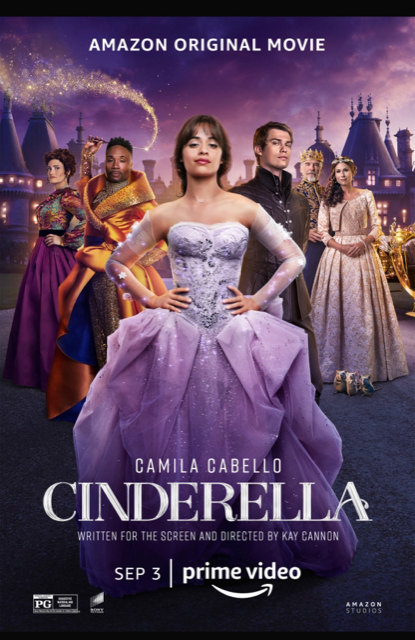
Greetings again from the darkness. In keeping with the times, writer-director Kay Cannon (the screenwriter for three PITCH PERFECT movies) has turned the classic and ancient Cinderella tale into an agenda movie, albeit one adorned with new and lively adaptations of popular songs. The earliest versions of the folk tale date back 2000 years, while the most widely-accepted fairy tale version was penned by 17th century French writer Charles Perrault, who also wrote “Little Red Riding Hood” and “Sleeping Beauty”. Since then, there have been countless renditions around the globe in various forms: literary, stage, musical theatre, TV, and animated and live action film. As far as I can tell, this is the first feminist take.
Opening with the town folks performing Janet Jackson’s “Rhythm Nation”, we are then introduced to Ella (pop singer Camila Cabello in her first movie), who lives in the basement of her stepmother’s (Idina Menzel) home. Yes, Ella has two stepsisters, although neither are particularly wicked. In fact, Anastasia (Maddie Baillio) appears almost disinterested, while Drizella (Charlotte Spencer) is at times, downright hilarious (in a Leslie Mann kind of way). Even the stepmother has moments of respectability and decency with Ella.

Ella’s only friends are the three mice who also live in the basement. It’s here where she hones her talent as a dress designer and dreams of having her own business (“how hard can it be?”). For her, she sees fashion design as not just her way out of the basement, but more importantly, as her road to independence. She doesn’t need a man or anyone else, and is skilled in daily affirmations. Hers is less of a ‘dream’ and more of a goal, despite the challenges of her situation.

Of course this is still a Cinderella story, and Nicholas Galitzine plays Prince Robert, an unfocused young man who lacks the drive to be king and fulfill the ultimate wish of his father, King Rowan (Pierce Brosnan). On the other hand, Robert’s sister, Princess Gwen (Tallulah Greive) is both driven and filled with ideas on ways to improve the kingdom. Her father readily dismisses her from matters of importance (men things), while Queen Beatrice (Minnie Driver) initially tries to maintain peace in the family. Knowing that this is a musical, and seeing Pierce Brosnan’s name in the credits, might generate nightmarish flashbacks for those who experienced his singing in MAMMA MIA! (2008). While he does tease/threaten us with singing, most of his musical bits are quite tongue-in-cheek.

Bringing a jolt of energy to the story at a time when it’s desperately needed is Billy Porter as Ella’s non-binary Fabulous Godmother, known as Fab G. Porter’s costume and overall flamboyance are a hoot to watch, and oh by the way, he’s quite a singer as well. And yes, the three mice turn into coachmen played by James Corden, James Acaster, and Romesh Ranganathan. They do serve up some comic relief, but likely not as much as they or the filmmaker hopes. Surprisingly, the set design and costume design are fairly drab – the two exceptions being Porter and the ball.

In addition to the opening “Rhythm Nation” song, you’ll hear a version of Salt-N-Pepa’s “What a Man”, as well as other familiar tunes. The music and the shift in Ella’s approach are the contemporary touches, as the girl-power theme stresses there’s no need for a man … even a Prince. The twist on the Cinderella tale varies from previous versions, the most popular being Kenneth Branagh’s 2015 film with Lily James and Cate Blanchett, the 1997 film with Whitney Houston as the Fairy Godmother, and of course, Walt Disney’s 1950 animated classic. Ms. Cannon’s version is still a love story; it’s just love of one’s self and career, rather than the love of another person. A tale perfectly suited to the times.

In select theaters and on Amazon Prime beginning September 3, 2021

WATCH THE TRAILER


THE LOST LEONARDO (2021, doc)

August 26, 2021

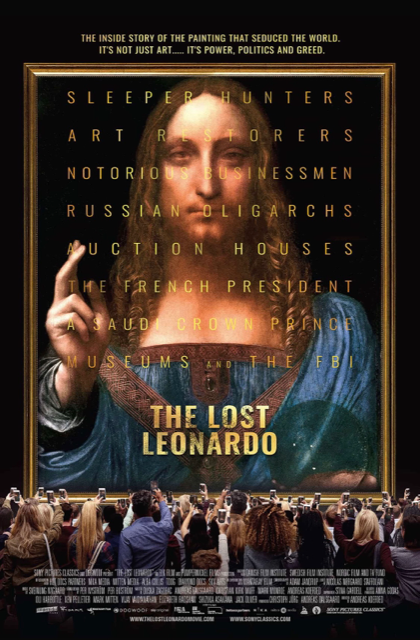
Greetings again from the darkness. This is an unusual documentary from Andreas Keofoed. The first part examines the attempts to solve the origin mystery of a discovered painting, while the second half takes us inside the mysterious money side of the collectible art world. Both mysteries are fascinating on their own, and they blend together to track the 15 year history of a painting that may have come from the brushes of Leonardo da Vinci more than 600 years ago. Or it may not have.
We first meet Alexander Parish, a self-described “Sleeper Hunter” – one always on the lookout to purchase undervalued artwork. “That’s what I do”, states Parish. He’s the one who found the Salvator Mundi painting at a 2005 New Orleans art auction. He and his partner, Robert Simon, paid $1175 for the painting, though they had no idea what they were getting. Director Keofoed spoils any surprise, by delivering an opening credit graphic that traces the painting’s international travels over the next dozen years by itemizing the sales: $1175 in 2005, $83 million in 2013, $127.5 million in 2013, and $450 million in 2017.

Part 1: The Art Game focuses on the examination, investigation, and restoration of the painting. On one hand we have restorer Dianne Modestini meticulously working her magic to discover what she believes is without question, a da Vinci painting. On the other hand we have noted art critic Jerry Salz who is less skeptical and more mocking in his conclusion that not only is it not from da Vinci, it’s not even a ‘good’ painting. A great deal of effort goes into formulating the painting’s provenance – the family tree of ownership. This is crucial to the process in establishing whether it belongs with one of the 15 known Leonardo paintings, or perhaps, at best, from the work of his pupils.

Beginning with Part 2: The Art Game, the film shifts focus from the origin of ‘The Male Mona Lisa’ (as it was dubbed) to its sale and subsequent flip, and the associated investigation by the CIA into possible money laundering. It’s at this point where we meet Yves Bouvier and learn of his purchase and flip to Russian Oligarch Dmitry Rybolovlev, who is none too happy once he puts the pieces of the transaction together. The use of Freeports by the rich is also discussed. These high-security fortresses allow the owners to avoid taxes by maintaining a state of “in transit”. It’s also in this section where the role of Christie’s auction house comes into play and we learn of the brilliant hype/marketing of ‘The Lost da Vinci’.

When spending $450 million on an object, most of us would likely verify the item’s authenticity. But then most of us aren’t the Crown Prince of Saudi Arabia. Part 3: The Global Game details how the authenticity of the painting might not even matter when the purpose is to move or protect money. A “dark transaction” allows the purchase to remain anonymous, and when the identity is discovered, it’s clear that the art world is now about money, not art.

For some purists, the question of authenticity remains for the Salvator Mundi, and restorer Modestini remains haunted by her conclusion. The art of the deal is clearly less about the art and more about the deal. Leonardo da Vinci’s legacy is not impacted by this debate, but the impact of the painting on many other folks is undeniable … and it has served a purpose as an eye-opener and economics lesson for the rest of us.

Opens in select theaters on August 27, 2021

WATCH THE TRAILER


TOGETHER (2021)

August 26, 2021

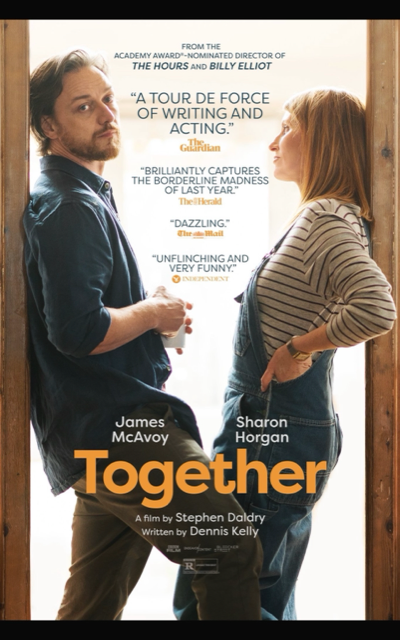
Greetings again from the darkness. As expected, we are beginning to see an influx of “pandemic” movies and TV shows. What wasn’t expected is the unique and creative approach in this one from Co-directors Stephen Daldry (THE HOURS, 2002) and Justin Martin. The script is from Dennis Kelly and the writing, directing, and acting all work together seamlessly to create quite an unusual viewing experience.
The weight of the movie rests on the outstanding performances from James McAvoy and Sharon Horgan (GAME NIGHT, 2018). They don’t simply break the fourth wall, they outright obliterate it. These two characters, whose names we never learn, talk directly to us viewers at least as often as they do to each other. The story begins in March 2020 on the first day of COVID quarantine, and carries through for a full year. As we open, the relationship has admittedly run its course, though as the days go by, circumstances can change things. The two are joined in the house by 10 year old son Artie (Samuel Logan), who spends an inordinate amount of time hovering in the background, hearing the two adults say things he shouldn’t hear. They appear to devote very little time to the boy’s stress … although their own feelings are front and center.

It’s a bit off-putting at first as we adjust to the couple speaking directly to us. On top of that, the sharing of personal information and the overlapping dialogue of their caustic exchanges meant to hurt, make this feel a bit like we are intruding. But the conversations are so relatable since we’ve all experienced the uncertainty and frustration wrought by the pandemic. In a short amount of time, we understand these two. He shares the story of his early confrontation with a grocery clerk over his son’s food choices, while she explains the guilt associated with an ailing elderly mother during a lockdown. Their “mushroom” story is certainly one for the ages, and again, provides much insight into these two people of distinctly opposite political spectrums.

Daldry and Martin filmed this in just 10 days, and with the entire piece taking place on the lower level of the couple’s flat, the film has a definite stage feel – accentuated by the long takes and aura of live performances. The dialogue stands in for action, and Ms. Horgan’s explanation of the reality of “exponential growth” in regards to COVID is one of the most stunning math classes you’ll attend. This is a case study of personalities and the relationship effects of a pandemic, and it is infused with enough dark comedy to keep it entertaining, rather than depressing. Some similarities exist to the SXSW film THE END OF US, though this one is quite a different viewing experience.

Bleeker Street is releasing TOGETHER in theaters on 8/27/21 and digitally on 9/14/21

WATCH THE TRAILER


THE OUTSIDER (2021, doc)

August 23, 2021

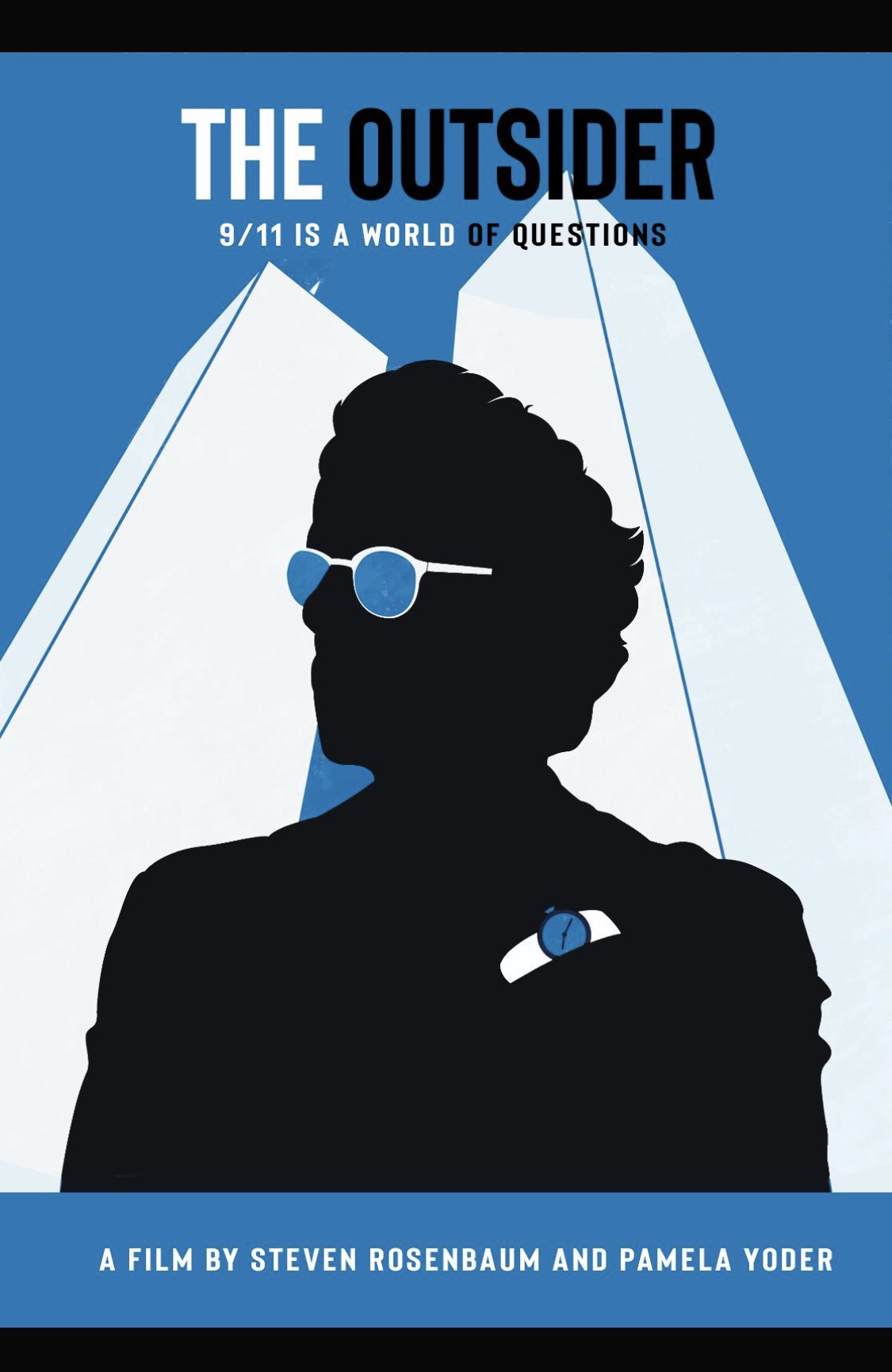
Greetings again from the darkness. September 11, 2001 was “a blue sky day” in New York City. Until it wasn’t. Co-directors Pamela Yoder and Steven Rosenbaum previously collaborated on 7 DAYS IN SEPTEMBER (2002), a documentary focusing on how the tragic events of that day impacted the lives of various folks. Their work on that film led the filmmakers directly to this project which examines the seven year process of opening the National 9/11 Museum at Ground Level. The result is as much a case study in personality clashes as it is a recording of artifacts.

Yes, we do see some of the archival video footage that deep down we always hope to never see again. The towers collapse, the air is clouded, and people are panicked. Soon after the attack, Michael Shulan converts his Soho storefront space into a crowd-sourced photo exhibit called “Here is New York. He invited people to bring their own photos for display. Shulan had instinctively created a shared space where people would come to pay tribute to lives lost and remember the day that should not be forgotten. A few years later, something strange happened … Michael Shulan was named Creative Director of the museum that was in the early planning stages.

Shulan’s vision conflicted at times with Museum Director Alice Greenwald’s vision. “What should the museum be?” Ms. Greenwald had run the Holocaust Museum in NYC, and had a definite idea of what this should be, while Shulan had zero museum experience and wondered if they were creating a memorial or a museum. He wanted to provoke questions, while she wanted to provide answers. A $500 million budget was at stake, and they couldn’t even agree on the approach.

We get a countdown to the museum’s opening, and even hear from the Construction Manager as work proceeds. ‘The Last Column’ provides for an interesting segment, and we see the flood that affected many of the collected artifacts. Michael Bloomberg’s influence is noted, and we see the ‘composite’ – the compacted floors on display. The documentary does focus on emotions, but it’s not the emotions we typically associate with 9/11. Instead, it’s Shulan’s disappointment and frustration. The film touches on the criticism received from the family in regards to the high ticket costs and souvenir shops, and it’s the posted quote that sticks with us: “No day shall erase you from the memory of time.”

Available now on VOD

WATCH THE TRAILER


FLAG DAY (2021)

August 19, 2021

Greetings again from the darkness. Life is full of choices, however sometimes destiny takes charge and there’s little we can do about it. One’s parents are the most obvious and crucial example. We don’t choose our parents and yet their impact on our lives is unavoidable. Jennifer Vogel’s book, “Flim-Flam Man: The True Story of My Father’s Counterfeit Life”, has been adapted for the screen by the FORD V FERRARI screenwriting brothers, Jez Butterworth and JohnHenry Butterworth. The film is directed by two-time Oscar winner Sean Penn, who also co-stars.
Told through the eyes of Jennifer (played here by Sean Penn’s daughter Dylan Penn, a lookalike of her mother Robin Wright), this is the “based on a true story” of John Vogel, but also the story of Jennifer, who managed to overcome challenges that stemmed from her far-from-ideal childhood. Jennifer’s mother Patty (Katheryn Winnick, “Vikings”) is an alcoholic and has a tumultuous marriage to John, a con man who constantly spews bombast and fabrications (aka lies) as he tries to scam the system and impress his family with his big plans (that go nowhere).

Since the film opens with a law enforcement standoff, and with Jennifer being interviewed by a Federal Marshal (Oscar winner Regina King), we know how John’s saga concludes, and most of the movie is spent in Jennifer’s memories to paint the picture of her dad and her life. Some of these are “flashes” of moments, while others are extended segments where we really get a feel for the father that cluttered a daughter’s mind and life. It’s tough to watch 105 minutes of a guy with little redeeming value.

This is not the place to detail what we see, but it’s at times disturbing to see the memories of a father who doesn’t so much slip in and out of the lives of Jennifer, younger brother Nick (played by Sean’s son Hopper Jack Penn), and mom Patty, as he appears and vanishes in proverbial explosions akin to the Wicked Witch of the West. Given that her mom is equally inept at parenting, high school Jennifer seems destined to follow in her father’s footsteps.

Covering a period from 1975 through 1992, we see Jennifer as a young kid, and then Ms. Penn takes over the role in high school. She is also our narrator, some of which is overwrought for a film that mostly strives to stay grounded in family dynamics, as Jennifer works to overcome. In addition to the previously mentioned appearance by Ms. King, there are also brief yet effective turns by Josh Brolin (as John’s brother Uncle Beck), Dale Dickey (as John’s crusty mother), Norbert Leo Butz (as Patty’s sleazy boyfriend), and Eddie Marsan (near the film’s end).

In addition to overuse of voiceover, director Penn includes a few too many song/musical interludes. Some of these songs are excellent (Cat Power, Eddie Vedder, Glen Hansard), but they feel a bit heavy-handed and forced into the film. In fact, melodrama is chosen over nuance on multiple occasions, but when the film is good, it’s very good. The best scenes are between father and daughter, Sean and Dylan, the latter of which shows flashes of incredible depth. We look forward to more of her work. As for Sean, can you name another actor whose natural look better exemplifies a guy who has had the snot kicked out of him by life (even if he’s made his own bed)? He portrays John Vogel as a con man who believes achieving the American Dream is something he’s owed, not something to earn. His love of Chopin is not enough to excuse his horrific parenting, scamming, or felonious behavior. There are various forms of freedom, and Jennifer must discover freedom from someone who has prevented you from being her true self.

Opens in select theaters on August 20, 2021

WATCH THE TRAILER


THE MAGNIFICENT MEYERSONS (2021)

August 19, 2021

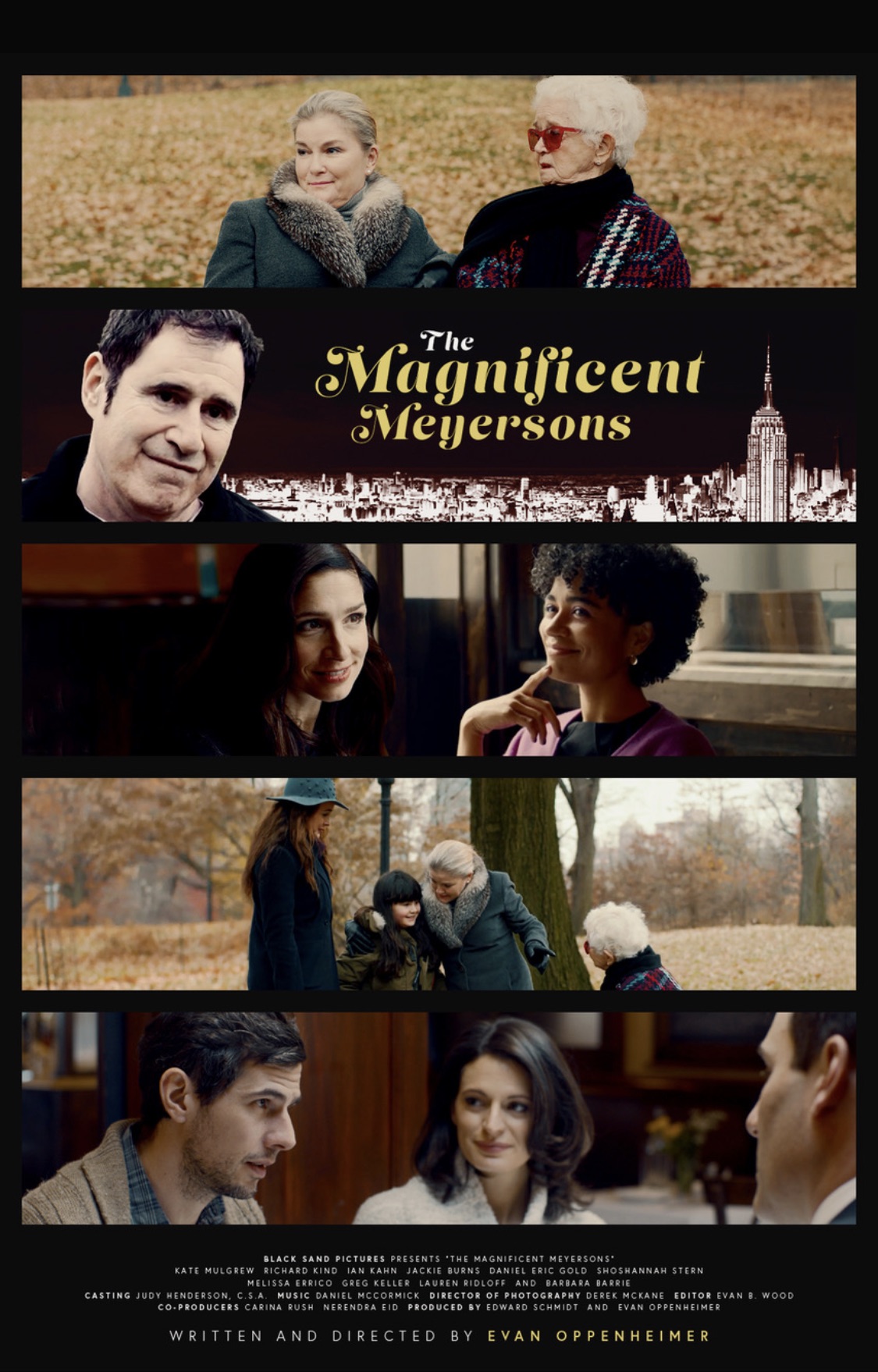
Greetings again from the darkness. It might have been quite enjoyable had we just continued to eavesdrop on Kate Mulgrew and Barbara Barrie as they strolled through the park talking about life – past, present, and future. Their segment is easily the highlight of the film, and unfortunately, it’s difficult to put a positive spin on any other piece of this project from writer-director Evan Oppenheimer. Okay, some of the drone shots of New York City are lovely, however, it’s important to know when enough is enough.
The film opens by introducing the titular Meyersons. Ian Kahn plays eldest son Roland, a grumpy, uptight dude who seems to care only about 3 things: his young daughter, his success in business, and his strength in holding the family together during tough times. Relative newcomer Jackie Burns plays eldest daughter Daphne, who is married to nice guy Alan (Greg Keller), and she’s the type who holds grudges against him for what she dreamt, and keeps secrets that shouldn’t be kept. Shoshannah Stern plays Susie, the deaf daughter with an unscrupulous business plan and a luminescent also-deaf girlfriend Tammy (Lauren Ridloff, “The Walking Dead”). Youngest son Daniel (Daniel Eric Gold, a Josh Groban lookalike) is a Rabbi-in-training, while questioning all aspects of religion.

Most of the Meyersons are not very adept at being decent human beings. Their mother is played by the aforementioned Ms. Mulgrew (“Orange is the New Black”, Star Trek: Voyager”), and she’s a pediatric Oncologist, who questions her career choice since she has to regularly deliver such horrific news. Ms. Barrie plays her mother Celeste, who seems to be the only one with any real perspective on life or the family. Also appearing is terrific character actor Richard Kind as father Morty Meyerson, who is seen mostly through flashbacks prior to abandoning his family some twenty years prior.

It’s quite possible this would work better as a stage play, but that would mean the loss of the multiple street shots of the city, which are far more interesting than most of the conversations we are forced to hear. If a filmmaker chooses to fill the screen with a bunch of whiny New Yorkers, the whining should at least be interesting and/or entertaining. And while it’s understandable for a director to want to give his own child some screen time, all objectivity cannot be surrendered. This is quite simply a painful and laborious film to sit through. I don’t say that easily or often, as I inevitably find something or someone to latch onto in the 250+ movies I watch each year. This time I failed.

Limited theatrical release in NYC on August 20, and Los Angeles August 27

WATCH THE TRAILER


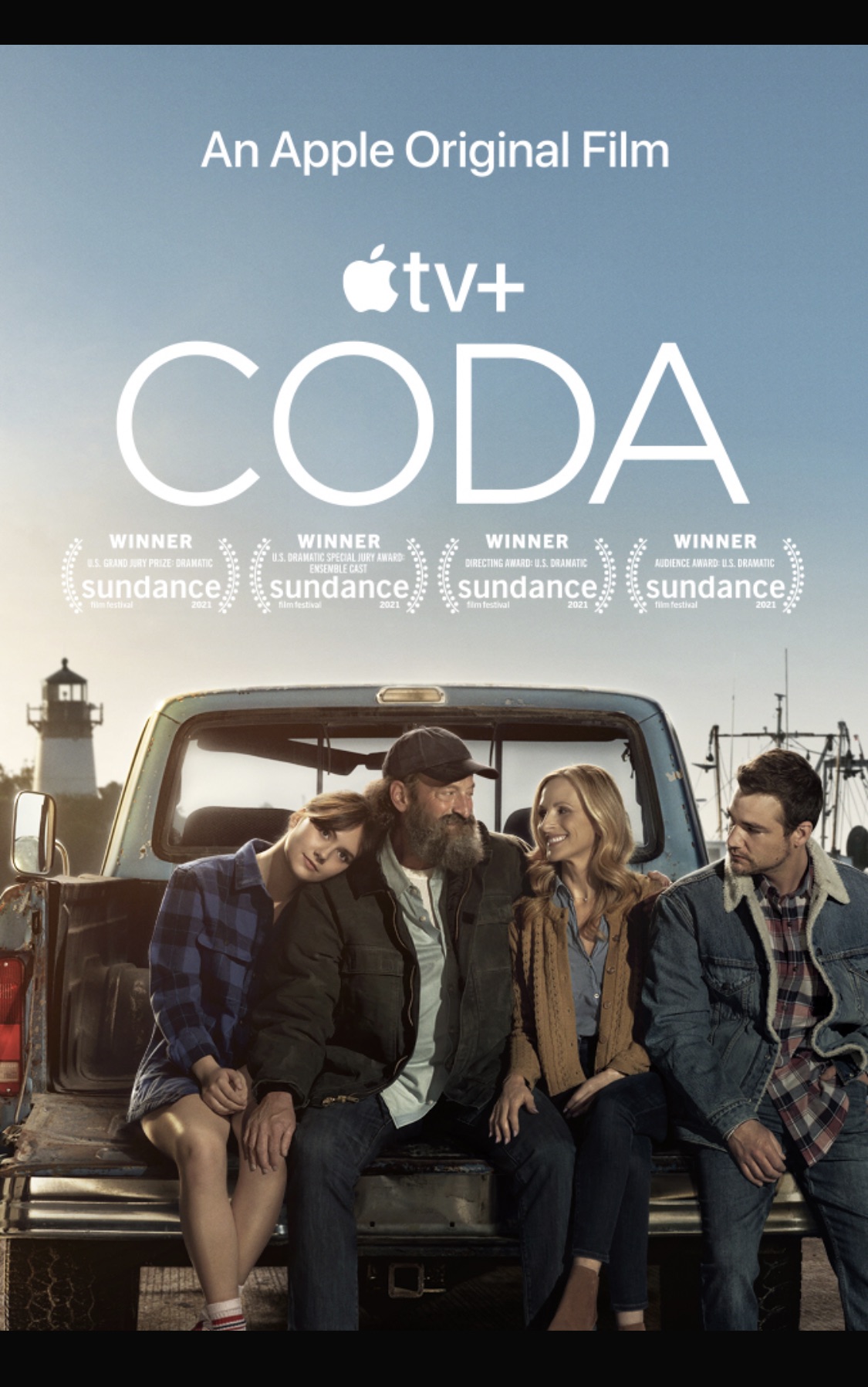
CODA (2021)

August 12, 2021

Greetings again from the darkness. Ruby Rossi is a high school student. She is also a CODA – Child of Deaf Adults. Her older brother is deaf too, meaning Ruby’s life has been spent as an interpreter for her family, while also working on the family fishing boat in Gloucester, Massachusetts, where they are treated as outcasts and viewed as oddities by others. Ruby also loves to sing and listen to music, activities she can’t share with her family. This is no coming-of-age tale, as Ruby has long been wise beyond her years. It is, however, a story of a young person finding their true self and breaking from the ties that bind to the only life she’s known.

Emilia Jones (HIGH-RISE, 2015) stars as Ruby, and we first see her slinging fish on the boat with her father Frank (Troy Kutsor) and brother Leo (newcomer Daniel Durant). Ruby belts out songs while the two men handle their duties, unaware of the lovely melodies filling the air. At home, the dinner table conversation is handled through ASL (American Sign Language) with mom/wife Jackie (Oscar winner Marlee Matlin, CHILDREN OF A LESSER GOD, 1986) leading the way.

At school, Ruby is an outcast due to her clothes, the lingering aroma of fish, and her “weird” family. With a silent crush on Miles (Ferdio Walsh-Peelo from the excellent SING STREET, 2016), Ruby signs up for choir, but freezes during the audition. The choir director, Bernardo (roll the r’s) Villalobos, is played energetically and colorfully by Eugenio Derbez (OVERBOARD, 2018), and he offers encouragement to Ruby – mostly because she has a beautiful singing voice. Bernardo explains how her singing voice offers a path to college, something she’s never before considered due to family responsibilities.

There is a lot going on in this film from writer-director Sian Heder (TALLULAH, 2016). It’s obviously adapted from the 2014 French film LA FAMILLE BELIER, and plays as a mainstream crowd-pleaser, when it just as easily could have been a deep cut indie film. Ms. Heder’s approach means a larger viewing audience, though there are elements we wish had been further explored. The teen romance never really clicks, and there are hints that Bernardo’s story holds more levels than we get. However, the Rossi family dynamics are quite something to behold. Father Frank wears his emotions on his sleeve. Sometimes those emotions are angry and bitter, while other times quite comical or even horny (for his wife). Brother Leo wants desperately to lead the family business towards prosperity. He has ideas for growth, but is frustrated being dependent on Ruby as a conduit to the community.

Mother Jackie and Ruby have a typical mother-teenage daughter relationship. The mother wants status quo where the daughter remains an integral part of the family, while the daughter wants her mom to acknowledge the dreams for a different life – one that capitalizes on her talents. When Jackie questions her daughter on her singing, she does so in the most hurtful way possible (brilliant writing). And yet, when mom recounts Ruby’s birth, the love is as clear as the disconnect … and likely to draw a tear or two. Filmmaker Hader serves up numerous strong scenes, but two really stood out for this viewer. First, when Ruby is singing on stage, we “hear” what the parents hear, and their pride is obvious. The second occurs when dad asks Ruby to sing for him as they are perched on the backend of the car. It’s phenomenal acting by Kutsor, and further clarifies a lifelong father-daughter bond … and the first time he fully comprehends her talent. All four leads give strong performances, and it’s a star-making performance from Ms. Jones (think a young Saoirse Ronan).

Apple paid a record-breaking $25 million for the film’s rights at Sundance, and the mainstream appeal of this family drama sprinkled with comedy and life messages is indisputable. So while my preference would have been more focus on the ‘outsider’ aspect of the Rossi family in the community, it’s easy to see why this choice was made. It’s an entertaining film that will likely land on many year-end “Best” lists. Maybe even mine.

Streaming on AppleTV+ on August 13, 2021

WATCH THE TRAILER