 Greetings again from the darkness. It’s understandable if this movie makes you consider whether penguins might make better friends than people. David Schurmann directs a script from Kristen Lazarian Paulina and Lagudi Ulrich that is ‘inspired by a true story’. By now, we all recognize this as code for dramatic license has been taken, and it’s up to the viewer to differentiate fact from fiction.
Brazilian fisherman Joao (Pedro Urizzi), his wife Maria (Amanda Magalhaes), and their son Miguel (Juan Jose Garnica) are living a lovely, simple life along the coast until tragedy strikes at sea on Miguel’s birthday. The story jumps ahead a few decades to find a sullen and continuously grieving and guilt-ridden Joao (Jean Reno) and an extraordinarily patient Maria (Adriana Barraza) still live in the same house, though they barely interact with others in the remote village.
One day, Joao rescues an injured penguin from an oil slick. After carefully cleansing the oil from the penguin’s coat, Joao begins feeding him a steady (and consistent) diet of fresh sardines. Joao is happy when the recuperated penguin sticks around for a while and is elated when he shows back up the following year. Maria isn’t sure what to make of the returning penguin (named DinDim by a local girl), yet she’s thrilled to see Joao has a bit of spark. As viewers, we see what Joao doesn’t. DinDim hails from Patagonia and is part of the annual penguin migration being studied by Marine Biologist researchers.
Mr. Reno and Ms. Barraza (nominated for an Oscar for BABEL, 2006) are two familiar and dependable character actors who rarely get a shot at lead roles, and even here, they are often in support of a penguin. They are both relatable and excellent here. Reno does nice work conveying a broken man who rediscovers joy after so much sorrow. It’s also interesting to see DinDim’s initial trip and how he became separated from the colony. Of course, much of this is speculation, although we do know that this penguin returned to Joao for eight consecutive years, and actual clips are shown at the end of the film. Director Schurmann has delivered a film that could be enjoyed by families, with only the early tragedy being a point of concern.
Opening in theaters on August 16, 2024


 Posted by David Ferguson
 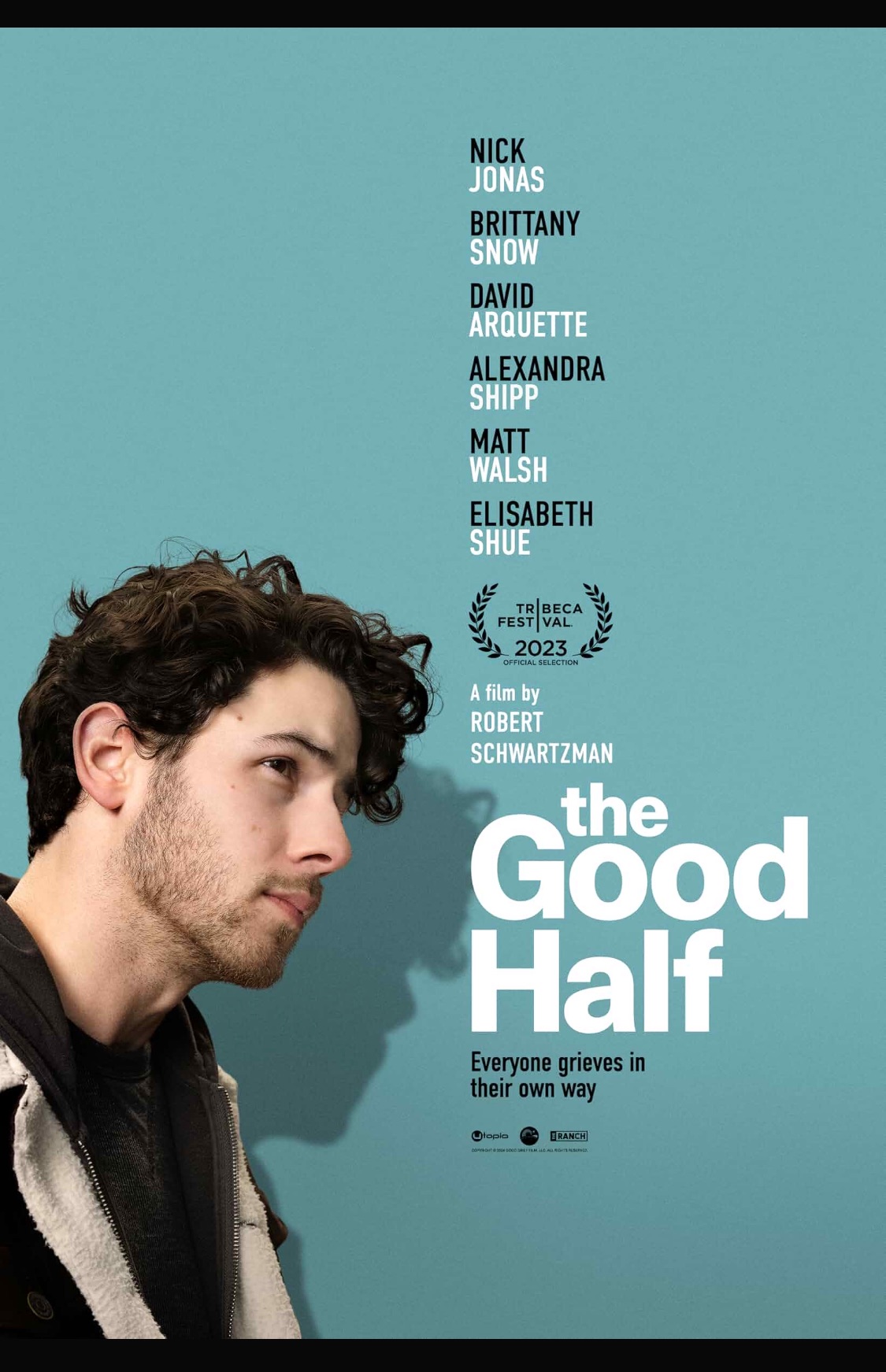 Greetings again from the darkness. Losing a parent is a difficult time that most of us will deal with at some point. Sorrow and guilt and anger are typically part of the grieving process, and that’s precisely what writer Brett Ryland and director Robert Schwartzmann (THE ARGUMENT, 2020) show us. For those who have been through it already, it’s likely to bring back emotions that will always be there, and for those who haven’t experienced this yet, it serves as a cautionary tale.
 Greetings again from the darkness. Billed as “a fictional story inspired by true events”, the film pretty obviously draws from the 2014 case where aesthetician Dawn DaLouise was accused of plotting the murder of rival Gabriel Suarez. This is the first feature film from music video director Austin Peters, who co-wrote the script with Sam Freilich and Deering Regan (all first-time screenwriters). Although there is some entertainment value here, the inexperience of the filmmakers shines through, leaving us wishing for a bit more heft.
 Greetings again from the darkness. Add this to the long list of films reminding us to temper our expectations and high hopes prior to viewing. Still, optimism seemed reasonable given an excellent director and strong cast. Director Doug Liman has delivered such entertaining films as SWINGERS (1996), THE BOURNE IDENTITY (2002), EDGE OF TOMORROW (2016), and this year’s remake of ROAD HOUSE (2024). Matt Damon and Casey Affleck both have Oscars on their mantels, and Hong Chau has a recent Oscar nomination. To top it off, the supporting cast includes such favorites as Jack Harlow, Alfred Molina, Michael Stuhlbarg, Andre De Shields, Ron Perlman, Toby Jones, Ving Rhames, and Paul Walter Hauser. All the pieces were in place. So, where’s the spark … the pizzazz … the fun?
 Greetings again from the darkness. Some slack and a certain level of compassion is due director James Marsh’s (Oscar winner for MAN ON WIRE, 2008) biopic on the enigmatic writer Samuel Beckett. The reasons no other filmmaker has previously attempted to profile Beckett are on display here, right alongside the reasons he remains such a fascinating figure. The screenplay from Neil Forsyth features surprisingly little of Beckett’s own work, and instead, generally breaks his life into three categories: his foundation as a writer, his work in the French Resistance, and the weight of his romantic life.
 Greetings again from the darkness. Usually a story about building a recording studio likely would hold no interest to anyone who wasn’t an audio geek. But attach Jimi Hendrix to the story and suddenly all music fans are curious to learn something new about the guitar god. Filmmaker John McDermott has completed numerous Hendrix projects in the past, and likely knows as much (or more) about Jimi Hendrix than any other living being.
 Greetings again from the darkness. One result from the expansion of the movie streaming universe is that independent films with specific topics can find a home for niche audiences. Actor-turned-director Kelly Blatz (he was a co-lead in LOREN & ROSE, 2022) turns in a rare motorcycle racing movie, although to enhance the odds, it also features the familiar tropes of an angry young man, an estranged father-son reunion, and a love story.
 Greetings again from the darkness. Not many people are famous for their entire life. Elizabeth Taylor came about as close as one can. Director Nanette Burstein uses 40 hours of recordings that resulted from journalist Richard Meryman’s 1964 interviews with 32-year-old Ms. Taylor. This was at the height of her fame and popularity.
 Greetings again from the darkness. The Troubles of Northern Ireland were a 30-year political and social conflict that officially ended in 1998 with the Good Friday Agreement. Even today, the pain and memories and divisions remain. Writer-director Rich Peppiatt’s film is set in 2019 (West Belfast) and is billed as a “mostly true story” involving controversial hip-hop group Kneecap and the push to make Irish an official language. Early on we are told, “A country without a language is only half a country.”
 Greetings again from the darkness. The secret sauce for movies based on comic books and superheroes has always seemed pretty obvious … give the hardcore fans what they want. Somewhere along the way, the industry shifted its focus from entertainment to pushing the boundaries of technology. The result was a (many) years long stream of visual extravagance with little heart and soul. Writer-director Shawn Levy and co-writers Rhett Reese, Ryan Reynolds, Zeb Wells, and Paul Wernick have managed to right the wrong and put things back on track. Of course, Disney’s purchase of 20th Century Fox and the Marvel Universe slowed down development, but they have finally capitalized on two fan-favorite characters developed by Rob Liefeld and Fabian Nicieza … Deadpool and Wolverine.
 Movie Reviews from the Dark