Greetings again from the darkness. This is Brazil’s official entry for the 2015 Academy Awards, and it’s the feature film debut of writer/director Daniel Ribeiro. With some similarities to Truffaut’s Jules and Jim(1962), it’s a coming-of-age story focused on the adolescent desire for independence, and the awkwardness and curiosity associated with first love.
As the film opens, we meet best friends Leonardo (Ghiherme Lobo) and Giovani (Tess Amorim) as they lazily chat while hanging out by the swimming pool. Their innocent discussion about romance and a first kiss bring to light the naivety of their age and situation. Giovani carries a torch for Leo, but he is clueless to her desire. His blindness since birth is a major reason, but the arrival of new student Gabriel (Fabio Audi) slowly uncovers another obstacle to any future romantic link for Gi and Leo.
To his credit, Mr. Ribeiro never emphasizes Leonardo’s handicap and instead allows the three teenagers to struggle through daily existence riding the roller coaster of emotions so typical for the age. Sure, Leo gets bullied a bit at school by the insensitive jerks we all know so well, but he struggles more with his overprotective mother who has yet to come to grips with her son’s maturity and desire for the next level of independence. The real core of the story involves the fine line between fragility and strength of friendship, as well as the realization of one’s sexuality. These issues are handled expertly and without sermon or grandstanding.
The film has been exceptionally well received at LGBT Film Festivals, and has crossover appeal for those interested in a grounded look at the basic challenges of adolescence.
Greetings again from the darkness. Director Chris Lowell co-wrote the story with Mohit Narang, and there is really no other way to describe it than a modern day redux of The Big Chill(1983). If you are familiar with that film from 30+ years ago, you remember the narcissism, strained friendships, and emotional turmoil that were offset by a best-selling soundtrack. Three decades later we witness narcissism run amok and a crumbled version of friendship, this time offset by the guzzling of alcohol.
Daniel (Ryan Eggold, TV’s “The Blacklist“) has organized a reunion of his childhood friends back at the cabin on the lake where they shared many a summer. Daniel’s parents recently died in a car accident, and none of his “friends” showed up for the funeral … hence, the crumbled version of friendship. As they begin arriving at the cabin, we immediately categorize each: Tom (Beck Bennett, “Saturday Night Live“) is the wise-cracking slacker, James (Brett Dalton) is the TV Reality Show celebrity, Martin (Will Brill) and Abby (Erin Drake) are the high school sweethearts stuck in a strained marriage, and Charley (Jessy Hodges) is the free-spirited chick with a lust-filled history. The arrival of Daniel’s old flame Olivia (Britt Lower) is offset by her fiancé Henry (Reid Scott). May the oddballs be ever in your favor.
Sounding like the old man I am quickly becoming, this generation of thirty-somethings left me quite saddened. What made The Big Chillwork, was the actual bond that tied the group together. Remember, they all showed up for a funeral … rather than being summoned for skipping one. The original group had charm, personality and was interesting; whereas this group remains focused on their own problems – oblivious to the needs and feelings of others. They find the bottom of a bottle or drugging an adversary to be actual solutions, rather than resorting to the effort involved with intimacy or conversation. Yes, sad I am.
Despite my issues with the possibility of this being an accurate portrayal of this generation, there are plenty of positives with the film. Lovell truly has a photographer’s eye and uses it for much of the camera work … it’s beautifully shot. Also, each member of this ensemble jumps right in to their character and does a superb job (especially Reid Scott). There is also a terrific segment of three conversations edited together that play off each other like some kind of wonderful parlor game. It’s the highlight of the film.
While much of the film plays like a passive-aggressive expose’, the script leaves no room for interpretation or analysis … Daniel actually spells out his true misguided mission. Beginning a movie with references to Gertrude Stein and Ernest Hemingway is often a good start. However, Hemingway’s theory that all generations are lost, doesn’t mean that some aren’t more lost than others. The game of Whisky Slaps works not just as a scene, but also as a metaphor for watching this movie.
Greetings again from the darkness. A surefire method to get attention for a movie is “the feature film directorial debut of Jon Stewart”. The popular comedian/commentator/talk show host makes an exceptional living getting people to laugh and think, so a politically charged story based on real life events should be right in his proverbial wheelhouse. Mix in the fact that Stewart and his show are linked to those events, and now you have some real intrigue.
Maziar Bahari was a Newsweek political correspondent sent to cover the 2009 Presidential election in Iran. His experience led him to write the book “Then They Came For Me: A Family’s Story of Love, Captivity and Survival”, on which the film is based. Bahari was a young husband who left his pregnant wife at home for what he thought would be an assignment lasting but a few days. Instead, by the time he returned home, he had been held captive in Evin Prison for 118 days – suspected of being a foreign spy, and incessantly interrogated and subjected to psychological and physical torture.
Gael Garcia Bernal plays Bahari with a naïve and amiable spirit that contrasts sharply with what we might envision as the traits necessary for success in his line of work. It does work well to allow the viewer a quick connection with the character as we later pull for him during the toughest moments. The film brings light to the importance of a free press, and the dangers inherent otherwise. As the Iranian government accuses Bahari of being a spy, it’s easy for us to understand the blurred line between spy and journalist. Those with the most to hide are often the most paranoid.
When Bahari first arrives in Iran, happenstance leads him to cross paths with a taxi driver who enthusiastically introduces him to the “educated” … the “not Ahmadinejad” faction. These are the revolutionaries working to bring enlightenment to the government through their candidate. As you are probably aware, the election instead brought what Bahari’s mother (Shohreh Aghdashloo, House of Sand and Fog) calls “the same old sh**”. In other words, despite seemingly overwhelming support, their candidate lost in what they can only assume was another fixed election.
Bahari’s personal story is the focus of the film much more than an investigative look into Iranian elections. He films the protests of the election aftermath, and the next morning he is awakened to a search of his personal belongings. The accusations begin with such laughers as having his “Sopranos” DVD classified as a pornography collection. Laughs are short-lived though, as Bahari is arrested and swept away to the prison. The torture he faces is nothing like what we witnessed in Zero Dark Thirty, but the psychological warfare waged by his interrogator (Kim Bodnia) is designed to break down Bahari emotionally so that he admits to being a spy (an enemy of the government).
We certainly gain insight into Bahari’s personal struggle to maintain his hope and position. Visions of his father and sister appear to him in his cell and provide advice. These apparitions seem more level-headed and passionate than Bahari was even before his arrest. And therein lies the biggest issue with the movie. We know how the story ends, so the suspense is non-existent. Instead, we are somehow to relate to the daily misery endured by Bahari, but that just isn’t captured in a two hour movie. The closest we get is a remarkable sequence where Mr Bernal (as Bahari) moves to the music (in his head) of Leonard Cohen’s “Dance Me to the End of Love”. This is a man clinging to hope for his future with memories from the past. It’s a very touching moment.
The need for a free press is obvious from this story, but it’s unclear whether another point made in the movie was intentional. Bahari has his camera holstered during the violent election aftermath until he is disparaged by one of the rebels … something along the lines of “you have a weapon and choose not to use it”. This moment raises the question of whether these political correspondents are so concerned about personal danger that they let that affect the stories they tell and the pictures we see. This may be the most powerful question raised by the film, and one not easy to answer.
Lastly, it does seem at times that the movie plays as Jon Stewart’s tribute to Maziar Bahari, which makes us wonder whether Stewart’s burden of guilt from his (unintended) role in Bahari’s capture was the driving force behind the making of the film. It comes across a bit light on issues and heavy on hero-worship (apology). Still, mixing in actual news footage and the role of social media, keeps us from forgetting that this is a real man plunged into a dangerous situation simply because he was trying to show and tell the truth.
Greetings again from the darkness. Kickstarter campaigns will not allow every wannabe director to realize their filmmaking dream, but it did allow writer/director/producer Suju Vijayan to make her first feature. The film has deservedly enjoyed some success on the second tier Film Festival route, and it’s done so as a pleasant viewing experience without the exaggerations typically seen in the cultural battles of indie productions.
Priya (Navi Rawat from TV’s “Numb3rs”) and Ray (Ross Partridge) are a happily married couple who seem relatively content with their life in Van Nuys, California. She is an immigration lawyer who takes her job to heart, while he is a former teacher searching for his place in life … currently designing a jungle gym (he dropped out of architecture classes) while juggling the demands of beer drinking and pot smoking. One morning Priya informs Ray that her 20 year estranged father will be staying with them for awhile during his concert tour with other musicians from India.
Ashok (Piyush Mishra) is an obstinate man who proceeds to interrogate the couple on such hot topics as the size of their home, their status as renters, Ray’s lack of a job, Priya’s fashion and work outside of the home, and of course, the couple’s decision not to have kids. The cultural and generational differences are handled in a grounded, believable manner with a tinge of humor as well as insight. Ashok’s overblown ego and pride take a direct shot when it’s discovered that the concert tour is not what he expected. It’s this development that takes the story in an interesting direction … an obvious ending in sight … but interesting still.
Ray and Ashok are forced to spend time together while Priya works, and it’s kind of funny to spot their similarities. Ashok’s marital and relationship track record illustrates a similar self-centeredness and lack of direction to what we witness with Ray. Soon enough, these two are bonding over wine and the creative nature they share.
The story is familiar enough, and carries the banner for the “he’s family” motif. Despite this, the marital strife and family emotions and personality traits are all well written and well performed. Mr. Mishra’s work is especially delightful to watch, and Mr. Partridge bears a striking resemblance to Dermot Mulroney, including the corresponding slacker style. The film covers no new material, but does provide an enjoyable look at family life complicated by cultural and generational differences.
Greetings again from the darkness. Familiar faces are everywhere in this crime thriller from husband and wife filmmakers Richard Gray (director) and Michele Davis-Gray (writer). The familiar faces make the most of a story with no shortage of characters or sub-plots, though sometimes the movie tries a bit too hard to be gritty and hard-edged.
Jerry O’Connell plays Joe Mulligan, a former basketball star turned club owner and drug dealer. Joe is dealing drugs to pay off his dead dad’s debt to loan shark Luis Guzman, all while keeping his dream of hosting his own cooking show on the Food Network. See, Joe is mostly a nice guy caught up in an ugly world. This world includes his brother Holt (Justin Long) who may not be the straight-laced guy he first appears as, his drug boss Bobby (John Corbett), Bobby’s henchman Frank (Steven Bauer), and William Spinks (John Savage) as the powerful guy who demands a set-up in exchange for a big pay day.
The set-up is on track until one of the freakiest fatal accidents strikes Sadie Hill, the object of Spinks’ attraction. Desperate for the money, the bumbling drug dummies, decide to find a substitute. Enter Joe’s customer and Holt’s squeeze as the titular lookalike. Gillian Jacobs (TV’s “Community”) as Lacey does a nice job making us believe she is just desperate enough to agree to the job. Yes, desperation is a trait shared by most every character in the movie … even the detective played by the always reliable Gena Gershon. The final character of note is Mila (Scottie Thompson), who plays the “girl walks into a bar” role and proceeds to muddy the water in this big plan. Both Ms. Jacobs and Ms. Thompson flash the ability necessary for more ambitious projects.
Slow-motion and cheesy music negatively impact some of the dramatic moments and the sex scenes … especially an otherwise effective cross-cut between O’Connell and Long as they seduce Thompson and Jacobs, respectively. Still, for a rainy day mindless crime thriller that won’t require much investment, this one is satisfactory and offers a chance to catch up with some of our most familiar character actors.
**NOTE: If you don’t recognize Jerry O’Connell’s name, you might remember him as a child actor … he played Vern in Stand By Me (1986)
Greetings again from the darkness. No one has sung the words “I’m a MAN” better than the great Muddy Waters, but even he would have been unable to bounce back from the ramifications of the split-second reaction of Tomas when things go awry at a mountainside family lunch.
Writer/director Ruben Ostlund delivers an intriguing and thought-provoking look at gender roles and the definition and expectations of masculinity, especially within a family. What makes a real man? What is a hero? Is our predilection of survivalist or protector hard-wired into our DNA? And what happens to a relationship when the foundation of respect crumbles? Would you believe this film tackles these emotional issues, and does so in such a brilliant manner, that we often find ourselves chuckling (albeit with a tinge of guilt)?
A family vacation in the French Alps takes a turn when, while lunching on a veranda overlooking the ski slopes, a controlled avalanche goes wrong and the café is threatened. Tomas (Johannes Bah Kuhnke) grabs his phone and goes scurrying for protection, while his wife Ebba (Lisa Loven Kongsli) covers the kids and calls for his help. Both are instinctive reactions, and while one recalls George in a “Seinfeld” episode, the other is more in line with what we expect from a parent.
Although the avalanche turns out harmless and the family members are physically fine, the emotional shockwaves of Tomas’ actions reverberate through the family … and even through another couple (Kristofer Hivju, Fanni Metelius). There is a exceptional dinner party scene with the two couples which brings the issue to a head, and it’s excruciatingly painful and funny to witness. This is terrific story telling and filmmaking and acting.
The film is Sweden’s submission for Best Foreign Language Oscar, and it must be considered a favorite so far. Though I’m not a huge fan of the final 10-15 minutes, that doesn’t take away from the questions as the characters try to come to grips with the situation. The filmmakers provide some really nice contrasts between dark humor, disappointment and broken trust. I challenge you to find scenes of toothbrushing that generate more tension and relationship insight.
**NOTE: I wasn’t familiar with the actors who play Tomas and Ebba, but they reminded me very much of Stephen Dorff and Bridget Moynahan
Greetings again from the darkness. Many of us still catch ourselves asking “Why is this news?” while watching the local newscasts. We ask this despite knowing sensationalist journalism is the way of the world, and writer/director Dan Gilroy reminds us (in a rare comedy-thriller) … if it bleeds, it leads.
Jake Gyllenhaal continues his progression as one of the most fascinating actors working today. Here he plays Lou Bloom, a fast-talking, self-help studying, ultra-charming sociopath, with creepy bug eyes (thanks to a 20-25 lb weight loss) and an even creepier grin. Mr Gyllenhaal nails the role in a way that reminds of Travis Bickle of Taxi Driver(Robert DeNiro was 33 at the time – the same age as Jake now).
Three other movies came to mind while watching this: Network (the lack of a conscience approach to ratings), Drive (the stylistic camera work and loner lead character), and Body Double(a fascinating Brian DePalma film from years ago). Rene Russo is the veteran news woman who encourages and enables the Bloom character to use his “good eye” to pursue the money shots … defined as anything that strikes fear into the suburban world.
Gyllenhaal is all in for his role as Bloom. Nightcrawling is the label given to stringers (private cameramen) who compete for the video that will lead the newscasts. Bloom’s google-based training has turned him into a Tony Robbins type who blows through dialogue at a speed every bit as fast as he drives his red Dodge Challenger to the next tragedy. Bloom is the epitome of charm in the wrong hands. Think Ted Bundy with a camera. While Bundy actually committed the murders, Bloom blurs the line between recorder of history and influencing the criminal action. He also delivers one of the first on screen ‘chasing a car chase’ scenes.
This is Dan Gilroy’s directorial debut, though he has written over films, including The Bourne Legacy, which was directed by his brother Tony. Dan also wrote my of my favorite rarely seen films entitled The Fall(2006). Dan Gilroy is married to Rene Russo, and her calm, yet equally sleazy, presence works well with the quirky, in-your-face Gyllenhaal character. Cinematographer Robert Elswit (known for his work with Paul Thomas Anderson) beautifully captures the nighttime energy of Los Angeles, as well as the brutal and savage crime scenes.
Gyllenhaal is the real deal here, and somehow makes this frightening monster believable as a guy who could walk amongst us every day (or night). Early on in the film, his character is asking for a job and spouts off a line that includes a bit about being “raised in the self-esteem movement so popular in schools“. It’s our first glimpse of his psychosis which is also grounded in reality.
SEE THIS MOVIE IF: you want to see the extremely rare comedy-thriller OR you want to see Jake Gyllenhaal’s wildest performance yet
SKIP THIS MOVIE IF:the actual nightly news is creepy enough for you … no need to see how it could be even worse
Greetings again from the darkness. It’s simultaneously “the best job and the worst job”. While not a definition of a TV Showrunner, that is certainly the best description. With the recent renaissance of TV, and the competition between networks, cable and the internet, an incredible level of creativity and freedom has produced a more cinematic effect on the small screen. Whose broad shoulders are responsible for what we watch? The Showrunners, that’s who.
This is a behind-the-scenes look at the process of getting a show to air, and then struggling to keep it there … it takes an enormous amount of talent and a ton of good luck. We learn that 84% of new TV shows fail, and it’s important to note that good shows often fail – not just bad ones. Director Des Doyle presents an extremely impressive succession of interviews. These are the writers, producers and showrunners of some of TV’s most innovative shows: JJ Abrams (“Lost”), Joss Whedon (“Buffy the Vampire Slayer”), Terence Winter (“The Sopranos”, “Boardwalk Empire”), and Janet Tamaro (“Rizzoli & Ives”) just to name a few. This who’s who of showrunners generously share their insight and observations on the business that more than a few call “a grind”.
Especially interesting is the concentration on the writing process. We go inside the writer’s room and hear discussions on the importance of looking at the entire season, rather than a specific episode. We learn the importance of “quality scripts on time”, meaning the writing must be good and must come fast – episodes frequently air within a month of filming. Joss Whedon advises writers to focus on moments, not on moves. Collaboration is crucial, and while nothing beats an actor who embodies a particular role (Michael Chiklis in “The Shield”), never lose sight that writing is the heart of TV shows.
Discussion of the various outlets (networks, cable, internet) leads to an explanation of how TV writing has evolved. Some shows are now designed for the increasingly-popular “binge watching”, while network shows are still in the business of “selling ads”. Another significant shift is due to Social Media. TV is described as now being like the theatre – immediate feedback is available (Twitter, Facebook). While ratings are still important, interaction between the industry and viewing public is now standard operating procedure.
It’s not often we are allowed behind the curtain in the entertainment business, but this one should be mandatory viewing for anyone with an itch to become a TV writer. You should know the stress and insecurities that accompany the talent and ego. You should understand the time pressures and the lack of recognition that often follows even those who prove successful. You should also know that for those who have it in their blood, nothing else compares. This is truly “the art of running a TV show”.
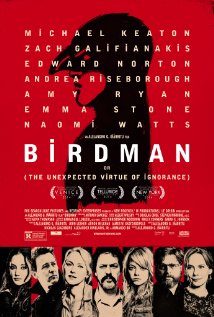
Greetings again from the darkness. Hollywood versus Broadway. Screen versus Stage. It’s always been a bit Hatfield’s and McCoy’s. The basic argument comes down to celebrity versus artistic merit. Director Alejandro Gonzalez Inarritu blurs the lines with his most creative and daring project to date. It’s also his funniest, but that’s not really saying much since his resume includes Babel, 21 Grams and Amores Perros.
The basic story involves a former Hollywood actor well known for playing a superhero (Birdman) many years ago. Riggan is played by Michael Keaton, who you might recall garnered fame playing Batman many years ago. While the parallels are obvious, it’s quickly forgotten thanks to a majestic performance from Mr. Keaton. Riggan is trying to prove something to himself and the world by writing, directing and starring in a stage production of Raymond Carver’s short story “What We Talk About When We Talk About Love”.
Riggan’s quest runs into every imaginable obstacle, not the least of which is his own internal struggle with his ego … voiced by his former Birdman character. This could have been a more detailed exploratory view of the creative ego, but we also have money issues, casting issues, personal issues, professional issues and family issues.
Zach Galifianakis plays Riggan’s best friend-agent-lawyer, and is the film’s most grounded character. Yes, you can read the sentence again. A slimmed down Zach perfectly captures the highs and lows of the guy charged with juggling the creative egos and the business requirements of the production. Naomi Watts plays the exceedingly nervous and emotional film star making her stage debut, while her boyfriend and co-star is played by Edward Norton who, well, basically plays Edward Norton … a critically respected method actor who is known to be a royal pain in the keister. Riggan’s current squeeze, who is also an actress in the play, is played by Andrea Riseborough who gleefully blindsides him with an announcement that is unwelcome and untimely. Riggan also receives visits from his ex-wife (Amy Ryan) and is employing his fresh-from-rehab daughter (Emma Stone) in an assistant role. As if all of this wasn’t enough, a tipsy Riggan botches a pub interaction with an all-powerful stage critic (Lindsay Duncan), and the two trade incisive insults regarding each other’s vocation. So all of these characters and worlds collide as the production nears the always stress-inducing opening night.
After all of that, it’s pretty easy to state that the script is somehow the weakest part of the film. Instead, the directing, cinematography, editing and acting make for one of the most unique movie experiences of all time. Director Inarritu and famed cinematographer Emmanuel Lubezki and the editing team, deliver what appears to be a single take for mostly the entire run of the film. Of course we know it can’t possibly be a single take, but it’s so seamless that the breaks are never obvious to us as viewers. We have seen a similar approach by Alfred Hitchcock in his 1948 film Rope, but this time it’s a frenetic pace, and the maze-like setting in the bowels of NYC’s St James Theatre that makes this one a spectacular technical achievement.
Lubezki won an Oscar for his camera work on Gravity, and he has also worked on multiple Terrence Malick films, but this is the pinnacle of his career to date. It’s impossible to even comprehend the coordination required for the camera work, the actor’s lines and marks, the on que jazz percussion score from Antonio Sanchez, and the fluidity of movement through the narrow halls and doorways of backstage. It’s truly a work of art … whether a stage critic thinks so or not! Most every cinephile will see this one multiple times, but mainstream appeal will certainly not grab ahold. Reality, fantasy, insanity, and morbidity all play a role here and frequently occupy a character simultaneously. These aren’t likable people, and the film’s crucial scene forces Mr Keaton to speed-walk through Times Square in only his tighty-whities, leaving his character in the proverbial “naked on stage” situation. It’s rare to see such unflattering looks at both the stage and screen worlds, and it’s also rare to see such fine performances. Three standouts are Keaton, Norton and Stone. If the industry can avoid presenting awards to itself for “cartoons and pornography“, these three should all capture Oscar nominations.
Beyond that, director Inarritu, cinematographer Lubezki, and composer Sanchez deserve special recognition for their incredibly complex technical achievements. For those who complain that Hollywoood only produces re-treads, sequels and superhero movies, take a walk on the wild side and give this one a shot. You may not love it, but you’ll likely admire it.
SEE THIS MOVIE IF: it’s creative filmmaking you seek OR you want to see a tour de force performance from Michael Keaton OR you seek the challenge of identifying the scene cuts (good luck)
SKIP THIS MOVIE IF: you hear enough voices in your own head and prefer not to take on those from Birdman
Greetings again from the darkness. Every once in awhile a movie comes around that seems to have all the markings of a cult film that could become a midnight movie favorite. Since I can best describe this one as “a darkly comedic supernatural horror film”, its only real hope for staying power is that teens and young adults embrace the outlandish look at good and evil, and make it a regular on the midnight movie circuit.
Director Alexandre Aja (The Hills Have Eyes) has long been part of the “splat pack” and this time his source material has good genes. The popular book was written by Joe Hill, son of the great Stephen King. It’s an oddly atmospheric and sometimes funny film with theological undertones, and Aja stays mostly under control until the ultra-violent ending sequence.
Daniel Radcliffe stars as Ig, a young man widely suspected by his fellow small town residents of murdering his true love (Juno Temple). After a visually creative opening that turns Ig’s world upside down and moves us from heaven to hell, we follow Ig’s attempt to solve the murder with the help of his attorney and long time friend (Max Minghella). And then one morning, things get really weird. Ig sprouts devil horns from his forehead. Things also get fun. This devilish look has the effect of causing people to confess their darkest inner thoughts … those thoughts we don’t even admit to ourselves!
Much of the movie plays as a basic whodunit, and the entire thing has a “Twin Peaks” feel to it … right down to the diner (Eve’s Diner with an apple logo). There are flashes of satire aimed at the news media, the drug culture, religion, and parenthood; and its core is a theme of “every devil used to be an angel“. With the satanic element, you can be sure Rock ‘n Roll comes into play (David Bowie, Marilyn Manson, The Pixies), and it’s actually kind of fun to watch Ig take advantage of his supernatural powers with a combination of evil and charm.
Radcliffe takes the role seriously and his approach adds some bite to the humorous elements. Juno Temple has limited screen time as his love interest, while Heather Graham goes full out nutso as the publicity seeking waitress, and Kelli Garner has the most frustrating role (her talents are wasted, except for a bizarre donut scene). Minghella doesn’t bring much to a role that had some potential, but Joe Anderson delivers as Ig’s drug addicted trumpet playing brother. James Remar and Kathleen Quinlan each have an extended scene as Ig’s parents, and David Morse delivers as the angry dad who has lost a daughter.
Mr. Aja throws a mixture of style and elements as he takes full advantage of the gloomy and colorful Pacific Northwest setting. Numerous flashbacks are utilized, including some childhood events that impact the current situation. The pitchfork, horns and serpents are there to distinguish good versus evil, but mostly you better be prepared for a twisted hoot that reminds a bit of Bubba Ho-Tepin the outrageous blend of comedy and horror … yep, the makings of a midnight cult favorite.
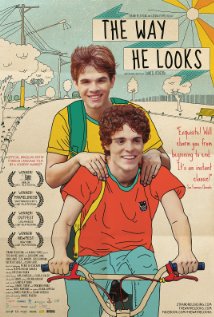 Greetings again from the darkness. This is Brazil’s official entry for the 2015 Academy Awards, and it’s the feature film debut of writer/director Daniel Ribeiro. With some similarities to Truffaut’s Jules and Jim (1962), it’s a coming-of-age story focused on the adolescent desire for independence, and the awkwardness and curiosity associated with first love.


 Posted by David Ferguson






 Movie Reviews from the Dark