THE HOMESMAN (2014)

December 1, 2014

homesman Greetings again from the darkness. We have come to expect our Westerns to be filled with stoic heroes and nasty villains, but this film delivers a pious, yappy leading lady paired with a selfish, no frills drifter. Based on the 1988 novel from Glendon Swarthout, it’s also the second directorial outing from Tommy Lee Jones (The Three Burials of Melquiades Estrada, 2005).

Hilary Swank plays Mary Bee Cuddy, a name repeated so many times that it will surely stick with you … even if the movie doesn’t. Thirty-one years old and unmarried, Ms. Cuddy is not without talent. She works the plough horses, cooks up fried chicken, and plays a mean fake piano. As is pointed out to her a couple of times, she is also “bossy” and “plain” looking … neither trait especially appealing to men in the wild west.

Ms. Cuddy volunteers to take three local women to Iowa. The three women (Grace Gummer, Miranda Otto, Sonja Richter) have each gone insane, and somehow Iowa is the most civilized place within a wagon ride’s distance. Cuddy teams up with a low-life drifter played by Tommy Lee Jones, after they strike a deal that allows him to escape certain death. The verbal clash of cultures and personality between the two main characters provides most of the action on screen, as the three women being escorted are mostly muted and either locked in the back of the wagon or tied to a wagon wheel during riding breaks.

The film is at its best when focusing on the harsh realities of frontier life. Cinematographer Rodrigo Prieto (Brokeback Mountain) does a nice job of capturing the wide expanse and stark vastness of the landscape, while also tossing in some artsy silhouettes and proof of abruptness of this life. Director Jones utilizes some haphazardly timed flashbacks to help us better understand the plight of the three women, but this could have been done much more effectively. Courage, inner-strength, and morality all play a role here, and the contrast between frontier and civilization was most distinct.

Much of the film plays like an oddball buddy picture – think Nolte and Murphy in 48 Hours, or Bogart and Hepburn in The African Queen. If you find the interaction between Swank and Jones to be realistic, then you will probably buy into the whole film. If not, the lack of flow and choppiness of scenes will jump out. There seems to be a never ending stream of little more than cameos from a tremendous line-up of actors: Barry Corbin, William Fichtner, Jesse Plemons, David Dencik, Evan Jones, John Lithgow, Tim Blake Nelson, James Spader, and Hailee Steinfeld. There are even a couple of scenes near the end featuring Meryl Streep (her daughter Grace Gummer plays one of the 3 insane women). The slew of familiar faces actually detracted from the story for me, because the Swank and Jones characters just couldn’t hold my attention.

The ending seems quite odd and a bit out of place for what we have just watched, and I’m still confused by the line of dialogue addressing the difficult “winter” they must have had on the wagon trip … it’s clearly stated that the trip began in May and would take a few weeks. Even in Nebraska, May and June can’t be considered winter. If you enjoy Hilary Swank on a soapbox or Tommy Lee Jones dancing a jig, then perhaps the pieces will fit better for you than they did for me.

SEE THIS MOVIE IF: you are intrigued by a long, mostly uneventful wagon trip where 3 of the 5 people don’t speak and one rarely shuts up.

SKIP THIS MOVIE IF: Tommy Lee Jones dancing a jig (twice) or Hilary Swank playing air piano just aren’t enough to pull you away from holiday shopping.

watch the trailer:


FOXCATCHER (2014)

November 30, 2014


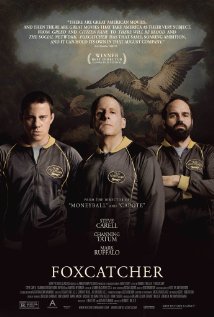
foxcatcher Greetings again from the darkness. The 1996 newscast remains vivid in my mind. It was captivating due to the bizarre circumstances and the tragedy involving an athlete whose Olympic career I had followed closely. Initially, I had trouble reconciling the story of this popular world class athlete and the mentally troubled billionaire who was part of one of America’s richest and most iconic families. This movie fills in some of the gaps.

Director Bennett Miller (Capote, Moneyball) is a meticulous filmmaker and is never in a hurry as a story teller. He allows the characters to develop on screen at their own pace … and this time the pace is excruciatingly slow – in a brilliant, yet painful to watch manner. The lead characters are a diverse trio of men. Mark Schultz (Channing Tatum) won Olympic Gold in 1984, but he is shy and withdrawn to the point of being socially awkward and unable to capitalize on his victory. His older brother Dave Schultz (Mark Ruffalo) also won a Gold Medal in 1984, and is very engaging family man who helped raise Mark, while building endorsements and job opportunities for himself. The triumvirate is completed by the incredibly odd billionaire John duPont (Steve Carell), who proclaims himself a wrestling coach after building a state of the art training facility on his family estate. The ultra rich can do such things.

John duPont was never able to live up to his mother’s (Vanessa Redgrave) standards. She even paid the chauffeur’s son to be John’s friend as they were growing up. With Mark always in the shadow of his more popular brother, duPont seizes the opportunity to capitalize on Mark’s vulnerability and invite him to lead his Foxcatcher wrestling team (named after the family estate which is near Valley Forge). duPont’s ultimate goal is to also have Dave join them, but it’s a tougher sell for various reasons.

The mommy issues and brother issues drive the need for validation and are at the core of story here, as are ego, “patriotism”, and ultimately delusion. Steve Carell sports a nose apparatus that captures the reason DuPont nicknamed himself the “eagle”. He also kicks his head back, while slumping his shoulders, in physically capturing duPont’s unorthodox movements. But that’s nothing compared to the eerie aura he puts off whenever he must deal with another person. He sends up red flags to anyone even minimally aware of their surroundings, but to a lost soul like Mark, he becomes a father figure and “coach”.

A wrestling movie would figure to be male dominated, but even with that, Sienna Miller (as Dave’s wife) and Vanessa Redgrave (as Jean duPont) are almost non-existent as the only female characters. Anthony Michael Hall has a brief supporting role, and it’s nice to see Guy Boyd back on screen as well. However, most every scene is some mixture of Carell, Tatum and Ruffalo, and they each deliver. It’s a side of Carell we have never before seen (many of the greatest comics have a dark side), and Tatum is spot on as the hulking, sulking Mark, while Ruffalo captures the easy charm and sensitivity of Dave.

The story offers further proof that life can be stranger than fiction … especially when it involves an insecure and mentally unstable billionaire who envisions himself as a leader of men.

SEE THIS MOVIE IF: you are familiar with the 1996 story OR you want a lesson in how not to act once you become a billionaire

SKIP THIS MOVIE IF: you are expecting a typically comedic Steve Carell performance (he is creepy in a not-funny way)

watch the trailer:


THE HUNGER GAMES: MOCKINGJAY – PART 1 (2014)

November 27, 2014

mockingjay Greetings again from the darkness. I’m now even further removed from the target demographics than for the first two Hunger Games movies. Regardless, I have read all 3 books from Suzanne Collins’ trilogy and have seen all 3 movies based on her books. Oh, wait. There will be FOUR movies, not three, from her source material. Hello Lionsgate profits! By definition, The Hunger Games: Mockingjay Part 1 is a warm-up act … it’s setting the stage for the finale which will be released in one year.

So for this one we get a Hunger Games movie with no Hunger Games. In fact, there is very little combat action at all. Instead, we are witness to the strategic planning and “selling” of a war (think Wag the Dog), replete with short promo videos featuring Katniss (Jennifer Lawrence) as the Mockingjay … the rallying symbol of the rebels. There is a terrific scene featuring four great actors: Jennifer Lawrence, Julianne Moore (as President Coin), Jeffrey Wright (as Beetee) and the late Philip Seymour Hoffman (as Plutarch). Four great actors in harmony elevating a movie based on YA novels. Pretty cool.

With no actual Hunger Games, the color palette of the film is almost entirely grays and browns. Even Julianne Moore’s famous red tresses are toned down to a streaked gray. The bleak look reminds of the Metropolis (1927) set, and also makes President Snow’s (Donald Sutherland) vivid white wardrobe and beard stand in contrast to rest. Mr. Sutherland has another juicy scene flashing his devilish grin and twinkle. He’s another example of the perfect casting, which extends to Elizabeth Banks (Effie), Woody Harrelson (Haymitch), Stanley Tucci, and Mahershala Ali (as Boggs). You should expect much less Josh Hutcherson (Peeta) this time, but a little more Gale (Liam Hemsworth).

Jennifer Lawrence proves again that her recurring role as Katniss is underrated from an acting perspective. She is now best known as an Oscar winner, but that doesn’t affect the sincerity, emotion and tenacity that she exhibits here.

This ending of Part 1 feels a bit awkward, but the break comes at the right time considering how the book is written. If you are a fan of the franchise, just accept that you will be buying a ticket for this move as well as next year’s finale.

**NOTE: Fans of Face Off will pick up a nod to that film

**NOTE: Philip Seymour Hoffman passed away with less than two weeks remaining in the filming schedule. He will appear in the finale, but his last few scenes were re-written to account for his absence. I will say it again next year, but his death leaves such a void for us movie lovers.

watch the trailer:


THE IMMORTALISTS (2014, doc)

November 27, 2014

immortalists Greetings again from the darkness. These days most tend to define anti-aging as the desire to look younger … vitamins, lotions, botox, and plastic surgery all thrive in a society obsessed with never looking old. Co-directors David Alvarado and Jason Sussberg introduce us to two of the world’s leading anti-aging scientists, and neither of them specializes in facelifts.

Bill Andrews is 61 years old, runs ultra-marathons, and his catchphrase is “cure aging, or die trying”. Dr. Andrews is convinced human beings can live forever. Fifty year old Aubrey de Gray is the heavily bearded (think “Duck Dynasty”) founder of the SENS Foundation, which is dedicated to stopping/correcting the aging process. While some, especially the old guard of biologists, label their missions as pseudo-science, a 2011 Harvard project actually reversed aging in mice – lending credence to the work of these two (and others).

As with many frontiers in science, this subject begs two questions: Can we? Should we? One additional question fits snugly here as well: What happens if we do? Each of our scientists gets his shot at explaining his theory. The two theories actually contradict each other, leading to a somewhat friendly rivalry.

Rather than remaining focused on the science and the works of many other doctors dedicated to anti-aging, the film evolves into a character study of two distinct personalities. Bill’s mission is personal as he confesses his desire to live forever, to save his dad who suffers from Alzheimer’s, and to cure his best friend who has cancer. Aubrey, on the other hand, states his work is not personal in the least. His sights are set on saving humanity.

The personal side of these two dominates the film. We see a great deal of Bill running – sometimes while giving interviews, and sometimes struggling to breath while (twice) attempting a 138 mile marathon through the Himalayas. We see even more (so to speak) of Aubrey as he enjoys a nude picnic with his biologist wife, and later a glass of champagne with one of his two younger girlfriends in the woods near his California commune. These are two eccentric, but very different gentlemen who are attractive subjects for a documentary. Unfortunately the blistered feet and shaggy beard take away from the more interesting topic of curing aging.

The accusations of quackery are met with the obvious comparisons to early flight technology. We couldn’t fly until we could. Will humans someday live forever? Can the aging process be reversed? It appears more likely that de Gray’s SENS Foundation has a better chance of success since it has received funding, while Andrews’ research company is nearly bankrupt. Very little time is given to the “What happens if we do?” question. The filmmakers assumed we would find the two gentlemen as fascinating as they do. Instead, the film left me wishing for more insight on the science, and less spotlight on the scientists.

watch the trailer:


CITIZENFOUR (2014, doc)

November 20, 2014

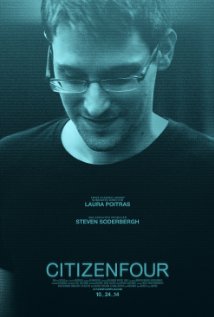
citizenfour Greetings again from the darkness. Edward Snowden. You know the name and you know the story. Hero of the People or Enemy of the State? Ultimate Patriot or a double-spy for the Russians? Protected as a Whistle-Blower or Guilty of Treason? Chances are you long ago made up your mind on how you view Ed (his stated name preference).

In January 2013, Snowden contacted documentarian Laura Poitras via an anonymous email name “Citizenfour”. By June, the two were meeting in a Hong Kong hotel along with journalist Glenn Greenwald. What follows is a mesmerizing look at the actual footage shot of Greenwald interviewing Snowden. This is Ed Snowden before the media storm. This is Ed Snowden continually proclaiming that he is not the story, and he is trusting Greenwald to determine what documents are fit for public release. He voices concern about jeopardizing national security, while at the same time being adamant about exposing the immense and widespread governmental tracking of digital movements by millions of people … most with no known ties to terrorism.

The timeline is public record, so the core of the film is really an intimate look at the man who, acutely aware of the coming fallout, proceeded with pulling the curtain back on NSA actions that he deemed inappropriate. Ms. Poitras structures the film as a thriller, and it will certainly cause tension in every viewer. We can’t help but put ourselves in Snowden’s shoes. Would we feel the need to go public with proof?  Who would we tell?  How would we tell them?  Would we be willing to release our name, knowing it could put everyone we love in danger?  Would we be prepared to watch our President publically call us out as unpatriotic and a danger to the nation?  These questions are impossible for us to answer, but add weight to the scenes of Snowden answering Greenwald’s questions while Ms. Poitras works the camera.

One of the more interesting points made in the movie is that what we once termed individual freedom and liberties, is now couched as privacy. We have come to expect our privacy, and certainly don’t appreciate our government digging through our emails, search history, texts and phone calls. But how to balance the individual “right” to privacy with the government’s need to collect intelligence in the name of national security? That’s the key question, and one with no clear answer.

Regardless of your opinion on Snowden and his actions, the film presents him as an idealist believing he is doing the right thing. Most of this occurs before the media firestorm, but we do see the anticipated fallout. Once Snowden goes into hiding, we witness Greenwald becoming the face and voice of the cause. He is a talented journalist and exceptional speaker, and doesn’t back down from the reaction of those who stand accused.

The film allows us to take notice of the personal attacks on Snowden as an attempt discredit his documentation. Making Snowden the story distracted the media and the general public from the real issue. It’s a fascinating film that will surely make you uncomfortable and cause re-evaluation of the chain of events. You may not change your mind, but you will most certainly have a better understanding of the human side.

watch the trailer:


WALKING THE CAMINO: SIX WAYS TO SANTIAGO (2014, doc)

November 20, 2014

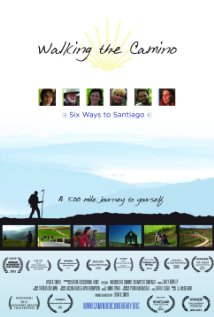
walking the camino Greetings again from the darkness. There aren’t many traditions that span more than 1200 years, and only one of those involves walking 500 miles … the Camino de Santiago. Its origin is as a religious trek to Santiago de Compostela where tradition holds that the magnificent cathedral contains the remains of St. James the Apostle. These days, the Camino is no longer limited to those with Christian beliefs, and in fact many modern day pilgrims take it on as a personal quest rather than a spiritual journey.

Director Lydia B Smith and her camera allow us to travel along with a group of (six) pilgrims, each with their own story, background and motivation. The journey involves both physical and emotional challenges, and results in varying degrees of self-awareness. One obvious difference in today’s pilgrims versus those of medieval times is the experience is much more communal these days. Not only do the walkers eat and sleep in the same hostels along the route, they also freely share their emotions and thoughts with each other (and the camera). This contrasts greatly with the tradition of solitude and quiet introspection.  Call it a lesson in generational differences.

The elements rotate between favorable and challenging. The pilgrims must face cold, hot, rain, and wind. These obstacles of nature are magnified with foot blisters, sore knees and other bodily ailments. However, for most of these people, the mental challenge is every bit as steep. For 6 plus hours each day over approximately 35 days, they focus on the incredible scenery as well as their own thoughts. It’s impossible to hide from one’s self, even though friendship … and even relationships … form along the path.

Each of those who complete the journey realizes it’s not about the destination, but rather the inspiration and spiritual enlightenment – even if it wasn’t their original goal. There is talk about the “internal Camino” and how you walk with your heart. Reflection on this spectacular path leads to harmony with nature and self. A lovely Spanish guitar accompanies our viewing pleasure, and it’s impossible not to imagine ourselves on this journey. If inspiration strikes, just be aware that spending that much time with one’s self is an activity far removed from our generation’s typical day.

watch the trailer:


MIKE NICHOLS (1931-2014) remembered

November 20, 2014

mike nichols When a giant from the Entertainment world passes away, I take the time to read of the few of the tributes and reminisce about the person’s impact on me and the industry. Periodically, and for varying reasons, I am motivated to write my own words about the person and their career.

As one of only twelve (12) EGOT’s (a winner of Emmy, Grammy, Oscar, Tony), Mike Nichols’ legacy and impact are obvious. He is not just the old guy married to Diane Sawyer. Rather, he is a visionary who impacted entertainment for more than 50 years as a performer, stage director, film director, producer and writer.

Some will recall his ground-breaking comedy work with Elaine May from the mid-50’s through the early 60’s (see the video below). Others know him as the Oscar winning director of the classic film The Graduate (1967), and other films such as Who’s Afraid of Virginia Woolf, Carnal Knowledge, Silkwood, and Working Girl. He was also instrumental in the original stage productions of such well-known and long running plays as “Barefoot in the Park“, “The Odd Couple” (Art Carney and Walter Matthau), and more recently “Spamalot“. From the mid-60’s through this year, he bounced professionally and expertly between Hollywood and the stage. Mr. Nichols’ final film was Charlie Wilson’s War (2007), and he won his final Tony Award directing Arthur Miller’s “Death of a Salesman” (2012).

While the career and awards are long-lived and impressive, what’s more notable is how those in the industry refer to him. You will read and hear words like leader, mentor and visionary. Nichols was a collaborator who could inspire artists to their best work. For me personally, I always admired his ability to be funny-smart … or maybe it’s smart-funny. He made us laugh while making us think, and that’s quite something to treasure.


THE THEORY OF EVERYTHING (2014)

November 18, 2014

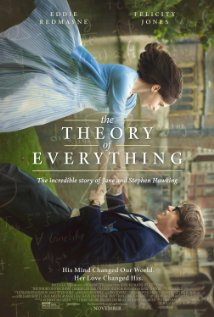
theory of everything Greetings again from the darkness. Stephen Hawking would most certainly make anyone’s list of the most fascinating people to have overcome severe obstacles in life to achieve greatness. Even today, at age 72, Hawking remains one of the foremost physicists and cosmologists. His extraordinary mind now 50+ years trapped inside a body that failed him, and as we learn, should have killed him by the time he was 23.

Director James Marsh is known for his work on two documentaries: Project Nim, and Man On Wire. His flair with reality in those two films is mostly kept in check with this conventional biopic. Based on Jane Hawking‘s book “Travelling to Infinity: My Life with Stephen”, the film does a nice job of showing us the stages of his motor neuron disease, while never digging too deep into the resulting hardships for Stephen or Jane (his wife).

Eddie Redmayne (Les Miserable, My Week with Marilyn) delivers the type of performance that often results in awards. His physical contortions capture the Hawking we have all seen, yet he also emotes the charm and wry humor that accompanies his genius. Jane is played by Felicity Jones (so terrific in Like Crazy) and since it’s based on Jane’s book, we are provided a glimpse into her strength and tenacity as she refuses to give up on Hawking or their relationship.

Some basic science is touched upon here – mostly through beer foam on a table or the glowing embers from a fireplace, but it’s highly recommended that you read Hawking’s best selling book “A Brief History of Time” if you have not already done so. It’s written using language so clear and concise, that even I almost understood it! Much more than science, this film is about the tenacity of Jane and her ability to keep Stephen moving forward while still pursuing her own studies and raising their three kids.

The evolution of their relationship is deftly handled, even as they each drift away towards others. When the break eventually occurs, it is the one moment in the film where heartfelt emotion is on full display. Oddly enough, it’s more relief for both parties than disappointment. In light of the doctor’s original estimate of two years to live, this moment is quite poignant.

Excellent support work comes courtesy of David Thewlis as Hawking’s professor and mentor, Emily Watson as Jane’s mother, Simon McBurney as Stephen’s dad, Charlie Cox as Jonathan (Jane’s second husband), and Maxine Peake as Elaine (Stephen’s second wife). Also of note, Harry Lloyd plays Stephen’s classmate and friend Brian. Mr. Lloyd is the great, great, great grandson of Charles Dickens.

You can see this one without being intimidated by the science, and instead get a glimpse at Hawking’s challenges and the strength of Jane.

SEE THIS MOVIE IF: the personal relationship and struggles of Hawking and his wife are of interest to you.

SKIP THIS MOVIE IF: you are looking for some in-depth analysis of Hawking’s genius

watch the trailer:


INTERSTELLAR (2014)

November 16, 2014

interstellar Greetings again from the darkness. There are probably three distinct groups that view this as a “must see” movie. First, there are the hardcore science lovers – especially those dedicated to space and time. Next would be the core group of Sci-Fi aficionados (those who quote and debate the specifics of 2001: A Space Odyssey, Blade Runner, The Matrix, etc). And finally, those cinephiles who anxiously await the next ground-breaking film of director Christopher Nolan, whose experimental and pioneering methods are quite unique in today’s Hollywood.

Given that I would be laughed out of the first two groups – exposed as less than a neophyte, you may assume that my discussion of this film will not be steeped in scientific or astrophysical theorem. Instead, this will provide my reaction to what has been one of my two most anticipated films of the year (Birdman being the other).

Simply stated, the look of this film is stunning and breath-taking. Its theatrical release comes in many formats, and I chose 70mm. This made for an incredibly rich look with probably the best sound mix I have ever heard. The physical sets were remarkable and as varied as the scene settings: a farm house, a NASA bunker, multiple spacecrafts, and numerous planets. Beyond that, we experienced the effects of blackholes, wormholes and the tesseract. Mr. Nolan’s long time cinematographer and collaborator Wally Pfister was off directing his own film (Transcendence), so the very talented Hoyt Van Hoytema joined the team and contributed sterling camera work, including the first ever handheld IMAX shots. Top this off with Hans Zimmer’s complimentary (though sometimes manipulative) score, and Mr. Nolan has produced a technical marvel of which known adjectives lack justice.

Take note of the exceptional cast led by the reigning Oscar winner Matthew McConaughey (Dallas Buyer’s Club), and other Oscar winners and nominees Michael Caine, Anne Hathaway, Jessica Chastain, Matt Damon, John Lithgow, Casey Affleck, and Ellen Burstyn. Beyond these, we also have David Oyelowo, Wes Bentley, William Devane, Topher Grace, David Gyasi, Collette Wolfe, Timothy Chalamet, and an exceptionally fine performance from Mackenzie Foy (who will forever be remembered as the “Twilight” child of Kristen Stewart and Robert Pattinson).

On the downside, I found myself shocked at some of the dubious and distracting dialogue. At times, the conversations were contradictory and even seemed out of place for the situation, character and movie. In particular, the entire Matt Damon sequence and the Anne Hathaway monologue on “love” both struck me as disjointed and awkward. These and other minor annoyances can’t be discussed here without noting key plot points, so that’s where we will leave it. However, it must be mentioned that the words of Dylan Thomas are so oft repeated, that the phrase “Do not go gently into that good night” can now be officially considered fighting words.

The works of noted Theoretical Physicist Kip Thorne were the inspiration for the story, and even Astrophysicist Neil deGrasse Tyson has come out in support of much of the science in the film. Be prepared for brain strain on topics such as space-time continuum (Einstein’s Relativity of Time), gravity, and the aforementioned wormholes, blackholes and tesseracts. The blight depicted in the first hour draws its look and even some closed circuit interviews directly from Ken Burns’ documentary The Dust Bowl (2012). Beyond all of the science and lessons of human arrogance and survival, I found the story to be focused on loss … loss of home, loss of loved ones, loss of hope … and balanced by the remarkable human survival instinct. Christopher Nolan deserves much respect for addressing these human emotions and desires with the overwhelming vastness of space, and doing so in a time when Hollywood producers would much rather financially back the next superhero or even a sequel to a 20 year old comedy.

**NOTE: (Could be considered a  SPOILER)  If I were sending a crew into space on a dangerous mission to save the species, and my Plan B was to have this group start a new community on a new planet, I would certainly send more than one female on the mission.

SEE THIS MOVIE IF: scientific brain strain is your favorite form of entertainment OR you need proof that Gravity was mere fluff in the realm of space film

SKIP THIS MOVIE IF: your idea of time-continuum is hitting the snooze button on your alarm clock

watch the trailer:


MISS TIBET: BEAUTY IN EXILE (2014, doc)

November 14, 2014

miss tibet Greetings again from the darkness. Proving once again that real life provides the most fascinating topics and characters, documentarian Norah Shapiro takes a look at cultural identity and the slow process of exiled-Tibetans adapting to the outside world. Her project takes us inside the Miss Tibet Beauty Pageant … “a pageant with a difference”.

Tenzen Khecheo is the film’s focus. She appears to be a pretty typical teenager living in Minneapolis, though we soon enough learn her family history. Her father received one of the rare immigration visas issued by the U.S. to exiled Tibetans. His family later joined him in the states, and Tenzen’s story picks up after his death. She decides to enter the 10th annual Miss Tibet pageant, and is accompanied by her mother and sisters as they head off to Dharamsala in the Indian Himalayas.

The pageant is run by a self-described “small town impresario” named Lobsang Wangyal, who is more flamboyant and publicity-addicted than any of the six women in the pageant. The stated ideal behind the pageant is to empower Tibetan women and provide them confidence and a platform to have their voice heard. Of course, this seems ironic to us Americans who have heard for years that these pageants are the polar opposite of empowering. But this contradiction helps us understand some of the basic cultural differences in the United States (where freedom is abused) versus exiled-Tibet where morals, honesty, kindness, modesty and spirituality are the most adhered to traits.

What follows is more or less a Westernized Beauty Pageant replete with segments of swim suit modeling, personal talent, current events, and photography sessions. And just like in the U.S., scandal, controversy, and accusations of fraud and unfairness follow the announcement of the winners. This ugly scene captures the essence of what we previously heard from those interviewed – competition goes against the nature of this culture. While they are not against modernization and adapting, the idea of becoming more Westernized is quite unappealing to many.

Ms. Shapiro is kind enough to provide a brief history lesson on Tibet, and how the invasion of China led to the exiled community who for years has followed the guidance of the Dalai Lama. We also meet Ama Adhe, a long time political prisoner, who meets with the girls – driving home the difference between those who have truly suffered for their beliefs and those who simply talk a good game. Tenzen Khecheo mostly behaved like a typical American teenager, though she did show moments of humility when she doubted her relevance among the Tibetan women. It’s always interesting to get a glimpse inside another culture, especially one that is in slow transition.

watch the trailer: