COLUMBUS (2017)

August 3, 2017

 Greetings again from the darkness. The first feature film from Korean writer/director/editor Kogonada provides intimate and revealing slices of life that are somehow simultaneously familiar, thought-provoking, and enlightening. There is so much going in this seemingly quiet little story that we are left thinking that it could easily have been split into 2 or 3 movies.

Haley Lu Richardson stars as Casey, a local girl who works in the library and as a tour guide. She’s clearly smart, and readily admits to sacrificing her future for the responsibility of looking after her mother (Michelle Forbes) – a recovering addict to both meth and “s***heads”. Her exchanges with Gabriel (Rory Culkin) carry the weight of intellects-in-development, as well as strained attraction that is regularly shut down through sneakily awkward and uncomfortable moments. Their back-and-forth on reading, video games and attention spans is one of the best on-screen exchanges we will hear this year.

The film begins with an elderly man having some type of seizure, sending him to the hospital and canceling his scheduled architecture presentation. His son Jin (John Cho) arrives from out of town and the next morning has an initial inelegant crossing of paths with Casey. The lack of connection between the two transforms in a beautifully written and photographed scene the next day. Shot from the other side of the window glass with no audible dialogue, we witness the moment Casey lets down her guard and Jin becomes enamored. It’s a unique and wonderful scene – so quiet, yet it changes everything.

Columbus, Indiana is the other star of the film. Its famous modern architecture is featured prominently throughout as Casey guides Jin to her favorites. Their corresponding conversations, usually while puffing on cigarettes, gradually become more detailed and more revealing. Doorways, bridges, windows, and buildings become part of the conversation, and crucial to the look and feel created by cinematographer Elisha Christian.

Mr. Cho captures the stoic nature of a son inconvenienced by a Korean culture that requires him to be present should his father die. He is miffed by the need to ‘adequately grieve’ for the man who never put his own life on hold for his son. Ms. Richardson is the revelation here. Having seen her in SPLIT, THE EDGE OF SEVENTEEN, and THE BRONZE, it was obvious she had screen presence, but here she shows the depth and range that portends a long and varied acting career. Her slumped shoulders and panged expression are spot on for a 19 year old who is too smart for her situation, yet too young and unworldly to know how to forge ahead.

Kogonada proves himself a sly storyteller as well as a master of visual setting, utilizing language, architecture and above all, conversation. At one point, Jin asks Casey “Are we losing interest in everyday life?” This filmmaker is doing his part to keep us aware and interested.

watch the trailer:


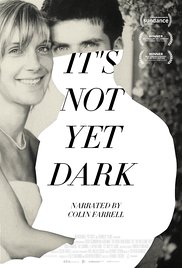
IT’S NOT YET DARK (2017, doc)

August 3, 2017

 Greetings again from the darkness. We all have two kinds of friends: those who sulk for days when the candy machine eats their quarter, and those with such zest for life that no personal or professional tragedy dampens their “can do” spirit. Director Frankie Fenton presents the remarkable story of Simon Fitzmaurice, an Irish writer and filmmaker who is robbed of his body by MND (Motor Neuron Disease).

Fellow Irishman Colin Farrell narrates the film, giving poignancy to Simon’s own words … words he can no longer speak himself. As a writer and filmmaker, Simon’s “before” life is documented through pictures, videos and many of his thoughts on the page. He was a youngster full of ideas and energy. We learn this from his father Damien, his mother Florence, his younger sister Kate and childhood friend Phil. More than any other, we learn it from his wife Ruth. In fact, this is as much Ruth’s story as it is Simon’s. She is a special lady in love with a special man. Their story will likely resonate with you.

In 2008, Simon’s short film THE SOUND OF PEOPLE was selected to screen at Sundance. Not long after, he was diagnosed and given 3-4 years to live. Less than 10 years later, he became the subject of this documentary which was also a Sundance selection. It’s not the path he envisioned, but as he says, “For me it’s not about how long you live, it’s how you live.”

This cruel disease allows him to feel everything, yet he can’t walk, speak, breathe or eat without artificial help. The film shows us how Simon documented the many phases of the disease, right down to his last dance. One form of “artificial help” allowed him to return to filmmaking. He utilized eye gaze technology to finish writing and then direct his first feature film, MY NAME IS EMILY. With all of his physical challenges and the support of his wife and kids, it’s wrapping the movie that proved to him that he “made it back to work”. It provides the answer to his earlier question, “What is a man?”

It’s touching to hear Ruth describe how the hiring of a nurse allowed her to go back to being a wife and mother, rather than a care-giver. She and Simon even later had twins (kids #4 and 5), and he wrote a best-selling book/memoir on which this film is based. Last year the documentary GLEASON provided a similarly inspirational story about Steve Gleason, an NFL player stricken with ALS. These two films and these two men (and their wives) provide a sentimental, sincere and life-affirming message that life is worth fighting for and living to the fullest.

watch the trailer:


FROM THE LAND OF THE MOON (Mal de pierres, France, 2017)

August 1, 2017

 Greetings again from the darkness. Director Nicole Garcia (The Adversary, 2002) takes the best-selling novel from Milena Agus and harkens back to good old-fashioned movie melodrama – with a French twist. Of course, most any project is elevated with the beautiful and talented Marion Cotillard in the lead role. Few can suffer on screen as expertly as Ms. Cotillard, and she conveys that disquiet through most of this story.

What is love? You’d best not look to Gabrielle (Cotillard) for clarification. As a young woman, her search for love and sexual fulfillment follows the fantasies of the novels she reads (Wuthering Heights). Her corresponding inappropriate behavior teeters between delusion and hysteria. It’s the 1950’s in rural France, so her actions and attitude are not much appreciated, and her parents bribe Jose (Alex Brendemuhl), a local bricklayer, to marry Gabrielle. She is then given the choice of (an “arranged”) marriage or a mental institution.

As a romantic dreamer whose blurred reality expects love to mirror those romance novels, Gabrielle’s self-centeredness and failure to grasp reality results in a loveless marriage – and easily one of the most uncomfortable lovemaking scenes in the history of French cinema. Beyond that, severe kidney stones make it impossible for her to bear children. In hopes of “the cure”, she is sent for treatment to a spa in the Alps (it’s the same spa from Paolo Sorrentino’s 2015 film YOUTH).

While at the spa, she meets handsome Andre (Louis Garrel), a gravely ill soldier from the Indochina War. Gabrielle imagines Andre to be everything she dreamt a lover should be (except for that whole sickness thing). The contrast between the two love-making sessions is startling, and it seems as though Gabrielle has found her bliss.

The years pass after her release from the spa, and Gabrielle makes one mistake after another … blind to what and who is right in front of her … while holding on to the dreamer’s dream. She is certainly not a likeable person, and is downright cruel to her loyal (and extremely quiet) husband Jose. However, Ms. Cotillard is such an accomplished actress that we somehow pull for Gabrielle to “snap out of it”.

The novel was adapted by Jacques Fieschi, Natalie Carter and director Garcia, and you’ll likely either be a fan or not, depending on your taste for old-fashioned melodrama. Despite numerous awkward moments, it’s beautifully photographed by cinematographer Christophe Beaucame. Additionally, the music plays a vital role here – both composer Daniel Pemberton’s use of the violin, and the duality of Tchaikovsky’s piano concerto that connects Gabrielle’s two worlds. You may say she’s a dreamer, but I hope she’s the only one.

watch the trailer:


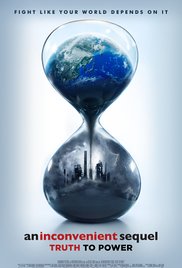
AN INCONVENIENT SEQUEL: TRUTH TO POWER (2017, doc)

July 30, 2017

 Greetings again from the darkness. Eleven years ago, former Vice President Al Gore teamed up with filmmaker Davis Guggenheim to deliver a significant and startling wake-up call in the form of the documentary AN INCONVENIENT TRUTH. Not only was this the first introduction to the science of “global warming” for many, it also won an Oscar for Mr. Guggenheim and contributed to Mr. Gore winning the Nobel Peace Prize.

Co-directors Bonni Cohen (THE RAPE OF EUROPA) and Jon Shenk (LOST BOYS OF SUDAN) seem conflicted on the purpose of this sequel. Is this a frightening eye-opener on the climate-related changes over this past decade, or is it an attempt to return the spotlight to a faded rock star? The film provides evidence of both.

The film kicks off with a reminder of how powerful the original documentary was and how it started an avalanche of deniers … even re-playing Glenn Beck’s comparison of Al Gore to Joseph Goebbels as being weak sources of truth. Mr. Gore is on screen almost the entire run time. He is a self-described “recovering politician”, yet we see him acting very much like an esteemed politician: presenting on stage, shaking hands with the adoring crowds, posing for selfies, giving speeches, appearing on talk shows, and coming across as a highly-polished public figure reciting well-rehearsed lines.

As we would expect, the film is at its best when it focuses not on the celebrity and commitment of Mr. Gore, but rather on the statistics and documentation of these earth-changing developments. Some of the featured videos are surreal: the 2016 Greenland glaciers “exploding” due to warm temperatures, the flooded streets of Miami Beach from rising tides, and the aftermath of the Philippines typhoon are particularly impactful. There is even a connection made between the severe drought and the Syrian Civil War in creating an especially inhumane living environment. A Gore trip to Georgetown, Texas and his visit with its Republican mayor is effective in making the point that political platforms should have no bearing on our doing the right things for our planet. There simply aren’t enough of these moments.

A central focal point is the 2015 UN Climate Conference in Paris, and cameras are rolling when terrorism causes fear for the safety of 150 heads of state, and necessitates a delay in the proceedings. We are privy to some of the behind-the-scenes negotiations that include Solar City agreeing to “gift” technology to India in an attempt to have that country join the accord and reduce from 400 the number of planned new coal plants. Of course as we now know, the historic Paris Climate Accord has since been compromised with the pull out of the United States after the recent election.

Is the purpose of the film to keep climate change believers motivated, or are the filmmakers (and Gore) attempting to educate those who might still be won over? With so much attention to Mr. Gore’s ongoing efforts (and an attempt to solidify his legacy), it often plays like a pep talk rather than a fact-based documentary.

There is no questioning the man’s passion, though his screen presence over two hours is hampered by his reserved manner. He states clearly that he is “not confused about what the right thing to do is”, and even compares his mission to the Civil Rights movement. Gore labels the lack of global process as a “personal failure on my part”, while simultaneously claiming the Democracy crisis has affected the attention given to the climate crisis. His frequent proclamations that “we are close” seem to be in conflict with the many setbacks. Are we close? The film seems to offer little proof.

watch the trailer:


ATOMIC BLONDE (2017)

July 30, 2017

 Greetings again from the darkness. David Leitch has taken the rare Hollywood career path of stuntman-to-director. His expertise in fight scenes is beyond reproach as evidenced by his limited work on JOHN WICK (2014), and in his helming this heavily promoted, style over substance summer action film masquerading as a spy thriller. Kurt Johnstad (300) adapted Antony Johnston and Sam Hart’s graphic novel “The Coldest City”, and in collaboration with director Leitch and the ultra-talented Charlize Theron, has created some of the most brutal, bone-crunching and violent fight scenes ever seen on screen.

Ms. Theron stars as Lorraine, an MI6 agent whose life-sustaining nourishment is apparently derived from Stoli on the rocks and an endless supply of cigarettes. The opening scene features a naked Lorraine submerged in an ice cube bath seeking relief for her bruised and battered body. She then heads to an official debriefing by her supervisor (Toby Jones) and a CIA officer (John Goodman); they want details on what went wrong with her most recent mission. Those details come through flashbacks of Lorraine’s trip to Berlin to investigate the murder of a fellow agent and the stolen list of all agents. It’s 1989, and the Cold War concern is that the list falls into the hands of the KGB, immediately placing all agents and missions in peril.

With the recurring backdrop of President Reagan exhorting Mr. Gorbachev to “tear down that wall”, the film in no way employs the clever clandestine strategies of the TV series “The Americans”, or even slightly resembles international espionage classics like TINKER TAILOR SOLDIER SPY or THREE DAYS OF THE CONDOR. Instead, whatever plot lines or MacGuffins exist have one sole purpose: generate another fight scene for Lorraine.

Stairwells, kitchen utensils, a skateboard, water hoses, car keys and a corkscrew all have their moments (no, it’s not a Jackie Chan movie), as do a couple of car chase sequences. Ms. Theron is a physical marvel (she performed most of her own stunts) as she takes on numerous adversaries in various locations all while sporting more fashionable black & white outfits (with coordinated stilettos) than we can count. She has proven many times (MAD MAX: FURY ROAD, NORTH COUNTRY, MONSTER) that she is much more than a pretty face, and this is her most grueling role to date.

This is undoubtedly Charlize’s show, and supporting work is provided by an underutilized James McAvoy (fresh off of SPLIT) as the rebellious Berlin station agent, Eddie Marsan as a German Stasi known as Spyglass, James Faulkner as MI6 Chief, Roland Moller as the Soviet Bremovych, the always-cool Til Schweiger as the watchmaker, and Bill Skarsgard (Pennywise in the upcoming IT remake). Sofia Boutella plays the wonderfully named Delphine LaSalle, a French agent who, like most of the human race, is attracted to Ms. Theron/Lorraine.

Though it’s understandable we don’t get to see much of Berlin, the soundtrack continually reminds us that we are in 1989 thanks to music from such varied artists as David Bowie, Public Enemy, Nena, The Clash, Depeche Mode and A Flock of Seagulls. There is even a throwback clip from MTV making a crack about the ethics of sampling, and Cinematographer Jonathan Sela’s background in music videos works perfectly for the flash cut action segments.

A more intricate and full-bodied story tied to the international espionage of the Cold War could have elevated the film to a more elite status; however, it immediately becomes one of the top female-led action films and features some of the most impressive and fun to watch cinematic fight scenes ever. Next up for director Leitch is Deadpool 2, so we will soon find out if he can inject humor into his expert action.

watch the trailer:


A GHOST STORY (2017)

July 20, 2017

 Greetings again from the darkness. We’ve not previously seen a movie like this latest from writer/director David Lowery. Detractors will likely roll their eyes and ask “and why would we?”, while those who find a connection here will pontificate endlessly on the existential meaning of life, love, loss and legacy. Polarized reactions to the film will lead to some colorful post-viewing discussions … exactly what would be expected from an artsy non-horror movie entitled A Ghost Story.

Yes, there is a ghost. However this ghost is neither friendly Casper nor angry spirit. Instead, for the vast majority of the run time, we see a white sheet covered Casey Affleck (at least we are told it’s him) standing in static melancholic repose. We do initially meet Affleck’s composer character in what appears to be a somewhat normal up-and-down relationship with his wife, played by Rooney Mara. In the midst of a passive-aggressive argument about whether to move from their somewhat dumpy suburban rental, Affleck’s character is killed in an automobile accident mere feet from their driveway. We next see him back in the house, draped in a bedsheet (one way to keep wardrobe costs under control), and watching his grief-stricken wife through blackened eye holes.

We come to understand that the ghost is confined to the home and time seems to bounce from present to future to past. The residents change, but the ghost doesn’t. Periodically the ghost flashes anger or some other act that disrupts the real world, but mostly he just stands and observes longingly.

A word of caution is in order. This is a deep cut, art house indie that features very little dialogue, almost no plot, and numerous extended fixed shots with no payoff for your anticipation. Oh, and it’s shot in the old fashioned almost square aspect ratio. There are no creepy clowns under the bed or in the storm drains, and there is an absence of cheap jump-scares (OK, there is one that is the director’s prank on the audience). This is more abstract experimental filmmaking than traditional horror, so choose your viewing partner accordingly.

Filmmaker Lowery previously collaborated with Affleck and Mara on the critically acclaimed 2013 Ain’t Then Bodies Saints, and this one was filmed in secret just after Lowery completed Pete’s Dragon. It takes a meditative approach to some of the issues we all ponder at times. Lines such as “We do what we can to endure”, and “You do what you can to make sure you’re still around after you’re gone” … these provide the clues when you begin to wonder what the film is trying to tell you. In fact, it isn’t telling you anything. It’s encouraging you to think. The film may lack a traditional narrative structure, but if taken with an open mind, it can generate some introspection that most movies wouldn’t even attempt to inspire.

In addition to Affleck and Mara, the small cast also includes Liz Cardenas Franke (the film’s producer) as the landlord, and singer-songwriter Will Oldham as a hipster philosopher/prognosticator who is given entirely too much screen time. Daniel Hart contributes an excellent use of music – especially considering the minimal dialogue and non-existent special effects. The film doesn’t solve the mysteries of the universe, but it does answer the question of whether Rooney Mara can eat an entire pie in one uninterrupted shot. Expect descriptions as disparate as: inexplicable, pretentious, boring, thought-provoking, and existential … whatever your reaction, you wouldn’t be wrong.

watch the trailer:


DUNKIRK (2017)

July 19, 2017

 Greetings again from the darkness. Even for us frequent movie-goers, a truly great film is a rare and emotional experience. Leave it to Christopher Nolan, one of the finest film makers working today, to deliver a World War II masterpiece centered on a remarkable and historic evacuation, rather than one of the epic battles that more directly led to an Allied victory. The result is a spectacular, stunning and relentlessly intense assault on our eyes, ears and emotions … it’s a horrific thing of artistic beauty.

Mr. Nolan chooses a triptych approach to tell the May/June 1940 Dunkirk story from three distinctly different perspectives: The Mole, The Sea, and The Air. The Mole (term for protective sea walls) is the “by land” segment, and it shows nearly 400,000 soldiers lined up on the beach – nervously waiting to be either rescued or massacred. The Sea puts us not on the deck of the Navy destroyers, but rather alongside the citizen volunteers who answered the call to ferry men off the beach with own pleasure vessels. The Air plops us inside the Spitfire cockpits of two Royal Air Force pilots battling low fuel as they attempt to protect their fellow soldiers below. This 3-part film harmony expertly captures the disorientation of war by shuffling between the three segments, and varying the timelines and sequence of each.

This all happened pretty early in the war, as Winston Churchill had only become Prime Minister a few weeks prior. It should be noted that Mr. Nolan purposefully avoids the usual war room blustery (we see neither Churchill nor Hitler, and there is little mention of the infamous Halt Order) and allows the action to tell the story. Instead, his focus on the (very) young men being sent to battle makes a clear political statement on the absurdity of war. One of “The Sea” volunteers (an excellent Mark Rylance) delivers the message when he states it’s the old men running the war, so he can’t be expected to just sit back as young sons are sent to fight and die.

Despite the epic look, feel and sound of the film and the massive scale of the event, this film is surprisingly at its best in the small moments of heroism and the dogged determination of individuals to survive. Minimal dialogue allows the horrors of war to take center screen. Danger and death are at every turn – bombings, torpedoes, drowning, gunfire, and most any imaginable peril is ever-present. We witness PTSD (shell-shock) in the form of Cillian Murphy’s shivering rescued soldier, and are reminded that every young man present will be either dead or scarred for life. No one escapes war unscathed.

The opening sequence finds young Fionn Whitehead and his squad being targeted with gunfire as German leaflets fall from the sky. The leaflets are maps outlining the hopelessness as German forces have them surrounded. The film is meticulously researched and historically based, though the few characters we get to know are fictionalized accounts. The practical effects throughout are breath-taking and much of it was filmed on location at the Dunkirk beach. There will likely be some complaints regarding the scarcity of female characters and those of color, but the technical aspects of the film are beyond reproach – although the French might have preferred their military receive a bit more attention. Hans Zimmer’s score is unique and searing as it perfectly captures the intensity of the film. His use of a ticking watch only perpetuates the constant feeling of running out of time. Cinematographer Hoyte Van Hoytema and Editor Lee Smith prove why they are among the best at their profession.

Given the spectacle of the action (if possible, see it in IMAX or 70mm), it’s remarkable how we still manage to get to know some of the characters. From The Mole segment, Fionn Whitehead, Aneurin Barnard and Harry Styles represent the young soldiers, while Kenneth Branagh and James D’Arcy play officers. Tom Hardy and Jack Lowden are piloting the Spitfires, while Mark Rylance, Barry Keoghan, Tom Glynn-Carney, and Cillian Murphy are aboard the rescue yacht. Nolan regular and good luck charm Michael Caine can be recognized as the voice on Air Force radio. There is a 1958 film with the same title, and it stars John Mills and Richard Attenborough. The connection (other than the Dunkirk title) is Sir Attenborough’s grandson Will appears in this current film.

The horrors and impact of World War II continue to be an abundant garden – ripe for the picking when it comes to movies. Over the past 70 years there have been numerous approaches to telling part of the story that redefined the world: Judgment at Nuremberg (legal aftermath), Casablanca (romance), I Was a Male War Bride (comedy), Tora! Tora! Tora! and From Here to Eternity (Pearl Harbor), Shoah (documentary), Schindler’s List and Son of Saul (holocaust), Downfall (Hitler), The Great Escape (entertainment), Patton (bio), The Pianist (personal), Saving Private Ryan (Normandy), Das Boot (U-boat), The Thin Red Line (Guadalcanal), and Letter From Iwo Jima (two opposing perspectives). Each of these, and many others, have their place in War movie history, and now Christopher Nolan’s film belongs among the best.

watch the trailer:


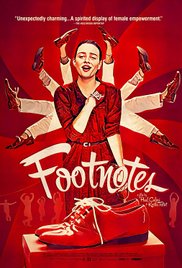
FOOTNOTES (Sur qued piel danser, France, 2017)

July 16, 2017

 Greetings again from the darkness. On the heels of success experienced by LA LA Land, and “inspired by the films of Jacques Demy and Stanley Donen”, co-writers and co-directors Paul Calori and Kostia Testut find the right fit with this whimsical musical-comedy that puts coming-of-age and social commentary on equal footing.

Pauline Etienne stars as Julie, an eager, hardworking young lady who flip-flops between odd jobs (McJobs) just trying to make ends meet in a tough French economy. When she secures a job as a stocker in a high-profile shoe (not footwear) factory, Julie is determined to buckle down, not step on toes, win over her stern supervisor (Clementine Yelnik), and finally get her life in order. Unfortunately, there are rumors of an upgrade, which in the world of corporate management double-speak means downsizing, or even closing the factory. Julie then spends most of the movie treading lightly between romance, a gruff boss, and her activist co-workers.

This is not the kind of musical where the singing voices, original songs or dancing will knock your socks off, but it all relates to the story and nothing seems forced. Feeling threatened, the factory ladies step up their game by singing “Let’s Fight Back” with some creative choreography that makes good use of the warehouse space. One of the delivery drivers (Olivier Chantreau) takes a shine to Julie, even though the boss assumes she is behind the workers’ strike and tries to boot her from the job.

Luic Corbery plays the smarmy CEO whose polished misleading statements are laced with charm as he attempts to re-buff the angry protests from the factory workers; all the while scheming to move operations to lower-cost China. With female solidarity and empowerment around her, Julie must decide if she will be the sole outlier, or if this is her chance to find her true self. It’s in these scenes where Ms. Etienne’s real-person screen presence spikes the story with the well-meaning persona that makes us care.

The working class dream of a better life is a constant throughout, though the ending is a bit disappointing given what we have watched Julie trudge through. The choreography is not flashy or polished, but rather low key and meaningful. There is a touch of the classic The Umbrellas of Cherbourg (including a song/dance featuring multi-colored umbrellas), and although it’s not at that level, it nonetheless is an admirable and enjoyable film. It should be noted that the original title Julie and the Shoe Factory does not quite take advantage of the wordplay offered by the English title.

watch the trailer:


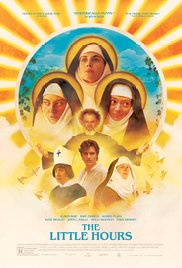
THE LITTLE HOURS (2017)

July 13, 2017

Oak Cliff Film Festival 2017

 Greetings again from the darkness. It’s not often when the obvious comparison to a movie is the classic 1975 comedy Monty Python and the Holy Grail, and it’s even more unusual for such a film to be making the rounds at festivals (I saw this at Oak Cliff Film Festival) where schedules tend to be loaded with serious and dark subject matter. This outlandish comedy won’t be to everyone’s taste, as it is profane and at times mean-spirited.

The year is 1347 when writer/director Jeff Baena’s story kicks off outside a convent where it takes less than a couple of minutes to realize that these aren’t your usual nuns. Profanity spews forth, as does laughter from the audience. Dave Franco plays a servant who has a good reason to flee from his King (Nick Offerman) and agree to a cockamamie plan suggested by the local priest (John C Riley). The plan has Franco working at the convent pretending to be deaf mute, while struggling to decline the advances from the aforementioned warped nuns played by Aubrey Plaza (the director’s long-time girlfriend), Alison Brie (“Mad Men”), and Kate Micucci (Unleashed).

Plot is barely an after-thought here, and most of the movie plays like interrelated “Saturday Night Live” skits. In fact, Fred Armisen and Molly Shannon are part of the ensemble, along with Paul Reiser and Adam Pally. Just as the characters begin to wear a bit thin, a new character is introduced, resuscitating our interest. Each of the actors deliver, but it’s Armisen and Micucci who are especially fun to watch, as is Riley’s tendency to turn communal wine into a community beverage.

Raunchy medieval comedies filled with debauchery and outrageously misdirected nuns could be classified as a bit of a stretch. However it makes more sense when you learn that Mr. Baena has adapted this from Giovanni Boccaccio’s “The Decameron”, and his use of modern day dialogue and attitudes, delivered by an ultra talented comedic cast, makes this one to watch after a particularly rough day or week of work. Expect an altar filled with f-words and blasphemy with a wink. If you are OK with that, you’ll likely laugh and enjoy the temporary reprieve from real life … even without any killer rabbits or Knights who say “ni”.

watch the trailer:

**I could only find a red band trailer – and ‘nun’ of that is appropriate.


LEFTOVERS (2017, doc)

July 13, 2017

 Greetings again from the darkness. I can’t ever recall a documentary starting with the filmmaker explaining that the subject matter was neither a passion, nor even something he was particularly interested in. But that’s exactly how Seth Hancock opens his film. He claims to never have thought much about aging, yet was asked to make a film on hunger within the senior citizen community, based on his experience as a photographer.

“Food Insecure” seniors was a new description learned during the film. The statistics show 6 million seniors go hungry every day, and there are others who experience uncertainty over the when/where/what of their next meal. These are the ‘lost and forgotten’. It’s a national disgrace. Meals on Wheels was a major backer of the film, as were some other organizations that assist seniors.

Director Hancock divides the film into three parts: Learning to Care, Giving a S**T, and Looking for Solutions. He bounces around the United States and offers segments based in Marin County California, Owsley County Kentucky, Orlando, Detroit, and Austin. Each area has their own issues, but the problems are remarkably similar – we just don’t do a very good job of making sure the elderly have enough to eat, and are properly cared for.

It’s pointed out that these are the folks who fought our wars, built our towns, and educated our populace. They deserve better. There is a particularly interesting interview with Carla Laemmle, a former dancer and actress. She is the niece of the legendary Carl Laemmle who founded Universal Studios. Carla explains that without her daily delivery from Meals on Wheels she would be “stuck” in a retirement center or hospital, instead of living in her own home.

The film mixes in interviews with the CEO’s of Meals on Wheels and AARP, as well as numerous senior citizens and volunteers. Many statistics are provided throughout, and it’s noted that every dollar invested in Meals on Wheels saves up to $50 in Medicaid. Other statistics are equally stunning and eye-opening, including the projected number of seniors in 2020 and the importance of Social Security benefits as the bulk of income for seniors.

Frustration with government and politicians is expressed many times, as is the good-heartedness of so many folks (many of whom also are frustrated by bureaucracy) who strive to bring a little joy – and food – into the lives of unfortunate seniors. Health Care and Socialization are touched on, as is the contrast in Texas of the applications for handguns (1 page) versus food stamps (18 pages). The issue of hunger for senior citizens is not going away, and it’s time for real solutions – not just because it’s the humane thing, but also because the folks deserve better.