ELEVATION CHANGE (2019, doc)

October 2, 2019

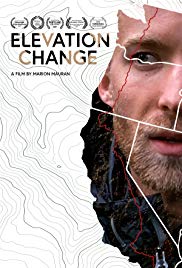
 Greetings again from the darkness. When former Yale University high-jumper Sam Fox announces he is setting out to break the speed record on the Pacific Crest Trail, he does so with a confidence-bordering-on-arrogance that seems to be a natural trait amongst endurance athletes. This was 2011 and Sam’s goal was to raise $250,000 for the Michael J. Fox Foundation, a quite personal cause, given that his mother Lucy was diagnosed with Parkinson’s disease.

The Pacific Crest National Scenic Trail (PCT) is 2653 miles long and connects Canada to Mexico via Washington, Oregon, and California, across the Sierra Nevada and Cascade mountain ranges. Yes, it’s roughly 100 marathons covering some rugged terrain, so we can’t help but chuckle when Sam initially states that he’s not worried about the physical challenge, only the mental aspects of covering 44 miles per day for 60 days to break the record.

Running, hiking, and climbing every day for 2 months is more than most of us can imagine. We see Sam after Day 1 when he has traveled 66 miles in 21 hours, and the reality of his journey strikes us, as well as him. Sam has been described as ultra-competitive, and he’s told us his mother is his motivation. Thru-hiking is a serious endeavor and Sam’s support group includes his girlfriend Chloe, and two good friends John and Eric, who have agreed to assist with food, water, communication, logistics, navigation, and any other obstacles that arise. They are even handling his social media, which is being used as a promotional tool for fundraising.

This is director Marion Mauran’s first film, and in addition to selecting a fascinating subject, she gets lucky in that the PCT record-holder Scott Williamson (who deserves his own film) is not only a few days ahead of Sam on the trail, but he also agrees to be interviewed for the film. Mr. Williamson’s personal story is jaw-dropping, and he makes for a very interesting contrast in personality to Sam Fox. They each have their own motivations for taking on the trail, and Mr. Williamson is quite introspective, while the irritable Mr. Fox appears to seek and appreciate the spotlight. Unfortunately, we get no film of Williamson on the trail, but some of the segments of Fox filming himself provide terrific insight into the struggles.

Weather, rattlesnakes, bears, foot and leg injuries, and solitude are some of the obstacles faced, and when John gets hospitalized with shingles, Sam’s dad jumps in. We quickly see where Sam gets his determination, as the no-nonsense patriarch offers up his philosophy of pushing one’s self to the limit. Director Mauran and her crew mix in some breathtaking shots along the way, with the beauty of nature set against the pain and struggles of Sam’s trek.

We can’t help but compare this to the fantastic 2018 film FREE SOLO chronicling Alex Honnold’s climb of El Capitan in Yosemite. These are individuals that push through pain and mental turmoil, and take themselves to limits most of us can’t fathom. Ms. Mauran’s film might have been even more impactful had the parallels and contrasts between Sam Fox and Scott Williamson been further explored, but what we see is more than enough for us to sit back in our recliners and marvel at the spirit and commitment of endurance athletes.

watch the trailer:

https://www.imdb.com/title/tt3410342/videoplayer/vi2510405401?ref_=tt_ov_vi


JUDY (2019)

September 26, 2019

 Greetings again from the darkness. It’s been 80 years since THE WIZARD OF OZ was released and 50 years since Judy Garland died. So why do we still care so much? Of course the obvious reason is that, for many generations, her adventures as Dorothy Gale from Kansas marked the first time many of us kids could put ourselves in the shoes (mine weren’t ruby sparkles) of a lead character in a movie. Her fantastical journey ignited our imaginations and whisked us away to fight witches and flying monkeys, while making wonderful friends in a corn patch and enchanted forest. Oh, and that voice! However, there is another side to this coin. Judy’s story is also an example of the dark and tarnished side of Hollywood … she pulled back more than one curtain.

Renee Zellweger (Oscar winner for COLD MOUNTAIN, 2003) stars as Judy Garland, and her performance will likely put her in line for her fourth Oscar nomination. The film basically covers the last year of Judy’s life, and director Rupert Goold (TRUE STORY, 2015) is working from a script by Tom Edge adapted from Peter Quilter’s stage play, “End of the Rainbow”. There is no Lollipop Guild here. Instead, the harsh realities of Judy’s life are explored. The film opens with Judy and her kids, Joe and Lorna, performing on stage … and then being unceremoniously denied a room at a nearby luxury hotel. See, Judy’s career is in a bad way (admittedly undependable and uninsurable) – as is her health. She is broke, has no home, and offers for roles or performances have dried up. She ends up at her ex-husband Sid Luft’s (Rufus Sewell) home, which after some former-spouse bickering, is where the kids stay.

With no other real prospective gigs, Judy accepts an offer from Bernard Delfont (Michael Gambon) to perform at his Talk of the Town theatre in London. Most of the film covers her time in London, and the challenges for all involved. She’s 46 years old in the winter of 1968, and though her voice no longer carries the sublime purity of those early years, Judy still has incredible stage presence and an ability to connect with the audience. The challenges occur for her assigned assistant Rosalyn Wilder (who served as a consultant on the film, and is played here by rising star Jessie Buckley), as well as Judy herself. She misses her kids, and is battling loneliness and an addiction to pills – causing her to rarely eat or sleep. When her “friend” (and fifth husband) Mickey Deans (Finn Wittrock) shows up, Judy’s attitude perks up, but her already questionable dependability falters.

Flashbacks to Judy’s teenage years at MGM are used to portray how the studio and industry took control of her body, soul and career. Watching studio head Louis B Mayer (Richard Cordery) bully young Judy (played by newcomer Darci Shaw) by pretending to be a father figure while keeping her weight in line with a diet of cigarettes, diet pills, and soup, is just painful. These scenes, including those with young Judy’s frequent co-star Mickey Rooney, help us understand why she was in such a state by the time she hit London. Ms. Zellweger embodies the blend of frailty and determination and talent, as well as the insecurities that simultaneously drove Judy and held her back. Of course, few singers have ever possessed the vocal talent of Judy, but Zellweger admirably brings the appropriate strain and pain to the songs she sings for the movie, including “By Myself” and “The Trolley Song”.

Born Frances Ethel Gumm, Judy Garland first hit the stage at age 2, and never experienced a “normal” childhood or traditional relationship. Despite her immense talent, she was never able to find peace with the pressures of performing. Years of abuse led to an early death, not long after she finished her London run. The film never backs away from the tragic story, but also allows one of the brightest stars of an era to shine through. For those who only know Judy as that homesick girl from Kansas, or maybe also as the rosy-cheeked youngster on the Trolley in the holiday favorite MEET ME IN ST LOUIS (directed by her future husband Vincente Minnelli), there is likely a shock factor in seeing the broken icon in middle age. The film also deals with that always-present bond she had with her audience, especially with the gay community – although a certain sequence of the film involving a gay couple (both huge fans) seems quite improbable.

For a film like this to work (it was not sanctioned by Judy’s daughter Liza Minnelli), it all rides on the lead performance.  Renee Zellweger beautifully captures both the tragic essence and the stunning talent of the late 1960’s Judy Garland, an iconic and revered entertainment figure. The film allows us to understand the lifelong mistreatment and heartbreak of this woman, as well as the strength and joy she received while performing live. Balancing the “early” Judy with the “later” Judy was a brilliant way of bringing her life full circle. Ms. Zellweger’s performance goes so much deeper than singing on stage … she embodies the insecurity and frailties of a woman who was never afforded the opportunity to live her own life.

NOTE: There was a 2001 TV mini-series entitled “Life with Judy Garland: Me and My Shadows”, based on daughter Lorna Luft’s memoir, in which Judy Davis (lip-synching to Ms. Garland’s songs) delivered an impressive and Emmy winning performance.

watch the trailer:


MILES DAVIS: BIRTH OF THE COOL (2019, doc)

September 26, 2019

 Greetings again from the darkness. The idea of a PBS “American Masters” documentary on jazz great Miles Davis could be cause for concern. The series is known for its high-level and mostly favorable profiles of influential people. Would the series go “deep” enough?  Would it gloss over the dark side? Would it be able to capture the essence of an enigmatic man who changed the music world more than once? The final result is a documentary that acts as a terrific primer for those unfamiliar with Miles Davis, and one that should satisfy his most ardent fans as it chronicles each stage of the music. For this we can thank Stanley Nelson, a documentarian who has delivered several projects on the history of African-Americans.

By definition, the ‘cradle-to-grave’ approach limited to a 2 hour run time means certain aspects must be glossed over. We learn that Miles’ father was a dentist in East Saint Louis, allowing them to be the second wealthiest black family in the state. Of course, this did not shield them from racism and segregation, or even domestic violence within their home … a trait that Miles would carry throughout his own relationships later in life.  “Music comes before everything.” It’s a battle cry from the memoir, “Miles: The Autobiography”. The film features actor Carl Lumbly narrating many of Miles’ own words throughout the film – with Lumbly’s voice bearing a sufficient resemblance to Miles’ distinct sound.

Montages of photos are utilized, initially to kick off the film with shots of Miles performing on stage, and then to mark the specific social and political era as the timeline shifts (1944, 1955, 1969, etc). Interviews are conducted with East Saint Louis residents, Miles’ childhood friends, musicians – those he played with and those he influenced, writers, and historians. Each brings their own perspective to telling Miles’ story, and perhaps none is more insightful than former dancer Frances Taylor, who was married to him from 1968-78. This era and their marriage was a key element of the 2015 film MILES APART starring Don Cheadle. Ms. Taylor passed away in 2018, and her recollections hold much weight and insight into Miles off stage.

The advantage of a chronological recap of his career is that it allows for a clear grasp of just how often the music of Miles Davis evolved over the years. At age 17, he was playing with Dizzy Gillespie and Charlie Parker, and in 1955 at the Newport Jazz Festival he introduced a new style that shook the industry and landed him a lucrative recording contract. He took film score to a new place with Louis Malle’s ELEVATOR TO THE GALLOWS and later played with the great John Coltrane. Of course Miles’ seminal 1959 album “Kind of Blue” is discussed by many who note the impact it had on jazz and music in general. We hear from Wayne Shorter, Herbie Hancock and Carlos Santana as each tries to describe a sound that defies description.

As he himself proclaimed, Miles was all about the music; and because of this, it makes sense that the film focuses on his innovative approach. Director Nelson does not, however, ignore the dark side of the man. As far back as high school Miles was “a genius and weird”, but lifelong battles with drugs and alcohol, and his history of being a difficult and violent partner, put the personal side in stark contrast to the beauty of his music. His first two wives, Frances Taylor and singer Betty Mabry, both documented his violent temper, and it’s a little disappointing that his third wife, actress Cicely Tyson was not interviewed for the film. They were married from 1981-88. Ms. Tyson turns 95 years old this year, and is still a working actor. It was the younger Ms. Mabry that revamped Miles’ fashion and introduced him to Jimi Hendrix and Sly Stone, helping usher in the jazz fusion era.

We do learn the story behind the recognizable raspy voice, and the film covers his time at Julliard, his first trip to Paris (where he met actress Juliette Greco), his collaboration with arranger Gil Evans, the influence of Clive Davis, and his performance with Quincy Jones not long before Miles died in 1991. It’s details like Miles Davis music provided the template for Hip-Hop that make the film click, but of course the real joy is derived from hearing his music from 5 decades of work. Someone in the movie states “I want to feel the way Miles sounds.” And we know exactly what she means.

watch the trailer:


JIM ALLISON: BREAKTHROUGH (doc, 2019)

September 26, 2019

 Greetings again from the darkness. We don’t hear much about renegade scientists, at least not outside of science-fiction novels. It seems Jim Allison, the subject of this documentary, proudly embraces the label in real life. Many can thank him and his research and his hard-headedness for their being alive and cancer-free today.

Allison’s family hails from a quiet little, mostly Hispanic, south Texas town named Alice. He traces his Alice family roots to 1840, and his ancestors experienced the oil boom, agricultural advances, and the subsequent busts. His father later moved Jim, his two brothers and their mother to Dallas, which is where she died when he was 11 years old. Only near the end did Jim learn she had been suffering with lymphoma. Thus began his lifelong quest to cure the disease that killed his mother (and later his brother), and sent his dad into such a depressive state that Jim had to be raised by others.

In regards to the above mentioned hard-headedness, Jim’s brother discloses that, from an early age, they called him “diamond head”, a description that is quite self-explanatory. Much of the film takes us through Jim’s timeline. He studied Biology at the University of Texas in Austin in 1965, ultimately earning his Ph.D in 1973. It’s also where he met his wife Malinda, forming a couple that somehow worked despite his obsession with research and dalliances with music after hours. That’s right, Jim is a self-taught harmonica player who rarely misses a chance to play on stage in a club. There is even a clip of him performing with Willie Nelson at Austin City Limits. The infusion of Jim’s personal life helps balance the heavy dose of science served up – a necessary by-product of profiling a genius immunologist.

The film tracks Jim as a researcher at the Scripps Clinic in San Diego in 1974, and then as he was lured back to Texas in 1977 when MD Anderson opened a lab in Smithville, not far from Austin. He worked there until 1985 when UC Berkeley offered him a full professorship at a time when Immunology was still considered a quasi-science. We learn that it was really Jim’s research and work over many years that not only resulted in advancements in cancer treatment, but also the acceptance of Immunology within the Scientific community.

Bill Haney is not your typical documentarian. He is Harvard educated, a successful inventor and entrepreneur, and has founded businesses and non-profits. Mr. Haney seems focused on making the world a better place, and he recognizes that a man like Jim Allison deserves to have his story told … in fact, he deserves to be a household name. As a filmmaker, Mr. Haney understands that we connect best with personal stories. He introduces us to Sharon Belvin who was diagnosed with melanoma at age 22. Sharon tells her story and how none of the traditional chemotherapy treatments were working for her, and it wasn’t until she became part of the trial for Allison’s approach that she saw improvement. Hers is a fascinating case study, and that one that resonates with us because she is so personable and likable.

We are informed that various types of cancer kill up to 9 million people each year. Two reporters, Eric Benson from “Texas Monthly” and Andrew Pollack from “The New York Times” fill in the story with some of the industry progressions. There is even an attempt at simplifying T-Cells, T-Cell receptors and CTLA-4 for us non-science folks. The importance of Bristol-Myers Squibb and their patents is discussed, and we gain insight from Allison’s best friend and professional associate, Lewis Lanier. All of this helps us understand the challenging path Allison chose to pursue his work. The descriptions of him as a passionate and creative scientist may contrast with our predisposed impressions of scientists, but by the end, we understand why Jim Allison was awarded the Nobel Prize for Medicine in 2018. His Ipilimunab and its follow-up Immuno-Oncology have saved hundreds of thousands of lives. Director Haney’s choice of Woody Harrelson as a narrator for a science film deserves to be questioned, but his choice of Jim Allison as a man whose work deserves to be recognized, and whose name should be known, is beyond reproach. I’ll now think of him every time I hear a harmonica.

watch the trailer:


MS. PURPLE (2019)

September 26, 2019

 Greetings again from the darkness. Kasie (an excellent Tiffany Chu) lives with her father (James Kang), who has an unidentified terminal illness, and has been in an extended coma, showing no real chance for recovery. Kasie is the primary caregiver, and out of familial duty, refuses to put him in hospice for professional care. She also works as a Hostess/Escort at a popular Karaoke bar and has a rich boyfriend, although there seems to be no love between the two – it’s more of a business relationship.

Out of necessity, Kasie re-connects with her older brother Carey (Teddy Lee) who bolted from home many years ago after disputes with the father. He seems to have done little with his life, and frequently gets booted from an internet café for lack of cash. Carrying guilt for deserting his sister and father years ago, especially since the mother/wife left home when the kids were very young, he agrees to help Kasie with caregiving, and even takes dad for “road trips”. It’s quite a comical sight to see son pushing dad’s bed through town set to The Proclaimers’ “I’m Gonna Be (500 Miles). Much of the siblings’ adult issues can be traced to mom abandoning them for a better life with a rich man. Some emotional scars never heal, so this bit of levity is welcomed.

Director and writer Justin Chon (co-written with Chris Dinh) was behind the critically acclaimed GOOK in 2017 (a Korean DO THE RIGHT THING). Here he uses Kasie’s flashbacks to childhood with her dad and brother as a framing device, demonstrating how the father dealt with his wife leaving, and laying out the responsibilities and burdens that family can bring. There are recurring shots of lone palm trees whose significance to Kasie is only explained late in the film … but does provide more insight into the bond she has with her father. The contrast between memories of her father telling her she’s a beautiful girl and the obnoxious, entitled behavior of her rich Karaoke customers is heart-breaking. A nice young valet (the car parking type) played by Octavio Pizano offers Kasie a taste of normalcy and it slowly brings her back towards center.

Ms. Chu carries the film. Her performance relays the vast array of emotions – the duty she fulfills that wears her down. She is quite something to behold. The film has a terrific score of violin music from Roger Suen, and lets us know that finding one’s self while caring for another can be a breakthrough that may sometimes be loud, and may sometimes be quiet. I was fortunate to stumble onto this movie at the 2019 Dallas International Film Festival when another screening got cancelled. Such a pleasant surprise,

watch the trailer:


ZEROVILLE (2019)

September 26, 2019

 Greetings again from the darkness. In this age of comic book movies and remakes, creative and artistic filmmakers are to be commended for sticking to their vision, no matter how cloudy. James Franco has put together a most unusual career as both actor and director. Here he takes on both in this adaptation of Steve Erickson’s novel, with a screenplay by Paul Felten and Ian Olds. It’s a movie seemingly made for movie nerds, but this particular movie nerd, while enjoying some of the homages, mostly found this to be too messy to recommend.

James Franco plays Vikar, a socially inept loner with a shaved head and permanent scowl. On that head is a tattoo of Elizabeth Taylor and Montgomery Clift from A PLACE IN THE SUN, the first movie the sheltered Vikar ever saw (11 months ago), and the one that initiated his obsession with movies. Vikar finagles his way into the industry – first as a set builder, and then under the tutelage of veteran film editor Dotty (Jacki Weaver) – reaching award winning status as a filmmaker. Along the way, the character of Vikar recalls Chauncey Gardner in BEING THERE. Is he a genius, or so simple-minded that his thoughts are accepted as brilliant?

It’s 1969, and in an early scene, Vikar is interrogated by police regarding the murder of Sharon Tate. This is our first indication that fact and fiction will be blended here to make whatever points the film is trying to make. Vikar befriends Viking Man on the set of LOVE STORY, and we soon realize John Ford wannabe Viking Man (played by Seth Rogen) is a stand-in for John Milius … a Hollywood legend worthy of his own film. The two new friends attend a beach house party where a group of up-and-coming filmmakers are brainstorming in the living room. Represented are Steven Spielberg, spit-balling a shark movie; George Lucas, yammering about robots; and a young Scorsese and Coppola.

Vikar is soon attracted to and dreaming of a beautiful actress named Soledad Paladin (Megan Fox). This shift of gears to romance from industry commentary does the film no favors. The film is at its best when Vikar is navigating the waters of a Hollywood in transition, including an old school power producer played by Will Ferrell. One of his scenes has him singing “Lum-de-lum-de-lai” in an odd show of power as he attempts to win the girl. Others making an appearance include Danny McBride, Dave Franco, and Craig Robinson – as a burglar who educates Vikar on the nuances of SUNSET BOULEVARD, Erich Von Stroheim, and MY DARLING CLEMENTINE. Joey King has a key role as Soledad’s daughter Zazi, and she even sings on stage.

There are so many nods to Hollywood, that the film plays more like an experimental art project or trivia game than an actual story. The famed Roosevelt Hotel is featured, as is Frances Ford Coppola’s (played by Horatio Sanz) out-of-control film set of APOCALYPSE NOW. A quite colorful description of John Wayne is offered up, and the silent classic THE PASSION OF JOAN OF ARC takes center stage. We even get Iggy Pop and The Stooges at CBGB, and the first song we hear is “It’s My Life” by Eric Burdon and The Animals.

A key note here is that this was filmed in 2014, and has been caught up in a quagmire of bankrupt distributors ever since. That could explain the questionable flow and editing, but we can assume the wild camera angles were all part of Franco’s plan. It really plays like an experimental film and it covers a few years, though we are never really sure how many. The twist at the end is pretty easy to predict, and unfortunately, it leaves us wondering where an obsession with cinema is likely to lead us.

watch the trailer:


THE DEATH OF DICK LONG (2019)

September 26, 2019

 Greetings again from the darkness. “It’s Been Awhile” by Staind is the song we first hear from Pink Freud, a garage band formed by buddies Zeke, Earl and Dick. The music is awful, and “band practice” seems to exist solely for the purpose of getting these slackers together, hanging out, and drinking beer. Daniel Scheinert also directed SWISS ARMY MAN (2016) and this first screenplay from Billy Chew shows some real promise for twisted comedy-drama blends. Director Scheinert also plays the titular Mr. Long.

One evening, band practice takes a wrong turn, and Dick ends up dead … unceremoniously dumped in a hospital parking lot by his bandmates. If somehow we previously had any doubts as to the intelligence of Zeke and Earl, all doubt is removed as these two bumbling idiots try to cover up their involvement and what actually happened that night. The cause of death is slow to unfold, but once it does, it surely is the only one of its kind in the history of cinema. The Sheriff (Janelle Cochrane) and her deputy (the talented Sarah Baker) prove equally clueless in their attempts to solve the crime, and much of the film’s humor revolves around folks just not asking quite the right question in any situation.

If you’ve ever wondered what happens when small town Alabama adult moronic rednecks get together, the answer involves beer, pot, fireworks and firearms. None of that will likely surprise you; however, the twist and reveal, hopefully will. I first saw this at the 2019 Dallas International Film Festival, and it’s a tragicomedy that unabashedly offers a tip of the cap to the Coen Brothers.

Michael Abbott Jr plays Zeke and Andre Hyland plays Earl, and their scenes together will have you laughing and questioning human existence. Virginia Newcomb plays Lydia (Zeke’s wife), Jess Weixler is the perplexed wife of Dick, and Sunita Mani is hilarious as Earl’s friend Lake Travis (a name nearly as much of a punchline as the film’s titular character).  While the film has many funny and awkward moments, it can also be taken as a statement on testosterone-driven bad decisions and actions with consequences. If nothing else, we learn how to quickly answer when someone asks, “Y’all wanna get weird?

CAUTION: RED BAND TRAILER (not appropriate for younger viewers):


AD ASTRA (2019)

September 19, 2019

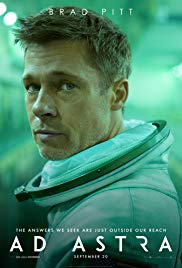
 Greetings again from the darkness. Astronaut Roy McBride’s pulse rate may never go above 80 bpm, but mine certainly did during the opening sequence which features a stunning and spectacular space fall. It’s unlike anything we’ve seen before. Roy has trained his entire life for this work; however his true mental state is only revealed slowly throughout the film’s run. After witnessing his actions and hearing (through narration) his thoughts, we are left to decide what we think of Roy … stoic hero or simmering psychopath? Either way, he’s haunted by a past that has rendered him mission-focused and the world’s worst party guest. The film takes place in the not-too-distant future.

Brad Pitt stars as Roy McBride, in what may be his career best (and most inward-looking) performance. Roy is the son of NASA hero Clifford McBride (Tommy Lee Jones), the leader of The Lima Project – a decades old mission to Neptune tasked with searching for extraterrestrial life. The elder McBride has long been assumed dead with no signals or response signs in many years. A recent power surge that threatens humanity has been traced to Neptune, and now Roy is being used as bait to track down his rogue astronaut father and prevent him from causing further damage.

Roy’s assignment requires him to journey from Earth to the Moon to Mars and, ultimately, on to Neptune. Along the way, he travels with Colonel Pruitt (Donald Sutherland), an old friend of Clifford’s, who is sent along to make sure the son doesn’t acquiesce to the father. Of course, it’s a nice touch to have Tommy Lee Jones and Donald Sutherland together again in a space movie 20 years after SPACE COWBOYS, a more upbeat adventure. Here we see a populated moon – yet another place we humans have messed up – replete with turf wars. There is also a shootout in a space capsule, and an unscheduled stop that provides shocking visuals and causes a shift in the crew.

James Gray, who directed the vastly underrated THE LOST CITY OF Z (2016) delivers a space film with terrific visuals and a script he co-wrote with Ethan Gross, that examines how a father can affect the life of his son even when he’s not present. The film has an unusual pace to it. There are a few action sequences, but the core of the film is the psychological state of son versus absent father. Roy’s inability to connect with loved ones is displayed through flashbacks involving Liv Tyler, and it’s his own narration that provides us much more insight than his regularly scheduled psychological tests.

Ruth Negga (LOVING) has a nice turn as Helen Lantos, one of the key officials at the Mars space station, and her encounter with Roy provides him with yet more background on his father. It’s easy to recall both APOCALYPSE NOW (only with Tommy Lee Jones as Colonel Kurtz) and 2001: A SPACE ODYSSEY given the isolation, questionable mental state, and mission-gone-wrong. The cinematography Hoyte Van Hoytema (DUNKIRK) is outstanding, and never allows us to forget Roy is in space … with danger present in every moment. The title translates “to the stars”, and it’s true in every sense.

Mr. Gray has delivered a thought-provoking big budget science fiction film. It has incredible special effects, but the personal story packs even more punch than the galactic adventure. Many will compare this to other space films like CONTACT, GRAVITY, and FIRST MAN, but this one requires more investment from the viewer, as it’s the character study that resonates. This is Brad Pitt’s movie (he’s in most every scene), and the ties to his father are never more evident than when he (and we) see The Nicholas Brothers performing in black and white on that monitor. If a daily psychological profile was required for each of us, it would be interesting to see how much work would actually be accomplished. Now, imagine yourself stationed in space and just try to keep your heartrate below 80!

watch the trailer:


LORO (2019, Italy)

September 19, 2019

 Greetings again from the darkness. Silvio Berlusconi is a former Prime Minister of Italy, having served four times. He is also a billionaire businessman who has been deeply involved with Italian politics for more than 20 years. Berlusconi is in his 70’s and has been convicted of tax fraud, accused of conflicts of interest, and is well known for his brash and charismatic personality, as well as his scandalous personal lifestyle and numerous controversies. None of that is required information prior to watching the movie since it’s described as a “fictional” account, but it does help to have a basic understanding of the man.

It should be noted that the film was originally released as Part 1 and Part 2. The international version I watched has been edited to 151 minutes, almost one hour shorter than the two parts combined. It begins by following Sergio Morra, a charming hustler and schemer played by Riccardo Scamarcio (JOHN WICK 2). Along with his wife Tamara (Euridice Axen), he runs a prostitution and escort ring of beautiful young ladies … each willing to show and do whatever is necessary to obtain money, drugs, and a career or rich husband. It becomes apparent that Sergio really wants a chance to meet with “him”, Silvio Berlusconi, in hopes of some type of business partnership. Sergio’s meeting with Silvio’s lead mistress Kira (Kasia Smutniak) cracks the door that he so wishes to enter.

Sergio throws a party at Villa Morena, the home next to Silvio’s sprawling Sardinia country estate. Decadence and wild activities abound, as does dancing by the swimming pool to the thumping Italian techno music. There seem to be no rules, or even etiquette, at the party where nudity, drugs and booze are commonplace. The party gets Silvio’s attention and he agrees to meet with Sergio. It’s at this point where the film shifts to its second narrative. No longer focused on Sergio, the story becomes all Silvio.

Toni Servillo delivers a tour de force as Silvio Berlusconi. Sure, he is masked in make-up to capture the look of someone trying hard to look younger than they are – but that’s exactly what Silvio did (and does). Mr. Servillo manages to become the larger-than-life figure that commands attention in every crowd and every room. Elena Sofia Ricci plays Veronica Lario, Silvio’s wife. We witness their crumbling marriage and the unhappiness she has each day. Silvio’s process with everyone, including his wife, is to shift into smooth political salesman mode. In fact, one of the greatest scenes of all movies this year has Silvio re-capturing his early days as a real estate salesman as he pushes a non-existent apartment on a lonely housewife. The scene features fascinating acting, writing and filmmaking in one fell swoop.

Director Paolo Sorrentino is best known for his Foreign Language Oscar for the fantastic THE GREAT BEAUTY (2013). This film is more extreme and harsh than that one was, and Sorrentino co-wrote this script with Umberto Contarello. Frequent collaborator Luca Bigazzi delivers terrific cinematography. At times the film looks like one lavish fashion shoot. The score and music come from Lele Marchitelli and play a crucial role throughout. Italy is presented here as having declined into a state of hedonism with mass debauchery. It’s uncomfortable watching women stoop to these levels in hopes of being recognized and rewarded with some type of affirmation – either a better career, more wealth, or whatever their dreams might be. A powerful man is there to take advantage of such insecurities. The film touches on Silvio’s political power and the aftermath of the L’Aquila earthquake. Much of the film focuses on the overall amorality of those involved, and though the actions of these folks might go against our own standards, we will admit that filmmaker Sorrentino has a knack for making something so vulgar still look darn good on screen.

watch the trailer:


CORPORATE ANIMALS (2019)

September 19, 2019

 Greetings again from the darkness. Filmmaker Patrick Brice is building a career on films that leave us with an unsettled, even conflicted feeling on whether we should “like” them or not. He certainly has little time for ‘normal’ characters, and heroic behavior rarely enters a scene. His latest is written by Sam Bain (PEEP SHOW, and son of Emmy winning director Bill Bain), and it fits perfectly into the offbeat comedy realm of Mr. Brice’s previous two CREEP films (with Mark Duplass) and THE OVERNIGHT (2015).

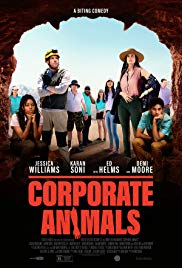
The film kicks off was an advertisement (in the pre-production stage) for Incredible Edibles, a bio-friendly company that produces edible cutlery (a comical visual). Featured in the ad is the company’s ruthless CEO Lucy, played by Demi Moore. Lucy has arranged a Team Building outing for her employees in the mountains of New Mexico. The expedition is led by Brandon (Ed Helms, THE HANGOVER), a Bear Gryllis type who easily evaluates the team’s incongruent pieces. After advising against Lucy’s demand for the “Advanced” trail, Brandon gives in since ‘the check has cleared’. He proceeds to lead the team on a repelling adventure down into a stunning cavern.

Just when it looks like the “advanced” trail was the right call, a cave-in occurs, trapping the team with no escape route, and little food or water. It’s at this point when we realize that most of Lucy’s management style seems to have originated in a ‘get tough’ management book from the 1960’s. She has no real instinct on how to treat people, and mostly just bullies and tricks them. Ms. Moore’s character and performance could easily be viewed as a spoof of her DISCLOSURE role with some uncomfortable laughs. We even get a Harvey Weinstein punchline.

Noticeable right away is the terrific comedic cast. Lucy’s team consists of Jess (Jessica Williams, BOOKSMART), Freddie (Karan Soni, DEADPOOL), Derek (Isiah Whitlock Jr, CEDAR RAPIDS), Gloria (Martha Kelly, “Baskets”), Billy (Dan Bakkedahl, SWORD OF TRUST), May (Jennifer Kim, “The Blacklist”), Suzy (Nasim Padrad, ALADDIN), and intern Aidan (Calum Worthy, “American Vandal”). This is an exceptionally talented group of funny people who know how to deliver a line. Some of the funniest moments are the ‘throwaway’ lines being uttered in between the main dialogue. That’s where the real comedy gold is buried, so listen closely.

Although the film is a comedy, it also boasts some elements of horror and suspense. Lucy’s twisted idealism is the basis for some of this, as is the team’s situation as things become more dire (think ALIVE blended with any workplace comedy). We learn the company is teetering on financial failure, and as one might expect in a confined area, workplace resentments and true feelings begin to rear up. The script never quite takes on business satire, focusing instead on personal reactions to a bleak situation. Even Gary Sinise and Britney Spears are included in the comic elements, and while some will find this to be a fitting midnight movie, others will once again be left wondering what to make of Patrick Brice’s films. And maybe that’s the point.

watch the trailer: