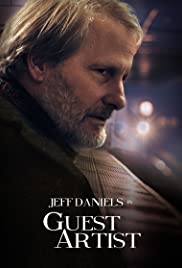
GUEST ARTIST (2020)

July 20, 2020

 Greetings again from the darkness. “Based on an incident which became a play which became a movie.” It’s with this note, the film version of Jeff Daniels’ 2006 play begins. Daniels also stars as (fictional) playwright Joseph Harris, who won a Pulitzer Prize, an achievement he rarely lets anyone forget. Harris’ success seems to have left him tormented and blocked, as he hasn’t written anything “readable” in 20 years … a tidbit we learn from his agent (Erika Slezak, more than 2200 episodes of “One Life to Live”). The two meet for “coffee”, which is literary code for early drinking … a hobby Harris seems dedicated to during all waking hours.

That scene with Mr. Daniels and Ms. Slezak is one of the two best in the film – the other being near the end. The two long time collaborators wage a war of words – some offensively, others defensively – and the agent gives as good as she receives. When he claims to hate television, and proclaims “I’m a playwright”, she counters with “You’re a dinosaur.” We learn much about the Joseph Harris character in this sequence. While it’s easy to label him a burnout, we sense there is something deeper that has him dreading the trip from New York City to Michigan to fulfill a contractual obligation with a local theater group.

Once Harris arrives in small town Michigan, the vast majority of the rest of the film is shot inside the quaint train depot … a station that most of the passing trains don’t even slow down for. Over-eager playwright-wannabe Kenneth Waters (played by newcomer Thomas Macias) is late to meet his hero, and for that, he is subjected to mounds of verbal abuse from Harris, who can barely maintain consciousness over inebriation. Despite his love for the bottom of bottles, Harris proves always capable of a vicious diatribe directed at easy target Kenneth. However, periodically mixed in with the poison, are some words of wisdom for the young man.

The bulk of the film is a competition between Harris and Kenneth. Can the young local theater apprentice convince the washed up legend to stay in town and fulfill his theatrical duty? Adding spice to the proceedings is the train master (played by Richard McWilliams), who not only wields a wicked baseball bat, but he also sees, hears, and judges everything that happens in his station.

As part of the ongoing negotiations, Harris agrees to read the first play Kenneth has written. The young man eagerly awaits the insightful feedback from his idol, but the moment becomes a lesson in worshipping heroes … they are just as human as us. Mr. Macias does manage to mostly hold his own in what easily could have been a one-man show, if not for Harris’ need for someone at whom to direct his rants. We half expect Kenneth to mutter, “I’m your number one fan!” as he absorbs the insults and takes in the life lessons.

The backstory for this one is pretty interesting. Mr. Daniels admitted in an interview that he wrote the story based on actual events in the theater many years ago involving playwright Larnford Wilson, who might not view that as a compliment, were he still alive. This is also the first film under Grand River Productions, a joint venture of Mr. Daniels, Tim Busfield (who directs the film), and Mr. Busfield’s wife, actress Melissa Gilbert (“Little House on the Prairie”). It was shot mostly in Chelsea, Michigan where Mr. Daniels lives, and where he founded his Purple Rose Theater Company. And the homegrown aspect goes even deeper. Busfield’s son Wilson Coates Busfield is the DP, while Daniels’ son Ben did the composing.

It seems obvious that Daniels learned some lessons on structuring dialogue from his time on “The Newsroom” with Aaron Sorkin. We hear it in such lines as “I’m a playwright. I’m eternally serious”, as well as the ongoing battle between hope and cynicism. Typing out the opening credits is a nice tough for a movie featuring a writer, but the “I’m not sorry” bits are overplayed. As mentioned previously, the two best sequences are that opening in NYC, and the scene outside the depot near the end, when Harris comes clean on what he’s written and why – a scene that also includes the best and most heart-breaking line in the film. It may not be “The Great American Play”, but there is plenty here to take in and think about.  Sorry, not sorry.

Digital HD on Tuesday, July 21 via Apple TV, Google Play, Prime Video, FandangoNOW and more.

watch the trailer:


THE PAINTED BIRD (2020)

July 16, 2020

 Greetings again from the darkness. Polish-American writer Jerzy Kosinski’s 1965 novel “The Painted Bird” has one of the strangest and most controversial histories of any book. Initially celebrated as an extraordinary piece on the Holocaust era, the novel was banned in Poland, and author Kosinski was accused of falsifying claims of it being an autobiographical work. Later he was accused of plagiarism for this book and his 1970 book “Being There” (adapted into a 1979 movie starring Peter Sellers). This story of a young Jewish boy, abandoned by his parents and traveling the Eastern Europe countryside during WWII, is now accepted as a blend of fiction and his friend (director) Roman Polanski’s experiences. Czech filmmaker Vaclav Marhoul has turned the book into a stunning viewing experience.

First time actor Petr Kotlar is extraordinary as the unnamed (until the end) Jewish boy on a journey that might be entitled Dante’s Circle of Abuse or Homer’s Odyssey of Misery. This is a young boy in need of kindness from strangers, but unable to find much. The film opens with the boy running through the woods carrying what appears to be his pet ferret. He’s being chased by a group of sadistic Anti-Semite bullies. It’s a chase that doesn’t end well. We learn the boy is living with his “Auntie” Marta (Nina Sunevic) on her rundown farm, and we intuit that his parents thought he would be safer here than with them. When the woman dies suddenly and unexpectedly, the boy accidentally burns the house down, kicking off his walk across the countryside. Almost inexplicably, this is the most upbeat segment of the film.

Director Marhoul divides the film into 9 chapters, each named after the person the boy meets and lives with temporarily. I’ll recap the following eight chapters with a focus on not giving away too much … just know that this film is unrelenting in its brutality and bleakness. After Marta’s death, the boy stumbles into a village where he is considered cursed and labeled a vampire. The witch doctor Olga (Ala Sakalova) enslaves him until he escapes down river, where he is rescued by a mill worker. The head miller (Udo Kier) is a frightening man who takes exception with his worker (not the boy) gazing lustfully at his wife. Kier’s eyes manage to burn right through the black and white film, and soon he turns exceedingly violent towards his wife and the worker, leaving us with an unforgettable visual.

The boy then finds himself at the home of Lekhi (Lech Dyblik) who captures wild birds and regularly hooks up with Ludmila (Jitka Cvancorova), a wild woman who lives in the forest. The boy witnesses two horrific deaths, but not before the sequence which gives the film its title and ensures we understand what happens to outcasts – those who are different. At about the one hour mark, the boy finds an injured horse and walks it into the local village. It’s at this point where we hear him speak (kind of) for the first time. A violent Russian invasion of the village results in the Cossacks offering the bound and gagged Jewish boy to the German soldiers as a “gift”. Stellan Skarsgard is the veteran soldier who draws the assignment of taking the boy into the woods to shoot him.

When the soldier sends him on his way, a sickly Catholic Priest (Harvey Keitel) takes the boy under his wing and trains him to be an altar boy. All is fine until a parishioner (Julian Sands) with despicable intentions agrees to take the boy in and provide for him. This segment has what may be the most cringe-inducing death scene in the film, after which we find the boy trudging through snow and falling through ice, and crawling towards a cabin where Labrina (Julia Valentova) and a sickly old man live. The boy faces more abuse as he’s incapable of pleasing Labrina, which leads to situations he’s much too young to understand. Traumatized, the boy’s personality takes a turn.

In his next village, an attack by Germans puts the boy in contact with Russian sniper Mitka (Barry Pepper), who leaves him with the real life advice of, “an eye for an eye, and a tooth for a tooth.” Having only recently lost his innocence, the advice hits home for the boy. He ends up in an orphanage where a surprise occurs that causes the boy to lash out in anger … at least until he observes something that makes him understand the world has been cruel to others, not just him.

Normally, I wouldn’t recap or outline the segments of a movie in this manner, but it’s crucial to understand what you are about to watch. It’s a nearly 3 hour epic of human cruelty and survival instinct. Young Petr Kotlar spends much of the movie taking and witnessing abuse while his face is near emotionless (save for a couple of extremes). Joy is elusive, if not non-existent. The film shows us not all Holocaust horrors occurred in death camps. The atrocities of war and the cruelty of humans result in a film that is beyond bleak at times, but also makes a clear point about how differently people treat those not “like” us, regardless who the “us” is. This point is as evident today as it was during WWII.

Director Marhoul excels in showing, rather than telling … there is almost no ‘telling’ throughout the film. Cinematographer Vladimir Smutney makes expert use of the 35mm black & white film to provide images that are stark and brutal like the world the boy sees. The Production Design from Jan Vlasak puts us right in the muck, while the Sound from Jakub Cech is crucial to every scene.

The film is a joint project of Czech Republic, Slovakia, and Ukraine, as Poland refused to participate. It had quite the festival run last year, including some high profile walk-outs during the Venice Film Festival. It’s one of the rare movies that every cinephile is thankful to have seen, yet as human beings, we would likely never want to watch again. Murder, abuse, suicide, torture, bestiality, rape, violence, cruelty, slaughter, pedophilia, incest, war atrocities … these aren’t topics we typically seek out, and they thankfully aren’t topics that all show up in a single movie very often! There are a few moments of compassion if you watch closely, but mostly it’s a reminder of the cruelty of humans when the structure of society collapses, and hope is hard to come by. As Edwin Starr sang in his number one hit in 1970, “War, good God. What is it good for? Absolutely nothing.”

Available on VOD from IFC Films on July 17, 2020

watch the trailer:


THE SUNLIT NIGHT (2020)

July 16, 2020

 Greetings again from the darkness. The journey to find one’s self is not unique to artists, but for some reason, it’s more cinematically appealing when an artist is involved. In this quirky film from director David Wnendt, with a screenplay Rebecca Dinerstein Knight adapted from her own novel, artists (of varying types) are everywhere. Of course finding one’s self usually involves making peace with this quagmire we call life.

Frances (Jenny Slate, OBVIOUS CHILD, 2014) watches as three snooty art critics denigrate her latest work to the point of humiliation. Her long-time boyfriend dumps her, and she returns home to her parents, both artists. Instead of sympathy from the family, she’s bombarded with news that her sister Gaby (Elise Kibler) is engaged to a man her father loathes, and to top off the family dinner, her parents (Jessica Hecht, David Paymer) announce they are separating. Rather than deal with any of this head-on, Frances accepts an apprenticeship with an artist in north Norway. “Norway, Norway”. Where the sun never sets.

Nils (Fridtjov Saheim) is the personality opposite to talkative, upbeat Frances. He grumps around while escorting her to the trailer she’ll stay in for the summer. The project, seemingly uninspiring, is to paint a local dilapidated barn yellow – inside and out. Nils is under a tight deadline to finish the barn so it (and he) can earn a spot on the map of cultural sites. Close by is a Viking museum and community, where the folks, led by their Chief (Zach Galifianakis), re-create Viking life for tourists (or mostly themselves).

One day Yasha (Alex Sharp, HOW TO TALK TO GIRLS AT PARTIES, 2017) shows up. He’s arranging a ceremonial Viking funeral for his beloved father (Olek Krupa). Father and son worked together daily in their bakery and developed a close bond. Sasha’s mother (Gillian Anderson), who left them years ago, unexpectedly shows up for the funeral, hoping to lure him to live with her.

Frances compares everyone she meets to subjects in famous works of art. It’s her way of connecting art to the real world, as well as helping her find a place for people in her world of art. Frances and Yasha are drawn together in their search for direction and meaning, and we are led to believe this connection, no matter how brief or random their crossing of paths might be, helps her in her personal quest.

The cinematography from Martin Ahlgren captures this rarely seen top-of-the-world wonderland, and the landscape is truly something to behold. Ms. Slate is once again top notch in her role. She’s likable and relatable, traits some actors struggle with, but which apparently come natural to her. And while we expect lives to be messy and complicated, we hope for a bit more from our movies. Frances’ home life is drawn straight out of a TV sitcom, and the whole Viking village never really makes sense. It seems Frances is short-changed on all of her relationships here, yet the trip still manages to help her discover something in her art. And that’s just about how life works – really messy right up until something clicks, and then back to messy.

Available on VOD July 17, 2020

watch the trailer:


KAYE BALLARD: THE SHOW GOES ON (2020, doc)

July 13, 2020

 Greetings again from the darkness. I feel obligated to disclose that while growing up, I was never much of a Kaye Ballard fan. It seemed she was mostly seen on game shows (“Hollywood Squares”) and her many appearances on Talk Shows and Variety Shows. Her loud and boisterous humor was a bit outside the nuanced observational humor I preferred. Now, after seeing Dan Wingate’s documentary, I have tremendous admiration and respect for this multi-faceted performer whose showbiz career spanned more than 70 years.

One of the first clips we see is Kaye Ballard performing in front of a live audience (where she was always most comfortable) and she says, “I wish I was 90 again.” It’s a great line that not many comedians get to use. Ms. Ballard died in 2019 at age 93, and she never stopped performing. Director Wingate’s opening credits are in “old school” style, replete with flashing neon lights and big band/orchestral music. It’s the perfect choice for the profile of a performer who evolved as the business changed.

We listen as she recollects the start of her career, and then systematically walks and talks us through the next 70 plus years. She was only 16 years old when she joined Spike Jones’ band, and she admits performing is what she always wanted to do. Wingate includes comments and clips from an incredibly diverse group of entertainers – ranging from Liz Smith to Perry Como to Henry Mancini to Bette Davis to Carol Burnett to Ann-Margret to Woody Allen (and many more). Composer-Singer Michael Feinstein has a few appearances throughout the film, providing some structure, but interviews with Ms. Ballard keep her on screen much of the time.

It’s clear she always thought her best work was from her time in nightclubs, and though she never stopped those performances, her career shifted to live theater and then to TV. Her best-known TV role was co-starring with Eve Arden in “The Mothers-In-Law” series from 1967-69 (re-runs available on Amazon Prime), and then later had a recurring role in “The Doris Day Show.” Ms. Ballard was a vibrant performer and an extremely talented singer.

She jokes about being typecast as a “screaming Italian”, but hearing her talk about her friendships, including Marlon Brando, Carol Channing, and the recently deceased Jerry Stiller, makes it clear she established many personal connections over the years, and was always quick to help out another performer. She even speaks to a couple of exceptions, including Phil Silvers. And who would have guessed she crossed paths with Andy Warhol, while also performing for President Ronald Reagan at The White House? This is a woman who is very grateful and appreciative of the career and friends she made, and I walked away feeling educated, and maybe even guilty for undervaluing her talent. Kaye Ballard was much more than an “X” or “O” on “Hollywood Squares” … she was an incredibly talented and generous woman who lived her dreams.

Viewing details available at KayeBallardMovie.com

watch the trailer:


RELIC (2020)

July 10, 2020

 Greetings again from the darkness. Anyone who has a friend or relative afflicted with dementia knows it’s often like living in a real life horror film. It’s frustrating and claustrophobic and guilt-inducing and above all, frightening. The first feature film from director Natalie Erika James deals with dementia, amongst other topics, in the guise of a horror film. Is it a haunted house movie? Is it a demonic presence movie? Well, yes to both. The script from Ms. James and Christian White blends multiple familiar aspects of horror films into something that ends up quite original.

“Ends up” is the key, because the first two-thirds of the story moves slower than a glacier in the middle of winter. Don’t get me wrong, the film looks great – the house and the atmosphere are ultra-creepy. It’s just that almost nothing happens during that span, and that’s an eternity for set up. Kay (Emily Mortimer) receives a call that a neighbor hasn’t seen her mother in a while. Kay and her 20ish daughter Sam (Bella Heathcote, PRIDE AND PREJUDICE AND ZOMBIES, 2016) take the drive over the hills and through the woods to grandmother’s house. Their initial measured walk-thru of the house tells them (and us) much. Post-it notes are stuck everywhere, including one that says “Don’t follow it”. Spoiled fruit on the counter, a favorite chair moved, and food for a pet long ago passed, are all indicators that something is off. If that’s not enough, the house that grandma is missing from has mold on the walls and ceiling, and strange locks on doors.

After an unsuccessful search party through the nearby woods, Grandma Edna (Robyn Nevin) reappears with no recollection of where she’s been. Of course, this doesn’t really improve things for anyone. We sense that workaholic Kay and her mother have never really been close, and the same can be said for Kay and Sam. Generational disconnect is on display. And poor Edna has lost her husband, her pet dog, and most of her essence … except for the few moments when she snaps back to lucidity.

Dread and impending doom dominate every scene for the first hour. Kay has dreams of an old cabin from her past, and Edna has an unexplained bruise on her chest.  The stained glass window on the front door is a key, and the sounds coming from the walls are unable to be tracked down. As disoriented as Edna is, the house itself has that impact on us and Sam. Is it the house that’s haunted, or the characters?

The cinematography from Charlie Sarroff plays well off the stillness and unknown, and the sound design and music (Brian Reitzell) work hand-in-hand in establishing the creepy atmosphere. The three actresses are superb, and I especially enjoyed Ms. Nevin and her piercing eyes, as she is known mostly for her live theatre work (and also as Councillor Dillard in The Matrix movies). For her first feature, Ms. James has delivered a high-concept Australian horror/suspense film with a very original (and weird) ending. Others may be a bit higher on the film, but we likely all agree that Ms. James is an intriguing filmmaker.

IFC Films will have this available VOD beginning July 10, 2020

watch the trailer:


OLYMPIA (2020, doc)

July 10, 2020

 Greetings again from the darkness. She is now in the 7th decade of her acting career. She was married to one man for 55 years. She recently turned 89 and is still working regularly. Olympia Dukakis is a marvel to behold. Strong-minded, direct-speaking, charismatic, talented and long-lasting, she makes a fascinating subject for director Harry Mavromichalis in his first feature-length documentary.

An early segment features Ed Asner presenting her star on the Hollywood Walk of Fame. Soon after she admits that “it doesn’t mean anything” to her, but her Academy Award did. She won the Best Supporting Actress for her role as Cher’s mother in MOONSTRUCK (1987), and we later see her at the ceremony as her elderly mother is captured watching it unfold on TV. This moment matters because we have already heard Olympia discuss her challenging times growing up with her mother (she claims to have channeled her own mother for the role).

Much of this documentary was filmed years ago. We are there on her 80th birthday and her 49th wedding anniversary. Clips are included from some of her theater work, as well as movies. Playing a transgender character in PBS’ “Tales of the City” (1993) made her a gay icon, and we see her as Grand Marshal of the Gay Pride parade in San Francisco. This is especially timely today given that Halle Berry just announced she was stepping down from a transgender role … due to the pressure brought on by her not being transgender.

Olympia is very forthcoming in discussing her approach to life, and life itself. She discloses the initial doubts she had regarding a woman’s place in Greek history, before bucking up and proclaiming “it’s not me that’s less.” When she felt the theater world considered her “too ethnic”, in 1973 she founded The Whole Theater in Montclair, New Jersey. She refused to let the world place limits on what she could do. She offers up many personal memories such as her time fencing at Boston University – stories that provide clear examples of her personality and makeup.

As I watched the film, my thought was that it meandered a bit too much. Upon reflection, it makes complete sense, as that’s the manner in which she lives and works and thinks. We see clips as she converses with her cousin Michael Dukakis, the former Governor of Massachusetts, during his candidacy for President. The film bounces around with stops in New York, Los Angeles, Toronto, and Cypress. Toronto was for a Norman Jewison retrospective (including MOONSTRUCK), and while in Cypress we walk the aisles of a grocery store with her (very weird).

Insight is offered from fellow actors such as Laura Linney, Austin Pendleton, Lainie Kazan, and Whoopi Goldberg, but it’s really the bits and pieces we get regarding her long-term marriage to actor Louis Zorich that are most meaningful. The couple discuss why their marriage and partnership has worked, and how friendship is the key. Louis passed away in 2018, and Olympia continues to act and teach acting classes. We even get a peek behind the curtain when we watch her work through/find a character in rehearsal. Seemingly tacked on towards the end are clips from a trip to her mother’s village in Greece with her daughter and grandkids. It’s a chance to see her interact with local women, and does provide a stark contrast to what Olympia has done with her life. She claims that she can “remember plays and theaters”; however, “it’s people” she doesn’t remember. She can be certain that the people will remember her.

Virtual cinema release on July 10, 2020 via https://www.abcinemanow.com/

watch the trailer:


ALL HAIL THE POPCORN KING (2020, doc)

July 10, 2020

 Greetings again from the darkness. For anyone who has ever tried to write a story, you know how difficult it can be. Generating an idea, building characters, and establishing a tone are challenging enough; but discovering the perfect ending is nearly impossible. So no matter how many times you tried, and how frustrating you found it, imagine the world of Joe R Lansdale. He papered his walls with more than 1000 rejection letters, but now (at age 68) has written more than 50 novels and more than 500 short stories.

As if the sheer volume of volumes wasn’t enough, Mr. Lansdale has written in just about every genre you can name: horror, western, science fiction, mystery, and suspense. He’s had success in comic books and graphic novels, and some of his work has been adapted to film and TV series, including cult favorite BUBBA HO-TEP (2005), COLD IN JULY (2014), and the TV crime series “Hap and Leonard.”

Filmmaker Hansi Oppenheimer aims the camera at her garrulous subject and lets him go. Mr. Lansdale loves talking about writing, and it’s clear that he was born to write. He and his wife Karen live in Nacogdoches, Texas which isn’t too far from Gladewater – where Joe was raised, and where he revisits for this film. His East Texas roots seem to have kept him grounded, as there isn’t an ounce of condescending tone in any of the stories he tells or memories he recalls. At least a dozen writers are interviewed here, along with musicians (guitarist Vince White), a book editor, actors (Bruce Campbell, James Purefoy), and directors (Don Coscarelli, Mick Garris).

We hear Joe described as “a genre unto himself”, “a no BS guy”, and “the most well-known unknown author.” Joe talks about the time he was chosen to finish an Edgar Rice Burroughs story that had been left unfinished when the Tarzan writer passed away. He also reminisces about how pulp fiction led to the radio programs of his youth and then evolved into the early TV series he watched. And it’s fascinating to hear about the crazy dreams he had after chowing down on Karen’s greasy (lard-coated) popcorn at movie time … and how those dreams led to many of the stories he wrote.

Ms. Oppenheimer includes many photographs throughout and the use of terrific retro graphics adds a dash of art to the look of the film. Mr. Lansdale owns his own martial arts studio where he still teaches Shen Chuan, and we get a clip of him in action. He claims “The Drive-In” (series) was his most imaginative work, and that’s really saying something coming from the writer who had old Elvis team up with black JFK to battle an Egyptian mummy in a senior citizen home. Surely that will provide a unique epitaph when the time comes. Until then, expect a lot more words to find the Lansdale page.

watch the trailer:


Panel Discussion – Streaming, Theaters, and COVID-19

July 8, 2020

I participated in a panel discussion on the state of movies: the impact of streaming services, the challenges faced by movie theaters, and how the COVID-19 pandemic has changed so much in the movie industry.

The other two panelists were movie critic Will Mann and screenwriter Tim Hodgin (@tim_hodgin). The discussion was moderated by the editor of International Policy Digest, (intpolicydigest.org) and you can read it here:

https://intpolicydigest.org/2020/07/08/streaming-theaters-and-covid-three-cinephiles-weigh-in/


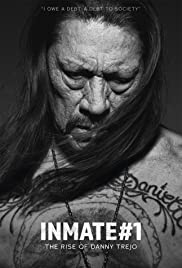
INMATE #1: THE RISE OF DANNY TREJO (2020, doc)

July 6, 2020

 Greetings again from the darkness. It’s easy and convenient to lump folks into the old adage “people don’t change”, because not changing is the easiest way. However, we’d be hard pressed to find someone who fits the “turned over a new leaf” description better than Danny Trejo. He has certainly made the best of his second chance … and he knows it. What makes his story inspirational is his willingness, no make that determination, to share his own story in hopes that he can help others.

Director Brett Harvey surprises us in a couple of ways with this documentary. First, he spends the first two-thirds on Trejo’s background, with barely a mention of movies. Second, he recognizes the gold to mine here is derived from Trejo himself, and he allows the man to talk and show us what he’s all about. Sure, we get bits of insight from Trejo’s neighborhood friends, his acting peers, and his own kids and sister, but no one can tell Trejo’s story better than Trejo. In fact, director Harvey bookends the film with Trejo talking to convicts, and beginning with “my number was B-948.”

While cruising around town in his 1956 Chevy Bel Air, Trejo points out “Richie Valens Junior High”, which is actually Pacoima Middle School. It’s fascinating that he still lives in the same area in which he was raised, especially after we hear him recall his childhood. As a kid, his hero was Uncle Gilbert – the cool guy who had money, cars, and girls. Trejo stuck like glue to Gilbert, who turned the boy onto weed at age 8 and heroin at age 12, and then transitioned him to armed robbery (including a live grenade!). It was four bags of sugar sold to an undercover cop that sent Trejo to San Quentin.

Trejo is very direct as he discusses his time in prison and what occurred to push him towards getting his life in order. He mentions it’s not about reform, but about keeping a promise. He talks about the ‘predator or prey’ aspect of prison and recalls some of the best advice he received: remaining on the path of drugs-alcohol-crime can only lead to death-insanity-jail. He absolutely believes these words and works this in to his motivational speeches to this day.

He stumbled backwards into an acting career, simply by visiting a friend on the set of RUNAWAY TRAIN (1985). His look and that tattoo were instrumental to his acting gigs, and that’s where the title of the documentary comes from – he was cast as “Inmate #1” in the early days. Of course, things really exploded for him after his second cousin, director Robert Rodriguez, cast him as the silent assassin in DESPERADO (1995), and then again when Trejo got the lead in the tongue-in-cheek MACHETE (2010) which spawned from a fake trailer in the Rodriguez-Tarantino blend GRINDHOUSE (2007).

One of those interviewed states, “They make movies about guys like him”, and by the time the documentary ends, we simply with there were more people like Danny Trejo in society. It’s rare that we find such respect for an actor after getting to know what they are like “in real life.” He may joke about learning acting at the San Quentin School of Dramatics, but he spends most of his time doing good for others. His infectious laugh and upbeat demeanor are traits of a man who appreciates his second chance in life. Just keep in mind, “Machete don’t text.”

watch the trailer:


ELVIS FROM OUTER SPACE (2020)

July 6, 2020

 Greetings again from the darkness. All you Elvis Presley fans out there can relax. This is not a documentary. In fact, trying to put a label on the film co-written and co-directed by Marv Z Silverman and Tracy Wuischpard would be pointless … unless we can just agree on “Midnight Movie Madness”, and leave it at that.

Not that I would ever encourage such activity, but some have declared that the best ‘midnight movies’ are most enjoyed whilst a sufficiently mind-altered state is achieved, and one is unnaturally influenced by beverage or ‘other’. Now that’s a category this film easily and happily (and likely by design) fits in. There is no reason to start this film while thinking clearly, and actually, thinking is best avoided for the entire 90 minute runtime.

The story kicks off with the narrator explaining that Elvis has spent the last 30 years or so with the aliens of Alpha Centauri. He has been playing music for the community of ETs proving “music is the universal language.” ’But now Elvis is homesick for Earth and wants to see his daughter, Linda Bess Truman. The aliens contact the CIA and arrangements are made for the drop in Area 51. Some quick math places the story sometime around 2010 or a couple years prior.

There is no way I will risk spoiling the zaniness that occurs, but Elvis, now codename John “JB” Burrows, finds himself in the 1970’s Elvis World Crown Competition at the Desert Sands Hotel in Las Vegas. You may have heard about the time that Charlie Chaplin lost a Charlie Chaplin look-alike contest, but here, JB brings down the house as an Elvis impersonator. He’s so good the other contestants (quite a motley crew) question his identity. One of those is “Big M” who is also the film’s narrator. All of this drama is broadcast via “Barry Live”, a TMZ type show delivers laughs along with the daily scoop.

George Thomas plays JB/Elvis, and he seems at ease in the jumpsuits, although those fake sideburns are a punchline by themselves. David Heavener is Big M and the narrator, and his initial role as rival shifts as the story progresses. Diane Yang Kirk plays CIA Agent Messina, who is on JB’s side, and Lauren-Elaine Powell is Jackie, the earthly love interest. Barry Ratcliffe nearly steals the show as the TV host of “Barry Live”, and I believe TJ Myers plays daughter Linda, while Martin Kove (you’ll recognize as bad guy Kreese from THE KARATE KID, 1984) is the State Trooper. Alexander Butterfield is CIA Chairman Townsend, and in real life, Mr. Butterfield served as Deputy Assistant to President Richard Nixon, and was the one who revealed the existence of the Oval Office recording system during the Watergate investigation. Best of all, Sonny West appears as himself. Sonny was part of Elvis’ “Memphis Mafia” back in the day. Sonny and his cousin Red West died within a couple of months of each other in 2017.

Hopefully you’ve picked up that this move is so far outside of mainstream that a traditional review is simply not possible. Animation is used for the aliens and spaceships and the rest of it must be seen to be … well, seen. It appears to be a re-boot of Mr. Silverman’s 2011 project entitled MEMPHIS RISING: ELVIS RETURNS, making most of the footage almost 10 years old. Still, a passion project is the heartfelt pursuit of a filmmaker, whether it’s SCHINDLER’S LIST or Elvis being held captive in ‘Area 52’.

watch the trailer: