“Hollywood” (Netflix limited series, 2020)

May 1, 2020

Netflix limited series premiering May 1, 2020

 Greetings again from the darkness. “I want to go to Dreamland.” One might assume that phrase is related to Hollywood being the place where dreams can come true, but co-creators Ryan Murphy and Ian Brennan take us down a much different path. The two have collaborated on the TV series “Glee”, “Scream Queens”, and “The Politician”, and here they offer up a revisionist history on the post- WWII Golden Age of Hollywood, in the vein of what Quentin Tarantino did in INGLORIOUS BASTERDS and ONCE UPON A TIME … IN HOLLYWOOD. Mr. Murphy and Mr. Brennan seemingly focused on idealistically imagining a film industry where one’s race, ethnicity, or sexual preference made little difference. In doing so, they devote significant time to racism and homophobia.

While the series mixes fact and fiction in such a way that the lines are often blurred, there are two main storylines that provide the backbone of the series: the actual suicide of 24 year old actress Peg Entwistle, which occurred in 1932 when she jumped from atop the Hollywoodland sign; and the mostly fictional crossing paths of a handful of aspiring actors, writers and filmmakers as they navigate the treacherous film industry waters. We see the new generation clashing with the establishment – a tale as old as time.

The 7 episodes cover approximately 7 hours, but it was somewhat challenging to make it through the first three. However, I’m so glad I stuck with it. The series starts off with what seems like a concerted effort to push every boundary possible in regards to sex and racism, with an emphasis on the proliferation of homosexuality within the industry. The characters that are new to town are trying desperately to survive as cling to the dream of their big break.

The series elevates significantly in Episode 4 when the attention turns to filmmaking and acting and running a studio. There is a terrific sequence where we bounce back and forth between two pairs of actors rehearsing for their auditions. We feel the pressure that actors endure during the audition process, and note the fine line … almost an indiscernible line … between success and failure. In addition to the newcomers trying to secure roles, we follow a gay, black first time screenwriter and a half-Filipino first time director. As a bonus, Eleanor Roosevelt is portrayed as preaching the social importance of a studio breaking from the industry norm.

“What if you could re-write the story?” is the tagline, and it applies not only to the screenplay of “Peg” (the movie within the movie), but also to Murphy and Brennan as they show how the industry should be, well except for the illicit sex, marital affairs, and mob interventions. Hypocrisy and double-standards are part of the fabric of the movie industry, but what if that gay, black screenwriter didn’t have his work defined by those labels, or the half-Filipino director wasn’t selected because he could pass as white, or if the talented black actress wasn’t relegated to playing domestic help? Those are the core issues at play here, and each of the characters has hopes of changing things in Hollywood.

As you would imagine, the cast here is deep and crucial to whether the project works or not. There are some acting veterans mixed with some regulars from Murphy’s previous projects. The newcomers in town are actor Jack Castello (David Corenswet), actor Rock Hudson (Jake Picking), actress Camille Washington (Laura Harrier), director Raymond Ainsley (Darren Criss), and screenwriter Archie Coleman (Jeremy Pope). These newcomers intermingle with industry types such as super-agent Harry Wilson (Jim Parsons, who gets the best dialogue in the series), Ace Studios owner Ace Amberg (Rob Reiner), his wife Avis Amberg (Patti Lupone), their daughter wannabe actress Claire (Samara Weaving), Ace’s mistress actress Jeanne Crandall (Mira Sorvino), Ace casting director Ellen Kinkaid (Holland Taylor), studio producer Dick (Joe Mantello), and Eleanor Roosevelt (Harriet Sansom Harris). Dylan McDermott shines as Ernie, the owner of Gold Tip Service Station, where customers come for the special service offered with the code word ‘dreamland’.

There is an underlying theme where most everyone here is acting – pretending to be something they aren’t. It begs the question, how much of yourself would you surrender for fame or money, or simply to avoid discrimination and hardship? There seems to a lust for fame, and a lust for just about everything except dignity. Three real life actors are noted for how they were marginalized as people and/or professionals based on either their race or sexual preference. The stories of Rock Hudson, Anna May Wong (Michelle Krusiec), and Hattie McDaniel offer up real life proof of the injustice that was prevalent during this era.

Movie history buffs will enjoy the name dropping, such as George Cukor’s party, and Noel Coward, Tallulah Bankhead, and Vivian Leigh. There is also fun to be had with industry terminology, but the purpose of the project has higher meaning. The dreams of those who arrive versus the power of those already there is on full display. The internal struggles and fallout that occurs when folks are trying to fit an image rather than stay true to themselves – that message is delivered. Dylan McDermott’s Ernie is meant to represent the reality of broken dreams that happen right down the street from where dreams come true.

Stylistically, the series is beautiful to look at. Even the opening credits have a surreal quality. The set/production design is top notch, from the studio lot to the sound stages to the small apartments decorated to the era … and the cars are spectacular. Black and White images are used sparingly, but effectively to stay true to his period in cinema, and the music/soundtrack is perfectly used and could be a top seller as a standalone. Watching the great Patti Lupone is reward enough, but seeing Dylan McDermott and Jim Parsons deliver their best ever work is really something to behold. The debate of Money versus Art versus Social Responsibility could fill many textbooks, and Murphy and Brennan succeed in getting us to think. For those that can fight through the first three episodes, the payoff is there (OK, the ending is a bit hokey), and as Hattie McDaniel tells us, “the most important thing is being in the room.”

watch the trailer:


OUR MOTHERS (Nuestras madres) 2020

April 30, 2020

 Greetings again from the darkness. Every war is ugly and devastating, and few lasted as long as the Civil War in Guatemala, which ended in 1996 after many years and many deaths. Its history tracks back to the early 1960’s, and the fighting between the government and various leftist rebel groups was violent, resulting in more than 200,000 deaths (mostly Mayan) in the 1970’s and 80’s. In his first narrative feature, writer-director Cesar Diaz chose not to examine the causes of war, but rather the fallout … the tattered lives left in its wake.

Armando Espitia stars as Ernesto, a young anthropologist at the Forensic Foundation – an institute that specializes in locating, identifying, and carefully packaging the remains of the casualties of war. It’s 2018, and the news reports we overhear call this an “historic moment”, as war criminals are brought to trial. The film opens on Ernesto as he is assembling the skeletal remains taken from a mass burial site that the Institute was recently permitted to excavate. We soon learn that Ernesto has his own personal mission – finding out what happened to his father, who is identified only as a guerilla fighter. Ernesto’s mother (Emma Dib), with whom he lives, discourages him from searching for his dad. He states ‘I need to know’, while she says ‘I don’t wish to remember.’

Director Diaz includes a gut-wrenching sequence of women in a local village. It’s almost like a series of photographs … a lineup of local woman who are victims of the war. The work of cinematographer Virginie Surdej is extraordinary in this sequence. These aren’t actors, but rather natives to the area – women whose weathered faces show the story being told by the movie. They lead Ernesto to a mass grave on private land where many of the slaughtered men and children are buried. The atrocities toward the women were often worse than death, and now they are going about living, fully aware that their loved ones never received the respect in death that is so valued.

Ernesto takes statements from the women, and is so devoted to finding his father that his social life consists of sleeping in his car and fantasizing about the local bartender. Ernesto and the women, who are the face of war, are simply looking for closure. They want dignity for the dead, and he wants to know his roots. There is much family pain and pride, and often when family secrets gets solved, the result is more pain than relief. Director Diaz was born in Guatemala and delivers a mostly quiet film that is only 78 minutes in run time, but its message rings loud and clear … the horrors of war don’t end when the war does. The film was a multi-award winner at Cannes, and justifiably so.

watch the trailer:


BULL (2020)

April 30, 2020

 Greetings again from the darkness. A film focusing on an unlikely intersecting of cross-generational dead-end lives in a mostly ignored poverty-stricken area on the outskirts of Houston may not seem like much of a pick-me-up during these challenging times. And while it’s not a crowd-pleaser, it is pleasing in a high quality independent filmmaking kind of way – especially to those of us who thrive on such projects. Writer-director Annie Silverstein’s first feature film was co-written with Johnny McAllister and Josh Melrod, and it never tries to impress with any cleverness or trickery, and instead allows us to wallow in the harshness of a world that has its inhabitants grasping for hope.

We first see 14 year old Krystal (Kris) and her little sister messing with a chicken that’s been killed by their pet pit bull in their backyard. The chicken belongs to their African American neighbor Abe, who threatens to shoot the dog if it comes in his yard again. Kris spends an inordinate amount of time taking care of her little sister. They live with their constantly annoyed grandmother while their mom is incarcerated. Jailhouse visits begin with hugs, and end with frustration. Kris seizes on an opportunity while neighbor Abe is gone for a weekend rodeo. She invites her friends over and they raid Abe’s liquor and pain pills, and trash his house. The kids all have fun, but Abe is understandably upset when he returns home.

In a show of mercy towards Kris’ grandmother, Abe agrees to allow Kris to clean up the party mess rather than be arrested and shipped to juvenile detention. Slowly, very slowly, Abe and Kris begin to bond. She is fascinated by middle-aged Abe’s history. He was once a bull rider, and now he’s a bull fighter – one of the guys in the arena who distracts the bulls so the riders can escape safely after their ride. His body and spirit are broken, and he’s constantly in pain and sore. Kris, a sullen teenager, carries her own pain. Her situation is such that we (and Abe) find it difficult, if not meaningless, to judge her. She desperately wants to be loved and cared for, but finds none of that through her family or “friends.”

Rob Morgan, who was so memorable in MUDBOUND (2017), plays Abe, a man who fights to maintain his dignity in a profession more conducive to younger folks, and with a body that continues to fail a bit more with each gore. He has some type of relationship with his ex, Sheila (Yolanda Ross), but mostly he’s alone and quiet until he’s around his fellow rodeo performers. Newcomer Amber Havard plays Kris, and captures the confusion and hurt with subtle facial movements of an actress far more experienced. The moment her mother (Peggy Schott) lets her down yet again is gut-wrenching, and we feel Kris’ pain every bit as much as we feel Abe’s pain at the tip of a bull horn.

Ms. Silverstein’s film is surely to draw comparisons to the excellent THE RIDER (2017), with its understated approach, and power in the quietness and stillness. It touches on African American rodeos, and provides a contrast with ‘white’ rodeos, while also showing us the sex and drug issues facing young Kris. With its multi-generational view of life, we see a girl desperate for a role model, and a man coming to terms with loneliness. Kris and Abe prove quite the odd couple as she finds a glimmer of hope in her desire to become a bull rider, and Abe finds a companion and reason to carry on. The two fine performances help us deal with the often bleak daily lives of Kris and Abe, and Ms. Silverstein directs her film in such a visceral way that, as viewers, we are appreciative when the cloud lifts just a bit.

watch the trailer:


THE SOUND OF THE WIND (2020)

April 29, 2020

 Greetings again from the darkness. It’s the first feature film from Jared Douglas, and as with most dedicated independent filmmakers, he wears many hats in this production: writer-director-producer-editor. Mr. Douglas certainly didn’t take the easy route or shy away from difficult material. Instead, he takes us deep into the dark world of mental illness.

Rather than a peek inside an asylum or mental hospital, we are up close and personal with Lucio and his struggles. Lucio is played by Christian Gnecco Quintero, and our first inclination something isn’t quite right comes when he’s buying diapers at a convenience store. Lucio gets skittish and looks around as if someone is watching or following him (the camera enhances the feeling). He calls Vanessa (Stefanie Rons) to tell her that he’s in danger and he can’t come home to her and their young daughter. Lucio then hits the road … he’s on the run from something or someone we don’t see.

Our eyes are on Lucio nearly every moment of the 84 minute run time. It’s not pleasant to see what he’s going through. Lucio is paranoid to the point of self-destruction. When his car breaks down, a kind stranger named Chris (Dwayne Tarver) takes him back to his ranch cabin. Throughout the film, Lucio flashes the ability to converse with others, but it’s never long before the illness kicks in. Even the charity or generosity of strangers isn’t enough to put Lucio at ease, and the consequences can be severe. His biggest challenge … his biggest hurdle … is himself. Periodic calls to Vanessa provide us the insight to see what a devastating scenario this is for her as well.

I know you’re out there!” The phantom is all too real to Lucio. His reality is not ours. Cinematographer Neeraj Jain effectively captures the frantic moments and Quintero’s performance relays the urgency of every tick. Mental illness is often overlooked or overplayed in movies, but not so here. There is no comic relief, only the relentless pressure of trying to make sense of the confusion.

watch the trailer:


THE INCOHERENTS (2020)

April 29, 2020

 Greetings again from the darkness. If you have yet to experience a mid-life crisis, it only means you haven’t lived long enough. Of course, this ‘crisis’ often has little to do with age, and can seep into your marrow at any time … even when you think your life is plodding along just fine. These little thoughts or doubts or ideas start creeping in, and soon the only thing on your mind is a sports car, a younger partner, traveling the world, writing a novel, changing careers, or yes, starting a rock band.

Meet Bruce. He’s working a dead-end job as a 40-something year old paralegal. He’s married to the lovely Liz and they have two children and a fine house. Bruce’s boss takes advantage of his lack of ambition by assigning menial tasks and requiring overtime. When a burned-out Bruce arrives home in the evening, he sees the ‘To-do’ list his wife has posted on the fridge, and he guzzles a beer before heading down to the basement to play music and write songs. It’s his escape from life, but also his tie to younger years when he and his buddies had a legitimate band named The Incoherents.

Jeff Auer stars as Bruce, and he also wrote the screenplay. When his wife Liz (Kate Arrington) green-lights his dream of getting the band back together, Bruce contacts the Hamilton brothers, drummer Tyler (Ben Foster lookalike Casey Clark) and bass player Keith (Walter Hoffman), and they all meet up at the pub owned by their former lead guitarist Jimmy (Alex Emanuel, also the film’s Music Director and a Producer). The long-standing riff between Jimmy and Bruce dates back to the band’s initial run, but soon the chill warms and the band is rehearsing at Annette O’Toole’s studio. She calls them a “lost cause.”

The (middle-aged) boys enjoy playing gigs, but can’t seem to draw a crowd thanks to their utter ignorance of marketing or social media. Enter Jules (Vincent Lamberti), an agent of by-gone years who is blunt in his assessments, even if he seems to bring little else to the band. While all of this is happening, Liz is pushing to open her own long-wanted graphic design business. The idea of both spouses pursuing their dreams is quite intriguing, but the film misses a huge opportunity by focusing almost entirely on Bruce and the band. Liz is left with the scraps of a few reaction scenes (a waste of Ms. Arrington’s talent).

This is director Jared Barel’s first feature film, and it’s likely many of the missteps will be avoided in future projects. Bruce is front and center for most of the run time, but there are other characters who seem to be much more interesting – though most of their backstories are simple teases. On the bright side, the dream of being a rock star is the dream of many, as is recapturing the vitality of a youth long passed. So the relatability factor is present.

Bruce and Liz have 2 kids, which are treated mostly as after thoughts that only come in to play when both parents have something they want to do on the same weekend. Somehow the $80 for a babysitter becomes an obstacle that can’t be overcome … this despite the band’s numerous $30 per rehearsal hour in the studio and Liz’s plane trip to attend her sister’s book signing and put together a business plan. Very little of the real world stuff makes sense, which leaves the band part feeling a bit superfluous and hokey. Amy Carlson (“Blue Bloods”) has an awkward scene as a super-promoter, and we do get see Fiona Silver perform. There are some good ideas here, but it feels like the filmmakers were a bit too close to the project for it to ever really click.

watch the trailer:


BAD EDUCATION (2020)

April 23, 2020

 Greetings again from the darkness. Trust in our national institutions may be at an all-time low, but it’s not like there haven’t been plenty of events over the years to make us wary enough to demand attention and oversight. This story of the 2002 Nassau County Schools scandal is a prime example. This is director Corey Finley’s follow up to his clever and twisted THOROUGHBREDS (2018), and the script is from writer Mike Makowski, who was a student in the district when the scandal hit.

Hugh Jackman plays Dr. Frank Tassone, the District Superintendent of Schools, while Oscar winner Allison Janney (I, TONYA) is Pam Gluckin, the Assistant Superintendent. Both are excellent, but Mr. Jackman delivers what might be his best ever performance. His Tassone is uber-charming, and clearly wants the best for the schools and students. We do notice some oddities about him. He seems to be overly concerned about his physical attractiveness – perfect business suits, facelifts, not a hair out of place, and big smiles to show the world he has it all under control. In contrast, if Ms. Janney’s Pam had a mustache, she would certainly twirl it as the story’s most obvious villain.

The film opens by informing us that the district has been evaluated as doing excellent in terms of student test scores, student admissions to prestigious schools, raising property values in the area, and with financial success that leads to a new construction project – one that appears to be more of an ego project than substantive for education. Ray Romano plays the President of the School Board, and we get glimpses of life at the school, and the challenges faced by the administrators. As with many things, if all is well, few questions are asked.

However, stuff hits the fan when a reporter for the school paper starts doing some basic research. Rachel (Geraldine Viswanathan, BLOCKERS) is writing a “fluff” piece on a new high dollar capital improvement project at the school, when she stumbles on irregularities in billing. It turns out Ms. Gluckin has been embezzling for years. When the discrepancies first come to light, the conversations with the school board and administrators is downright fascinating. The crime is obvious, but by going public, who does it help and who does it hurt? These people don’t want the kids to lose opportunities. They don’t want their property values to drop. And they don’t want the bad publicity that comes with being unaware fraud had been ongoing under their watch.

Once Ms. Gluckin’s scheme has been exposed, Jackman really kicks it into gear for Tassone. Any additional details would spoil the fun, but it becomes clear that he’s a master manipulator. Corrupt people have a way of convincing themselves their actions are justified, given the good work they do. You know the drill – underappreciated and underpaid. Solid support work comes from David Bhargava as Rachel’s father, who is also going through his own professional crisis. Alex Wolff is the editor of the school paper, and he faces his own moral dilemma in a scene where he knows the right thing to do will actually cause harm to his college opportunity. Finally, Rafael Casal stars as Kyle, a bartender/dancer and former student of Tassone, as they are reunited in Las Vegas.

Director Finley and cinematographer Lyle Vincent (THROUGHBREDS, A GIRL WHO WALKS HOME ALONE AT NIGHT) shoot in harsh light, never allowing the truth to hide behind soft filters. These are complex people with real lives and real families and real friends, all doing good things for the students. Watching a compromise of morals or a twisting of ethics is always a bit uncomfortable, but the film shows just how easy we can overlook the obvious. The film features brisk pacing with some dark humor in moments that least deserve humor. The trailer is a bit misleading, as the comedy is quite dark in nature. A low-key approach to filmmaking provides none of the over-the-top dramatic flair we expect. Instead it’s social commentary and a psychological study of pathological liars and manipulators … in positions that bring public trust.

premieres HBO April 25, 2020

watch the trailer:


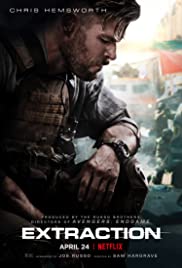
EXTRACTION (2020)

April 23, 2020

 Greetings again from the darkness. The description for this movie labels lead character Tyler Rake “a fearless black market mercenary.” Now I’ve personally never shopped for a mercenary, but my assumption is that every one of them is ‘black market’, and none would likely self-identify as anything other than ‘fearless.’ My Facebook account is inundated with unwanted advertisements, and I’ve yet to see one for any mercenary, much less one that lacks courage. Now you likely find this to be worthless meanderings, but that’s where the first feature length film from director Sam Hargrave took me. Mr. Hargrave is a veteran stunt coordinator and stunt performer (he’s been the stunt double for Chris Evans’ Captain America), and he’s working from a script by Joe Russo (director and producer of the last two Avengers movies and the last two Captain America movies).

Chris Hemsworth (THOR) stars as the aforementioned Tyler Rake. It’s a role that would have just as easily worked for Jason Statham or, in past years, Bruce Willis, Sylvester Stallone, or Arnold Schwarzenegger. Rake is a live action hero, haunted by visions and dreams of better times. His fighting prowess, shooting skills, and willingness to play roulette with his own life, make him the perfect hire for imprisoned drug lords when their son is kidnapped by a rival drug lord. And that’s exactly what happens.

The film opens with Tyler in a bad spot. He’s injured and trying to shoot his way out of a mess where he’s badly outnumbered. The film then flashes back a couple of days where we witness the kidnapping of Ovi Jr (Rudrhaksh Jaiswal) by Amir Asif (Priyanshu Painyuli), the drug lord rival to Ovi Jr’s imprisoned father. We also see Tyler, after a few too many drinks, take a running leap off a 30 meter cliff into an Australian lake. Soon he’s visited by Nik (Golshifteh Farahani, Adam Driver’s wife in PATERSON). She acts as his handler for the dangerous jobs, and few are more risky than extracting Ovi Jr.

What follows are fast-paced car chases through the dusty streets of Dhaka, bone-crunching hand-to-hand combats, and more shootouts than we’ve seen in a while. Tyler’s job is to extract Ovi Jr and deliver him safely home. When things go sideways, the two end up on the run from an entire army, and take cover in a local sewer … with all the sights and smells you might imagine. Supporting roles are covered by David Harbor as Tyler’s old friend, and Randeep Hooda as Ovi Sr’s right-hand man.

As you might expect, there are double-crosses and plenty of opportunities for Tyler to show off his ‘fearless’ Samercenary skills. Ovi Jr is a bit of a nerd, but does offer up some life philosophy for his troubled protector: “You drown not by falling in the water, but by staying submerged in it.” The kill count here is extraordinarily high and literally thousands of rounds get fired. What’s most surprising, however, is that Tyler’s cell phone somehow survives his many falls, gunshots, sewage, and car collisions. It’s much more impressive than the old Timex commercials. Gifted cinematographer Newton Thomas Sigel (X-MEN movies, DRIVE, THREE KINGS, THE USUAL SUSPECTS) does an admirable job capturing the action sequences; it’s just that this is too similar to many movies we’ve seen before, though it serves as a chance for Hemsworth to be something other than Thor. For those in need of an action flick fix after all this social distancing, EXTRACTION should scratch the itch.

opens Netflix April 24, 2020

watch the trailer:


TRUE HISTORY OF THE KELLY GANG (2020)

April 23, 2020

 Greetings again from the darkness. The opening title card states “Nothing you are about to see is true” … and then it dissolves, leaving the word ‘true’ as the first word in the film’s title. Of course, some of the things we are about to see are true, though it is a dramatized version with a screenplay adapted by Shaun Grant (BERLIN SYNDROME, 2017) from Peter Carey’s 2000 novel. Director Justin Kurzel (MACBETH, 2015) takes a very artsy and stylistic approach in telling the story of the notorious Australian outlaw, Ned Kelly, while still including the expected violence and brutality.

Opening in 1867 Australia, we first see young Ned Kelly (Orlando Schwert) spying on his mother (Essie Davis, THE BABADOOK, 2014) as she provides service to Sgt. O’Neill (Charlie Hunnam). It’s the kind of service a young boy should never see his mother perform, especially as the father/husband (Ben Corbett) hovers outside the cabin with Ned’s siblings. Life is difficult for the Kelly family. Dad has some issues, so mom does what she has to in order to keep food on the table. Ned’s life and family dynamics change quickly when his dad takes the fall for a crime Ned committed.

Harry Power (played by hefty Russell Crowe) arrives on the scene, and becomes Ned’s mentor in song (a sing-a-long title that can’t be repeated here) and as a bushranger. It’s not long after this when the movie shifts from Ned as a boy, to Ned as a man (played by George Mackay, 1917), who spends a few years away from home. Ned crosses paths with Constable Fitzpatrick (Nicholas Hoult) numerous times, one which results in Ned meeting, and falling for, a young prostitute named Mary Hearn (Thomasin McKenzie, JOJO RABBIT). Ned and Mary return home to visit his mother, and they find she’s now engaged to a younger man, George King (Marlon Williams). George has been teaching his “trade” of horse-thieving to Ned’s brothers, including Dan (played by musician Nick Cave’s son, Earl Cave). It’s at this point we learn about how the Kelly Gang was formed, and why they took to wearing dresses … “Nothing scares a man like crazy.”

There is a lot going on in this story for the tale of a man who was executed at age 25. We see Ned evolve from a curious youngster to a bare-knuckle boxer to an outlaw who became an anti-hero cult icon. Witnessing the father figures he endured leaves little wonder why he turned out the way he did – an angry, cross-dressing outlaw leading the Irish rebellion in hopes of taking down the Crown. Ned is told that “a man can never outrun his fate”, and we know Ned’s fate upfront. We are there as Ned gives a motivational speech to the Kelly gang, and we watch in awe as they self-test their own body armor.

My Dear Son …” are the first words we hear as Ned writes a letter promising to tell no lies about his history. The letter acts as somewhat of a framing device for the film, and covers the entirety of the Kelly Outbreak, as it’s now referred. There have been numerous projects (movies, mini-series, docu-dramas) over the years, including Mick Jagger (1970) and Heath Ledger (2003) as those who have portrayed Ned Kelly on screen. Director Kurzel and cinematographer Ari Wegner offer up quite a stylish look for this vast wasteland, and even utilizes some Terrence Malick-type editing for effect. Even the closing credit sequence is a work of art. It’s a family affair for director Justin Kurzel, as his brother Jed Kurzel delivers the music, and Justin’s wife Essie Davis plays Ned’s mother. It’s certainly not a typical western, and Ned is difficult to relate to as a character, but the look and style of the film keep us engaged. Perhaps the oddest decision was to have MacKay clean-shaven, as most of us have seen the photos of Ned Kelly and his beard … a beard that seemed to inspire modern day hipsters. Filming took place at Old Melbourne Gaol, which was the actual spot where Ned Kelly was hanged. His last words were: “Such is life.”

watch the trailer:


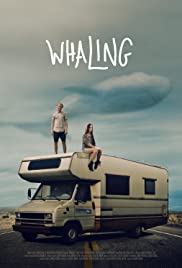
BRAKING FOR WHALES (2020)

April 23, 2020

 Greetings again from the darkness. Their mother amassed quite the collection of whale-related items from eBay prior to her recent passing. The brother needs the inheritance to continue his self-discovery course, which may or may not answer the question of whether or not he is gay. The estranged sister apparently abandoned her young daughter for fear of being a lousy mother. He admits to being ‘lost’, and she admits to being ‘broken’. Self-loathing is on full display in director Sean McEwen’s first feature film.

Tom Felton (Draco from the Harry Potter movies) plays Brandon Walker, and Tammin Sursok (“Pretty Little Liars”) plays his older sister Star Walker. They reunite for the reading of mom’s will, which includes the outlandish requirement for Brandon and Star to dispose of mom’s ashes in the belly of whale in order to receive their inheritance. Needing the money, they hop in mom’s old Winnebago for a 48 hour road trip to a public aquarium that houses the closest whale to Iowa.

The emotional impact of a story about a brother and sister finding common ground on a forced road trip boils down to two things: the chemistry between the two actors and the script. Mr. Felton and Ms. Sursok seem to be committed to the cause, and there are a couple of moments that strike the right chord, but overall the script is what prevents us from connecting to either the characters or the story. The attempts to inject humor tend to be in poor taste, while the dramatic elements either repeat themselves or don’t work because we simply don’t care enough about Brandon or Star.

Having the running gag of Brandon proclaiming “I’m not gay” while Star relentlessly peppers him on the topic comes across as not just dated, but also quite sad – seeing as Brandon is a thirty-something year old man. And worse than that is the stop over at Aunt Jackie’s (Wendi McLendon-Covey, BRIDESMAIDS, “The Goldbergs”) and Uncle Randal’s (David Koechner) house. This sequence of social commentary meant to bash extreme right-wing conservatives is simply embarrassing to watch. I actually felt terrible for the actors in these scenes. Comedy around homosexuality and racism must be handled with grace … whether it’s subtle or cartoonish.

The script was co-written by director Sean McEwen and his leading lady (and real life wife) Tammin Sursok. Respect is due to independent filmmakers who find a way to realize their project, but we do wish more time had been spent on the script. In fact, the whole production felt rushed and unpolished, leaving us with the most dreaded question any movie watcher might ask … how much longer?

watch the trailer:


THE BOOKSELLERS (doc, 2020)

April 15, 2020

 Greetings again from the darkness. One might think that the only thing less interesting than watching someone read a book would be watching them talk about a book they are buying and not intending to read. Director-Editor-Producer DW Young somehow manages to make the topic quite engaging … due in no small part to the stream of bibliophiles and antiquarian booksellers we meet. The philosophy of the film is best expressed through one of the many spot-on quotes sprinkled throughout: “Books are a way of being fully human.”

It’s either cheating or hedging one’s bet when a director secures an interview with the eloquent Fran Lebowitz for a documentary. If the documentary is about books, well that’s even better. She perfectly describes the joy in “crawling around” bookstores in search of just the right one. She recalls the days when bookstores lined 4th Avenue, in what had been labeled “Book Row.” These days, only one remains – The Strand, which was founded in 1929. We learn that in the 1950’s, there were 358 bookstores in New York City, and now your search for a good read is limited to 79. The oldest remaining NYC bookstore is the stunning Argosy on E. 59th, and it’s being operated by the three daughters of Louis Cohen who opened the store in 1925. Ownership of the building is key to the bookstore remaining open for nearly 100 years.

Director Young takes us inside the beautiful and historic Park Avenue Armory for the NYC Antiquarian Book Fair. It’s here where we see a Fidel Castro doll (I guess everything is collectable!), and more importantly get a feel for how the rare book trade works. These collectors are obsessive about their books and compulsive in their mission of the next rare discovery. We see warehouses, apartments, offices, and stores jam packed with books, and to cap it off, we hear from the folks who have made this their passion. Not just bibliophiles like Ms. Lebowitz, Gay Talese, and Susan Orlean, but the boots-on-the-ground booksellers and collectors. There is even a segment on Martin Stone, the legendary book scout or bookrunner, who was also a rock ‘n roll guitarist.

“The internet killed the hunt.” A perfect example is given on how the world wide web changed book selling and collecting. In the old days, a collector could spend years assembling a full collection of Edith Wharton books, whereas today, a credit card and an afternoon on the internet would yield the same results. This is ‘buying’ contrasted with ‘collecting’, and the old school collectors have either adjusted or are struggling. Even auctions have changed, and Bill Gates’ purchasing Leonardo Da Vinci’s “The Codex Leicester” via phone … for $28 million … is an example.

Movies about book dealers are discussed, including THE BIG SLEEP and UNFAITHFUL, and we see a clip of Larry McMurtry’s speech championing book reading and bookstores. It should also be noted that Mr. McMurtry is a long time book seller and collector from Archer City, Texas. One of the industry’s new celebrities is the ultra-charming Rebecca Romney, who became famous for her stints on TV’s “Pawn Stars” as the resident book expert. Ms. Romney is leading the new wave of collectors, and her passion as a glass-half-full type is contagious.

Author Maurice Sendak said “There’s so much more to a book than reading.” Here, we learn about the importance of book jackets and special bindings, and how these rare books are actually historical evidence … artifacts of culture. This explains why ‘book burning’ has the history it does as both symbolizing and physically accomplishing the destruction of certain segments of society. We also learn those in this business don’t think highly of Kindle. The words may be the same, but the experience certainly isn’t.

The film is billed as a behind-the-scenes look at the New York rare book world, but it spends more time exploring the folks who make-up this business/industry/lifestyle. Their passion, and one might even call it a fetish, is quite interesting. The argument can be made that their work is quite important in preserving history. Smooth jazz accompanies the story, and it’s only fitting that I learned a new word: Incunabulum, which is an early printed book. These collectors express concern about their legacy, so hopefully the film will spur even more people to understand the historical relevance of books in our cultured society.

Opens in Los Angeles virtual cinema on April 17, and nationally on VOD (Apple/iTunes, Amazon, and cable, satellite and digital platforms) on June 5, 2020

watch the trailer: