SXSW 2021 Day 3

March 19, 2021

SXSW 2021 Day 3

 This was my third and final day of movies at this year’s South By Southwest (SXSW) virtual festival. I’ve watched and reviewed 16 movies in 60 hours, and remarkably, there wasn’t one clunker in the bunch.


Day 3 for me included a documentary, a comedy, two dramas, and a horror film. Here’s a recap:


WITHOUT GETTING KILLED OR CAUGHT (documentary)

 Jerry Jeff Walker made the lyrics famous: “If I can just get off of this L.A. freeway without getting killed or caught”, but it was Guy Clark who wrote ‘em. Co-directors Tamara Saviano and Paul Whitfield put together a profile of legendary songwriter Clark, but it’s also an intimate look at an era, the challenges of the music industry, Clark’s enigmatic wife Susanna, and at their friendship with the great Townes Van Zandt.

The film is based on Susanna’s diaries and the biography written by co-director Saviano entitled, “Without Getting Killed or Caught: The Life and Music of Guy Clark”. Most documentaries that focus on a musician spend the vast majority of time on the songs, but this is something quite different. Sure, the music is crucial to the story, but this is the saga of struggling artists and poets, and the unconventional and complicated relationships they formed. It’s more of a psychological character study than a tribute to the beautiful music.

Background on Guy and Susanna go back to each of their childhoods. We see family photos and videos, and learn Guy was brought up west Texas tough, while Susanna had a large family. Brought together by tragedy, their 40+ year relationship was built on art and a free-wheeling nature not uncommon to the times. Guy became best friends with songwriter Townes Van Zandt, and an unconventional triumvirate was the result when Townes and Susanna became spiritual soul mates.

Vince Gill, Steve Earle, and Rodney Crowell fill in some details of those early years, and more importantly provide perspective on the commitment to a specific type of songwriting that Guy held precious. There are also clips of interviews with Townes, and we learn just how difficult it was for Guy to achieve success. It came much easier for Susanna, who wrote #1 hit songs AND was an accomplished artist – her painting served as the cover of Willie Nelson’s “Stardust” album.

Of course, Guy Clark ultimately achieved both admiration and success with his songs. Jerry Jeff put him on the map, but Grammy awards came later, as did lifetime achievement awards and best-selling albums. The film includes much of Susanna’s time with “TR”, which is what she called the tape recorder, so we eavesdrop on many conversations – both personal and musical. Clips of Guy’s appearances on Austin City Limits in 1977, 1981, and 1989 are a pleasure, but the later years are a bit more difficult. The most challenging part of the story is knowing that Susanna remained bedridden after Townes’ death in 1997. Guy passed a few years later: “Texas is callin’, callin’ me home.” With narration from Sissy Spacek (as Susanna), the film is a personal journey that we are privileged to take.


SWAN SONG (drama)

 It’s never too late. We’ve all heard the phrase, but is it accurate … at least mostly? Writer-director Todd Stephens met the real life Pat Pitsenbarger in a small town gay bar, and he turned that person into this engaging story by casting the great Udo Kier in the lead. When we first meet Pat, he’s living a life of daily drudgery in a nursing home. He’s a curmudgeon whose hobbies are folding (perfectly) the paper napkins he takes from the cafeteria, and sneaking a smoke when no one is looking. We also see how tenderly he treats an incapacitated neighbor. It’s not the last time we see his two sides.

Pat was once a renowned hairdresser in Sandusky, Ohio. When he is informed that a long-time former (wealthy) client has passed away, and her dying wish was for Pat to do her hair for the funeral, he sneaks out of the home and begins a road trip down memory lane. Despite Pat spending the time on foot, the film has the feel of a true road trip movie as he crosses paths with many folks – some new and some with ties to his previous life. One of his first stops is the graveyard to visit his life partner who died of AIDS. We realize Pat still grieves.

There is a hilarious stop at a convenience store as he tries to knock off the items on his shopping list for the project. Since he has no money, Pat depends on the kindness of others … and his own sticky fingers. As he makes his way through town, some folks remember him, while others remind him of how long he’s been gone and how much has changed. His house and business may be gone, but his memories remain.

Two folks from his past generate tremendous scenes. Pat confronts Dee Dee Dale (a reserved Jennifer Coolidge) who gets to tell her side of the story of their unpleasant business split so many years ago. Even better is a “conversation” in the park with his old friend Eunice (a superb Ira Hawkins). The two old friends toast the bygone days of their gay club, while also acknowledging the new world of the gay community. It’s a touching sequence.

But the most surprising portion of the film occurs at the funeral home, where Pat imagines a final chat with that recently deceased client, Rita Parker-Sloan. What a pleasant surprise (actually shock!) to see Linda Evans back on screen. She is terrific in her brief appearance and we’ve really missed her over the last 23 years. But this film belongs to Udo Kier, and he kills. Pat is known as “The Liberace of Sandusky” and Kier embraces all that entails. This is a sentimental story punctuated by a spirited performance – and a Shirley Bassey song!


HOW IT ENDS (comedy)

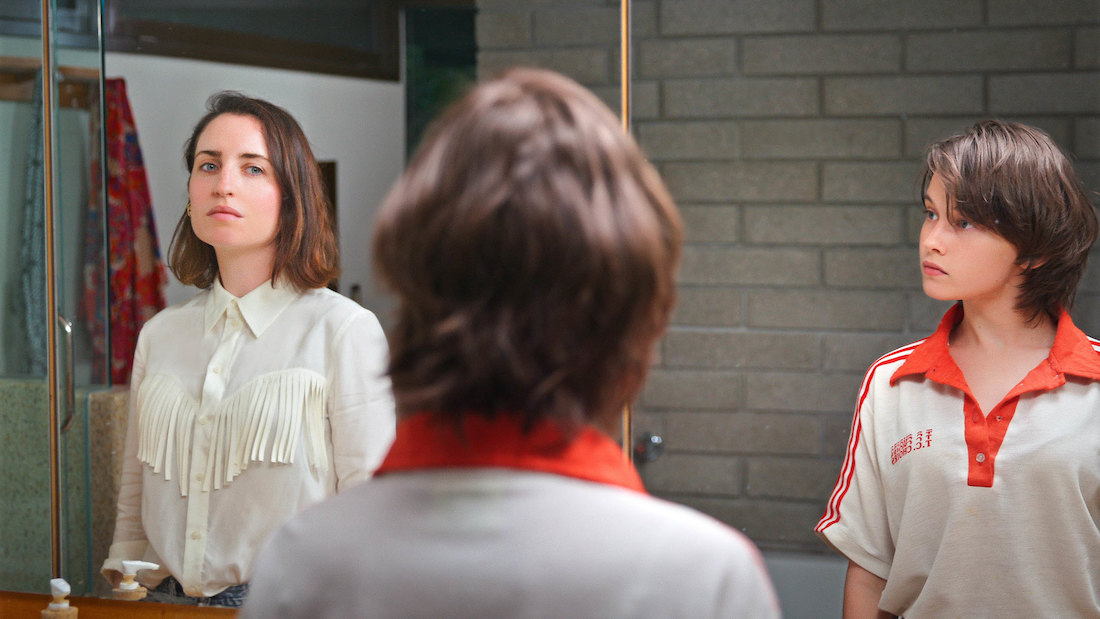
 We get glimpses of the meteor that’s speeding on a collision course with Earth, but no character ever points it out. In fact, most emit a chill vibe that corresponds to that of the film. The only exception is Liza. Played by Zoe Lister-Jones, Liza simply wants to get trashed and let the world end overnight … well after she finishes off her morning pancakes (at least a dozen) and glass of wine.  Liza’s only problem is Young Liza (Cailee Spaeny), her metaphysical younger self who pressures Liza to attend the Apocalypse Party being thrown by Mandy (Whitney Cummings).

In addition to attending the party, Young Liza persuades Liza to spend the day confronting her regrets. This includes meeting up separately with her divorced parents (Brad Whitford and Helen Hunt), as well as a former best friend (Olivia Wilde), and past boyfriends, including her one true love (Logan Marshall-Green). In fact, this trip down Regret Road provides a steady stream of stereotypical California flakes. This means none of the soul-searching ever goes very deep, but playing spot-the-funny-person is a win-win. None of the interactions seem to last more than 2-4 minutes, but it’s a blast seeing how many familiar faces pop up during Liza and Young Liza’s day of walking. I won’t name the others here so that you can enjoy each moment – some more than others.

The film is co-written and co-directed by Zoe Lister-Jones and Daryl Wein, and it’s one of the more entertaining ‘pandemic’ films so far. For me, the constant roll of quick vignettes never got old, but you should know that as good as the performances are from Lister-Jones and Spaeny, the soul-searching and self-discovery only skims the surface. Still, a chill End of the World party seems perfect, even if a 1980’s relic agreed to be a punchline.


VIOLET (drama)

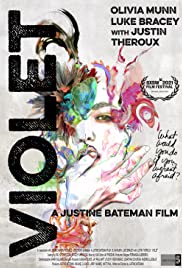
 Justine Bateman’s first feature film as writer-director acts an education for men and a wake-up call for women. And it’s welcome and effective on both fronts. Olivia Munn (“The Newsroom”) stars as Violet, a film industry executive whose self-doubts and lack of confidence prevent her from every really feeling happiness. Her inner voice – she calls it “the committee” feeds her bad ju-ju and keeps her obsessed with safe decisions, rather than dynamic ones … both personally and professionally.

As an example, her inner voice (Justin Theroux) pushes her to date an older, boring film executive for the sake of her career, rather than her screenwriting life-long friend Red (Luke Bracey) who clearly thinks more highly of Violet than she does herself. Violet’s boss (Dennis Boutsikaris) purposefully belittles her which causes some of her staff to also show little respect. Violet does have some supporters who recognize the talent and strength within her, but of course, it’s Violet who must come to terms with the disconnect between achieving happiness and the way she makes choices.

We see flashbacks to Violet’s childhood and understand how the seeds of self-doubt were planted. The supporting cast is excellent and very deep, though some (Bonnie Bedelia for one) only appear briefly. Filmmaker Bateman uses on screen script to let us know what’s going on in Violet’s mind as it battles with her “committee”. It’s a trick that serves the purpose well. Some may recall the “Seinfeld” episode where George does “the opposite”. Well that sentiment serves Violet well and puts her on the road to recovery … and to silencing that darn committee. A terrific first feature from Ms. Bateman, and kudos for the closing credits which put the crew on camera.


VIOLATION (drama/horror)

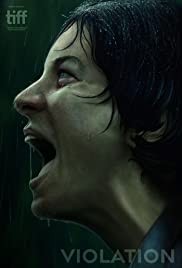
 Not just another rape-revenge thriller, this film from co-writers and co-directors Dusty Manicinelli and Madeleine Sims-Fewer is one of the most brutal and unforgiving films I’ve seen in a while. Emotional pain, regret, bitterness, and compromise worm through every scene and every character.

It begins as a cabin in the woods story. Miriam (co-director Sims-Fewer) and Caleb (Obi Abili) have a strained relationship that appears headed towards a breaking point. They are meeting up with Miriam’s sister Greta (Anna Maguire) and her husband Dylan (Jesse LaVercombe) at his family cabin. There is an underlying tension that prevents the four from every being at ease with each other, though we only get bits and pieces at a time. To further force our concentration, the story is told in non-linear fashion, making it important to focus on hairstyles and details.

One evening by the campfire turns into a turning point in the film and acts as the before and after point. A primal and brutally violent sequence takes up close to half of the film, and it’s unlike anything I’ve previously seen on screen. The practical effects are next level, and Ms. Sims-Fewer is absolutely terrific throughout. A chilling use of music accompanies an odd combination of wolf-rabbit-psychopath, and the filmmakers use shots of nature as connective tissue in a world where sometimes we are the wolf and sometimes the rabbit. Certainly not a film for mass audiences, but it will surely find an appreciative following.


SXSW 2021 Day 2

March 18, 2021

SXSW 2021 Day 2

 This year’s South By Southwest (SXSW) festival is being held completely online, and of course a virtual festival lacks the oh-so-enjoyable elements of long lines, rude people, bad weather, and rushed fast food. Sure the excitement and energy of an audience is missing, but at least there is no hotel expense!

Day 2 for me included two documentaries, two thrillers, and two dramas. Here’s a recap:


WeWORK: OR THE MAKING AND BREAKING OF A $47 MILLION UNICORN (documentary)
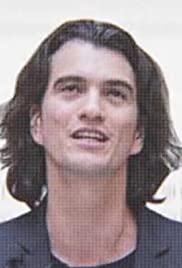
 It’s quite possible that many scams originally begin with someone’s good intentions. However it’s just as likely, and maybe even more so, that many scams begin with only the intention of raking in millions or billions for the founder. The dream of becoming the next Steve Jobs, Jeff Bezos, or Mark Zuckerberg is simply too enticing for some. Filmmaker Jed Rothstein profiles the rise and fall of WeWork, or more accurately, its charismatic commander, Adam Neumann.

Offering a nice overview for those unfamiliar, the film uses multiple clips of Neumann speaking so that we get a real feel for how so many fell under his spell. Neumann was an immigrant from Israel, and certainly bought into the ideal of living the American Dream. Labeled a visionary, and always full of ideas, Neumann co-founded WeWork with Miguel McKelvey. They were known affectionately as Mr. Outside and Mr. Inside, respectively, due to McKelvey’s focus on operations and infrastructure and Neumann’s ability as a salesman and the (and hair) of the company.

The idea of co-working space was not new, but it had never been pitched or marketed the way that Neumann did. He appealed to the rebellious nature of millennials, who couldn’t picture themselves in the traditional corporate office environment of the establishment. Neumann capitalized on their FOMO, and rammed home the message of “Do what you love.” He preached to the choir with his promise of the next revolution being the “We revolution.”

Journalists from Forbes, The Atlantic, and The Wall Street Journal are interviewed, as are former We staff members and clients. Mr. Rothstein does a nice job of tracking the progression of the company via graphics showing valuation each year beginning with a few million in 2012 through a peak of $47 billion in 2018. He also explores how, within a 6 week period, the company went from that peak to near bankrupt.

A business model based on “community” with the goal of changing the way people work and live, turns out to be smoke and mirrors if legitimate business practices aren’t followed. That’s not to say his communal approach doesn’t work, but as so often happens, greed and the lust for power, create the downfall. Rothstein points out that the company’s own S-1 filed prior to the planned IPO was the red flag that had previously gone undetected.

This is as much a psychological study of Neumann as it is a business case study. Every time Neumann bristled at being called a “real estate company”, we should have known. With his cash infusion from Japan’s SoftBank still not leading to traditional profitability, we should have known. When his bizarre actress wife, Rebekah, became more involved with decisions and publicity, we should have known. Hindsight is crystal clear, and by the end, we realize Neumann has more in common with the notorious Elizabeth Holmes of Theranos than with Steve Jobs. The Jesus Complex seems obvious, but as humans we want so much to believe the words of an idealist … especially a cool one. There is a lot to unpack in this documentary, and it’s worth it – even if it helps us learn our lesson yet again.


HERE BEFORE (drama/thriller)
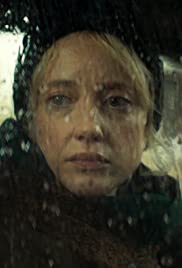
 Grief can be the most powerful and dangerous emotion we experience as humans. Anger and joy come and go, but real grief seeps into our marrow and becomes part of our being. Writer-director Stacey Gregg wisely tackles the topic with the assistance of the always excellent Andrea Riseborough (a resume loaded with strong projects) as Laura, a mother who begins to believe that her deceased daughter Josie has been reincarnated as the new neighbors’ daughter, Megan (Niamh Dornan).

Ms. Gregg expertly builds tension and doubt through the film’s first half, and throws a terrific curve ball in the final act … one I kick myself and applaud the filmmaker for not seeing it coming. There is an awkwardness between the two families forced together by a shared dwelling wall. That awkwardness only builds as Laura continually oversteps boundaries when it comes to Megan, who seems to know entirely too many details when it comes to Josie’s death.

Megan’s parents, Marie (Eileen O’Higgins) and Chris (Martin McCann), are from a different socio-economic class than their neighbors, and the uncomfortable connection extends to Laura’s husband, Brendon (Jonjo O’Neill) and son, Tadhg (Lewis McAkie). Whether it’s in the front yard, at school, or the grocery story, each time these families cross paths leaves us with weird vibes and feeling more confused. Is something supernatural at play here?

The cinematography from Chloe Thomson is superb, and composer Adam Janota Bzowski is pitch perfect is giving us just enough at the right moments. Set in Belfast, this is a gripping thriller with terrific performances throughout. Stacey Gregg makes it look all too easy with her first feature film.


LANGUAGE LESSONS (drama)
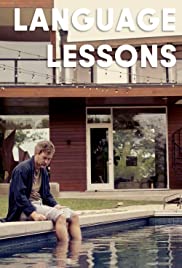
 The use of video chats as a plot device might have been a bit more adventurous 18 months ago, but oddly, the pandemic and our familiarity with this type of communication (out of necessity) actually works to strengthen this interesting film. It’s the feature film directorial debut of Natalie Morales, who co-wrote the script with Mark Duplass, and the two co-star as the only characters we see on screen.

Ms. Morales plays Carino, a Costa Rica-based Spanish teacher hired by Adam’s (Duplass) husband Will (an unseen DeSean Terry). An awkward first lesson – Lesson #1 of 100 in the package – includes Adam’s morning routine of hot/cold dips in the pool and spa in the backyard of his luxurious home. Director Morales labels the lessons throughout, and no, we thankfully don’t see all 100. After a personal tragedy occurs, the teacher-student dynamic shifts and becomes more therapy before settling into a strange friendship.

Between lessons, Adam and Carino exchange many personal messages, many littered with entirely too many “I’m sorry” lines in an attempt to avoid overstepping boundaries. Adam is forthcoming with his personal feelings, while Carino bounces between trying to stay professional and wanting to bond. It’s clear she is hiding details of her personal life, while rarely discouraging Adam from over-sharing. The frequent personal messages reveal more about each character than the scheduled meetings, but combined they work very well.

The charisma of Duplass and especially Morales allow us to care very much about this relationship. They are both charming, and Morales has the most fun in the drunk birthday song scene. She is to be commended for taking such a simple structure and creating an interesting movie that proves people need connection – whether in person, through masks, or via Zoom.


THE FALLOUT (drama)

 Megan Park is an established actress with some memorable roles (WHAT IF, 2013), and although she has directed some short films, this is her first feature film as writer-director. Her subject matter revolves around a school shooting and how it impacts students in so many ways. Rather than creating a project focusing on gun control, Ms. Park instead takes on the various emotions that occur after such a horrific event.

Vada (Jenna Ortega, young Jane in “Jane the Virgin”) is a 16 year old high school student who is in the restroom when gunfire is heard. We don’t see the shooter, and instead director Park sticks with Vada and Mia Reed (Maddie Ziegler) as they hide in the stall, terrified of what’s happening. Mia is the school beauty, and one that Vada and her best friend Will (Nick Ropp) would typically make fun of behind her back. While in the stall, a bloody Quinton (Niles Fitch) joins them.

The three students form an unlikely bond after the shooting, as Will finds a new mission in life as an activist and spokesperson. Vada’s parents are played by a skittish Julie Bowen and the always dependable John Ortiz. Vada and Mia both struggle with their emotions, and start to depend on each other. Quinton has serious fallout to deal with, though he and Vada get closer as well. Though she is unable to talk to her parents or deal with her younger sister, Vada does see a therapist played by Shailene Woodley.

It’s painful to see anyone have to deal with such a horrific event, but it’s so much worse when it’s kids who simply aren’t mature enough or experienced enough to handle such a burden. Wine, sex, and pot all make up the attempts at self-healing by the students, and the film doesn’t shy away from the difficulties they face in returning to school – or returning to anything resembling normalcy after attending memorial services for numerous classmates. Filmmaker Park allows us to experience Vada’s slow recovery, and then throws in a gut-punch of an ending that is likely to stun many. A terrific performance from Ms. Ortega and strong filmmaking from Ms. Park makes this one stick with us.


TOM PETTY SOMEWHERE YOU FEEL FREE (documentary)
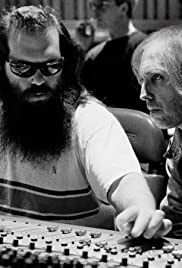
 Adria Petty, daughter of the late rock legend, Tom Petty, discovered a stash of 16mm film shot by photographer Martyn Akins between 1993 and 1995. The footage chronicles Petty’s recording of his 1994 triple platinum album, “Wildflowers” – the album he considered his best and most personal. The found footage, along with insight and perspective from many who were there, allows us to understand why he felt that way.

Mary Wharton directed multiple episodes of “VH1 Legends”, and her expertise with musicians elevates this to must-see for any Tom Petty fan … or even any songwriter who wants to witness the crafting of songs, and the crafting of a sound. See, this was Petty’s first time to work with famed rap producer and co-founder of Def Jam Recordings, Rick Rubin. Adria explains what was happening in her father’s personal life during this time, and how he wanted something new and different from his work with The Heartbreakers – although most of them worked on this album as well.

In addition to the 27 year old footage, Ms. Wharton includes current day interviews with Mike Campbell, Benmont Tench, and producer Rubin. Campbell seems mostly bored with the interviews, but Tench spills all his memories. It’s really Rubin who brings the most insight and perspective to what Petty was trying to do. The changing of drummers from Stan Lynch to Steve Ferrone is discussed, and we hear Petty explain that he still wants to sing with bassist Howie Epstein. So the songs may sound different, and have special meaning to Petty, many of the musicians are those he was most familiar and comfortable with.

We see rehearsals, recordings, sound checks, and live performances. There are also rare clips of Petty at home. Ms. Wharton provides a unique opportunity to watch an artist at work and how the pieces are assembled to create a masterpiece album that is as strong today as it was on its first release. Tom Petty died in 2017, but lives on in his music, and now in the footage of his musical process.


OFFSEASON (horror)

 Horror director and writer Mickey Keating adds to his oeuvre with a creative twist on the genre that mixes zombies, the depths of hell, and a powerful monster. Using title cards to take us through six chapters and an Epilogue, Mr. Keating has us experience the events through the eyes of Marie Aldrich (played by Jocelin Donahue). However, it’s Marie’s mother Ava, played by the always interesting Melora Walters (whose career dates back to DEAD POETS SOCIETY, 1989), whom we see and hear from first. She appears near death as she explains that she’s accepted that there is no way to run away from nightmares … they always find you.

Marie receives a letter informing her that her mother’s grave has been desecrated and it’s an urgent matter that must be handled promptly and without fanfare (do people usually go to the press on such matters?). Marie and her boyfriend George (Joe Swanberg) head to the island where Mom is buried. It’s a creepy place that shuts down for the winter. Marie’s mother had told her stories of the island and “The Man from the Sea”, and how the island residents sold their soul to the sea monster in order to survive the harsh conditions. Reluctantly, the Bridge Man (Richard Brake) allows them to cross the bridge onto the island.

Things immediately seem weird and off-center. Marie finds her mother’s damaged grave, but the caretaker is nowhere to be found. Under a time crunch, Marie and George make some bad decisions … of course, it wouldn’t be a horror movie without bad decisions! Not to give away any of the fun, but suffice to say the island is cursed, just as Marie’s mom had warned.

Keating creates some nice visuals, and has terrific placement of The Vogues’ “Turn Around, Look at Me”. One thing that I couldn’t help but notice is that Marie runs and runs. She runs a lot. I’m hoping Ms. Donahue agreed to the extra miles before arriving on set. There are enough chills here to keep us engaged, and Keating deserves credit for an original story within a genre that frequently re-treads.


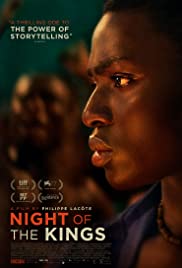
NIGHT OF THE KINGS (2021, Ivory Coast)

February 27, 2021

 Greetings again from the darkness. Could you tell a story that lasts all night? What if you were standing on a box in front of a few hundred rowdy inmates? What if your life depended on it? Writer-director Phillippe Lacote (RUN, 2015) opens the film with an aerial shot over the jungles of the Ivory Coast and slowly makes way to the isolated prison known as La MACA.

The camera takes us to the bed of a police pickup truck where a handcuffed young man is being escorted by an armed guard. It’s the first day of his prison sentence. La MACA has a warden and prison guards, but even they admit the place is mostly run by the inmates. The warden (Issaka Sawadogo) meets with the new prisoner (newcomer Bakary Kone), but it’s Blackbeard (Steve Tientcheu) who summons the newbie to his cell. Blackbird has been the Dangaro, Chief of Prisoners, for years, and only recently has his hulking presence led to chatter of diminishing losing power. With his fatigue requiring regular intake from oxygen tanks, Blackbird realizes his reign is near … and tradition requires that, once too weak to lead, he take his own life.

Blackbird names the wide-eyed new prisoner Roman, meaning he will be the storyteller at that evening’s Red Moon. Blackbeard has this planned as his final hurrah as leader. Two prisoners are vying to become the new Dangaro: Blackbeard’s loyal assistant Half-Mad (Jean Cyrille Digbeau) and rival faction leader Lass (Abdoul Karim Konate). They each have their eye on wearing the “crown”.

If all this sounds a bit convoluted, you should know it’s fascinating to watch unfold on the screen. The rules and rituals are followed vigorously, and just like in any political situation, behind-the-scenes maneuverings are ongoing. We never lose sight of the fact that there are hundreds of criminals gathered in a confined area, yet the structure of their organization lends itself to Roman’s storytelling.

As a member of the Microbes gang in the Lawless Quarter of Abidjan, Roman doesn’t consider himself a storyteller, and is reluctant to begin. Urged on by the aggressive reactions of his audience, he’s soon weaving tales blending his childhood, the recent arrest of local legend Zama King, and the mythology and history of the Ivory Coast. Stunning flashbacks and visuals are utilized in just the right dosage to help us understand the stories without losing the danger Roman faces. What danger, you ask? Well a fellow prisoner named Silence (played by Denis Lavant, from 2012 cult favorite HOLY MOTORS), who keeps a chicken perched on his shoulder, warns Roman that his story must last through the night until the Red Moon sets on the horizon … or the ritual demands he be killed. Talk about motivation – as if the metal hook in the stairwell wasn’t enough!

Filmmaker Lacote excels with his ‘story within a story’ and the blending of truth and fiction. The fed-up guards watching through the small window in their protected office says more than words could. And cinematographer Tobie Marier Robitaille works wonders within the claustrophobic confines of the prison, and by capturing the emotions of the participants. This is an original film that could be equally effective as a stage production, as both vehicles can convey the glory of the moment morning breaks. Let’s hope this isn’t “once upon a time” for Lacote, and that he has more to offer at this level.

Available February 26, 2021 in select theatres and Virtual Cinemas

WATCH THE TRAILER


CRISIS (2021)

February 25, 2021

 Greetings again from the darkness. The best thrillers often interweave multiple story lines to create a complex web of detail for viewers to unwind. Writer-director Nicholas Jarecki (ARBITRAGE, 2012) serves up three story lines, all related to the current Opioid crisis. Although the film looks great and has a deep cast, we’ve seen most of this before and no new insight is provided in regards to the struggle. Instead, it’s really standard thriller fare that never goes deep enough into any of the characters to make us care.

Armie Hammer (along with the recent personal baggage attached to him) stars as Jake Kelly, a DEA Agent who has worked undercover in hopes of exposing the Armenian-Canadian-American drug traffickers responsible for a significant portion of opioids crossing the border. Hammer spends the entire movie with an intensely furrowed brow that would likely inspire distrust amongst any potential drug syndicates.

In storyline number 2, Evangeline Lilly (Wasp in the ANT-MAN movies) is Claire Reimann, an architect and recovering drug addict, who is out for vengeance when her beloved high school athlete son is found dead with drugs in his system. The third segment features Oscar winner Gary Oldman (DARKEST HOUR, 2017) as Dr. Tyrone Brower, a science professor at a private Detroit university. He runs a drug-testing lab and faces a moral dilemma when questionable lab results for “the first non-addictive painkiller” puts people at risk, not to mention funding for his work.

Any one of these actors or stories could carry the weight of a movie, but when combined, they succeed only in crushing the entertainment value and tension level. Oldman’s story is easily the most interesting. It addresses how Big Pharma gets new drugs rubber-stamped by funding otherwise cash-strapped labs and schools. There is also the skepticism involved with the drug-producer’s influence over the supposedly independent FDA, and on top of all that, there is the ethical concerns of everyone putting the almighty dollar ahead of safety.

Director Jarecki (the brother of Andrew Jarecki who directed the superb 2003 documentary CAPTURING THE FRIEDMANS) kicks off the movie with a beautifully filmed, albeit brief, chase scene through the snowy Canadian forest. In fact, the camera work throughout is fine. It’s really the overloaded script that prevents any of the stories or characters from clicking. Mr. Oldman seems to sense that he needs to overcome the lack of complexity in his story, and because of the effort, loses his usual reserved cerebral approach for which he’s known.

Supporting work is provided by Greg Kinnear as the Dean willing to sacrifice ethics and friendship for money, Michelle Rodriguez as the DEA supervisor in a budget crunch, and Lily-Rose Depp as Jake’s strung out sister. Also contributing are Indira Varma, John Ralston, Martin Donovan, Mia Kirshner, Kid Cudi, Michael Aronov, Luke Evans, and Veronica Ferres. The weakest link here is director Jarecki himself, who for some reason, thought he could play Jake’s partner … a role that would have benefited from a more refined actor.

The horrific effects of the Opioid crisis are known to most, and the film plays like a Wikipedia explanation for anyone who doesn’t read or watch the news. Certainly not helping is the “Miami Vice” type score that accompanies many scenes, and the choppy editing that causes many scenes to fail. Better movies in this genre would include THE INSIDER (1999, ironically directed by “Miami Vice” creator Michael Mann) and Soderbergh’s TRAFFIC (2000). The obstacles faced by whistleblowers, the importance of funding to academia, budgetary concerns for law enforcement, the tragic impact of drugs on families, and the systemic corruption that has fueled the epidemic … all of these are touched on. It’s just that it all seems too obvious. If somehow you didn’t already know, the money-hungry don’t play fair – whether they be drug dealers or drug companies.

The film will hit theaters on February 26, 2021 and Digital and On Demand March 5, 2021

WATCH THE TRAILER


CHERRY (2021)

February 25, 2021

 Greetings again from the darkness. Brothers Anthony Russo and Joe Russo are known for their work with Marvel, including, AVENGERS: ENDGAME, and AVENGERS: INFIINITY WAR. This time they tackle a stylish crime-thriller based on the Nico Walker novel, and adapted for the screen by co-writers Angela Russo-Otsot (sister of the directors) and Jessica Goldberg. The Russos reunite with Tom Holland (Spider-Man in the Marvel universe), and he proves quite capable of carrying the heavy load in a bleak and somber drama.

Opening a film with a Van Morrison song is always a welcome move, and then it cuts right to Holland as our lead character narrating as he executes armed robbery at a local Cleveland bank. He admits it’s not his first and that his face has been caught on camera a few times. Oh, and he discloses to us that he likes trees. It’s not the last time we ask, “Why?”

The directors break the film into segments, beginning with Part 1: 2002, “When life was beginning, I saw you.” In English class, he spots Emily (Ciara Bravo) and soon the romance is in full bloom. A too-quick decision has him joining the Army, and the two lovebirds tie the knot before he heads out. In this segment, we learn that he takes Xanax for panic attacks, and his best friend is James (Forrest Goodluck).

Part 2 takes us through Basic Training, where Holland’s character pushes through the brutal Drill Instructors to become a medic, which transitions into Part 3 known as Cherry (the name given to Holland’s character after his first battlefield action. His time in Iraq finds him watching as his Army pal Jimenez (Jeff Wahlberg, Mark’s nephew) dies from wounds.

Part 4 “Home”, shifts the film from a character study to a case study on the extremes of PTSD. Even though he is back with Emily, the love of his life, Cherry simply can’t function as a normal person. The medal for his heroic war efforts means nothing to a man who can’t sleep or find peace. His self-destructive actions include drinking, drug addiction, and a series of bad decisions … all dragging his lovely Emily right down with him. This leads to Part 5 “Dope Life”, which is without question, one of the most depressing and difficult to watch segments of any movie I can recall. It’s every bit as much of a downer as THE BOOST (1988), LEAVING LAS VEGAS (1995), or  REQUIEM FOR A DREAM (2000). The film becomes a sea of drugs, bank robberies, and needles in arms.

Long time cinematographer Newton Thomas Sigel (DRIVE, 2011; THE USUAL SUSPECTS, 1999) assists with the horrific sensation that these situations evoke by capturing the desperation of the characters and squalor of their environment. The Epilogue covers an extended period time through present day, and though the ending is not really a surprise, we do wish a bit more context had been provided. The initial bank robbery we see basically bookends the film leaving us trying to recover from this Romance-War-Mental Health-Drug Addiction-Crime thriller that saps our energy. This is not one for those who prefer light-hearted cinema or get annoyed by cheap filmmaker tricks.

Available in theatres February 26, 2021 and on AppleTV on March 12, 2021

WATCH THE TRAILER


JUDAS AND THE BLACK MESSIAH (2021)

February 11, 2021

 Greetings again from the darkness. Electrifying. Towering. Ferocious. Choose whatever superlative you prefer to describe Daniel Kaluuya’s performance as Fred Hampton, Chairman of the Illinois Black Panther Party. Remarkably, Mr. Kaluuya captures Hampton’s legendary oratory skills, and his stage presence reminds of Forest Whitaker’s Oscar winning turn as Idi Amin in THE LAST KING OF SCOTLAND (2006). And the most stunning part is that this isn’t even really a story about Hampton. Director Shaka King, who co-wrote the script with Will Berson from a story by the Lucas brothers, Kenneth and Keith, actually devotes more time to Bill O’Neal, the FBI informant played by LaKeith Stanfield (SHORT TERM 12, 2013).

The film opens with a montage of activists in the 1960s, including Bobby Seale, and transitions right into a 1968 FBI symposium where director J Edgar Hoover (Martin Sheen in botched make-up) tells the auditorium full of agents that the Black Panthers are the greatest security threat to America. From there we watch as Bill O’Neal, wearing a trench coat and fedora, steals a car from a group of men in a pool hall simply by waving an FBI badge. When he’s apprehended, it’s that badge, not the car, that puts young O’Neal (he was 19 at the time) in the precarious situation of going to prison or accepting (actual) FBI Agent Roy Mitchell’s (Jesse Plemons, I’M THINKING OF ENDING THINGS, 2020) offer to infiltrate the Black Panthers as a federal informant.

One of the film’s most memorable lines occurs when Agent Mitchell asks O’Neal why he impersonated an agent. The reply: because “a badge is scarier than a gun”. It’s a belief that still holds true more than 50 years later. And that sentiment is a key part of Mr. King’s film. Blatant racism within law enforcement is on display through both the Chicago Police Department’s harassment, and the FBI (and Hoover’s) strategy to prevent the rise of black people.

As fascinating as Hampton and O’Neal are as characters (and real life men), the script falters in a couple of ways. We never really get to know Hampton except as the fire and brimstone speaker on stage. As impressive as that is, it’s a mystery to us how this 21 year old man became so inspirational and skilled at forming alliances. His “rainbow coalition” goal to unite local groups to battle ‘the establishment’ is remarkable, but we are left to wonder if feeding the poor and opening a local medical center were possible through any method other than all-out war. And if so, why the stock pile of guns? Another letdown with the script is that we are not shown how O’Neal manages to become so quickly trusted, and promoted to head of security.

Most of this is told through the eyes of O’Neal, and Stanfield is terrific at capturing the internal conflict and constant danger. Included here are dramatic recreations of O’Neal’s interview on a 1989 PBS documentary entitled “Eyes on the Prize 2”, and he admits to considering Agent Mitchell a role model. Unfortunately, the movie never shows this type of connection between the men. Rather, it’s an awkward and forced bond between two men, neither of which are comfortable with the actions required of their situation. That’s not to say the two don’t share some tense moments, because they do. Especially effective is when Mitchell explains to O’Neal that the Black Panthers are the same, and equally destructive, as the Ku Klux Klan.

Writer-director King and writers Berson, Lucas, and Lucas are all best known for their TV work, so this is a huge step forward for them. It’s a powerful movie that explains some of the Black Panther ideology and how it was treated by law enforcement. The “War versus Politics” explanation cuts to the bone, as do the actual clips played over the opening and closing credits. Dominique Fishback deserves mention for her terrific supporting turn as Hampton’s girlfriend, especially in her final scene. If you’ve ever wondered about the responsibility of leading a revolution, or the inner turmoil of being a snitch, then you’ll find some answers in this memorable film from Shaka King.

In theaters and streaming on HBO Max beginning February 12, 2021

WATCH THE TRAILER


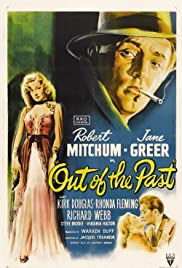
OUT OF THE PAST (1947) revisited

February 7, 2021

***** This is an entry into my “Revisited” series where I re-watch a classic movie and then write about it – not with a traditional review, but rather a general discussion of the movie, those involved with it, and its impact or influence.

 Greetings again from the darkness. There are a few films that provide the perfect example of Film Noir, and this one from director Jacques Tourneur is unquestionably one of them. Tourneur is also known for CAT PEOPLE (1942) and he’s the son of prolific French director, Maurice Tourneur. Daniel Mainwaring, under his pen name Geoffrey Homes, adapted the screenplay from his own novel, “Build My Gallows High”.

Jeff is the owner of a small town gas station, and although relatively new to the town, he’s made a few local friends – in particular Ann, with whom he has a pretty serious, though not altogether honest, relationship. Of course, it’s only a matter of time before Jeff’s mysterious past catches up with him, and this happens pretty early in the story. He’s called back to the big city by one of the henchmen for mobster Whit, who wants Jeff to track down Whit’s mistress, Kathie, who absconded with $40,000. It’s an offer Jeff can’t refuse, and soon enough he’s in Acapulco entranced by the “dame” he’s paid to track down. What follows is a slew of twists and turns, double-crosses, dangerous close calls, and yes, yet another “dame” that can’t be trusted.

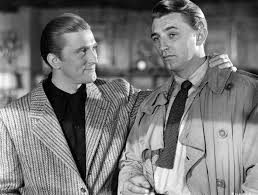
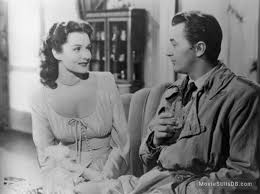
The noir hijinks are a blast to watch, thanks in no small part to the extraordinary cast. Robert Mitchum plays Jeff, and his dry, laconic approach allows him to walk that line between being an anti-hero and a good guy that we root for. Whit is played exceeding well by not-yet-a-star Kirk Douglas, whose pent-up energy and fast-talking nature are the perfect dueling partner for Mitchum. While the screen presence of Mitchum and Douglas can’t be denied, it’s Jane Greer who steals nearly every scene she’s in playing Kathie. Duplicitous is not a strong enough word for the character of Kathie. Ann is played beautifully by Virginia Huston, and Rhonda Fleming comes into the story as Meta Carson about halfway through, competing with Kathie for the title of least trustworthy woman you’ll likely come across. Other supporting performances come from Paul Valentine as Whit’s henchman Joe, Richard Webb as Ann’s protective and jealous suitor Jim, Steve Brodie as Fisher, and Dickie Moore as Jeff’s trusty employee known only as The Kid.

Director Tourneau was a master of creating atmosphere, and his career took him through many types of projects, formats, and genres: Short films, westerns, horror, adventure, war, mystery, and crime. The last few years of his career were spent directing TV movies and series. He passed away in 1977 at age 73, leaving behind two movies, OUT OF THE PAST and CAT PEOPLE that would be selected for the National Film Registry. Writer Daniel Mainwaring also passed in 1977 (age 74), and though he began as a journalist-turned-novelist, his greatest success was as a screenwriter. In addition to this film, he also wrote another noir classic, THE BIG STEAL (1949), in which director Don Siegel reunited Robert Mitchum and Jane Greer; and the original INVASION OF THE BODY SNATCHERS (1956), also directed by Siegel.

 Robert Mitchum and Kirk Douglas are both considered giants of Hollywood past. Mitchum is viewed as the consummate tough guy, and his characters often stood out due to the air of indifference in his acting style. He was only nominated for one Oscar in his career, but the memorable roles are many – including westerns, romance, and crime thrillers. Mitchum’s “bad boy” persona was only enhanced by his serving jail time for a marijuana offense in 1949, however in real life, he was married to his wife Dorothy for 57 years (although his extramarital affairs were well known). He also had some success as a singer-songwriter, and on screen, he is remembered for two of the best ever screen villains from CAPE FEAR (1962) and THE NIGHT OF THE HUNTER (1955). Fans of TOMBSTONE (1993) recognize Mitchum’s voice as the narrator, and his final screen appearance was in 1997, the same year he died at age 79.

Kirk Douglas was nominated for 3 Oscars, and very few actors were more proficient at stealing a scene, and even fewer duplicated his long-lasting screen presence. He was a showy performer who was hardly known when cast in OUT OF THE PAST, the movie that vaulted him towards stardom. His most iconic roles include Vincent Van Gogh in LUST FOR LIFE (1956), Doc Holliday in GUNFIGHT AT THE OK CORRAL (1957), and in two Stanley Kubrick films, PATHS OF GLORY (1957) and SPARTACUS (1960). Douglas is often given credit for virtually ending Hollywood’s “Blacklist” by hiring Dalton Trumbo to write for SPARTACUS. Douglas worked frequently in the 1960s, 1970s, and 1980s, and made eight films with Burt Lancaster, another industry legend. A stroke in 1996 made speaking very difficult for him, but therapy allowed him to get back on stage and on screen. In the early 1960s, Douglas starred on stage in “One Flew Over the Cuckoo’s Nest” and he held on to the screen rights until his son, actor-producer Michael Douglas, turned it into a 1975 box office hit starring Jack Nicholson. Kirk Douglas was married to his second wife, Anne, for 65 years until his death in 2020 at age 103.

 Jane Greer was only 22 when she filmed OUT OF THE PAST, yet she had the aura to make us believe her Kathie could turn any man inside-out. She won beauty pageants as a baby, and sang with orchestras as a teenager, but the movie camera and big screen took her to a new level. As her career was just starting, she got caught in the infamous web of Howard Hughes, and only a quickie marriage to singer Rudy Vallee allowed her to escape. Her two best known films are this one and THE BIG STEAL two years later, in which she again co-starred with Mitchum. In 1984, she appeared in Taylor Hackford’s remake of OUT OF THE PAST, entitled AGAINST ALL ODDS. In the film, she plays Rachel Ward’s mother. After her second divorce in 1963, she had a long-term relationship with actor Frank London. They both passed away in 2001. She was 76.

Rhonda Fleming was in her mid-20s during filming, and had already appeared in Alfred Hitchcock’s SPELLBOUND (1945). Her career spanned more than 40 films, including Robert Siodmak’s THE SPIRAL STAIRCASE (1946), Fritz Lang’s WHILE THE CITY SLEEPS (1956), and John Sturges’ GUNFIGHT AT THE OK CORRAL (1957). She worked with most every leading man of the era, including four films with Ronald Reagan. As a gifted singer, she performed in  Broadway musicals and was featured in her own concerts. Fleming spent most of the 1960’s and 1970’s doing TV work. She was married 6 times, and died in 2020 at age 97.  The third female star in the film was Virginia Huston as Jeff’s small town girlfriend. Ms. Huston’s acting career lasted less than a decade, and she also appeared in FLAMINGO ROAD (1949) with Joan Crawford, and as Jane opposite Lex Barker in TARZAN’S PERIL (1951). She passed away from cancer at age 55 in 1981.

Paul Valentine, who plays Whit’s smirking henchman Joe, also had a fairly limited career, although like Ms. Greer, he also appeared in the remake AGAINST ALL ODDS in 1984. It was one of his last screen appearances. Richard Webb, Anne’s intense and jealous protector Jim, was a hard-working character actor from the 1940s through the 1970s, and he authored some books on psychic phenomena. Dickie Moore plays the deaf-mute “Kid”, Jeff’s confidant, and was the epitome of a child star. Beginning at age 18 months, Moore appeared in 52 movies by age 10. If you are ever in a trivia contest and the question comes up about Shirley Temple’s first on screen kiss – you’ll rack up the points if you answer ‘Dickie Moore’. He appeared in five Best Picture nominees, but his acting career was over by age 30. While researching his book on child stars, he met actress Jane Powell. They had been married for 27 years at the time of his death in 2015.

The film stands the test of time and is right there with THE MALTESE FALCON (1941) and DOUBLE INDEMNITY (1944) and any others considered classic Film Noir. In fact, Humphrey Bogart was originally offered the role of Jeff, and while we can imagine him in the role, Mitchum was terrific in making it his own. No one has ever said, “Baby, I don’t care” any better, and it is also the name of Mitchum’s 2001 biography written by Lee Server. In addition to the great cast, Tourneur makes creative use of lighting and camera angles throughout, and all of that adds up to a fun movie-watching experience in spite of some of the confusion on how the story progresses. It’s a must see for anyone who enjoys classic movies or wants to experience a young actress stealing a film right out from under two screen legends.

*NOTE: I previously wrote about this movie in 2011, but I felt the urge to dig a bit deeper after re-watching it recently.

WATCH THE TRAILER


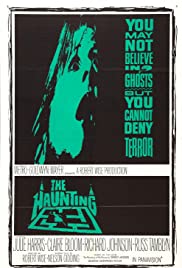
THE HAUNTING (1963) revisited

January 30, 2021

*** This is an entry into my “Revisited” series where I re-watch a classic movie and then write about it – not with a traditional review, but rather a general discussion of the movie, those involved with it, and its impact or influence.

 Greetings again from the darkness. Long ago, filmmakers figured out how to have fun with ‘things that go bump in the night’. Of course some do it better than others, and how scary or creepy you find a movie will depend on your personal phobias and preferences. For a combination of haunted house, ghost story, and psychological thriller, few are better than this 1963 gem from director Robert Wise. I’ve strategically planned this after the recent success of two limited series from Netflix: “The Haunting of Hill House” (2018) and “The Haunting of Bly Manor” (2020). Although the two series were marketed as being related, in fact only the 2018 series was based on the 1959 novel from Shirley Jackson … the same as Wise’s 1963 film.

The story begins with Dr. John Markway (Richard Johnson) being contracted to conduct a scientific study of psychic phenomena and paranormal activity in the now vacant Hill House mansion that has a 90 year history of strange and tragic endings for its past inhabitants. He will be joined by two hand-picked volunteers, Eleanor Lance (Julie Harris) and Theodora (Claire Bloom), as well as Luke Sanderson (Russ Tamblyn), the young man who stands to inherit Hill House. Eleanor has a history of paranormal connection (as a child) and Theo is a clairvoyant with ESP tendencies. Luke is mostly an obnoxious rich kid hoping to cash in on his inheritance.

We get an early introduction to Eleanor’s home life, and in those days she would likely have been labeled a spinster. She has spent many years taking care of her recently deceased mother, and is now out of step with reality … and burdened with guilt from her sister, who not only treats her like a child, but also blames Eleanor for their mother’s death. Being selected for the Hill House research is a dream come true for her – a chance to do something for herself. Her arrival at the gates of the manor provide a glimpse of just how important this is to her. She refuses to heed the caretaker’s (Valentine Dyall) warning, and demands to be allowed in.

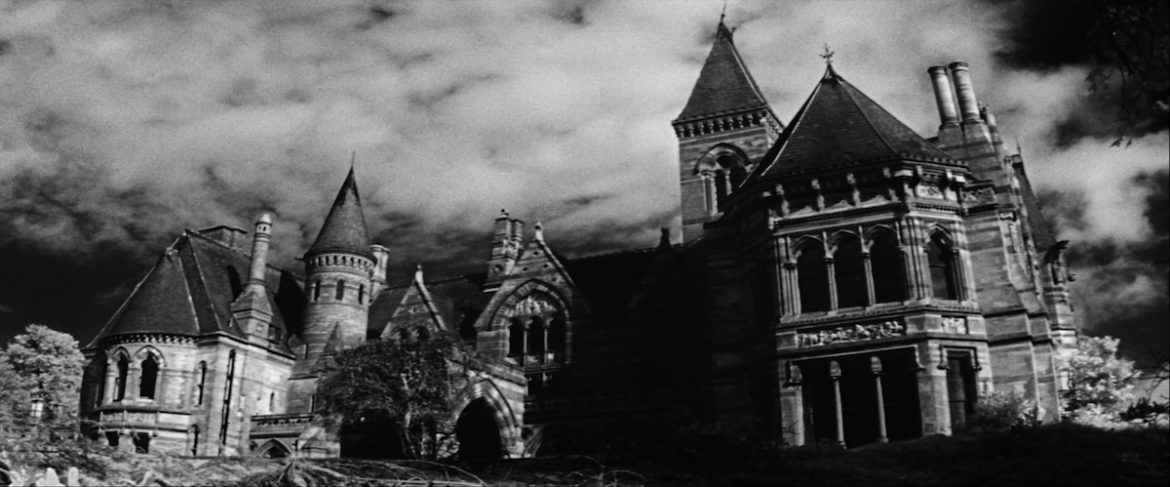
Our first view of Hill House is seen through Eleanor’s eyes and we hear her inner voice acknowledge the feeling of having the house “watch her” as she drives up. The exterior shots of the neo-Gothic mansion are truly awe-inspiring and intimidating. She is greeted at the door by the other caretaker (Rosalie Crutchley), who takes socially awkward to a new level with her zombie-like warnings of the night and the dark. Soon the others arrive, and the initial conversations allow us to understand the differing personalities and get our first look at the interior of Hill House.

The initial set-up is for a scientific, first hand analysis of supernatural occurrences inside the house … all led, of course, by Dr. Markham. Sexual tension plays a role here as Eleanor is attracted to Dr. Markham, who conveniently has not mentioned that he’s married. Simultaneously, Theodora teases and flirts with Eleanor, while only admitting to not being married, yet still cohabiting as an “us”. What is abundantly clear from the beginning is that Hill House itself is a featured character. Director Wise and cinematographer Davis Boulton utilize creative camera angles and specialized lighting, and capture the essence of the home through terrific set design. In a rare case for horror movies, very few special effects are present outside of sounds; although the spiral staircase in the library and the heaving wooden doors are quite memorable.

Director Robert Wise was a 4 time Oscar winner (THE SOUND OF MUSIC, 1965, WEST SIDE STORY, 1961) and was also Orson Welles’ film editor on CITIZEN KANE (1941). Wise directed such diverse films as STAR TREK: THE MOTION PICTURE (1979); the sci-fi classic THE DAY THE EARTH STOOD STILL (1951); SOMEBODY UP THERE LIKES ME (1956), which turned Paul Newman into a star; RUN SILENT RUN DEEP (1959) a submarine movie starring Clark Gable and Burt Lancaster; THE SAND PEBBLES (1966), which was Steve McQueen’s only Oscar nomination; and another horror gem AUDREY ROSE (1977). Well-liked by actors and respected in the industry, Mr. Wise died in 2005 at age 91.

Screenwriter Nelson Gidding and director Wise both previously received their first Oscar nominations for I WANT TO LIVE (1958), and were frequent collaborators, including: ODDS AGAINST TOMORROW (1959), THE ANDROMEDA STRAIN (1971, adapted from Michael Crichton’s novel), and THE HINDENBURG (1975). Gidding adapted Shirley Jackson’s tremendous novel, “The Haunting of Hill House”, with some variations that turned it into more of a psychological cinematic experience. Mr. Gidding passed away in 2004 at age 84.

 Julie Harris received her Oscar nomination for EAST OF EDEN (1955), where many fell in love with her as Abra, the girl torn between two brothers, one of which was played by Oscar nominee James Dean in his star-making turn. Ms. Harris’ career spanned seven decades (1948-2009), and, as a 5-time Tony winner, she remains one of the most honored and respected stage performers of all-time. Much of her later career was on stage and television, including a long run on “Knot’s Landing”. She passed away in 2013 at age 87.

Claire Bloom, who plays Theodora, is still alive today and turns 90 the day after Valentine’s Day 2021. He acting career has spanned eight decades (1948-2019), and one more gig will get her to a remarkable nine! Never one to shy away from controversy, Ms. Bloom shines here as the lesbian with ESP, and she is also a renowned stage actress recognized for her Shakespearian work. She had marriages to Oscar winning actor Rod Steiger and Pulitzer Prize winning author Phillip Roth, and many will recall her role as Queen Mary in THE KING’S SPEECH (2010).

The two male leads in the film were played by Richard Johnson and Russ Tamblyn. Mr. Johnson is known as the actor who turned down the role of James Bond in 1962, setting the stage for Sean Connery’s historic run. Johnson was briefly married to Kim Novak (VERTIGO, 1958), and his career lasted seven decades (1950-2015), and he remained working until his death in 2015 at age 87.  Mr. Tamblyn was coming off his role as Jets’ leader Riff in Robert Wise’s WEST SIDE STORY (1961), and he had earlier appeared in SEVEN BRIDES FOR SEVEN BROTHERS (1954). He was Oscar nominated for his role in PEYTON PLACE (1957), and during his 8 decade career (1948-2018), he appeared in 6 movies that were Oscar nominated for Best Picture. He is 86 years old and recently appeared in the 2018 limited series “The Haunting of Hill House”. He is the father of actor Amber Tamblyn.

For fans of James Bond movies, you’ll be pleased to see Lois Maxwell appear in this film as Dr. Markway’s wife. Of course, Ms. Maxwell is known to fans as Miss Moneypenny in 14 James Bond movies, second only to Desmond Llewelyn’s 17 appearances as Q. She passed away in 2007 at age 80.

 In the movie, Hill House is described as a 90 year old New England house with a history of psychic phenomena. However, the exterior shots are actually of a neo-Gothic mansion (hotel) in Ettington Park near Stratford-Upon-Avon. It’s an active hotel with a history tracks back to the 11th century. The interior shots were conducted on a UK studio set. In 1999 director Jan De Bont (SPEED, 1994) delivered a second adaptation (not a remake) of Jackson’s novel, starring Liam Neeson and Catherine Zeta Jones. A different house was used for Hill House.

Wise’s film is now nearly 60 years old, and it holds up today thanks to the house, the performances, the direction, and the decision to create a psychological thriller and character study. The power of suggestion is key, yet it never loses the core of being a haunted house story … a house that seems to want Eleanor (note the parallels to the origin story of Abigail told in one of the early scenes). There have been debates about whether that initial set-up takes too long, or if more attention should have been paid to why the house is drawn to Eleanor (and vice versa), but overall, it holds up very well as classic horror. On a separate note, no one could accuse the film of being cursed, as most everyone associated, enjoyed a long a fruitful career and life … even the house!

WATCH THE TRAILER


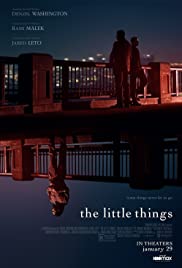
THE LITTLE THINGS (2021)

January 30, 2021

 Greetings again from the darkness. When a script has bounced around Hollywood for 30 years without getting produced, there is usually a good reason why. Written by John Lee Hancock in the early 1990s, a handful of directors have been attached at various times, but it’s the writer himself who has managed to get it on screen all these years later. Mr. Hancock has found his niche as a director by targeting the precise middle of mainstream with such films as SAVING MR BANKS (2013) and THE BLIND SIDE (2009), an approach more challenging when the topic is chasing a brutal serial killer.

Of course, casting three Oscar winning actors is always a wise choice. Two-time Oscar winner Denzel Washington (TRAINING DAY, 2001, GLORY, 1989) stars as Joe Deacon, a defrocked L.A. homicide detective banished to the California desert as a Deputy Sheriff in Kern County. “Deke” suffered a heart attack, went through a divorce, and lost his job as a result of being haunted by an especially grisly unsolved case. When Deacon is tasked to pick up evidence in Los Angeles, he stumbles into a case being worked by his hotshot replacement, Jim Baxter. Oscar winner Rami Malek (BOHEMIAN RHAPSODY, 2018) brings his unorthodox mannerisms to the role and soon (and unsurprisingly) the ‘old school’ and ‘next gen’ detectives are teaming up to work a serial killer case with (unsurprising) similarities to Deke’s old case.

Denzel is especially effective in the first half of the film. His Deke is a quiet man with extraordinary observational and listening skills, and he brings none of his patented histrionics to the role. Deke’s ‘little things’ process quickly identifies a suspect, and it’s a doozy. Oscar winner Jared Leto (DALLAS BUYERS CLUB, 2013) is Albert Sparma, a greasy-haired appliance repair man (who let’s this guy in their house?) with a penchant for following news of the city’s crimes. Soon enough he’s taunting Deke and Baxter, and enjoying every minute of their frustration at the lack of evidence. It’s the cat and mouse game we’ve seen many times.

I’m a fan of retro movies, and Hancock announces upfront that this one is set in 1990. There are two reasons for this: that’s the era when he wrote the script, and it corresponds to a time when the Night Stalker was fresh on the minds of L.A. citizens. (side note: Netflix is currently showing the superb docuseries, “Night Stalker: The Hunt for a Serial Killer”). The idea of mismatched partners with polar opposite personalities is another aspect that we are quite familiar with, and Hancock even uses flashbacks to show us exactly what haunts Deke.

Supporting work comes from Chris Bauer, Terry Kinney, Glenn Morshower, Natalie Morales, and Michael Hyatt, with the latter two providing a non-victim female presence – although neither is given much to do. The most interesting aspect of the story is how Baxter is falling into the same emotional void as his new mentor, but unfortunately, not much time is devoted to this. In fact, the story has very little to keep us interested, and instead that burden falls to Washington, Malek, and Leto. Hancock has delivered a dark, brooding crime thriller that fails to deliver the thrills. It certainly pales in the obvious comparisons to David Fincher’s Fincher’s SE7EN (1995) and ZODIAC (2007), but is fine for killing time while stuck at home during a pandemic.

Now available on HBO Max

WATCH THE TRAILER


THE MARKSMAN (2021)

January 14, 2021

 Greetings again from the darkness. Liam Neeson’s particular set of skills, and his grumpy face, seem to show up on screen most every January. If there is a surprise to this year’s entry, it’s that the annual Liam action movie is not directed by Jaume Collet-Sera, as were THE COMMUTER (2018), RUN ALL NIGHT (2015), NON-STOP (2014), and UNKNOWN (2011). Mr. Collet-Sera has apparently traded Liam in for The Rock as his go-to action star. Instead, it’s director Robert Lorenz (TROUBLE WITH THE CURVE, 2012) who co-wrote the script with two other first time screenwriters, Chris Charles and Danny Kravitz. As with most (not all) of Mr. Neeson’s aging-action-hero films, this one is both watchable and forgettable.

Jim Hanson (Neeson) is a struggling Arizona cattle rancher. He’s also a flag-flying former Marine, who carries a walkie-talkie so he can immediately inform the Border Patrol whenever he spots “IAs” (illegal aliens) crossing his land. Jim is a shell of his former self ever since his beloved wife passed away. He spread her ashes on the hill next to his rundown home … a home that sits on land in the final stages of bank foreclosure. Her daughter Sarah (Katheryn Winnick, “Vikings”) is part of the Border Patrol and periodically keeps tabs on Jim.

Although he never seems to care much for those crossing the border, Jim’s quick to offer a drink to anyone stranded and injured, even as he calls the Border Patrol. A young boy and his pleading mother are no different until a carload of cartel boys show up. The subsequent shootout leaves a couple of people dead and ignites a cross-country cat-and-mouse chase. A previous scene from Mexico taught us that the mother, Rosa (Teresa Ruiz), and her son, Miguel (Jacob Perez), were sent on the run thanks to her brother’s crossing of the cartel. Mauricio (Juan Pablo Raba, THE 33, 2015) is the intimidating cartel soldier sent to kill the mother and son.

The story covers Monday through Saturday, in what would be considered a stressful week for just about anyone. Jim had promised Miquel’s mother that he would take the boy to her cousin’s home in Chicago, and being the good soldier, he is committed to fulfilling his duty. Along the way, the grizzled old man and the angry young boy bond while driving in Jim’s bullet-riddled pickup truck. Hot dogs and hamburgers play a role, but mostly a late confrontation in a barn attempts to add some character development to a story that, to this point, had very little.

Filmmaker Lorenz has a history with Clint Eastwood, and offers up a respectful nod to his mentor by including a grainy scene from HANG ‘EM HIGH on a motel television. There is surprisingly little political commentary included, which actually adds to the slowness and dryness of the material. Liam Neeson is now 68 years old, and he has developed a nice little niche for himself with these action movies that are interesting enough to burn a couple of hours for viewers.

Coming to theaters January 15, 2021

WATCH THE TRAILER