Greetings again from the darkness. Making a political statement is nothing new for movies; however, if a filmmaker takes a stance on a controversial issue, the final product needs to be insightful and compelling in order to make a difference. Seemingly intent on making a mockery of the death penalty, director Timothy Woodward Jr delivers little more than a B-movie with a hyper-serious tone, but a script that is at times laughably off the mark.
Even before the opening credits roll, we get our first brutal murder … just moments after persnickety Bruce Dern belittles his wife over the sandwich she made for him. Next up, Dr. Amanda Tyler (Denise Richards) is being asked by the Assistant District Attorney to consult on the case of a death row inmate, to determine if a stay of execution should be granted. See, Dr. Tyler is a criminal psychologist. Yes, she’s played by Denise Richards. If this causes you frightening flashbacks to Ms. Richards’ role as a physicist in The World is Not Enough, then you begin to have some idea what this movie is like.
The inmate is Jackson Shea (a formidable Kaiwi Lyman-Mersereau) and as he tells his life story, we are provided scenes that explain how he got to this point. It’s a pretty interesting backstory starting with sleazy Uncle Mike, an alcoholic mother, and a seemingly endless array of circumstance that might have formed the basis of a better movie.
You will note many familiar faces along the way: Michael Pare as Shea’s partner, Patrick Kilpatrick as a criminal kingpin, Johnny Messner as a fellow criminal, and Emma Rigby as Shea’s love interest. For you football fans, you’ll likely reminisce about Brian Boswell when you witness Rob Gronkowski as a gun-toting bodyguard.
All of this could have been good criminal fun if we weren’t being incessantly slapped upside the head with the anti-Death Penalty message … how trading death for death isn’t appropriate, and for tilting the scales to show how criminals are basically good guys who accidentally end up in a bad spot thanks to a broken system and culture of violence. It’s all a bit too heavy-handed and self-righteous, taking away some of the joy in chuckling at Ms. Richards playing it straight as an intellectual idealist.
Greetings again from the darkness. This is one of those tough little indie movies that would fit right in at most film festivals. Directed by Joel David Moore and written by Andrew Eisen, the film has a few exceptional scenes, yet once it’s over, it’s pretty easy to just leave it behind. That shouldn’t happen with a story dealing with a theme of death with dignity. Shouldn’t there be a desire to talk about the issue, or at least spend some time in thought?
Perhaps the reason this one isn’t the gut-punch we expect is that while the central reason for the story is 80 year old Ray’s (Frank Langella) desire to end life on his terms, the vast majority of screen time is devoted to the exceptionally dysfunctional family that surrounds him. It’s not an “issue” movie, and dysfunctional family movies are about as common as superhero movies these days … we’ve become a bit numb.
Ray and his wife Estelle (Mary Kay Place) are living with their daughter Kate (Christina Applegate), her husband Brian (Billy Crudup) and Kate and Brian’s teenage daughter Annie (Nicola Peltz). It’s a crowded house where emotions run high, voices are usually amped to 11, and Kate and Brian’s marriage is stressed to the limit with responsibilities.
Bad news at the doctor’s office leads Ray to the crucial decision on his future. He announces this while giving the most uncomfortable birthday speech ever at dinner that evening … “I want to die.” It’s a terrific scene and each person’s reaction is priceless – to the point where we almost wish it were in slow motion so as not to miss anything.
Typically poor teenage judgment by daughter Annie means mother Kate stays at home for discipline, while Brian reluctantly agrees to drive Ray cross country to Oregon to find out if he qualifies under the mercy killing law. Estelle and her always present booze come along for the ride, but it’s mostly the strained relationship between Ray and Brian that generate the fireworks. Along the way, they add Ray’s estranged gay son Danny (Josh Lucas), as well as Brian’s angry college age son Nick (Alex Shaffer). Once they reach Oregon, another wonderful scene/sequence occurs as Ray meets up with a longtime friend who has made the same decision. It’s a well handled and well acted portion of the story.
Ray’s decision to hide his medical diagnosis from the family is the source of the most recent conflict, but there’s a history in this family. Isn’t that always the case? A lack of communication often causes even more issues than too much honesty. The abundance of dysfunction can’t be offset by some peaceful bird-watching, and all of the frustration and anger prevents the necessary conversations on the more interesting topic … a reason to live vs. a desire to die. A slight re-focus would have taken more advantage of the terrific performance of Langella, and added some fun to the post movie discussion.
Greetings again from the darkness. It’s often seemed as if Robert DeNiro existed in two unrelated cinematic worlds. He’s a 7 time Oscar nominee and 2 time winner (The Godfather: Part II, Raging Bull) renowned for his dramatic work, while also seemingly intent on proving he’s as funny as he thinks he is. His work in Analyze This, Analyze That, and the Fockers franchise takes “playing against type” to an extreme. This latest is his return, 35 years after The King of Comedy, to playing a stand-up comedian.
Of course Jackie Burke (DeNiro) is no regular comedian. He’s pushing 70 years old, has anger issues, no close friends, a strained relationship with his brother (Danny DeVito) and agent (Edie Falco), and fights his popular legacy as “Eddie” from a decades-ago popular sitcom. He strives to be recognized not as Eddie, but as Jackie Burke, the king of insult comics.
That anger lands him in community service where he meets Harmony (Leslie Mann) who is also serving her time. It’s kind of creepy to watch the 30 years older dude hit on her, but it’s explained away by her ‘daddy issues’ with Harvey Keitel. Of course, DeNiro and Keitel have a natural rhythm (that spans 5 decades of working together), but it’s really DeNiro and Mann who have the best scenes (outside of the unnecessary romantic interlude). Ms. Mann is especially fun to watch and brings a sense of realism to a film that’s mostly lacking.
Taylor Hackford directs a script written by a blend of 4 writers: a Producer of Fight Club, a standup comedian, an Oscar nominee for The Fisher King, and a writer best known for the Kennedy Center Honors. It’s a weird mix that explains the periodic flashes of genius and the overall mismatched parts.
There are no shortage of familiar faces that pop up, including Billy Crystal, Lois Smith, Jimmie Walker, Brett Butler, and Gilbert Gottfried. Patti LuPone is enjoyable in her role as DeVito’s wife and Jackie Burke-hater. It’s nice to see Charles Grodin in a Midnight Runreunion with DeNiro, and Cloris Leachman proves that comedy kills in her brief time on screen.
Although there is a more cutesy humor segment at a retirement center when Burke leads the residents through a make-shift version of “Makin’ Poopie” set to the rhythm of “Makin’ Whoopie”, anyone seeing this should be braced for raunchy humor. Lots of raunchy humor. Jackie Burke is an insult comedian in the vein of Don Rickles, only he adds a dash of Jim Norton and Amy Schumer. With all the uncomfortable laughs, it might best be described as that rare film genre – blue humor for the blue hairs.
Greetings again from the darkness. Pre-judging movies is just something that naturally happens for frequent movie watchers, and a pleasant surprise can create a joyous experience. Such is the case with the feature film debut from Sean Brosnan (son of Pierce). With no shortage of entries into the Family Revenge-Action-Thriller genre, it takes something special to standout, and though it targets a (very) limited audience, those that give it a shot will likely be impressed.
It’s the style that we notice from the opening black and white segment, where two brothers are hanging out and joking together as the older one offers up some typical teenager advice on “romance”. An exceptionally brutal and violent attack leaves Chester (Chester Rushing) the older brother dead, and Asher (Gabe White) the younger brother deaf.
We flash forward to a time when Asher is an adult who takes care of his mother, and prepares for revenge against his father. That’s right … the monster of a man responsible for the violence that changed the course of Asher’s life was his own father. The pursuit of revenge is something we’ve seen on screen many times before, but it’s the performances and the look of the film that make this one worth discussing. Joe Anderson stars as the adult Asher, and he conveys wide emotional swings with no dialogue. Instead, we are guided by the narration of his younger self – and this is some of the most poetic narration you’ll find outside of a Terrence Malick movie. As terrific as Anderson is, and as much as we empathize with his character, it’s Gary Stretch (former British boxer) as his father Ivan, who provides a villain so despicable that we find ourselves anxious and rooting for Asher’s violent revenge.
There is mention that serving in Vietnam destroyed Ivan’s soul, but it’s rare to see a man with no conscience and one who is capable of such carnage. Director Brosnan offsets this creature with the black & white flashbacks, and creates a contrast of beauty vs brutality. It really messes with your head and emotions. Marc Shap is the cinematographer and he shows a wonderful eye for both nature (much of the film takes place on the bayou) and personal interactions (both calm and frenzied). The film also makes good use of sound – and no sound, both of which are effective.
Make no mistake, this is not an easy movie to watch, and won’t be to the taste of most. Violent revenge is not really condoned or condemned in the movie, but it seems clear that if you are taking that path, make sure you do it right the first time! Young Asher’s narration tells us that “revenge is not noble, but it’s human” … a sentiment that rings quite true. What’s also true is that Sean Brosnan is an exciting new director to keep an eye on, and maybe the first ever to include a closing credits tribute to Irish playwright John Millington Synge.
Greetings again from the darkness. What is your dream worth? Would you sell it? How much would it take? Kenny Wells is a dreamer. Sure, he is a third generation mining prospector, but he’d rather tell you the story of his grandfather and those mules than actually dig in the dirt himself. In fact, talking is what he does best (and most often). It’s the first film from director Stephen Gaghan since his 2005 Syriana, for which he received an Oscar nomination for his screenplay. This time he collaborates with writers Patrick Massett and John Zinman to deliver a blend of The Wolf of Wall Streetand The Treasure of the Sierra Madre, with a dash of The Big Shortand American Hustle.
Matthew McConaughey is nearly over-the-top in his portrayal of Kenny Wells, a prospector with the spirit of a wildcatter. This isn’t ‘sexiest man alive’ McConaughey, but rather ghastly Matthew. Balding dome, protruding gut, and hillbilly teeth … it’s all there wrapped in a sweaty cheap suit and accessorized with booze and cigarettes. The actor seems to relish the role.
The story kicks off in 1981 Reno, showing Kenny as an eager to please son to his distinguished father played by Craig T Nelson. Flash forward to 1988 and Kenny’s struggling through the recession in an effort to keep his dad’s company alive. His loyal employees work the phones from the musty cocktail lounge where Kenny’s girlfriend Kay (Bryce Dallas Howard) waits tables.
Billed as “inspired by true events”, Kenny goes to great extremes to meet up with legendary geologist and miner Mike Acosta (played by Edgar Ramirez). These two need each other and team up to sniff out a gold mine down the river in Indonesia. What follows is despair, desperation, malaria, elation, big investment bankers, a hostile takeover attempt, political maneuverings, heartbreak, pride, and a surprising twist. It’s a wild ride and doesn’t always take you where you assume it’s headed.
The supporting cast includes Corey Stoll and Bill Camp as part of the Wall Street investment group, Stacy Keach as a supporter and investor of Wells, Toby Kebbell as an FBI agent, and Rachael Taylor as a contrast to Bryce Dallas Howard’s working class character. Also appearing is Bruce Greenwood as the king of the prospector hill and featuring an awful accent that adds to the borderline cartoon feel of some scenes.
Hope and greed could be viewed as a disease, but for Kenny Wells, we are urged to believe it’s all about the dream. What’s left if you sell off that dream? Instead, if you aren’t part of the fraud, maybe you live for that moment on stage when they present you the Golden Pick Axe award, and you finally believe your father would respect you. Iggy Pop and Danger Mouse collaborate on an included song, which somehow fit in with the string of 1980’s music that plays throughout. The rapid and numerous changes of direction will keep you entertained, though we do wonder how much truth from the Bre-X scandal was actually used, and how much was just a chance for McConaughey to go all out.
Greetings again from the darkness. Pedro Almodovar is a fascinating filmmaker and one that I’ve followed consistently since his 1988 Women on the Verge of a Nervous Breakdown. Over that almost 30 year period, I have rarely felt let down by his work, and have quite often walked out of the theatre in awe of his artistry, creativity and dedication to providing original cinematic viewing experiences.
The quite visually suggestive opening sets the stage for an Almodovar experience, only what follows is much different than what we have come to expect. It’s (somewhat) based on the short story trilogy of Alice Munro (Destino, Pronto, Silencio), and returns him again to his strength – telling the story of women. It may not be as flamboyant as some of his previous work, but rather it’s a pure and earnest emotional drama. It even has a bit of Hitchcockian flavor with the element of mystery playing a central role.
Emma Suarez and Adrian Ugarte alternate in the role of Julieta and both are excellent. Ms. Suarez plays the older Julieta looking back on her life, while Ms. Ugarte populates most of the memories being entered into the journal … a writing effort designed to fill in the life gaps for her long estranged daughter Antia.
We learn that Julieta fell in love with fisherman Xoan (Daniel Grao) while his wife was in a coma, and that Antia was conceived before the wife passed away. Xoan’s housekeeper Marian (played brilliantly by Almodovar regular Rossy de Palma) is one who knows a man has needs, but doesn’t always know when to speak and when to remain silent. One of her not so secret secrets is Xoan’s artist friend Ava (Imma Cuesta) who manages to get close to Xoan, Julieta and Antia. Ava is such an interesting character that a movie about her could have been equally entertaining. Other key players here are the older Julieta’s boyfriend Lorenzo (another Almodovar regular Dario Grandinetti) and Antia’s special childhood friend Bea (Sara Jimenez) who appears years later (as Michelle Jenner) in a quick appearance that rocks Julieta’s world.
Guilt, death, love, disappointment, and relationships are all significant pieces to this Almodovar puzzle. Spirituality even pops up when Antia attends a retreat and makes her life-altering decision … one spurred by youth and vulnerability, and possibly leading to regret later in life. As Julieta recounts her life, we understand her middle-aged whole in the heart. She has “lost” everyone she has ever loved – her husband, her daughter, her mother.
Cinematographer Jean-Claude Larrieu experiments with camera angles and captures the beautiful vistas and landscapes, while never losing the intimacy required for such an emotional journey. The color red is all over the film and almost jumps off the screen at times, ensuring that the visual element never is far removed from the drama. The score from Alberto Iglesias is excellent and quite a complement to another master work from Almodovar.
Greetings again from the darkness. When war hits close to home, the grieving of surviving family members never ends. At the end of World War II, author Hans Fallada was given access to the Gestapo file of Otto and Elise Hampel. Fallada wrote a 1947 novel based on their story, and in 2009 it was translated to English for his bestseller “Every Man Dies Alone”. Director Vincent Perez collaborated with Achim von Borries and Bettine von Borries to adapt the novel for the big screen.
Otto (Brendan Gleeson) and Elise (Emma Thompson) play a mostly quiet, working class couple who pay the ultimate price for a cause in which they don’t believe. Their protest takes the form of a clandestine 2 person operation. They systematically distribute postcards with anti-Hitler messages … nearly 300 of the cards between 1940 and 1942. It’s a drip campaign that takes the form of non-violent political resistance, and certainly rankles those of the Third Reich.
Daniel Bruhl plays Escherich, the Nazi officer put in charge of the investigation (labeled Operation: Hobgoblin). He is charged with finding the source of the cards and punishing those responsible. As the hunt drags on, Escherich is presented as a Nazi with a conscience, and bears the brunt of his superior’s frustration, while living in as much fear as those he is chasing.
The film has a somber tone, and somehow never generates the tension or dread that this couple must have been dealing with on a daily basis for so long. In fact, Alexandre Desplat’s score seems to fit a movie much more intense than what we are watching on screen. Mr. Gleeson delivers his usual grounded and believable performance despite a script that could have used a bit more potency. The film does deliver the always powerful message of having no regrets when you are standing up for what’s right.
Greetings again from the darkness. How you define success will likely determine your interpretation of this film that is every bit as much about the humble beginnings and explosive growth of McDonalds as it is a biopic of Ray Kroc, the self-professed “founder” of the golden arches empire. Capitalism and its corresponding businessmen have not typically been favorably portrayed by Hollywood in such films as The Social Network, Wall Street, Glengarry Glen Ross, Steve Jobsand The Wolf of Wall Street. This latest from director John Lee Hancock (Saving Mr. Banks, The Blind Side) and writer Robert Siegel (The Wrestler) is no exception, and it’s obvious why.
It’s 1954 when we first catch up with Ray Kroc (as played by Michael Keaton). He’s the type of traveling salesman who totes around his latest widget (a multiple milkshake machine), rehearses and polishes his spiel (via extreme close-up), and listens to motivational record albums that preach the importance of persistence, while he stays at roadside motels that act as his home away from home. Kroc doggedly pursues the American dream, and optimistically bounces from one project to another … convinced that he’s found “the next big thing”.
When circumstance leads him to a crowded little octagonal burger shop in San Bernardino, Kroc becomes fascinated with its simplicity and success. Over dinner, Dick (Nick Offerman) and Mac (John Carroll Lynch) McDonald detail the Spee-Dee kitchen design and unique focus on quality, consistency and speed that today is considered the starting line of the fast-food industry. The tennis court sequence is especially creative and fun to watch. While the brothers prefer to keep the business small and remain in control, Kroc pitches his vision of franchising … a pitch with emphasis on “Crosses. Flags. Arches”.
The full story is likely one most people don’t know … despite the fact that McDonalds now feeds 1% of the world population each day (a statistic posted on screen). The relationship between Kroc and the McDonald brothers was never a smooth one, and it’s a perfect example of dog-eat-dog, or unprincipled vs idealistic. Kroc sees himself as a “winner”, while it’s likely most will view his actions as unscrupulous, even if legal.
Keaton’s performance accurately captures a man who is impatiently ambitious, and whose confidence and ego grow incrementally as it becomes inevitable that the decency of the brothers is actually a weakness in business. Offerman and Lynch are both excellent, and other support work is provided by Laura Dern as Kroc’s first and mostly neglected wife who is tossed aside when something better comes along; BJ Novak as Harry J Sonneborn, the key to Kroc’s power move; Justin Randell Brooks as Fred Turner and Kate Kneeland as June Martino, two trusted employees; and Patrick Wilson as a key franchisee. Linda Cardellini (Mad Men, Bloodline) plays Joan, Ray’s wife (she was actually his third) and business advisor from 1969 until his death in 1984. The film shortchanges her importance – at least until the closing credit recap.
Bookending that opening extreme close-up sales pitch, is a near-conclusion zoom on Keaton’s face as he prepares for an event where he will tell his story … at least his version of the story. The film does a really nice job of capturing the era. Of particular interest is that the cars don’t look like they rolled right out of a classic car show, as happens with most movies. It’s nice to see some faded paint and a dented fender on screen. The early McDonalds locations are beautifully and realistically replicated to provide a nostalgic look for some, and a first glimpse for others. Carter Burwell’s score is complementary to the proceedings, and director Hancock deserves credit for not just making this the Michael Keaton/Ray Kroc show. Rather than serving up a Happy Meal movie, the film instead provides a somewhat toned-down historical view of ambition and drive, and the birth of an empire … one that changed our culture.
Greetings again from the darkness. There is little offered by the history of the country of Chile that would lead you to believe that some laughs, giggles and chuckles are in store if you watch director Pablo Larrain’s film about Pablo Neruda. But that’s exactly what happens as we watch a police inspector hunt down the Nobel Prize winning Chilean poet and Senator. While you would probably not describe it as an outright comedy, it’s a serio-comedy that will educate (a little) and entertain (a lot).
The opening scene takes place in the men’s room as a most serious Senate debate has flowed into an inappropriate locale. Apparently there is no relief during this time of relieving. It’s here that Neruda’s spoken words are as important as those he writes, and those spoken words lead directly to his need to go on the run. The poet/senator and his artist wife Delia del Carril become fugitives in their own country, and most of the film has them negotiating the Chilean underground.
Set in 1948, three years after the end of WWII, a fascinating game of cat and mouse between hunter and hunted evolves. Director Larrain and writer Guillermo Calderon employ a generously creative license, and play quite fast and loose with facts resulting in a delightfully complex quasi-detective story.
Luis Gnecco plays Pablo Neruda, and actually looks very much like the Chilean icon who was influential, but also a bit prickly and burdened with his own sense of entitlement. Gael Garcia Bernal plays Inspector Peluchonneau, who is charged by the President to hunt down and capture the now enemy of the state. It’s a wild chase that involves up to 300 policemen in support of the Inspector who romanticizes the chase. The filmmakers have more fun with traditional story structure as the Inspector’s internal dialogue questions whether he is the lead character … an idea that would never be considered by the man he is chasing.
The film has a retro look and feel, and borders on farcical at times – the shots inside a moving car appear right out of the old 1940’s detective movies. But the harsh realities of the times are never far removed. It could be a Picasso speech or a concentration camp director named Pinochet (soon to play a more important role in Chile). Neither the Inspector nor the fugitive make for a trustworthy narrator, but their different perspectives constantly provide us with more bits to consider.
Luis Gnecco, Gael Garcia Bernal and Mercedes Moran (as Delia del Carril) are all excellent in their roles, and the use of music is spot on … especially the score from Federico Justid (whose work I noted in Magallanes and The Secret in Their Eyes). Director Larrain also released the high profile Jackie (with Natalie Portman) over the holidays, and deserves to be discussed as one of the more creative filmmakers working today. It’s pretty tough to name another contemporary film that blends an oddball inspector, a tough woman losing touch, and a narcissistic fugitive – all with bases in reality, while never settling for something as mundane as the truth.
Greetings again from the darkness. Sometimes the real life story is enough. The story of Saroo Brierley is proof. A 5 year old boy from rural India gets stranded at a train station and inadvertently takes a train trip that strands him in Calcutta, thousands of miles from home. He is adopted by a Tasmanian couple and later uses Google Earth to systematically track down his village, family, and ultimately his self.
Saroo’s story would be interesting enough had a writer fabricated it; but in fact, Luke Davies adapted the screenplay directly from Mr. Brierley’s book “A Long Way Home”. Director Garth Davis and an exceptional cast bring this incredible and inspirational and touching story to the big screen in a wonderfully entertaining manner.
The first part of the film introduces us to 5 year old Saroo (a bright-eyed and energetic Sunny Pawar) and his beloved and protective older brother Guddu (Abhishek Bharate). The two boys are nearly inseparable and seem oblivious to the hard life provided by the small village they live in – where their mother literally carries rocks all day. A fluke of circumstance causes the train station separation for the brothers, and young Saroo finds himself on a train ride that will forever change his life.
Very little dialogue is found in this first part, but we immediately connect with the young boy, and we feel his frantic desire to return home as a tightness in our chest as he falls into the quagmire of homeless kids in Calcutta. When Saroo first meets Sue and John Brierley (Nicole Kidman, David Wenham), he isn’t sure how to react. His assimilation into this unrecognizable new world might just as well have been on another planet as a home in Tasmania.
Once the film jumps ahead, Dev Patel takes over as Saroo and the film turns into a journey for the universal need to understand our identity … where we come from, and who we really are. Rooney Mara has a small but important role as Saroo’s girlfriend Lucy (a composite character), as does Divian Ladwa as Mantosh, another boy adopted by the Brierleys. It’s here where Google Earth enjoys its biggest plug as the tool Saroo utilizes to solve the mystery of his origin.
The film is beautifully shot by cinematographer Greig Fraser, and he perfectly captures the harshness of young Saroo’s home village, the frenzied pace of Calcutta and the beauty of Tasmania … all without losing the emotions of any given moment. To cap it off and to prove the filmmakers never stooped to any ‘trickery’, the film ends with actual footage of Saroo reuniting with his mother, and then the magical moment when his two mothers embrace. Good luck maintaining composure during this part!
 Greetings again from the darkness. Making a political statement is nothing new for movies; however, if a filmmaker takes a stance on a controversial issue, the final product needs to be insightful and compelling in order to make a difference. Seemingly intent on making a mockery of the death penalty, director Timothy Woodward Jr delivers little more than a B-movie with a hyper-serious tone, but a script that is at times laughably off the mark.


 Posted by David Ferguson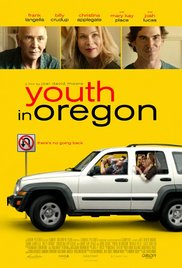


 Movie Reviews from the Dark