MURDER ON THE ORIENT EXPRESS (2017)

November 9, 2017

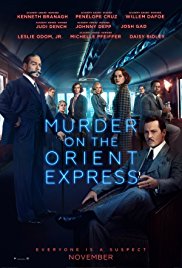
 Greetings again from the darkness. Who doesn’t love a good whodunit? Don’t we all find a bit of guilty pleasure in being the mastermind who solves a fictitious murder case? Has anyone ever been better at crafting an intricate murder mystery than Agatha Christie? Why all the questions? Well, that’s nothing compared to what “probably the world’s greatest detective”, Hercule Poirot, must answer amidst the foul play aboard the sleek, luxurious, and snowbound Orient Express.

This latest film version has Michael Green (BLADE RUNNER 2049, LOGAN) with the adapted screenplay and Kenneth Branagh directing and starring as the fabulously mustachioed Poirot (with his own take on the iconic super-sleuth). Like the near-perfect 1974 version, this latest adaptation succeeds in capturing the theatricality, while avoiding any stodgy staginess. Director Branagh shot on film and it pays off in both the stunning snow-covered mountains and landscapes, as well as the tight, precisely-blocked interior shots around the exceptional set designs.

Fans of the novel will notice some shifting of character names, professions and backgrounds, although the vast majority of the story remains intact … including the early murder that occurs not long after the film ingeniously introduces us to each of the characters. The cast is strong and deep, and in addition to Mr. Branagh, features: Penelope Cruz, Willem Dafoe, Dame Judi Dench, Daisy Ridley, Leslie Odom Jr, Josh Gad, Johnny Depp, Derek Jacobi, Lucy Boynton, Michelle Pfeiffer, Olivia Coleman, Sergei Polunin, Manuel Garcia-Rulfo. All are suspects – well, except the victim.

If you haven’t read the novel or seen a previous version, know that the fun is in ride. Follow along as Poirot dispenses zingers throughout, while maintaining a most precise commitment to balance in all things. He is an exacting and fastidious man, and as entertaining as he is skilled in crime solving. Note that the photograph he keeps of his one true love Katherine, is actually a photo of young Emma Thompson (Branagh’s real life wife). Enjoy keeping track of the clues and hints, while also tracking the widely diverse personalities, excuses and alibis. Most of the many characters only have a couple of key scenes, and it’s quite fun to see what these talented performers make of their moments. Daisy Ridley, Lucy Boynton and Derek Jacobi make the most of their time, while Penelope Cruz overplays hers. Other than Branagh, the star who shines the brightest is Michelle Pfeiffer (fresh off a killer performance in MOTHER!). She continues to remind us just how talented she is, and no, your ears aren’t playing tricks … that’s Ms. Pfeiffer singing “Never Forget” (lyrics by Branagh) as the closing credits roll.

Ms. Christie’s outstanding novel was first published in 1934, and is somewhat based on the Lindbergh baby kidnapping and her own train-riding adventure. It’s a wonderful and perplexing read … one that will have you changing your mind multiple times on who you believe to be guilty of murder. It’s obviously a personal favorite. There have been numerous movie versions over the years, and none have matched the excellence of director Sidney Lumet’s 1974 film with an incredible all-star cast alongside Albert Finney’s Poirot. Though this most recent movie doesn’t reach the timelessness of that one, no movie can be expected to capture the detail and maze-like structure of the novel. It’s still quite fun – and a true joy- to see the pages come to life (irony intended) on the big screen.

watch the trailer:


NOVITIATE (2017)

November 9, 2017

Greetings again from the darkness. As recognized at Sundance, this is a commendable debut feature film from writer/director Margaret Betts. It touches on subjects as thought-provoking as traditions in religion, faith, youthful romanticism, and most poignantly, first love. The film is at its best when focusing on the frustration, anger and confusion of both a helpless parent and the teenage girls so full of innocence as they try to come to grips with a decision their maturity level has them incapable of making.

Margaret Qualley (“The Leftovers”, and real life daughter of Andie MacDowell) stars as Cathleen, a 17 year old girl whose small town life included parents who divorced when she was younger. Her mother (an excellent Julianne Nicholson) is a foul-mouthed, chain-smoking agnostic who embraced the responsibility of raising Cathleen, even after the father stormed out of their lives. As they stand face-to-face and Cathleen announces she is going to become a nun and proclaims “I’m in love with God”, we all share the parent’s pain as a mother stares back incredulously, knowing full well a 17 year old is incapable of making such a decision on her own.

At the convent we meet Reverend Mother (Melissa Leo), a woman so devoted to the cause that she hasn’t stepped foot outside the fortress-like walls in 40 years. As she explains to the nuns-in-training that her voice is God’s voice, it brought back memories of Alec Baldwin’s surgeon character in MALICE (1998) stating in a perfunctory manner, “I am God.”

The story follows (at least) three stories: the Reverend Mother, Cathleen and the other nuns, and that of the powerless parent. The setting is the early 1960’s and an ordinance known as Vatican II has just been issued. It was designed to restructure the Catholic Church (for the first time in a century) and have it become more contemporary – allowing the nuns to better serve society. Unfortunately, many of the long-term nuns did not embrace the changes and it rocked their daily routines. Adding salt to their wounds was the fact that the changes were mandated from Rome with no input from the nuns – signaling the beginning of a still-present lack of power for women in the church. This is oh so evident in a scene with the Archbishop (Denis O’Hare) explaining to Reverend Mother how she missed the “subtext” in the suggestions.

Most of the film focuses on the group of girls who are shielded from the outside world and its temptations as they go through the rigorous training on the path to solidifying their love of God. What we see is that these girls are simply trying to figure out their own identities as the system works to drain human nature from their souls. The scenes of solitary prayer are powerful as they each wrangle with their beliefs, faith and true self. Typical teenage giddiness is on display as the girls wear their white dresses and veils on the day of vows. Their elation around the campfire is more creepy than comforting. Most painful of all are the “circle of faults” that Reverend Mother subjects the girls to. Morgan Saylor (“Homeland” daughter) plays one of the Sisters and has one of the most gut-wrenching scenes in the film. Most of us have never been through anything close to this and would label it cruel and manipulative.

Cathleen’s mother visits when allowed and dutifully shows up for all ceremonies. We can feel her pain as she strives to will some common sense into her daughter – never giving up hope. It’s crucial to note that Ms. Betts does not attempt to take down the church. Rather her story seeks to explore what inspires these young girls to make such a decision, and the emotional turmoil that goes into it. The film kicks off with a narrated “We were women in love”, and ends with a footnote explaining that 90,000 nuns left the convents after Vatican II. If you can connect with the hopeful girls, perhaps the film will have the intended emotional gut punch for which it strives. For the rest of us, we are left with no real explanation, nothing to uplift us, and the crushed spirit of a 40 year devoted nun. On the bright side, the arrival of an exciting, new filmmaker is always worthy of celebration … no need to comfort me.

watch the trailer:


LAST FLAG FLYING (2017)

November 8, 2017

 Greetings again from the darkness. Apprehension and trepidation are the emotions that strike whenever anyone compares a movie to the classic 1973 Hal Ashby/ Jack Nicholson film THE LAST DETAIL. That holds true even if the novel the film is based on was written by the same author (Darryl Ponicsan) who wrote “The Last Detail” (1970), and even if the new film is directed by one of the finest directors working today – Richard Linklater. This latest doesn’t play like a true sequel, but the reuniting of three men who served together in Vietnam does hammer home a couple of interesting statements while also delivering the type of dramedy that 2017 audiences tend to connect with.

Larry “Doc” Shepherd (Steve Carell), a former Navy medic, has had the type of year that no one deserves. It’s 2003 and he has just been notified that his Marine son was killed in action while on duty in the war in Iraq. This comes only a few months after Doc lost his beloved wife to breast cancer. It’s too much for him to handle on his own, so he embarks on a mission to ask his Vietnam buddies from three decades prior to accompany him to claim his son’s body at Arlington National Cemetery.

His two buddies are former Marines Sal Nealon (Bryan Cranston) and Richard Mueller (Laurence Fishbourne). Sal is a washed out dive bar owner and Mueller is now the Reverend at a small church. The three men share the burden of a war secret that each has tried to forget, and they begin what’s basically a road trip movie of middle aged men bonding during what is the absolute low point in life for one of them. Simultaneously, it also seems like an opportunity for all three to rejoin the living.

Lost idealism is the shared trait now among the three men, though their levels of cynicism vary. Edwin Starr sang it, and the characters in this movie openly question: War … What is it good for? Doc, Sal and Mueller have separated themselves from memories of war in three distinct ways – family, booze, and God. It’s only by reconnecting with each other that they begin the long overdue process of reflection. TV’s are tuned to the capture of Saddam Hussein from the spider-hole, and the similarities of the Vietnam and Iraq wars are contemplated. These are patriotic men who once trusted the government, but are now so disenchanted they ask “what’s the point?”

Mr. Cranston has the showiest role, but it’s Mr. Carell who shines as the still-in-shock father. J Quinton Johnson also excels as the young Marine charged with accompanying the gentlemen, and the best scene of the film features Cicely Tyson as the mother of a long ago fallen soldier who crossed paths with the three leads. As you might expect in a Linklater movie, the musical choices are unusual and spot on. Bob Dylan (“Not Dark Yet”), Neil Young (“Old Man”), Eminem (“Without Me”), and Levon Helm (“Wide River to Cross”) are all included.

The film is certainly an unusual blend of comedy, tragic drama, and contemporary political commentary. Unfortunately, the contrivances are too many and too frequent to allow the film and characters to breathe and achieve the greatness of a true message movie. It teases us with flashes us brilliance and then pokes us in the ribs with another goofy sidebar as if to say “just kidding”. It seems this would have been better served as an intimate portrayal of these three aging men who were willing to die for their country than as a giant political anti-war statement and an accusation of how evil the government is. The ultimate message Linklater drills home: be a good friend, and be a good person. We can never have enough of those.

watch the trailer:


LBJ (2017)

November 2, 2017

 Greetings again from the darkness. More than 50 years after his death, President John Kennedy casts an ever-present shadow over Lyndon Baines Johnson’s career as a stellar politician and a President with significant accomplishments. Part of the reason is presentation – JFK was a story book leader straight from the fashion magazines, while LBJ was a vulgar-at-times comic book adversary who looked and talked funny. Each has been portrayed on film numerous times and from various perspectives.

Woody Harrelson and his facial prosthetics play LBJ, and Mr. Harrelson seems to be enjoying the swagger and emotional range of the titular man. What this film does that’s a bit different from others is embrace the comedic elements – enhanced by both the performance and the script from Joey Hartstone. It seems odd (a somewhat awkward) to have so many laughs in a movie where the infamous 1963 Presidential motorcade, and subsequent assassination, form the backdrop.

Director Rob Reiner presents LBJ in all his crude and gruff glory, but also shows the ultimate politician – a man who was constantly negotiating. Intimidation was always part of the LBJ motif, and the film effectively displays the tactics used by John and Bobby Kennedy (Jeffrey Donovan, Michael Stahl-David) to take the wind out of LBJ’s sails after the election.

There are reenactments throughout the film that place us back in the middle of iconic images seared into our memories … the motorcade after the shots, the scene at Parkland, and the swearing in aboard Air Force One with Jackie still wearing her blood-stained Chanel suit. This was an incredible time in our history, as the nation was emotionally shattered. It’s for this reason that much of the film seems disjointed or misguided. Too much (or maybe not enough) attention is on LBJ’s strained relationship with Georgia Senator Richard Russell (Richard Jenkins), one of the most racist men we’ve seen on screen. Their discussion of race relations while being served dinner by the black woman is beyond uncomfortable – yet still somehow too stagey.

Most of the film is spent on LBJ’s time as Senator and Vice President, with only the final act being about his famous networking upon ascending to the Presidency … after which the entire focus is on the Civil Rights Act. The flow of the film seems a bit off, though most will enjoy watching Harrelson’s performance – especially when paired with Jennifer Jason Leigh’s Lady Bird. Together, the two almost rescue the script.

watch the trailer:


THE KILLING OF A SACRED DEER (2017)

October 26, 2017

 Greetings again from the darkness. When we become a spouse and a parent, we immediately develop a mode of protection never before experienced. We would do anything possible to protect our kids and spouse – even die for them if necessary. One of the most gifted and imaginative filmmakers working today forces us to consider a terrifying scenario: what if we had to select one of our family members to die?

Yorgos Lanthimos delivered the most bizarre and interesting film of 2016 with THE LOBSTER. This time out he re-teams with co-writer Efthymis Filippou, although this story eschews the dark humor of their previous film, opting instead for a type of gut-wrenching psychological warfare we have not previously witnessed on screen.

The goal here is not to make the viewer uncomfortable. Mr. Lanthimos wants us downright miserable from the tension. This is obvious from the opening scene as Schubert accompanies a close-up look at open-heart surgery, and continues through the awkward conversations and speech patterns as we get to know the characters. A terrific Collin Farrell plays the surgeon Dr Steven Murphy. Nicole Kidman is his wife (also a doctor), and their kids Kim and Bob are played by Raffey Cassidy (TOMORROWLAND) and Sunny Sulgic, respectively. The wild card is Barry Keoghan (DUNKIRK) who plays Martin, the most charming and oddball stalker who is hell bent on revenge and retribution. Keoghan is quite brilliant in this most difficult role.

Beyond the psycho-revenge plot lies a story of survival and atonement, making for an excruciatingly unsettling time in the theatre. We feel the vice tightening on us as the tone shifts from uncertain awkwardness to dark sinister intentions. Director Lanthimos and his regular cinematographer Thimios Bakatakis are in perfect sync with the various harsh angles (high and low spiked with screeching violins) and the necessary tight shots to emphasize the uneasiness and confusion of the characters.

Alicia Silverstone is quite memorable in her one scene as Martin’s mother. Frustrated that her flirtations with Steven aren’t reciprocated, she belts out the year’s greatest line of dialogue: “I won’t let you leave until you’ve tried my tart!” Of course, we couldn’t expect sexual relations to be any closer to normal than the conversations, and Ms. Farrell and Ms. Kidman ensure this to be so. Truly at the peak of the acting profession, Ms. Kidman has never shied away from tough material or less-than-ideal characters. Her strength and determination come through in every scene here, and it’s her scene at Martin’s home where she really puts her stamp on the film.

As difficult as it is to describe the film without giving anything away, one thing is certain – it’s a horror film. It’s difficult to imagine a more frightening scenario than what shakes out here with touches of both SOPHIE’S CHOICE and THE DEER HUNTER, while also having nothing in common with those films. The film’s title comes courtesy of Euripides, and its suspenseful awkwardness at a level rarely seen. The next feature from Mr. Lanthimos (starring Emma Stone and Rachel Weisz) is due next year, and if the line was forming now, I’d be in it.


watch the trailer:


WONDERSTRUCK (2017)

October 26, 2017

 Greetings again from the darkness. If you know an adolescent who is ready to step up from comic book movies, this would be a terrific introduction to more emotionally dramatic and narrative-driven cinema. That’s certainly not meant to imply that director Todd Haynes’ latest is only for kids, or even that it’s aimed at that demographic. Instead, it’s the rare opportunity to follow two intersecting story lines over two different time periods with kids as the main focus, and have some very interesting post-movie discussions related to characters, eras, and filmmaking techniques.

We follow the stories of two kids who are separated by 50 years. Although the time boundary exists, the similarities between their journeys are many. Each is running away from home in search of their roots and identity. They are both hearing-impaired and living in less than ideal family environments. Additionally, their footsteps cross many of the same places in New York City as two museums play key roles.

Ben (Oakes Fegley, PETE’S DRAGON) is a 12 year old living in Gunflint, Minnesota. It’s 1977 when his mother (Michelle Williams) dies unexpectedly and a freak accident takes his hearing. Convinced an odd bookmark is a clue to finding the father he’s never met, Ben sets off for New York City. Rose (remarkable first time actress Millicent Simmonds) lives in 1927 Hoboken, New Jersey and is obsessed with silent screen star Lillian Mayhew (Julianne Moore in a dual role). Rose is an artistic child whose domineering dad has little time for her, so she hops aboard the ferry and heads to the big city to track down an idol – who may be more closely tied than we first imagine.

Brian Selznick adapted the screenplay from his own novel (he also wrote “The Invention of Hugo Cabret”, which was the basis for Scorcese’s HUGO), and some may find the two story lines muddled or difficult to follow. However, for those who connect with the characters and their adventures, it’s a fascinating and entertaining ride. Director Todd Haynes (FAR FROM HEAVEN, CAROL) has established his expertise in visual stylings, and here he gets to present two distinct looks for the separate eras. Ben’s 1977 world is filled with the polyester and neon colors of that era and it’s even given the washed-out look of 1970’s cinema. On the opposite end of the spectrum, Rose’s 1927 world is presented in black and white as a silent movie. The lack of dialogue allows us to focus on her facial expressions and body language, which tell us what we need to know.

The American Museum of Natural History plays a significant role in both stories, and the Queens Museum is central to the finale which ties up the two pieces for us. The contrasts of the two eras are as vital as the similarities. Along the way, each of the kids gets a bit of help. Ben befriends Jamie (Jaden Michael) whose connection to the museum and the city provides Ben a boost, while Rose’s much older brother Walter (Cory Michael Smith) also has a connection to the museum and helps put Rose on the right track. The distinct photographic styles help us easily switch between eras, and much credit goes to cinematographer (and frequent Haynes collaborator) Edward Lachman and editor Affonso Goncalves.

Oscar Wilde’s quote, “We are all in the gutter but some of us are looking at the stars”, takes its shot as the theme for the two stories, and really it’s a heartfelt film with interesting storytelling and unusual cinematic effects. The set design is terrific throughout, and especially vital during the silent movie segments of Rose’s story. Carter Burwell’s prominent score also effectively shifts styles between stories and eras. The ties that bind us – a core need to understand our roots – do so regardless of age and time period. This is a nifty little film that provides much to discuss and consider.

watch the trailer:


ALL I SEE IS YOU (2017)

October 26, 2017

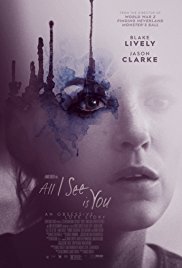
 Greetings again from the darkness. Director Marc Forster has crafted a career of making movies that are readily watchable, though for the most part, not especially memorable. These include: FINDING NEVERLAND, STRANGER THAN FICTION, QUANTUM OF SOLACE, WORLD WAR Z, and his best film, MONSTER’S BALL (2001). His latest falls short of those, but thanks to Blake Lively and some creative visuals, we remain interested enough.

This is Ms. Lively’s follow up to last year’s surprise summer hit THE SHALLOWS, her nearly one-woman sea-based spectacle. This time out she does an admirable job of carrying the film in spite of script flaws. It’s co-written by Sean Conway and director Forster, and despite teasing some fascinating psychological aspects, we find ourselves constantly waiting for the movie to show us what we already know is about to happen. Predictability is rarely an asset for a film, and here it acts as a ball and chain to the pacing.

The first third of the film works to establish two things: what Gina’s (Lively) daily life is like as a blind person, and the type of relationship she and her husband (Jason Clarke) have. We get an abundance of distorted light flashes to simulate what she has lived with since the car accident that took away her parents and her vision during childhood. Her marriage finds her very dependent on her husband and Clarke’s character thrives on this … even giving brief glimpses of his demented personality that will eventually take over the film in the final act.

Gina’s doctor (Danny Huston) performs a transplant which successfully restores her vision. The bulk of the story revolves around the changes that vision brings to her life and how the marriage begins disintegrating. The best message here is what happens to a relationship as the individuals change and evolve. Specifically in this case, the wife gains an entirely new perspective, while the husband longs for the days where she was dependent on him.

At times it feels as if director Forster is working hard to create the look and feel of an experimental movie, rather than focusing on the story. There are some interesting visuals provided by locations and camera angles, although the moody atmosphere never really clicks. Ms. Lively singing “Double Dutch” provides an ending that is both odd and mesmerizing in a strange way. We are reminded that evil and self-centeredness can take on many forms, though this film never quite packs the dramatic punch it might have.

watch the trailer:


GOODBYE CHRISTOPHER ROBIN (2017)

October 19, 2017

 Greetings again from the darkness. Are you ready for a family-oriented movie based on the origins of the universally beloved children’s character “Winnie the Pooh”? Well, despite the PG rating, this is not one for the kids – no matter how much they adore the cuddly, honey-loving bear. When you realize it was directed by Simon Curtis (WOMAN IN GOLD) and co-written by Frank Cottrell Boyce (MILLIONS), filmmakers known for their crowd-pleasing projects, the final version could be considered borderline deceitful.

It’s 1941 when we first see A.A. Milne and wife Daphne receiving an unwanted telegram whilst tending the English garden. We then flashback to 1916 when Mr. Milne was serving on the front lines of WWI, and returned with a severe case of shell-shock (described as PTSD today). His episodes can be set off by bees, balloons, and bulbs. This affliction also has him in a deep state of writer’s block accompanied by a need to write an important anti-war manuscript.

Domnhall Gleeson plays the famous writer and Margot Robbie his wife. The 1920 birth of their son Christopher Robin makes it clear that lousy parenting exists in every era. Neither father nor mother have much use for their offspring, so they enlist the help of a Nanny Olive, played by Kelly Macdonald. Does it sound like a wonderful family flick so far? Well things do pick up when C.R. is shown as an 8 year old played by screen wonder Will Tilston. His bright eyes and dimples so deep we wonder if they are CGI, bring joy to the viewers, even if the parents remain icy and self-centered.

The film’s middle segment allows father and son to bond on long walks through the 100 acre wood, and we are witness to how the toys become the familiar icons of children’s stories: Winnie the Pooh, Eeyore, Piglet, Kanga, Roo, and of course, Tigger. The picturesque English countryside makes a beautiful setting for the adorable and energetic C.R., known at home as Billy Moon (nicknames abound in the Milne household).

Unfortunately, the father-son segment leads to even more atrocious parenting. After the book is first published in 1926, young Christopher Robin becomes little more than a marketing piece for the family business. The walks in the woods are replaced by radio interviews and publicity appearances. No matter how Nou (the nickname for Nanny Olive) tries to bring normalcy to the boy’s life, the parents remain oblivious to what is happening.

Alex Lawther appears as the 18 year old Christopher Robin. He’s committed to serving his duty in WWII after surviving boarding school bullying and hazing. Equally important to him is escaping the shadow of the celebrity childhood, and finding his own identity – one that is not associated globally with a fuzzy bear. The innocence of childhood stolen by selfish parents is painful to watch, whether 90 years ago with the Milne’s, or today with any number of examples.

The 3 reasons to watch this film are: the photography is beautiful (cinematographer Ben Smithard), those other-worldly dimples of a smiling boy, and the near-guarantee that you will feel better about yourself as a parent (if not, you need immediate counseling, and so does your kid). In this case, being a well-made movie is not enough. The film is a bleak downer with the few exceptions teasing us with the infamous whimsy of the classic stories. Sometimes pulling the curtain back reveals a side of human nature akin to war itself. We are left with the impression that the audience and readers are to blame – being held accountable – for the misery suffered by the real Christopher Robin. Crowd-pleaser? More like the blame game.

watch the trailer:


THE FLORIDA PROJECT (2017)

October 18, 2017

 Greetings again from the darkness. “The Happiest Place on Earth” has long been a Disney catchphrase. The irony for those living on the road to Disney World is the focus of the latest from ground-breaking filmmaker Sean Baker. Mr. Baker was the creative force behind the remarkable TANGERINE (shot entirely with iphones) a couple of years ago, and his most recent film solidifies his brilliance at bringing us the fringes of society – those we don’t typically see on screen. Beyond that, these are the folks many of us pay little attention to in real life.

The Magic Castle Motel is a lavender monstrosity that belies the daily struggles of those who live behind its purple doors. It’s actually a seedy extended-stay that caters to ultra-budget guests. Included among those are 6 year old Moonee (Brooklyn Kimberly Prince) and her friend Scooty (Christopher Rivera). As we watch them spit on a car below their perch on the motel balcony, we quickly judge these as kids with a bit too much free time and a shortage of parental guidance.

As the summer days roll on, we tag along as Moonee leads Scooty and their new friend Jancey (Valeria Cotto) in some boundary-pushing adventures. Their fun ranges from typical kid mischief to accidents with more serious ramifications. The brilliance here is that through the child’s eye, we see joy and excitement and fun. We hear the purity of giggles and giddy screeches as the kids bound between tourist traps, ice cream parlors, and rooms forbidden as off-limits. All of this miscreant activity occurs amidst the adults who trudge on simply trying to survive another day.

While we might be tempted to recall Cat Stevens’ lyrics, “while the sinners sin, the children play”, it’s director Baker that refuses to pass judgment. Moonee’s mother Halley (Bria Vinaite) was recently fired from her “dancing” job, and is now constantly on the prowl to make enough money to cover the weekly motel bill. She clearly loves her daughter, but is too proud and angry, and just has no idea of how to pull out of this vicious cycle of poverty. The artificial dreams that are prevalent in so many films have no place at the Magic Castle Motel. It’s about the next meal and keeping a roof above.

Don’t go searching for plot here. Instead, at times it feels like a documentary on Moonee or the spirited need for fun and laughter that is in the DNA of kids. We are just following a real kid around, and that’s a tribute to the marvel that is Brooklyn Kimberly Prince. She steals every scene and most of the movie … and that’s in spite of the terrific performances from Ms. Vinaite and screen vet Willem Dafoe. It’s a rare “normal” role for Mr. Dafoe, and he makes the most of it as Bobby, the motel’s manager. He is also a father figure, mediator of disputes, bill collector, and protector of damaged souls. With no hint of saccharine or Hollywood mush, Bobby is unable to detach emotionally from those who live at the hotel, not because he is soft, but rather because he is human. We see his demeanor change drastically when the owner of the hotel arrives for inspection. Bobby understands the fragility of his own situation due to what he witnesses each day.

Director Baker is a master of color use and the blending of abrupt framed images with the handhelds in close proximity within motel rooms and personal interactions. His story (co-written with his TANGERINE and STARLET collaborator Chris Bergoch) never feels condescending, preachy or romanticized. There is no blatant political statement being made. These are folks living their lives as best they are able within the confines of their situation. The police and Child Protective Services are always hovering as a reminder that the next mistake could significantly alter lives. Somehow, the film is both hilarious and heart-breaking. The obvious comparison is to last year’s MOONLIGHT, and it could even be viewed as a prequel to AMERICAN HONEY. Mostly it’s a slice of rarely seen life and further proof that Sean Baker is already an important filmmaker, and one that likely has more to say. As for the debate around the final scene, does it really matter? There is no better place for a child to escape reality … even if it might only be in their mind. Sometimes that’s the only escape we get.

watch the trailer:


LOVING VINCENT (2017)

October 13, 2017

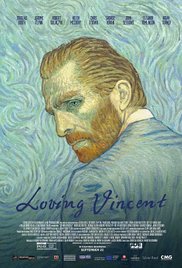
 Greetings again from the darkness. For those skeptics who scoff when filmmaking is described as an art form and labor of love, co-directors Dorota Kobiela and Hugh Welchman invite you to take in their nearly decade-in-the-making project. It’s the first fully hand-painted on canvas feature film – experimental filmmaking crafted by more than 100 artists and including an estimated 130 paintings, with 65,000 individual shots/frames.

The spectacular visuals were created by painting over the images … both of actors performing scenes and van Gogh’s paintings. By adding to and amending images, even 10 times or more, the scenes come to life with movement and a pulsating psychedelic feel. The familiar colors of his paintings create a level of connection, while black & white images are used for flashbacks and reenactments.

Though we have never seen this look on screen before (this goes beyond Linklater’s WAKING LIFE), the stunning visuals are accompanied by what can be described as a detective story or murder/suicide mystery. It picks up in 1891, one year after van Gogh’s suspicious death. A local Arles postman holds one last letter from Vincent to his beloved brother Theo. Having held onto it for much too long, he asks his son Armand Roulin to hand-deliver the letter to Theo. Sporting the yellow blazer so recognizable from his portrait, the angry and skeptical Armand heads to Paris. Little does he know, this is only the beginning of his journey … a journey that finds him researching Vincent’s life and a journey that helps him discover more about himself.

There have been many movies made focusing on this amazing artist: LUST FOR LIFE (1956), VINCENT (1987), VINCENT & THEO (1990), and VAN GOGH (1991). This one is filled with contrasting and conflicting stories, theories and recollections, and descriptions of events from those who crossed paths with the artist on a daily basis. We listen right along with Armand as he spends time in Avers-sur-Oise … where Vincent lived, painted, and died.

Many of the actors involved are recognizable even in this artistic format: Chris O’Dowd is the postman, Douglas Booth is Armand, John Sessions plays art supplier Pete Tanguy, Eleanor Thompson is the innkeeper’s daughter Adaline, Jerome Flynn is the controversial Dr. Gachet, Saoirse Ronan is Gachet’s daughter Margarita (recognizable from her piano portrait), Helen McCrory plays the disgruntled Gachet housekeeper, Aidan Turner is the boatman, and Robert Gulaczyk is Vincent. Since these folks were all part of van Gogh’s artwork, we are fascinated to see them come to “life”.

Vincent van Gogh picked up a brush for the first time at age 28. He was dead at age 37, and left behind approximately 800 paintings of portraits and landscapes – many among the most famous pieces in the world today. Did he try to commit suicide as he claimed or was there a more sinister explanation for his death? Of course the filmmakers only hint at possible answers and can’t solve a mystery that is approaching two centuries. Understanding the man is challenging, and perhaps our best hope is through the work he left behind. This is a compelling cinematic experience and we have certainly benefitted from the filmmaker’s labor of love. Clint Mansell’s score leans heavily on strings and piano, and is perfect accompaniment for the story. One could question the closing credits use of Lianne La Havas’ version of “Vincent” (renamed “Starry Starry Night”) rather than Don McLean’s, but one mystery per day is plenty. Spot the paintings, play detective, and mostly enjoy the visuals built on the works of a complex, talented, and tragic figure.

watch the trailer: