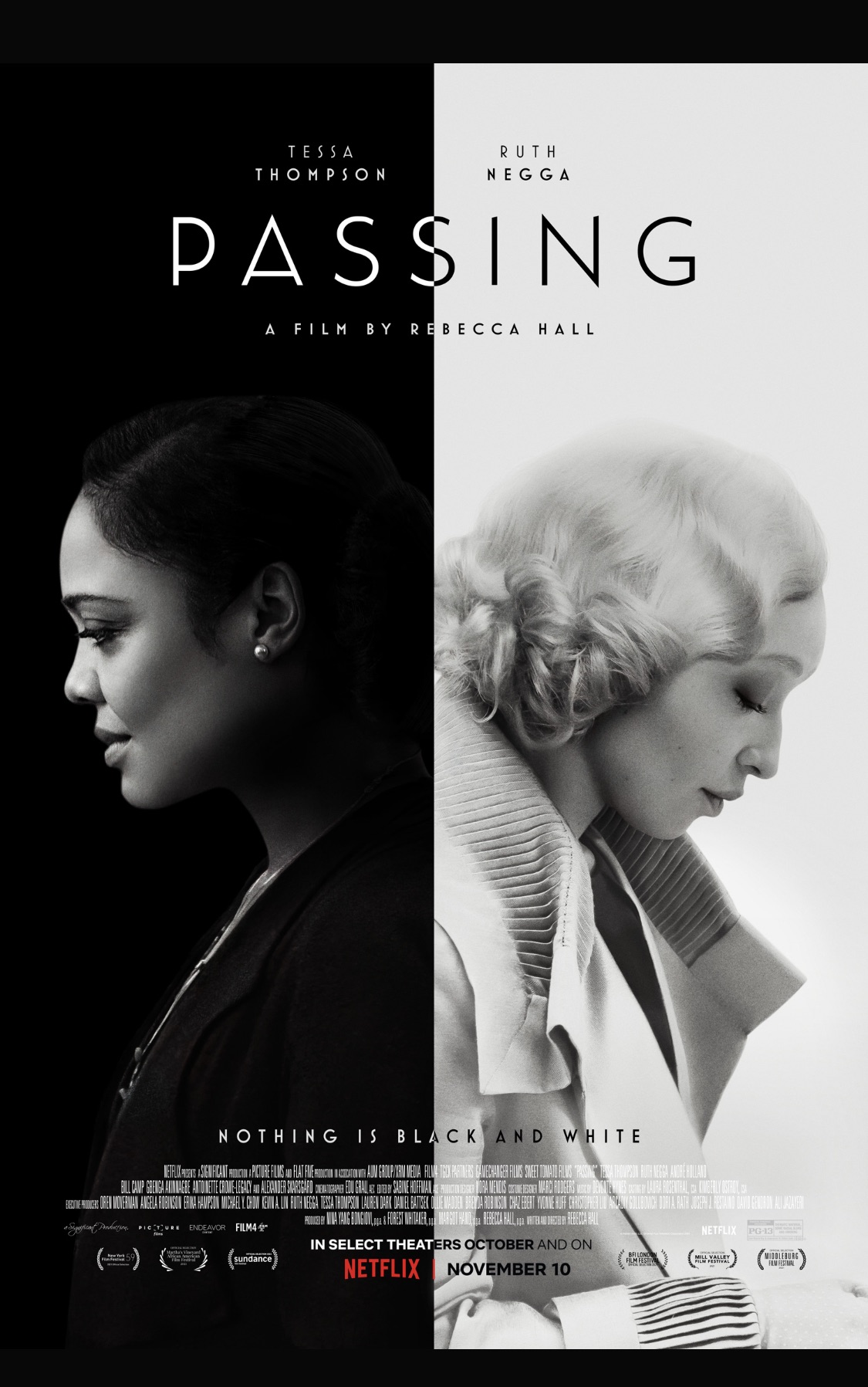
 Greetings again from the darkness. “We’re all passing for something or other.” Irene (played by Tessa Thompson) speaks the line that cuts to the quick of Nella Larsen’s 1929 novel, adapted here by first time writer-director Rebecca Hall. We are familiar with Ms. Hall’s many film projects as an actor, and her debut as a director shows immense promise. Ms. Larsen’s novel was inspired by her own life as a mixed-race woman.
It’s Irene whom we first see as ‘passing’ as white as she visits a retail store and takes tea at a fancy restaurant that most assuredly would not serve her if her light complexion and drawn-down hat were not hiding her true self. Cinematographer Eduard Grau has the camera track Irene’s darting eyes that are trained to notice potential trouble. Her gaze stops on a woman seated alone. There is a familiarity between the two and soon, Clare (Ruth Negga) has joined her long-ago childhood friend, Irene, at her table. While Irene “passes” when it’s necessary, she clearly identifies and lives as an African-American – married to Harlem doctor Brian (Andre Holland). Clare, on the other hand, is living a lie. She has permanently “passed” as a white woman, marrying John (Alexander Skarsgard).
The film’s best scene occurs when Clare takes Irene home and introduces her to husband John. His vile, racist nature immediately shows, creating a tense moment filled with excruciating and subtle exchanges of knowing glances between Clare and Irene. It’s a dangerous moment and we aren’t sure where it’s headed. What is clear is that a childhood bond may exist between the two ladies, but there is now a void that can never be filled. But what happens is that Clare finagles her way into the lives of Irene and Brian (and their kids). What we see is that Clare finds the ‘honest’ life quite enticing. Allowing herself to be who she is … dropping the façade … energizes her. Racial identity and sexuality are at stake here, and so are class and culture.
Bill Camp plays a pompous writer named Hugh who always seems to be hanging around the same parties and events as Irene. One of the best lines of the film occurs after Bill asks someone why they are hanging around. The answer is brief and insightful, and cuts to the quick. It’s a strong debut film from director Hall. It has a dreamlike look and excellent performances from the two leading ladies. The grey area in life is teased, and we do wish the dive had been a bit deeper on Irene and Clare, but that ending is one that will stun you – even if you’re expecting it.
Streaming on Netflix


 Posted by David Ferguson
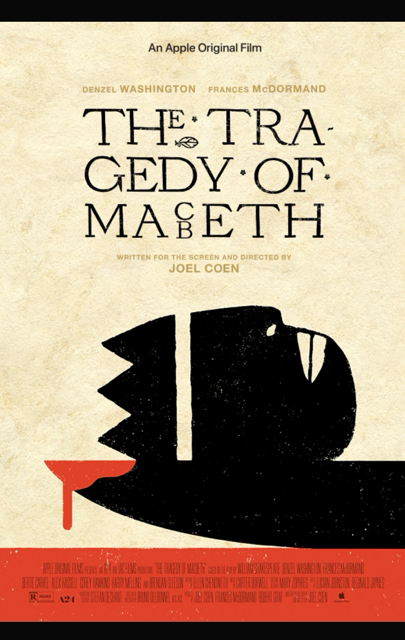 Greetings again from the darkness. The confounding part about screen adaptions of great and familiar literary works is that we have each already formed our mental images of characters and setting. Adapting Shakespeare’s 400 year old play is Joel Coen (4 time Oscar winner, NO COUNTRY FOR OLD MEN), and it’s also his first time to fly solo as director without his brother Ethan. Filmed in black and white on a sound stage, this production may lack the frills we’ve come to expect in modern times, yet while its stark sets recall German Expressionism, the film still manage to deliver memorable visuals.
 Greetings again from the darkness. The only honest way for me to begin is to simply admit that I adore this movie. In fact, I may love it as much as writer-director Paul Thomas Anderson loved making it. The setting is 1970’s San Fernando Valley, the area where the director was raised, and it’s such a caring tribute and sweet story (while also being exciting and nostalgic) that’s it’s tempting to stop writing and just encourage everyone to watch it. My only regret is that for those who weren’t around during this time period, some of the attention to detail and meticulous filmmaking won’t strike the same chord as it will for the rest of us.
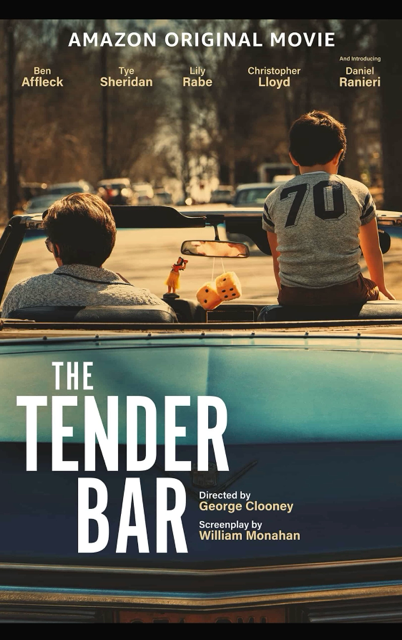 Greetings again from the darkness. Pulitzer Prize winning novelist and journalist JR Moehringer published his memoir in 2005. Fortunately for him, it led to his being in high demand to pen the memoirs of others. Unfortunately for us, it also led to George Clooney directing a mostly listless movie version. Adapted by Oscar-winning screenwriter William Monahan (THE DEPARTED, 2006), the film does offer a surprisingly interesting performance from Ben Affleck, while also failing to capitalize on other elements that could have provided a boost.
 Greetings again from the darkness. Movies don’t get the credit they deserve for opening our eyes to other cultures and providing a snapshot into the lives of others … lives often unimaginable to us. Another aspect of World Cinema is that it serves as a reminder that people are people all over the globe. Dreams and disappointments are simply a part of the human existence. Often we recognize more similarities than we previously thought. Such is the case with the debut feature film from writer-director P.S. Vinothraj. This is India’s official submission for the Foreign Language Academy Award.
 Greetings again from the darkness. There are so many things that go unspoken about parenting, and first time writer-director Maggie Gyllenhaal specifically focuses her lens on the pressures of motherhood, by adapting the 2006 novel from the anonymous and talented and mysterious Italian writer Elena Ferrante. Of course, we are all aware of Ms. Gyllenhaal’s fine work as an actor, yet it’s almost beyond belief that this is her debut as a feature film director. The source material is strong, but Ms. Gyllenhaal, along with a terrific performance from Olivia Colman (Oscar winner, THE FAVOURITE, 2018), turn a coastline vacation into a mesmerizing psychological case study.
 Greetings again from the darkness. If you are a fan of little films that seem quiet on the surface but deep down have jarring tremors of emotions, then this 3 hour art-house gem from Japanese writer-director Ryusuke Hamaguchi is a must-see. The director, along with co-writer Takamasa Oe, adapted the script from the short story by Haruki Murakami, part of his “Men Without Women” collection. The story revolves around Russian playwright Anton Chekhov’s “Uncle Vanya”.
 Greetings again from the darkness. Fans of filmmaker Guillermo del Toro anxiously await his new projects knowing full well that each will have a stylish atmosphere, a certain fantastical creepiness, and characters a bit outside the norm (whatever normal is these days). Beyond that, the mystique derives from whatever new approach the extraordinarily talented filmmaker will surprise us with this time. For his first follow-up to his Oscar winning THE SHAPE OF WATER (2017), del Toro and co-writer Kim Morgan have adapted the 1947 cult noir classic by director Edmund Goulding (starring Tyrone Power), which itself was adapted from William Lindsay Gresham’s 1946 novel.
 Greetings again from the darkness. In a cinematic oddity, this is my second SWAN SONG film to review this year. The first was a SXSW starring vehicle for Udo Kier, and now we have the first feature film from writer-director Benjamin Cleary, who won an Oscar for his 2015 short film STUTTERER. It’s safe to say the two ‘Swan Songs’ share no similarities other than their title. Cleary presents a sci-fi drama that applies moral and ethical questions to advanced medical science, and our inherent desire to protect loved ones.
 Greetings again from the darkness. What happens if Chicken Little was right, and the sky really is falling? Writer-director, and Oscar winner, Adam McKay proved with THE BIG SHORT (2015) and VICE (2018) what occurs when he turns his unique commentary towards a target. Two questions remain. Is political or social satire just too easy these days? Has insanity permeated our globe to the degree that pointing out the lunacy has become ho-hum? McKay wrote the script from journalist David Sirota’s story, and it’s even more extreme than his previous work, and likely meant as a wake-up call to all of us.

