THE STRANGER (2026, France)

August 18, 2026

Greetings again from the darkness. It has been quite a while since the last film adaptation of Albert Camus’ 1942 novel “L’Etranger”, and filmmaker Francois Ozon (behind one of my favorites, SWIMMING POOL, 2003) went to Albert’s daughter Catherine to get approval for this project. Previous adaptations include THE STRANGER (1967, Italy) and FATE (2001, Turkey). Ozone and Phillippe Piazzo collaborated on this updated screenplay (including some variations from the source material).

Ozon opted to film in black and white, and after some flashbacks to ‘old’ Algiers, we jump to the 1930’s where we find Meursault (a terrific Benjamin Voisin) as what’s often described as an indifferent man. Taciturn and/or withdrawn would also be properly descriptive, yet he’s typically quite direct during his limited times of speaking. Meursault is mysterious because he’s handsome and doesn’t spill his emotional guts over everything that happens. That everything includes the notice that his mother has died.

While most of us would be deeply affected by the news, we are unsure about Meursault. He spends time in the Baths of Algiers with Marie (Rebecca Marder), along with drinks in the pub, a Fernandel film at the cinema, and an evening of intimacy. At his mother’s funeral, his stoic demeanor confuses the attendees, and soon enough he and Marie are facing questions of love and marriage. As usual, he remains emotionally detached, willing to go along.

Things change during a beach visit with friends, and Meursault finds himself imprisoned on murder charges. We witness the act and it feels quite surreal. The trial takes up a chunk of the film and among those speaking on his behalf are a couple of neighbors: an old man  (Denis Levant) who states Meursault was kind to him and his mangy dog, and another (Pierre Lottin) who may have abused his own girlfriend. Meursault manages to spurn God and a Priest while in his cell, and he does question the meaning of life. Ozon’s use of black and white are reminders of the French New Wave of the 50’s and 60’s, and plays right into Camus’ existentialism. The character of Meursault and the story leave us much room for reflection, thought, and discussion … despite appearing fairly simple on the surface.

On DVD/Blu-Ray August 18, 2026, available on digital nationwide

WATCH THE TRAILER


DON’T SAY GOOD LUCK (2026)

August 14, 2026

Greetings again from the darkness. “Break a leg.” The well-meaning phrase dates back many years as a way to avoid the dreaded ‘good luck’ for someone preparing to perform on stage. When high school sophomore Sophie explains this to her mother, the mom hugs her and offers how bad she would feel if her daughter actually broke her leg. Such is the love of a mother … this particular mother … in this heartfelt movie from director Julia Hart, who co-wrote the screenplay with her husband Jordan Horowitz and Laura Hankin. It’s based on Ms. Hankin’s own personal story.

Sophie is played by Sunny Sandler (daughter of Adam, who also produces the film). She’s nervous for her audition for the “Waitress” musical at school. A butt dial from dear old dad (Max Greenfield) unwittingly clues her in to the return of mom’s (Melanie Lynskey) cancer. This happens just before Sophie’s turn on stage, and the real emotions shown impress the director (Stephanie Beatriz) and win her the lead role. Sophie’s big moment is tempered by her mom’s horrible news.

Sophie’s grandparents (Steve Buscemi, Bebe Neuwirth) arrive to ‘help’, and while grandpa offers driving lessons, grandma overreacts to everything, bringing more stress to an environment already on edge. So, while emotions are in overdrive, the comedy relief is provided by Jon Lovitz (a Sandler favorite) at the family bagel shop. The laughs are welcome due to the intensity of emotions shown by both mother-daughter relationships, and the BFF dynamic between Sophie and Carolyn (Scarlett Estevez). Plenty of teen angst and grown-up drama is on display, yet Ms. Sandler, and especially Ms. Lynskey both deliver such believable and strong performances, that the scales never tip.

Drama on the school stage would be enough for most teens, although life often delivers more than what seems fair. Mom wants Sophie to pursue her dreams, while Sophie doesn’t want to miss a moment with her mother. Plenty of tears flow, and yet, the interactions and situations mostly are handled in a way that seems realistic and true-to-the-moment.

Premiering on Netflix on August 14, 2026

WATCH THE TRAILER


OLMO (2026)

August 6, 2026

Greetings again from the darkness. Olmo is like most fourteen-year-old boys. His visual fantasizing about the girl of his dreams requires nothing more than a toy car and a glimpse of her walking outside. Yet, Olmo is also different than most his age because he shares caregiving responsibilities for his disabled dad, who is stricken with Multiple Sclerosis. It’s been more than a decade since he last directed a feature film, and writer-director Fernando Eimbcke delivers one of his best. He and co-writer Vanesa Garnica also collaborated on this year’s FLIES, which is currently making the festival rounds (including Cannes).

Alvan Uttapa stars as Olmo, and he perfectly captures the essence of a teenage boy trying to figure things out in Las Cruces, New Mexico in the late 1970’s. He and his older sister Ana (Rosa Armendariz) have a never-ending argument that goes like this, “Your turn.” “No, your turn.” This is in reference to whose turn it is to help their father Nestor (Gustavo Sanchez Parra) with the many things he is unable to do on his own now that the disease has rendered him mostly helpless to control his body.  Their mother Cecilia (Andrea Suarez Paz) takes as many double shifts as possible at the diner so that the family can fight the near-eviction notices that arrive frequently.

When Nina (Melanie Frometa), Olmo’s object of desire, invites him and his best buddy Miguel (Diego Olmedo) to a big party, she has only one condition … bring the stereo. Olmo is giddy with excitement, and only has two obstacles: first, it’s ‘his turn’ to care for dad, and second, the stereo needs repair. This leads to a tremendous scene with Nestor talking the boys through how to troubleshoot and fix the (era-specific) stereo. It’s here where we get the full impact of Nestor wanting so much to be the father he was before the disease. The once proud man hears the bickering over whose turn it is, and feels the frustration of being a lesser dad who can’t even stop his daughter from smoking. But the stereo repair restores some of that feeling … even if only for a moment.

Olmo and Miguel together are a hoot, and the comedic touches elevate the film from generic coming-of-age to a multi-dimensional story of a family grounded in real life issues. Olmo has the desires of a normal teenage boy, Ana wants to be part of the “in crowd” (she spends much of the movie in bright white roller skates), Nestor wants to be an involved father, and Cecilia wants to take care of the family while tending to her own needs. This is an era before cell phones, and a backyard grill becomes a (further) point of contention between Nestor and Uncle Julio. Even Walter Murphy’s disco classic, “A Fifth of Beethoven” has a place in this story.

Immigrant parents (Nestor and Cecilia) raising Americanized kids (Olmo and Ana) means both English and Spanish are spoken at home … often in the same conversation. Sometimes everyday life creates huge tensions and stress for all family members – and sometimes it’s a specific event. This time, that specific event awakens Olmo. Director Eimbcke gives us a shot near the beginning of the film that is actually the film’s ending … a smooth move for the filmmaker. This feels like it could have been a documentary, which is a testament to how family life is so well captured.

In theaters nationwide beginning August 7, 2026

WATCH THE TRAILER


SHEEP IN THE BOX (2026, Japan)

July 23, 2026

Greetings again from the darkness. Most of us would do just about anything for a grieving loved one. Kepsuke (Daigo Yamamoto) proves this when he accompanies his wife Otone (Haruka Ayase) to a presentation at ReBirth, a company specializing in humanoids meant to replace a lost child. An accident two years ago cost this couple their 7-year-old son Kakeru (Rimu Kuwaki), and the husband, though skeptical of the whole thing, hopes this is what his wife needs to move on.
The film is written and directed by the ultra-talented Hirokazu Kore-eda (THE TRUTH, 2019; SHOPLIFTERS, 2018; OUR LITTLE SISTER, 2015), who has utilized his remarkable insight into human nature to bring us several memorable films. This one may lack the emotional depth of his previous work, yet it has plenty to say about technology and artificial intelligence. Otone is an architect and Kepsuke is a builder, and for much of the film, she is working on designing a unique house for another couple. Of course, the real story here is how humanoid Kakeru fits with this new family. Otone is initially quite accepting of this new being, while Kepsuke takes a bit longer.

Could you love a robot? Is an emotional bond even possible? Does this constitute life and should the new Kakeru even be considered a ‘real’ boy? Filmmaker Kore-eda throws in a twist since there are two sides to this story … and Kakeru’s side is easily the most fascinating. As it/he bonds with his true peers, the story takes on a much different and much larger picture than the intimate family drama we initially expected. We are told we are “a product of your own past”, and it’s Otone and Kepsuke who believe they are deciding whether to keep it or not. The obvious comparison here is Spielberg’s AI: ARTIFICIAL INTELLIGENCE (2001), but Kore-eda takes a different approach and leaves us pondering whether technology is serving us or will technology ultimately serve itself?

Opening in theaters July 24, 2026 and expanding through August 7, 2026

WATCH THE TRAILER


A WOMAN’S WORK (2026)

July 17, 2026

Waco Independent Film Festival 2026

Greetings again from the darkness. It’s such a treat when a film sneaks up and surprises you with such emotional depth that you not only feel like you know the characters, but you also want to stick around and see how they do over the next few years. The first feature film from writer-director A.R. Ephraim does just that, leaving me so touched by what I’d just watched, yet saddened that my connection with Jolene was over.

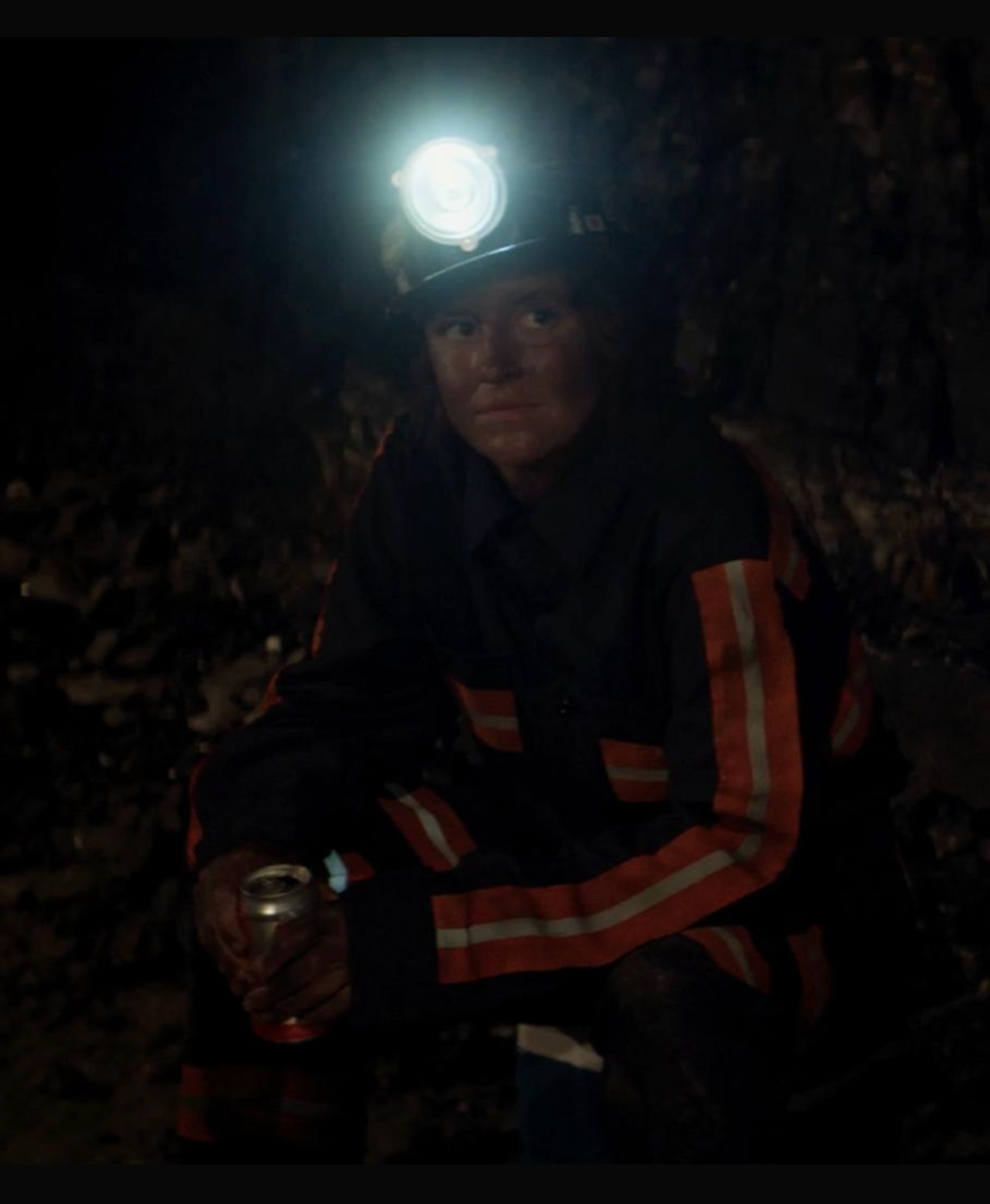
Louisa Harland (HAMNET, 2025) delivers a quietly powerful performance as Jolene, a young woman working in the coal mines of Harlan County, Kentucky. She has been supporting her two sisters since their parents passed away. Sixteen-year-old Lara (Emma Duchesneau) is in love with local boy Judd (Braden Bell), who is not the sharpest tool in the drawer. Six-year-old Emmy (newcomer Shelby Mullins) is sweet and smart, and benefitting from Jolene’s life lessons on cooking, fishing, and shooting.

When Lara tells Lou that she’s getting married to Judd, the reaction is just what you would expect from a protective sister who sees the bigger picture. Lou works the nightshift at the mines. She packs a lunch for 2-3 days, “just in case”, and comes home daily to wash the ground-in coal dust off her body. Unfortunately, the weight of her life does not rinse off so easily. Miners’ attitude towards working women isn’t much better than the small town attitude towards a gay woman raising kids. Lou’s relationship with Kylie (Alice Kremelberg, “The Boroughs”) is the worst kept secret in town, yet the two women seem good for each other.

The film opens with a gentle overview via drone of the beaten down mining town, and later Lou states, “all these buildings used to be something.” Lou is tough, but she’s also an incredibly giving and caring person. She’s the kind of friend or sister you want … she’ll even stick up for a loved one in a bar fight. When Kylie decides she’s ‘gotta get outta here’ (the way small town often folks do), Lou has a decision to make. What we witness is the difference between sacrifice and responsibilities. That difference is love … and proof that family is borne from the heart. A.R. Ephraim has created a film that will stick with me for a while.


THE ODYSSEY (2026)

July 16, 2026

Greetings again from the darkness. What makes a movie “epic”? Most cinephiles would agree the list of epic movies includes LAWRENCE OF ARABIA (1962), GONE WITH THE WIND (1939), BEN-HUR (1959), and APOCALYPSE NOW (1979). Of course, arguments can be made for many other films, and it really comes down to how you define ‘epic’ and how you perceive a specific film. Regardless of your definition or perception, there is no doubt that this latest from Oscar winning filmmaker Christopher Nolan is an epic film and an epic movie-watching experience. Yes, it’s the first film to be filmed entirely with IMAX 70mm cameras, and it’s based on the Homer’s “Odyssey”, itself a piece of epic Greek literature … but it also is a piece of filmmaking unlike anything we’ve previously seen.
Oscar winner Matt Damon stars as Odysseus, and the story is centered on his ten-year journey home after the Trojan War. This includes a breathtaking Trojan Horse sequence, told with a twist from tradition. My favorite sequence (and that’s really saying something) involves the Cyclops and his flock of sheep inside the Master Cave in Greece. It’s truly staggering film work that would itself win every technical Oscar in most years. However, Nolan offers us so much more here – action-packed battle scenes, torturous boat journeys at sea, other creatures that must be seen (Scylla who snatches men from the deck of a ship), and the unheard (by us) song of the Sirens known to seize men. Another terrific sequence involves a fabulous Samantha Morton as Circe the witch, who has a special way of treating strangers.

Oscar winner Anne Hathaway plays Queen Penelope, wife to Odysseus and mother to their son Telemachus, played by (Spider-Man) Tom Holland. The two have a twenty year wait to see if Odysseus lives and if he will return to them in Ithaca. Penelope is left to manage the power struggles for her hand in marriage and for the kingdom, with a key figure being the slimy Antinous (Robert Pattinson). Oscar winner Lupita Nyong’o plays the stunning Helen of Troy, as well as her twin sister in a dual role, and it’s Zendaya who shows up periodically for Odysseus as the goddess Athena. In a substantial role, we find Oscar winner Charlize Theron as Calypso, spending years on her island with the wayward and lost Odysseus. Nolan’s cast is massive and talented and includes John Leguizano in a key role, as well as Jon Bernthal as Menelaus, Elliot Page as Sinon, and Himesh Patel as Eurylochus … plus many others you’ll recognize.

Nolan reteams with Oscar winning cinematographer Hoyte Van Hoytema to provide a truly amazing visual experience, filming in at least six countries to help us visualize Antiquity and Odysseus’ journey across the Mediterranean Sea: Morocco, Greece, Italy, Iceland, Scotland, and Malta. Three-time Oscar winner Ludwig Goransson delivers a unique and powerful score, with a blend of electronics and even some jazz. Nolan has credited Emily Wilson’s 2017 translation of Homer’s “Odyssey” for the modern language take, and though “Zeus’s Law” is referenced a few times, it can easily be described as human decency. The modern-day messages shine through – false gods, lust for power, and treating others poorly are mistakes humans have made over and over … and these messages couldn’t be more relevant than right now. The film reportedly had a $250 million budget, and as amazing as the film is, there will surely be those who complain that it moves too slowly or the film is too dark. I would only say that watching the film is like having a book unfold in front of you. I would certainly recommend if you are planning to see the film, head to an IMAX theater or at least the biggest screen nearby.

Opens in theaters on July 17, 2026

WATCH THE TRAILER


THE LEGEND OF JUAN JOSE MUNDO (2026)

July 16, 2026

Waco Independent Film Festival 2026

Greetings again from the darkness. For those who are itching to re-live the glory days of 1984 high school, writer-director Michael Walker and co-writer Susan Gomes are here for you. The surprising part is that even for non-Gen X viewers, the film is so well crafted and acted, that it flows beautifully as a time capsule for the era. As if that’s not enough, it’s also based on a true story.
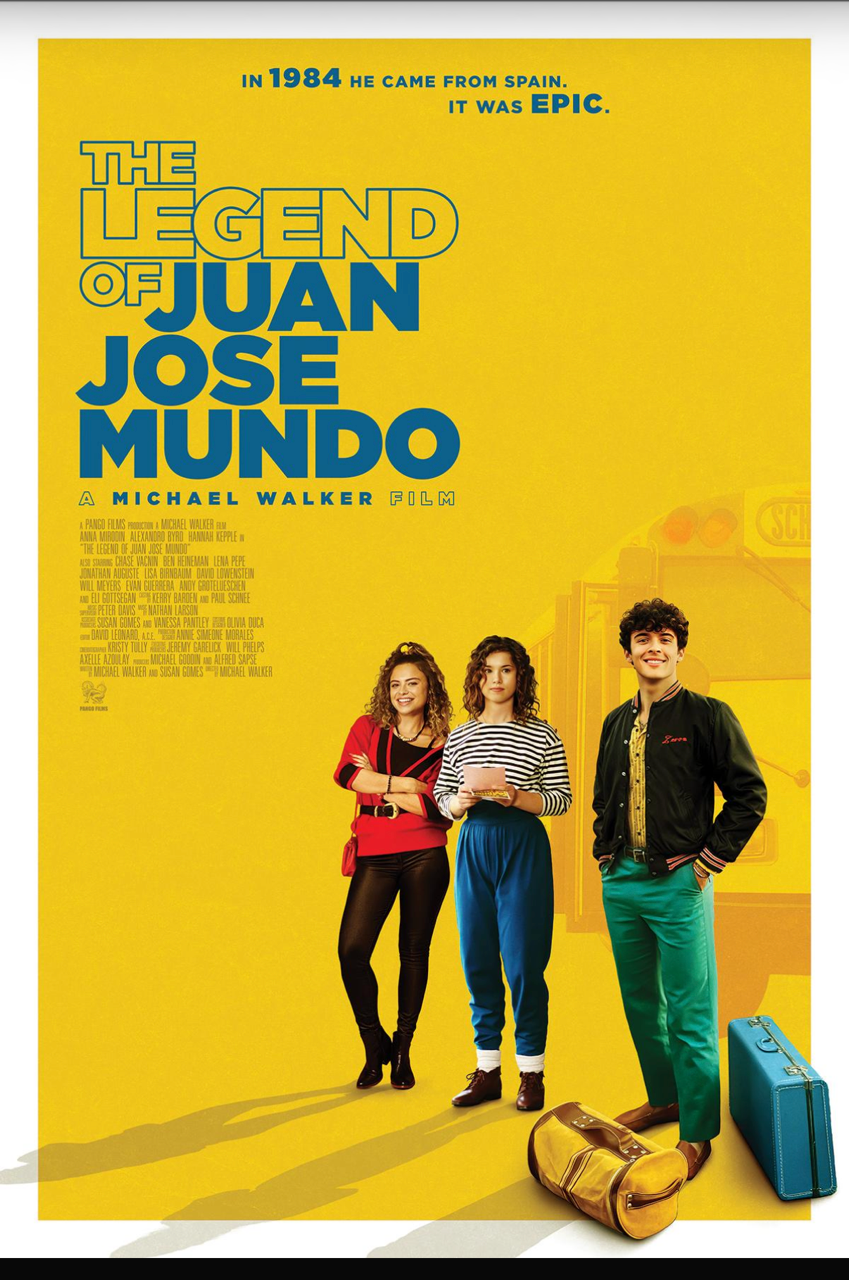
Relative newcomer Anna Mirodin shines as Julie, a Jewish high school junior in suburban New York (White Plains). She’s a good student … trusted by her teachers, and a good girl … who admits she’s “never done anything with a boy.”  Her best friend, Suzanne (Hannah Kepple, “Cobra Kai”, and a Dyan Cannon lookalike) is a bit more adventurous and tries to coax her friend into being more assertive in pursuing her desires. The perfect opportunity arises for Anna when Juan Jose Mundo, arrives from Spain as the exchange student assigned to stay at her house during his trip.

Juan Jose Mundo (Alexandro Byrd in his first feature film) is a charming, handsome, gregarious young man with proper manners around parents and the charisma to attract high school students of both genders. It’s quite entertaining to watch Juan quickly embed himself into the basement parties and other activities of Julie’s classmates – all while her reserved nature prevents her from sharing her feelings with him. Along the way, we are treated to the ‘treasures’ of 1984, including the family station wagon, the tied-to-the-era fashion choices, the music (much of which now seems comical), the blatant racism, and the politics that generated a Mondale/Ferraro bumper sticker on said station wagon. Especially prevalent is the presence of mix tapes as a flirtation strategy. Despite ringing true to the period, much of what’s included acts as a painful reminder of 1984.

Admittedly, teen comedies aren’t my usual cup of tea, yet Walker and Gomes fill a void that’s existed since the days of John Hughes … this is a smart movie about teenagers, and it even serves up a life lesson, if you can find a teen to listen. On the surface, it doesn’t seem to be a story about the danger of those years, but in fact, it’s a cautionary tale about teen desire, confusion, frustration, and peer pressure. We even have awkward parents and an obnoxious sibling on display. Kudos to the cast and filmmakers for refusing to dumb down the material for their audience.

WATCH THE TRAILER


HORSEGIRLS (2026)

July 16, 2026

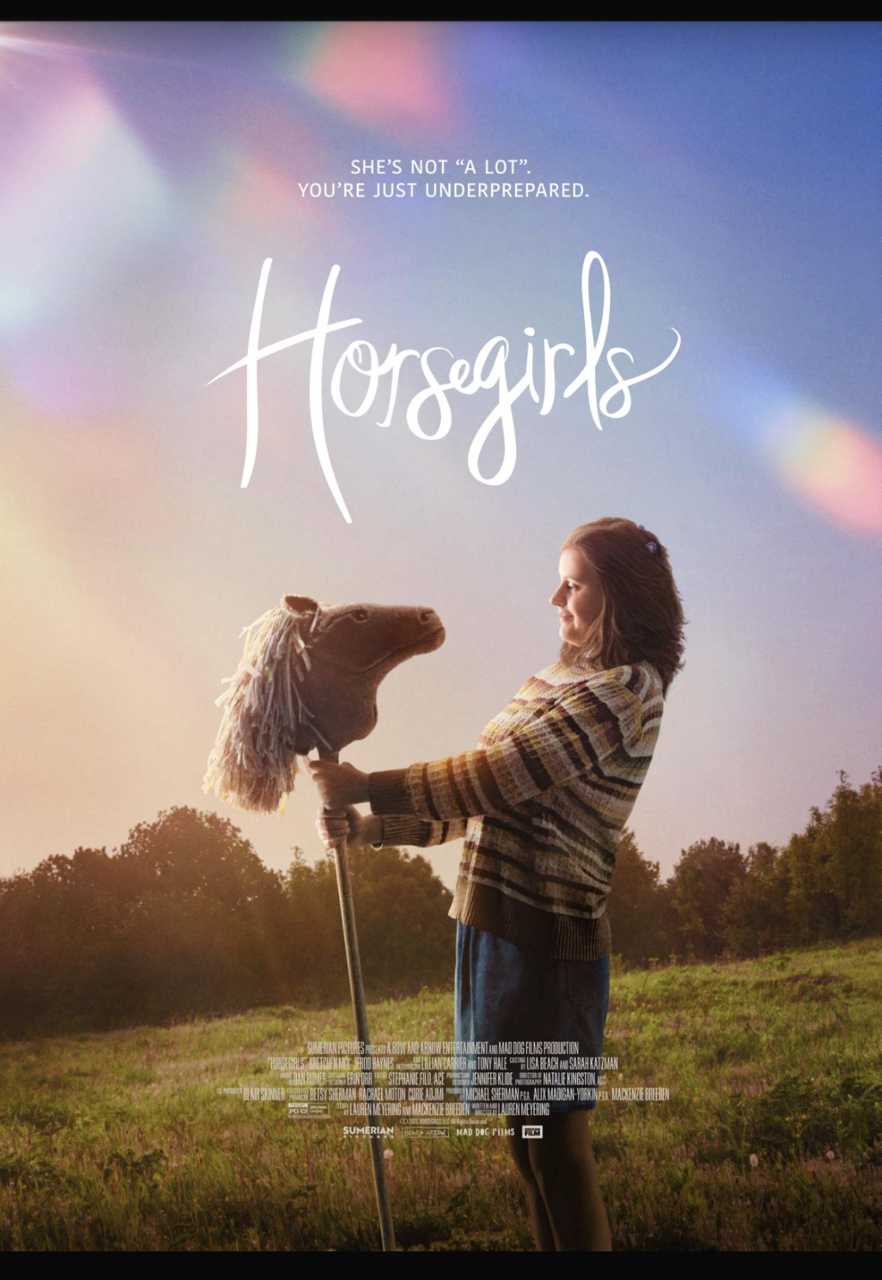
Greetings again from the darkness. I usually try to avoid using the word ‘endearing’ to describe a film that strikes an emotional chord, but for this film from writer-director Lauren Meyering and co-writer Mackenzie Breeden, the word fits perfectly. Much of the reason for this is the screen presence of Lillian Carrier, who was diagnosed with autism at age 16. Here she portrays twenty-two-year-old Margarita in a way that allows us to understand her real life challenges.

Margarita openly confesses the backstory of her name to most everyone she meets. It’s a clue to how direct and honest she can be, while also showing her difficulty in recognizing social cues and adhering to social norms. She lives with her mother Sandy (Gretchen Mol), who is undergoing chemotherapy for breast cancer. Sandy and Margarita have a deep bond, but mother is trying hard (for good reason) to push Margarita towards independence. This leads to arguments, and to Margarita securing a job at the local Halloween store run by Hank (Igbal Theba).

It’s joining a troupe of young hobby-horse dancers (yeah, I had no idea this was a thing) that leads Margarita even closer to independence. The team’s coach is played by (an excellent) Jerod Harris, and his ‘tough love’ approach is something Margarita responds to. “Walk it off, Red”, is one of his regular sayings as she initially stumbles through the routine or faces harsh treatment from the snooty girls on the team. We all know that ‘adulting’ is not easy. The trip is filled with obstacles. It’s even more challenging for those on the spectrum, yet we find a certain satisfaction in watching Margarita grow and develop.

I’ve been a fan of Gretchen Mol since the 1990’s and have often said I wish she would act more often … at least in the projects I see. Here, she’s a strong mother and vulnerable woman and really delivers as Margarita’s mother. As Margarita, Lillian Carrier is quite something to behold. She is smart and emotional and relatable … and someone we enjoy rooting for. Some may call this a ‘coming-of-age’ story, and perhaps it is. Mostly, it’s the journey of life that we all travel – only some roads are a bit bumpier than others. Look for a nice cameo towards the end.

The film opens in theaters on July 17, 2026

WATCH THE TRAILER


READING LOLITA IN TEHRAN (2026)

July 9, 2026

Greetings again from the darkness. Other than basic decency and human connection, there are few things that define a person and their life more than education. Whether gained in a classroom or through daily experiences, understanding people and history is what provides our perspective and our foundation of humanity. A common strategy of small-minded authoritarians who seek only more power is to limit educational opportunities for others … as if holding one group down will lift up said power-monger. This is on full display in this film based on the experiences Azar Nafisi detailed in her 2003 memoir. The film is directed by Eran Riklis (LEMON TREE, 2008), who co-wrote the screenplay with Marjorie David.

Golshifteh Farahani (PATERSON, 2016, EXTRACTION, 2020) stars as Azar Nafisi, a literature professor at Tehran University, whom we first meet just after the 1979 Islamic Revolution. In very little time, we learn Azar is a passionate and dedicated teacher, while also being a fierce defender of personal rights – to teach and to learn. Director Riklis divides the film into four chapters, each using the name of a classic literature piece. F. Scott Fitzgerald’s 1925 “The Great Gatsby” is where we begin, and the professor structures a classroom courthouse, putting the novel on trial … on the heels of Ayatollah Khomeini instilling hijab laws as a way to hold women back and stifle feelings.

Part 2 jumps ahead 15 years to 1995 in the section named “Lolita” for Nabokov’s 1955 novel. At this point, most every move is a risk for Azar, and she finds herself wistfully daydreaming of the days when she could browse the many titles at Hamida’s independent bookstore, which no longer exists. Moving forward to 1988, it’s Henry Miller’s 1878 novella “Daisy Miller”, as well as the peak of the Iran-Iraq border war. In this section, Azar looks over her students and concludes, “They have nothing to remember.” It’s the most poignant line of the film and perfectly captures the importance of a cultured and open society. The final chapter takes place in 1996 and takes its title from Jane Austen’s 1813 novel, “Pride and Prejudice”. This also coincides to Azar’s final year in Iran, before she moved to the U.S. Azar is quite fortunate to have married Bijan (Arash Marandi), an engineer who was so patient and understanding.

Azar became a U.S. citizen in 2008 (as a young woman, she earned her Ph.D. from the University of Oklahoma) and has carried forth as an esteemed academic professional since. Perhaps her most rewarding and risky days were the regular sessions she held at her house in Iran, inviting women to learn and discuss the literature that had been forbidden by the regime. Filmed in Italy (not Iran), Azar Nafisi’s story is one of courage and determination, and it reminds us of the societal importance of equality, free speech, and open learning. In contrast, Azar, the filmmakers, and lead actors are forbidden from returning to Iran.

Opens July 10, 2026 in New York and July 17 in Los Angeles and Nationwide

WATCH THE TRAILER


COUTURE (2026)

June 26, 2026

Greetings again from the darkness. “The best laid plans of mice and men often go awry.” It’s a famous adage that easily could continue with ‘through no fault of their own’ … and as it pertains to writer-director Alice Winocour’s (MUSTANG, 2015) latest film, the adage applies specifically the women. For a film based on Fashion Week in Paris, we get a rare glimpse inside the Chanel showroom. More importantly we get a feel for the stress and pressure being carried by those involved.

Oscar winner Angelina Jolie stars as Maxine Walker, an American director of indie horror films on the verge of her big break. She’s been invited to create a short film that will open the show just prior to the models taking the runway. Chosen to star in the film and be first on the runway is this year’s big new arrival, rookie model/actor Ada (real life model Anyier Anei in her debut film role). The striking Ada is from Sudan by way of Kenya. Another character we are keyed on is French make-up artist Angele (Ella Rumpf, RAW, 2016), who maintains a helpful approach, despite often being taken advantage of.

Ada has skipped Pharmacy School and kept the secret from her father as she pursues this possible career change. Angele is working diligently to be a writer, despite the harsh criticism from a older male editor who tells her, “Just because they (the stories) are real doesn’t make them interesting.” Maxine is dealing long-distance with her teenage daughter while also going through the legalities and emotions of a divorce. All three working women have men making their dreams more challenging to reach. Maxine has it even worse when a doctor hits her with the results of a biopsy. This seems especially pertinent since Ms. Jolie underwent a preventive mastectomy and lost her mother to breast cancer.

Other characters involved here include Ukrainian Christine (Garance Marillier, RAW, 2016), an anxious seamstress working on her first solo dress for the show; Anton (an underutilized Louis Garrel, LITTLE WOMEN, 2019) as Maxine’s oft-frustrated cinematographer; and two French acting legends, Vincent Lindon as Maxine’s Doctor Hansen and Aurore Clement as a woman she meets in the hospital waiting room. There are many other near-connections, and that’s probably the film’s greatest flaw. So many of these characters could provide an interesting story, yet it feels like most get shortchanged. The film’s messages come across quite clearly: Fashion Week is built upon the work of many women, and those women all overcome obstacles to complete their work.

In theaters beginning June 26, 2026

WATCH THE TRAILER