SHAME

December 11, 2011

 Greetings again from the darkness. Can a film be a beautifully crafted work of art AND also a movie that very few will enjoy, or even have an interest in seeing? Clearly, I am in the minority here as critics are raving about the insight and genius of writer/director Steve McQueen (Hunger). McQueen is an art school graduate and has a terrific eye for color, tone, texture and visual acumen. Those talents (and plenty more) are all on display in Shame.

For me, there are two separate aspects to discuss: the look of the film, and the effectiveness of the story. The first deserves recognition and kudos, while the second has resulted in a total lack of interest and ambivalence. Evidently the goal was to detail and humanize the diagnosis of sex addiction, detailing the lack of emotional connection that follows this most personal of activities. The film is rate NC-17 for good reason. Not only are the two stars uninhibited, but much of the supporting cast joins in … too many to count.

I will not itemize the number of ways in which Brandon (Michael Fassbender) tends to his addiction. On the surface, he is a normal looking guy with a normal job in a generic Manhattan office building. We quickly learn that he is always alone and in angst … regardless if he is in a group at hour hour, hooking up with one of his endless stream of partners, or handling his own business. This guy is unable to find joy in anything that life offers.

His isolated world is one day invaded by his sister Sissy (Carey Mulligan). We learn that their up-bringing has much to do with his always dour mood, and her desperate need for attention and care. They are both a mess … just in different ways. She has a line via voice mail that says “We aren’t bad people. We’re just from a bad place.”. That is meant to explain the rotting foundation without exposing us to another story of poor parenting skills. 

 The clearest indication that Brandon’s emotional issues are well beyond frayed, occurs when he actually starts to see a glimmer of relationship hope with a co-worker (Nicole Beharie), only to have that end in performance failure. He quickly fixes the problem by resorting to what he does best … with no meaning attached.  The best sequence in the film occurs while Brandon eye flirts with a subway passenger, whom he loses in the crowd after the ride. She re-emerges late in the film clearly open to his attention.

Carey Mulligan is building a strong film career and her performance here is wonderful. Michael Fassbender has had a remarkable year with the latest X-Men, Jane Eyre, A Dangerous Method, and Haywire. That is a dream year for an actor. The film is beautiful to look at and has stunning performances. All that for a movie that is not really very interesting and certainly lacks substantive entertainment value for the normal movie-goer.

SEE THIS MOVIE IF: you can ignore the beat down of the story and focus on the artistic film qualities OR you just like to see movie stars naked.

SKIP THIS MOVIE IF: watching characters in the midst of life-long emotional abyss is less than appealing to you, not matter the high level of art direction

watch the trailer:


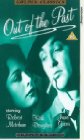
OUT OF THE PAST (1947)

December 4, 2011

 Greetings again from the darkness. Finally caught back up to this one after close to 30 years. I have always listed it among my favorite Film Noir movies and now I remember why! The story is not dissimilar to many of the detective films from the 40’s and 50’s, but this one is based on Daniel Mainwaring‘s brilliantly titled novel “Build My Gallows High”. It stars ultra-cool Robert Mitchum and an up-and-coming actor named Kirk Douglas, in just his second film.

 As with any Film Noir, there must be a “dame” stirring up trouble for the men who just can’t seem to think clearly around them. Here we get two fabulous women who can’t be trusted: Jane Greer and Rhonda Fleming. We also get some of the most creative lighting you will ever see in a movie. I am guessing the production budget was very small, but the shadows and darkness work very well for the story. The next best part of this one is the stream of classic lines. Some are funny and others are quite jolting, given the seriousness with which they are delivered.

The movie is directed by Jacques Tourneur, who also directed Cat People just a few years prior. His best scenes here involve Mitchum, Greer and Douglas playing cat and mouse with dialogue, but I also enjoyed Rhonda Fleming’s brief but impactful appearance.

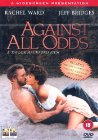
 A couple of interesting notes on those involved. Jane Greer was discovered by Howard Hughes and has some pretty frightening things to say about their time together. She was a very young bride to Rudy Vallee, but Hughes broke up the marriage pretty quickly. Ms. Greer also appeared in Against All Odds in 1984. That film was basically an updated remake of this one. In that film, she played the mother of Rachel Ward‘s character. Since this was Kirk Douglas’ second film, you can really see how little range he had at this point. Very interesting to compare this to some of his later work.  If you enjoy the noir genre, this is a must see.

check out 39 seconds of one scene and you’ll get a feel for the shadow effects:


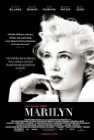
MY WEEK WITH MARILYN

December 2, 2011

 Greetings again from the darkness. I was initially ambivalent on seeing a movie about Marilyn Monroe making a movie. My twisted thinking was that I have already seen the actual film The Prince and the Showgirl, and this particular story is based on a book by Colin Clark who claims to have had a connection/fling with Marilyn during the production phase of the film. Since I had always doubted Clark’s claim, it wasn’t until early reviews of Michelle Williams‘ performance hit Twitter that I started to get interested.

 For an actor, playing Marilyn Monroe must be similar to playing Elvis. Everyone on earth knows what the real deal looks and sounds like. What is interesting about this film is that it is chock-full of actors playing well known people. In addition to Williams/Monroe, we get Eddie Redmayne as Colin, Kenneth Branagh as Sir Lawrence Olivier, Julia Ormond as Vivia Leigh (Olivier’s wife), Toby Jones as Arthur Jacobs, Dominic Cooper as Milton Greene, Karl Moffat as DP Jack Cardiff, Dame Judi Dench playing Dame Sybil Thorndyke, Zoe Wannamaker playing Paula Strasberg (Monroe’s acting coach), and Dougray Scott as Arthur Miller (the famous writer and Monroe’s husband at the time).

 Michelle Williams dominates the film just as Monroe would have. She mimics the iconic movements, but best succeeds in capturing the essence of Marilyn. History states that Olivier was very impatient with Marilyn and struggled with her irregular schedule and “method” approach to acting (which he abhorred). It is little wonder that Marilyn struggled so with her first and only film outside of the U.S. Many have an image of Ms. Monroe as a ditsy blonde, but there are a couple of well-documented autobiographies that show a pretty shrewd business person and one very aware of her marketable and valuable public image.

 As for the film, it rates a couple of ticks higher thanks to the outstanding performances of both Michelle Williams and Kenneth Branagh. If not for them, it would be little more than a TV movie. Speaking of, this is the first feature film for director Simon Curtis, whose previous work has been seen on television. Personally, I would have preferred a movie that focused on either the making of The Prince and the Showgirl or a view of the human side of Marilyn. Here, we get a shortage of each.

SEE THIS MOVIE IF: you want to see Michelle Williams’ beautiful performance as Marilyn (she is likely to get an Oscar nom)

SKIP THIS MOVIE IF: you are looking for any real insight into what Marilyn was like as a real person (this one just skims the surface)

watch the trailer:


HUGO

November 29, 2011

 Greetings again from the darkness. This latest from Martin Scorsese can be fitted with multiple labels and each would be correct: a tribute to the birth of movies, a case for film preservation, a children’s fable, a special effects/3D extravaganza, a family movie with touches of Dickens. Very few directors would tackle such an ambitious project and succeed in producing such a magical experience.

Based on Brian Selznick‘s (relative to the film giant David O. Selznick) children’s book “The Invention of Hugo Cabret”, this is a story of redemption and fulfillment. Asa Butterfield plays Hugo, made an orphan when his watchmaker father (Jude Law) dies in a fire. Hugo gathers up the project he and his dad had been working on, and  moves in with his drunkard Uncle Claude (Ray Winstone). They live in the walls of a 1930’s Paris train station and maintain all the clocks, ensuring accurate time for travellers. When his uncle disappears, Hugo carries on the daily mission unseen by passengers and station staff. He steals the occasional croissant and milk to survive, all while continuing the mission of repairing the fantastic automaton his dad salvaged. Hugo is convinced there is a hidden message from his father that will be revealed when the automaton is fully functioning.

 Hugo gets cross-ways with a station toy vendor named Georges, played by Sir Ben Kingsley. Georges is a bitter old man and has no time for Hugo the urchin. Chloe Moretz plays Isabelle, a ward unto Georges, and she and Hugo strike up a friendship. Hugo introduces Isabelle to the world of cinema … previously off-limits to her thanks to Georges. She returns the favor by awakening Hugo to the power of books in a store run by the mysterious, and always great, Christopher Lee. All this is happening while Hugo tries to evade the grasp of the oddly dedicated and slightly twisted station inspector played by Sacha Baron Cohen.

 The kids’ research and automaton revealed hint lead them to a film history book written by Rene Tabard (Michael Stuhlbarg). It’s here that they discover Georges is really George Melies, the famous pioneer of film who developed the first special effects and studio system. If you know much of film history, then you recognize Melies as the one who brought us the 1902 A Trip to the Moon. It is here that Scorsese delivers a quick recap of the origination of film, including the Lumiere Brothers, the famous clock stunt by Harold Lloyd and other silent film classics like Buster Keaton and Charlie Chaplin. The best portion is dedicated to recreating the creative community  used by Melies to produce films with his wife in a make-shift studio.

 It is here that we are allowed to remember just how magical movies can be and how the best ones fill us with a sense of wonderment. The lines between what we feel and what Scorsese is showing us becomes so blurred it no longer matters. As Isabelle is overwhelmed in the theatre, that same feeling sweeps over us. How interesting that Scorsese’s first special effects film features the man who originated film special effects. We even get a re-creation of the famous Lumiere Brothers’ oncoming locomotive clip that caused audiences to jump. We get it in 3D in Hugo’s own station!

 I have been extremely critical of 3D and its misuse in movies these past couple of years. It rarely adds to the movie and always dims the colors and brightness. Scorsese is a firm believer in the technology and set out to show what can be done and how it can compliment the story. While more impressive than any 3D since Avatar, I still have my doubts about the benefits. What I do know is that if you can overlook the story that drags a bit and the possibly unnecessary 3D effects, you will probably find the film to be extremely entertaining and fun to watch. Howard Shore‘s score plays a vital role and supporting work comes from Emily Mortimer, Richard Griffiths, and Helen McCrory. It’s not for the youngest kids, but it will make you feel like a kid … while reminding you that movies are the stuff that dreams are made of.

Note: with a budget of almost $170 million, there is almost no chance that this film turns a profit, but for full effect, I would encourage you to see this on the big screen.

SEE THIS MOVIE IF: you can enjoy a tribute to film history wrapped in a family film designed to flaunt the power of 3D OR you have a pretty smart kid aged 8 or older who could appreciate the most impressive movie prop of the year (automaton).

SKIP THIS MOVIE IF: you lean towards a cynical mindset and are unlikely to open up for a big budget children’s fable making a case for film preservation

watch the trailer:


MELANCHOLIA

November 24, 2011

 Greetings again from the darkness. Anyone who walks into this film having not seen the trailer or being unfamiliar with the previous works of writer/director Lars von Trier has my sincere sympathy. He is a unique and ambitious filmmaker with a touch of expressionism, abstractness and a unique visual style. His movies are seen by a small audience and appreciated by even fewer. And on top of that, he may be the least politically correct celeb working today.

The film begins with a most unusual prologue backed by an ominous Wagner composition and numerous visuals that play like slow moving paintings come to life. Clearly, the end of the world is at hand. After that, we get two parts: Part 1 Justine, and Part 2 Claire. Justine (Kristen Dunst) is first seen in her wedding gown heading towards the reception with her new husband (Alexander Skarsgard). Normally, this is one of the happiest times of anyone’s life, but here something is just not quite right. Once inside, we begin to understand. Justine’s family and friends are all a bit off-center, and she is the worst of all.

 I won’t go into the details because what really matters is that Melancholia, a large blue planet, is headed directly towards earth. Kiefer Sutherland plays Justine’s rich brother-in-law and he assures everyone that the “pass by” will be a special moment and no need to fear a collision. His wife Claire (Charlotte Gainsbourg) believes her husband and tries to comfort her sister Justine.

The supporting cast is outstanding and includes not only Alexander Skarsgard as the groom, but also his father Stellan Skarsgard as Justine’s over-bearing employer; Charlotte Rampling as Justine’s beyond bitter mother; John Hurt as the take-no-responsibilty father; Jesper Christensen as the faithful caretaker; and creepy Udo Kier as the wedding planner. It’s quite a cast and the only real point of their existence seems to be having Justine and the viewer question if this existence is better than no existence … which could happen in 5 days.

 This year has provided quite a metaphysical buffet at the theater. We have had The Tree of Life, Another Earth, Take Shelter and now this entry from von Trier. This group will have you questioning many things in life, and beyond. The other similarity between the three is the artistic craftsmanship with which each is made. Clearly two famous paintings play a key role for von Trier, and his final shot is done with such a deft touch that only guys like Tony Scott and Michael Bay will feel let down.

I certainly can’t recommend this one to all. It is somewhat slow moving and filled with symbolism and characters bordering on depression. It is beautiful to look at, but tough to watch. My guess is you already know if this is one for you.

SEE THIS MOVIE IF: you enjoy risky, creative filmmaking designed to initiate thought in the viewer … even if that thought might be questioning how one would handle pending doom.

SKIP THIS MOVIE IF: you look to movies to be uplifting and funny – a way to take your mind off the heavy stuff

watch the trailer:


THE DESCENDANTS

November 19, 2011

 Greetings again from the darkness. Ahh … finally! I was beginning to wonder if 2011 was going to produce a film that I could whole-heartedly recommend to both cinephiles and casual movie goers. Writer/director Alexander Payne has delivered a gem. And in a giant surprise, it stars George Clooney as a guy going through real life stress, and in his own words, “just trying to keep his head above water“.

Clooney plays Matt King, a lawyer in Hawaii who is also the trustee of a family land trust. Only this is no typical family land trust. It involves thousands of pristine Kauai acreage that has been left untouched for hundreds of years. The endless stream of “cousins” want him to sell to a developer for enough gold to make them all filthy rich. The locals don’t want him to sell as they believe in the spiritual nature of land, not the green backs of hotels and beachfront homes. And Matt only wishes this was his biggest problem.

 Matt’s fun-loving wife has been injured in a speed boat accident. She is in a coma and the prognosis is not bright. She also has a living will that states no life-support, which is another of the problems Matt must face. Additionally, he must re-connect with his two daughters. See, Matt has been the workaholic attorney that has left the child-rearing to his wife. The two daughters prove to be more than a hand full for the clueless Matt. Scottie (Amana Miller) is the youngest and is struggling with how to react to the state of her mother. Alexandra (Shailene Woodley) is off at boarding school in hopes that she can be tamed from her wild ways. These three must come together and really bond for the first time.

 Those three problems would be enough for any one man to handle, but Matt receives one more bit of information. Turns out his wife was having an affair at the time of her boating accident. So, “having a bad day” seems a little insufficient for Matt’s situation. At this point, the movie takes a sharp left turn turn and almost becomes a mini-road trip movie. Matt, his two daughters and Alexandra’s odd friend Sid (Nick Krause) take on the mission of informing friends and relatives, while also tracking down the “other guy”.

It may seem like I have given away much of the story, but in fact, all of that has been discussed in one of the trailers. What sets this film apart is how this web of stress is handled by Matt and daughters. The story is based on the novel by Kaui Hart Hemmings, and the screenplay is co-written by Payne, Nat Faxon and Jim Rash. Watching Matt as he struggles through each decision and situation makes us pull for him, even though he really isn’t anything special … he’s not all that friendly or charming (a rarity for a Clooney character), and certainly not a polished parent.

 Alexander Payne has given us About Schmidt and it’s been 7 years since his last feature, Sideways. Both of those excellent films, and this one, give us a character on the brink … full crisis mode. Some of his characters lash out (Paul Giamatti in Sideways), while others turn to introspection (Jack Nicholson in About Schmidt). Here, Clooney’s character seems to have many decisions to make, but the biggest one is reconnecting with his own soul and being the kind of man he needs to be, for himself, his daughters and the sacred land.

 In addition to Clooney’s fine work, I was very impressed with Shailene Woodley as his oldest daughter.  Veteran Robert Forster turns in a macho role as Clooney’s father-in-law, who harbors some resentment towards him.  Matthew Lilliard and the underrated Judy Greer play the crucial roles of Mr. and Mrs. Brian Speer. Beau Bridges plays the leader of the cousins, which also includes Michael Ontkean (from The Rookies in the 70’s).  You might also recognize surfing legend Laird Hamilton as Troy, the driver of the boat when Clooney’s wife is injured. The other two key characters are the beautiful state of Hawaii and the pitch perfect guitar and island music throughout.

The characters and story are so effective that you will find yourself tearing up in the same scene where you laugh out loud. And that will happen more than once. Few filmmakers can walk the high wire between comedy and drama better than Payne. We connect with these character as they are real people … we KNOW these people. And we know excellent filmmaking when we see it.

SEE THIS MOVIE IF: you enjoy a multi-faceted script with realistic characters and dialogue that sounds like something any of us might actually say OR you would like to see Clooney’s best performance to date (even better than Syriana).

SKIP THIS MOVIE IF: you prefer your comedy to lean towards slapstick and your drama to be a bit less real-world scenario

watch the trailer:


J. EDGAR

November 14, 2011

 Greetings again from the darkness. The best place to start with this one is by saying what it isn’t. It is not a documentary. It is not a very detailed history lesson. It is not the best biography of the man. It is not a behind-the-scenes of the FBI. What it is … another piece of quality filmmaking from Clint Eastwood. It’s an overview of J. Edgar Hoover and his nearly 50 years of civil service under 8 U.S. Presidents.

The screenplay is from Dustin Lance Black, who also wrote the script for Milk, based on the story of Harvey Milk (played by Sean Penn). Clearly, Eastwood and Black had no interest in setting forth an historical drama that couldn’t possibly be told within a two hour film structure. No, this is more of a fat-free character study that hits only a few of the highlights from an enigmatic man’s fascinating career. With so few available details about Hoover’s personal life, some speculation is required … but Eastwood walks a tightrope so as to make neither a statement nor mockery.

 Therein lies the only problem with the film. While hypnotic to watch, we are left with an empty feeling when it’s over. How can that be? This man built the foundation of the FBI. He instigated the fingerprint system. He armed the secret police. His agency tracked down notorious gangsters. He led an anti-communist movement. He was in the middle of the investigation for the Charles Lindbergh baby kidnapping. He supposedly kept secret files on most politicians and celebrities. He viewed the security of Americans as his responsibility. He was smack dab in the middle of almost 50 years of American history … all while being a power-hungry, paranoid mama’s boy who may have been, in her words, a daffodil.

An elderly Hoover’s own words tell his story as he dictates his memoirs. We are told that his memories of these stories are blurred and he takes a few liberties to say the least. He longed to be the comic book hero like his own G-Men. He longed to be recognized for his contributions, even to the point of desiring a level of celebrity. In his mind, he was the face of national security and the hero cuffing many outlaws. In reality, he was also the black-mailing schemer who so frightened Presidents with his secret files, that all 8 of them backed off firing him. He could be viewed as the ultimate survivor in a town where few careers last so long and cross party lines.

 The film picks up in 1919 when Hoover is a youngster making a name for himself as an all-work, no play type. That reputation stuck with him until the end. When he was first promoted, he hired Helen Gandy (Naomi Watts)to be his secretary. In one of the most remarkable hires of all time, she sticks with him until his death in 1972. Staunchly loyal to Hoover and totally dedicated to her job, Ms. Gandy helped Hoover with decisions and processes throughout. The other member of his inner circle was Clyde Tolson (Armie Hammer). Tolson was Hoover’s right-hand man at the bureau, his trusted adviser, his daily lunch partner, and speculation never ceased on their personal ties.

 Judi Dench plays Annie Hoover, J Edgar’s controlling mother, whom he lived with until her death. She was also his adviser, supporter and probably a factor in his stunted social skills. We also get glimpses of how he dealt with Robert Kennedy (Jeffrey Donovan) and his overall lack of respect for John Kennedy, Martin Luther King, Jr. and Richard Nixon. The Lindbergh case plays a key role because Hoover used it to gain more power for his bureau and increase funding for weapons, forensic labs and resources.

 As for Leonardo DiCaprio, it’s difficult to explain just how outstanding his lead performance is. It could have been a caricature, but instead he affords Hoover the respect his place in history demands. The 50 years of aging through make-up can be startling, especially since the time lines are mixed up throughout. His speech pattern mimics Hoover’s, as does the growing waist line. There are some Citizen Kane elements at work in how the story is told and how it’s filmed, but Eastwood wouldn’t shy away from such comparisons.

If you want real details on Hoover, there are some very in-depth biographies out there. The number of documentaries and history books for this era are limitless. What Eastwood delivers here is an introduction to J Edgar Hoover. It is interesting enough to watch, and Leonardo’s performance is a must-see, but the film lacks the depth warranted by the full story.

SEE THIS MOVIE IF: you want a primer to the life and career of Hoover OR you want to see DiCaprio’s performance, which will almost certainly receive an Oscar nom.

SKIP THIS MOVIE IF: you are looking for a detailed history on the FBI or the life of Hoover

watch the trailer:


DOUBLE INDEMNITY (1944) revisited

November 12, 2011

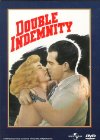
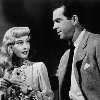
 “I wonder if you wonder.”  Every time I hear Walter Neff say those words to Phyllis Dietrichson as their intial encounter concludes, I smile and settle in for another round of Double Indemnity (1944).  Chris Vognar, Film Critic for the Dallas Morning News kicked off his Fall Film Noir Series (co-sponsored by Dallas Film Society) with one of my all-time favorites.  Though I have seen it many times over the years, this was my first time on the big screen … and from a 35mm print!  So much of the subtle filmmaking becomes apparent – the variance of lighting, the intensity of shadows, and the vividness of close-ups.  This reinforces my belief that we should never miss an opportunity to view good films in a theatre setting … just as the director intended.

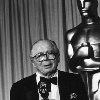
 Since this film was released 67 years ago, I won’t bother about noting “SPOILERS“.  If you haven’t seen it and plan to, you might stop reading here.  If you would like a little insight, then let’s keep going.  Billy Wilder (left) directed the film and his place as a Hollywood legend is quite secure.  He was nominated for 21 Oscars (Director, Writer, Producer) and had 3 wins.  Some of his classics are: The Lost Weekend, Sunset Blvd, Witness for the Prosecution, Some Like it Hot, The Apartment, The Front Page.  Many think of Wilder as a comedic filmmaker and he certainly had success in that genre, but if you watch closely, even his comedies have a dark element to them.

Double Indemnity is based on the novella by James M Cain, who also wrote Mildred Pierce and The Postman Always Rings Twice.  Wilder was a fan of Cain’s book, but knew the dialogue wouldn’t work well on screen.  So together with Raymond Chandler they wrote a screenplay filled with crackling lines and a constant feeling of dread and pending doom.  As great as the script is, it is heightened by a wonderful cast that includes Fred MacMurray, Barbara Stanwyck, Edward G Robinson, Porter Hall, Jean Heather, Tom Powers, Richard Gaines and Byron Barr.

For me, MacMurray’s performance is what brings the words to life and jumps the film to the “must see” category. He is playing against two Hollywood heavyweights in Stanwyck and Robinson, but we are somehow sympathetic to this not-so-bright guy who gets played like a fiddle by the villainous, wily woman he lusts after.  Even as he is recording his confession, a part of us understands how he got drawn into MURDER!  Not just any murder, but one for money and love … only there is no money, and there is no love.

 Ms. Stanwyck is perfectly cast as the femme fatale who weaves her web of deceit and destruction.  She quickly spots the vulnerability of MacMurray’s character and uses her assets just enough to hold the leash tight.  It is a testament to her screen presence that she can pull off the sultry siren while sporting a less-than-desirable blonde wig.  At the time, the wig was so controversial that the producers compared it to George Washington and wanted it trashed.  However, filming was too far along and now it’s impossible to imagine her looking any other way.  Besides, MacMurray only seems to notice her anklet!

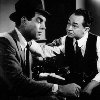
 Edward G Robinson made a name for himself as a tough-guy actor … cop and mobster all rolled into one.  Here he plays the insurance investigator with a sixth-sense for fraudulent claims.  He is a hard-nosed, dedicated employee who takes his responsibility very seriously and has no sympathy for those who cheat his cherished system.  He has a soft spot for co-worker MacMurray, even though he is one of the back-slapping salesmen he so loathes.  Their relationship in the film is one of respect and about as close as two professional men could be, given the era.  When Robinson goes off on his rant about suicide research, he is a joy to behold.  This guy could flat chew scenery.

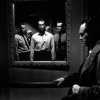
 In addition to the infamous wig, you might also notice that MacMurray is wearing a wedding band throughout the film, even though his character is clearly a single man.  Wilder and MacMurray stated many times over the years that was simply a mistake and not “caught” until post-production.  Expect a chuckle when MacMurray, as the narrator, enviously describes a Spanish style Los Angeles home as costing $30,000 … probably less than the property taxes would be on that house today.  The film originally was to end with MacMurray in the Gas Chamber and Robinson looking on (inset), but this was deemed inappropriate.  One last little nugget: early in the film, MacMurray walks out of Robinson’s office and past a man sitting on a hallway chair reading a paperback book.  That man?  Raymond Chandler, in his only on screen appearance.

The film is often described as quintessential Film Noir.  Another prime example of Film Noir would be The Big Sleep (1946), based on a Raymond Chandler novel, directed by Howard Hawks, and starring Humphrey Bogart and Lauren Bacall.   While Film Noir might not be an easily definable term, there are certain elements that must be present.  Lighting is key.  Shadows must be prevalent.  Some type of detective story is usually at the center, and we typically get some poor schlub of a guy being yanked around by the femme fatale.  The right “mood” is essential … as a viewer we know things are headed down the wrong path, but we just can’t save the characters from their own poor choices.  But neither can we look away.  That helpless feeling is a strong indicator that you just watched a terrific Film Noir.

watch the original trailer:


LIKE CRAZY

November 5, 2011

 Greetings again from the darkness. The Sundance Film Festival got it right when it awarded this film its Grand Jury award. This is wonderful independent filmmaking – the kind that draws in our own emotions and makes us feel what the characters feel, while also forcing us to deal with our own memories. If you enjoy fluffy Hollywodd rom-coms, you may not have what it takes to watch this raw “first” love story. I felt tightness in my chest and an aching in my bones … and I am a grumpy old man! 

I have been on the bandwagon for Elizabeth Olsen‘s breakout performance in Martha Marcy May Marlene. Without hesitation, I will say that Felicity Jones deserves the same accolades. It’s her first US film, but she is flat out spectacular in conveying deep emotional swings. I will see this one again just to watch her every blink and nod. She comes across as a fantastical blend of the Mara sisters – some of Kate’s radiance mixed with Rooney’s deep soul. It is always exciting to see such dramatic new talent at the early stages of their career.

 Writer/director Drake Doremus clearly has a bond to this story as the long term relationship and themes of separation, patience and true love are played with a cutting edge reality that we rarely see on screen. Anna (Jones) falls for classmate Jacob (Anton Yelchin) and we experience the clumsiness and hopeful flirtations of their early dates. The kicker is that Anna’s student visa expires at the end of the semester and she makes the foolish decision to stay in bed with Jacob for the summer. This keeps her from re-entering the US when she tries to return to him.

To really connect with this film, you need to put yourself back in the first love moment or more so, at a time when you experienced a long distance relationship. That excruciating feeling that every moment apart would never end. What had me scratching my head a bit was the fact that Jacob never packed up and headed to London to be with Anna for good. He is a furniture designer who works in a loft in Santa Monica. Thanks to the internet and the fact that people all over the world buy furniture, it seems like the perfect business to run from anywhere … say, London with your soul mate! Made me believe that possibly Jacob wasn’t as gaga as Anna.

 Both of them take on close companions. Jacob’s is played wonderfully by Jennifer Lawrence (Winters Bone). She is very sweet and clearly loves Jacob, which raised another question for me. What to think of those who can fall deeply for one who is not “all in” for them? Anna moves in with Charlie Bewley who also misreads the buy-in and makes the biggest mistake a guy can make … don’t ask the question if you don’t know the answer.

There are some terrific scenes with Anna’s parents played by Oliver Muirhead and Alex Kingston, both whom you will recognize. Also, Anna’s publisher is played by Finola Hughes and there are a couple of odd scenes between the two so that we understand just how talented Anna is as a writer. The ending is absolutely perfect and the two future mega stars (Jones and Yelchin) capture the moment with precision and heartfelt doubt and wonderment. It’s not the clean ending we Americans have come to expect, but it’s one that loudly announces the arrival of Felicity Jones, Anton Yelchin and director Drake Doremus.

 I was lucky enough to attend the opening night in Dallas, and Mr. Doremus (pictured, left) was in attendance for a Q&A. Fully expecting a brooding, beret-wearing film school reject, I was shocked when Doremus proved to be charming, energetic, thoughtful and downright appreciative of comments from the audience. He explained that much of the dialogue was improvised between the actors, and that the film was made for $250,000. If you are unfamiliar with filmmaking, $250,000 is roughly what Tom Cruise gets for a breakfast budget on his films. These points just made me more of a fan of the director and the film.

SEE THIS MOVIE IF: you are fan of independent filmmaking OR really talented young actors OR non-traditional love stories OR you understand “smudgeness” as used by Anna in a poem to describe their love

SKIP THIS MOVIE IF: you prefer your romantic movies to follow the fluffy, feel good formula OR your skepticism for soul mates is beyond hope

watch the trailer:


THE RUM DIARY

November 5, 2011

 Greetings again from the darkness. I suppose we are to give Hunter S Thompson the benefit of the doubt. Some of his writings are historically invaluable and models of brilliant writing. I doubt many would include The Rum Diary in that category. Director Bruce Robinson (Jennifer Eight, Withnail and I) does the best he can with enormous help from Thompson’s friend and biggest cheerleader, Johnny Depp.

The film plays as an autobiography supposing Thompson’s character Paul Kemp (Depp) would have been employed in 1960 at the San Juan Puerto Rico STAR, a newspaper run by English speaking Americans trying to report in Spanish speaking land. The editor is Lotterman (Richard Jenkins) who just wants simple human interest stories that the tourists will enjoy. When Kemp arrives, Lotterman asks him what kind of drinker he is. Kemp replies “the high end of social“. A greater understatement may never have been uttered. Kemp, and of course, the real life Thompson, ingested liquor at a pace and volume greater than a marathoner takes in water.

 Kemp finds a drinking buddy in Sala (Michael Rispoli) who is the paper’s photographer. He is drawn into a shady land development plot by Sanderson (Aaron Eckhart), an American looking to capitalize financially by raping the undeveloped beach front land. He needs the help of Kemp to “sell” the project to investors, tourists and locals. Not surprisingly, Kemp’s vision is a bit cloudy and he screws this up while also turning the head of Sanderson’s lady, Chenault (Amber Heard).  All the while, a shady, oddball figure played by Giovanni Ribisi is ALWAYS around.  Ribisi’s character is the guy who, if in prison, other inmates would come to for “supplies”.  Somehow, though, this character is free to roam about San Juan.

 Depp does a standout job as Thompson again (Fear and Loathing in Las Vegas) with his speech pattern and ever present sunglasses. The feel of the 1960’s is on display with fashion and autos, but this one just didn’t do it for me. I suppose the message from Thompson here is that he did what he always envisioned himself doing … he went hard after the establishment bad guys and brought them down hard. However, this story rings a bit hollow and there are just too many missing pieces and too many holes.

SEE THIS MOVIE IF: you never miss anything with Johnny Depp or written by Hunter S Thompson … there is really no other reason.

SKIP THIS MOVIE IF: you are looking for a real introduction to the Gonzo Journalism that Hunter S Thompson was best at

watch the trailer: