THE KILLING (1956) revisited

March 9, 2012

 Greetings again from the darkness. What a treat to see this one on the big screen, some 56 years after its release. This is famed director Stanley Kubrick‘s first real feature-length film and is a quasi-film noir near the end of that genre’s run. You undoubtedly know Kubrick’s more famous work on 2001: A Space Odyssey, A Clockwork Orange, and The Shining, among others. His amazing eye with the camera is on full display here, but this provides quite a different look from his later works.

Sterling Hayden stars as Johnny, the leader of a gang who plans to rob a racetrack of 2 million dollars. At its core, this is a traditional heist film, but it is presented in anything but a traditional manner. The non-linear timeline and constant flashbacks and flash-forwards influenced many future filmmakers such as Quentin Tarantino and Christopher Nolan. For the era, this was incredibly unique and a bit experimental. In fact, the studio forced Kubrick to add the narrator post-production to make it easier for the viewer to follow. The narrator is Art Gilmore, a prolific voice actor, who was heard in numerous movies, TV shows and previews.

 Support work is provided by many familiar character actors that we all recognize. Elisha Cook is best known for his work in The Maltese Falcon and Vince Edwards gained fame as TV’s “Ben Casey”. There are two actresses of note here. Marie Windsor plays the scheming, double-crossing wife/girlfriend whom Hayden’s character claims has a dollar sign right where her heart should be. Ms. Windsor also appeared in Swamp Women, director Roger Corman‘s directorial debut. Coleen Gray plays Hayden’s loyal girlfriend. Ms. Gray had a long, prolific career as an actress, but never achieved the stardom that many predicted.

 As viewers, we are included in most of the strategy involved in the heist and recognize many of the details as they occur. One of the more fascinating scenes is a bar fight featuring Kola Kwariani. This is a very unusually staged fight and is actually quite humorous today, with a touch of The Three Stooges. This was Mr. Kwariani’s only film appearance and it’s quite memorable for a professional wrestler! Another sequence that really stands out features Timothy Carey as a sharpshooter. His speech pattern is a bit bizarre, but we never doubt his commitment to the cause. Carey’s character has a very daring exchange with a race track security guard that is even uncomfortable so many years later.

Kubrick was groomed as a still photographer and his expert eye is obvious in each of his films. His approach to filming the horse racing scenes is spectacular, and stands in contrast to his love of stressed faces in close-ups. Supposedly Rodney Dangerfield appears as an extra during the bar fight, but I missed him. Probably need the DVD for that! This one is certainly worth checking out for a glimpse into early Kubrick and the screen magnetism of Sterling Hayden … who 16 years later (as Sgt McClusky) would break the jaw of Michael Corleone with a single punch, and later be the victim of one of Hollywood’s all-time mob hit scenes in Louis restaurant.

SEE THIS MOVIE IF: you are interested in what early Kubrick looks like compared to his later hits OR you want to see Sterling Hayden in prime form

SKIP THIS MOVIE IF: the gangster and heist films of the 40’s and 50’s aren’t to your taste

see the original trailer:


WE NEED TO TALK ABOUT KEVIN (2011)

March 4, 2012

 Greetings again from the darkness. The Brady Bunch, this isn’t. It’s also not the place to look for helpful parenting tips. In fact, the story revolves around Eva, a woman (Tilda Swinton) who apparently didn’t want to have a child … at least not at this time, and certainly not THIS child. If you have seen The Omen, you probably gave thanks that you didn’t have a child like Damien. At least we knew Damien was the spawn of Satan. Eva’s son Kevin, is instead a good old fashioned psychopath. One who has an inherent need to cause pain and misery for his mother.

What a pair Eva and Kevin make. From day one, Kevin seems to sense his mother’s lack of joy in parenthood. And he seems to have a genetic disposition of making her pay. As with many psychopaths, his above average intelligence makes him all the more dangerous. He is tricky enough to keep his dad (John C Riley) clueless as to his nature, while causing much doubt in the dad’s mind as to the stability of his wife.

 My favorite part is actually how director Lynne Ramsay structured the storytelling. It goes beyond non-linear and actually bounces throughout three key periods: Kevin as a baby/toddler, Kevin as a 6-8 year old (Jason Newell), and Kevin as a teenager (Ezra Miller). Each age is progressively more frightening and disenchanting … and all of the “Kevin” actors glare with the same lifeless eyes. The film begins with what is an undetermined catastrophe. This event is slowly revealed over the course of the movie, though we witness events leading up to it, as well as the resulting fallout.

 There are recurring scenes where Eva is scrubbing the exterior of her house in an attempt to remove the red paint that was purposefully splattered. As a viewer, we understand that she has blood on her hands and she seems resigned to the fact that she is now a social outcast, even a pariah. We spend much of the movie in Eva’s jumbled thoughts as she tries to piece together what has happened and why. Of course, there is no simple answer. The title explains what was missing all along. There was no communication and no willingness to confront the problem … a psychopathic son born to a disenchanted woman who refuses to get past her lost dreams. To say they all paid the price is an understatement.

This film has a very limited audience, though my claim is that Ms. Swinton was quite deserving of an Oscar nomination. She wears defeat like a mask and lives in isolation better than most could. Even the music is offbeat and unusual in its use … thanks to Radiohead’s Jonny Greenwood. As filmmaking, this is high art. As storytelling, it’s a bit muddled and quite a downer.

SEE THIS MOVIE IF: you want to feel better about the kids you are raising

SKIP THIS MOVIE IF: you are looking for helpful parenting tips

watch the trailer:


THE GODFATHER (1972) revisited

March 3, 2012
 Black screen. Cue the lone trumpet’s haunting opening notes of Nino Rota‘s theme.  Close up of a suffering man.  “I believe in America.” That, my friends, is a powerful opening to a truly great film.
 
It’s been 40 years since it’s original release, and this latest remastering looked and sounded amazing on Cinemark’s largest screen. Following those opening moments, we get our first look at Marlon Brando as Vito Corleone. On this screen, it was almost like seeing him for the first time … a disquieting figure that oozes power and commands respect.
 
There is no need for another review of this truly classic American film.  Instead, this will offer a few observations (possible spoilers) and notes of interest … combined with the highest possible recommendation to watch this one again!
 
At its core, author Mario Puzo‘s story is about power, loyalty, trust and family.  We witness what happens when one is viewed as having too much power. Loyalty is rewarded, and disloyalty brings the harshest possible penalty.  Trust is gained over time, but lost in a flash. And family is the most complex subject of all.
 
 Over the years, there have been a few movies with more star-studded casts, but it’s difficult to imagine a more perfectly selected cast: Marlon Brando, James Caan, Robert Duvall, Al Pacino, John Cazale, Sterling Hayden, Richard Conte, Diane Keaton, Talia Shire, Abe Vigoda.  Each of these actors have graced the screen in numerous roles, but for this three hour film, they become Corleones, associates, enemies, etc.  
 
There were a few things that jumped out at me during this viewing.  The use of oranges (the fruit) contradicts the health benefits preached by the medical profession. Every time we see a bowl of fruit, a fruit stand or someone peeling, eating, or selecting an orange, a scene of doom (usually quite violent) is soon to follow.  Carlo is even wearing an orange suit when Sonny (James Caan) shows up and paints the sidewalk with him. Don’t miss the billboard featuring oranges that Sonny drives by just before he pulls up to the toll booth. Brando’s final scene is preceded by him playfully scaring his grandson with an orange peel.  I understand the importance of Vitamin C, but I think I’ll stick with supplements!
 
 It’s very interesting to note the camera angles throughout the movie.  In an unusual approach, director Francis Ford Coppola uses an “eye-level” camera almost exclusively.  This gives the viewer the feeling of being part of the scene, especially during the small group meetings within Corleone’s dimly lit office.  The few exceptions are the overhead shot of Corleone being gunned down, the Los Angeles cityscape, and a couple of shots at the wedding to emphasize the scale of the event.
 
The famous “Mattress Sequence” was put together by George Lucas (Star Wars fame) for his friend Coppola.  This is the segment after the Louis Restaurant shooting where we get a montage of B&W crime photos and newspaper headlines. These are real life crime photos and one of the shots is of Frank Nitti, Al Capone’s trusted enforcer.
 
It’s quite fascinating to recognize how many “classic” lines of dialogue sprung from the movie, especially when you notice the minimalistic approach to dialogue used by Puzo and Coppola.  Much of the communication is non-verbal body language, glances, nods and shrugs … Brando, especially, is a master at this.
 
 One of the more remarkable facets of the film is the transformation of Michael (Al Pacino).  We first see him as a dashing war hero relaxing at the wedding with his girlfriend (a baby-faced Diane Keaton). He is very laid back and kind of cocky with the thought that he can rise above the dirty family business. He sees himself as better than that. Watch the subtle changes in his appearance … his hair, his posture, his eyes, even his hat!  As great as Brando is as the Don, it’s Pacino’s performance that really takes the film to an unprecedented level.  It’s really fun to compare Michael’s even-keeled, calm processing approach to the high-strung, act-now-think-later approach of his brother Sonny.
 
 The final note involves actor John Cazale. Here (and in part 2) he plays Fredo as a frightened, insecure puppy who is desperate to find his place.  Imagine your father being Vito Corleone and your brothers are Sonny and Michael.  It’s to be expected that you might be overlooked and overpowered in conversation. The really interesting note about Cazale is that this was his feature film debut.  He went on to make 4 more films before cancer took his life in 1978.  Cazale made 5 films and all 5 were nominated for Best Picture (both Godfather films, The Conversation, Dog Day Afternoon, The Deer Hunter).  He was engaged to Meryl Streep at the time of his death.
 
So the real point here is that if you ever doubt the magic and power of movies … shut off your phone, close the blinds, take the cannoli, and let The Godfather absorb your thoughts.  While you are at it, remember … it’s not personal, it’s business (only you shouldn’t really believe that).
 
Thanks to Cinemark for making me an offer I couldn’t refuse.

W./E.

February 25, 2012

 Greetings again from the darkness. The true story of Edward abdicating the British crown for the love of his life transcends romance or history. It is even more interesting than the story of his brother’s reign in his place … as documented by Oscar winner The King’s Speech. To think this man surrendered the power that comes with being King, lost his family, and was outcast from his beloved country, all because he chose this woman … well that’s what dreams are made of.

This particular presentation is brought to us by director Madonna, who also co-wrote the script with Alek Keshishiam (the director of Madonna: Truth or Dare, 1991). An attempt is made to correlate a modern story featuring a Wallis-and-Edward-obsessed Abbie Cornish, and a Russian security guard played by Oscar Isaac. This feeble story line intertwines with the original story of Wallis Simpson and Edward. Guess which story is WAY more interesting than the other? Despite that, much screen time is wasted on Cornish and Isaac.

 Andrea Roseborough is outstanding as Wallis, the American twice-divorced spirited woman that Edward (James D’Arcy) falls so hard for. The only issue I had was that her speech pattern and tone reminded me of Rosalind Russell every time she spouted off another tart line of dialogue. Still, the sparks were evident between between these two, despite the sometimes horrendous camera work. Which leads me to the biggest problem … this is a horrendously made film and it doesn’t come close to doing justice to such an intriguing true life story.

On the bright side, I found both the film score and the costumes to be spot on, and of the highest quality.

SEE THIS MOVIE IF: you are mentally strong enough to overlook the modern day story that muddies the water of the far more interesting historical romance.

SKIP THIS MOVIE IF: you bet the odds that Madonna would become a first rate movie director.

watch the trailer:


KISS ME DEADLY (1955) revisited

February 12, 2012

 Greetings again from the darkness. This one showed up near the finish line of the classic Film Noir era, and has some features that make it stand out: unusual female characters, a quasi-parody feel, and a twisty ending unlike others from the genre. Based loosely on the Mickey Spillane pulp novel, the screenplay comes from A.I. Bezzerides, who is best known as the creator of the TV series “The Big Valley”. The biggest impact comes from director Robert Aldrich.

Aldrich (pictured below) is a bit under-appreciated in Hollywood history having also directed Whatever Happened to Baby Jane; Hush, Hush, Sweet Charlotte; The Dirty Dozen; and The Longest Yard (the good one). Here he turns up the intensity on the Private Investigator story by having Mike Hammer (a terrific Ralph Meeker) be quite a bit more forceful and aggressive than Marlowe, Spade and the other famous movie PI’s.

The film starts quite abruptly with one of the more fascinating beginnings in all of cinema. A panicky woman is running barefoot down a highway at night, wearing nothing but a bathrobe. That woman is Cloris Leachman (her screen debut) and she nearly causes Hammer to wreck his pristine Jaguar. Their relationship doesn’t end well, but it leads to a very unique torture scene that is almost entirely out the viewer’s sight line. Still, we quickly realize Hammer is in some deep trouble and he’s not the kind to let it be.

Two other very interesting female characters are part of the story: Gaby Rodgers plays Lily Carver as a conniving trickster, and Maxine Cooper (pictured below with Meeker) is outstanding as Velda, Hammer’s trusty assistant and maybe more. Ms. Rodgers and Ms. Cooper have other common ground. They soon disappeared from Hollywood films as both married powerful men in the business. Rodgers married the famous songwriter Jerry Lieber, who wrote many Elvis Presley hits. and Cooper married an Oscar nominated writer, Sy Gomberg.

 The cast features many prominent and recognizable actors of the time including Albert Dekker, Paul Stewart, Wesley Addy, Nick Dennis, Jack Elam, and Jack Lambert. There is also a Butch Cassidy and the Sundance Kid connection. Strother Martin has a brief scene as does Percy Helton (as the Medical Examiner). In the Butch Cassidy movie, Martin is the colorful Bolivian payroll supervisor who hires the boys, and Helton is “Sweetface” who gives away their hiding place. Another note on Helton: he had one of the longest acting careers in history 1915-1978 (which was 7 years after his death).

If you love films from the 40’s and 50’s, then this is a must see. It certainly has a place in Film Noir lore (say that three times quickly), and also has numerous other points of interest. Keep in mind that it was filmed at the height of the Atomic Bomb era … when scare tactics were the norm.

watch the trailer:


RAMPART

February 9, 2012

 Greetings again from the darkness. Dirty cops happen in real life sometimes, and in the movies quite often. It can be an intriguing subject to explore … psychological demons, ego, power-mongering, etc. Typically we see it presented as a cop torn between doing the right thing and feeling like he is owed something. Rarely do we see a cop portrayed as beyond hope … so far gone morally that redemption is no longer even a possibility.

Writer James Ellroy (LA Confidential) and director Oren Moverman (The Messenger) present to us Officer Dave Brown, known to his fellow cops (and even his daughter) as “Date Rape” Dave. The moniker stems from a vice incident where Brown supposedly dished out street justice to a serial date rapist. With no proof of his guilt, Brown remained on the force and his rogue manner has now escalated to the point where he is a constant danger to himself and others. This guy has no moral filter for everyday living.

 Officer Brown is played with searing intensity by a Woody Harrelson you have never before seen. As loathsome a character as you will ever find, you cannot take your eyes off of him. He is hated by EVERYONE! Somehow he has daughters by his two ex-wives (who are sisters) and they all live together in a messed up commune where ‘hate’ is the secret word of the day, every day. Most of the time no one speaks to Dave except to tell him to “get out”. He spends his off hours drinking, smoking, doing drugs and having meaningless sex. Heck, that’s just about how he spends his time while on duty as well.  Dave’s behavior and the theme of the movie seem to be explained in a scene when he tells the IA Detective (Ice Cube) that he is not a racist because a he hates “all people equally“.  

The supporting cast is phenomenal, though most aren’t given but a scene or two. This includes Robin Wright (who nearly matches Dave in the tortured soul department), Sigourney Weaver, Anne Heche, Cynthia Nixon, Ned Beatty, Ben Foster, Ice Cube, and Steve Buscemi. The first hour feels like an Actor’s Retreat as most every scene introduces another familiar face.

 Still, as terrific as Harrelson is, and as deep as the cast is, the film is just too one note and downbeat and hopeless to captivate most viewers. Some of Moverman’s camera work is quite distracting and the sex club scene was pure overkill and unnecessary. Downward spiral is much too neutral a term to describe this character’s path and ultimately, that prevents the film from delivering any type of message. Harrelson had been mentioned as a possible Oscar candidate, but it would not be surprising if the film itself worked to his detriment.

SEE THIS MOVIE IF: you want to see a fantastic performance by Woody Harrelson OR you are just looking for a way to kill that pesky feeling of joy that’s been following you around lately

SKIP THIS MOVIE IF: you need to like at least one character in a movie

watch the trailer:


A SEPARATION (Jodaeiye Nader az Simin, Iran)

February 5, 2012

 Greetings again from the darkness. This one finally made it to Dallas and it’s now clear why it is not only the Oscar favorite for Best Foreign Language Film, but also received a Best Original Screenplay nomination. It’s truly that good … and powerful … and thought provoking. I caught myself changing my mind more than once on some of the issues these characters faced.

The film opens with Nader and Simin (Peyman Moadi and Leila Hatami) in front of a judge to determine if they will be granted a divorce. Simin wants to take their daughter Termeh (Sarina Farhadi, the director’s daughter) to study abroad. Nader doesn’t disagree with the plan, only the timing. He refuses to leave his Dad, who suffers from Alzheimer’s, alone in Iran. In a poignant moment, Nader points out that while his dad may not know him, he still certainly knows his dad. This is the first of a recurring theme throughout … there are numerous ways to look at every issue.

When Simin moves in with her mother, Nader hires Razieh (Sareh Bayat) to be his dad’s caregiver. After a few days, Nader and Razieh have a heated argument and he pushes her out of the apartment. Next thing he knows, she is in the hospital after a miscarriage. She and her husband (Shahab Hosseini) file a claim saying Nader pushed her down the stairs causing the miscarriage. The core of the story is the actions of the key characters during the inquisition process by the judge/inspector. Nothing seems clear cut, and each character’s recall and statements vary from moment to moment.

 A key point is that these are all basically good and moral people. Muslim believers in various stages. None would purposefully sin, yet each is trying to protect something or someone. The script is fascinating in its detail and subtlety. It moves like real life rather than a movie trying to get crammed into a 2 hour window. Written and directed by Asghar Farhadi, the film deserves all accolades and acclaim. Let’s hope it finds an audience in the U.S. We could certainly use more stories and films like this. My reasoning for keeping my comments short here is that I believe this movie is most effective when one can watch this movie with few pre-conceived notions. Let your mind follow its own path.

SEE THIS MOVIE IF: if you want to see one of the best films of 2011 OR you would like an example of superb  and complex screenwriting

SKIP THIS MOVIE: if you prefer movies that don’t require you to engage the decision-making part of your brain (this one keeps you working!)

watch the trailer:


ALBERT NOBBS

January 30, 2012

 Greetings again from the darkness. We are accustomed to movies with men posing as women for comedic effect … Mrs. Doubtfire and Tootsie come to mind. Watching an extremely serious, even bleak, film with a woman (Glenn Close) posing as a man is quite rare, and I will say, downright uncomfortable. When Albert Nobbs is described by his co-workers as a strange little man, they have no idea!

The film is based on a novella by George Moore, and has been a pet project of Glenn Close since she starred in the off-Broadway play in the 1980’s. Her dream has been realized in this film directed by Rodrigo Garcia. The film has an extremely talented cast including Brendan Gleeson as a doctor, Bronagh Gallagher as Mrs Page, Mia Wasikowska, Aaron Johnson and Brenda Fricker as hotel staff, Pauline Collins as the hotel proprietor, and Jonathan Rhys Meyers as a frequent hotel guest.  The song over the closing credits (co-written by Ms. Close) is sung by Sinead O’Connor.

Beyond that fabulous cast, the only thing that really makes the film worth watching is the curious performance of Ms. Close as Albert Nobbs and the much more colorful and lively turn by Janet McTeer as Mr. Page … the only one (we know of) who can understand what Albert is going through. Both are nominated for Oscars. During the film, we get the personal story from each of these characters on why they made their choice, but Albert’s story is a bit muddled. He/she seems to have just fallen into the life and been unable to stop for the past 30 years. Now, Albert has a dream that can only be achieved through the wages earned as the non-descript, efficient waiter in an 1890’s Dublin hotel.

 There are many painful scenes to watch, but none moreso than Albert courting Helen so that he can have a partner for his new business. He has no idea how a real relationship works or why people are attracted to each other. Albert just sees Helen as a means to an end, and is following the blueprint set by Mr. Page.  Some will enjoy this much more than I, as the thought of pretending to be someone you aren’t for 3 decades is just more than I can even comprehend. When Gleeson’s doctor spouts that he has no reason why people choose to lead such miserable lives, I concur whole-heartedly.

SEE THIS MOVIE IF: you want to see how little joy would be had spending one’s life pretending to be someone else OR you don’t want to miss two Oscar-caliber performances (Close, McTeer)

SKIP THIS MOVIE IF: misery in 1890’s Dublin holds no more interest for you than misery in any other era or locale

watch the trailer:


EXTREMELY LOUD AND INCREDIBLY CLOSE

January 22, 2012

 Greetings again from the darkness. Ten years since the September 11 attack, and it’s still difficult to talk about, write about, or make a movie about … and certainly difficult to critique any of those attempts. Since I haven’t read the novel by Jonathan Safran Foer (who also wrote “Everything is Illuminated”), my comments will be related only to this film directed by Stephen Daldry (The Hours, The Reader) and the script by Eric Roth (Forrest Gump, The Curious Case of Benjamin Button).

Two positive things stand out for me in the film. Young Thomas Horn as Oskar Schell is an interesting and talented newcomer, and someone I enjoyed watching on screen for most of two hours. Approximately 70 years his senior, Max von Sydow is captivating as the speechless “Renter” from Oskar’s grandmother’s apartment. The two are quite an entertaining pairing on their road-trip through NYC.

 The basic story is that Oskar’s father (Tom Hanks) is one of the victims of the WTC attacks. Through flashbacks we see that he was a world-class father to Oskar, who may very well be inflicted with Asperger’s Syndrome. Either way, Oskar is intelligent way beyond his years and possesses quite a curious and analytical mind. When his father dies, Oskar is convinced he can make sense of things by finding the lock that fits a key he found in his father’s closet. He assumes it’s another puzzle his father laid out for him with the only clue being “Black” written on the envelope.

While it is interesting to see how Oskar organizes his mission of contacting the 472 Black’s noted in the NYC phone book, it seems mostly a writing trick to get this unusual youngster mingling with “normal” citizens. When he teams with von Sydow, the energy level picks up, but we can still feel the wheels turning on the machinery to create tear-inducing moments. These moments are EVERYWHERE and include Oskar being oblivious to his hurtful ways with his mom (Sandra Bullock).

 The support work is excellent and includes John Goodman, Viola Davis and Jeffrey Wright. Young Mr. Horn is best known for his winning Jeopardy during “Kid’s Week”, so he is obviously real-life smart as well as on screen talented. This story is just too preposterous to take seriously. How many parents would let their 11 year old wander the streets of NYC? What reaction would this kid receive as he confronts strangers while jingling his tambourine so as to calm his nerves? Just too much melodramatic storybook stretching to make this a story worth telling in regards to the September 11 events. However, if you are need of a few good cries, this one tees it up for you.

SEE THIS MOVIE IF: you want to see an exciting newcomer in Thomas Horn OR it’s just been too long since you had a good cry (or 3 or 4)

SKIP THIS MOVIE IF: you prefer movie/story manipulations not be quite so obvious

watch the trailer:


THE CAINE MUTINY (1954) revisited

January 17, 2012

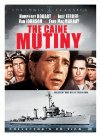
 Greetings again from the darkness. This film was nominated for seven Academy Awards (no wins), including Best Picture. Watching it today, it seems clear that the courtroom scene with Humphrey Bogart in the chair as Lt. Cmdr. Queeg drove this film to the heights it reached. That few minutes is as powerful as anything Bogart ever did on screen. Unfortunately, he would pass away (esophagal cancer) less than three years later.

The first part of the film is solid enough as we meet newly graduated (mama’s boy) Ensign Willie Keith (Robert Francis). His first Navy assignment is aboard a minesweeper (junkyard Navy) and the veteran officers quickly note his disappointment at not being stationed on a more prestigious carrier. Those veteran officers are played by quite a list of actors: Van Johnson plays no-nonsense Lt. Steve Maryk, Fred MacMurray plays the cynical wannabe novelist Lt. Tom Keefer, and Tom Tully plays Cmdr. DeVriess, who irritates young Willie with his laid back approach to command. We also see Lee Marvin and Claude Akins as part of the ship’s rag-tag crew.

 A shift occurs once Queeg replaces DeVriess. Queeg brings a tough old school Navy approach to the ship and is easily thrown by the sight of an untucked shirt. Over a short amount of time, the officers begin taking note of the odd behavior of Queeg. MacMurray’s character acts as an armchair psychologist, and more importantly, an instigator for the other officers. He is convinced Queeg is unstable and unfit for duty. The climax occurs during a typhoon and Lt Maryk (Johnson) takes the abrupt step of relieving Queeg of his duties … an action that’s never actually occurred aboard a Naval ship.

Soon Maryk and Willie are brought up on charges of mutiny. At about the 90 minute mark, their attorney makes his first appearance. Jose Ferrer plays Lt. Greenwald, the only naval attorney who would take the case against the highly decorated Commander. Watching Queeg (Bogart) on the stand is just about as good as acting gets. Ferrer is exceptional as well.

 This film is about the character of men and their reactions to situations in which they are trained to act otherwise. It’s based on the Pulitzer Prize winning WWII novel by Herman Wouk, and the screenplay is by Stanley Roberts. The film is directed by Edward Dmytryk, who you may know as one of the “Hollywood Ten”. Dmytryk spent time in prison for his lack of cooperation with HUAC, and his previous involvement with the communist party. The score is outstanding and was composed by the famous Max Steiner, who was also responsible for a couple of other films you may have seen: Casablanca and Gone with the Wind. It should also be noted that this was the second of five total films made by Robert Francis (Ens Willie Keith) and the 25 year old up-and-coming actor was killed in a plane crash the year after this film was made.

*note – Edward Dmytryk retired from filmmaking and for a few years taught film theory at the University of Texas.  I was fortunate enough to be a student in a couple of his classes.  His insight was remarkable.

*note – an aspiring young actor named Maurice Micklewhite was so inspired by the movie and Bogart that he changed his name to … Michael Caine

*note – pay special attention to the number of ticks/quirks that Queeg display (his use of Chinese Baoding Balls for stress, his use “K” as a form of communication, his facial contorts in moments of indecision, etc)

here is the original trailer (the volume level is very low):