INGRID BERGMAN IN HER OWN WORDS (2015, doc)

November 12, 2015

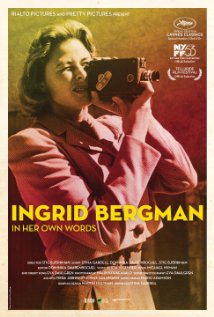
ingrid Greetings again from the darkness. A seven time Oscar nominee and three time winner. One of the best known and most beloved actresses of all-time. Fifty year acting career. Died at age 67, mere weeks after her final performance. These are all bullet points to highlight Ingrid Bergman, the cinematic icon. However, documentarian (and fellow Swede) Stig Bjorkman pays little attention to the icon, and instead focuses on the woman.

What sets this apart from many biographical portraits is Bjorkman’s access to Bergman’s diaries, journals, personal letters, photos, home videos, and most importantly, interviews with her four children: Pia Lindstrom, Roberto Rossellini, and twins Isabella and Ingrid Rossellini. It’s a treasure trove of memories, documentation and insight into a woman who lived life on her own terms … often in direct opposition to what societal norms dictate. The film neither defends nor celebrates her free spirit; it simply reports it and allows us to sit in judgment, should we be so inclined.

One of the best clips is young Ingrid’s screen test where her natural beauty radiates on screen, and her expressive eyes make it obvious why David O Selznick recognized her star quality. But there are numerous other clips and photographs which show her mostly involved with her family … one of her husbands and some combination of her kids. Not fitting into the typical “motherly” box, Ingrid spent an enormous amount of time away from her kids as they were growing up. She clearly loved them very much, as evidenced by the words in her diaries and letters, and the visuals from their time together. And the interviews with her children today make it obvious they viewed her as a fun friend, rather than the nurturing mom.

Another aspect that is crystal clear is the ambition and drive possessed by Ingrid. She even states “no one can have everything”, and her actions and words make it obvious that acting was what brought her to life – whether on screen or on stage. It never took long on the home front for her to feel the pull of her true adventurous nature, and soon enough she was back on a movie set … leaving the kids behind.

Specifics of her movie career are mostly glossed over. Casablanca has a quick segment, as does her time with Alfred Hitchcock. Instead, we get a broad perspective of the scandal that rocked the movie world … a pregnant Ingrid left her first husband (Petter Lindstrom) for her director-lover Roberto Rossellini. For the times, this was extreme impropriety and there were even boycotts of her films. No place was harder on her than the United States. Absolutely unapologetic and without remorse, Ingrid took her career to Europe. Ingrid and Roberto had three kids together, and since history has a way of repeating itself, it was only a matter of time before Roberto was with his pregnant girlfriend in India, and Ingrid moved on to producer Lars Schmidt (and his private island).

The most impact from the timeline comes courtesy of the four adult children as they recall the extended times away from their mother, followed by memorable and fun stints together. Of course, they have each had many years to come to terms with a mother who frequently chose pursuing her career dreams to spending time with them. Imagine having a mother who said “I belong more to the make-believe world of theatre and film”. It can make you tough and independent, or it can have the opposite effect. We hear each of them discuss.

This is the wrong place to look for a career retrospective of Ingrid Bergman the actress, but it’s an intimate and fascinating look at a woman who understood what was important to her, and refused to be ruled by societal expectations. Young Swedish actress Alicia Vikander provides voice-over for much of Ingrid’s written word, but it’s Ms. Bergman’s actions and the insight from Pia, Roberto, Isabella and Ingrid that complete the full portrait of a most unusual woman. Ms. Bergman died in 1982 (age 67), just weeks after her final role in the TV movie A Woman Called Golda… a fitting portrait of another woman who lived life by her own rules.

watch the trailer:


ALL THINGS MUST PASS (2015, doc)

November 6, 2015

all things must pass Greetings again from the darkness. I do not envy those experiencing their childhood in this modern era. Sure, they have far superior electronics and hundreds more TV channels, but they also have very little independence (most can’t even walk alone to a friend’s house or a park) and they likely will never experience the pure joy of perusing the stacks at Tower Records (or any other record store) for hours … experiencing the thrill of discovering a new artist or style of music that rips into their soul. OK, I admittedly suffer from a touch of “old man” syndrome, but filmmaker Colin Hanks (yes, the actor and son of Tom) has delivered both a cozy trip down memory lane and a stark accounting of good times and bad at Tower Records.

With humble beginnings as little more than a lark, Tower Records began when Russ Solomon’s dad decided to sell used 45 rpm singles in his cramped Sacramento drug store. He bought the singles for 3 cents and sold them for 10 cents. Within a few years, Russ purchased the record business from his dad, and proceeded to run it as only a rebellious kid from the 1960’s could. From 1960 through 2000, the business grew each year. It expanded the number of stores (peaking at 192 worldwide) and constantly adjusted to the musical tastes and the delivery method – 45’s, LP’s, cassettes, CD’s, etc.

Using some terrific photographs and video clips, accompanied by spot on music selections, director Hanks brilliantly and generously allows the actual players to tell the story. The expected celebrity drops are present, and even the words of David Geffen, Dave Grohl, Bruce Springsteen and Sir Elton John carry emotion. However, far and away the most impact comes from extended interviews with the unconventional and charismatic Tower Records founder Russ Solomon and his devoted and forthright employee team. Their sincere recollections provide the roadmap through the phenomenal growth, as well as the devastating end in 2006. We understand how these stores became so much more than retail outlets … they were cultural hotspots for at least two generations. We also learn some things we probably shouldn’t … like the definition of “hand truck fuel”, and the reason Russ installed hot lighting in the listening booths.

Mr. Hanks surprises with his ability to balance nostalgia and the harsh realities of the downfall of an iconic cultural business. The film captures the key role Tower Records, while also pointing out that the crash was due to more than just Napster and digital music delivery. An interesting case study for business majors highlights the importance of vision vs debt. For more insight from Colin Hanks, check out the interview from film critic Chase Whale: http://www.hammertonail.com/reviews/documentary/a-conversation-with-colin-hanks-all-things-must-pass/

“No Music. No Life”. The motto of Tower Records was somehow inspirational, and fit perfectly for stores that featured mammoth album artwork on their store fronts, their own “Pulse” magazine, and staff that couldn’t fathom life without music … much less wearing a suit and tie to work. This was truly “a chain of independent stores”, and trust me when I tell you that hanging out at Tower Records was more fun than having hundreds of cable channels.

watch the trailer:


BACK IN TIME (2015, doc)

October 24, 2015

back in time Greetings again from the darkness. Thirty years is an eternity in the filmmaking world. Only a few dozen movies even get a cable run in the year after their theatrical run. So, it’s worth noting, and maybe even magical, when a movie is beloved and worshipped by a rabid fan base some three decades after release. Such is the case with Back to the Future, the story of Marty McFly and Dr. Emmett Brown and their time-travelling escapades. First time director Jason Aron offers up a look at the BTTF community of fans, and some behind-the-scenes scoop from those involved.

Talking heads abound in the first part of the movie, as we see and hear from the masterminds of the classic: Robert Zemeckis and Bob Gale, as well as Michael J Fox, Lea Thompson, Steven Spielberg, Huey Lewis, Christopher Lloyd, Claudia Wells, Alan Silvestri, Dean Cundey, Dan Harmon, Frank Price and others. Very little new information is served up, and in fact Mr. Zemeckis doesn’t seem especially excited to be involved, whereas Mr. Gale seems quite pleased and comfortable with his role in film history. The best “making of” anecdotes come from Michael J Fox, though it is interesting to note just how difficult it was for the film to get studio backing – “time travel” movies didn’t have a successful box office track record.

The middle third of the movie is dedicated to the iconic Delorean car, and all that entails. This sequence would have been effective were it completed in 10 minutes, but instead it brings the film’s flow to a dead stop. Sure, it’s amazing that this many have a hobby related to this obscure car and its role in a classic film, but enough already!

Fan-based clubs and the accuracy of the film’s “future” predictions for 2015 make up the final third of the run time, as we get a glimpse of how close we are to real hover boards and flying cars. The question that seems unanswered is just who is this film aimed at? Most of the insight has been long ago discussed in DVD “bonus” coverage or previous interviews with the key players. The fan communities are certainly of interest if one is part of it, but the vast majority of those who have held the film close to their heart for 30 years care little for the obsessive fringes, and only for the emotions and imagination delivered by the film that needs no roads.

watch the trailer:


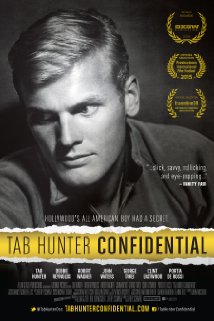
TAB HUNTER CONFIDENTIAL (2015, doc)

October 18, 2015

tab hunter Greetings again from the darkness. “Made it, Ma. Top of the world!” That line was famously bellowed by James Cagney in the 1949 film WHITE HEAT, and it reasonably could have been shouted behind closed doors, a few years later, by Tab Hunter. Of course, that wouldn’t have been the only thing Mr. Hunter was keeping behind those doors.  In his 2005 autobiography, he came out publically as a gay man. Director Jeffrey Schwarz takes that book, and puts a very forthcoming Mr. Hunter in front of the camera, to deliver a fascinating, entertaining and educational glimpse at what it was like to be a movie and musical superstar at a time when being a gay man was not just a social taboo, but actually considered a mental illness.

Normally, “talking head” documentaries quickly become tiresome, but now in his 80’s, Mr. Hunter remains an engaging and delightful man, and he is so sincere and upfront in telling his stories, that we couldn’t possibly turn away. In addition, director Schwarz drops in interviews from those who were there. These include: Debbie Reynolds, Connie Stevens, Robert Wagner (filling in his for his deceased wife Natalie Wood), John Waters, George Takei, and Robert Osborne. Each recall moments from real life, with the studio publicity romances (Reynolds, Stevens, Wood) providing the touch of melancholy that brings focus to the matter at hand.

Another entertaining touch added by Schwarz is his use of actual dialogue snippets from Hunter’s films to deliver punch to a point – sometimes comedic, sometimes more serious. Never succumbing to the career retrospective approach, the film does offer significant film clips, photographs and recollections of Hunter’s unique career that found him #1 at the Box Office, as well as #1 on the Pop Music Charts (his recording of “Young Love” knocked Elvis off the top of the charts).

The film could also serve as a historical documenting of the Hollywood Studio system, as Hunter’s success with Warner Brothers was never to be duplicated once he gained his contractual release (through buyout). We do go through the career re-birth brought about by Hunter’s work in the John Waters offbeat classic Polyster, where the former matinee idol finds himself making out on screen with Divine, the 300 pound transvestite who was a fixture in Waters’ films. Surprisingly, it’s Hunter’s fearless approach to the material that makes it click.

But beyond the Hollywood insight, the film is most effectively the story of a man who, because of his era, had to be one person in public and another behind the closed doors. Hunter describes this as “being rewarded for pretending to be someone you aren’t”. He speaks frankly about his relationship with Anthony Perkins, as well as a couple of other serious relationships. We also learn about his childhood, when he had an abusive father and was close to his older brother, who later died in Vietnam. Hunter speaks of being “lost as a kid”. Beyond the Hollywood years, it’s fascinating to hear Hunter speak of his time on the Dinner Theatre circuit, where he put up with the travel and drudgery so that he could pay the bills and care for his sick mother. We also learn that in addition to his staggering good looks, his on screen appeal, and his musical talent, Hunter was also a world class figure skater and competitive equestrian horse jumper. Yep, Tab Hunter is pretty much the guy we would all despise … if he just wasn’t so darned nice and likeable!

watch the trailer:


OUR DAILY DOSE (2015, doc short)

October 17, 2015

Greetings again from the darkness. Documentary director Jeremy Seifert made some noise in 2013 with his creatively titled GMO OMG, which along with his latest fit snugly into a sub-genre I call “Wake up, sheep!”  Mr. Seifert has a gentle approach in alerting us to topics which the general public mostly never even considers … at least until enough people are talking about it, and we are forced to learn something.

Since 1945, fluoridation of public water systems has been commonplace and widely accepted as a process that reduces dental breakdowns (cavities) by as much as 25% (roughly one cavity per person). It’s only recent scientific studies that have categorized fluoride as a “Developmental Neurotoxin” and “Endocrine Disruptor”.  In English, those two terms are defined respectively as a substance which negatively impacts brain development in children, and negatively impacts thyroid function. Mr. Seifert states that these studies prove that it’s time to re-think the national position on water fluoridation.

We learn that Grand Rapids, Michigan was the first city to add fluoride to its drinking water, but of course, one would be hard-pressed these days to find even a small scale municipality that provides un-fluorinated water to its populace. Scientists and doctors in the film (somewhat surprisingly) categorize fluoride as a poison rather than a nutrient, and that is certainly an attention-grabbing term. Their stance is that inclusion in our drinking water means it contradicts the “informed consent” doctrine that covers health care, and the real risk seems to be in dosage control. See, most water systems can’t even measure the amount of fluoride used, and there is no accurate way to track any person’s actual intake – given that water is used in so many food and drink products.

Asbestos, Lead, Arsenic, and Vioxx are all provided as examples of substances that were once deemed safe. Sure, Mr. Seifert’s approach might be considered a “scare tactic” or overreaction, but his point really is that it’s time to question the use and, if nothing else, allow consumers to make their own educated decisions. When he states 97% of Western European countries do not fluoridate water, many jokes on British dental work spring to mind … but this is also a pretty hearty statistic leading credence to Seifert’s call for more and better research.

The filmmaker even includes a Dr Strangelove or: How I Learned to Stop Worrying and Love the Bomb reference as acknowledgement that some will wave this off as just another conspiracy theory; however, if his 20 minute film can wake enough sleeping sheep, then perhaps some serious dialogue can be had.

http://www.ourdailydosefilm.com


A BALLERINA’S TALE (2015, doc)

October 15, 2015

a ballerina tale Greetings again from the darkness. You may have seen her “60 Minutes” segment earlier this year, or you may have heard the announcement over the summer when she became the first African-American Principal dancer (prima ballerina) at American Ballet Theatre. Or perhaps you recognize her being featured in advertisements for Under Armour or T-Mobile. If none of this sounds familiar, then you may be totally unaware of Misty Copeland, and director Nelson George has just the documentary for you.

One need not be an expert on ballet to recognize the ability, tenacity and stage presence of the lovely and incredibly athletic Misty Copeland. The grainy footage of her dancing at age 15 can’t prevent this star from shining. Soon enough she is the only black dancer in the American Ballet Theatre troupe of 80, and from there she just continues to advance.

The film touches on her unusual and challenging childhood, and also provides a brief primer on the history of ballet (15th century Italy, 17th century France), before naming the few names of the African-American ballet dancers over the years. See, skin with color and a muscular body were considered taboo in the lofty world of ballet … and it became even worse during the era of famed choreographer George Balanchine. His vision of the perfect dancer led to a culture of eating disorders, depression and impossible standards for body image. The point is that Misty Copeland not just broke down color barriers, but also body image expectations … even though she went through her own struggles (Krispy Kreme, anyone?).

We are also provided a peek at the physical grind and incredible strain that these dancers go through to appear so graceful and effortless on stage. A stress fracture in her shin threatened Misty’s career, and the film follows her recovery and remarkable ability to become an even better dancer after the injury and surgery.

Most interesting is the relationship that Susan Fales-Hill cultivated with Misty. This mentorship helped Misty fight through the personal and social challenges, while also connecting with the movers and shakers throughout the African-American community. The film’s best sequence has Misty connecting with Raven Wilkinson, who was a ground-breaking dancer from the 1950’s. Watching these two ladies (separated by multiple generations) bond through dancing is heart-warming and extraordinary.

Of course, we also are treated to a few extended dance performances from Misty – both live performances and the under-appreciated practice sessions. This culminates with her being cast as Odette/Odile in “Swan Lake” … yes, a black ‘white swan’. Her talent leaves us in awe, and is surely inspiring an entire generation of young dancers. The film certainly would have been better served by allowing us to connect with or understand Misty the person … but we must be satisfied watching Misty the dancer.

To see Misty’s Under Armour commercial entitled “I Will What I Want”:

https://www.youtube.com/watch?v=ZY0cdXr_1MA


HE NAMED ME MALALA (doc, 2015)

October 7, 2015

malala Greetings again from the darkness. One would be hard-pressed to name anyone currently on the planet who is more deserving of having her story told than Malala Yousafzai. In case you don’t recognize the name, Malala is the teenage girl who was shot in the head by the Taliban for speaking out in favor of education for Pakistani girls.

Unlike her namesake in the legendary story told to open the film, this Malala somehow survived the gunshot and has continued her mission of spreading the importance of education throughout the globe. Her efforts resulted in her being named the Nobel Peace Prize winner in 2014. This girl is extraordinary and inspiring.

Davis Guggenheim has proven his expertise in the documentary world with excellent work in Waiting for Superman (2010) and his Oscar winner An Inconvenient Truth (2006). Though Malala may be his most fascinating subject to date, this is probably not his best filmmaking. The extensive use of animation distracts from Malala’s story, and also Guggenheim’s attempts to show the teenage girl that exists alongside the global activist are often disjointed. We enjoy seeing her warm and sincere interactions with her brothers and her embarrassment at low grades on school work, but each time one of these sequences begins, the film abruptly shifts to another incident – possibly as a reminder to us that her life is anything but normal.

Some of the film’s highlights include Malala’s speech to the United Nations assembly, the crime scene photographs of the bus on which she and her friends were shot, and those moments when she lets her emotions roam free … she mutters “It’s so hard to get things done in this world”. We feel her pain and find ourselves wanting to stand with Malala.

Much of what we see is from her promotional tour to support her book “I am Malala”, and it’s her words and commitment to the cause that leave such an impression. Guggenheim hints that her father may have pushed her into this life, but this wise-beyond-her-years young woman has more than earned our respect and admiration. She convinces us that the best way to “arm” young people around the world is with books and a pen … the most powerful weapons.  Her courage and commitment cause us to question our actions as 17 year olds. What a truly extraordinary person she is.

To learn more about her mission: https://www.malala.org/malalas-story

watch the trailer:


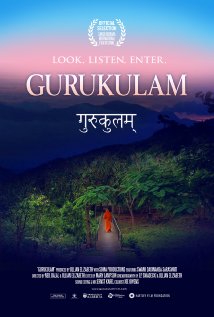
GURUKULAM (2015, doc)

August 22, 2015

gurukulam Greetings again from the darkness. We depend on documentaries to teach us things we don’t know, introduce us to interesting people, and take us places we will probably never visit. Co-directors Jillian Elizabeth and Neil Dalel accomplish all of these by taking us to south India and the jungle setting of Ashra Vidya Gurukaulam.

Filmed as far back as 2010, we go deep into an environment that would normally be off-limits to cameras. We follow students who have come to the ashram to learn from Swami Dayananda Saraswati and study the ancient wisdom of Advaita Vedanta.

The film alternates between following Dayananda and providing us a feel for the students and the overall life of quiet ritual, meditation and spirituality. The Swami is pretty fascinating as he constantly shares the wisdom, philosophy and insight that is not designed to raise funds, but rather to offer the process of discovering one’s self and life meaning.

Not only is this a different approach for a documentary … it’s very quiet (no narrator) and paced to mirror the movements from the ashram … but it is extraordinary to see the contrast versus our usual hectic daily lives in the Western world. A community of solitude may sound incongruent, but watching these folks find peace in their daily rituals while combining self-realization with supporting their neighbors, is something that must be witnessed to fully comprehend.

There are only a few shots that include cell phones or computers … another stark contrast to our daily lives of over-stimulation. Instead, the simplicity of the day and the tranquil setting permit a more open and uncluttered mind, heart and soul. This easily could have been a profile of Swami Dayananda, but the choice of the filmmakers to provide a more complete overview creates quite a unique viewing experience – one that quietly draws you towards introspection.

watch the trailer:


A LEGO BRICKUMENTARY (2015, doc)

July 30, 2015

lego Greetings again from the darkness. Toys can be fun, educational, relaxing, challenging, and yes, even profitable. No toy exemplifies all of these characteristics better than LEGO. Co-directors Kief Davidson and Daniel Junge go “Beyond the Brick” (the film’s original title) as they explore the history and community of these fascinating plastic pieces.

Founder Ole Kirk Christiansen (of Denmark) began as a maker of wooden toys, but in 1947 he discovered a plastic molding machine which, within a couple of years, revolutionized his company and the toy industry. The company is still family-owned and is now a $4 billion company and the second largest in the industry despite competing in only one category of toys. It’s a remarkable business case study, and an equally remarkable study in social impact. If you own LEGO pieces from 1955, they will still work with the bricks and pieces being produced today … planned obsolescence is not part of the LEGO business strategy.

The film introduces us to the designers, the master builders, and the community of LEGO aficionados known as AFOL (Adult Fan of LEGO). We also learn of a LEGO language filled with acronyms that permeate the competitions, fairs, and conferences.

In the early 2000’s, the company posted its first ever loss, but quickly rebounded by listening to their loyal customer base and making the necessary product changes. Last year’s award-winning animated THE LEGO MOVIE has stimulated even more interest in the tubes and studs … as well as permanently stamping our brains with the “Everything is Awesome” song.

Jason Bateman narrates the film – as a minifig – and adds a splash of color and visual acumen to the story telling process. It’s important to note that visuals are a key factor in some of the breathtaking creations of the brand’s most committed devotees. This includes the work of one who re-creates classical artwork for a gallery in NYC, and a stunning life-sized model of the Star Wars X-Wing Starfighter in Manhattan. We also see how LEGO plays a role as Autism therapy for kids, and even for mock-ups at NASA.

The LEGO community is most impressive. They actually participate in suggesting and designing new products, and the online network of LEGO stop-action short films act as a combined marketing strategy and challenge to other users. LEGOLAND doesn’t draw much attention here, but the loyalty and creativity of the customers is quite something to behold. It’s a reminder that the smartest companies collaborate with (rather than dictate to) their customer base … but most can only dream of this deep LEGO relationship with AFOL.

watch the trailer:


THAT SUGAR FILM (2015, doc)

July 29, 2015

that sugar film Greetings again from the darkness. Ever since Morgan Spurlock provided us with a gut check on the evils of McDonalds with his 2004 documentary Super Size Me, movie goers have shown a real appetite for information on food and nutrition. We have since had informative and entertaining documentaries on wheat, corn, fat, organics and gardening. This latest sweet film comes from Australian director Damon Gameau. He takes the Spurlock approach and personally becomes a lab rat to expose the effects of too much sugar. His mission is 60 days of eating “typical” sugar intake through what would ordinarily be considered “healthy” foods. In other words: no ice cream, candy or soda.

Mr. Gameau introduces himself as a healthy guy who exercises regularly and eats a diet of mostly fruits and vegetables. His girlfriend is 6 months pregnant as he begins this 60 day experiment into the world of sugar. There is a quick history lesson on how sugar became a food staple, and fellow Australian Hugh Jackman explains the pivotal event that occurred in 1955 – a Dwight Eisenhauer heart attack. This spurred debate between US doctors who blamed it on high fat, while the British doctors attributed it to an excess of sugar. The low-fat revolution began, and was actually responsible for the increased amount of sugar in our processed foods. We learn that a full 80% of the standard products on grocery store shelves contain added sugar.

A panel of medical experts provides the necessary tests upfront that set the baseline for blood work, enzyme levels, liver function, weight, etc. The comparison 60 days later is frightening, but it’s Gameau’s daily journey that provides the real insight and biggest eye-openers. He doesn’t spend much time focusing on any particular brands, though Pepsi (Mountain Dew), Coca-Cola and Jamba Juice each takes some serious jabs. Instead we witness his mood swings and lack of motivation for exercise.

British actor Stephen Fry explains the Glucose/Fructose make-up of Sucrose and we are given an overview of how our bodies process this – including a briefing on the role of insulin. As the days go on, we witness Gameau’s weight gain and he explains his lethargy and most surprisingly, his mental inconsistencies. He has bouts of cloudiness in a mind that was once clear. It’s this and the dramatic change in his liver that delivers the real scare.

It seems clear that all calories are not created equally (a calorie from an apple is not processed the same as a calorie from a Snickers), and that food companies have put much effort into hiding, or at least disguising, the amount of sugars added to the massive amount of processed food consumed each year by the average person. Perhaps Diabetes and Obesity and tooth decay are not thought to be immediate enough threats to cause a shift away from the convenience of processed food. Mr. Gameau shows just how dramatic and severe the changes can be in only 60 days. So imagine 5 years. 25 years. Just how much warning do we need?

watch the trailer: