DIFF 2017: Day Two

April 3, 2017

The DALLAS INTERNATIONAL FILM FESTIVAL runs March 31- April 9, 2017

It’s the first weekend of the festival and that means two full days of movie watching, and a breakfast that must hold me all day. It also means very little writing time, so the updates will be slightly delayed. Below is a recap of the four movies I watched on Saturday April 1 (no April Fools jokes here):


44 PAGES (documentary)

Most of us were first introduced to Goofus and Gallant while trying to mind our parents stern direction to “be still” as we sat in the sterile doctor or dentist waiting room as kids. Highlights Magazine was our only tangible hope for entertainment in a world before smart phones ipads. Filmmaker Tony Shaff captures the vital role played by this publication as he documents the 9 month process of putting together the magazine’s 70th anniversary edition.

The first surprise is that filming doesn’t take place in some Madison Avenue skyscraper, but instead in a turn of the century mansion in tiny Honesdale, Pennsylvania (pop 5000). That’s right, the creative folks work in the same little town where the Myers founded Highlights so many years ago … and some of those in the bloodlines remain involved with the business.

If you are imagining a scene that’s a throwback to a Norman Rockwell painting, you wouldn’t be far off. Their mission is: For the benefit of children, and the motto is “Fun with purpose”. The job of the staff is to think like kids, and I challenge you to avoid even a touch of envy as you feel the spirit of editor Judy Burke and her ever-present smile as she enthusiastically tackles every task of every day.

No Santa Claus and no witches are just some of the parameters that give structure to the general content aimed at ages 6 to 12. You won’t find a single advertisement in an issue, and that brings up the viability of a publication business that is dying on the vine in many market segments. We see how the Highlights group is evolving into apps and the digital world, and even a new Robotics section, while still holding tight to the paper page.

The music was a bit loud and distracting at times, but mostly director Shaff succeeds at providing a blend of nostalgia and contemporary as we get to know the staff and witness their efforts to stay relevant and true to their belief that the magazine does indeed matter.


DEALT (documentary)

One of the sub-genres of film documentaries involves profiling those folks who are doing extraordinary things in life. Sometimes these people are changing the world, sometimes they are sharing their talents, and other times they are overcoming challenges that most of us don’t have. Richard Turner of San Antonio, Texas is one of those who checks all three boxes.

Mr. Turner is the world’s best card mechanic … a magician, if you will – although he doesn’t much like that word. Now you might be asking how a card trickster is changing the world, and it’s a fair question. The answer becomes clear when we see him sharing some card secrets with a young visually-impaired girl late in the film. That’s correct, Mr. Turner is himself blind, and if you assume that a blind man cannot possibly execute highly complex and entertaining card tricks, you are encouraged to learn more about this remarkable man.

Director Luke Korem expertly provides the necessary background for us to understand how Turner has become the star he is, and equally fascinating is how he simultaneously delivers a personal profile of the family man – the flawed man – who has slowly, but surely come to accept his weaknesses after a life of denial. “Blind” was another word he spurned for years, as he was driven to let his skills stand on their own against all others. So while we “ooh and ahh” and gape in amazement at his card skills, our hearts are touched by the relationships he has with his wife Kim, his son Asa, and his self-reflective drive that allowed him to reach 5th degree black belt. Mr. Turner likely practiced his card skills for 16 hours today … how was your day?


CITY OF JOY (documentary)

Bukuvu in the Democratic Republic of Congo is an area you may or may not be familiar with. Would you be surprised to learn that the area is among the richest in the world for highly sought-after natural resources (conflict metals) for use in many global products such as computers and smart phones? This peaceful and happy community was rocked in 1996 when the war over these resources began.

Filmmaker (and Editor-extraordinaire) Madeleine Gavin takes us inside a brutal and horrifying world that is controlled by militias hired by governments and multi-national governments in an effort to protect territories and resources. These local militias are the local power and care little for the citizens of these areas. Their strategy is too much to watch: they move into a village and rape the women of all ages, thereby breaking down the family structure, causing locals to move out, leaving the village to the militia to patrol.

Rape is the main weapon of this economic war, and these survivors are broken women. Enter a remarkable woman named Christine Schuler-Deschryver and a courageous Dr. Mukinege. In 2007, the City of Joy organization was founded and the compound opened in 2011. Their mission is to turn these rape survivors into community leaders.

Dr. Mukinege runs the Panzi hospital where the women come to get healed physically. Ms. Schuler-Deschryver is the director of the City of Joy where the women stay for 6 months to gain emotional strength by telling their stories and transforming the pain into leadership. We learn of Christine’s ambivalence towards celebrity photo opps, and contrast that with Eve Ensler (The Vagina Monologues) who is actively involved with the center. This is an incredibly important and powerful documentary that educates us on the horrible atrocities, as well as the inspirational side. By the end of 2017, more than 1000 women will have graduated from City of Joy. The real hope is that one day the center is not needed.


THE RELATIONTRIP

I just need to simply accept the fact that I’m too old to ever really understand the new world of hipster relationships and dating. Getting to really know someone, and all the nuances and time and effort that go with that, has been replaced by speed-dating events and apps designed for swiping away any connection based on a profile pic. Still, I should be able to find the humor in this bass-ackwards new world of courting.

Co-directors C.A. Smith and his real life partner Renee’ Felice Smith open up the film with a clearly disgruntled and discombobulated couple in a car – and without a word, we flashback to “four days earlier”. Beck (Ms. Smith) and Liam (Matt Bush) are seemingly proud independent loaners who have their meet-cute at a late night concert of Liam’s band named The F*** Dragons. What follows is a hyper-speed relationship development that starts out as a ‘friendship friend trip’ and ends according to the film’s title.

Along the way, the audience shares the discovery of personal baggage with Liam and Beck. Liam is weighed down by past girlfriends, a devotion to video games, and mommy issues taking directly from a Woody Allen movie (kind of funny thanks to massive Sally Struthers ankles). Beck has body-insecurity and lacks personal confidence, personified through a funky, wise-cracking muppet and a swimsuit habit that is a bit extreme.

The film uses some surreal elements and effects to make some interesting points, and a creative peanut butter and jelly metaphor that provides hope that this is the beginning of a filmmaking partnership to keep an eye on. In the meantime, I’ll try to view this new relationship world as evolution and not disappointment.


DIFF 2017: Day One

April 2, 2017

The 2017 Dallas International Film Festival runs March 30-April 9

 The usual excitement of festival Day One was tempered somewhat by this incessant cough that I can’t seem to shake, and the realization that I will be a nuisance to others in the theatre. However, my goal of 30 movies in 10 days will not be stopped so I loaded up on Robitussin, cough drops and a giant bottled water, and headed off to my first scheduled movie. Of course, it was Friday afternoon so Dallas traffic forced me to into a fall-back plan before I had even seen one movie. Pulling off to the Angelika rather than continue creeping on Central expressway towards the Magnolia ended up as a fortuitous turn of events. The three movies I watched are recapped below.

WAKEFIELD

While I wasn’t a big fan of Robin Swicord’s directorial debut (The Jane Austen Book Club, 2007), she bounces back nicely with this Bryan Cranston vehicle with one of the more creative scripts featuring internal dialogue that I’ve ever seen. Cranston is showing a knack for selecting interesting interesting projects, and he excels here as the high-powered attorney who spontaneously decides to drop out of society in a most unusual manner.

There is a ton of social commentary on display here with targets including married life, suburban living, career pressures, and self-doubt … substantially summed up with a line from Cranston’s character, “Most everyone has had the impulse to put their life on hold.” As he proceeds through his new ‘unshackled’ and ‘primal’ lifestyle while observing unnoticed through the stained glass window in his garage attic, much of his focus seems to be on discovering just who he is at his core, and what is the truth behind his relationship with his wife (Jennifer Garner). It’s as if he is asking “What am I?” while staying close to his previous life in a voyeuristic way. The score is in the style of a 1980’s Brian DePalma movie, which just adds to the unique cinematic experience.


TOMMY ‘S HONOUR

Jason Connery (Sean’s son) directs this story about old Tom Morris and his son Tommy written by Pamela Martin from the book by Kevin Cook. It’s a bit surprising that the story focuses as much or more on the melodrama and personal story of the younger Tommy than the historical influences, but there is links action to give us a feel for the times.

Jack Lowden and his dimples portray Tommy, while Ophelia Lovibond plays his love interest Meg. Their relationship drives the story, and we are reminded that small-minded people were every bit as prevalent 140 years ago as they are now. Tommy’s mother, their community, and even the minister of the Church pass harsh judgment on Meg and her unfortunate past. Combine that with the element of “Gentlemen”, which are anything but, and we get an understanding of how Tommy’s actions changed not just the game of golf, but also influenced the softening of the class difference. His push to bring respect and fairness to professional golfers erased the similarities with how race horses and golfers were treated the same from a wagering perspective.

This was the time of the original “13 Rules of Golf”, and when rowdy crowd hovered right next to the golfers as they played. Other than the closing credit graphics, Old Tom Morris (Peter Mullan) isn’t really given his due as a course designer, but this is really the story of his son, and though the film is a bit too long, it’s a story that deserves to be told.


CITY OF GHOSTS (documentary)

Oscar nominated director Matthew Heineman delivered the stunning documentary Cartel Land in 2015, and here he once again proves his expertise as the messenger of important stories that need to be told.

The film begins in the Syrian city of Ragga in 2012, and we see the beginning of the revolution against the Assad regime. The sayings “Death is Death” and “Danger has a special taste” come into play, and by the end of the film, there is a clarity that is devastating.

The courageous and dedicated Citizen Journalists are divided into two groups: the internal who risk their lives in Ragga uploading news stories and videos of ISIS actions and, the external who are based in Turkey and Germany and post regularly to social media outlets. Their combined efforts and risk taking allow the real story to be told from their home city mostly cut-off from the outside world – as evidenced by the satellite graveyard.

RBSS (Ragga is Being Silently Slaughtered) is the movement spreading the truth about ISIS atrocities – including public beheadings, shootings, and bombings. It’s a terrifying story, never more so than during the professionally produced recruiting ISIS videos featuring young children. These brave folks have had friends, family and neighbors slaughtered which inspires them to continue fighting the guns and bombs with the power of words. It’s breathtaking.


AMERICAN ANARCHIST (2017, doc)

March 30, 2017

 Greetings again from the darkness. If only the young had a monopoly on ignorance and poor judgment. As William Powell’s wife states during this film, all adolescents do dumb things, but they don’t all write it down and publish it. Such was the case with 19 year old Mr. Powell who, at age 19, wrote “The Anarchist Cookbook”. It was published in 1970 and has since sold more than 2 million copies.

Charlie Siskel (Gene’s nephew and director of Finding Vivian Maier) conducts an extended and in-depth interview with the 65 year old Powell in an attempt to discover what motivated him to write the book, how it has affected his life, and how he feels about it now. Siskel pulls no punches with his questions, with one of the first being, did Powell ‘advocate a violent overthrow of the government?’ Powell’s proclamation that it was not intended as “a call to action”, leads us to believe he was either quite naïve as a 19 year old author, or has spent the last four decades rationalizing his original intent.

In the late 1960’s the counterculture uprising included monumental movements: Civil Rights, Women’s Rights, and Gays. For an insightful 19 year old to write a book for like minded individuals – the liner notes state it’s “not a book for children or morons” – and claim the only choice for real men is revolution, well, it’s understandable that his work and the corresponding stigma has followed him through life.

It’s a fascinating interview with a man who professes remorse (“which is different than regret”) and somehow seems to be caught off-guard with the “laundry list of associations” to his book: Columbine, Oklahoma City bombing, Aurora theatre massacre, Gabby Giffords shooting, and numerous other bombings, shootings and atrocities against humanity. Mr. Siskel was a producer on Michael Moore’s Bowling for Columbine, so he pushes hard for insight during this part. Powell is very self-reflective and measured in his responses during the final segment … even as he states “I didn’t do” those evil things. He does acknowledge some responsibility, and states that while everyone has ‘skeletons in the closet’, his skeleton is in print through 2 million copies and easy internet access.

At one point he labels his own work as “over-the-top exaggerated rhetoric” and admits that what he now views as rubbish, was at the time considered “cool”. His defense, so many years later, that he wanted to advocate people thinking for themselves rings a bit hollow. No matter how true it is that he doesn’t control publishing rights and long ago distanced himself from the book, it’s a chilling reminder that one’s legacy doesn’t discriminate against age. All we have is (hopefully) wisdom with age, and an introspection that can be shared. The documentary is one that provides much insight into human nature, while also serving as a compelling history lesson.


THE LAST LAUGH (2017, doc)

March 5, 2017

last-laugh Greetings again from the darkness. The best comedy often touches a nerve. Jokes can make us feel uncomfortable and even a bit embarrassed for laughing. Although the best comedians are traditionally those who attack the politically correct world we live in, there are certain topics that remain taboo even to the bravest comedians: child molesting, rape, AIDS, 9/11, and the Holocaust. Director Ferne Pearlstein examines the issue of taboo comedy through numerous interviews with some well known and successful comedians, authors, and even Holocaust survivors.

Much of the focus here is on the Holocaust, and some of the familiar faces providing insight include Mel Brooks, Sarah Silverman, Gilbert Gottfried, and Rob and Carl Reiner. We learn the most important rule is … never tell a crappy joke about a dark subject – it better be really funny! We also learn that while the Holocaust is mostly off-limits, the Nazi’s are fair game. Bugs Bunny, Charlie Chaplin, The Three Stooges, and The Marx Brothers have all mined the Nazi world for the sake of comedy and satire, though maybe none have done so as frequently or successfully as Mel Brooks (“Springtime for Hitler”)

One of the most interesting recurring threads of the film involves Auschwitz survivor Renee Firehouse. North of 90 years old, this remarkable lady is extremely sharp and understands the importance of laughter … while also never being shy about what she thinks is NOT funny. Ms. Firestone even meets up with the effervescent Robert Clary, a fellow Holocaust survivor, and known to many as LeBeau on the TV show “Hogan’s Heroes”.

A trip to the Holocaust Survivor Convention on the Las Vegas strip offers up more thoughts on the role comedy played in keeping these folks alive. We see rare footage of carefully staged Cabaret acts from within the concentration camps … who even knew this went on? The recently re-discovered footage of Jerry Lewis’ “The Day the Clown Cried” is also shown, and the commentary from Harry Shearer makes it clear that the rest should never find an audience.

Authors Etgar Keret, Shalom Auslander and Abraham Foxman each provide their thoughts on forbidden comedic topics, and clips are shown from “Curb Your Enthusiasm” and Brooks’ The Producers, as well as scandalous moments from Louis CK, Joan Rivers, Chris Rock, and the most censured comic of all, Lenny Bruce. Laughter may be the best medicine, but sometimes it’s interesting to take a step back and determine exactly what is off-limits. When has a joke gone too far? It appears from Ms. Pearlstein’s project that the line in the sand is determined by personal taste, preference and judgment.

watch the trailer:


THE FREEDOM TO MARRY (2017, doc)

March 5, 2017

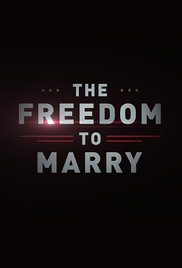
freedom-to-marry Greetings again from the darkness. The film takes us back more than forty years to a 1973 poll that found the majority of the people in the United States felt homosexuality was immoral. That’s what the folks at the non-profit organization Freedom To Marry had to overcome in their decades long fight to win the right for legal gay marriage. Filmmaker Eddie Rosenstein offers up a behind the scenes, and very detailed look at the history, strategy, and tactics used by the group to reach their goals.

In 1983 Evan Wolfson wrote his Harvard thesis on why gay marriage is moral and just. After that, and because of it, Mr. Wolfson became the driving force, the leader, and the face of the movement for gay marriage rights … as well as the Director of the Freedom To Marry organization. This is really the inside story and a chronological legal and political history of the push for gay marriage.

The fight is truly a Civil Rights movement of rallies and marches – both for and against. We witness the revolution one conversation at a time, and the film counts down the days to the Supreme Court arguments, as well as the final decision. 102 days until the Supreme Court arguments open … and a reminder that about a decade prior there were zero firms that allowed gay marriage. Much time is spent with Mary Benauto, the chief litigator for the cause, and a true champion of legal gay rights.

It’s Evan Wolfson who dominates the film, and rightly so. He’s known as “The Marriage Guy” and “The Paul Revere of Gay Marriage”. We witness him leading many important meetings and consistently working towards the goal. He explains to us that AIDS shattered the silence of the community, as the movement shifted from “leave us alone” to “let us in”. As Ms. Benauto explains, “I do this work because people just want to be who they are”; but it’s Evan who makes his mission clear when he states, “I always believed we would win”. The film is an extraordinary look at a vital part of Civil Rights history, complete with heroes.

watch the trailer:


DYING LAUGHING (2017, doc)

February 24, 2017

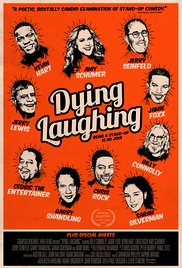
dying-laughing Greetings again from the darkness. We all want to be funny. Making people laugh allows for an immediate connection … plus it just feels good to make someone else happy. Co-directors Lloyd Stanton and Paul Toogood show us the dark side (or at least the backside) of comedy through a series of black and white filmed interviews with dozens of stand-up comedians. In this age of political correctness, Chris Rock explains that there is only one group who says what they want to say: stand-up comedians.

It plays not so much as “how to become a comedian”, but rather a therapy session for those who already are. It’s loosely structured into segments that provide very specific insight and real life stories on: the first time on stage, life on the road, dealing with hecklers, the devastation of bombing, how to connect with an audience, and what it’s like to be “on” or really kill it.

The list of participants is too long to list here, but includes such stalwarts as the aforementioned Mr. Rock, Jerry Seinfeld, Sarah Silverman, Jerry Lewis, Kevin Hart, Amy Schumer, Billy Connolly, and Dave Attell. Those at the top of their profession open up about what it takes and how they made it. Think “Take a Parent to School Day”, without the societal filter or peer pressure. These folks spend most of their waking hours looking outward for material, but here they are generous enough to look inward so that we might better understand their craft.

A diverse cross-section of comedians provide examples of racism, sexism and most any other ism. There is also the admission that a need/desire for acceptance exists pretty much across the profession. The struggles and challenges make up the experience which is vital to the growth and survival of a comedian … and maybe even what strands of sanity they possess. We hear stories of writing and re-writing jokes over and over again for years, before finally hitting on the right wording and delivery. We learn Smartphones often contain pages of notes on ideas and partial jokes, and that pain on stage often leads to a better act.

Jerry Seinfeld produced a documentary in 2002 entitled Comedian, and it dealt with the rigors of honing the act in front of audiences, and when combined with this project, we are reminded that comedy is at its best when it is about SOMETHING (fertile ground these days) … and that every comedian gets knocked down – but then gets up again (tip of the cap to Chumbawamba). The film is dedicated to the late Garry Shandling (who also appears in the film) and leaves us with the thought that “the laugh is your reward as a comedian”. And that’s pretty sweet.

watch the trailer:


DECANTED (2016, doc)

February 23, 2017

decanted Greetings again from the darkness. Fantasizing about owning and running your own Winery is perfectly natural, and impossible to avoid, while on a weekend escape to Napa Valley, California. Director Nicholas Kovacic opens with a helicopter tour of the 30 mile long area courtesy of Heidi Barrett, winemaker extraordinaire, and wife of Bo Barrett (of Chateau Montelena and Bottle Shock fame). The terrain below is so beautiful, that when it’s combined with the industry it supports, a romantic vision is understandable.

The patchwork quilt of individual parcels falls in a geologic epicenter with near perfect conditions for growing the grapes that lead to the marvelous wine. Of course, Mother Nature is still in control, and that’s one of the points to the film (which could have been titled “Starting a Winery for Dummies”). Of course, Ms. Barrett is no dummy, and neither are any of the other winemakers we meet during the course of what’s probably a too long 82 minutes. These folks pour love, sweat, worry, and money into a once per year product that can go wrong at any of the numerous steps prior to having a glass poured as you settle in for a juicy steak of plate of pasta.

Much of the time is devoted to Texan Mike Martin as he shops for a new winery, and settles on one in Coombsville. His Italics Winegrowers makes the point, that it’s probably wiser to buy an existing enterprise, than wait the 4 to 5 years for the first crop if starting from scratch. The established Reynolds Family Winery provides another example of the complexity to this business; and just how much nurturing goes into farming and production, and the incredible variances experienced from year to year.

Napa Valley is described as still in the “Wild West” stage since the tradition goes back only a couple of decades (instead of centuries like in Italy and France). Creativity abounds as new winemakers thrill us with the discovery of new blends and varietals. A perfect example is Ms. Barrett’s 6L 1992 Screaming Eagle, which nabbed a record $550,000 for a single bottle at the 2000 Napa Valley Wine Auction (now called Auction Napa Valley).

The film does a nice job of talking about how the industry has evolved to one that pays attention to farming the vines and the full process … not just what happens when it hits the barrels. There is even mention of how branding plays a key role these days, yet is still sometimes overlooked. Beautifully filmed, with some gorgeous shots of the area, Mr. Kovacic’s project is bit more artistic than most documentaries, but might have benefited from a shorter run time … or better personal connection to the players.

watch the trailer:


LEFT ON PURPOSE (2016, doc)

February 16, 2017

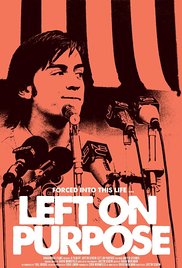
left-on-purpose Greetings again from the darkness. A film about a guy with an aversion to wearing pants would not typically hold much appeal for me, but this is no typical documentary and Mayer Vishner is no typical subject. Co-directors Justin Schein and David Mehlman raise a couple of philosophical questions here: should a person have the right to take their own life, and what responsibility does a documentarian have towards their subject when faced with an ethical dilemma?

Very few younger than 50 (maybe even 60) will recognize the name Mayer Vishner. He worked closely with those who founded the radical 1960’s group called the Yippies (Youth International Party) – Abbie Hoffman, Paul Krassner, Jerry Rubin (also an early Apple investor and stockbroker), and musician Phil Ochs. A self-described Forrest Gump, Mayer states he helped them be “giants”. The Yippies challenged authority and the system at every turn and were quite proud to create the label counter-culture.

Five decades later, Mayer remains holed up in his same Greenwich Village apartment not far from MacDougal St and the Gaslight Café, where much of the Yippies action took place. The small apartment is in total disarray and Mayer now lives in squalor, getting through most days with absurd amounts of alcohol and pot, and apparently very little human interaction outside of director Schein’s visits.

It’s here where things get fuzzy. Schein set out to make a film about a man who was right in the middle of one of the most tumultuous times in US history, but seemed to make the ultimate documentarian mistake of becoming too close … even friends … with his subject. It’s this line-crossing that puts Schein in the cross-hairs of a moral dilemma when Mayer states, “If this film happens, it will be about a film about suicide”. Should he keep filming? Should he get help for Mayer? Should he walk away from the project and let nature take its course?

What follows is an up close and personal look at a man who is still very articulate, though suffering bouts of depression due to a life of loneliness and solitude. He sees no reason why he shouldn’t be able to end his life on his own terms and in front of a camera. We also see Mayer’s periodic surges of energy … whether it’s the Occupy Wall Street movement (I’ve “been here before”), seeing his brothers, or a visit with Diane, his friend of 35 years who helps with therapeutic gardening. Of course, these surges are short-lived and each followed by a hard crash.

Along the way, we see a video clip of 16 year old Mayer just beginning his lifelong journey of questioning authority. We also see the 3 pallets of memories being stored in a warehouse prior to being purchased by the University of Michigan, and we learn that Mayer was once the editor of “LA Weekly”, though fired for his alcoholism. Mayer’s own notes describe himself as an anarchist, pacifist, gardener, poet and dozens more. He clearly had a purpose in life and ultimately, in death. The film is tough to watch at times both because of Mayer’s self-destructive mode, and for the interesting and debatable issues raised by continuing with filming. Perhaps the film will have you questioning your own beliefs, though the hope is you never find yourself in this situation with a friend. A well made documentary should educate and inspire discussion, and there’s no shortage of either with this one.

watch the trailer:


THE SUNSHINE MAKERS (2016, doc)

January 22, 2017

sunshine-makers Greetings again from the darkness. “Turn on. Tune in. Drop out.” For those of us born a bit too late to subscribe to Dr. Timothy Leary’s call to action in the 1960’s, our knowledge of the psychedelic era’s drug culture is limited to what we’ve read, what we’ve been told and the alarming cautions blasted over the PA system in the Woodstock movie. Director Cosmo Feilding Mellen and writer Connie Littlefield tell the fascinating story of two of the biggest drug dealers you’ve never heard of, and the story will have you believing they could have been the inspiration behind TV’s “Breaking Bad”.

You would be hard-pressed to find two less similar business partners than Nicholas Sand and Tim Scully. Mr. Sand is the type who embraced the free-love and free-your-mind approach of the 60’s, and we are subjected to his preference for nude yoga … something that bothers us much more than him. Mr. Scully was a science genius with a touch of Asperger’s. What the two agreed on was their mission of using LSD to create a more peaceful and loving society. They considered themselves “American Patriots”.

The two drug dealers receive kid glove treatment from the filmmaker, and along with some video clips of the era, at times it feels a bit like “we’re getting the band back together”. There is a steady stream of those who were part of the operation, which was based at Billy Hitchcock’s New York estate. Watching these 70-somethings reunite and discuss the good old days has a surreal feel at times, but what’s clear is that they all have fond memories of each other.

Avoiding the authorities was obviously a key for these folks, and director Mellen even interviews the two agents who devoted the most time to tracking down Sand and Scully. We learn that the Brotherhood of Eternal Love (aka “the hippie mafia”) was key to the distribution channel, and that the “Orange Sunshine” even made it to the soldiers on the frontline in Vietnam.

The interesting story doesn’t end when Sand and Scully are arrested and inexplicably end up as cell mates at McNeil Island Penitentiary in Washington. Scully researches a loophole that allows the two to be released on bail. This leads to Sand becoming a 20 year fugitive from the law in Canada, while Scully ends up serving his sentence. Catching up with the two men fifty years after their first meeting still makes us wonder how they worked together so long … and it leads to Sand explaining they were LSD evangelists, and did “a better job than Jesus”. Now back to more nude yoga.

watch the trailer:


UNDER THE SUN (2016, doc)

January 1, 2017

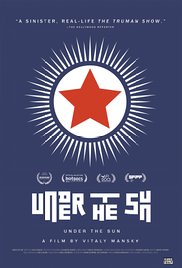
under-the-sun Greetings again from the darkness. There is an old episode of “The Twilight Zone” that has always stuck with me. It starred Bill Mumy (who later became well known as Will Robinson in “Lost in Space”) as a young boy with God-like mental and telekinetic powers. The entire town was afraid of him, so they constantly acted in ways to make him believe they were happy and appreciated him. Memories of that show came rushing back as I watched this documentary from Russian director Vitaly Manskiy. We outsiders know little about life in North Korea (it’s known as ‘the Hermit Kingdom’), though the film seems to confirm what we’ve been led to believe: it’s a country filled with citizens either living in fear or living with acceptance of their plight (or both).

Director Manskiy was contracted to make a movie about daily life of an ordinary family in Pyongyang. Two “escorts” were assigned to him, a state-sponsored script was provided, and his footage was reviewed daily. When the project was dissolved, Manskiy assembled the pieces … and added the secretly saved snippets from when he kept the cameras rolling between takes. The result is a documentary on the attempts of a Communist government to stage an illusion of perfection. It comes off as a foolish propaganda effort to convince the world that North Koreans are a happy people. What we see on screen convinces us otherwise.

At the center of all this is 8 year old Zin-mi and her family. If you thought The Monkees were a pre-fab TV version of The Beatles, this shows what true manipulation is all about. Zin-mi’s parents are given new jobs for the movie version. Rather than a print journalist, her father is given a job as an executive at a garment factory; and rather than a cafeteria worker, her mother is presented as working at a soy milk factory. Additionally, the family is moved into a nice apartment and then provided with meal time conversation, and even told where and how to sit and stand.

Zin-mi has joined the Childrens Union and the whole community is preparing for Day of the Shining Star – the national holiday celebrating the birthday of Kim Jong-Il; keeping alive the memory of their supreme leader who died in 2011. During these preparations, we see the clean streets and no-frills buildings, as well as the brainwashing that occurs during presentations and classes … the Japanese are labeled scoundrels, while Americans are cowards. The lingering images, and faces of those posing for photos, can’t mask the emptiness of the individuals.

The film reinforces more than enlightens, and it’s more a rare snapshot of this society than a global perspective. Still, we can’t help but feel saddened for the people as their lines are fed to them with directions like, that was “too gloomy”, and, do it again with “joy”. No proof of the brutal regime is presented, but it’s obvious freedom of thought is not encouraged. The correlation becomes all the more ironic when it’s recalled that the title of that Twilight Zone episode was “It’s a Good Life”.