78/52 (2017, doc)

October 12, 2017

 Greetings again from the darkness. Does it make sense to create an entire movie about a single scene from another movie? Director Alexandre O. Philippe answers with a resounding “Yes” and proves it with thorough and varied analysis of the infamous and iconic shower scene from Alfred Hitchcock’s classic PSYCHO.

“The death of a beautiful woman is, unquestionably, the most poetical topic in the world.”

That quote from Edgar Allan Poe opens the film, and reminds us that the hullabaloo surrounding PSYCHO would never have been possible if Janet Leigh hadn’t been a beautiful movie star … and if Hitchcock hadn’t shocked us with the timing … and if so many other pieces hadn’t fallen into place. It’s those pieces that are the focus of Mr. Philippe’s expository on the immediate and lasting impact of the scene.

The film’s title comes from the 78 pieces of film and 52 cuts that make up the 3 minute sequence being adored, admired and argued here. The interviews and insight come fast and passionately from filmmakers, writers, educators, film historians, and actors. We meet the ultra-charming Marli Renfro, who was Janet Leigh’s body-double for the film – and also graced the September 1960 cover of Playboy. There is also Tere Carrubba, Mr. Hitchcock’s granddaughter and the daughter of Patricia Hitchcock, who has a minor role in PSYCHO. A few of the others who discuss the scene and film’s influence include directors Peter Bogdanovich, Guillermo del Toro, and Karyn Kusama (JENNIFER’S BODY); writers Leigh Whannell (SAW, INSIDIOUS) and Bret Easton Ellis (AMERICAN PSYCHO); and  Janet Leigh’s daughter, actress Jamie Lee Curtis.

True technical analysis and peek behind the mysterious filmmaking curtain kicks into high gear when Walter Murch speaks. Mr. Murch is a 3-time Oscar winner and 9-time nominee for such timeless films as APOCALYPSE NOW and THE CONVERSATION. He is an expert on sound and film editing, two vital components to the shower scene, and he literally guides us through the individual cuts. Most fans of the film know of the chocolate syrup, but the casaba melon and the painting on the wall might be new territory. The film ties together, like never before, the script of Joseph Stefano, the storyboard of Saul Bass, the editing of George Tomasini, and the scene score of Bernard Hermann … all giants of the industry.

Whether you are a film lover, Hitchcock fanatic, or film theorist, you are likely to find something new here. The film represents so many “firsts” and was truly a turning point in the film industry, while also being a cultural phenomenon. When Martin Scorcese talks about the PSYCHO influence on RAGING BULL, it’s the culmination of a blissful 90 minutes.

watch the trailer:


TAKE EVERY WAVE: THE LIFE OF LAIRD HAMILTON (2017, doc)

September 28, 2017

 Greetings again from the darkness. The face of his sport. An American icon. A living legend. Each of these would be accurate in describing super-surfer Laird Hamilton. Oscar nominated in 2014 for her LAST DAYS IN VIETNAM, documentarian Rory Kennedy (daughter of Ethel and Robert F Kennedy) delivers the most in-depth look yet at Hamilton and his unconventional life.

Before he was born, his pregnant mother underwent a procedure that basically created free-swim time for the fetus (Laird). Whether this played a role in his life as a water man can be debated, but after his dad left the family to join the Merchant Marines, Laird’s mom Joann Zerfas moved with her young son to Hawaii. Her free-spirited nature certainly influenced Laird’s approach to life, and we are led to believe that as a 4 year old, he encouraged the union between his mother and Bill Hamilton, the best known surfer of the time.

We view some incredible archival footage of Laird’s early years, along with photographs leading through his childhood. In fact, it isn’t always easy to tell what is “old” footage and what is new from the lens of cinematographers Alice Gu and Don King. Even if you find Hamilton’s personality and approach off-putting, you will likely be awed by the surfing footage. His younger brother Lyon describes him as a 100% disobedient child, and we learn Laird was often picked on as one of the few white kids in a Hawaiian school in the 1970’s. He found solace from school and an abusive step-dad in the “honesty of the ocean”, where if you do it right – you are rewarded, and if you make a mistake – you pay the price.

It doesn’t require a psychology degree to see that Laird eschews most rules and has pretty much lived his life according the tide patterns and swells of Maui’s north shore. He has been heavy on ambition and conquering fear, and a bit light on societal norms and loyalty (ex-wife and his fellow Strap surfers). Director Kennedy is balanced in her approach here. As we begin to judge him by our standards, she reminds us of his unique nature … stand-up barrels in 7th grade, refusing to join in the parade for a high-paying career in modeling or acting, etc.

Known as the master of big wave surfing (he never competed on the traditional pro surfing tour), Laird’s life as a true Water Man took him paddle surfing through the English Channel, and the early stages of wind-surfing, connected surfing, tow-surfing, and hydro-foil boarding. He and his buddies were the first to ride the infamous Jaws waves of Pe’ ahi.

Along the way, we learn about the beginnings of his relationship with former pro volleyball player Gabrielle Reece and how he shifted ever-so-slightly into a family man role … without losing his desire to continually conquer the ocean. We see his intense training program and the beat up body he now has to work around. There is a bit of a peek into the surfer community and the jealousies and tension that aren’t obvious to outsiders. Laird’s “fear defect” is accompanied here by periodic punk rock music that seems the perfect fit for a man who is a natural phenomenon in the water and on a board, while showing no interest in the conventions most of us live by. You might not appreciate his personality, but there is nothing but respect for his courage in riding those 80 foot waves.

watch the trailer:


TROPHY (2017, doc)

September 28, 2017

Dallas International Film Festival 2017

 Greetings again from the darkness. Totally unexpected is a documentary on big game hunting that doesn’t come down squarely on one side of this argument. Co-directors Christina Clusiau and Shaul Schwarz do an admirable job of laying out the facts and leaving the viewer to contemplate how these moving pieces create a blurred line between conservation and commerce.

Expect a couple of scenes that might be difficult to watch – after all, it is a documentary on hunting animals. There are plenty of facts and statistics provided, with one of the most staggering being since 1970, the world has lost 60% of its wild animals. Rhinos alone are down from 500,000 to 30,000, and we meet a rhino breeder who has devoted his life and fortune to saving the species. On the surface, his stance seems difficult to debate, but African law prevents the sale of rhino horn, which means this breeder is sitting on millions of dollars of warehoused horns, while poachers profit by picking off his animals and selling the horns on the black market. Not so clear now, is it?

Additional segments involve elephants, alligators, and other species. We visit the massive Safari Club hunting convention in Las Vegas, as well as stock auctions where breeders battle over the next generation. The safari clubs argue that much of the money paid by big game hunters is distributed back into the conservation efforts of the country, though the corruption of politicians can’t be ignored.

The contrast between shooters and hunters, killers and sportsmen, is noted and legitimate detailed information is provided. Focus goes to the “Big 5”: hunters trying to bag each of water buffalo, leopard, elephant, lion and rhino. The process is slow and expensive, and the three affected tentacles – hunting, breeding, conservation – have evolved to facilitate the future of the species and those dependent on the industries.

Hunter’s remorse is admitted, as is a connection to the animals by the otherwise stoic and businesslike breeders. When one hunter quotes the bible in saying that man shall have dominion over animals, it’s a reminder that no matter one’s stance on these topics, there is always an argument to be had and a defense to be made. The still unanswered question is, can the industry be run in a manner that allows the animals to survive, the villagers to benefit, and the vendors to profit? In theory, this seems doable … but reality and self-interest often destroy best intentions.


MANOLO: THE BOY WHO MADE SHOES FOR LIZARDS (2017, doc)

September 24, 2017

 Greetings again from the darkness. Despite my lack of interest in high heels, or really high fashion in general, it’s always exciting to gain some insight into the creative process of an acclaimed artist such as Manolo Blahnik. Unfortunately, Michael Roberts’ (fashion writer by trade) directorial debut delivers more of a tribute than any type of peek behind the curtain. Heck, let’s call it what it is … it’s a fluff piece, plain and simple.

Mr. Blahnik has been labeled “the best shoemaker of the 20th and 21st centuries”, despite his claims of being merely a humble cobbler. There are dramatizations mixed with interviews, and plenty of famous faces to fill the screen. In fact, Vogue editor Anna Wintour seems to log nearly as much screen time as Blahnik himself … and shockingly, she’s giggling and smiling through most of it. Mr. Blahnik does make many of his own statements, including an admission of having no interest in politics or relationships. It seems designing the shoes is what keeps him going each day. And it’s this point where the filmmaker misses the real opportunity to dive deep into the creative process.

As is common in the fashion world, celebrities are usually front and center. There is an extended segment with Rhiannon, and there’s a glimpse of Donald Trump near the runway. Bianca Jagger, Diana Vreeland, and Sarah Jessica Parker all have their moments. We are shown a clip of Princess Diana wearing Manolo stilettos, and of course, a scene from “Sex and the City” is included … confirming the real audience for the film. Director Sofia Coppola describes her reasons for dressing the titular character of her film MARIE ANTOINETTE in Manolos, and there is an odd and slightly uncomfortable portion where Blahnik buddy Rupert Everett discusses Manolos for men, though seemingly in a contradictory manner.

There is nothing wrong with a lovefest celebration, but it is somewhat frustrating to listen to the gushing of admirers when a more insightful project is deserved, and would have been welcome.

watch the trailer:


SCHOOL LIFE (2017, doc)

September 6, 2017

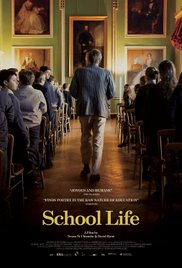
 Greetings again from the darkness. With all the talk about statues these days, maybe it’s career teachers like John and Amanda Leyden who deserve their bronzed images displayed in public so that we may all pay proper respect. The film follows the married couple during their 46th and final year as educators at Headfort School, the only remaining primary boarding school in Ireland. These two have been inspirational and influential to so many students over the years, and now they find themselves in a quandary about how to leave the only life they’ve known since becoming adults.

Co-writers and co-directors Neasa Ni Chianain and David Rane, along with script consultant Etienne Essery, use a loose structure in documenting the daily activities, and the blending of traditions with modernity, within the somewhat imposing walls of Headfort. We find it pleasurable to focus on passionate, dedicated teachers rather than on what’s broken with today’s education system.

John’s hard line stance and frequent use of sarcasm (“That wasn’t entirely bad”) effectively masks his caring nature and desire to help students learn and improve. He teaches Latin, Math and coaches the student band that plays many familiar rock songs. He considers this just as important as any class. Amanda takes a more traditional approach in teaching Literature. She uses a well-refined mixture of encouragement and books to facilitate the lessons and motivate students to read more.

The past and present are always on display here … with both the institution and this couple. School and home are blurred lines for the students as well as for John and Amanda. “If we don’t come here, what’ll we do all day?” This line speaks to the uncertainty and wariness that are weighing on the couple as their career end approaches.

As viewers, we must keep in mind that these are privileged children, all of whom are likely to move on to elite secondary schools. In fact, the arrival of selection letters plays a role near year end. When alone at home, we hear John and Amanda complain about students, not unlike you probably complain about your co-workers. The difference here is that this man and woman are truly dedicated to helping each student become their best self.

The film style allows the day-to-day challenges to appear as they may, and while little is learned about individual students, it’s clear that John and Amanda are lost about leaving the only working life they’ve experienced … a devotion to helping kids develop. In fact, the Headmaster, Dermot Dix, is a former student of the Leyden’s. The film’s original title, In Loco Parentis, translates to “in place of parents” … we wish these pseudo-parents nothing but the best in the biggest transition of their life. They certainly have earned happiness, and maybe even a statue.

watch the trailer:


KIM DOTCOM: CAUGHT IN THE WEB (2017, doc)

August 24, 2017

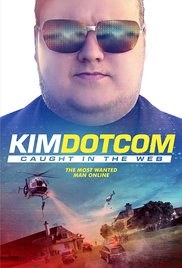
 Greetings again from the darkness. On paper, it reads like some cheesy B-movie thriller on the trail of a super-hacker nicknamed “Dr. Evil of the internet” as he builds his empire by stealing the work of others. However, director Annie Goldson is dealing in reality and submerges us in the years-long saga of Kim Dotcom, the (somewhat) proud owner of the Dr Evil moniker. This is every bit as much a commentary on legalities and technology as it is on the ‘livin’ large’ lifestyle of the film’s quite colorful subject.

Bordered by a security wall and monitored by cameras, the sprawling estate in Coatesville New Zealand is where we begin. It’s the home of super-hacker and entrepreneur Kim Dotcom, formerly known as Kim Schmitz, and his wife Mona and their 3 kids. Think Jordan Belfort in THE WOLF OF WALL STREET and you’ll have a good idea of the type of extreme parties that Kim and his cohorts hosted. In 2012, a pre-dawn full SWAT gear raid of the estate changed everything – and we are privy to some of the actual footage.

After the raid, law enforcement threw just about every possible charge at him: money laundering, racketeering, and most crucially, copyright infringement. Perhaps you were one of his MegaUpload customers? Millions of people were, and he banked hundreds of millions of dollars from his site – a site designed for users to share files with others. Of course, it turned into a site where mostly what was uploaded and shared were digital copies of movies and music. The files spread across the globe while leaving artists and production companies empty-handed with no royalties. The question of law boiled down to this: can an online provider be protected or insulated from the (illegal) actions of its users?

Kim Dotcom has been described as a parasite, a criminal and as evil. Obviously, he sees himself much differently. While reveling in his “most wanted man online” badge, he prefers to position himself as a resistance fighter … one who has simply seized an opportunity afforded by a technological revolution of which lawmakers can’t maintain pace.

Director Goldson provides as much structure as possible to a messy and multi-faceted legal story, while also presenting the super-sized personality of Kim Dotcom … a man driven by ego, greed, and fame. He clearly thrives on his celebrity status (as evidenced by his participation in a Town Hall meeting with Julian Assange and Edward Snowden), and from a very early age became quite comfortable with relaxed ethics in our ever-evolving culture of technology.

In an era of dissolving morals, he is a difficult man to muster sympathy for. It does seem, however, that he was at a minimum, a victim of over-reaching by law enforcement (from New Zealand and United States). The legalities of the search warrant and charges are a bit murky (and still being challenged), and viewers will likely teeter between ‘lock him up’ and ‘modernize the laws’. We all know the universal internet is tied to the global economy, so why are international copyright laws so fragmented and antiquated? Instead of a B-movie thriller, Ms. Goldson has delivered a true-to-life horror story … one with no clear resolution in sight.

watch the trailer:


CALIFORNIA TYPEWRITER (doc, 2017)

August 17, 2017

 Greetings again from the darkness. QWERTY. Chances are you recognize that from your laptop keyboard, and have never thought about the origin or design reason. This is just one of the fascinating topics in the surprisingly interesting and entertaining documentary from Doug Nichol (former music video guru for Aerosmith, Lenny Kravitz, Sting, and The New Kids on the Block).

Did you know there are folks who collect and still use typewriters? Well there are, and you’ve even heard of some of them: Tom Hanks, Sam Shepard, David McCullough and John Mayer. We hear from each of these as they describe their connection to the “old school” way of producing text on a page.

Mr. Nichol began with the idea of making a short film focusing on a small typewriter repair shop in Berkeley. As the story evolved, he learned of the many facets associated with the community of typewriter enthusiasts … those who refuse to give up the old way simply because a new way exists. There is history. There is nostalgia. There is a link to creativity. The film explores all of this and more.

Christopher Latham Sholes was a believer in Women’s Rights in the 1800’s, and his invention of the typewriter was to create more job opportunities for women. His prototype looked more like a piano, and due to a lack of investor interest, he finally had to sell to Remington in order to get production and marketing. By 1890, there were 60 manufacturers of typewriters, and the Sholes and Glidden model remains a gem of any collection even today.

It’s bittersweet to see the recently deceased Sam Shepard and hear him explain how he never got along with a computer screen, but loves the feel and sound of his typewriter. He created some of the most marvelous plays ever written, and compares loading the paper to ‘saddling a horse’, and notes the sound of typing has a “percussion about it”.

John Mayer recalls seeing Bob Dylan “playing” a typewriter as he wrote his songs, and has since made it apart of his own songwriting process. An inordinate amount of time is spent with Mayer onscreen, but it does make the point that even the generation raised on technology can find value in an object that was once an office staple, and is now a mere relic to most. Writer David McCullough claims the typewriter is the only way he can write, and Tom Hanks seems to truly enjoy talking about his typewriter obsession, and how he spends time each day typing out thank you notes and correspondence.

The repair shop is the heart of the story, and we continually come back to Ken Alexander as he lovingly restores each machine that comes in. It’s with a bit of irony that we watch Ken and the store owner Herb come to realize that they must rely on today’s technology of websites and social media as a last hope for survival.

In stark contrast to Ken bringing typewriters back to life, we see modern sculptor Jeremy Mayes as he scavenges for typewriter parts for his latest piece. And in an odd twist, we meet a group who makes music with typewriters and actually perform classic songs with their own vibe.

Nostalgia has brought back vinyl records, and there is a community of folks who believe the typewriter revolution is underway. The rationale is that technology is now ruling our lives and we need to step back and get in touch with what is real and produce tangible results – not just use up storage on a hard drive. While we may not be convinced that “the revolution is typewritten” (from The Typewriter Insurgency Manifesto), the film is actually thought-provoking as it tracks and connects humans-machines-technology.

watch the trailer:


STEP (2017, doc)

August 8, 2017

 Greetings again from the darkness. Director Amanda Lipitz proves that a documentary can be both inspiring and a bit sad. She takes us inside the Baltimore Leadership School for Young Women and introduces us to the senior girls on the Step dance squad known as the “Lethal Ladies”. The school was founded in 2009 with the goal of sending every student to college, in spite of the challenges and barriers faced in this inner city community. This is the school’s first senior class, and everyone – students, teachers, parents, administration – is on edge.

Emotions overflow throughout the film. The normal roller coaster ride that accompanies high school girls is somehow magnified when the pressures of becoming the first one in the family to attend college collide with such harsh realities as poor grades, no food in the fridge, no power in the home, and inconsistent support from parental units. There is also the goal of winning the year-end Step competition against schools that have a more successful track record, and who likely don’t face the extremes of Baltimore street violence and poverty that is normal for these girls each day.

Ms. Lipitz’ film, a Sundance award winner, never backs away from the emotion of the moment and yet still manages to maintain the long-game perspective of trying to get each of these students graduated and accepted into college. She dives into the home lives of a few of these girls and though all of the parents want the best for the kids, it’s quite obvious that the type of home support and structure varies widely even amongst these few we follow.

The real beauty of this environment is that the school provides structure, guidance and support all along the way. The Step coach pushes them hard daily towards being the best they can be going into the competition. The girls also push themselves and each other, and overcome some personality conflicts, all for the sake of a stronger team. The school principal has one-on-one meetings to light a fire when necessary, and you’ve likely never seen a more dedicated high school college counselor who doles out hugs and motivation in whatever dosage is necessary.

The key message here is that it takes a combination of inner-strength and drive, and a support system of family, teachers, coaches, administrators and friends, for kids to have a chance at finding a way to succeed at life … whether that’s at Johns Hopkins or a local community college program. This is a special film with a real-world case study of students looking for a way up, and of those looking to provide the necessary boost.

watch the trailer:


IT’S NOT YET DARK (2017, doc)

August 3, 2017

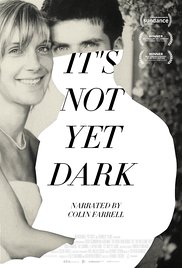
 Greetings again from the darkness. We all have two kinds of friends: those who sulk for days when the candy machine eats their quarter, and those with such zest for life that no personal or professional tragedy dampens their “can do” spirit. Director Frankie Fenton presents the remarkable story of Simon Fitzmaurice, an Irish writer and filmmaker who is robbed of his body by MND (Motor Neuron Disease).

Fellow Irishman Colin Farrell narrates the film, giving poignancy to Simon’s own words … words he can no longer speak himself. As a writer and filmmaker, Simon’s “before” life is documented through pictures, videos and many of his thoughts on the page. He was a youngster full of ideas and energy. We learn this from his father Damien, his mother Florence, his younger sister Kate and childhood friend Phil. More than any other, we learn it from his wife Ruth. In fact, this is as much Ruth’s story as it is Simon’s. She is a special lady in love with a special man. Their story will likely resonate with you.

In 2008, Simon’s short film THE SOUND OF PEOPLE was selected to screen at Sundance. Not long after, he was diagnosed and given 3-4 years to live. Less than 10 years later, he became the subject of this documentary which was also a Sundance selection. It’s not the path he envisioned, but as he says, “For me it’s not about how long you live, it’s how you live.”

This cruel disease allows him to feel everything, yet he can’t walk, speak, breathe or eat without artificial help. The film shows us how Simon documented the many phases of the disease, right down to his last dance. One form of “artificial help” allowed him to return to filmmaking. He utilized eye gaze technology to finish writing and then direct his first feature film, MY NAME IS EMILY. With all of his physical challenges and the support of his wife and kids, it’s wrapping the movie that proved to him that he “made it back to work”. It provides the answer to his earlier question, “What is a man?”

It’s touching to hear Ruth describe how the hiring of a nurse allowed her to go back to being a wife and mother, rather than a care-giver. She and Simon even later had twins (kids #4 and 5), and he wrote a best-selling book/memoir on which this film is based. Last year the documentary GLEASON provided a similarly inspirational story about Steve Gleason, an NFL player stricken with ALS. These two films and these two men (and their wives) provide a sentimental, sincere and life-affirming message that life is worth fighting for and living to the fullest.

watch the trailer:


AN INCONVENIENT SEQUEL: TRUTH TO POWER (2017, doc)

July 30, 2017

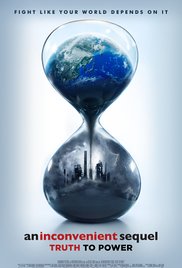
 Greetings again from the darkness. Eleven years ago, former Vice President Al Gore teamed up with filmmaker Davis Guggenheim to deliver a significant and startling wake-up call in the form of the documentary AN INCONVENIENT TRUTH. Not only was this the first introduction to the science of “global warming” for many, it also won an Oscar for Mr. Guggenheim and contributed to Mr. Gore winning the Nobel Peace Prize.

Co-directors Bonni Cohen (THE RAPE OF EUROPA) and Jon Shenk (LOST BOYS OF SUDAN) seem conflicted on the purpose of this sequel. Is this a frightening eye-opener on the climate-related changes over this past decade, or is it an attempt to return the spotlight to a faded rock star? The film provides evidence of both.

The film kicks off with a reminder of how powerful the original documentary was and how it started an avalanche of deniers … even re-playing Glenn Beck’s comparison of Al Gore to Joseph Goebbels as being weak sources of truth. Mr. Gore is on screen almost the entire run time. He is a self-described “recovering politician”, yet we see him acting very much like an esteemed politician: presenting on stage, shaking hands with the adoring crowds, posing for selfies, giving speeches, appearing on talk shows, and coming across as a highly-polished public figure reciting well-rehearsed lines.

As we would expect, the film is at its best when it focuses not on the celebrity and commitment of Mr. Gore, but rather on the statistics and documentation of these earth-changing developments. Some of the featured videos are surreal: the 2016 Greenland glaciers “exploding” due to warm temperatures, the flooded streets of Miami Beach from rising tides, and the aftermath of the Philippines typhoon are particularly impactful. There is even a connection made between the severe drought and the Syrian Civil War in creating an especially inhumane living environment. A Gore trip to Georgetown, Texas and his visit with its Republican mayor is effective in making the point that political platforms should have no bearing on our doing the right things for our planet. There simply aren’t enough of these moments.

A central focal point is the 2015 UN Climate Conference in Paris, and cameras are rolling when terrorism causes fear for the safety of 150 heads of state, and necessitates a delay in the proceedings. We are privy to some of the behind-the-scenes negotiations that include Solar City agreeing to “gift” technology to India in an attempt to have that country join the accord and reduce from 400 the number of planned new coal plants. Of course as we now know, the historic Paris Climate Accord has since been compromised with the pull out of the United States after the recent election.

Is the purpose of the film to keep climate change believers motivated, or are the filmmakers (and Gore) attempting to educate those who might still be won over? With so much attention to Mr. Gore’s ongoing efforts (and an attempt to solidify his legacy), it often plays like a pep talk rather than a fact-based documentary.

There is no questioning the man’s passion, though his screen presence over two hours is hampered by his reserved manner. He states clearly that he is “not confused about what the right thing to do is”, and even compares his mission to the Civil Rights movement. Gore labels the lack of global process as a “personal failure on my part”, while simultaneously claiming the Democracy crisis has affected the attention given to the climate crisis. His frequent proclamations that “we are close” seem to be in conflict with the many setbacks. Are we close? The film seems to offer little proof.

watch the trailer: