TESLAFY ME (2020, doc)

April 2, 2020

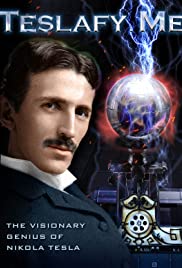
 Greetings again from the darkness. I’ve been trying to think of other examples of famous people known for one thing, when they deserve to be remembered for something else. Hedy Lamarr, considered by many to be the most beautiful actress ever (she played Delilah in SAMSON AND DELILAH), also invented a frequency hopping process used today in WIFI and military defense satellites. Marcel Marceau was a world famous mime who also helped save thousands of children during WWII. Johnny Weissmuller, who played Tarzan in many movies during the 1930’s and 40’s and created that iconic Tarzan yell, also was a 5 time Olympic Gold medal swimmer. Surely there are many others with similar stories, but maybe none more remarkable than Nikola Tesla … known today as the make of a popular electric car, but his backstory is vital not only to history, but also to our current way of life.

Slovenian filmmaker Janja Glogovac delivers a very informative and highly polished documentary that takes us through Tesla’s life (Serbian roots, raised in Croatia, moved to United States), including his dealings with such well known luminaries as Thomas Edison, George Westinghouse, and JP Morgan. Ms. Glogovac utilizes interviews with intellects, including Tesla’s nephew William Terbo (a NASA engineer), and also many creative graphics, simulations, and animation.

Do you consider Steve Jobs a visionary? Would you be surprised to learn that Tesla imagined the cell phone more than a century ago? He dreamed of Utopia where energy was clean, rather than dependent on fossil fuels which would negatively impact climate and the earth’s natural vibrations. Tesla detailed how his ideas came to him as flashes of light, and very specific. For you engineers and scientists, don’t worry, some segments go fairly deep on his inventions and what they were meant to accomplish.

Tesla came to America in 1884, and after a brief stint with Edison (who put much into trying to discredit Tesla), was funded by George Westinghouse. Tesla’s commitment to his electro-magnetic motor (alternating current) elevated his rivalry with Edison and the direct current option. When Tesla and Westinghouse “lit up” Chicago, the industrial revolution was ushered in. Tesla’s hydro-electric power from Niagara Falls earned him the title of Father of Renewable Energy, and led to the Wardenclyffe Tower construction in 1901. It was an experimental wireless transmission tower that ended up with a similar fall from grace as Tesla himself.

Can the story of Nikola Tesla be told in an 80 minute documentary? Hardly. But the purpose seems to be reigniting an interest in a forgotten genius – a man whose work with radio, wireless, and electricity is still being utilized today. Elon Musk chose his brand name wisely, and we can’t help but wonder if Tesla’s ideas for clean energy had been supported rather than squashed, would we have avoided some of today’s issues. Learning that J. Edgar Hoover had Tesla followed, and that Tesla died broke, leaves us wanting more information … he deserves to be known as something more than the badge on an sleek electric vehicle.

watch the trailer:


SLAY THE DRAGON (2020, doc)

April 2, 2020

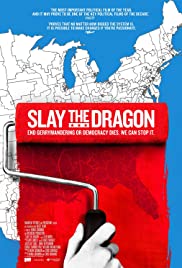
 Greetings again from the darkness. It’s no wonder our faith in democracy is waning. The list of reasons and the targets to point fingers are both numerous. Heck, one of the last-standing Presidential hopefuls has spent most of his life believing and preaching that there is a better way. This documentary from co-directors Chris Durrance and Barak Goodman ensures gerrymandering remains on the list of reasons. They weave together three stories from Michigan, North Carolina, and Wisconsin to demonstrate how a party can invoke a strategy of gerrymandering, and what the long-term impact can mean.

We’ve long understood the basics of gerrymandering. It is when one political party works to carve up the voting districts in order to benefit one party or handicap the other. The film educates us on the fine art of “packing” and “cracking.” Packing involves concentrating the opposing party’s voters into a few districts, while cracking involves spreading out (diluting) that party’s voters amidst many districts. Both are designed to render opposition votes meaningless. We even learn how gerrymandering got its name … a link to Elbridge Gerry, a former Governor of Massachusetts and Vice President to James Madison.

The “star” of the Michigan segment is Kate Fahey, and we see how her 2016 Facebook post led her directly into political activism, and the formation of “Voters Not Politicians” (VNP). Because she is so energetic and engaging, it’s clear why the filmmakers devoted so much time to this segment. Ballot initiatives, petitions, speeches, interviews, the Michigan Supreme Court, and ultimately, voting day … this is her journey and we get to come along for the ride.

North Carolina and Wisconsin offer more details on the fights against gerrymandering, but neither of these stories go quite as in-depth, although we do follow the Wisconsin case all the way to the U.S. Supreme Court, where Justice Kennedy’s retirement changes everything. There is a very informative segment on the Republican’s national strategy after Obama was elected. Survival of the party was in jeopardy, and behind-the-scenes strategists like Chris Jankowski and Tom Hoeffler were specialists brought in to focus on the best approach to re-districting across the country … something called the Redmap Project.

There are a lot of moving parts included in the film by Durrance and Goodman: tracing the 2014 Flint water crises to the 2010 elections, insight into ALEC (American Legislative Exchange Council), discussions of Lobbyists writing bills, details on voter suppression, and input from journalists, radio talk show hosts, political consultants, and attorneys. David Daley, author of the 2016 book “Ratf**ked” comments throughout with his opinions on specific examples of gerrymandering. The grass roots movement to end gerrymandering in Michigan was fascinating to watch, and there is mention that both parties have used gerrymandering to their advantage over the years. The difference makers these days are Big Data and Big Tech … highly complex analytical tools that turn this into a science. “Independent committees” drawing district lines is offered as a solution, but if the last decade has taught us anything, it’s that most everyone has an agenda and true independent thinkers are a rare breed. Whether calling this an “assault on Democracy” is accurate or not, it seems quite obvious that there must be a better way … and a better way is needed.

watch the trailer:


IT STARTED AS A JOKE (2020, doc)

April 2, 2020

 Greetings again from the darkness. Have you heard the one about the comedy festival poking fun at comedy festivals? Of course not. And you may not even be familiar with comedian Eugene Mirman. But the efforts of co-directors Julie Smith Clem and Ken Druckerman ensure that by the end of their documentary, we understand the impact of Eugene Mirman’s Comedy Festival (founded to parody comedy festivals).

So who is Eugene Mirman? He’s one of the key players in alternative comedy … comedians who don’t rely on traditional jokes, and often perform in places other than comedy clubs. If you ever watched the series “I’m Dying Up Here”, you saw a comedian perform in the back of a local deli. That is an example of alternative comedy. When you check the lineup of comedians included here, it becomes even more obvious. Kristen Schaal, John Hodgman, Kumail Nanjiani, Janeane Garofola, Jim Gaffigan, Bobcat Goldthwaite, Mike Birbiglia, and Michael Showalter are just a few of the participants. Ms. Garofola embraces her “alternative” by labeling herself a terrible joke writer, and more of a “filibusterer.”

Eugene Mirman is known for his voice acting (“Bob’s Burgers” and “Archer”), as well as his appearances on TV series such as (the brilliant) “Flight of the Conchords.” He married Set Director Katie Tharp and they had a son named Oliver. These personal details matter because Katie’s cancer plays a part in Eugene’s final year for the festival, and we get a glimpse of their home life, including time with Oliver. Their personal life is instrumental in elevating this from a Comedy Central special where comedians parade across the stage, to a real life drama that inspires a comical look at the parts of life that don’t seem so funny on the surface.

A community of comedians is on full display here at The Bell House in Brooklyn. They recall the first time they met or saw Eugene perform, and recollect memories of the festival’s past 10 years. Each of those festivals were presented with some off-the-wall theme – sometimes funny, sometimes poignant. H Jon Benjamin (lead voice in “Bob’s Burgers”) tells his story … a pork chop story that was his introduction to Eugene. Silliness is ever-present, but the Eugene/Katie love story stands on its own – including the ‘first kiss’ photo that graced their wedding invitation. The festival may have begun as a joke, and comedians may shy away from dragging their personal life into the act, but it’s clear “comedy is about connecting with people”, and its value never diminishes.

watch the trailer:


“How to Fix a Drug Scandal” (Netflix DocuSeries, 2020)

April 1, 2020

Beginning April 1, 2020 – Netflix, 4 episodes

 Greetings again from the darkness. We expect the chef to taste the special of the day. We don’t expect the bench chemist to personally try out the drugs being tested for a criminal case. This 4-part DocuSeries from Netflix explores not one, but two of the most explosive cases in Massachusetts history. Were these Law Enforcement scandals? Were these workplace scandals? Were there miscarriages of justice? The simple answer to all three questions is yes, and the series breaks down the stunning details as well as the aftermath.

Most DocuSeries focus on one crime or one criminal. Here, documentarian Erin Lee Carr delivers two stories connected by job description, consequences and geography. In the state of Massachusetts, two drug testing laboratories are used for the majority of drug cases. The Hinton lab covers Boston and the eastern part of the state, while the Amherst lab covers the west, including Springfield, the capital for illegal drugs. In the Hinton lab, it was discovered that “star” chemist Annie Dookhan had illegally falsified thousands of drug tests. In the Amherst lab, chemist Sonja Farak admitted not just to using the drugs she was testing, but using those drugs while on the job.

Either of these stories are worthy of documentary treatment, and yet combining them generates even more impact, both from a viewing standpoint and for the legal fallout. Ms. Farak’s story is easily the most fascinating. There is a reason that many bakers carry a few extra pounds … they sample the goods. So why shouldn’t we be extra cautious with those who test illicit drugs all day, every day? Evidently no one in Massachusetts ever thought to ask the question, as Ms. Farak worked in the Amherst office for nearly 10 years with minimal oversight. She literally walked across the hall from the lab to smoke crack cocaine, and even cooked the drug at her desk!

If not for the Farak story, we would likely find Annie Dookhan’s case to be one of the most outrageous we’ve heard. Lauded as the highest producing chemist in the busy Hinton lab where she worked for 9 years, it turns out Ms. Dookhan used “dry labbing” to sustain her numbers. Dry labbing is basically eye-balling substances to determine if they are likely illegal drugs. These two women were involved in over 50,000 cases, including those for which they testified in court. They are accused of “fraud on the court.”

As you might imagine, defense attorneys were in an uproar as the details in these cases emerged. Ms. Carr focuses her attention on defense attorney Luke Ryan, and one of his collaborating trial attorneys, Jared Olanoff. While law enforcement and prosecutors fought to maintain the convictions, Mr. Ryan spent a significant portion of his time researching, tracking down evidence, and making the case that thousands of convictions should be overturned, with prisoners released and criminal records cleared. It’s particular disheartening to see Massachusetts Attorney General Martha Coakley take the stance that Ms. Farak’s inappropriate actions were limited in scope to just a few cases. Ms. Coakley’s statements were made before any type of investigation had been done, so it was clearly an attempt to minimize attention from the media, public and other attorneys.

Interviews with Ms. Farak’s mother and younger sister Amy are included. Their words help personalize the film, since dramatizations and archival clips are used for Farak’s stunning testimony. The actions of so many are questioned throughout. Even with limited budgets, how are these chemists not subjected to some basic oversight? How does Judge Kindred make the ruling he does? Why did the ACLU need to get involved in what seems like a pretty straightforward situation? What happens if Luke Ryan doesn’t remain diligent in his pursuit of justice? What if the State Supreme Court had refused to hear the cases?

Some background information is provided for both women, including the fact that Sonja Farak was the first girl to play high school football in Rhode Island. Both women had strong academic backgrounds, but education doesn’t always make for good judgment. This DocuSeries from Ms. Carr is exceptionally well crafted and the stories move fast and keep us spellbound. More than 50,000 cases were impacted by the inappropriate and illegal actions of these two trusted chemists, and their actions cast doubt on the entire judicial system. Let’s just hope that the next time one of your co-workers is sneaking off 10 times a day to smoke crack, that someone will say something to somebody!

Premiering April 1, 2020 on Netflix

watch the trailer:


NO SMALL MATTER (2020, doc)

March 26, 2020

 Greetings again from the darkness. Perpetuating the species is one goal, but improving the species … specifically, improving the possibilities for each child … is truly a worthwhile pursuit. The research is presented, and the film is co-directed by Danny Alpert, Greg Jacobs, and Jon Siskel (Gene’s son). We are told “Beginnings matter”, and then we are shown why and how.

Birth to age 5 is critical for what is called “the Learning Brain.” Unfortunately, in today’s society, fewer parents are spending a significant amount of time with their youngsters. We are told that in the U.S., 11 million kids under age 5 are spending greater than 50% of waking hours with someone other than their own parents. Daycares and pre-schools have become the most important link in the early brain development of these young kids. And because of that, the high income versus low income gap is creating vastly different results for the age group. Higher income tends to offer better options for early development, and statistics show these kids hear and learn more words, and visit more libraries and museums. We are informed that in 28 states, daycare costs are now greater than public college tuition.

Research and input is offered by Professors, researchers and children educators. We follow one particularly enthusiastic pre-school teacher who is clearly very talented, but due to low salary (she has a second job bartending), she decides to head back to graduate school. It turns out the challenges at this younger level are the same faced throughout the education system. Teachers are underpaid and overworked, and it’s the students who suffer. However, unlike older ages, this younger age group isn’t yet capable of taking on more learning opportunities on their own. They require assistance.

The Abecedarian Project in Chapel Hill, North Carolina and the Avance group in Waco, Texas are highlighted as organizations working to provide assistance to those at risk of not being able to provide adequate early childhood learning opportunities. We also see the military’s approach of “Investing in Quality” so that the kids of military families have stimulating learning programs. Educators stress the importance of ‘executive function’ – the learned skill of kids being able to pay attention and cooperate in a classroom environment. It’s not all about reading and writing. The need goes deeper. The film does a nice job of presenting information most of us are aware of, in a way that makes the solutions clear and importance known. The idea of referring to this as ‘brain building’ rather than ‘babysitting’ makes a lot of sense. Not investing in our kids from day one means we are choosing perpetuation over than improvement.

watch the trailer:


FACING EAST (2020, doc)

March 17, 2020

 Greetings again from the darkness. The story of the Eastern Cemetery in Louisville, Kentucky is disheartening, yet somehow not overly surprising. It’s known as the most over-buried cemetery in America, and while the practice of over-burying – more than one body per plot – can be traced to greed, the shocking part here is the length of time it has evidently been business-as-usual at this particular cemetery.

The sign posted at the entrance states Eastern Cemetery was founded in 1848. In 1885 the “Louisville Journal” was reporting on mass pauper graves at the site, with 2-3 bodies per grave. This is Tommy Baker’s first feature length documentary and he provides us the statistics we need to fully comprehend the story. Eastern Cemetery is 29.6 acres, and the industry standard is 1000 bodies per acre. Records indicate 138,000 bodies can be traced to the cemetery, including the mass pauper graves from the mid-19th century. So yes, Eastern exceeds the standard by more than 100,000 bodies.

Mr. Baker opens the film with archival footage of a courtroom case involving the cemetery, but as we learn, despite ceasing operations in 1989, no one has been held accountable. Three chapters provide the film’s structure: History, Interrogation, and Friends of Eastern. History is important to establish the foundation of what occurred, but it’s the words of those interviewed who make this an emotional story to follow. The impact really strikes a chord when a family member reminds us that our society strives to bury the dead with dignity. She proclaims that at Eastern, a loved one’s final resting place is neither final nor restful.

We hear from the director of Cave Hill Veterans Cemetery, a graveyard that shares a property boundary/wall with Eastern, and has ten times the land. We hear of the ownership and involvement of the Methodist Church, as well as the affiliation with Greenwood Cemetery. Eastern housed Louisville’s first crematorium, and in 1989 when the re-using of plots became public knowledge, the cemetery ceased operations. It was at this point where things somehow got worse. The graveyard fell into disrepair due to neglect, and a sad situation turned shameful.

As is often the case, money provided an answer. A misappropriation of perpetual care trust funds meant there was no money for upkeep. Family members were angry and frustrated. After 25 years of failed court cases and legal wranglings, a non-profit organization called Friends of Eastern began to clean-up the site and re-store it to a proper condition. Frank Whitaker is our narrator through this sad saga with heart-breaking segments like “babyland”, and we come to understand how Eastern became the most over-buried cemetery in America … but we are discouraged to learn there are others.

Watch the trailer:


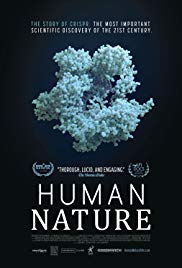
HUMAN NATURE (2020, doc)

March 12, 2020

 Greetings again from the darkness. That feeling when you start up a 95 minute documentary and a black and white clip of a Biologist giving a speech in 1966 fills the screen … it’s a moment of dread, which fortunately, filmmaker Adam Bolt quickly turns into a fascinating education. The fellow giving the 1966 speech (I missed his name) states that someday we will be able to alter human genes. More than 50 years later, Mr. Bolt’s film shows us that scientists are beyond that, and on the verge of developments that demand some serious and literally life-altering discussions.

Deep science and cinematic story-telling aren’t typically a good mix, but here we have a blending of journalists, researchers, and many types of scientists working with a knowledgeable filmmaker. They succeed in explaining the ‘why’ and ‘what for’ of gene-editing in a way that even a simpleton such as yours truly could follow. Going in, the concept of CRISPR (Clustered Regularly Interspaced Short Palindromic Repeats) was vague at best (for me), and those involved with the film explain how this has opened the scientific door to the building blocks of life through gene-editing.

For structure, the film is divided into six chapters: Needle in a Haystack, CRISPR, The Gene Machine, Brave New World, The Good Gene, and Playing God. These chapters touch on the story of young David Sanchez (afflicted with Sickle Cell Anemia), food and bacteria, Aldous Huxley’s book, eugenics, and morality. With so much to cover, the film excels in providing just enough for viewers, and putting the spotlight on those who can best explain their area of expertise or what results might mean.

Science often complements humanity while simultaneously standing opposed to nature. The film even shows the infamous JURASSIC PARK clip where Dr. Ian Malcolm (Jeff Goldblum) tries to confront the idea of genetic altering by stating, “Scientists were so preoccupied with whether or not they could, they didn’t stop to think if they should.” There are also clips from BLADE RUNNER and GATTACA, and they all lead us to the question on everyone’s mind … should we play God?  Most agree that stopping genetic diseases is a worthy goal, but how about designer babies? That’s where discussion of Huxley’s “Brave New World” and Hitler come in. Should we be architecting the “perfect human being”? When Dr. Jennifer Doudna asks, “What have I done?”, she’s smiling on the outside as a scientist, but surely has doubts as a person.

Keegan DeWitt’s score is top notch for a documentary, but a film about isolating individual and specific strands of DNA isn’t really about style. Listening to bioengineers discuss their own work and that of others in the field, gives us the basics of the science involved; however, as a society we must come to grips with that big question. Do we play the hand we’re dealt, or do we stack the deck and keep one up the sleeve? At some point very soon, we must decide. As the film states, after 2 billion years, this is the end of the beginning. What does the next stage look like?

watch the trailer:


MARCEL DUCHAMP: ART OF THE POSSIBLE (doc, 2020)

March 11, 2020

 Greetings again from the darkness. The familiar phrase is “Art is in the eye of the beholder”, but do you know the full quote?  Author E.A. Bucchianeri actually wrote, “Art is in the eye of the beholder, and everyone will have their own interpretation.” Perhaps no artist lived this philosophy more than Marcel Duchamp; a true artist who inspired so many, and who convinced the art world that even an ‘idea’ could be art. There may be no more perfect fit than Matthew Taylor creating a profile on an artist who touched so many art disciplines … not unlike the director himself.

“I have forced myself to contradict myself in order to avoid conforming to my own taste.” Marcel Duchamp spoke these words and seemed to live by them. He was born in the Normandy area of France, and his grandfather ensured that art surrounded family members. Marcel, his two older brothers, and their sister all became artists. Marcel became the one who inspired, influenced, and created controversy and debate.

Mr. Taylor’s film is, for the most part, a chronological profile of Duchamp. He effectively uses interviews to emphasize the impact. As an example, performance artist Marina Abramovic, filmmaker Michel Gondry, and singer David Bowie … each creative giants in their respective field … have clips crediting the influence of Duchamp. Others interviewed include: Art historians, researchers, critics, and other artists.

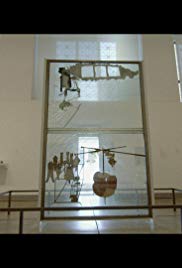
The film takes us through Duchamp’s association with Dada, Cubism, and Conceptualism – though he claimed none of these. We get a peek at his use of science, language, geometry and technology in his work, and also learn the stories behind his most famous works, including Nude Descending a Staircase (1912), 3 Standard Stoppages (1914), his Mona Lisa parody LHOOQ (1919), and The Large Glass (an 8-12 year project). His “Readymades” include the R Mutt urinal from 1917, which absolutely tested the boundaries of what could be art.

Duchamp had a long-time affair with Brazilian artist Maria Martins, while his second wife, Alexina Sattler, was the former daughter-in-law of renowned painter Henri Matisse, an artist he had once used as a prime example of “retinal art” – pleasing only to the eye. Clearly Duchamp felt art was ‘of the mind’ and he felt taste to be subjective, even an enemy of art. Sometimes referred to as the “Father of Conceptualism”, Duchamp gave a lecture in 1962 titled “Apropos of Myself”, of which the full text is available online.

Mr. Taylor’s film and Mr. Duchamp’s work are quite enlightening as to how the definition of art was expanded, and how that transformation is still impacting today’s artists. It’s mentioned that most every artist wants fame and fortune, and though Duchamp wanted neither, he ended up with both. By the film’s end, we are in agreement with Duchamp that what’s important isn’t the art, but rather the artist. And few have been more important than Marcel Duchamp.

watch the trailer:


TREAD (doc, 2020)

February 27, 2020

 Greetings again from the darkness. If not so tragic, this story might fit best in Ripley’s Believe it or Not. What better description is there for a small town welder who builds an armored bulldozer, weaponizes it, and then takes it on a rampage of revenge, destroying the buildings, homes, and businesses of those he believe ‘wronged’ him? This actually happened in Granby, Colorado in 2004, and that welder’s name was Marv Heemeyer.

Filmmaker Paul Solet begins the film with a recording of a 911 call and news clips of the actual events of June 4, 2004. Solet then proceeds to lay out the backstory of Heemeyer, and how things escalated to the point where destruction and suicide seemed like the only logical step to him. Solet cleverly utilizes Heemeyer’s own self-recording (via audio cassette) as a framing structure for the film. Heemeyer’s voice tells us what his plan was, and why he had reached this level of desperation.

Interviews are key, and we hear from law enforcement officers who were on the scene that day, Heemeyer’s ex-girlfriend Trisha MacDonald, his best friend, a younger man from his snowmobile club, brothers from a family that had supposedly targeted Marv, and a newspaper reporter, Patrick Brower, who also wrote a book on Heemeyer’s rampage. Actual news clips and reenactments are used to show us what those being interviewed tell. In this case, it’s an effective approach.

It’s particularly interesting to hear that Marv was mostly a likable guy who just bumped up against local town and county politics a couple of times. Marv was not part of the ‘good old boys club’ and admits to needing to “teach a lesson” to those he perceived has gone out of the way to make life difficult for him. His bulldozer was a way for him to dole out the justice that was otherwise going unserved.

This is a story of revenge told in a somewhat sympathetic manner towards Marv Heemeyer, a man who considered himself “an American Patriot.” The audio tape is clearly a confession of what he planned (and later carried out), and it was clear he knew this was a suicide mission. Listening to his rants, we assume some form of mental illness was involved, and his best friend describes him as a man who ‘spent too much time alone.”

The video clips of the carnage, and of the many law enforcement officials on the scene – all of whom were helpless to stop the bulldozer – are captivating and difficult to watch. Fortunately, after the fact, we know that no one died that day other than the man who was responsible. Marv, a man of “righteous anger”, had his day of serving justice and rare ‘Bulldozer Rampage’ headline knocked off the front page one day later by a much bigger story.

watch the trailer:


ONCE WERE BROTHERS: ROBBIE ROBERTSON AND THE BAND (doc, 2020)

February 20, 2020

 Greetings again from the darkness. Based on Robbie Robertson’s “Testimony: A Memoir”, documentarian Daniel Roher’s film is understandably told from the lead guitarist’s point of view, and in fact, Mr. Robertson spends a good deal of time recollecting directly to the camera. For those familiar with the acrimonious-filled history since The Band split in 1976, you won’t be surprised that Robertson’s recounting of events varies greatly from those in the 1993 memoir of his former friend and bandmate in “This Wheel’s on Fire – Levon Helm and the Story of the Band.”

Mr. Robertson is now 76 years old, and in addition to his guitar skills, he has always been an articulate speaker, and one who comes across as prideful and mostly sincere. These days he is one of only 2 band member still living, and the other (Garth Hudson) has nothing to say publicly about The Band or its members. This is one man’s version of reality, and from a perspective of music history, it’s quite interesting and entertaining.

“The Band was greater than the sum of their parts”, says Bruce Springsteen, in one of many interviews used for the film – including Eric Clapton, Taj Mahal, George Harrison, Peter Gabriel, David Geffen, Martin Scorsese, and “Rolling Stone” magazine founder Jann Wenner. Some of the initial interview clips play over an opening live performance of “Up on Cripple Creek”, including Clapton stating he was “in awe of their brotherhood.” The film then traces the timeline and early years as the pieces of the band came together … much of it centered around Ronnie Hawkins, who is not only the most insightful of those interviewed, but also the most colorful. We learn that Robertson was writing songs at age 15, and that it was meeting Bob Dylan that changed everything.

A substantial portion of the film deals with those early years, and the tales of being booed by audiences as they backed the newly “electric” Dylan are especially fascinating. In 1967 when The Band moved to the pink house in Woodstock, communal living led to artistic and creative productivity, including The Band’s masterpiece album, “Music from Big Pink” (1968). There are some terrific old photos included here which give us a feel for the times, and the aforementioned ‘brotherhood’ of this band that seemed more tightly connected than most.

Of course, it was the late 1960’s and heavy drinking and drug usage took its toll, and The Band began to unravel. In 1976, 34 year old Martin Scorsese was brought on to direct a documentary of The Band’s final performance. THE LAST WALTZ was released in 1978 and included electrifying live performances from some of the all-time greats: Van Morrison, Eric Clapton, Neil Diamond, Joni Mitchell, and Bob Dylan, to name a few. The concert was held at Winterland Ballroom in San Francisco, which would later close after a 1979 New Year’s Day marathon concert by The Grateful Dead. Scorsese’s film included interviews with the band members, but it was his unique and varied camera placements that brought the stage show to life.

Director Roher’s producers on this film include Scorsese, Ron Howard, and Brian Glazer. While it is often the story of Robbie Robertson’s personal journey, it also serves as his perspective on The Band – a group of musicians who were right in the middle of things as popular music evolved. Levon Helm, Richard Manuel, and Rick Danko have passed away, and reclusive Garth Hudson refuses to re-live the past, so it’s Robertson who tells their story, and his. We do get to see The Band perform “The Weight”, “The Night They Drove Old Dixie Down”, and most fittingly, “I Shall Be Released”, but if it’s the music that most interests you, track down and experience THE LAST WALTZ. It was the final time THE BAND performed all together on stage, and as Robertson says, “everybody just forgot to come back.”

watch the trailer: