THE TEST AND THE ART OF THINKING (doc, 2020)

November 16, 2020

 Greetings again from the darkness. “And you may begin.” Thanks to this documentary feature film from Michael Arlen Davis, we now know that 3.5 million high school students graduate each year, and 80% of them have taken a standardized college admission test at least once. The vast majority of those students experience anxiety and feel the pressure that comes with needing a certain score to have any chance at gaining admission to the school of their choice.

Why do these tests exist? What do they measure? How are scores used in the admissions process? How accurate are they in predicting academic success at the next level? These topics are discussed during the film through interviews with academics, tutors, parents, and students. Surprisingly, the professional tutors – or testing coaches – provide the most insight. Each has their own philosophy, but the key takeaway is that standardized tests don’t evaluate what you know, but rather how you think and how well-prepared you are to take such a test.

Carl Brigham, a Princeton Professor of Psychology and member of the advisory council of the American Eugenics Society, is credited with creating the original SAT, though it’s been re-designed a few times since. We hear from John Katzman, who founded the Princeton Review in 1986 as a business to teach and tutor students on how to best prepare for standardized tests. From there, many others, including private for-hire tutors have become part of this ever-expanding industry. This goes to the core of just how important test scores are viewed in the college admission process.

In 2001, Dr. Atkinson of the University of California system announced they were looking to drop the SAT from the admissions evaluation, and this year’s COVID environment has pushed other systems and schools to consider alternative methods as well. It’s pointed out that the tests are not dissimilar to IQ tests, yet most agree a test score is not an accurate measure of intelligence. Standardized tests are described as a “get the answer” test, and the better students hone this skill, the less anxiety or stress they feel, and the more options they’ll have for advanced education … or all of the above.

Available on streaming platforms beginning November 17, 2020

watch the trailer


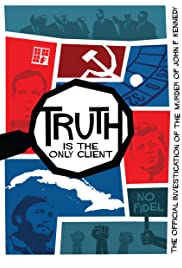
TRUTH IS THE ONLY CLIENT: THE OFFICIAL INVESTIGATION OF THE MURDER OF JOHN F KENNEDY (doc, 2020)

November 16, 2020

Greetings again from the darkness. Having spent much of my life in Dallas, the tragic events of November 22, 1963 have always played a role in my identity as a Texan. President Kennedy’s assassination that day has carried the added burden of conspiracy theories and politicized commentary … this in addition to the devastating emotional toll it took on the citizens of the United States. Co-directors Todd Kwait and Rob Stegman focus their attention on The Warren Report, the research conducted by the 7 appointed members of the committee, plus the affiliated attorneys and staff.

We see the archival clip of the Boston Symphony announcement of that day’s assassination, and the reaction of the live audience as the conductor reveals the Funeral March from Beethoven’s symphony is next up. It’s effective as a reminder of the gut-punch felt by the populace, before the filmmakers’ move towards a more analytical look at the findings by the commission. Vincent Bugliosi then informs us that it’s the greatest murder case in world history, and also the most important and complex. Bugliosi (now deceased) was the lead prosecutor in the Charles Manson case, and he also acted as the prosecutor in a 1986 televised mock trial of Lee Harvey Oswald – an event which led Bugliosi to write a detailed 2007 book entitled “Reclaiming History: The Assassination of President John F Kennedy”.

Four surviving staff members affiliated with the Warren Commission are interviewed on camera, as are other experts, authors, historians, and investigators. The “star” witnesses are Ruth Hyde Paine and Robert Blakey. Ms. Paine was a friend of Marina Oswald, and owned the house where Marina lived at the time of the assassination. Mr. Blakey was Chief Counsel and Staff Director to the U.S. House Select Committee on Assassinations (1977-79), which investigated Kennedy’s death. Among the other key contributors included here are author Patricia Johnson McMillan (“Marina and Lee”), Kennedy expert Judge Brendan Sheehan, CIA historian David Robarge, and Sound/Acoustics investigator Steve Barber.

While acknowledging, and not shying away from, the numerous conspiracy theories that have been floated in regards to the assassination, it’s important to understand that the focus here is on the report filed by the Warren Commission. It could even be categorized as having the goal of proving its accuracy. It’s noted that Chief Justice Earl Warren directed everyone associated with the commission that, “your only client is the truth”. We are informed that the multitude of conspiracy theories have cumulatively accused 12 groups, 82 assassins, and hundreds of co-conspirators. The commission interviewed 552 witnesses, and those involved remain adamant that their research and work was neither tainted nor politicized.

A high level history lesson is worked in between the interviews, often tying in to the portion of the report being discussed. These segments include: the assassination attempt on General Walker, Oswald’s pro-Castro work in New Orleans, the ‘grassy knoll’, the pristine bullet, Jack Ruby (including some background on him), and of course, the Zapruder film … where the pertinent frames are analyzed. There is an interesting segment on the Police Audio and how it was remarkably released via Gallery Magazine (a publication for adults). Discussion of Operation Mongoose, the CIA plot to overthrow communism in Cuba, including the killing of Fidel Castro may or may not be news to viewers, and there is even mention of Oliver Stone’s 1991 movie, JFK.

Included among those who have been accused of orchestrating the assassination are Cuba, the Soviet Union, organized crime, the FBI, and the CIA. Those involved specifically reference the cover-ups perpetrated by those latter two federal agencies. Did these hinder the investigations and impact the final report? Whether you subscribe to one or more of the conspiracy theories, one would be hard-pressed to not at least acknowledge that the citizenry’s distrust of government was amplified during this time,  and nothing since has calmed the waters. Kwait’s and Stegman’s film is undoubtedly the best film breakdown of the Warren Report, though it’s unlikely to change the minds of those who prefer a conspiracy.

watch the trailer


THE CAMPAIGN OF MINER BO (2020, doc)

October 19, 2020

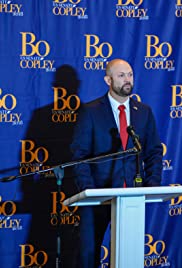
 Greetings again from the darkness. During her campaign for the presidency, Hillary Clinton appeared at an Ohio Town Hall meeting, and while pushing green energy alternatives said, “We are going to put a lot of coal miners and coal companies out of business.” It’s the kind of statement that makes headlines, and it did. Of course, Hillary went on to say that it was important we don’t forget about the people that work and depend on the coal industry, but that never became part of the story. Director Todd Drezner does include it here, while mostly focusing on how West Virginian native Bo Copley, a former mining company employee, became a candidate for U.S. Senate.

As a refresher, we see Hillary’s Town Hall statements, and we also see the clip of the roundtable where Bo Copley handed a family photograph to Hillary, confronting her with the real life impact of shutting down coal production.  That simple gesture turned Bo Copley into a “coal miner celebrity”, ultimately pushing him towards the campaign that inspired this documentary. The film opens in June 2017 in Williamson, West Virginia, as Bo rehearses his announcement speech. He’s neither polished, nor confident, and admits, this is “not my natural habitat”.

One thing that quickly becomes clear – Bo is a good dude. He’s a family man and a man of faith. Another thing that’s just as clear – Bo is in over his head for this process. He’s a well-intentioned nice buy, but his platform seems to be, “I think an everyday person should represent everyday people.” This happens to be a highly contested Republican primary featuring five other candidates, two of which are skilled politicians, and a third is a mining company owner who served prison time for a tragedy that killed 29 miners.

The film is structured as a countdown to the primary, and it follows Bo on some of his campaign stops – most of which reinforce that he’s not equipped for this race. He is the prime example of a guy who wants a change in politics and is willing to step up, but simply doesn’t have the understanding … or the funds … to actually compete. He believes if people like him, they’ll vote for him; so there’s no need to ask for votes, even as he’s coaching a kids’ soccer team.

Bo’s wife Lauren is also included here, and she’s supportive of his run, though not initially. Their Christian beliefs are on full display. Director Drezner’s and Bo’s best moment occurs during a talk show interview when the candidate answers the obvious question, “Why start your political career running for the U.S. Senate.” Bo’s answer is spot on and thought-provoking, and goes to the heart of the flaw in our system. The film should be watched by anyone looking to dive into a political run, as it excels as a how-not-to guide.

watch the trailer


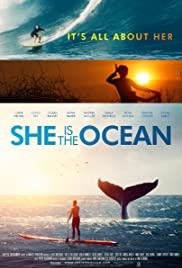
SHE IS THE OCEAN (doc, 2020)

October 15, 2020

 Greetings again from the darkness. “My soul is full of longing for the secret of the sea. And the heart of the great ocean sends a thrilling pulse through me.” That quote from William Wadsworth Longfellow sums up much of what makes the nine women (OK, 8 women and one younger girl) the subject of director Inna Blokhina’s fascination. The film takes us around the globe to meet these women who are drawn to the sea.

It’s a beautiful film to look at, and why wouldn’t it be? Most of it occurs on beaches, underwater, or on surfboards as the waves come in. Two key elements are in play here. First is the spiritual connection to the ocean, and second is women pursuing their passion and dreams as they relate to the ocean.

Cinta Hamsel is the youngest of those featured here, and her aging acts as a framing structure for the film. Her name translates to “Love” in Indonesia, and the filmmaker catches up with her over the years, including her “first big wave”. Cinta flashes a luminous smile from a very early age, and it’s a treat to watch her energy grow and change over the years.

The other women featured here get their own segments – some more expansive than others – and there is probably a 40 or 50 year range in ages. Coco Ho is a 20-something year old pro surfer and the daughter of professional surfer champion surfer Michael Ho. She has many surfing titles to her name all over the world, and is a proud icon for the power of women. Ocean Ramsey swims with sharks – not in the business sense, but rather in the real world. She is knowledgeable and protective of the species, and even educates tourists on what sharks are actually like in comparison to JAWS. Anna Bader is a world famous cliff diver, often executing dives from 24+ meters. She hails from Germany and is the daughter of an Olympic gymnast. Ms. Bader thrives on independence, and she opens up about how her life perspective changed when she got pregnant. Rose Molina is a spiritual vagabond. She has lived all over the world and she thrives on her alone time with yoga and meditation. Her dance and ballet training combined with her free diving, lends itself to her freedom and safety in the sea. Keala Kennelly grew up in Hawaii and became a professional surfer. She discloses how she tried to fit into the feminine model the sponsors wanted, but now she just focuses on being herself – especially after a severe facial injury. Andrea Mollen loves distance paddling in the ocean and surfing big waves. She gushes over her love for her daughter and her work as an EMT. Jeannie Chesser is a bit older than those previously mentioned. She has lost her husband and her professional surfer son Todd, who drowned. Ms. Chesser discusses her cancer diagnosis and how she uses surfing for healing. Finally, we have Sylvia Earle, who despite being the most interesting of all of these woman, receives the shortest segment. As the first female Chief Scientist of the U.S., Ms. Earl is a Marine Botanist who spreads the message that the history of life is in the ocean, and we must respect and protect it. She also inspires by encouraging us to re-discover that child explorer that we once were … embrace the sense of wonder.

If the film has a flaw, it’s that the focus is so concentrated on surfing, and underplays the message and accomplishments of Sylvia Earle. Filmmaker Blokhina opts to give each woman their own song/music (some work better than others). And of course, while each story is inspiring and interesting, it’s the shots of Hawaii’s Pipe Line and Jaws waves that literally take our breath away. Jacques Cousteau said, “The sea, once it casts its spell, holds one in its net of wonder forever.” These women certainly agree.

watch the trailer


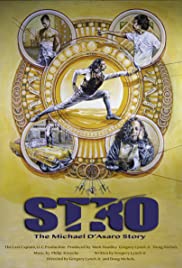
STRO: THE MICHAEL D’ASARO STORY (doc, 2020)

October 15, 2020

 Greetings again from the darkness. I would have not guessed a fencing movie could hold my attention. I’d have been wrong. But then, this isn’t so much a fencing movie as it is the story of the legacy of Michael D’Asaro, a former world class fencer and coach. Co-directors Gregory Lynch Jr and Doug Nichols previously collaborated on another fencing documentary entitled THE LAST CAPTAIN (2017), and it’s clear they are familiar with the sport and its history.

Beginning your film with a philosophical Carl Jung quote immediately sends the message that this is an unconventional sports project. In fact, psychology and philosophy played a key role in the success of Michael D’Asaro throughout his career, and his approach and style evolved greatly as he aged. He believed one could learn all of life’s lessons through fencing.

For those of us not as schooled on fencing’s finer points, the directors are kind enough to serve up a quickie education, with a key point being the three weapons used in completion: Foil, Epee, and Sabre. Each of the weapons has its own set of rules and demands its own particular skill set. Rare is the fencer who excels at all three. And yes you are correct, Michael D’Asaro was one of these. We hear from many of his teammates and pupils, and the descriptions are pretty consistent. D’Asaro had his own aggressive style. There was an “edge” to him, and he fought with fierceness.

Much of the film is structured like a standard biopic, with D’Asaro’s sister, son, and ex-wife (and fellow fencer) recollecting bits and pieces of the life of this Brooklyn boy. We learn his own mother nicknamed him “Chubby” and he was part of a street gang, which is why he initially had an interest in fencing – he hoped it would fine-tune his knife fighting. D’Asaro was certainly no choir boy, and we hear about his hard partying (drugs and alcohol), and get a timeline of his ups and downs involving the Olympics, Pan Am games, the U.S. Army, his hippie years on Haight-Ashbury, and his re-birth at Hans Halberstadt Club, which led to his coaching gig at San Jose State.

Speaking of psychology, it’s fascinating to read the body language of Al Morales as he recalls his rivalry with D’Asaro, and learning of D’Asaro’s Polish mentor, Jerzy Pawlowski, often referred to as the greatest fencer of all-time. By the end, we realize D’Asaro lived an interesting life, most of it on his terms. Despite all his wins ‘on the strip’, and the fact that he beat colon cancer, a brain tumor finally proved too much – although it may have led to his finding peace as a person, and with his legacy of performance, coaching, and impacting women’s sports.

watch the trailer


DRIVING WHILE BLACK: RACE, SPACE, AND MOBILITY IN AMERICA (2020, doc)

October 13, 2020

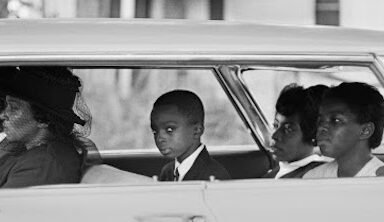
Greetings again from the darkness. When I was a kid, our family vacations consisted of loading up the car (with stuff and people) and hitting the road. Airline travel was not in the budget, and, at night, we typically piled everyone into one room at a low cost roadside motor inn (motel). We always had an ice chest, which allowed us to prepare most meals while on the trip … eating in a restaurant or café was a luxury that might happen once or twice on a trip. Why do I tell you this? Well because this is pretty much exactly how black people in this movie describe their long ago vacations. However, the few differences were substantial, to say the least. As a white family, we always had options for places to stop, while the black families were always concerned for their safety, and certainly never had the number of options we did. That anxiety and horror felt by blacks on the road in a racist society still exists today, and the history is expertly examined in this PBS documentary from author Gretchen Sorin and Ric Burns (brother of Ken).

We are told that the phrase, “Driving while black” covers much more than the time behind the wheel. It’s the constant concern for safety – while eating, sleeping, and living. The advent of affordable cars opened up the opportunity for blacks to answer the call of the road, and make memories with their families, but the constant fear never left. Mobility is emblematic of freedom, and the film goes back to the ‘forced mobility’ of slave ships and takes us through many progressions: slaves needing a note from their owner to cross the street, the Underground Railroad, the Fugitive Slave Act (the lit fuse to start the Civil War), the 1863 Emancipation Proclamation that freed blacks but left them nowhere to go, Reconstruction as a hopeful era, cotton and tobacco sharecropping, the rise of the KKK and the Jim Crow era, the booming Interstate Highway era – with the sacrifice of black neighborhoods, the Great Migration (north and west), how integration impacted Black culture, history, and heritage, and finally, how the cell phone age has opened many eyes.

Since this is a detailed history lesson, Ms. Sorin and Mr. Burns include terrific interviews with historians, writers, and journalists. Some of the archival video and photographs are stunning, and the film includes pertinent quotes from such dignitaries as Thurgood Marshall, W.E.B. Dubois, Richard Writer, James Baldwin, and Frederick Douglass. The photographs of actual lynchings are tough to look at, and the statistics provided are soul-crushing. As we hear people recount history with actual stories, it becomes very personal, rather than just title chapters in a social studies textbook.

Many “Black travel guides” existed, but it’s (NYC postal worker) Victor Green’s “The Negro Motorist Green Book” that is most well-known and the longest lasting. It contained “safe places” for blacks to stay, eat, and stop. The book could be found at many Esso stations, and we learn that it was published for more than 30 years. The fallout of integration meant that many black businesses failed as families moved to the suburbs … leaving only a very small percentage of ‘Green Book’ businesses with open doors.

An interesting segment on how the automobile industry, and Henry Ford in particular, led to the Great Migration of blacks from the south to the north (specifically Detroit). The promise of a job, decent pay, and independence were quite the draw. On the other hand, we see the many Chevrolet ads touting how the open road allows one to control their own destiny … but the folks in those ads were always white. This is a remarkable history lesson, and it’s very well documented. Today’s readily available cell phone footage has opened the eyes of the rest of us, so that we can understand the meaning of ‘Driving while black’.

The film premieres on PBS nationwide on October 13, 2020

watch the trailer on CNN:

https://www.cnn.com/videos/us/2020/10/08/driving-while-black-pbs-trailer.cnn


TIME (2020, doc)

October 8, 2020

 Greetings again from the darkness. “Our prison system is nothing more than slavery, and I’m an abolitionist.” So states Fox Rich, a successful business woman, and the mother of six boys. Director Garrett Bradley brings us the story of this woman who devoted 20 years to the mission of getting her husband’s prison sentence reduced. It was 1997, and the desperate Shreveport couple were arrested for armed bank robbery. Fox took the plea bargain, while husband Rob did not.

Fox served less than 3 years for her involvement in the robbery, while a Louisiana judge sentenced Rob to 60 years (the maximum sentence was 99), with no allowance for parole. Fox was pregnant with twins when Rob was sentenced. She named the twins Freedom and Justus. Director Bradley expertly weaves clips from the home videos Fox recorded for Rob with ‘in the moment’ discussions and observations of her attempts to get someone in the system to hear the case.

What we witness over the course of the film is a proud, strong, fierce woman who, as a single mother, raises 6 kids while she works – at her job and to get Rob released. Twice per month visits is all that she’s allowed with Rob, which leads one of the sons to comment that hiding behind the strong family image is a lot of pain. Fox discusses how her mother taught her to believe in the American Dream, but desperate people do desperate things … although we never get an explanation of just why Fox and Rob were so desperate to rob a bank. Fox’s mother states, “Right don’t come to you doing wrong”, and then she turns around and compared incarceration to slavery.

There are some mixed messages delivered here, which is understandable given how complicated life can get. Perhaps the most vivid message is the impact incarceration has on a family. Fox is an extraordinary woman devoted to raising her sons as strong and smart young men. But she also decries that her boys have never had a father and don’t even know the role one plays. While Fox displays the ultimate in polite phone decorum despite her frustrations with an uncaring, inefficient system, we do see her sincerity as she stands in front of her church congregation asking for forgiveness of her poor choices.

The film was highly acclaimed and talked about at Sundance 2020, and that’s likely because it strikes hard at family emotions and societal issues. A prime example is the phone call between Fox and Rob just prior to his re-sentencing hearing. From a filmmaking perspective, the black and white images are terrific, and as previously stated, the home movies and “live” filming are expertly blended. On the downside, the sound mix is horrible at the beginning, and the music (beautiful piano playing) often overpowers the dialogue throughout. It’s a film meant to create discussion amongst viewers, and it’s sure to do so.

watch the trailer


THE WALRUS AND THE WHISTLEBLOWER (2020, doc)

October 8, 2020

 Greetings again from the darkness. Is this Canada’s answer to the ground-breaking documentary BLACKFISH (2013), which destroyed SeaWorld’s status as wholesome family entertainment?  Well, kinda sorta. MarineLand is the popular amusement park located in Niagara Falls, Canada. It was founded in 1961 by John Holer, a former circus animal trainer, and has a catchy jingle known by most Canadians: “Everyone loves MarineLand!”

This is the first feature length documentary for director Nathalie Bibeau, and rather than structure as an expose’ (like BLACKFISH), this comes across as more of a psychological profile of Phil Demers, a former trainer at MarineLand, and the titular “whistleblower”. In 2012, he quit his job at the park and began going public with reports of the mistreatment of animals, in particular a walrus named Smooshi that Demers personally trained. He took to social media to make his case, and garnered thousands of followers as @WalrusWhisperer.

The park’s owner, John Holer, is referred to as ‘The King of Niagara’ and is cast as the villain to Demers’ crusading hero. As Demers’ social media generated more attention and he became involved with anti-captivity protesters outside the park, MarineLand filed a $1.5 million lawsuit against Demers, claiming he was “plotting to steal a walrus”. Now I’m no legal expert, but I would guess the number of lawsuits that mention a walrus is actually quite low, and it would be a bit humorous were it not for the ongoing mistreatment of animals.

Director Bibeau includes some archival footage of Demers and Smooshi inside MarineLand, and throughout the film there are clips showing animals and other trainers, although we are never really sure of the timeline. A significant portion of the time is spent with Demers (seen jogging and eating ice cream?) and his partner Christine, also a former MarineLand trainer, as they worry about the media attention and the financial implications of this legal battle.

Canadian politics and the economic impact of the fight against MarineLand collide, and we see and hear some of the dialogue that occurs between lawmakers and activists. We are also witness to an interesting conflict between the anti-captivity protesters and Demers, as he admits to not being a Vegan (eating steak makes him feel good). So he’s both an insider and outsider, as his passion for saving the park animals from drugs and food deprivation for training is admired, while his dietary preferences are most assuredly not.

MarineLand did not participate in the film, so what we have are Demers’ statements and passion, and the video clips. There is little doubt that animal abuse is occurring at the park, and director Bibeau does allow a most interesting comparison: thousands of paying customers vs the hand full of protesters. An often emotional Demers keeps our attention for most of the movie, but whether he’s enough for a full length documentary that lacks a true finale, is questionable. What would he do if granted custody of Smooshi? And why is his approach lacking in structure and organization? It often plays as one guy trying to correct a wrong while lacking a plan. To its credit, the film references the Lewis Carroll poem, The Walrus and the Carpenter, “The time has come, the Walrus said, to talk of many things.” Animal rights is an ongoing issue, and … #SaveSmooshi

Theatrical release on October 9, 2020 and On Demand November 24, 2020

watch the trailer


THE PHENOMENON (2020, doc)

October 6, 2020

 Greetings again from the darkness. One has to hand it to documentarian James Fox. He is nothing if not persistent. And persistency is a requirement for anyone involved with researching and reporting UFO sightings that now date back more than 70 years. To give you an idea of Mr. Fox’s commitment to the cause, he also directed OUT OF THE BLUE (2003, which was also narrated by Peter Coyote) and I KNOW WHAT I SAW (2009), and produced (with his father Charles) UFO’S: 50 YEARS OF DENIAL (1997).

Peter Coyote is back as narrator for Mr. Fox’s latest project, apparently inspired by the 2017 New York Times report of the secret Pentagon UFO program called Advanced Aerospace Threat Identification Program (AATIP), which details US Navy Pilots’ multiple encounters with Unidentified Flying Objects. And just this year (2020), the US Defense Department confirmed encounters classified as ‘unconfirmed’.

For many years now, we have heard the claims that, “We are not alone in the Universe”, and “There is something else out there.” This film lays out the photographic evidence and the eyewitness testimony, as well as researching the secretive nature of the government on this topic for so long. We hear from some of those affiliated with Project Blue Book, the UFO investigative initiative formulated by the US Air Force. Many pilots and crew have documented what they’ve seen, and there is even a 1998 interview with Astronaut Gordon Cooper, providing more credibility to the sightings and encounters.

The film somewhat works as a timeline, but director Fox chose to bounce around in time, which provides some structure, while also working against a chronological perspective. It goes back to 1947, when pilot Kenneth Arnold reported an encounter with multiple flying saucers in formation near Mount Rainier, and then details more sightings that occurred over the next few decades, including: 1952 invasion of secure airspace, 1955 military pilot William Coleman, 1957 Levelland, Texas sheriff, 1966 landing in Michigan, and the 1966 Congressional hearings. We learn of “The case that changed everything”, a 1964 New Mexico encounter with Officer Lonnie Zamora, which left evidence such as landing gear imprints, footprints, and a burn area.

As you would expect, Dr. Jacques Vallee and Dr. J Allen Hynek are included here. They are two of the foremost experts on UFO research, and Dr. Vallee was the inspiration for Francois Truffaut’s Dr. Lacombe in Steven Spielberg’s classic CLOSE ENCOUNTERS OF THE THIRD KIND (1977). Director Fox does a nice job mixing the interviews with experts, historians, military personnel, intelligence officers, and eye witnesses – interviews that have taken place over many years. For skeptics, plenty of international work is blended in, as we learn of the students in 1966 Australia, the 1982 Ukrainian nuclear site, and in the “Contact” section, we hear of 1959 New Guinea where the aliens “waved” back, and 1994 Zimbabwe, where students reported being communicated with telepathically.

watch the trailer


THE RINGMASTER (2020, doc)

October 6, 2020

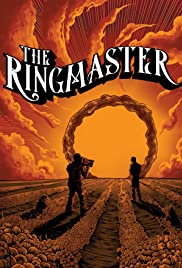
 Greetings again from the darkness. I’ve just finished reading an article proclaiming “addict” is now an offensive term, but since Zach Capp refers to himself as a gambling addict at the beginning of this movie, I guess it’s alright here. Let’s start by saying it’s not unusual for a documentary project to shift gears or change tracks during production. Sometimes a better story or topic pops up, and the filmmaker goes with it. But that’s not what this is. This is more ‘Mutiny on the Documentary’ and the result is a unique mess that still manages to hold our attention.

Zach discusses his 2015 stint in rehab (“it saved my life”) and subsequent inheritance from his grandfather. These two events led him to quit his very good job and pursue documentary filmmaking. His first subject? Onion rings. The onion rings he calls “a big part of my childhood”. After we hear numerous customers rave about these onion rings, we meet Larry Lang, the man responsible for the immensely popular tasty treats. Mr. Lang lives in Worthington, Minnesota, and we quickly realize he’s not the guy you would likely select as the centerpiece for a film. Well, we realize that, but Zach Capp never does.

We do learn that Zach had a vision, and this was to be the first in a series entitled “American Food Legends”. Following Larry around is somewhat less than stimulating, and we try to decide if he is simply socially awkward, or if he falls somewhere on the spectrum. His onion ring recipe is kept secret, and he brings the ingredients to work in a brown paper bag. Larry’s sister, Linda, acts as a kind of handler for him during the filming process with Zach and the crew. As a viewer, I often felt like they were intruding on this poor man, yet Zach and everyone involved treated Larry and Linda with respect.

The real cluster involves a garage band named Dead Man’s Party performing “Larry’s Song”, and continues on to the King Turkey Day Parade,  Badland’s Pawn – known for ‘Guns, Gold, and Rock ‘n Roll”, and ultimately, Badlands’ Speedway, where Larry’s onion rings are to be featured. Of course, most of Zach’s plans to “improve” Larry’s life fall flat because Larry is only happy when he’s in the kitchen he knows making onion rings for the locals who know him. It could be viewed as an intrusion with the best intentions … or it could be viewed as manipulation for selfish reasons.

However you view it, the aforementioned ‘mutiny’ occurs when the crew realizes Zach’s pursuit of the “Lord of the Onion Rings” (the original title) is more of a story than Larry Lang. Director Dave Newberg and his girlfriend Molly Dworski are called in to salvage a project that dragged out 3 years. The film is bookended with 2018 Las Vegas, as the onion rings are entered into a tasting as “Raider Rings” … an offering of the newly transplanted NFL Raiders from Oakland to Las Vegas. This ties in the long-time Las Vegas restaurant Piero’s, and its owner. It would be nice to report a happy-ending or even bittersweet finale, but life tends to deliver in whatever manner fits. By the time this one ends, we are mostly confused and concerned. What a strange experience, and one that I’ll recall anytime onion rings hit my plate.

watch the trailer