Greetings again from the darkness. Food, art, and history. There may not be a connection at your local McDonalds, but there certainly is among the world’s most renowned chefs. Director Laura Gabbert (CITY OF GOLD, 2015) documents the story beginning with Yotam Ottolenghi receiving an email from the Metropolitan Museum of Art asking him to curate a culinary presentation in conjunction with the museum’s 2018 “Visitors to Versailles” exhibit, covering the years 1682-1789, just prior to the French Revolution.
Ottolenghi is an accomplished chef (with a test kitchen in London), restauranteur, and described as the most influential cookbook author. Born in Israel, he’s our charming and exceedingly intelligent guide through this global process. Ottolenghi toured The Met and Versailles, and explains his rationale for focusing on desserts – a beautiful and colorful symbol of wealth and excess from the era. He then sets out to assemble a pastry “Dream Team” consisting of: Dominique Angel, the French pastry chef who invented the Cronut; Dinara Kasko, a trained Ukrainian 3D architectural design expert-turned-chef who now builds her own 3D molds for food; Ghaya Oliveira, born in Tunisia and now the pastry chef at NYC’s elite Daniel restaurant; Bompas and Parr, the British chefs known for technology and jellies – though only Sam Bompas takes part in the project; and Janice Wong, a Singapore chef who specializes in ‘edible art’.
We learn the inspirations for each of the chefs, from the gardens and fountains of Versailles to the particular flavors of the era. Ottolenghi takes us into the kitchens, as well as allowing access to the strategy sessions with managers at The Met. Ms. Gabbert’s film offers a glimpse at the craftsmanship, creativity, and artistry of these chefs as they work towards the big night. The final presentations are dazzling works of art themselves, and ironically (or maybe not) are enjoyed by the elites in attendance at the event. Marie Antoinette’s beheading may have been ‘a just dessert’ for an era of decadence, but the beauty of what these modern day artists have created is quite something to behold … and a nice respite from the world’s turmoil.
Greetings again from the darkness. Stacey Abrams is a generational spokesperson, and may very well be the future of the Democrat Party. This despite being recently passed over as Joe Biden’s running mate. Ms. Abrams is a producer on this film co-directed by Lisa Cortes (HIP HOP X FASHION, 2019) and Liz Garbus (nominated for 2 Oscars: WHAT HAPPENED MISS SIMONE?, 2015 and THE FARM: ANGOLA, USA, 1998). She also appears on camera numerous times speaking to us about voter suppression – something which impacted her directly.
The film provides an historical look at the different ways voters have been suppressed and elections manipulated over the years – dating back to 1789, when the film informs, only 6% of the population was eligible to vote: white male property owners. We hear from many historians, authors, politicians, and activists, yet it’s Ms. Abrams who stands out. She takes us through her personal background and describes in detail the influence her parents had on her. We also learn much about the 2016 Georgia Governor’s race, where Ms. Abrams faced off against Brian Kemp. In one of the more startling statistics, we are told that as Georgia Secretary of State, Mr. Kemp purged 1.4 million voters from the Georgia registry.
A true history lesson on voter suppression is provided, with much of the lesson and commentary provided by Ms. Abrams and author Carol Anderson, who wrote the 2018 book, “One Person, No Vote: How Voter Suppression is Destroying Democracy”. We also hear from others, including 88 year old Andrew Young, one of the leaders of the Civil Rights movement, and a former Mayor of Atlanta and former US Ambassador to the United Nations.
So many aspects of United States elections are discussed, and these include the Reconstruction era after the Civil War, the 19th Amendment, President Lyndon Johnson and Voting Rights Act, Gerrymandering, Voter ID requirements, Poll taxes and literacy tests, and the landmark 2013 case, Shelby County v Holder, resulting in a US Supreme Court decision that has impacted voter access. We see clips of the 30th anniversary of the Walk across the Edmund Pettus Bridge in Selma, Alabama, and it’s clear Civil Rights and Voting Rights are forever bound.
The documentary is important as it connects history with the modern day issues resulting in voter suppression. Ms. Abrams and Ms. Armstrong are vital voices on a topic that should have been laid to rest many years ago; yet as long as the thirst for political power exists, manipulation of the system will be attempted. So, it’s important that every citizen understand how this happens and what to be aware of.
Premieres at Telluride Film Festival September 2, 2020 and in select theaters on September 9, 2020, and on Amazon Prime beginning September 18, 2020
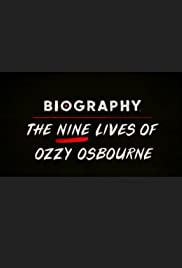
Greetings again from the darkness. My concern going in was that A&E would serve up a heavy dose of modern day Ozzy Osbourne, especially since this profile is directed by Greg Johnston, the producer of the popular reality TV show, “The Osbournes” (2002-05). Instead, the nine lives are divided up for various segments throughout Ozzy’s life (he’s 72 years old now), and seem to be weighted fairly … highlighting warts, family, and achievements.
The first “Life” segment takes Ozzy back to Birmingham, England where he spent his childhood. He and wife Sharon tour his early home – a home that now has an indoor toilet, a luxury not available to young Ozzy. We learn Ozzy had three sisters and two brothers, and that Birmingham was a blue color town lined with factories. Both of Ozzy’s parents were factory workers. Dad took the day shift, Mom the night shift. Ozzy explains that he hated school, and enjoyed his multitude of factory jobs even less. His eyes sparkle as he recalls how first hearing The Beatles inspired him to move towards music.
It’s at this point when we hear from guitarist Tony Iommi, drummer Bill Ward, and bassist Geezer Butler, the founding members, along with Ozzy, of Black Sabbath. This was 4 local lads who were pioneers in heavy metal rock music. Producer Rick Rubin talks about their influence, and how they started as a blues band and evolved into much harder and louder music. They sold many albums and became huge touring the UK and USA. Their second album “Paranoid” included the monster hit “Iron Man”, a true rock anthem. As you might know (or guess), Ozzy had significant issues with booze and drugs, and in 1979, he was fired by the band.
Many rock careers have ended due to addiction, but as the title infers, Ozzy manages to continually land on his feet. His new band, with talented guitarist Randy Rhoads, became huge, and the album “Blizzard of Oz” contained the megahit “Crazy Train”. During this time, Ozzy began his relationship with Sharon, the daughter of his manager. It was also during this era when Ozzy’s reputation as a wild man (or mad man) on stage blossomed … highlighted by shocking behavior at the record company offices and on stage (you’ve likely heard the live bat story). He was also banned from San Antonio for good reason. Disaster struck in 1982, but it was also the year Ozzy and Sharon wed.
Sharon, and Ozzy’s kids Jack and Kelly, are forthcoming in the stories they tell. It’s clear they love Ozzy, despite not always understanding his behavior. Ozzy is often shown watching clips of his live performances, and by the end, we fully comprehend that music and his family are both extraordinarily important to him … and he gives full credit to Sharon for his still being alive (a fact as stunning as Keith Richards still being with us).
The film does go into Ozzy’s retirement from performing, as well as the popular TV show with his family. The vintage clips are fun to watch, and all of the people interviewed (including an honest and often funny Ozzy) have fascinating insight to a remarkable life. It’s likely not many recall his days as the “Prince of Darkness”, but as Kelly says, Ozzy is “the real Iron Man”.
Greetings again from the darkness. I’ve lost track of the number of times I’ve read F. Scott Fitzgerald’s 1925 novel “The Great Gatsby.” In an effortless manner, it sweeps the reader into a magical world through prose that brings the parties and characters to life. Nick, Jay, Daisy, Tom, and Jordan become people we know … some we may like, others not so much. We precisely envision Gatsby’s estate, Nick’s bungalow, and that speeding yellow car. There have been multiple movie versions, with the most famous being 1949 with Alan Ladd, 1974 with Robert Redford, and 2014 with Leonardo DiCaprio.
In 2013, Robert Steven Williams and Richard Webb began a project documenting the five months in 1920 that Scott and Zelda spent in Westport, Connecticut. A 1996 article in “The New Yorker” magazine by renowned writer Barbara Probst Solomon gave credence to the idea that much of Fitzgerald’s inspiration for “The Great Gatsby” (and West Egg) came from those few months spent in Westport, Connecticut. Now you might think, ‘yeah, that’s kinda interesting’, but in the literary and academic worlds, it caused quite an uproar and backlash. See, foremost Fitzgerald expert and biographer Matthew Bruccoli was adamant that Great Neck, Long Island was Fitzgerald’s only inspiration for the classic novel … and Bruccoli staked his career and reputation on it. He scoffed and refuted any such notion that Westport played a role.
Filmmakers Williams and Webb proceed to systematically examine evidence, even though many literary scholars were, at a minimum, quite skeptical. Some background on Westport is provided, including noting its two most famous residents, Paul Newman and Joann Woodward, the 1956 movie THE MAN IN THE GRAY FLANNEL SUIT, Rod Serling’s “Twilight Zone” episode based there, and an entire season of “I Love Lucy” where Ricky and Lucy were living in the town. Numerous writers spent time in Westport, though few of the town’s current residents are aware of Scott’s and Zelda’s summer of 1920.
We see the cottage they lived in. She was only 19 years old, and the couple had been married only a short while. What’s most compelling is that during that summer, an eccentric and private millionaire named F.E. Lewis resided in the massive estate adjacent to the Fitzgerald house. Lewis was a mysterious man who threw lavish parties at his mansion overlooking the water. Sound familiar? Was Lewis the inspiration for Jay Gatsby?
An academic conspiracy doesn’t gather much interest outside the ivy walls, but Williams and Webb make a very compelling case that deserves consideration. It has always been presumed that Long Island was the basis for the novel, but even Scott’s and Zelda’s granddaughter, Bobbie Lanahan, believes it’s obvious that a writers experiences can be blended into a composite for fiction. Further evidence is offered by the previously unknown McKaig Diary, which details much of what occurred that summer.
Williams enlists the help of actor Sam Waterston (who played Nick Carraway in the 1974 film version) and narrator actor Keir Dullea (Dave in 2001: A SPACE ODYSSEY) to guide us through the journey. Clips from the movies and an analysis of Scott’s other writings, as well as Zelda’s novel “Save Me the Waltz”, lend credence to the thought that those 5 months in Westport made quite an impact on ‘America’s first pop stars.’ Most of us simply prefer to enjoy a good book, but for those who must know the background and what influenced the writer, the documentary makes a very good case for the important role of Westport, Connecticut for Fitzgerald’s “The Great Gatsby”.
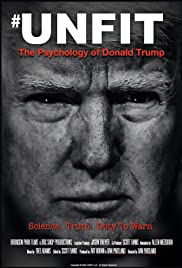
Greetings again from the darkness. Election Day 2020 is only two months away. Our nation is divided into two vocal factions … those for President Trump and those against him. There seem to be very few who fall into the “undecided” bucket, and that’s with no head-to-head debate yet. Because of this, we might question the “why” of Dan Partland’s documentary. However, what it does is condense three and a half years of President Trump’s actions and words into about 80 minutes of jarring psychoanalysis.
The film kicks off by informing us the President of the United States, as a result of taking office via election, is not subject to passing the mental fitness evaluation required by the military … yes, the military of which he is now Commander-In-Chief. We then hear from a steady stream of psychologists who offer up their diagnosis, though admittedly, none of met with Trump personally, and their analysis is based solely on observation and experience. They are in agreement that he fits the personality disorder known as a “malignant narcissist.” This label has four key elements: narcissism, paranoia, anti-social behavioral disorder, and sadism (the pleasure of harming others).
Labels are in vogue here. We hear from many psychologists and some previously associated with government and/or the administration, and each one has a label for Trump. The overriding question of Mr. Partland’s film appears to be, “Is Trump fit to be President?” In addition to the psychologists, we get interviews with George Conway, Malcolm Nance, and Anthony Scaramucci. Conway labels Trump as a “practical joke that got out of hand”, while Scaramucci (who lasted a total of 11 days in the administration) offers up a defense of Trump by stating, ‘Obviously he’s an a-hole, but he’s not a racist. He treats everyone like s___.”
Malcolm Nance offers up the most substantive insight into how government officials view the President, but it’s sportswriter Rick Reilly and author Tony Schwartz whose recollections are most memorable. Reilly tells the remarkable tale of how Trump cheats at golf (a gentleman’s game of integrity) and Schwartz, who co-wrote the book “Trump: The Art of the Deal”, states matter-of-factly that the President has no empathy for others.
The psychologists explain The Goldwater Rule and how The Tarasoff Rule overrides it. Bottom line, they are speaking out because of what they perceive to be their duty to warn society of impending danger. It should be noted that John Gartner is writing a book about Trump and his infamous tweets, and it is fascinating to see Jane Goodall’s study on chimps correlated to Trump and our society. The Hitler and Mussolini comparisons are discussed, as is the rise of fascist leaders in Brazil, The Philippines, Turkey, and other countries.
Is Donald Trump fit to be President? The argument is made here that he’s not, though we don’t hear any input from those who believe he is. Character and judgment have been on display since January 20, 2017 (and even before inauguration), so voters will decide. The film ends with discussions of nuclear threats and responsibilities, as well as how the Coronavirus was initially handled. Trump is given credit for drawing out what is referred to as the “tribal nature” in folks”, but mostly what we are left with is that Trump believes it’s all about him. Perhaps the impact of the documentary would have been greater had there been statements and input from those who support him. Instead, it comes across as confirmation for those who agree with this sentiment, and noise for those who don’t.
Available September 1, 2020 on digital and cable VOD
Greetings again from the darkness. He’s now 98 years old. Is it even possible to separate Pierre Cardin, the man, from Pierre Cardin, the global brand? Co-directors P. David Ebersole and Todd Hughes take on the fashion icon in the latest documentary focusing on the biggest names in the industry … and there may be none bigger or more important than Cardin. We begin with a montage of folks pronouncing his name in various dialects, and with the utmost respect.
“Who is Pierre Cardin?” After saying his name, many of those same people then struggle with how best to describe the man. Cardin himself cuts right to it, “It’s no longer me. It’s a brand.” The public brand was created by a private man – one who has never authorized a biography, which may explain why the filmmakers actually get very little direct input from Cardin himself. Instead, we get archival footage and a stream of admiring talking heads discussing his influence.
It’s a bit surprising to learn that this famous French designer was born in Italy. Cardin’s family relocated to France when he was young and Mussolini was in power. His fashion career got a boost when he met director Jean Cocteau and worked on costumes for the classic BEAUTY AND THE BEAST (1946), and then was named head designer at Dior. In 1950, when Cardin left to open his own house, Christian Dior was quite supportive of his pupil. Cardin followed that example, and mentored young designers over many decades.
This is an informative profile, and clearly outlines Cardin’s global vision. We learn he was the first to expand internationally into Japan, Russia, and China … and there is an entire segment devoted to his impact on China fashion. We see his number one model in the 1960’s, Hiroko Matsumoto, and Naomi Campbell explains how Cardin was the first to hire a diverse troupe of models from many races. He even had the first men’s fashion show, something that seemed quite extreme for the time, although he also designed suits for The Beatles. So much of Cardin’s career is detailed here – his initial foray into Ready-To-Wear, realizing his goal of designing not just for the privileged, but also the masses.
The Cardin brand has found its way into so many industries and on to so many products. This includes furniture, cologne, and even cars – specifically an AMC Javelin. Cardin became a pioneer in fashion eyewear, and as with his clothes, his modern approach was often ahead of its time. The film proceeds to go into his purchase of Maxim’s, the famous Paris restaurant (which he later franchised), as well as his passion for the theater, and the purchase of Espace Cardin in 1970. Cardin’s connection to Gerard Depardieu, Dionne Warwick, Marlene Dietrich, and even Alice Cooper are discussed, and we also hear from Sharon Stone and Jean-Michel Jarre, among others.
Despite all we learn, by the end of the documentary, Pierre Cardin remains a bit of an enigma as a person. His personal life includes intimate relationships with Jeanne Moreau (labeled his “life companion for years”) and Andre Oliver (who died of AIDS in 1991). Pierre Cardin is a designer and fashion icon who has a museum dedicated to his work … work to this day that he maintains a finger on the pulse. In fact, when asked the secret to youth, Cardin replies, “Work. Work. Work.” And we know he means it.
The film premiered at the 2019 Venice Film Festival, and will open in Virtual Cinema on August 28, 2020, as well as On-Demand to coincide with New York Fashion Week on September 15, 2020.
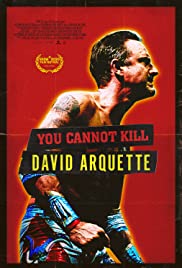
Greetings again from the darkness. I’ll admit to knowing very little about professional wrestling, so this was the first I had heard about actor David Arquette’s scandal from nearly 20 years ago, as he promoted his movie READY TO RUMBLE (2000). Documentarian David Darg and Video director Price James collaborate here as co-directors to deliver a documentary on one of the strangest, most off-the-wall stories I’ve ever seen … and one that fits well with the reputation of the professional wrestling world.
In a sport that thrives on good guy vs bad guy, David Arquette became the most hated man in wrestling. The power brokers in the industry determined a publicity stunt with his becoming WCW Champion would lead to a boon for the business. The fan and wrestler backlash was harsh and severe, and Arquette claims it made him persona non grata in both the sport and in Hollywood, though his math doesn’t add up. He discloses his “10 years of rejections” for acting roles, when the wrestling brouhaha goes back 20 years. And on top of that, he has worked pretty consistently over those two decades – albeit mostly in projects that don’t appeal to mainstream audiences.
So all these years later, here comes David Arquette in his attempt to re-enter the world of wrestling and gain respect from those that think he disrespected their beloved sport. The temptation here is to label the documentary and Arquette a joke, but he seems so sincere in his desire to find his way, that we catch ourselves following his journey with interest. And it’s not always easy to do so. There is one moment in particular: Arquette is wearing a purple bedazzled wizard cape while sitting on a horse and vaping, when he states, “I’m sick of being a joke”. Umm.
Arquette is likely best known for his role in the SCREAM movies, of which there were four between 1996 and 2011, and a fifth is on the way for 2021. Or perhaps he is best known as the ex-husband of “Friends” star Courteney Cox, with whom he has a daughter. Then again, maybe his fame is derived from being part of a family entrenched in entertainment. This includes his acting sisters Rosanna, Patricia and Alexis (who died in 2016), brother Richmond, father Lewis (a well-established character actor), and grandfather Cliff, who created the popular character Charley Weaver.
We meet Arquette’s wife Christine McLarty (who looks like she could be Courteney Cox’s younger sister), a career news reporter who is now a film producer, and she seems to share our confusion on why David is pursuing this at age 46 – after a heart attack, which resulted in stints and blood thinners. When he speaks of his previous alcoholism, anxiety, and other mental and physical health issues, we hope this is his way of improving his health. However, as we follow him on the road, we realize, it really is about the wrestling and redemption.
The journey leads to a “backyard wrestling” match where amateurs looking to humiliate the actor pretty much beat the heck out of him. It’s at this point where he decides to train, and heads off to a facility in Virginia, followed by Cancun and Tijuana street wrestling, segments that prove quite entertaining. The pride of a wrestling match is mentioned, and we watch a ROCKY segment where Arquette chases a chicken, and is called “crazy white boy” while a Spanish version of “The Last Kiss” is played. I warned you this was a strange one.
At times we can’t help but think this is a hoax in the same way in which Joaquin Phoenix parlayed his acting “retirement” into I’M STILL HERE, a mockumentary on his pursuit of a hip hop career. The difference is that Arquette really trains and really wrestles, ending with a match at the “Legends of Wrestling” in Detroit against Ken Anderson. This is a film that feels like a gag when it starts, but very real by the end. It’s not enough to motivate me to go back and watch some of those terrible David Arquette movies, but it’s enough to tip my cap to a man pursuing respect and redemption.
Available at Drive-ins on August 21, 2020 and VOD on August 28, 2020
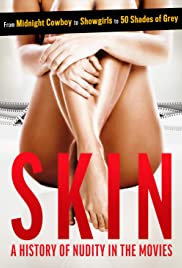
Greetings again from the darkness. Actress Hedy Lamarr is still remembered today for so many reasons. Often described as the most beautiful actress of all-time, she turned down the lead roles in both GASLIGHT and CASABLANCA (both eventually went to Ingrid Bergman). Her best known role was in SAMSON AND DELILAH (1949), and she was the inspiration for both Disney’s SNOW WHITE and Catwoman in the original “Batman” comics. Married and divorced six times, she’s in the National Inventors Hall of Fame for being co-inventor of ‘frequency hopping’ technology that is still used today for cell phones. Beyond all of that, some may know Ms. Lamarr is considered to have performed the first (non-pornographic) on screen female orgasm in ECSTASY (1933). And what better way for director Danny Wolf to open his documentary chronicling nudity in movies than with the actress whose career started with such a bang?
We hear a bunch of industry folks recall the first time they saw nudity on the big screen, and some actors and actresses look back on the first time they appeared nude in a movie. For the most part, director Wolf takes us in chronological order through the various stages of film nudity, dating back as far as 1887. However, he wisely includes a prologue dealing with the present day status of power dynamics, the #MeToo movement, and, of course, the Harvey Weinstein case. There is a stunning collage of those who have been accused of improper and/or illegal behavior – the faces are familiar, but, sadly, there are too many to name. We are even informed that today, actors and actresses typically have very detailed contractual protection in regards to nudity.
The steady stream of talking heads includes perspectives from authors, casting directors, film directors, art historian, professors, film critics, and, as mentioned, actors and actresses. Before breaking into the segments divided by decades (60’s, 70’s, 80’s, etc), we are provided a history lesson on the early years. For me, this was the most interesting chapter as it details the infamous Hays Code, the Catholic Legion of Decency (that “C” rating is pretty rough!), and the twenty year reign of Joseph Breen (the Breen Light was needed for go-ahead). There is also a brief profile of nude model Audrey Munson and her fascinating impact on statues, print, and cinema, and ultimately a tragic life spent mostly in an asylum (she died at age 104). This early segment also features the “secret” behind Chesty Morgan playing DOUBLE AGENT 73, the rise of “Monster Nudies” and “Nudie Cuties”, an interview with Mamie Van Doren. It concludes with Roger Vadim’s AND GOD CREATED WOMAN (1956) starring Bridget Bardot, effectively ending the Hays Code era.
As the film treks through the eras, in the 1960’s we see the impact of Janet Leigh’s shower scene in Hitchock’s PSYCHO, and Marilyn Monroe proves nudity doesn’t kill a career. This was also the time of European influence on American cinema, and 1968 began the MPAA ratings system, with Brian DePalma’s GREETINGS (with Robert DeNiro) as the first Rated X movie (since edited to an R), and MIDNIGHT COWBOYbecoming the first mainstream movie to carry an X rating.
Director Joe Dante talks us through much of the 1970’s as porn films like DEEP THROAT changed the landscape. It’s also the era where CARNAL KNOWLEDGE proved true movie stars could appear nude, and the decade that gave us LAST TANGO IN PARIS and THE LAST PICTURE SHOW. On the lower budget scale, this was peak Roger Corman time (the great Pam Grier is interviewed), the height of Drive-in movies (including cult favorite I SPIT ON YOUR GRAVE with Camille Keaton interviewed), and the notorious CALIGULA with commentary from Malcom McDowell.
Director Blake Edwards had the honor of ending the 1970’s with Bo Derek as a perfect “10”, and kicking off the 1980’s by having Mary Poppins (his wife Julie Andrews) appear topless in S.O.B. The decade of the 80’s takes some heat for serving up plenty of lame music and movies, but there were some memorable moments as well. Eric Roberts and Mariel Hemingway spend some time talking about STAR 80 and PERSONAL BEST, the latter which was the first mainstream film to feature a love scene with lesbian athletes. A highlight here is director Amy Heckerling ruminating on her classic FAST TIMES AT RIDGEMONT HIGH.
The 1990’s revived the “erotic thriller” genre (BASIC INSTINCT), as well as the NC-17 rating, of which Philip Kaufman’s HENRY & JUNE became the first recipient. The 1990’s were also the decade of BAD LIEUTENANT, THE CRYING GAME, BOOGIE NIGHTS, SHOWGIRLS, and AMERICAN PIE (the re-birth of the teen sex comedy). So, honestly, no word can possibly describe such a diverse group of films with nudity. The decade could easily support its own documentary, much like the 1970’s.
There is some insightful commentary surrounding contemporary cinema, including FIFTY SHADES OF GREY, and the inclusion of older actors and actresses in the “action”. Some of the best commentary during the film comes from Diane Franklin, Sylvia Miles, an old Russ Meyer interview, Liz Goldwyn (Samuel Goldwyn Jr’s daughter), Malcolm McDowell, and film critic Richard Roeper. But it’s director John Cameron Mitchell who provides the most searing observation on contemporary cinema when he states (paraphrased) – today the left would say any nudity or any sex scene is exploitive. And that’s the core of the debate. In this “Post-Weinstein” era, what is the “right” way to tell these stories and show these characters in a realistic manner, and yet do so in a way that isn’t exploitive, or puts actors or actresses in a situation that they feel uncomfortable or will regret? Proper conduct by those in power and straight communication between all involved seems like a good start. What would Hedy have to say?
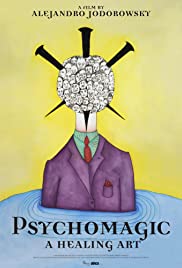
Greetings again from the darkness. Alejandro Jodorowski is a long-time avant-garde and visionary director known for cult classics EL TOPO (1970) and SANTA SANGRE (1989). He’s now 91 years old, and this is his first film since ENDLESS POETRY (2016) – only categorizing this as a “film” is a bit of a stretch. More in line with what we see would be, ‘a procession of demonstrations of Jodorowski’s own trauma therapy that he calls Psychomagic’.
Fortunately, we kick off with Jodorowski himself explaining his therapy. He defines Psychoanalysis, founded by Sigmund Freud, as being based on science and words. In contrast, he defines his Psychomagic as based on acts and touch. We then transition directly into an ongoing session – a sequence likely to be the last one many people watch, as only the most curious (or those charged with reviewing the film) will subject themselves to more.
The rest of the runtime is broken into “cases” distinguished by the specific reasons people are seeking treatment. Few can argue that treatments for emotional trauma can vary widely, and that not everyone will be affected the same, and that we should all be open to whatever works. However, I can assure you, Psychomagic treatment is unlike anything you have seen or experienced. These filmed sessions come off more like an acting workshop than therapy, though we are to assume they are legitimate.
Not to spoil anything, but rather to offer a taste of what’s in store, you should brace for full body shoe polish while dancing at night, the shattering of dinner plates on the patient’s chest in nature, pouring cold milk on an unclothed person, the simulation of birth for ‘grown ups’, sledgehammers on pumpkins decorated with family photos (OK, this one actually makes some sense!), sprinkling water on a massive tree to treat depression, burying a wedding dress, and participating in Mexico City’s Walk of the Dead. And I have skipped over the connection between menstruation and finger-painting and cellos.
Artists often thrive with great freedom, and the therapeutic effects of art have certainly been proven many times. It’s just that watching this, I became something beyond skeptical. It reminded me of the old-time healers, and the fine line between healing and scamming. Perhaps it was the regular inclusion of clips from Jodorowski’s films that put me on high alert, or maybe it was simply the progression of segments that each struck as more outrageous than the last. Jodorowski is an old man with a history of creating art, so I’m choosing to give him the benefit of the doubt, though it’s not an easy task after enduring this.
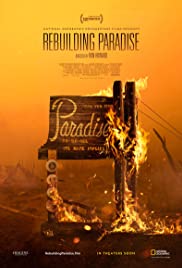
Greetings again from the darkness. It’s November 8, 2018 and the film opens with the daily weather report. For the residents of Paradise, California, this will forever be their worst nightmare: ‘Camp Fire’, the deadliest and most destructive fire in the state’s history. The first 9 minutes of film shows harrowing footage captured by dash cam, helmet cam, smart phones, news footage, and drones. As it begins, one resident says, “Honey, there’s stuff falling out of the sky.” Soon after, we hear a firefighter state “we are 100% surrounded by fire”, and as we ride in the car with a frantic family trying to escape, we hear their relief in the “clear skies” they finally glimpse.
This is a National Geographic production and it’s directed by 2-time Oscar winner Ron Howard. Mr. Howard is best known for his popular films like CINDERELLA MAN (2005), APOLLO 13 (1995), and yes, BACKDRAFT (1991). In the past few years, he’s directed documentaries on Luciano Pavarotti and The Beatles, but as best I can tell, REBUILDING PARADISE is his first step into Cinema Verite – letting the moments of reality unfold while capturing it with mostly handheld cameras.
By 11:38 am, the only light in the skies of Paradise is coming from the glow of the massive and intense fire. The aftermath can only be described as total destruction. Paradise is in ashes. We see the desperate attempt by first responders to ensure that all citizens are evacuated, and then we witness the search for bodies. Camp Fire killed 85 people and displaced 50,000 people, including all of Paradise (80 miles north of Sacramento). The challenges included finding shelter for residents, keeping folks out of town while the fire smolders, and figuring out what the next steps might be.
Director Howard structures the film with visits every 3 months, and to make it personal, a handful of folks are selected. These include Woody Culleton, a man who rose from self-professed town drunk to town mayor (now ex-Mayor), Police Officer Matt Gates, School Superintendent Michelle John, and School Psychologist Carly Ingersoll. Each of these people have their own personal struggles due to the fire, but they are also focused on assisting others, and helping the town of Paradise plan for the future.
It’s a full month before residents are allowed back to salvage anything possible from the ashes. At three months, activist Erin Brockovich gives a speech about the possible liability of PG&E and their equipment from 1921, while a logjam of dump trucks is used to clear debris from town. At six months, the high school seniors are given a graduation ceremony they will never forget, and at 9 months, healing and rebuilding is underway. We gain some insight into the struggles with FEMA and city government, and yet mostly what we witness is a community dedicated to remaining a community.
Mr. Howard chooses to end the movie with clips and warnings about global climate change, which may fit in a larger discussion, but here, the most effective segments are moments with folks simply trying to put their lives back together. That’s more powerful than anything else we can witness.
National Geographic is releasing this in Virtual Cinema and Digital on July 31, 2020
 Greetings again from the darkness. Food, art, and history. There may not be a connection at your local McDonalds, but there certainly is among the world’s most renowned chefs. Director Laura Gabbert (CITY OF GOLD, 2015) documents the story beginning with Yotam Ottolenghi receiving an email from the Metropolitan Museum of Art asking him to curate a culinary presentation in conjunction with the museum’s 2018 “Visitors to Versailles” exhibit, covering the years 1682-1789, just prior to the French Revolution.


 Posted by David Ferguson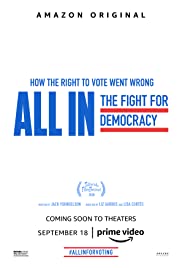


 Movie Reviews from the Dark