SXSW 2021 Day 3

March 19, 2021

SXSW 2021 Day 3

 This was my third and final day of movies at this year’s South By Southwest (SXSW) virtual festival. I’ve watched and reviewed 16 movies in 60 hours, and remarkably, there wasn’t one clunker in the bunch.


Day 3 for me included a documentary, a comedy, two dramas, and a horror film. Here’s a recap:


WITHOUT GETTING KILLED OR CAUGHT (documentary)

 Jerry Jeff Walker made the lyrics famous: “If I can just get off of this L.A. freeway without getting killed or caught”, but it was Guy Clark who wrote ‘em. Co-directors Tamara Saviano and Paul Whitfield put together a profile of legendary songwriter Clark, but it’s also an intimate look at an era, the challenges of the music industry, Clark’s enigmatic wife Susanna, and at their friendship with the great Townes Van Zandt.

The film is based on Susanna’s diaries and the biography written by co-director Saviano entitled, “Without Getting Killed or Caught: The Life and Music of Guy Clark”. Most documentaries that focus on a musician spend the vast majority of time on the songs, but this is something quite different. Sure, the music is crucial to the story, but this is the saga of struggling artists and poets, and the unconventional and complicated relationships they formed. It’s more of a psychological character study than a tribute to the beautiful music.

Background on Guy and Susanna go back to each of their childhoods. We see family photos and videos, and learn Guy was brought up west Texas tough, while Susanna had a large family. Brought together by tragedy, their 40+ year relationship was built on art and a free-wheeling nature not uncommon to the times. Guy became best friends with songwriter Townes Van Zandt, and an unconventional triumvirate was the result when Townes and Susanna became spiritual soul mates.

Vince Gill, Steve Earle, and Rodney Crowell fill in some details of those early years, and more importantly provide perspective on the commitment to a specific type of songwriting that Guy held precious. There are also clips of interviews with Townes, and we learn just how difficult it was for Guy to achieve success. It came much easier for Susanna, who wrote #1 hit songs AND was an accomplished artist – her painting served as the cover of Willie Nelson’s “Stardust” album.

Of course, Guy Clark ultimately achieved both admiration and success with his songs. Jerry Jeff put him on the map, but Grammy awards came later, as did lifetime achievement awards and best-selling albums. The film includes much of Susanna’s time with “TR”, which is what she called the tape recorder, so we eavesdrop on many conversations – both personal and musical. Clips of Guy’s appearances on Austin City Limits in 1977, 1981, and 1989 are a pleasure, but the later years are a bit more difficult. The most challenging part of the story is knowing that Susanna remained bedridden after Townes’ death in 1997. Guy passed a few years later: “Texas is callin’, callin’ me home.” With narration from Sissy Spacek (as Susanna), the film is a personal journey that we are privileged to take.


SWAN SONG (drama)

 It’s never too late. We’ve all heard the phrase, but is it accurate … at least mostly? Writer-director Todd Stephens met the real life Pat Pitsenbarger in a small town gay bar, and he turned that person into this engaging story by casting the great Udo Kier in the lead. When we first meet Pat, he’s living a life of daily drudgery in a nursing home. He’s a curmudgeon whose hobbies are folding (perfectly) the paper napkins he takes from the cafeteria, and sneaking a smoke when no one is looking. We also see how tenderly he treats an incapacitated neighbor. It’s not the last time we see his two sides.

Pat was once a renowned hairdresser in Sandusky, Ohio. When he is informed that a long-time former (wealthy) client has passed away, and her dying wish was for Pat to do her hair for the funeral, he sneaks out of the home and begins a road trip down memory lane. Despite Pat spending the time on foot, the film has the feel of a true road trip movie as he crosses paths with many folks – some new and some with ties to his previous life. One of his first stops is the graveyard to visit his life partner who died of AIDS. We realize Pat still grieves.

There is a hilarious stop at a convenience store as he tries to knock off the items on his shopping list for the project. Since he has no money, Pat depends on the kindness of others … and his own sticky fingers. As he makes his way through town, some folks remember him, while others remind him of how long he’s been gone and how much has changed. His house and business may be gone, but his memories remain.

Two folks from his past generate tremendous scenes. Pat confronts Dee Dee Dale (a reserved Jennifer Coolidge) who gets to tell her side of the story of their unpleasant business split so many years ago. Even better is a “conversation” in the park with his old friend Eunice (a superb Ira Hawkins). The two old friends toast the bygone days of their gay club, while also acknowledging the new world of the gay community. It’s a touching sequence.

But the most surprising portion of the film occurs at the funeral home, where Pat imagines a final chat with that recently deceased client, Rita Parker-Sloan. What a pleasant surprise (actually shock!) to see Linda Evans back on screen. She is terrific in her brief appearance and we’ve really missed her over the last 23 years. But this film belongs to Udo Kier, and he kills. Pat is known as “The Liberace of Sandusky” and Kier embraces all that entails. This is a sentimental story punctuated by a spirited performance – and a Shirley Bassey song!


HOW IT ENDS (comedy)

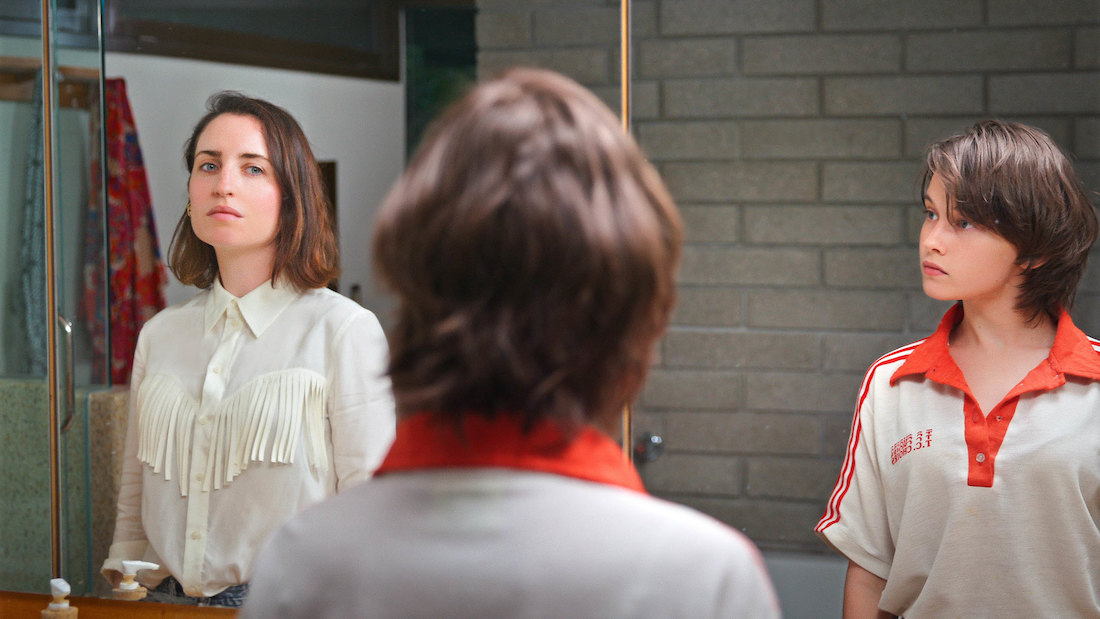
 We get glimpses of the meteor that’s speeding on a collision course with Earth, but no character ever points it out. In fact, most emit a chill vibe that corresponds to that of the film. The only exception is Liza. Played by Zoe Lister-Jones, Liza simply wants to get trashed and let the world end overnight … well after she finishes off her morning pancakes (at least a dozen) and glass of wine.  Liza’s only problem is Young Liza (Cailee Spaeny), her metaphysical younger self who pressures Liza to attend the Apocalypse Party being thrown by Mandy (Whitney Cummings).

In addition to attending the party, Young Liza persuades Liza to spend the day confronting her regrets. This includes meeting up separately with her divorced parents (Brad Whitford and Helen Hunt), as well as a former best friend (Olivia Wilde), and past boyfriends, including her one true love (Logan Marshall-Green). In fact, this trip down Regret Road provides a steady stream of stereotypical California flakes. This means none of the soul-searching ever goes very deep, but playing spot-the-funny-person is a win-win. None of the interactions seem to last more than 2-4 minutes, but it’s a blast seeing how many familiar faces pop up during Liza and Young Liza’s day of walking. I won’t name the others here so that you can enjoy each moment – some more than others.

The film is co-written and co-directed by Zoe Lister-Jones and Daryl Wein, and it’s one of the more entertaining ‘pandemic’ films so far. For me, the constant roll of quick vignettes never got old, but you should know that as good as the performances are from Lister-Jones and Spaeny, the soul-searching and self-discovery only skims the surface. Still, a chill End of the World party seems perfect, even if a 1980’s relic agreed to be a punchline.


VIOLET (drama)

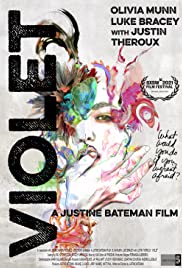
 Justine Bateman’s first feature film as writer-director acts an education for men and a wake-up call for women. And it’s welcome and effective on both fronts. Olivia Munn (“The Newsroom”) stars as Violet, a film industry executive whose self-doubts and lack of confidence prevent her from every really feeling happiness. Her inner voice – she calls it “the committee” feeds her bad ju-ju and keeps her obsessed with safe decisions, rather than dynamic ones … both personally and professionally.

As an example, her inner voice (Justin Theroux) pushes her to date an older, boring film executive for the sake of her career, rather than her screenwriting life-long friend Red (Luke Bracey) who clearly thinks more highly of Violet than she does herself. Violet’s boss (Dennis Boutsikaris) purposefully belittles her which causes some of her staff to also show little respect. Violet does have some supporters who recognize the talent and strength within her, but of course, it’s Violet who must come to terms with the disconnect between achieving happiness and the way she makes choices.

We see flashbacks to Violet’s childhood and understand how the seeds of self-doubt were planted. The supporting cast is excellent and very deep, though some (Bonnie Bedelia for one) only appear briefly. Filmmaker Bateman uses on screen script to let us know what’s going on in Violet’s mind as it battles with her “committee”. It’s a trick that serves the purpose well. Some may recall the “Seinfeld” episode where George does “the opposite”. Well that sentiment serves Violet well and puts her on the road to recovery … and to silencing that darn committee. A terrific first feature from Ms. Bateman, and kudos for the closing credits which put the crew on camera.


VIOLATION (drama/horror)

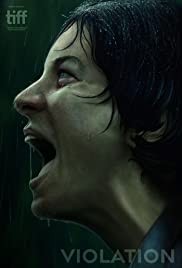
 Not just another rape-revenge thriller, this film from co-writers and co-directors Dusty Manicinelli and Madeleine Sims-Fewer is one of the most brutal and unforgiving films I’ve seen in a while. Emotional pain, regret, bitterness, and compromise worm through every scene and every character.

It begins as a cabin in the woods story. Miriam (co-director Sims-Fewer) and Caleb (Obi Abili) have a strained relationship that appears headed towards a breaking point. They are meeting up with Miriam’s sister Greta (Anna Maguire) and her husband Dylan (Jesse LaVercombe) at his family cabin. There is an underlying tension that prevents the four from every being at ease with each other, though we only get bits and pieces at a time. To further force our concentration, the story is told in non-linear fashion, making it important to focus on hairstyles and details.

One evening by the campfire turns into a turning point in the film and acts as the before and after point. A primal and brutally violent sequence takes up close to half of the film, and it’s unlike anything I’ve previously seen on screen. The practical effects are next level, and Ms. Sims-Fewer is absolutely terrific throughout. A chilling use of music accompanies an odd combination of wolf-rabbit-psychopath, and the filmmakers use shots of nature as connective tissue in a world where sometimes we are the wolf and sometimes the rabbit. Certainly not a film for mass audiences, but it will surely find an appreciative following.


SXSW 2021 Day One

March 16, 2021

SXSW 2021 Day 1

This year’s South By Southwest (SXSW) festival is being held completely online, and of course a virtual festival lacks the oh-so-enjoyable elements of long lines, rude people, bad weather, and rushed fast food. Sure the excitement and energy of an audience is missing, but at least there is no hotel expense!

Day 1 for me included four documentaries and one narrative. Here’s a recap:


HYSTERICAL (documentary)

 Stand-up comedy is certainly one of the toughest ways to make a living in the entertainment world. As if making others laugh isn’t difficult enough, convincing someone to give you mic time on stage takes a minor miracle when first starting out. Documentarian Andrea Blaugrund Nevins goes one step further as she focuses on the trials and tribulations facing female stand-up comedians. And she does so in a way that allows us to feel the struggle.

No matter your age, if you are reading this, then there were successful and funny female comedians working when you were growing up. Ms. Nevins includes clips of Moms Mabley from 1948, as well as Phyllis Diller, Joan Rivers, and other legends. But this documentary is about so much more than great jokes. We are privy to the personal stories behind the stage acts of many of the women working stand-up today. These women are honest and raw in recounting their journeys, and they are fascinating and informative.

Souls are bared, and no topic is off limits. Confidence, anger, self-doubt, childhood issues, and the desire for attention and acknowledgment are discussed. In what has traditionally been “a man’s world”, we are told that once onstage, “There is no one telling us what to do.” The dark side is also present. Pay discrepancies between the genders is well documented. We hear multiple stories of being subjected to inappropriate behavior, groping, and even assault. Included is the 2019 clip of Kelly Bachman rocking the room while Harvey Weinstein was present. On top of that, there is competition amongst the women due to the belief that there is only room for so many. Yet, despite this, a camaraderie exists among these brave women to prove the power of laughter. Terrific work from Ms. Nevins.


DEAR MR. BRODY (documentary)

 Filmmaker Keith Maitland is responsible for one of the best made and most interesting documentaries of all-time. His TOWER (2016) was a favorite on the festival run, as well as its numerous TV showings. The body count on his latest is reduced, and it plays like psychoanalysis of a young man who captured the nation’s attention for one brief moment in time.

If the title doesn’t ring a bell, you likely were either too young or not born when, in 1970, the heir to an Oleo Margarine fortune made headlines everywhere. Michael James Brody, Jr announced that he was going to give away his millions to anyone who asked. He even gave out his home address and phone number in Scarsdale, New York. The announcement even got him a spot on “The Ed Sullivan Show” to sing a song … which led to a recording contract.

At the time, Brody was 21 years old and married to Renee, who was kind enough to sit for interviews with Mr. Maitland for the film. Her (reluctant) insight paints a picture of a man who believed in “Peace” over “Money”, and started with the best intentions of helping people. Sadly, but not surprisingly, it didn’t take long for the cracks to show in Brody’s mission. His pronouncements of gift-giving had his wealth fluctuating from $25 million to $50 million, and even into the billions at times. His demeanor shifted drastically, sometimes within the same day.

The letters flowed in. And kept coming. We hear from authors, friends of Brody, and researchers. Producer Melissa Robyn Glassman located 12 boxes of unopened letters that movie Producer Edward Pressman had in storage from a movie project that never materialized. We also hear from Brody’s and Renee’s son Jamey, who not only collects items from the family “Good Luck” Margarine brand, but also has 40-50 boxes of unopened letters addressed to his dad … Dear Mr. Brody.

It’s those letters that provide the heart and soul of the story, the movie, and this moment in history. Maitland and Melissa track down some of the original letter writers, as well as some of the surviving family members. As they read the words from decades ago, emotions take over and instantly, we are observing an intimate memory. We may be intruding, but these are raw human emotions on display.

Brody’s mental state at the time is also discussed. Drugs clearly played a part in his behavior – specifically PCP, and this led to interest from the editor of “High Times” magazine. It also led to Brody being hospitalized for a time, and ultimately to tragedy. History is filled with odd characters, and Michael James Brody, Jr certainly had his Andy Warhol ’15 minutes of Fame’, but the real story here is that of those who wrote the letters of need/want more than 50 years ago.

**NOTE: it’s not surprising that Brody’s house at 31 Paddington Road in Scarsdale was long ago razed and replaced with a mansion more suitable to the area.


INTRODUCING, SELMA BLAIR (documentary)

 Whether it’s navigating the stairs on all fours, getting a boost up to the saddle of her beloved horse, or showing off her glittery turbans and walking canes, the showmanship of actress Selma Blair seems ever-present despite the severe effects of her Multiple Sclerosis (MS). Documentarian Rachel Fleit films the daily challenges faced by Ms. Blair as she comes to grips with the disease and its impact on her career, her life, and her ability to raise her son.

You likely recognize Selma Blair from her most popular movies, CRUEL INTENTIONS (1999) and LEGALLY BLONDE (2001). She admits to viewing herself as a supporting actor, rather than a star, but with 80 screen credits over 25 years, she’s certainly worked consistently. But here we see her daily physical and emotional struggles, though her sense of humor is present except for the darkest moments. Cracking wise about Kim Kardashian or Norma Desmond (SUNSET BLVD), and never hesitating to ensure her cane serves the dual purpose of fashion accessory, Ms. Blair keeps us constantly guessing as to whether she is serving up raw emotions or her best performance in the moment.

We can easily forgive her if a bit of her good humor is an act. It seems clear the film is designed to be a “gift” to her young son Arthur, should her life be cut short. Early on, we witness an MS episode when the stimulus gets to be too much. Her physical contortions and impaired speech are difficult to watch, but necessary for us to fully understand the brutality of the disease.

Half of the film is dedicated to her decision to seek stem cell treatment. The process is long and arduous, and we are spared much of the worst that she experiences. Still, it’s a weeks-long cycle followed by a two year recovery, with no guarantee of improvement. In fact, no miracle cure or recovery occurs, and Ms. Blair initially seems shocked that she has two years of recovery ahead. It’s difficult to believe she had not previously been informed.

Selma Blair’s slogan, “We have so much time to be dead”, is a terrific message and she’s to be commended and respected for opening up her challenges to the camera. It’s hopeful that her willingness to do so will help others, while also educating those unfamiliar with this disease. Mommy issues and extra drama aside, this film is quite something to experience.


THE END OF US (drama)

 Co-writers and co-directors Steven Kanter and Henry Loevner serve up one of the first COVID-19 relationship movies. It’s the kind of indie movie that plays well at festivals, but also one that nails what so many have experienced over the past year … well hopefully sans the break-up.

Ali Vingiano is Leah and Ben Coleman is Nick. They have been in a four year relationship that ends abruptly when Leah gets fed up with carrying an unbalanced load in regards to grown-up things like rent, food, and insurance. See, while Nick dreams of writing a screenplay and getting acting jobs (while taking few auditions), Leah is the grounded one who holds a real paying job. It’s easy for us to understand when Leah says ‘enough’.

The wrinkle here is that the break-up occurs in the early days of the pandemic. Knowledge is scarce and deaths are mounting. Businesses are closing and a stay-at-home order is issued in California, forcing this newly separated couple to … well … not be separated. Nick sleeps on the couch, but the two are together more now than … well … when they were together. Tension and stress is as prevalent as Zoom meetings.

It’s an unusual situation, and both Leah and Nick have friends they confide in, but moving on is pretty difficult when the proximity is closer than ever before. Petty emotions come into play, as do real ones. Apologies and quasi-apologies are rampant, but we see both change and grow despite the challenges. The lead actors are solid and the script is fresh and spot on. There are some uncomfortable moments, but relatability is the key here. Nice work from those involved.


DEMI LOVATO: DANCING WITH THE DEVIL (documentary)

 Opening Night Headliner at SXSW is a place of honor, and this year’s selection was the docuseries from Michael D Ratner (TV docuseries “Justin Bieber: Seasons”) highlighting Demi Lovato’s personal challenges, of which there are many. The 4-part series was shown straight-through with only chapter slides showing where each new episode begins. Initial scenes show Lovato during her 2018 tour, which was originally the purpose of a documentary. Filming ended abruptly when she overdosed on drugs and nearly died.

In 2020, Ms. Lovato had a new story to tell, and her personal struggles became the focus of the documentary. She promised transparency and honesty, and by all indications, she delivered. Very few celebrities have ever revealed so many personal challenges. By the end of the finale, we’ve heard about her addictions, the physical-emotional-sexual abuse she’s endured, her eating disorder, bi-polar diagnosis, depression, self-harm, and body issues. We also learn of her frequent lies to friends, family, and associates.

Not only does Lovato sit for many interviews, we also hear from her mother, sisters, friends, choreographer, Security Director, Business Manager, and former personal assistant. That’s right. One of the things that stands out most here is privilege. The former Disney child star and now global pop star has a support team and resources that most can only dream of. She went to rehab at one of the most exclusive facilities in the world, and after a near-death drug overdose, her famous new manager agrees to sign her, even after a relapse shortly after her rehab stint. Obviously addiction is something many struggle with, but it’s quite eye-opening to see the care wealth can attain.

One of the most interesting things to come from this is in the final episode where Lovato admits that “moderation” is her personal approach to dealing with addiction. Despite input from Elton John, Christina Aguilera, and Will Ferrell, Lovato believes she is better off with moderate alcohol consumption and pot smoking than stone cold sobriety. Only time will tell. One thing is for sure … her voice remains a true gift. Her “comeback” performance at the 2020 Grammy Awards and her singing of the National Anthem at the 2020 Super Bowl are unmistakable in proof of talent. However, we can’t help but wonder how the personal admissions will be received by the youngsters who look up to Demi Lovato.


LONG LIVE ROCK: CELEBRATE THE CHAOS (2021, doc)

March 11, 2021

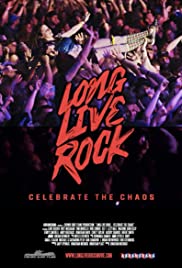
 Greetings again from the darkness. “Rock ‘n Roll is dead.” It’s a proclamation that many have attempted to push for the past 50 plus years. We know that during these past decades, many other music genres have had their runs: folk, reggae, pop, punk, disco, country, techno, hip-hop. But director Jonathan McHugh shows us that head-banging is still alive … and more importantly, he explains why.

For those unfamiliar, this serves as an overview of heavy metal music. McHugh allows those involved to speak their minds. This includes musicians, DJs, promoters, security workers, and especially fans. I won’t list all of the interviewees, but they are legitimate and include bands such as Korn, Metallica, Slipknot, Halestorm, Rob Zombie, Guns ‘n Roses, Live, Machine Gun Kelly, Greta Van Fleet, and Alice in Chains. The insight from the musicians is quite interesting and thoughtful, though it’s the fan segments that really hit home.

The euphoria of crowd surfing (even in a wheelchair), the energy (and rules) of a mosh pit, and the cringe-worthiness of a “Wall of Death” (compared to the BRAVEHEART battle scene) all feed into what’s best described as a community of superfans. These folks use the festivals as an escape, and the solidarity of these outsiders is quite something to behold. Their words convey their appreciation for the communal experience of the big shows, and just how important the festivals are as a release of stress from everyday life.

Traditionally, heavy metal has been male dominated and even labeled as “satanic” music, but the film does a nice job of showcasing some of the female artists who are now popular and their impact on drawing more female fans to the events. Gender and race are discussed, and examples provided on how the divisions no longer exist – the festivals draw a cross-section of society from professionals (a dentist and nurse are featured) to working class to those who have been reformed. The music created a rare bond between an ex-convict and his prison guard.

Of course, it’s not all one big love fest. There is much discussion of alcohol, drugs, and addiction. The musicians admit that fans are always trying to give free drugs to rock stars, or buy them a drink. It’s yet another way to connect, only it can be destructive.  The 2017 deaths of Chris Cornell of Soundgarden and Chester Bennington of Linkin Park are noted. Their deaths occurred only 2 months apart and had a dramatic impact within the community – especially following the 2015 death of Scott Weiland (Stone Temple Pilots and Velvet Revolver). Director McHugh is a frequent movie Producer and cinematic Music Supervisor presents many facets of heavy metal, and does so in a way to show the importance of the community to its superfans. Love live rock, indeed.

Virtual Cinemas on March 12, 2021

WATCH THE TRAILER


THE WAR AND PEACE OF TIM O’BRIEN (2021, doc)

March 2, 2021

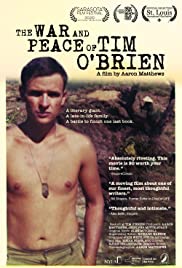
 Greetings again from the darkness. “We are all writing our ‘Maybe’ book.” So says National Book Award winner Tim O’Brien, the renowned war story author best known for his groundbreaking 1990 book, “The Things They Carried.” The book was based on his experiences in the Vietnam War, and Mr. O’Brien is the subject of this documentary profile by Aaron Matthews. Four years of filming (off and on) covers O’Brien’s journey in writing his next (perhaps last) book … his first since 2002.

O’Brien lives in Austin, Texas with his wife, Meredith, and their two sons, Timmy and Tad. The married couple look back to facing a fork in the road when Meredith wanted kids and Tim did not. He became a father for the first time at age 56, vowing to be a “decent” father. During those years, he did not write, and eventually it was Meredith that urged him to return to the keyboard. She says, “An artist makes art, a writer should write.” And much of Matthews’ movie explores O’Brien’s writing struggles, and his admitted battle in balancing family and writing.

With his ever-present cigarette and stash of notes and ideas, O’Brien walks us through some of his thought-process. His sons have shown no interest in learning about his war years, his childhood, or much of anything else in regards to their dad. They are simply normal teenagers more focused on sports, friends, and screen time. Dad acknowledges this, and is inspired by the idea that after he’s gone, they will appreciate knowing what made Dad tick. He cringes at the thought of being remembered for the worst thing that ever happened to him (war), but knows he would have valued the effort from his own dad – despite what we learn from a segment where O’Brien and his brother and sister reminisce about their parents.

In addition to being an incredibly talented writer, Tim O’Brien is a deep thinker, and actually quite courageous to invite cameras into his inner sanctum. Death is often on his mind, and even 50+ years later, he’s still haunted by his war experience – even though he has forged a writing and speaking career from it. The proof of his internal demons is seen with O’Brien on his hands and knees scrubbing the kitchen floor in the wee hours of the morning. We see him labor over a few words just like he labors over a magic trick – a few of which we see. Just don’t ask him to play the trombone. O’Brien speaks to the futility of his writing, and how his words have no impact on whether more are sent into battle. He labels himself a “Preacher of Peace”, but we are never really confident he has found peace … perhaps acceptance is more fitting. “Dad’s Maybe Book” by Tim O’Brien was published in 2019.

Available VOD on March 2, 2021

WATCH THE TRAILER


BLACK HOLES: THE EDGE OF ALL WE KNOW (2021, doc)

March 2, 2021

 Greetings again from the darkness. When most of us need an item, we first check the Amazon website for price and availability. For Physicists and Astronomers, it’s not always so easy. We are informed that photographing a Black Hole would require a telescope the size of planet Earth. Even with my limited science knowledge, I was able to understand the impossibility of fulfilling such a request. Of course, there is a reason they are Physicists and yours truly reviews movies. These folks are pretty darn smart and they find a way to solve problems. Harvard University Physics Professor and documentarian Peter Galison manages to make accessible the work of some of the world’s brightest minds.

Thinking back to 2019, you likely recall seeing the Black Hole photograph. It was everywhere … online sites, social media, TV newscasts, and magazine covers. We knew it was a breakthrough, but most of us had no idea what went on behind the scenes to capture that image. Galison’s documentary fills us in. Going back to 2017, and starting in Mexico, the film explains the Event Horizon Telescope (EHT). With the goal of photographing a Black Hole, a network of observatories from around the globe will be coordinated to simultaneously capture data, and then that data will be compiled to determine if the image(s) is an accurate representation.

There are a couple of things we follow … related by topic but differing in objectives. A group including Stephen Hawking, Harvard Theoretical Physicist Andrew Strominger, British scientist Malcolm Perry, and Cambridge scholar Sasha Haco are observed hard at work on solving the mysteries of Black Holes. Specifically what they are pursuing is the Information Paradox, which states the universe cannot be defined by physical laws. This pursuit of this group of geniuses is shown in symmetry with the work of the EHT teams, where mostly we follow Shep Doeleman and the challenges his team faces in holding up their end of photographing Messier 87, a supergiant elliptical galaxy.

The EHT teams are located around the globe, including Chile, Spain, the South Pole, Hawaii, and Arizona. Obviously the technical aspects of these projects are beyond my capacity, however, it should be noted that the film is easy enough to follow for us non-geniuses while also including some geeky detail for the advanced among us. What really stands out and makes the film fun to watch is the passion shown by these scientists. At the conference where the teams are gathered, these folks are giddy as they anticipate the results of their work and the compilation of data. Their excitement makes it clear what an enormous accomplishment the image is for all involved.

Sadly, Stephen Hawking passed away in 2018, so the clips we see are some of the last images of his final work. If you are curious as to how his work with Strominger, Perry, and Haco ended up, you may track down their final paper, “Black Hole Entropy and Soft Hair” … but I’m sure most of you have already read it. To add a touch of entertainment value, director Galison includes beautiful music from YoYo Ma as well as “Over the Rainbow” by Israel Kamakawiwo’ole. Overall, this is the perfect blend for novices and scientists who are interested in the fascinating topic of Black Holes and how the experts go about chipping away at the mystique and limits of knowledge.

Available VOD on March 2, 2021

WATCH THE TRAILER


SEX, DRUGS & BICYCLES (2021, doc)

February 25, 2021

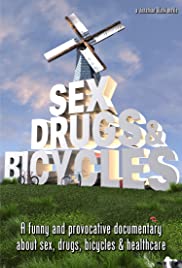
 Greetings again from the darkness.  For anyone who still believes documentaries are dry and boring, the cure is this latest from Jonathan Blank, a filmmaker who returns to Holland 25 years after his first documentary, SEX, DRUGS & DEMOCRACY (1994). Entertaining and informative is a terrific blend as Mr. Blank uses interviews, statistics, and animation to contrast the Dutch way of life with that of the good ol’ USA.

Tall and happy … the description of Holland’s citizens. And why wouldn’t they be happy?  The Netherlands are known for picturesque windmills, fields of tulips, and of course, legalized drugs and prostitution! Director Blank digs in to find out more, and what he teaches us, in an often humorous manner, is that Holland and USA are quite different in many ways, yet similar in some others. While Americans are known for devoting excessive hours to work and forgoing vacation, the Dutch are paid for 13 months, while actually only working 11. Yet hate crimes and a blight on history are shared traits.

The number of topics touched on here can seem overwhelming, though Blank’s structure of the “Top 10” things to know about Holland definitely helps. We get insight from locals, including a Senator, sexologists, educators, pot farmers, and other citizens. The topics include a national healthcare system, climate change, free speech, social tolerance, and renewable energy vs fossil fuels. There is even an “Animal Rights” political party.

Is Holland a Utopia? A regulated sex worker industry, pot smoking in coffee houses, and double-paid vacation might lead you to think so. However, Blank also talks about the high taxes, a history of slavery, modern day holiday parades that feature blackface, and hate crimes. The progressive social aspects of the culture include a healthcare system that covers gender-reassignment surgery and open acceptance of the LBGTQ community – except where it’s not. It turns out that even in the world’s happiest country, there are closed-minded and nasty people.

In a country of 17 million people where the admitted national pastime is “complaining”, it turns out there is much to admire, yet also an existence of many of the same problems faced elsewhere. Heck, the Dutch use the f-word as frequently as any Quentin Tarantino character, and their dependency on fossil fuels is a known hot topic. Director Blank has succeeded in presenting an entertaining and informative look at an admired culture … warts and all.

The film will air on PBS on February 26, 2021, and also on various streaming platforms.

WATCH THE TRAILER


MORE THAN MIYAGI: THE PAT MORITA STORY (2021, doc)

February 4, 2021

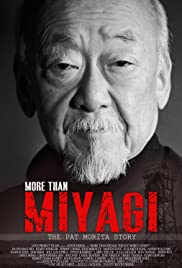
 Greetings again from the darkness. Mr. Miyagi not only taught Daniel-san how to stand up for himself in THE KARATE KID (1984), but his “wax on, wax off” entered our  lexicon as his philosophy educated us on how seemingly unrelated pieces of life can fit together. Pat Morita embraced the iconic role of Mr. Miyagi, and also appeared in the three sequels. Filmmaker Kevin Derek is here to tell us the rest of the man’s story.

Using a straightforward and traditional biographical profile structure, Mr. Derek takes us through the life of Pat Morita. We see photographs of him as a young boy who spent many childhood years immobilized – held captive in a body cast after extensive spinal surgery. Once healed, he joined his family in one of the internment camps during WWII.

At age 30, Mr. Morita’s professional goal as a stand-up comedian was to appear on The Ed Sullivan Show sporting one of the more politically incorrect nicknames, “The Hip Nip”. Though he never played ‘Sullivan’, his career turned out just fine thanks to support from Red Foxx. Laura Marr, Lenny Bruce’s mother, became Morita’s agent, and not only did his stand-up career take off, but he also secured his early acting gigs.

It was his “Happy Days” role as Arnold that took him mainstream. Many of the leads from the cast provide memories of working with Morita. Ron Howard doesn’t appear, but Marion Ross, Anson Williams, Danny Most, and Henry Winkler all do. They speak fondly of Morita and call him a “sweet guy.” Although Morita’s first shot at leading his own series (“Mr. T and Tina”) didn’t succeed, he was securing regular acting gigs. Of course, it was being cast as Mr. Miyagi in THE KARATE KID that made him a star.

Fellow ‘KK’ cast members Ralph Macchio, William Zabka, and Martin Kove all tell stories about working with Morita, and more importantly rave about what a generous and kind soul he was … referring to him as a “lovely man.” So you might be wondering, where’s the story? Well it’s Morita’s personal demons that may surprise. He died in 2005 at age 73, but he spent most of his life as an alcoholic – often working while inebriated. His wife Evelyn is interviewed here, but his daughters did not participate.

Much is made of his being born and raised in America, but spending his career bouncing from Japanese to Chinese roles, and masking the inner turmoil. We see clips from his wedding at Elvis Presley’s Las Vegas mansion, and his personal assistant also provides insight into working with him. One of the lowest points of his career is retold by Henry Winkler and Evelyn as they remember his struggles with alcoholism during a televised “Happy Days” reunion. It’s painful to hear.

Kevin Derek also directed THE REAL MIYAGI (2015), which was a profile of Fumio Demura, often recognized as the greatest karate master of a generation. Demura was also Morita’s stunt double in THE KARATE KID. Here, Derek simply allows Morita’s story to unfold – the ups and downs. Only a few actors get to create such an iconic character as Miyagi, and Morita actually played him in four films. His star on the Hollywood Walk of Fame is shown, and the current day successful spinoff “Kobra Kai” is discussed, yet we are left with a feeling of sadness for a man who accomplished so much, while never achieving his own inner-peace.

WATCH THE TRAILER


TRIBES ON THE EDGE (2021, doc)

February 1, 2021

 Greetings again from the darkness. From certain angles, we see the striking resemblance to her grandfather, world renowned researcher, explorer, and oceanographer Jacques Cousteau. Celine Cousteau builds on her family legacy by documenting her journey to Brazil in an effort to provide exposure to the plight of indigenous communities in the rain forests along the Amazon … each tribe in a battle for survival. Ms. Cousteau also explains how this issue is crucial to the world, not just those grasping to the long traditions of jungle life.

We get to watch as her crew assembles and gets taken by boat deep into the Amazon region. In the process, we learn there are approximately 10,000 known indigenous people living in the area she visits, plus an estimated 2000 that have never had “outside” contact. These tribes go back many generations, and Cousteau educates us by taking us along on her mission to these communities. Most striking is the prevalence of malaria and hepatitis within the tribes, when neither disease existed in these communities for hundreds of years. She discusses the conspiracy theory that the government is systematically exterminating these people via “white medicine” in order to gain access to the protected land – land that is brimming with resources, especially oil, minerals, and fish.

The Cousteau team spends much of their time in the Rio Novo section of Vale do Javari which allows us to get a feel for how this tribe lives and the challenges they face. These challenges range from snake bites to lack of medical supplies, and of course the constant threats of political maneuverings. Cousteau also educates us about FUNAI and SESAI, two agencies charged with protecting indigenous people in the demarcated land areas. Neither seems capable of doing so.

A brief segment covers Sydney Possuelo, a Brazilian explorer and tireless activist for the protection of Brazil’s isolated indigenous people. Cousteau’s point is clear – these are the caretakers of the rain forest, and have been for many years. Their existence is threatened, and we should care because of the interconnection to all people. As the Amazon rain forests are destroyed, so is the oxygen and water that sustain us.

Premiers February 2, 2021 on VOD, including iTunes, Amazon, Vudu, Google Play and YouTube.

WATCH THE TRAILER


THE LADY AND THE DALE (2021, docuseries)

January 30, 2021

 Greetings again from the darkness. Unlike our first glimpse of the shark in JAWS, we don’t have to wait long. A 1974 episode of “The Price is Right” gives us an upfront look at a 3-wheeled car known as The Dale. If you expect the fuel-efficient auto oddity to be the featured attraction of this four-part docuseries from directors Nick Cammilleri and Zackary Drucker, then you are in for quite a ride. While the history of the Dale is chronicled, this is actually the fascinating story of Elizabeth Carmichael, and how she achieved fame and notoriety – the highest highs and the lowest lows of the American Dream.

What makes her story fascinating? For starters, ‘she’ was born Jerry Dean Michael, a con man who claimed to grow up a poor farm boy in Jasonville, Indiana. Per classmates interviewed here, Jerry was neither poor, nor a farmer, but rather a middle class kid whose family ultimately relocated to Detroit, where he later joined the Army. The lies, cons, and fraud come lickety-split … so fast we can barely keep up as we blitz through his scams and his failed marriages, with at least two with kids he never saw. Not once. Lest you think this is over-hype, we also gets bits and pieces from the actual FBI file opened on Jerry Michael.

Always on the move … usually running from the law … Jerry spent time as a vacuum salesman, and then ran a small newspaper, which led to printing counterfeit money. He was often a fugitive and ran through as many names as he did jobs and homes. By 1966, Jerry Michael began presenting himself as Elizabeth Carmichael, and instructing his kids to refer to him as “mother”. Shockingly, his wife, Victoria, went along with this, and became “Aunt Victoria.” It’s an understatement to label this family and life as unconventional.

Candi Michael, one of Jerry’s daughters, is interviewed throughout the four episodes, and provides clear recaps of the many stages of her life. And what a crazy life it was. She explains, matter-of-factly, that her father became her mother, and the kids were trained to immediately stop what they were doing and hop in the car, so the family could instantly escape the latest brush with the law. The family zig-zagged across the country, never in one place very long, but often either in California or the Deep South.

The first episode, “Soldier of Fortune” is loaded with background information, and takes us through Elizabeth’s “self-transition”, as she gave herself hormone shots obtained from veterinarians. We also hear from Susan Stryker, a trans historian, who provides perspective and commentary through all episodes. The episode concludes detailing how, in the midst of a national gas crisis, Elizabeth became enamored with Dale Clifft’s new, fuel-efficient, 3-wheeled vehicle. She opened a business in Los Angeles called 20th Century Motor Car Company, and had visions of dollar signs dancing in her head.

Episode 2, “Caveat Emptor: Buyer Beware” opens with Rudyard Kipling’s poem, “If”, and those words go a long way towards describing how Elizabeth Carmichael was approaching life and viewing herself. Of course, her thinking was twisted enough to allow her to become a marketing phenomenon in the automotive industry and she positioned her car company (with no cars to sell, mind you) as competing head to head with the Big 3 American car makers: GM, Chrysler, and Ford. What’s amazing is that Elizabeth was so good at making folks believe, that deposits came flooding in for the ‘option’ to buy a car once they rolled off the production line.

It’s at this point that we begin hearing from some of the engineers and staff that worked for her, and it’s quite obvious that this was a giant shell game. Sure, some of the employees trusted her and were striving to build the car, but being paid on Fridays with stacks of cash should have been a warning sign. This is also the time when local media began to show interest. The key local reporter was Dick Carlson (father of Tucker Carlson) and he’s interviewed for the film, explaining how they sensed the ruse, and kept digging. Things took a turn for Elizabeth on December 31, 1974 when Japanese investors arrived to watch a disastrous test drive of the Dale. After getting close to what Candi called a “normal” life, the family high-tailed it to Texas to escape California regulations (and the law).

“The Guilty Fleeth” for Episode 3 opens with Elizabeth stating, “If I can stay out of jail, I can run for President.” Normally this type of person would be impossible to understand, but we’ve had four years of exposure to something similar, so comprehension comes much easier. We see clips from news reports and hear audio recordings of Elizabeth talking. In California, folks lined up for refunds after the media reports created doubt, and the FBI tracked her down. Not long after, she faced conspiracy charges and was exposed as a man (she had not had the second surgery). This meant serving time in a men’s prison, where she was beaten. The 9 month trial was all over TV and it’s not surprising to learn that Elizabeth acted as her own attorney … before jumping bail and fleeing yet again.

Episode 4, “Celestial Bridge”, covers Elizabeth’s final years in Austin, Texas, running a flower business … right up until an 1989 episode of “Unsolved Mysteries” ended up exposing her again, and having her extradited to California to serve an 18 month jail sentence. This final episode also devotes a good deal of time to the history of transsexuals, including Rene Richards, and comes full circle as we see a bright yellow Dale car on display at the Peterson Automotive Museum. Produced by Mark and Jay Duplass, this docuseries uses stop-action animation, archival footage and photos, and interviews from those who were there to detail the bizarre life of a fascinating person. It also ties in the aspect of a close-knit family in spite of all the obstacles faced for so many years. You may have seen a 3-wheeled car, but you’ve never known a life lived like Jerry/Elizabeth.

The Four-Part Docuseries premieres January 31 on HBO and HBO MAX

WATCH THE TRAILER


MLK/FBI (2021, doc)

January 14, 2021

 Greetings again from the darkness. “Free at last.” Martin Luther King, Jr’s speech at the 1963 March on Washington is partially shown, yet documentarian Sam Pollard’s film proves that MLK was never really free, and still isn’t, even 50 plus years after his death. Based on David J Garrow’s 2015 book, “The FBI and Martin Luther King, Jr: From “Solo” to Memphis”, the film looks at FBI documents detailing what can only be described as FBI Director J Edgar Hoover’s crusade to destroy the man some viewed as “the moral leader of our nation”, and others viewed as “the most dangerous Negro in America”.

Most anyone who has a general knowledge of US history in the 1960’s is aware that Hoover was focused on knocking the revered MLK off his pedestal. What the new documents and the film show is that Hoover was not a free-wheeling rogue (at least as far as King was concerned), but rather a tool of the informed administrations he served. Phone taps, surveillance, and undercover agents were all utilized and authorized in the campaign to discredit King’s credibility and expose him as morally compromised. The extra-marital affairs are no revelation, but the letter sent encouraging King to kill himself, along with the audio tape recordings of consensual affairs comprise what former FBI Director James Comey labels, “the darkest part of bureau history”.

Rather than the usual talking heads, the film plays the interviews over the non-stop archival footage and photographs. Those we hear from include diplomat and activist Andrew Young, King speechwriter Clarence B Jones, Yale historian Beverly Gage, retired FBI agent Charles Knox, and author David Garrow. The film goes back to 1956 when King was a Montgomery, Alabama preacher and takes us through his assassination in 1968 Memphis … a 13 year non-violent movement for Civil Rights, Voting Rights, and Poverty.

We learn that Hoover and William Sullivan (Head of FBI Intelligence) first thought that King’s downfall would be his connection to communism via his advisor Stanley Levison. When that failed, they decided to expose King’s non-monogamous activities which they felt would surely cause him to lose followers. The connection between King and the LBJ administration seemed strong right up until it wasn’t – due to King criticizing the money going to the Vietnam War, rather than to solve poverty in this country. Mahalia Jackson’s beautiful singing over the opening credits leads us right into the quandary of whether releasing the secret recordings and documents is a further invasion of privacy, or is it reasonable historical research? Pollard wisely doesn’t play any of the recordings during the film. More FBI documents and recordings are scheduled for release in 2027, and that same question will be pertinent then as well. Surely by now we’ve learned that people can accomplish great things, while themselves being imperfect.

Available January 15, 2020 Video on Demand (VOD)

WATCH THE TRAILER