SXSW 2021 Day 1

This year’s South By Southwest (SXSW) festival is being held completely online, and of course a virtual festival lacks the oh-so-enjoyable elements of long lines, rude people, bad weather, and rushed fast food. Sure the excitement and energy of an audience is missing, but at least there is no hotel expense!
Day 1 for me included four documentaries and one narrative. Here’s a recap:
HYSTERICAL (documentary)
 Stand-up comedy is certainly one of the toughest ways to make a living in the entertainment world. As if making others laugh isn’t difficult enough, convincing someone to give you mic time on stage takes a minor miracle when first starting out. Documentarian Andrea Blaugrund Nevins goes one step further as she focuses on the trials and tribulations facing female stand-up comedians. And she does so in a way that allows us to feel the struggle.
No matter your age, if you are reading this, then there were successful and funny female comedians working when you were growing up. Ms. Nevins includes clips of Moms Mabley from 1948, as well as Phyllis Diller, Joan Rivers, and other legends. But this documentary is about so much more than great jokes. We are privy to the personal stories behind the stage acts of many of the women working stand-up today. These women are honest and raw in recounting their journeys, and they are fascinating and informative.
Souls are bared, and no topic is off limits. Confidence, anger, self-doubt, childhood issues, and the desire for attention and acknowledgment are discussed. In what has traditionally been “a man’s world”, we are told that once onstage, “There is no one telling us what to do.” The dark side is also present. Pay discrepancies between the genders is well documented. We hear multiple stories of being subjected to inappropriate behavior, groping, and even assault. Included is the 2019 clip of Kelly Bachman rocking the room while Harvey Weinstein was present. On top of that, there is competition amongst the women due to the belief that there is only room for so many. Yet, despite this, a camaraderie exists among these brave women to prove the power of laughter. Terrific work from Ms. Nevins.
DEAR MR. BRODY (documentary)
 Filmmaker Keith Maitland is responsible for one of the best made and most interesting documentaries of all-time. His TOWER (2016) was a favorite on the festival run, as well as its numerous TV showings. The body count on his latest is reduced, and it plays like psychoanalysis of a young man who captured the nation’s attention for one brief moment in time.
If the title doesn’t ring a bell, you likely were either too young or not born when, in 1970, the heir to an Oleo Margarine fortune made headlines everywhere. Michael James Brody, Jr announced that he was going to give away his millions to anyone who asked. He even gave out his home address and phone number in Scarsdale, New York. The announcement even got him a spot on “The Ed Sullivan Show” to sing a song … which led to a recording contract.
At the time, Brody was 21 years old and married to Renee, who was kind enough to sit for interviews with Mr. Maitland for the film. Her (reluctant) insight paints a picture of a man who believed in “Peace” over “Money”, and started with the best intentions of helping people. Sadly, but not surprisingly, it didn’t take long for the cracks to show in Brody’s mission. His pronouncements of gift-giving had his wealth fluctuating from $25 million to $50 million, and even into the billions at times. His demeanor shifted drastically, sometimes within the same day.
The letters flowed in. And kept coming. We hear from authors, friends of Brody, and researchers. Producer Melissa Robyn Glassman located 12 boxes of unopened letters that movie Producer Edward Pressman had in storage from a movie project that never materialized. We also hear from Brody’s and Renee’s son Jamey, who not only collects items from the family “Good Luck” Margarine brand, but also has 40-50 boxes of unopened letters addressed to his dad … Dear Mr. Brody.
It’s those letters that provide the heart and soul of the story, the movie, and this moment in history. Maitland and Melissa track down some of the original letter writers, as well as some of the surviving family members. As they read the words from decades ago, emotions take over and instantly, we are observing an intimate memory. We may be intruding, but these are raw human emotions on display.
Brody’s mental state at the time is also discussed. Drugs clearly played a part in his behavior – specifically PCP, and this led to interest from the editor of “High Times” magazine. It also led to Brody being hospitalized for a time, and ultimately to tragedy. History is filled with odd characters, and Michael James Brody, Jr certainly had his Andy Warhol ’15 minutes of Fame’, but the real story here is that of those who wrote the letters of need/want more than 50 years ago.
**NOTE: it’s not surprising that Brody’s house at 31 Paddington Road in Scarsdale was long ago razed and replaced with a mansion more suitable to the area.
INTRODUCING, SELMA BLAIR (documentary)
 Whether it’s navigating the stairs on all fours, getting a boost up to the saddle of her beloved horse, or showing off her glittery turbans and walking canes, the showmanship of actress Selma Blair seems ever-present despite the severe effects of her Multiple Sclerosis (MS). Documentarian Rachel Fleit films the daily challenges faced by Ms. Blair as she comes to grips with the disease and its impact on her career, her life, and her ability to raise her son.
You likely recognize Selma Blair from her most popular movies, CRUEL INTENTIONS (1999) and LEGALLY BLONDE (2001). She admits to viewing herself as a supporting actor, rather than a star, but with 80 screen credits over 25 years, she’s certainly worked consistently. But here we see her daily physical and emotional struggles, though her sense of humor is present except for the darkest moments. Cracking wise about Kim Kardashian or Norma Desmond (SUNSET BLVD), and never hesitating to ensure her cane serves the dual purpose of fashion accessory, Ms. Blair keeps us constantly guessing as to whether she is serving up raw emotions or her best performance in the moment.
We can easily forgive her if a bit of her good humor is an act. It seems clear the film is designed to be a “gift” to her young son Arthur, should her life be cut short. Early on, we witness an MS episode when the stimulus gets to be too much. Her physical contortions and impaired speech are difficult to watch, but necessary for us to fully understand the brutality of the disease.
Half of the film is dedicated to her decision to seek stem cell treatment. The process is long and arduous, and we are spared much of the worst that she experiences. Still, it’s a weeks-long cycle followed by a two year recovery, with no guarantee of improvement. In fact, no miracle cure or recovery occurs, and Ms. Blair initially seems shocked that she has two years of recovery ahead. It’s difficult to believe she had not previously been informed.
Selma Blair’s slogan, “We have so much time to be dead”, is a terrific message and she’s to be commended and respected for opening up her challenges to the camera. It’s hopeful that her willingness to do so will help others, while also educating those unfamiliar with this disease. Mommy issues and extra drama aside, this film is quite something to experience.
THE END OF US (drama)
 Co-writers and co-directors Steven Kanter and Henry Loevner serve up one of the first COVID-19 relationship movies. It’s the kind of indie movie that plays well at festivals, but also one that nails what so many have experienced over the past year … well hopefully sans the break-up.
Ali Vingiano is Leah and Ben Coleman is Nick. They have been in a four year relationship that ends abruptly when Leah gets fed up with carrying an unbalanced load in regards to grown-up things like rent, food, and insurance. See, while Nick dreams of writing a screenplay and getting acting jobs (while taking few auditions), Leah is the grounded one who holds a real paying job. It’s easy for us to understand when Leah says ‘enough’.
The wrinkle here is that the break-up occurs in the early days of the pandemic. Knowledge is scarce and deaths are mounting. Businesses are closing and a stay-at-home order is issued in California, forcing this newly separated couple to … well … not be separated. Nick sleeps on the couch, but the two are together more now than … well … when they were together. Tension and stress is as prevalent as Zoom meetings.
It’s an unusual situation, and both Leah and Nick have friends they confide in, but moving on is pretty difficult when the proximity is closer than ever before. Petty emotions come into play, as do real ones. Apologies and quasi-apologies are rampant, but we see both change and grow despite the challenges. The lead actors are solid and the script is fresh and spot on. There are some uncomfortable moments, but relatability is the key here. Nice work from those involved.
DEMI LOVATO: DANCING WITH THE DEVIL (documentary)
 Opening Night Headliner at SXSW is a place of honor, and this year’s selection was the docuseries from Michael D Ratner (TV docuseries “Justin Bieber: Seasons”) highlighting Demi Lovato’s personal challenges, of which there are many. The 4-part series was shown straight-through with only chapter slides showing where each new episode begins. Initial scenes show Lovato during her 2018 tour, which was originally the purpose of a documentary. Filming ended abruptly when she overdosed on drugs and nearly died.
In 2020, Ms. Lovato had a new story to tell, and her personal struggles became the focus of the documentary. She promised transparency and honesty, and by all indications, she delivered. Very few celebrities have ever revealed so many personal challenges. By the end of the finale, we’ve heard about her addictions, the physical-emotional-sexual abuse she’s endured, her eating disorder, bi-polar diagnosis, depression, self-harm, and body issues. We also learn of her frequent lies to friends, family, and associates.
Not only does Lovato sit for many interviews, we also hear from her mother, sisters, friends, choreographer, Security Director, Business Manager, and former personal assistant. That’s right. One of the things that stands out most here is privilege. The former Disney child star and now global pop star has a support team and resources that most can only dream of. She went to rehab at one of the most exclusive facilities in the world, and after a near-death drug overdose, her famous new manager agrees to sign her, even after a relapse shortly after her rehab stint. Obviously addiction is something many struggle with, but it’s quite eye-opening to see the care wealth can attain.
One of the most interesting things to come from this is in the final episode where Lovato admits that “moderation” is her personal approach to dealing with addiction. Despite input from Elton John, Christina Aguilera, and Will Ferrell, Lovato believes she is better off with moderate alcohol consumption and pot smoking than stone cold sobriety. Only time will tell. One thing is for sure … her voice remains a true gift. Her “comeback” performance at the 2020 Grammy Awards and her singing of the National Anthem at the 2020 Super Bowl are unmistakable in proof of talent. However, we can’t help but wonder how the personal admissions will be received by the youngsters who look up to Demi Lovato.
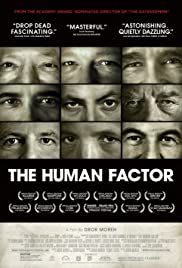 Greetings again from the darkness. It’s truly (and sadly) the never-ending story. The ongoing conflict between Israel and Palestine, or Jews and Arabs, has a history of more than one hundred years. Documentarian Dror Moreh was Oscar nominated for his 2012 film THE GATEKEEPERS, which told the story from the Israeli security perspective, and this time he focuses on the U.S. negotiators’ viewpoint. He covers a 30 year time period, but a substantial portion is dedicated to the Clinton administration.


 Posted by David Ferguson
 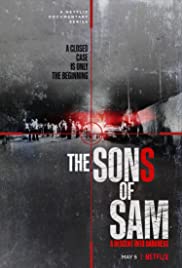 Greetings again from the darkness. Obsession can take many forms, and a few are on display in this latest Netflix docuseries from filmmaker Joshua Zeman. For those alive in 1977, you likely remember the reign of terror in New York City due to the “.44 Killer”, later known as “Son of Sam”. Fear was pervasive, and the shootings that actually started in the summer of 1976 but not connected until months later, mostly seemed random, which added to the public panic. Despite the title, Zeman’s docuseries is not so much about the murders, but about one man’s obsession with proving the ‘Son of Sam’ was really more than one person, and that the relief felt by citizens after the arrest of David Berkowitz, was misplaced.
 Greetings again from the darkness. Kermit the Frog. Bert and Ernie. Big Bird. Cookie Monster. Abby Cadabby. Grover. Oscar the Grouch. Guy Smiley. Mr. Snuffleupagus. Prairie Dawn. The Two-Headed Monster. Elmo. Count Von Count (The Count is my personal favorite). What a lineup of characters … each with their own personality and look, and every one designed to appeal to kids and help educate. It’s been more than 50 years since “Sesame Street” first hit the TV airwaves, and filmmaker Marilyn Agrelo (
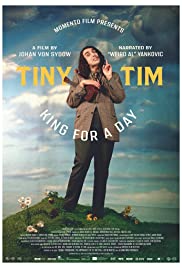 Greetings again from the darkness. I’m not sure how many people under age 50 even know who Tiny Tim was. Perhaps they recall a mention of his most popular song “Tiptoe Through the Tulips” in one of the Harry Potter books, or remember hearing the song in the 2010 horror film
 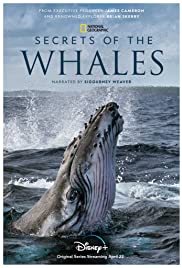 Greetings again from the darkness. For many of us, our exposure to whales is limited to learning in school they are the largest mammals on Earth, and browsing travel guides displaying fantastic photographs of breeching whales alongside various tour excursions. National Geographic is on a mission to take us deeper into the world of these marvelous marine creatures. This 4-part docuseries is Executive Produced by Oscar-winning director James Cameron and award-winning photographer Brian Skerry, and was filmed over 3 years in multiple locations around the globe.
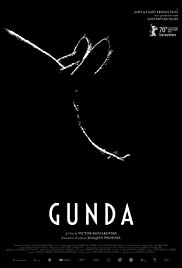 Greetings again from the darkness. We open on a pig in prone position with her head sticking through an opening in the barn. It takes a minute to realize the sow isn’t sleeping, but rather giving birth. Slowly the newborn piglets begin tumbling out into the world. Cutting to a reverse camera angle, we see the 12-13 babies desperately trying to latch onto mom for their first meal. The runt of the litter struggles more than the others. Award-winning filmmaker Viktor Kosakovskiy runs this first segment just over 19 minutes. There is no dialogue. No human on screen. The soundtrack is all natural from nature: the snorts from mama sow, the squeals from piglets, and unseen birds chirping.
 Greetings again from the darkness. Over the past five decades, blended families have become commonplace, while at the same time single women and same-sex couples have utilized sperm-donors to enrich and expand their families. Michael Rothman’s documentary kind of combines these two as he explores the 37 half-siblings resulting from anonymous sperm-donor number 5114 at the California Cryobank.
 Greetings again from the darkness. Depending on the subject, it’s not uncommon for documentaries to utilize archival video footage from 25+ years ago. What is unusual about co-directors Miles Hargrove’s and Christopher Birge’s film is that it relies almost solely on footage from that era … and all filmed by an amateur. This is really a video diary of the harrowing episode Miles and his family endured after his father was kidnapped and held hostage in 1994.