 Greetings again from the darkness. Renowned music producer Don Was sits at a sound board and methodically begins to deconstruct the gorgeous song, “God Only Knows”. As the instruments fade, and he shuffles the isolated vocals, Was shakes his head in amazement all these years later. The man behind the song, Brian Wilson (founder of The Beach Boys), was and remains a musical genius, and in his case, one need not be concerned about applying that overused label.
If director Brent Wilson’s film has a structure, it comes in the form of multiple car rides and diner lunches featuring Brian and his friend, “Rolling Stone” editor Jason Fine. Due to Brian’s anxiety during sit-down interviews, car rides and chats with his friend provide more comfort and free him up to reminisce and discuss his life and music. On the drives, Brian chooses the songs he wants Jason to play, depending on the mood and the topic of conversation.
Mental Health is now treated much differently than in years past. At age 21, Brian suffered from ‘auditory hallucinations’ – he was hearing voices in his head. Over the course of 6 decades, he has attempted to deal with the voices in various ways: food, drugs, alcohol, therapy, etc. But his only real escape has been through music. Even today, Brian never really looks at ease unless he’s performing his songs. He rides along offering commentary as his friend Jason tenderly guides him through the past, including stops at his childhood home in Hawthorne, Paradise Cove where an album cover was shot, his home on Laurel Way that featured his piano in a sandbox, and the Bellagio Road mansion in Beverly Hills. Brian is not one to dwell on the past, but he has tremendous recall for different phases of life.
As you might expect, many musicians are eager to discuss how Brian’s music with The Beach Boys influenced their own songwriting. Included here are Jakob Dylan (The Wallflowers and son of Bob), Jim James (My Morning Jacket), Taylor Hawkins, Linda Perry, Elton John, Bruce Springsteen, and even Nick Jonas. We presume the latter was included to represent the younger generation’s appreciation of music past. Elton may offer the most profound comment when he states Brian deserves accolades for his music AND his life. Each phase of Brian’s life is touched on, though we never dive too deeply. His demanding father (Murray Wilson) is heard through audio recordings, and the infamous “Landy years” where Dr. Eugene Landy literally controlled Brian’s life (right down to a sad story of spaghetti) are briefly dealt with, allowing us some insight into Brian’s many challenges over the years – including the death of two brothers, (and Beach Boys) Carl and Dennis.
But it’s the music that means the most to Brian and to us. We get some clips of live performances from the early days of The Beach Boys to the more recent live performances of Brian on stage. There is a terrific montage blending Carl’s and Brian’s separate singing “God Only Knows”, and Brian disclosing that “Good Vibrations” was recorded in pieces at 4 different studios to capture the sound he wanted. He also admits to being inspired by The Beatles and wanting to eclipse their work – which led to his writing the masterpiece Pet Sounds album, in turn inspiring The Beatles to write Sgt Pepper. There is a brief clip of Brian’s cousin, and fellow Beach Boy, Al Jardine commenting on Brian’s immense talent, but as expected, there is nothing from Mike Love; although Brian graciously proclaims Mike Love was “a great singer”.
Brian’s Beach Boys music has brought so much joy to listeners and fans over the years, and it’s truly fascinating to see how he has battled through a life filled with sadness and obstacles. Watching him listen to brother Dennis’s solo album, learning how he re-worked his unfinished Smile album to finally release it in 2004, or seeing clips of his live Pet Sounds performance at The Hollywood Bowl helps us understand the healing power of music. Brian has been compared to Mozart, and his fellow musicians discuss how his genius and vision shines through in song structure and texture. Brian Wilson stands as proof that for a true artist, pain and beauty are often linked and dependent on each other. The film’s closing credits feature footage of Brian and Jim James recording a new song, “Right Where I Belong”, showing that the music (and the man) is still a force.
In theaters and On Demand beginning November 19, 2021


 Posted by David Ferguson
  Greetings again from the darkness. Do you collect stuff? Does your stuff have meaning to you? Are you obsessed about saving your stuff? Documentarian Vincent Liota looks at the psychological aspects of how we treasure our treasures. In the montage opening, President Jimmy Carter and the Pope tell us not to put value on material items, while others tell us our saved objects represent memories that take us to our happy place. Liota even includes the “Rosebud” clip from CITIZEN KANE.
 Greetings again from the darkness (on the edge of town). The old adage goes, “Music soothes the savage beast”. But what if it’s the savage beast playing the music? Let’s go back more than 40 years to 1979. In March, the Three Mile Island nuclear plant accident occurred, sending shockwaves through the U.S. An activist group of musicians led by Jackson Browne, Graham Nash, Bonnie Raitt and others founded MUSE (Musicians United for Safe Energy) and scheduled concerts for awareness. The concerts were better known as “No Nukes”, and were followed up by a best-selling album and videos. Performing at two of the Madison Square Garden concerts in September were Bruce Springsteen and E Street Band. All these years later, Springsteen has re-mastered the original footage and packaged it as a remarkable and breathtaking 90 minute concert film that is a must-see for any Bruce fans of yesterday or today.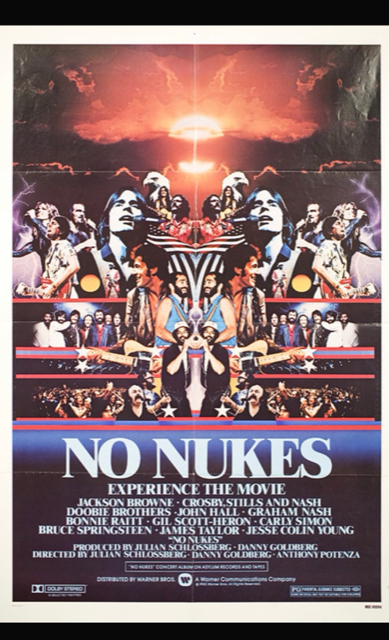
 Greetings again from the darkness. His name has been derogatory punchline for as long as any of us can remember. Labeling someone ‘a Benedict Arnold’ meant they had been disloyal to their team, club, organization, or group of friends. But those of us who are not Revolutionary War historians actually know very little of his story – in fact, few know anything beyond his being a recognized traitor to the United States. Director Chris Stearns, using historian James Kirby Martin’s 1997 book, “Benedict Arnold, Revolutionary Hero: An American Warrior Reconsidered”, offers us a deeper and more comprehensive look at a man who was more complex than the epithet he was branded with.
 Greetings again from the darkness. For anyone under age 35, it may be difficult to imagine a world where high-definition cameras don’t blanket every nook and cranny of our planet. These days, there are multiple channels serving up nature and oceanic documentaries, many with stunningly clear and colorful underwater photography. Each of these owe a debt of gratitude to Jacques-Yves Cousteau, and documentarian Liz Garbus is here to make sure we all know it.
 Greetings again from the darkness. Director Mary O’Leary’s cold opening replays the scene in the “Dark Shadows” TV series where Barnabas Collins, a 175 year old vampire, makes his first appearance. Fans of the gothic soap opera that ran from 1966 through 1971 know Barnabas first appeared months after the series premiered. The reminiscing is welcome and smile-inducing, but we must also recall that this vampire changed everything for those involved … especially actor Jonathan Frid.
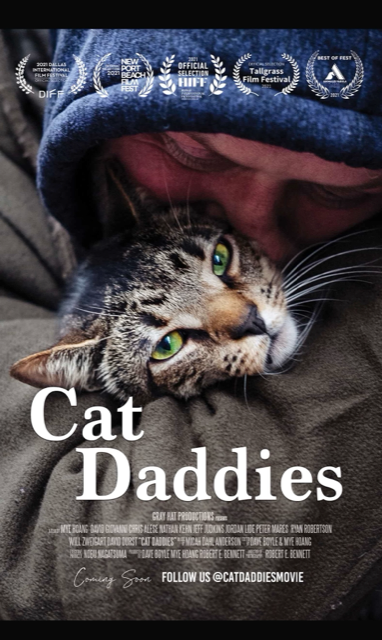 Greetings again from the darkness. There are so many ways to divide the world, but few lines of demarcation are clearer than ‘dog people’ versus ‘cat people’. Being firmly planted in the former group, while being confounded by the latter, it was for edification purposes that I agreed to watch Mye Hoang’s documentary. We got off to a rocky start when a Mark Twain quote popped up: “When a man loves cats, I am his friend and comrade, without further introduction.” Nope, Mr. Twain and I will simply disagree on this.
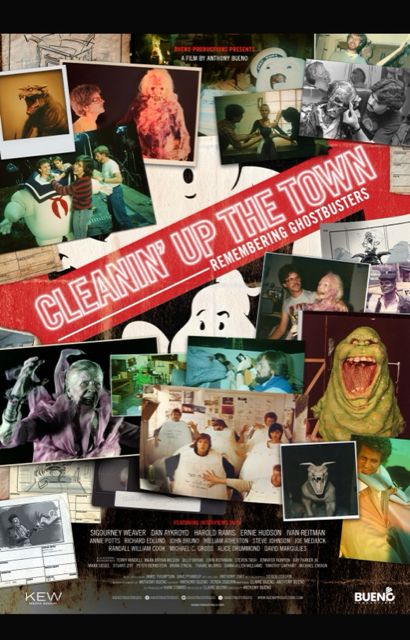 Greetings again from the darkness. For fans of the 1984 megahit
  Greetings again from the darkness. In 1971, renowned Italian film director Luchino Visconti announced he had cast “the most beautiful boy in the world” as Tadzio in his new film,
  Greetings again from the darkness. It’s a rare occurrence, but every once in a while subduing my internal fanboy is a bit of a challenge. A documentary on the career of the great Boris Karloff certainly is one of those times. Mesmerized by the Universal monster films as a kid, Karloff’s appearances continued to have a hypnotic effect on me throughout his career … a career that spanned fifty years and ended only with his death in 1969. Of course Christmas time each year returns Karloff back into our homes through his Grammy-winning voice acting in “Dr Seuss’ How the Grinch Stole Christmas!”
 Movie Reviews from the Dark