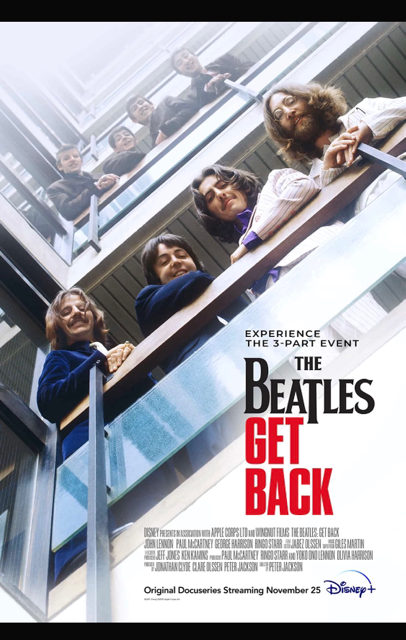
 Greetings again from the darkness. It’s a lot of Beatles. The three episodes total more than 7 hours of run time. It will be likely be too much for most folks. Not for me. In fact, I envy Oscar-winning director Peter Jackson, who got to go through every minute of 60 hours of video and 150 hours of audio from the 1969 sessions that led to the “Let it Be” album and documentary, as well as the band’s infamous rooftop live performance atop Apple Studios. The 1970 film won the band an Oscar for best original music, but unfortunately, that 42 minutes on the rooftop would be their final public live performance as The Beatles.
For those who have seen the 1970 documentary LET IT BE, you are aware of the discord amongst the band members during the sessions, but Peter Jackson’s project shows us there was much more to the story: pressure, expectations, creative forces, doubt, friendship, young men changing, and plenty of laughter and joking. And cigarettes. An incredible number of cigarettes. Keep in mind that even though they were the biggest band in the world, these lads from Liverpool still only ranged in age from the youngest, George at 25, to the oldest, John at 28.
One thing we notice is that there was a very small group involved with the daily activities. Outside of the band members, the faces we see most are Music Producer George Martin, the band’s long-time assistant Mal Evans, and renowned Sound Engineer Glyn Johns. It’s not really discussed here, but despite all the work we see Mr. Johns perform over the 22 days, it was Phil Spector who ended up with the production credit on the album. The director of the LET IT BE documentary, Michael Lindsay-Hogg, is seen quite a bit in the first two episodes, although he’s not as funny as he seems to think he is. Film Producer Denis O’Dell initially sets the band up at Twickenham Film Studios, which he rented as the location for his upcoming zany comedy THE MAGIC CHRISTIAN starting Peter Sellers and, yes, Ringo Starr. It’s this movie that has the Beatles on such a tight schedule, and it’s at Twickenham where Peter Jackson’s film kicks off.
PART 1 (2 hours, 34 minutes) provides a quick history of the band, dating back to 1956 when John Lennon and Paul McCartney formed The Quarrymen and invited George Harrison to join as a guitarist. There is a clip of the band performing at The Cavern, and a note on how Brian Epstein became the band’s manager. It was 1963 when George Martin began producing the band and that’s they year they hit #1 in Britain, kicking off Beatlemania. The following year took them to the United States for the appearance on The Ed Sullivan Show, and it was 1966 when the band faced the backlash over John’s comment about “being more popular than Jesus.” That was also the year when the band decided against future tours, choosing instead to focus on studio work and albums. 1968 brought the death of Brian Epstein at age 32, and the infamous trip to India, where they spent time with Maharishi Mahesh Yogi. So here they are in January 1969, with the goal of writing, rehearsing, and recording 14 songs, and then performing live over about a three week period.
Director Jackson uses the 22 days as a framing structure, going day-by-day to track the progress. Day 1 is kind of a feeling-out day as the band checks out the studio. Day 2 finds Paul in business mode, as the other band members poke fun at the Fan Club publication. Day 3 delivers the familiar setting of George being “annoyed” by Paul, but it’s Day 4 where “Get Back” is born, “Across the Universe” is introduced, and a terrific then-and-now montage of “Rock and Roll Music”. Day 5 gives us “I Me Mine”, as the band discusses ideas for the live show, and we learn code names for Ringo (Russian) and George (France). Day 6 finds Linda Eastman (not yet married to Paul) snapping photos in the studio while the band works on “The Long and Winding Road”, and “Let it Be.”. Day 7 is critical, as we get more “Get Back”, numerous mentions of Eric Clapton, and George leaving the band with “See ya’ in the clubs.” This is when we are subjected to our first Yoko Ono banshee screams. She has been attached to John’s hip for most every minute.
This first episode provides us our first look as the band works out songs on the fly. Ringo keeps amazing rhythm, while remaining mostly quiet. George’s insecurity and annoyance with his role (and Paul’s bossing) is beyond obvious (resulting in his leaving), and the band’s uncertainty about the best direction for the live performance is a bit unsettling. Despite all of that, it’s truly fascinating and humbling to watch and listen as they create the rough early versions of songs that we now know so well.
PART 2 (2 hours, 12 minutes) is probably my favorite episode of the three. For Day 8, with George having quit the band, Ringo is the first to show up as flowers are delivered for George from the Hare Krishnas. We eavesdrop as Paul (with Linda in tow) analyze the John and Yoko relationship, and we are privy to a secret conversation between John and Paul regarding George and the band. The rest of the day is spent rehearsing 3 songs, including Paul and John brainstorming fine-tuning “Get Back” lyrics. Day 9 has Peter Sellers stopping by – and likely wondering what the heck kind of mess he’s wandered into. This is Paul’s day to be irritated and stating they can’t go on like this. Day 10 reports on the band’s meeting at George’s house, which results in his return to the band and a shift from Twickenham studios to the Apple Studios on Savile Row, This throws a delay into things, and makes Day 11 a lost day.
Day 12 has the four band members back recording, despite technological challenges and a scathing article on the band in local publications. It’s this day when we hear an amazing version of “I Dig a Pony”, followed by “I’ve Got a Feeling”, “Don’t Let Me Down”, and “She came in through the Bathroom Window” (which would end up on Abbey Road). On Day 13, John recalls the Martin Luther King Jr speech, and the band gets a jolt of energy from keyboardist Billy Preston. Watching them perform “I’ve Got a Feeling” is pure musical joy. Day 14 stars strangely with more Yoko banshee screams, and Maxwell’s anvil is in the middle of the room, while the band solidifies the “Get Back” single. Day 15 offers discussions of Billy Preston as the 5th Beatle, while we get a Pattie Harrison sighting, and performances of “Two of Us” and “Polythene Pam.” Day 16 includes flashbacks to the trip to India, George working on “For You Blue”, the band’s first look at the rooftop, and early work on “Let it Be”. Once again, watching the creativity in action is simply mesmerizing.
PART 3 (2 hours, 19 minutes) begins on Day 17, which is only 3 days until the rooftop performance. George is assisting Ringo with writing “Octopus’s Garden”, which will end up on the Abbey Road album. Linda’s young daughter Heather bounces around the studio, and we can all relate to her cringing at Yoko’s latest banshee scream. We see John go hard on “Dig it”, while the band spends a great deal of time jamming to their favorite classics. These are musicians collaborating on the music they love – and enjoying every bit. Day 18 has George running through “Old Brown Shoe”, and John and Yoko celebrate her divorce being final. With Alan Parsons in the booth, the band goes through many takes of “Get Back”. On Day 19, George begins early work on “Something”, which would be featured on the Abbey Road album, and they wrap up the “Don’t Let Me Down” recording. With the live performance scheduled for tomorrow, Paul and John have a serious discussion about the payoff for all of this work. Is an album and one live show enough, if there is no TV special? As Paul’s brother Michael watches, we can’t help but think Paul was really hoping for another tour – one that would never happen.
Day 21, January 30, is when the rooftop performance actually happens. There are 10 cameras in place, 5 of which are on the roof with the band. Most of us have seen these performances, but director Jackson includes some of the ‘second takes’. The band opens with two takes of “Get Back”, followed by “Don’t Let Me Down”, “I’ve Got a Feeling”, “One After 909”, “Dig a Pony”, and second takes of “I’ve Got a Feeling” and “Don’t Let Me Down”. Included here are some of the interviews from folks on the street, and we see the cops who are unsure how to handle the noise complaints. What’s obvious and thrilling is that John’s and Paul’s voices are in prime form, and the band is truly enjoying doing what they do better than any other band … despite the cold London weather. You can sense their pride as they head to the booth for the playback. Day 22 is the Final Day, and the band finishes the mostly acoustic recordings for the album.
Over the three episodes, we hear bits and pieces of more than 100 songs, and we witness the collaboration and tribulations of a band that reached heights of popularity previously unimaginable (remember Elvis never performed in the UK). It’s quite a privilege to witness artists at work during the creative process. Tension and disagreements are to be expected, and yes, they did occur. Perhaps those tensions drove the individuals to be even more creative and better at their craft. Regardless of your thoughts on this, one thing is certain … The Beatles “passed the audition”.
 Now streaming on Disney+
WATCH THE TRAILER
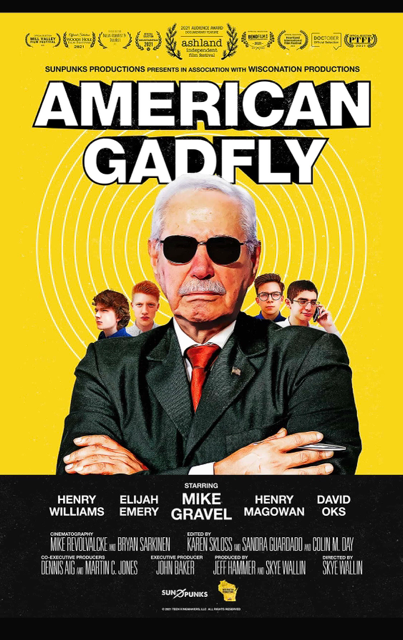 Greetings again from the darkness. Since I was unsure of the definition of “gadfly”, I was equally unsure of what I was getting into when I agreed to review the first feature-length documentary from Skye Wallin. It turns out, Wallin anticipated that particular uncertainty and kindly provided the definition in the opening for the film. A gadfly is one who provokes or annoys in regards to certain topics, and in this case those topics are political and societal in nature. The titular gadfly is not one person, but rather a few unusual collaborators: a group of smart and idealistic teenagers and an 89 year old former Senator.


 Posted by David Ferguson
 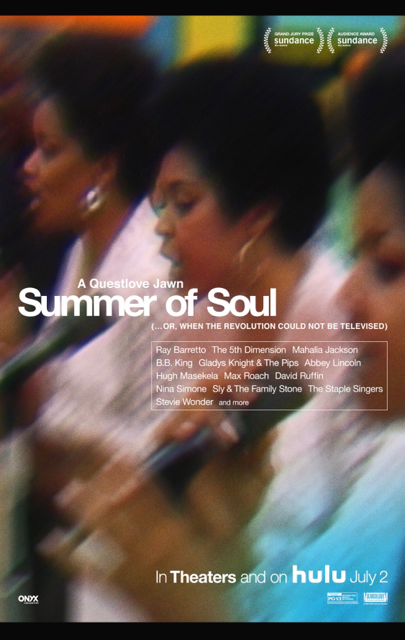 Greetings again from the darkness. Ahmir “Questlove” Thompson’s directorial debut is a history lesson wrapped in a concert film, and it’s just the blended spoonful we need. You might know Questlove best as the bandleader/drummer on “The Tonight Show with Jimmy Fallon”, and with this documentary, he has proven his skill in balancing the visuals with the message. The Harlem Cultural Festival was held over six weekends in the summer of 1969. Yep, the same summer as (and only 100 miles from) the infamous and celebrated Woodstock festival. A total of 300,000 people attended the free events held in Mt Morris Park in Harlem, and Questlove’s film brings back what has been forgotten.
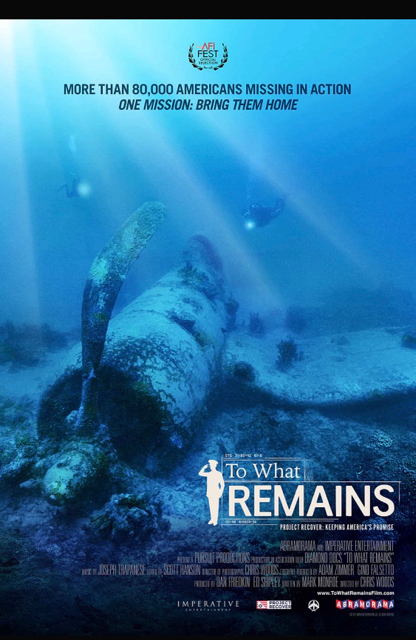 Greetings again from the darkness. Sometimes it feels pointless to write about a film, while sometimes it seems that the right words escape me. I don’t have the right words for this documentary from Chris Woods, yet I do know that it should be seen by as many folks as possible. As the divisiveness of our country continues to fester, this story about real people takes us to a time when heroes fought for freedom against real enemies, while so many families sacrificed for the benefit of all. Millions lost their lives in World War II, and Woods focuses on one small organization doing everything possible to bring closure to the especially brutal Battle of Peleliu.
 Greetings again from the darkness. Growing up, I loved watching Jimmy Connors and John McEnroe play tennis. Their talent was unmistakable and they had a certain flair for dramatic moments. But even as a kid, I was more drawn to the personalities of Bjorn Borg and Arthur Ashe – two champions who carried themselves with a quiet dignity and respect for the game and their opponents. They acted like grown-ups, not petulant kids. It wasn’t until later that I really understood the obstacles Ashe faced, and co-directors Rex Miller and Sam Pollard expertly handle this remarkable man’s story.
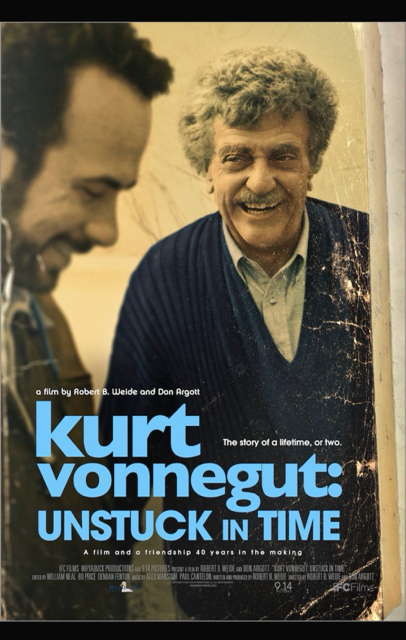 Greetings again from the darkness. Sometimes the work really does speak for itself. Co-director and long-time Vonnegut friend Robert B Weide even admits the renowned author told him, “anything that is any good of mine is on a printed page”. The strange thing here is that by the time it’s over, we aren’t sure if we’ve watched a documentary on the life of Kurt Vonnegut or one about Weide’s friendship with and respect of the man.
 Greetings again from the darkness. Renowned music producer Don Was sits at a sound board and methodically begins to deconstruct the gorgeous song, “God Only Knows”. As the instruments fade, and he shuffles the isolated vocals, Was shakes his head in amazement all these years later. The man behind the song, Brian Wilson (founder of The Beach Boys), was and remains a musical genius, and in his case, one need not be concerned about applying that overused label.
 Greetings again from the darkness. Do you collect stuff? Does your stuff have meaning to you? Are you obsessed about saving your stuff? Documentarian Vincent Liota looks at the psychological aspects of how we treasure our treasures. In the montage opening, President Jimmy Carter and the Pope tell us not to put value on material items, while others tell us our saved objects represent memories that take us to our happy place. Liota even includes the “Rosebud” clip from CITIZEN KANE.
 Greetings again from the darkness (on the edge of town). The old adage goes, “Music soothes the savage beast”. But what if it’s the savage beast playing the music? Let’s go back more than 40 years to 1979. In March, the Three Mile Island nuclear plant accident occurred, sending shockwaves through the U.S. An activist group of musicians led by Jackson Browne, Graham Nash, Bonnie Raitt and others founded MUSE (Musicians United for Safe Energy) and scheduled concerts for awareness. The concerts were better known as “No Nukes”, and were followed up by a best-selling album and videos. Performing at two of the Madison Square Garden concerts in September were Bruce Springsteen and E Street Band. All these years later, Springsteen has re-mastered the original footage and packaged it as a remarkable and breathtaking 90 minute concert film that is a must-see for any Bruce fans of yesterday or today.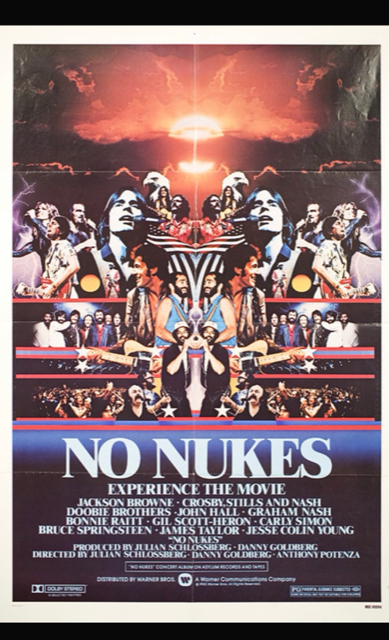
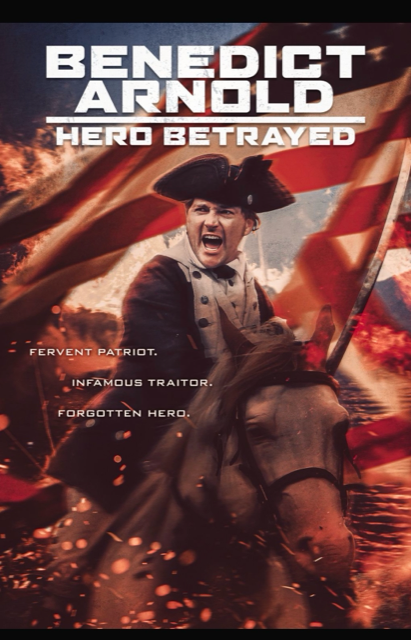 Greetings again from the darkness. His name has been derogatory punchline for as long as any of us can remember. Labeling someone ‘a Benedict Arnold’ meant they had been disloyal to their team, club, organization, or group of friends. But those of us who are not Revolutionary War historians actually know very little of his story – in fact, few know anything beyond his being a recognized traitor to the United States. Director Chris Stearns, using historian James Kirby Martin’s 1997 book, “Benedict Arnold, Revolutionary Hero: An American Warrior Reconsidered”, offers us a deeper and more comprehensive look at a man who was more complex than the epithet he was branded with.
