 Greetings again from the darkness. King Crimson was founded in 1969 and to this day, no one can properly describe their music. Even co-founder and band leader Robert Fripp avoids labeling the music and instead states, “King Crimson is a way of doing things”. Documentarian Toby Amies takes on the challenge of examining the band after 50 years.
While most associate guitarist Fripp as being the face of the band, he himself claims that it’s an ensemble and always has been. But then he also describes the years 1969 through 2013 as “wretched”, and that only with this most recent iteration has he found satisfaction. At a minimum, Fripp is a perfectionist, and it’s likely he is also a tortured genius who constantly strives for different, more, and better. He makes for a frustrating interview, and director Armies shows him mostly in various short clips, while letting current and former band members offer their opinions.
Co-founder Ian McDonald’s zoom interview is the most touching. Taking place shortly before McDonald’s passing in 2022, he breaks down and says, “I’m sorry Robert”, for leaving Fripp and King Crimson after only a year. Obviously, there was some bad blood between the two men, even after so many years. McDonald went on to co-found the band Foreigner in the 1970’s before taking on a solo career. Fripp remained with King Crimson and pursued his idea of what a band should be.
Former King Crimson bassist Trey Gunn explained being in the band was like “a low-grade infection”, while current drummer/keyboardist Bill Rieflin thrived with the band. Rieflin was performing with Stage four colon cancer and countless other health issues, yet viewed making music as what he was meant to do, right up until his passing during filming of this documentary. Numerous other former members were interviewed, and the comments range from annoyance to reverence. Current singer/guitarist Jakko is cautious about what he says so as not to cross Fripp. He cracks, “you’re irreplaceable … like the last bloke.”
It’s a unique band playing unique music – a style where each world class musician plays their part based on what fellow band members (usually 8 including 3 drummers) are playing. The result is often a peak experience for the audience, even for those who have attended many shows over the years. There is an interesting segment featuring a nun who is also a devoted fan of the band. She compares it to religion, and between the immersive music and Fripp’s commentary, we can’t help but put this in terms of philosophy, psychology, religion, and even a cult-like atmosphere. Always impeccably dressed like a British gentleman, Fripp’s obsessive discipline and demanding ways leave us with a better feel for the band, while being no closer to offering a label of description. This is not your parents’ music documentary … even if it happens to be your parents’ favorite band.
In theaters November 3, 2023 and VOD beginning December 1, 2023


 Posted by David Ferguson
  Greetings again from the darkness. What is left that no one has done? It’s a question that the most adventurous among us ask themselves. John Chau was certainly an adventurer. He ran marathons, loved hiking through forests, and enjoyed rock and mountain climbing. His dream was to venture onto the North Sentinel Island and introduce Jesus to the island’s sole inhabitants. The Sentinelese are an isolated human community of hunter-gatherers who have made it abundantly clear over the years that they do not welcome outside visitors.
 Greetings again from the darkness. “What a good boy!” That’s something every (boy) dog owner has said a thousand times … but probably not like what we see here. Director Gail Gilbert brings us a story that will tear at the heartstrings of every pet owner, and likely any viewer with a heartstring to tear. An Illinois breeder named Cindy welcomed what was to be her final litter of pure-bred Labrador Retrievers. The pups were beautiful, and everything was fine … right up until it wasn’t.
 Greetings again from the darkness. When John le Carre passed away in 2020 at the age of 80, conversations and debates raged about the best spy novelists, and what stood out was, no matter how many writers were mentioned – Ian Fleming, Tom Clancey, Robert Ludlum, Ken Follett – everyone’s list included le Carre. Oscar winning documentarian Errol Morris (THE FOG OF WAR, 2003) has taken le Carre’s final and most personal interview and adorned it with film clips, rare archival footage, and some dramatic effects to create a lasting tribute to a superb writer and a most interesting man.
 Greetings again from the darkness. The often-barefooted Joan Baez absolutely built a legacy of activism and social consciousness through the civil rights movement, Vietnam protests, prison reform, environmental issues, and other causes, making her easy to admire. Her music made her rich and famous, and has left a mark and influenced many others This documentary was initially intended to cover her farewell tour in 2018 at age 78, and while it is structured around that tour, the three co-directors, Miri Navasky, Maeve O’Boyle, and Karen O’Connor, have ended up with an intimate look that covers more of Joan Baez the person, than Joan Baez the talented singer.
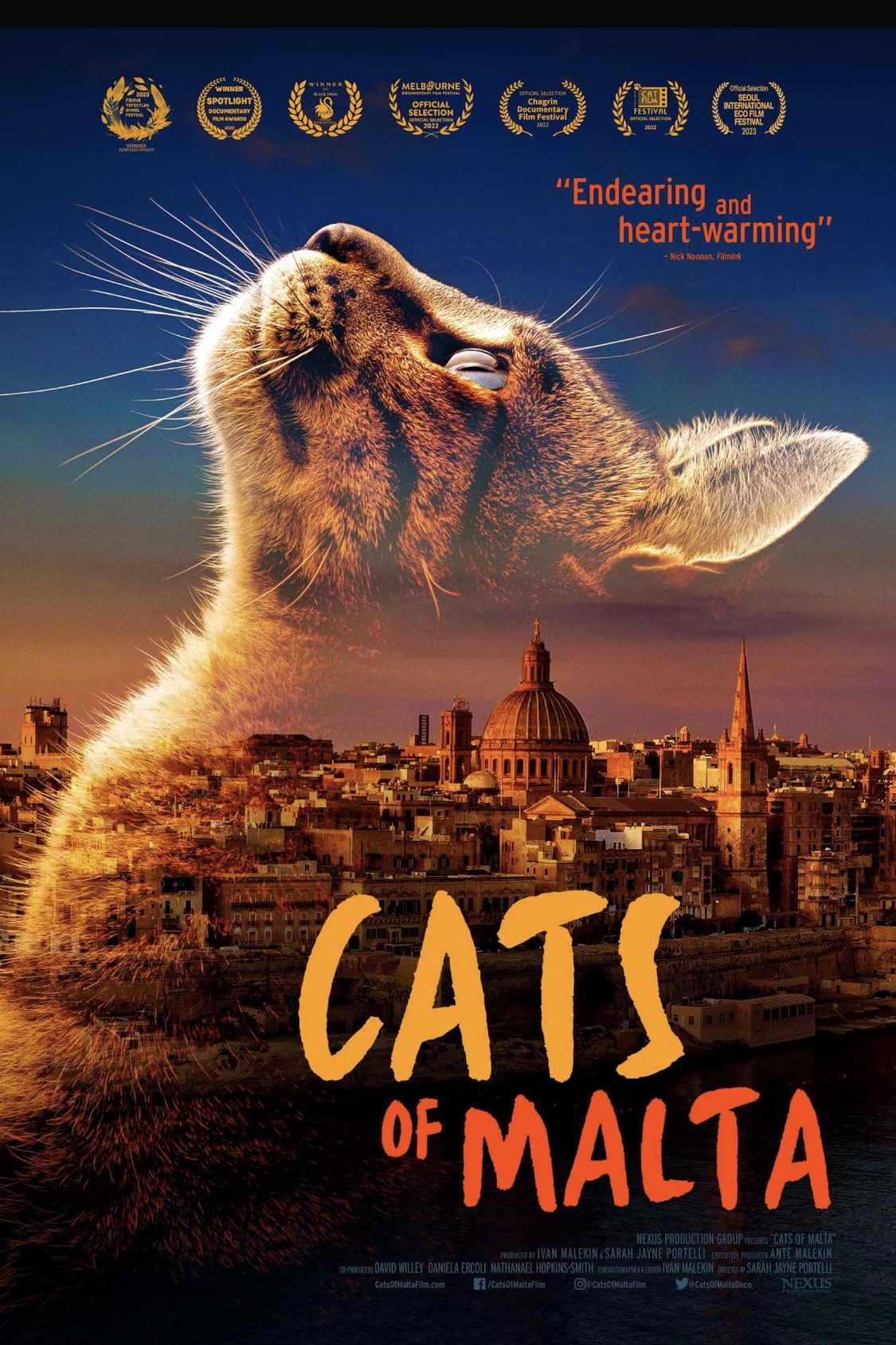 Greetings again from the darkness. Dog people vs cat people. There have been scientific studies on the personality of those who fall on one side or the other. Surprisingly, this dog lover agreed to review a cat movie … an agreement based on the assurance that all relevant cats would be on screen and not in my lap. Australian director Sarah Jayne Portelli opens with some spectacular aerial shots of Malta, an island (archipelago) in the Mediterranean Sea dating back to 5900 B.C. She gives us a brief overview of its history, and then discloses that she lived on Malta for four years and was intrigued by the cats.
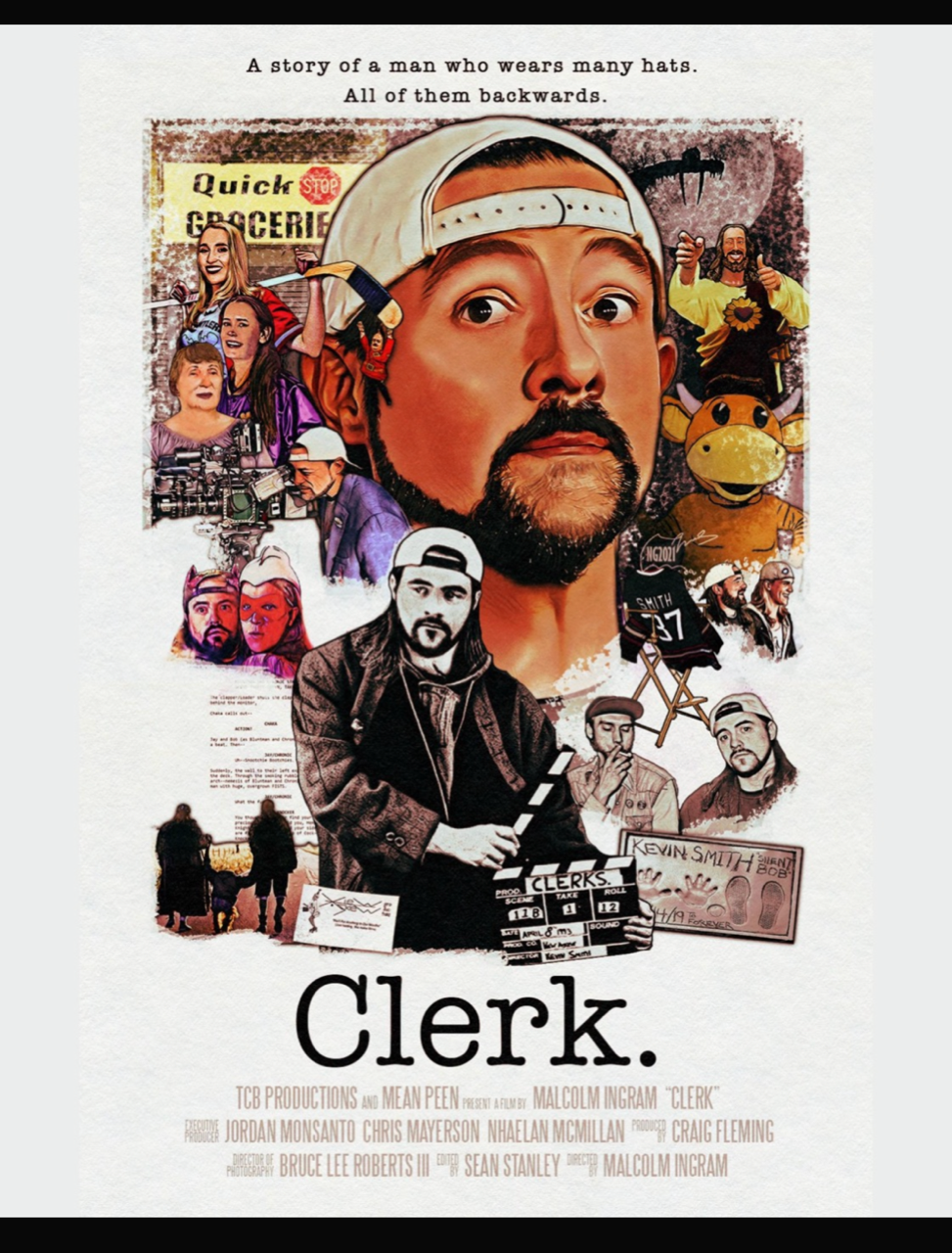 Greetings again from the darkness. Despite his 30-year career and devotion to independent cinema, none of writer-director Kevin Smith’s films have ever really clicked with me. Because of this, I was hesitant to review Malcolm Ingram’s documentary on the filmmaker whose rabid fan base adores him. What a pleasure (and relief) to report that it turns out Kevin Smith is much more likable and relatable than his movies, at least for me.
 Greetings again from the darkness. Although I was too young to attend Woodstock in 1969, I vividly recall the first time I saw the 1970 concert film, as I was stunned by the energetic performances, the dedicated attendees, and the mass of people making the best of rain, drugs, and music. By this time, I was attuned to Hendrix, The Who, Joplin, and most of the others, but the band that shook me was Santana. Familiar with only one song, “Evil Ways”, off their debut album, I was mesmerized by the pure force of their live “Soul Sacrifice” performance – the relentless drumming of Michael Shrieve (20 years old) and the blazing guitar work from band leader Carlos Santana (a 22-year-old).
 Greetings again from the darkness. Remember that time you paid pop star Brittany Spears one million dollars to jump out of a birthday cake at your party? Or the times you paid huge appearance fees to celebrities like Leonardo DiCaprio, Jamie Foxx, and Paris Hilton to hang around your lavish parties? If not, then you’re no Jho Low. And thank goodness for that. Jho Low was in cahoots with then Prime Minister Najib Razak to siphon billions from a fund designed to assist Malaysian citizens. Their fund was called 1MDB (1 Malaysian Development Berhad) and thanks to researchers and whistleblowers, this film from Cassius Michael Kim lays out a textbook case of corruption, fraud, and greed.
 Greetings again from the darkness. There have been many great writers over the years, yet only a handful of these have become celebrities themselves … in contrast to celebrities who become “writers”. Tom Wolfe was one whose personality was as big (sometimes larger) than his books. Sporting the trademark white suits that had him labeled “a dandy”, making frequent talk show appearances and numerous public book readings and speeches, Wolfe achieved the celebrity status that evidently was important to him. Richard Dewey’s documentary is based on the “Vanity Fair” article written by Michael Lewis (“Moneyball”, “The Big Short”, “The Blind Side”), who also appears on screen here providing insight into Wolfe the writer and Wolfe the man.
 Movie Reviews from the Dark