FOOD, INC. 2 (2024, doc)

April 9, 2024

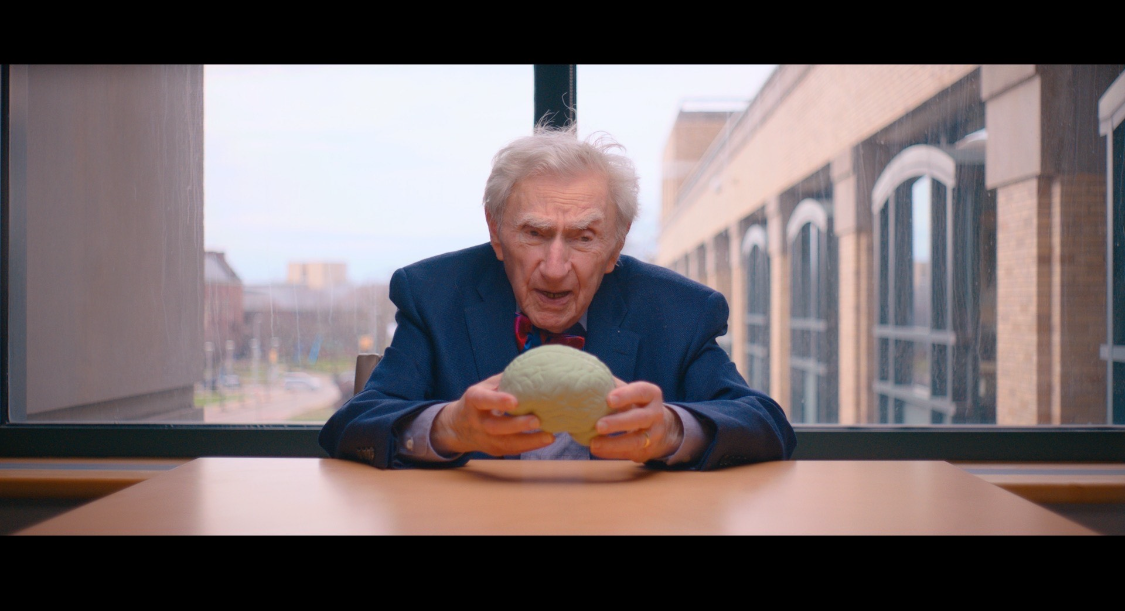
Greetings again from the darkness. It’s likely director Robert Kenner and producer Melissa Robledo assumed their Oscar nominated documentary FOOD INC (2008) would generate change and improvement in what we eat and how our food supply works. To some extent they were correct, yet here we are 16 years later, and Kenner and Robledo are back with FOOD INC 2, this time as co-directors, to emphasize the dangers of having a few mega-corporations in control of what we eat.
That first documentary has been described as the beginning of “the food movement”, and it’s true that many people have improved their diet by focusing on more natural and organic food sources, and depending less on fast food and processed items. However, it’s also true that mergers and acquisitions have allowed food suppliers to get bigger and more powerful over those years … and the Pandemic contributed as well. That first film highlighted our overdependency on corn products, and has led to more local farmers markets and more organic offerings (although still at elevated prices).

This second film informs us that the pandemic exposed just how delicate (and wobbly) our system is. Supermarket shelves sat empty while farmers destroyed crops and animals. The filmmakers hope this film will be a catalyst for closer inspection on how the mega-food companies are controlling what we eat, with a focus on profits rather than nutrition. Author and journalist Michael Pollan and “Fast Food Nation” author Eric Schlosser are back to lend their knowledge and expertise and concerns. The concern regards monopolies within the various food segments.

Discussion is held regarding President Trump issuing a 2020 executive order citing the Defense Production Act to keep meat packer plants open despite COVID outbreaks. It’s reported here that most of the meat was shipped to China, but U.S. corporate greed and profits remained intact, although no concrete data is provided. Mostly they call for anti-trust laws to be enforced.

Specifics are provided in the various food segments. The filmmakers take us to Immokalee, Florida where mistreatment of migrant workers is the story; Iowa, where the Tyson plant COVID outbreaks are detailed; Wisconsin, where the dairy industry is mentioned; back to Iowa where crops and soil issues are identified; New Jersey, where US Senator Cory Booker of the Agriculture committee is interviewed; and Montana, where US Senator Jon Tester speaks from experience. The demise of family farms is a by-product of the mergers and trend toward bigger, and the most frightening aspect is in regards to “ultra-processed foods” … those with additives and artificial sweeteners. These are the driving force behind diabetes, obesity, and other diseases … and the changes in Brazil diets are especially telling on the last point.

The value in this documentary from Kenner and Robledo is in the information and details. We learn that the big companies are investing in alternative meat and food (such as Impossible Burger), while at the same time taking advantage of research and data focused on sweetness and calories. Foods from science labs may be our future, right along with innovation in “weird” farming sustainability (Stockcropper) and kelp fishing/harvesting in Connecticut. Farm-to-table school lunches in Camden, New Jersey provide us some hope, and we learn about the conflicts with the Fair Food Program and labor relations.

There are no easy answers when billions of people on the globe must be fed. What we must demand is that efforts in the field go towards nutrition and sustainability, and not just profits for a few mega-companies.

Here are some of the provided statistics:

Four companies have a stranglehold on 85% of beef processing.

Three companies dominate 83% of cold cereal.

Two companies control 70% of the carbonated soft drink market.

Two companies control 80% of the baby formula market.

Ultra-processed foods make up about 58% of US adults caloric intake.

Special theater screening on April 9, 2024 and on Digital beginning April 12, 2024

WATCH THE TRAILER


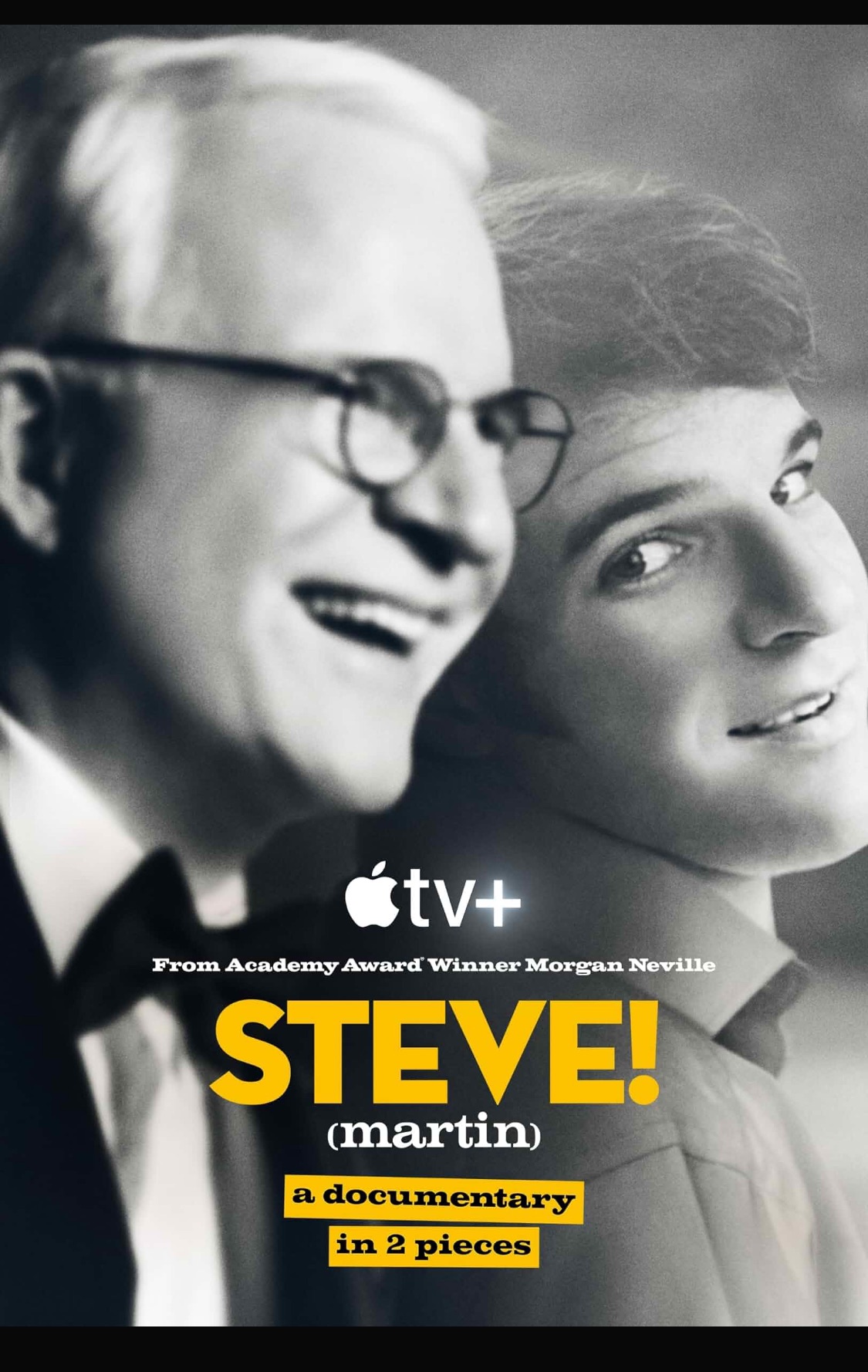
STEVE! (MARTIN): A DOCUMENTARY IN 2 PIECES (2024, doc)

March 28, 2024

Greetings again from the darkness. We are now two full generations past the peak (and end) of Steve Martin’s superstardom as a stand-up comedian. Today, he is mostly known as a banjo player, a writer, or as one of the three co-stars of the hit show, “Only Murders in the Building”. That’s right. At almost 80 years of age, and removed from his two previous fame-inducing careers (comedian and movie star), he “only” has three remaining paths to fame, glory, and gobs of money. Regardless of the Steve Martin era studied, what stands out is his remarkable ability to entertain – something he says captured his fancy the very first time he saw a stage.

Documentarian Morgan Neville won an Oscar for the spectacular 20 FEET FROM STARDOM (2013). He’s also behind WON’T YOU BE MY NEIGHBOR (2018), an excellent profile of Mister Rogers, as well as numerous other documentary projects. With more than a half-century of Martin’s career to somehow cover, Neville takes a “then” and “now” approach with what is effectively two films that split Martin’s fabulous career into the two titular ‘pieces’. “Then” covers the early developmental period, right up until 1980, when Steve Martin shocked the world by walking away from stand-up. “Now” offers a more personal and reflective look at his endeavors since.

For those of us who were around in the 1970’s, “Then” is not just a nostalgic look back at how one man reinvented stand-up comedy (though it is that). It’s also a fascinating look at Martin’s childhood and his early pursuit of finding his place in the entertainment world. We hear Martin state, “I guarantee you I had no talent.” Of course, whether that’s accurate is debatable, but what he certainly had was persistence, ambition, and a desire to make it. As a 15-year-old working at Disneyland (he was born in Waco, Texas but raised in southern California) he learned the basics of magic and balloon animals through observation and relentless practice. He admits his educational background in Philosophy gave him a unique perspective in understanding himself and audiences. He gave himself until age 30 to “make it”, and a fortuitous turn of events, made that birthday a special moment. He worked and massaged and practiced his routine – refining such silliness as an arrow through the head, happy feet, “Excuuuuuse Me!”, King Tut, and “Wild and Crazy Guy” – all while wearing a white suit and sporting premature gray hair. In 1976, Lorne Michaels invited Martin to host a relatively new comedy show called, “Saturday Night Live” (something he has now done 16 times). Soon after, Martin released the first two comedy albums to ever go Platinum. This led to the first of his many movie roles in the classic comedy, THE JERK (1979). Director Neville highlights each step of Martin’s amazing ascension via rare clips and input from Martin himself. And just like that … comedy’s first rock star walked off stage at age 35 and on top of the world.

“Now”, the second entry in Neville’s in-depth documentary, is much less about Steve Martin’s varied career and much more about Steve Martin the person. To emphasize the contrast between ‘Then’ and ‘Now’, this second piece begins in Martin’s kitchen showing him poaching two eggs (heavy on the pepper) for breakfast. Does that sound like showbiz? It’s an entirely different approach as we watch Martin and Jerry Seinfeld have a conversation about comedy, while Tina Fey, his sister, and others give brief insight into their paths crossing with Martin. Even his wife, Anne Stringfield, offers up some personal scoop on the man who has protected his privacy all these years … although it should be noted that their daughter only appears as a cartoon stick figure.

Much of this segment revolves around Steve Martin and his friend and “Only Murders in the Building” co-star, Martin Short, as they collaborate on jokes for their stand-up show … all while jabbing each other with friendly one-liners. Short says the reason Martin hasn’t aged is because he looked 70 when he was 30. It’s that kind of friendly banter between friends. A most poignant moment occurs as Martin is going through his bound copies of movie scripts. PLANES, TRAINS, AND AUTOMOBILES (1987) takes him back to his close friendship with the late, great John Candy, and the memories are almost too painful for Martin to bear.

It’s fascinating to hear Martin talk about his humiliation when PENNIES FROM HEAVEN (1981) failed, and learn more about his devotion to fine art. To emphasize the personal change Martin has gone through, the director shows an interview clip from decades ago where Martin refuses to discuss the first painting he bought, and then juxtaposes it with a contemporary clip where he eagerly expounds on that painting and others. Martin doesn’t appear to carry as much pride in his movie career as he should, and we see him working with illustrator Harry Bliss on a collection of memories and anecdotes from each film.

Morgan Neville likely underestimated the project when it began. He certainly benefitted from Steve Martin’s willingness to open up and share his personal archives. A man of many talents and interests, with multiple careers spanning decades may be a challenge for a biographer, but for viewers, it’s pure joy to stroll through the many reinventions of Steve Martin. His work is worthy of admiration, as is his willingness to open his life and reveal the hard work and dedication that goes on behind the curtain.

The film will be on Apple TV+ on March 29th.

WATCH THE TRAILER


CAROL DODA TOPLESS AT THE CONDOR (2024, doc)

March 21, 2024

Greetings again from the darkness.  Co-directors Marlo McKenzie and Jonathan Parker have teamed up for one of the most ‘revealing’ documentaries you’ll ever watch. OK, all I can do is try my best to minimize the use of puns and double entendre as the review progresses. But that won’t be easy as the filmmakers strip away the excess and serve up a bouncy peek at one of the more influential figures driving cultural change in San Francisco during the 1960’s.

Carol Doda became famous for more than two reasons. She was the first topless dancer in the Bay Area, and was so popular her name was a permanent fixture on the neon sign at the Condor Club in North Beach. Archival footage and photographs are used to take us back sixty years to 1964 when multiple battles were being fought: the Vietnam war, the Civil Rights Movement, and Feminism. The film uncovers Carol’s transition from spirited cocktail waitress to featured stage go-go dancer to, ultimately, the main attraction. She would make her much-anticipated entrance as a baby grand piano descended from the ceiling, slowly revealing a topless Carol Doda dancing on the instrument.  She was truly a popular tourist attracting in San Francisco, second only to the Golden Gate Bridge.

Interviews are conducted with surviving dancers, staff, and club owners. The admiration these folks have for Carol is impressive. Her mounds of courage at being the first topless dancer is obvious, and her gut-feeling for what was entertaining demands respect. We see in her interviews just how lovely, charismatic, and playful she was – always with a quip about her assets. The filmmakers also tie in Carol and others to the dance and song inspired by “The Swim”, ultimately recorded by Bobby Freeman. We also get a history lesson on ‘the Monokini’, a topless swimsuit designed by Rudi Gernreich, as well as Carol’s acceptance of silicone injections. She viewed this as a marketing necessity as these took her from a 34B to a 44DD, allowing for a competitive advantage. The 1964 Republican Convention at the Cow Palace featuring Barry Goldwater is discussed, as are Condor Club regulars such as Liberace and Walter Cronkite, and Carol’s relationship with Frank Sinatra.

Historically speaking, prior to WWII, women’s legs (Betty Grable, Betty Boop) were featured as the sexual attraction for men, while afterwards, attention shifted a bit higher thanks to Marilyn Monroe, Jayne Mansfield, and others. It was Carol Doda who capitalized on this trend with her live performances. We learn of the influence of her manager, Davey Rosenberg, and how, as they do, times shifted yet again, causing Carol to adapt to the times (bottomless), even as she aged. Very little of Carol’s personal life is covered here, though most admit they found her to be a bit of a loner, focused mostly on her career. I was a bit disappointed that Carol’s appearance in Bob Rafelson’s movie with The Monkees, HEAD (1968) wasn’t mentioned, but overall this is anything but a bust … instead a worthy history lesson and a lovely tribute to a woman who made her own way, despite the backlash from the feminist movement – those who should have been applauding her entrepreneurial spirit.

Opening in limited theaters on March 22, 2024 and expanding to more cities on March 29.

WATCH THE TRAILER


PITCH PEOPLE (1999/2024, doc)

February 29, 2024

Greetings again from the darkness. It’s been 25 years since this documentary from Stanley Jacobs made the festival rounds, and now his 1999 film has gained an “anniversary” release in theaters and on 4K digital. Those of us of a certain age recall our favorite TV shows being interrupted with commercials for the latest “As Seen on TV” products. Ginsu knives and Pocket Fisherman were two of the most prominent, yet there were dozens more that gained airtime. What stood out was the excitement of those presenting the products, making that day’s miracle seem like a must-have for everyone … well except the Ronco Salad Shooter held little appeal for my younger self. But a Ginsu knife that cut through tin cans? I could find a use for that!

Jacobs’ tracks the origins of pitch people back to the days of traveling ‘Medicine Men’ and their cure-all potions, to the untrusted ‘Snake Oil’ salesmen (who were often the same folks). What’s clear is that we humans have always (and continue to) been enticed by anything promised to make our daily lives easier and better … or as PT Barnum (supposedly) said, “There’s a sucker born every minute.” Of course, one need not have traveled in a covered wagon or even grown up with limited network TV in the 1970’s to have been mesmerized by the best (or even mediocre) pitch people. Every county and state fair, and most every trade show, car show, and conference, features the entertaining sideshow of a pitch person and their slight-of-hand, fast-talking presentation of some gadget. What Jacobs shows us is that these masters of oratory skills typically take great pride in their talent and results.

Pitchers, hawkers, grafters, barkers, salespeople … it matters little what label is applied. Their job is to draw folks in, set the hook, and make the sale. The more fun you have with the pitch, the more likely you are to part with greenbacks (or tap your card these days).  Ron Popeil (and his RonCo) may be the most famous and successful, and here, Jacobs details Popeil’s dad as well as the birth of the infomercial. Ed McMahon of Johnny Carson fame gets his own segment, and we experience how the pitch, once mastered, stays within the pitch person. We also hear from many others who work in this profession, some you’ll recognize, others you’ll feel like you should.

Slicers and dicers, miracle mops, and cookware, as well as anything “-O-Matic”, are big players in this market, and we find it entertaining to watch the pitch, but also see the reactions of those gathered around the booth at the fair. It’s quite a phenomenon, and one that Stanley Jacobs expertly captured in this documentary from many years ago … one certainly due a resurgence.

Opening in select theaters in 4K beginning March 1, 2024

WATCH THE TRAILER


THE HOBBY (2024, doc)

February 15, 2024

Greetings again from the darkness. As a kid and blossoming baseball fanatic, there were few things more exciting than ripping into a new pack of baseball cards. While some friends used clothes pins to attach them to bike wheels for a cool sound, I preferred to study the cards, especially the statistics and brief bio on the back. Often, the flat panel of bubble gum included was so stale it would snap in two, but the smell of a pack remains ingrained in my olfactory memory bank all these years later. In this documentary, Morgan Jon Fox explores the difference between traditional card hobbyists and new age collectable card investors, and introduces us to the people who have driven the changes.

New York Times reporter Paul Sullivan starts things off by recounting the investigative series he published on the collectable card industry. He admits to being shocked that not only were some cards selling millions of dollars, but also of how the card market had become just that … a true marketplace. No longer was it just adolescents swapping a Robin Yount for a Reggie Jackson. Where there had once been passionate collectors as hobbyists, there were now passionate investors – only they weren’t passionate like fans of the players on the card, instead they were passionate and focused on making money. RBI stats had been replaced by ROI, and these people were serious. Even the product evolved – trading cards were now collectable cards. And no one was putting them on their bicycle spokes.

Filmmaker Fox provides a bit of history for us. Cards date back to 1869 and were included in tobacco, candy, and gum packs. It was Topps who invented the modern-day collectables in 1952. This is also the year of the infamous Mickey Mantle rookie card that caused values, and the card market, to explode. The story behind this is quite surprising and detailed in the film. As the market for cards grew, more companies joined in. Competing with originator Topps were Fleer, Upper Deck, and Panini, and in 2021, the industry shifted again. Powerhouse retailer Fanatics and co-founder Josh Luber gained exclusivity for football, baseball, and basketball. Trade shows, podcasts, and websites all led to the growth in values which then led to popularity. What was once childhood fun, was now big business.

This was filmed in 2021-2022 when collectable cards were showing tremendous value jumps, and at the time, it was estimated that the market could be worth $100 billion by 2027. Not long after, values for many cards, and for the industry as a whole, plummeted. The rarest cards held up, but the mass market continues to struggle. The concern from insiders is that the market could ‘age out’ like stamp collecting has. Efforts are underway to draw more kids into collecting, and also expand the ‘non-sports’ market, which includes cards like Pokemon, Star Wars, Marvel, and Harry Potter. Fox even shows us some old Presidential collectables that feature Abraham Lincoln. While the line has certainly blurred between investor and hobbyist, it appears those who focus on a specific segment are now the most successful … say, shrewd curation of a Nellie Fox shrine.

Available TVOD on February 16, 2024

WATCH THE TRAILER


SLAMDANCE FILM FESTIVAL 2024

January 31, 2024

Every year I find myself with more appreciation for the Slamdance Film Festival. Celebrating innovative independent filmmaking, the lineup always features creative and unconventional movie projects – often from filmmakers just beginning their journey. Below are brief reviews on some of the films I caught virtually through this year’s festival.

BRANDO WITH A GLASS EYE

This story from writer-director Antonis Tsonis is based in Greece, where we find two brothers in dire need of funds. Luca (Yiannis Niarros) is a talented actor who has just received notice that he has been accepted into a prestigious method acting program based in New York City. He needs money for the trip, the tuition, and living expenses. Alekos (Kostas Nikoulis) has a dream of starting his own business. The two come up with the not-so-brilliant idea of a heist to secure the necessary funds.

Predictably, the heist goes bad for these two (previously) non-criminals, and in the ruckus, an innocent bystander gets shot in the stomach. The brothers manage to get away without being caught or identified. Already burdened with the guilt of his mother’s passing, Luca tracks down the gunshot victim, Ilias (Alexandros Chrysanthopoulos) and visits him at the hospital. These visits are a bit funny and quite uncomfortable – making them intriguing to watch. Soon, Luca and the well-to-do Ilias have formed a strange bond of unexpected friendship.

One of the entertaining pieces here is the Luca is always playing a role. Famed method actor Dustin Hoffman is referenced a few times via MARATHON MAN and DOG DAY AFTERNOON, as is the titular Marlin Brando (thankfully no scenes with butter). Luca’s acting exercises make for good entertainment, as both Nikoulis and Chrysanthopoulos are excellent in their roles. We are told that theater is about giving everything to art, and Tsonis has done that with his first feature-length film.

DARLA IN SPACE

Original with a big “O” (wink-wink, nudge-nudge), this zany film from co-writers and co-directors Eric Laplante and Susie Moon is offbeat and humorous while making a statement about money and ethics. It also manages to make orgasms as unsexy as possible.

Darla (Alex E Harris, director Laplante’s wife) is on her 18th business. This serial entrepreneur has cut a commercial for her Kitty Kasket, an artsy, customized product for the remains of deceased pet cats. We see the commercial and it’s as cringeworthy as you would imagine. A trip to the CPA reveals Darla owes a tax lien of a staggering (and unusual) $349,002 thanks to the selfish actions of her overbearing and irresponsible mother (Constance Shulman).

In a most head-scratching turn of events, while mopping in the required figure 8 motion, Darla stumbles on a ‘sentient orgasm-granting kombucha scoby’ named Mother (voiced by JS Oliver) that’s been hidden in a warehouse container. Picture a huge flapjack or pancake and then visualize Darla covering up with it and being treated to a Timothy Leary-inspired orgasm. Darla and Mother cut a deal so that Mother will help Darla raise the money to pay off the tax lien, while Darla will assist Mother fulfill the inexplicable dream of going to space.

Of course, we recognize Mother’s speech pattern as a nod to HAL9000 of Kubrick’s classic 2001: A SPACE ODYSSEY, but that’s about all we recognize here. Another character, Dr Brittney St Clair (Jenn Lyon) seems to always be on TV and is Darla’s inspiration, along with the “Yeah, OK” book. For those of us who respect creativity and risk-taking, filmmakers Laplante and Moon deliver a whopper.

THE ACCIDENT

How do we react when it seems the world is conspiring against us? Do we seize the opportunity to cheat the system if it means gaining an advantage that has eluded us? Does it matter if we are a kind and gentle person just trying to stay afloat? Italian filmmaker Giuseppe Garau delivers a film that offers one set of answers, while asking other questions, and reminding us that there is always a price to pay when our decisions skirt the bounds of ethics.

Marcella (a wonderful Giulia Mazzarino) is a stressed-out woman. Separated from her husband, the demands on her time cause her to be late picking up her daughter and ultimately losing her job. She possesses what we used to call a doormat personality – one who just seems to get walked on and taken advantage of at every turn. In hopes of digging herself out of a hole, Marcella goes into debt to purchase a used tow truck. Unprepared for the backlash from fellow “rescuers”, things turn ugly as her truck is vandalized and she is assaulted. Her claim that Italy is a “civilized country” clearly doesn’t apply to all citizens.

Mr. Garau’s unconventional storytelling is accompanied by an even more unconventional shooting style. Much (probably three-fourths) of the movie is shot inside the truck cab with the lens aimed at Marcella’s profile. We as viewers are literally riding shotgun on her daily adventures. We have such empathy for kind Marcella … right up until the tone changes. An opportunity pops up and she can’t resist, despite knowing this crosses a line of morality that she would have never previously dreamt of crossing. Does this decision prove her mettle, or does it cast her in a true light? We want people to be inherently good, and when they prove they aren’t, we can’t help but be disappointed. However, in Marcella’s situation, we (and she) can’t help but wonder if these actions are forgivable … until the moment we (and she) know they aren’t. It’s a terrific thought-provoking film with one of the best final lines you could ever ask for. The film won the Narrative Feature Grand Prize at Slamdance 2024.

INVISIBLE NATION (documentary)

The festival’s closing night film selection was this penetrative documentary by Vanessa Hope (granddaughter of producer Walter Wanger and classic film actress Joan Bennett). Given the state of global geopolitics at the moment, this inside glimpse of Taiwan through the eyes of its first female President, Tsai Ing-wen couldn’t be more timely.

It’s tough to decide which is more heartbreaking: watching high school students proclaim their identity through a Taiwan they view as an independent nation, or China President Xi Jinping stating, “Taiwan is China”, and that reunification is inevitable. Taiwan has been a democracy for decades, but it’s also a de facto country, one that isn’t even allowed to use their own name at the Olympics (Chinese Taipei).

We immediately gain respect for President Tsai Ing-wen as an exceptionally smart and wise and tough leader. On a daily basis, she deals with suppression from China, and has to walk a fine diplomatic line between supporters and detractors. We learn a bit more about The Sunflower Movement, a student-led rebellion and what role that has played in recent history. Unfortunately, this well-made and informative documentary reinforces the dread we feel towards the future of Taiwan as an independent nation.


THE ETERNAL MEMORY (2023, doc)

January 5, 2024

Greetings again from the darkness. Augusto and Paulina are a real couple facing real challenges in the real world. Their challenges aren’t related to where to head for dinner or whether Augusto will leave the toilet seat up or down. No, their daily challenges are whether Augusto will wake up and recognize his wife, or even know his own name. Chilean Documentarian Maite Alberti climbs inside this relationship to show us the real impact of Alzheimer’s Disease, and does so expertly and intimately.

Augusto Gongora was a professional News Reporter/Journalist during the Pinochet regime, and Paulina Urrutia was a successful actor … both well known in their country. We even see clips and archival newsreels of Augusto’s work. However, filmed during COVID, almost the entirety of the film is focused on these two people taking each day as it comes … the good days and the not-so-good days. And perhaps ‘moments’ is a better measure than days, as this cruel disease can shift quickly. Paulina handled much of the camera work so the director and crew could keep safe distance during the pandemic, and the result is a few blurry shots, none of which detract from what we are meant to see.

Paulina helps Augusto with his memory of work and kids. She helps him take a shower. She reads to him when they take walks, and she cringes as he rides a bicycle. She helps him with his eye protection as they view the eclipse. They even treasure the time they can dance together. There are many times they share a laugh, and there are times Paulina cries alone or Augusto appears lost. Mostly they have their tender moments which define the relationship that they so want to hold on to … all while surrounded by Augusto’s lifelong collection of books that fill the house – most of which he can no longer read.

Theirs is a love story. And it’s real.

WATCH THE TRAILER


A FATHER’S PROMISE (2023, doc)

December 15, 2023

Greetings again from the darkness. For viewers who value unlimited gun rights over the safety of children, this documentary will probably not convince you otherwise. For everyone else, it’s a gut-wrenching story. Mark Barden and his wife Jacqueline have experienced two devastating events in their lives. On December 14, 2012, their young son Daniel was one of twenty first-graders and six teachers shot to death while at Sandy Hook Elementary School in Newtown, Connecticut. Barden then dedicated his life to getting legislation passed that would help prevent such tragedies in the future. He and his family were in Washington DC when the Manchen-Toomey Public Safety and Second Amendment Rights Protection Act failed to pass.

Imagine the pain of losing a young son in a school shooting, and then have lawmakers at the federal government level tell you that they place more value on the shooter’s rights than your own kid’s safety. If it weren’t true, it would be unthinkable.

Documentarian Rick Korn’s previous project, HARRY CHAPIN: WHEN IN DOUBT, DO SOMETHING (2020), chronicled the singer’s life story, and this time out, he discovers music plays a key role in Mark Barden’s life. We get a brief background on Mark’s childhood and how he became a rising musician in the Nashville scene as an enormously talented guitarist. It’s where he met his wife, Jacqueline, and they ultimately moved to Newtown to raise their three children (Daniel was the youngest).

After the shooting, Mark admits he was “re-wired as a person”. Music was something he had shared with Daniel and now was not something he could pursue. Instead, he committed to activism … even as additional mass shootings occurred around the country. His calm, yet passionate demeanor, and ability to articulate pain and a reasonable and worthy path forward, made him a welcome speaker as he pursued legislation for background checks.

It took some time before Mark was able to let music back into his life. Some in the music community joined in to show that ‘music can transcend the spoken word’. Derek Trucks, Susan Tedeschi, Karen Fairchild, Sheryl Crow, and Bernie Williams (former NY Yankee), all joined Mark on his mission … as did many others. As Mark played guitar, it motivated his daughter Natalie to join in singing, as well as taking up the torch for activism.

We learn about the 26 new playgrounds named in honor of the Sandy Hook victims, and we learn of the work of Sandy Hook Promise, an organization formed to drive awareness and change. Director Korn covers much of what’s happened since 2012 in regard to mass shootings and the citizen push for some gun control measures. This includes the 2022 Uvalde, Texas shooting and the ensuing impassioned “What are we doing?” plea from Senator Chris Murphy. This is also likely the first time John Lennon’s “Bed-in for Peace” has been mentioned so closely to the name of Alex Jones, someone whose story is so disgusting, we can assume you already know. The film solidifies a couple of thoughts for us: Mark Barden is a man to respect, and we can continue to hope that the lobby for rational thought will someday be as strong as the lobby for unlimited gun rights.

The film had its world premiere and opened theatrically on Friday, December 8th in Manhattan. Additional cities to follow. 

WATCH THE TRAILER


BILLION DOLLAR BABIES: THE TRUE STORY OF THE CABBAGE PATCH KIDS (2023, doc)

November 22, 2023

Greetings again from the darkness. While in protective mode attempting to avoid being trampled during Black Friday shopping, you may wonder how the frenzy all started. Well, documentarian Andrew Jenks is happy to inform you that it dates back to 1983 when the first battles in the retail aisles were over an odd-looking doll (only don’t call them dolls) called Cabbage Patch Kids. To get us in the mood for shopping combat, the film opens by blasting Alice Cooper’s 1973 hit, “Billion Dollar Babies”.

Neil Patrick Harris narrates as the history of the Cabbage Patch Kids is tracked. I’ll admit to expecting a ‘cute documentary’ on the popular toys-babies-kids (anything but dolls), and while the cuteness is discussed, what we really get is yet another lesson in cut-throat business practices. Xavier Roberts is the one who manufactured the CPK and signed the licensing rights to Roger Schlaifer, who in turn sold the marketing rights to Coleco’s executive, Al Kahn. To understand the era, one must know that this was the front end of the 1980’s consumerism spike, as well as new advertising rules from the FCC, which permitted direct-to-kids ads. All of these fell into place to create the demand for the one-of-a-kind CPK.

But were they really one-of-a-kind? The second half of the film details the multi-year legal battle of Martha Nelson Thomas, who had been selling her ‘doll babies’ in the craft shop managed by Xavier Roberts. Her handmade babies looked almost identical to his, and even came with adoption papers that became so vital to the CPK marketing efforts. We hear from her attorney and her two adult kids, as Ms. Thomas has since passed away. The lawyer explains the case and how they attempted to have Xavier Roberts held accountable for his ‘theft’.

To his credit, Mr. Roberts gives his first interview in 20+ years, and is joined by Della Tolhurst, the former President of his company. Roberts explains how he was inspired by Walt Disney, and we tour his Babyland in Georgia, which provided an all-encompassing background story for the Cabbage Patch Kids and an experience for his customers. Whether you fall on the side of Xavier Roberts or the side of Martha Nelson Thomas, the courts affirmed his rights to the CPK empire.

Journalist Connie Chung offers her recollection of the frenzy, and we hear from the Proseys, a couple of collectors who once owned more than 6000 Cabbage Patch Kids. They explain how the re-sell market for the kids was bonkers, and parents just had to have these for their kid’s Christmas. So, beyond the shady business practice, there is the whole Black Friday frenzy. Sure it started with Cabbage Patch Kids and rude people yanking packages right from the hands of kids, but did we learn our lesson? Evidence suggests it’s only gotten worse over the years thanks to items like Beanie Babies, Tickle Me Elmo, American Girls dolls, and others. Beauty may be in the eye of the beholder for CPK, but our society tends to wash, rinse, repeat.

Coming to theaters beginning November 24, 2023

WATCH THE TRAILER


MAXINE’S BABY: THE TYLER PERRY STORY (2023, doc)

November 17, 2023

Greetings again from the darkness. For those who have scoffed at the “Madea” movies, or the periodic screen appearances of Tyler Perry in supporting roles, this documentary from Gelila Bekele (she and Perry share a child) and Armani Ortiz will open your eyes to the money-making machine and unstoppable force that is Tyler Perry. Clearly more of a tribute to his accomplishments than a deep dive into the man, his business, and his life, the film leaves us with full respect for what he has accomplished, as well as an understanding of an industry mogul who maintains complete control of his projects.

The opening credits play like a four-minute trailer for the movie we are about to watch, and that’s likely for the benefit of those who haven’t been paying attention to Perry’s ongoing success and his building of a media empire over the last two decades. Time is spent on his childhood in New Orleans, where sadly, he was so severely mistreated by his father that he later changed his name from Emmett Perry Jr to Tyler, in order to create the emotional distance he needed.

His close friend Oprah Winfrey states that Perry “turned pain into power”, and most of the film details how he went from self-financing a small theater production to constructing the sprawling Tyler Perry Studios on a 330-acre site in Atlanta that was originally the Confederate Army base, Fort McPherson. In fact, the 2019 grand opening of the studios is used as a bit of defining structure throughout, although it times, bouncing back and forth gives a sense of redundancy.

The studios are quite impressive, as is the fact that Perry accomplished this outside of the traditional Hollywood system. And other than the remarkable ‘rags-to-riches’ story, it’s Perry’s ability to blaze his own unconventional trail that garners the most respect. He recognized the underserved and underestimated Black audience and committed to providing material for “his audience”. Beginning with his first movie, DIARY OF A MAD HOUSEWIFE (2005), Perry worked his plan. While the critics bashed, the film cashed. Lionsgate President Michael Paseornek took notice, and again, Perry bucked the system by demanding creative control, ownership of his work, and establishing new parameters for TV series and syndication.

Perry’s work ethic is dwelled upon here, as is his love for his mother Willie Maxine Perry, who shows up in some clips and photos. Cousin Lucky Johnson offers the most insightful personal observations of what Perry’s traumatic childhood was like, lending credence to the remarkable success. Perry’s determination is beyond reproach, as is his mental toughness and ability to stick to his focus on control and ownership. The music/score of the film is frequently intrusive and overbearing, often distracting from the story, and the film is probably 20 to 30 minutes longer than it should be. However, taking a love-fest approach makes sense in this case, as Tyler Perry has progressed from dreamer to achiever, and the lessons are crystal clear.

Releases on Prime Video on November 17, 2023

WATCH THE TRAILER