SXSW 2021 Day 3

March 19, 2021

SXSW 2021 Day 3

 This was my third and final day of movies at this year’s South By Southwest (SXSW) virtual festival. I’ve watched and reviewed 16 movies in 60 hours, and remarkably, there wasn’t one clunker in the bunch.


Day 3 for me included a documentary, a comedy, two dramas, and a horror film. Here’s a recap:


WITHOUT GETTING KILLED OR CAUGHT (documentary)

 Jerry Jeff Walker made the lyrics famous: “If I can just get off of this L.A. freeway without getting killed or caught”, but it was Guy Clark who wrote ‘em. Co-directors Tamara Saviano and Paul Whitfield put together a profile of legendary songwriter Clark, but it’s also an intimate look at an era, the challenges of the music industry, Clark’s enigmatic wife Susanna, and at their friendship with the great Townes Van Zandt.

The film is based on Susanna’s diaries and the biography written by co-director Saviano entitled, “Without Getting Killed or Caught: The Life and Music of Guy Clark”. Most documentaries that focus on a musician spend the vast majority of time on the songs, but this is something quite different. Sure, the music is crucial to the story, but this is the saga of struggling artists and poets, and the unconventional and complicated relationships they formed. It’s more of a psychological character study than a tribute to the beautiful music.

Background on Guy and Susanna go back to each of their childhoods. We see family photos and videos, and learn Guy was brought up west Texas tough, while Susanna had a large family. Brought together by tragedy, their 40+ year relationship was built on art and a free-wheeling nature not uncommon to the times. Guy became best friends with songwriter Townes Van Zandt, and an unconventional triumvirate was the result when Townes and Susanna became spiritual soul mates.

Vince Gill, Steve Earle, and Rodney Crowell fill in some details of those early years, and more importantly provide perspective on the commitment to a specific type of songwriting that Guy held precious. There are also clips of interviews with Townes, and we learn just how difficult it was for Guy to achieve success. It came much easier for Susanna, who wrote #1 hit songs AND was an accomplished artist – her painting served as the cover of Willie Nelson’s “Stardust” album.

Of course, Guy Clark ultimately achieved both admiration and success with his songs. Jerry Jeff put him on the map, but Grammy awards came later, as did lifetime achievement awards and best-selling albums. The film includes much of Susanna’s time with “TR”, which is what she called the tape recorder, so we eavesdrop on many conversations – both personal and musical. Clips of Guy’s appearances on Austin City Limits in 1977, 1981, and 1989 are a pleasure, but the later years are a bit more difficult. The most challenging part of the story is knowing that Susanna remained bedridden after Townes’ death in 1997. Guy passed a few years later: “Texas is callin’, callin’ me home.” With narration from Sissy Spacek (as Susanna), the film is a personal journey that we are privileged to take.


SWAN SONG (drama)

 It’s never too late. We’ve all heard the phrase, but is it accurate … at least mostly? Writer-director Todd Stephens met the real life Pat Pitsenbarger in a small town gay bar, and he turned that person into this engaging story by casting the great Udo Kier in the lead. When we first meet Pat, he’s living a life of daily drudgery in a nursing home. He’s a curmudgeon whose hobbies are folding (perfectly) the paper napkins he takes from the cafeteria, and sneaking a smoke when no one is looking. We also see how tenderly he treats an incapacitated neighbor. It’s not the last time we see his two sides.

Pat was once a renowned hairdresser in Sandusky, Ohio. When he is informed that a long-time former (wealthy) client has passed away, and her dying wish was for Pat to do her hair for the funeral, he sneaks out of the home and begins a road trip down memory lane. Despite Pat spending the time on foot, the film has the feel of a true road trip movie as he crosses paths with many folks – some new and some with ties to his previous life. One of his first stops is the graveyard to visit his life partner who died of AIDS. We realize Pat still grieves.

There is a hilarious stop at a convenience store as he tries to knock off the items on his shopping list for the project. Since he has no money, Pat depends on the kindness of others … and his own sticky fingers. As he makes his way through town, some folks remember him, while others remind him of how long he’s been gone and how much has changed. His house and business may be gone, but his memories remain.

Two folks from his past generate tremendous scenes. Pat confronts Dee Dee Dale (a reserved Jennifer Coolidge) who gets to tell her side of the story of their unpleasant business split so many years ago. Even better is a “conversation” in the park with his old friend Eunice (a superb Ira Hawkins). The two old friends toast the bygone days of their gay club, while also acknowledging the new world of the gay community. It’s a touching sequence.

But the most surprising portion of the film occurs at the funeral home, where Pat imagines a final chat with that recently deceased client, Rita Parker-Sloan. What a pleasant surprise (actually shock!) to see Linda Evans back on screen. She is terrific in her brief appearance and we’ve really missed her over the last 23 years. But this film belongs to Udo Kier, and he kills. Pat is known as “The Liberace of Sandusky” and Kier embraces all that entails. This is a sentimental story punctuated by a spirited performance – and a Shirley Bassey song!


HOW IT ENDS (comedy)
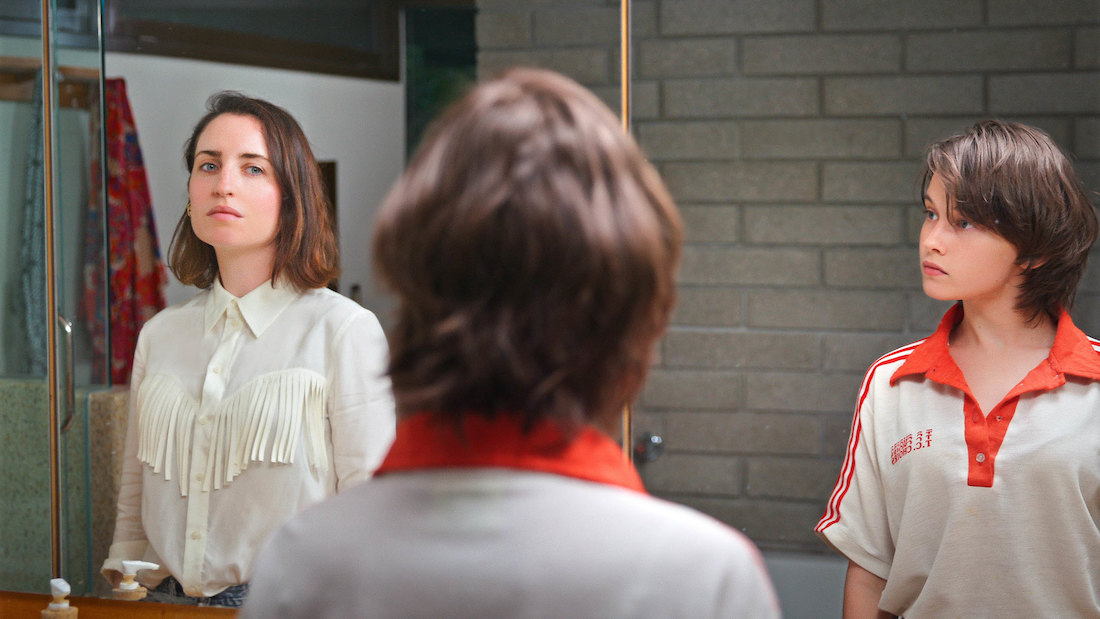
 We get glimpses of the meteor that’s speeding on a collision course with Earth, but no character ever points it out. In fact, most emit a chill vibe that corresponds to that of the film. The only exception is Liza. Played by Zoe Lister-Jones, Liza simply wants to get trashed and let the world end overnight … well after she finishes off her morning pancakes (at least a dozen) and glass of wine.  Liza’s only problem is Young Liza (Cailee Spaeny), her metaphysical younger self who pressures Liza to attend the Apocalypse Party being thrown by Mandy (Whitney Cummings).

In addition to attending the party, Young Liza persuades Liza to spend the day confronting her regrets. This includes meeting up separately with her divorced parents (Brad Whitford and Helen Hunt), as well as a former best friend (Olivia Wilde), and past boyfriends, including her one true love (Logan Marshall-Green). In fact, this trip down Regret Road provides a steady stream of stereotypical California flakes. This means none of the soul-searching ever goes very deep, but playing spot-the-funny-person is a win-win. None of the interactions seem to last more than 2-4 minutes, but it’s a blast seeing how many familiar faces pop up during Liza and Young Liza’s day of walking. I won’t name the others here so that you can enjoy each moment – some more than others.

The film is co-written and co-directed by Zoe Lister-Jones and Daryl Wein, and it’s one of the more entertaining ‘pandemic’ films so far. For me, the constant roll of quick vignettes never got old, but you should know that as good as the performances are from Lister-Jones and Spaeny, the soul-searching and self-discovery only skims the surface. Still, a chill End of the World party seems perfect, even if a 1980’s relic agreed to be a punchline.


VIOLET (drama)

 Justine Bateman’s first feature film as writer-director acts an education for men and a wake-up call for women. And it’s welcome and effective on both fronts. Olivia Munn (“The Newsroom”) stars as Violet, a film industry executive whose self-doubts and lack of confidence prevent her from every really feeling happiness. Her inner voice – she calls it “the committee” feeds her bad ju-ju and keeps her obsessed with safe decisions, rather than dynamic ones … both personally and professionally.

As an example, her inner voice (Justin Theroux) pushes her to date an older, boring film executive for the sake of her career, rather than her screenwriting life-long friend Red (Luke Bracey) who clearly thinks more highly of Violet than she does herself. Violet’s boss (Dennis Boutsikaris) purposefully belittles her which causes some of her staff to also show little respect. Violet does have some supporters who recognize the talent and strength within her, but of course, it’s Violet who must come to terms with the disconnect between achieving happiness and the way she makes choices.

We see flashbacks to Violet’s childhood and understand how the seeds of self-doubt were planted. The supporting cast is excellent and very deep, though some (Bonnie Bedelia for one) only appear briefly. Filmmaker Bateman uses on screen script to let us know what’s going on in Violet’s mind as it battles with her “committee”. It’s a trick that serves the purpose well. Some may recall the “Seinfeld” episode where George does “the opposite”. Well that sentiment serves Violet well and puts her on the road to recovery … and to silencing that darn committee. A terrific first feature from Ms. Bateman, and kudos for the closing credits which put the crew on camera.


VIOLATION (drama/horror)
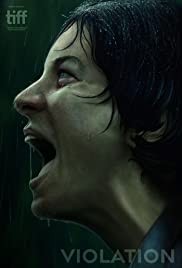
 Not just another rape-revenge thriller, this film from co-writers and co-directors Dusty Manicinelli and Madeleine Sims-Fewer is one of the most brutal and unforgiving films I’ve seen in a while. Emotional pain, regret, bitterness, and compromise worm through every scene and every character.

It begins as a cabin in the woods story. Miriam (co-director Sims-Fewer) and Caleb (Obi Abili) have a strained relationship that appears headed towards a breaking point. They are meeting up with Miriam’s sister Greta (Anna Maguire) and her husband Dylan (Jesse LaVercombe) at his family cabin. There is an underlying tension that prevents the four from every being at ease with each other, though we only get bits and pieces at a time. To further force our concentration, the story is told in non-linear fashion, making it important to focus on hairstyles and details.

One evening by the campfire turns into a turning point in the film and acts as the before and after point. A primal and brutally violent sequence takes up close to half of the film, and it’s unlike anything I’ve previously seen on screen. The practical effects are next level, and Ms. Sims-Fewer is absolutely terrific throughout. A chilling use of music accompanies an odd combination of wolf-rabbit-psychopath, and the filmmakers use shots of nature as connective tissue in a world where sometimes we are the wolf and sometimes the rabbit. Certainly not a film for mass audiences, but it will surely find an appreciative following.


SXSW 2021 Day One

March 16, 2021

SXSW 2021 Day 1

This year’s South By Southwest (SXSW) festival is being held completely online, and of course a virtual festival lacks the oh-so-enjoyable elements of long lines, rude people, bad weather, and rushed fast food. Sure the excitement and energy of an audience is missing, but at least there is no hotel expense!

Day 1 for me included four documentaries and one narrative. Here’s a recap:


HYSTERICAL (documentary)

 Stand-up comedy is certainly one of the toughest ways to make a living in the entertainment world. As if making others laugh isn’t difficult enough, convincing someone to give you mic time on stage takes a minor miracle when first starting out. Documentarian Andrea Blaugrund Nevins goes one step further as she focuses on the trials and tribulations facing female stand-up comedians. And she does so in a way that allows us to feel the struggle.

No matter your age, if you are reading this, then there were successful and funny female comedians working when you were growing up. Ms. Nevins includes clips of Moms Mabley from 1948, as well as Phyllis Diller, Joan Rivers, and other legends. But this documentary is about so much more than great jokes. We are privy to the personal stories behind the stage acts of many of the women working stand-up today. These women are honest and raw in recounting their journeys, and they are fascinating and informative.

Souls are bared, and no topic is off limits. Confidence, anger, self-doubt, childhood issues, and the desire for attention and acknowledgment are discussed. In what has traditionally been “a man’s world”, we are told that once onstage, “There is no one telling us what to do.” The dark side is also present. Pay discrepancies between the genders is well documented. We hear multiple stories of being subjected to inappropriate behavior, groping, and even assault. Included is the 2019 clip of Kelly Bachman rocking the room while Harvey Weinstein was present. On top of that, there is competition amongst the women due to the belief that there is only room for so many. Yet, despite this, a camaraderie exists among these brave women to prove the power of laughter. Terrific work from Ms. Nevins.


DEAR MR. BRODY (documentary)

 Filmmaker Keith Maitland is responsible for one of the best made and most interesting documentaries of all-time. His TOWER (2016) was a favorite on the festival run, as well as its numerous TV showings. The body count on his latest is reduced, and it plays like psychoanalysis of a young man who captured the nation’s attention for one brief moment in time.

If the title doesn’t ring a bell, you likely were either too young or not born when, in 1970, the heir to an Oleo Margarine fortune made headlines everywhere. Michael James Brody, Jr announced that he was going to give away his millions to anyone who asked. He even gave out his home address and phone number in Scarsdale, New York. The announcement even got him a spot on “The Ed Sullivan Show” to sing a song … which led to a recording contract.

At the time, Brody was 21 years old and married to Renee, who was kind enough to sit for interviews with Mr. Maitland for the film. Her (reluctant) insight paints a picture of a man who believed in “Peace” over “Money”, and started with the best intentions of helping people. Sadly, but not surprisingly, it didn’t take long for the cracks to show in Brody’s mission. His pronouncements of gift-giving had his wealth fluctuating from $25 million to $50 million, and even into the billions at times. His demeanor shifted drastically, sometimes within the same day.

The letters flowed in. And kept coming. We hear from authors, friends of Brody, and researchers. Producer Melissa Robyn Glassman located 12 boxes of unopened letters that movie Producer Edward Pressman had in storage from a movie project that never materialized. We also hear from Brody’s and Renee’s son Jamey, who not only collects items from the family “Good Luck” Margarine brand, but also has 40-50 boxes of unopened letters addressed to his dad … Dear Mr. Brody.

It’s those letters that provide the heart and soul of the story, the movie, and this moment in history. Maitland and Melissa track down some of the original letter writers, as well as some of the surviving family members. As they read the words from decades ago, emotions take over and instantly, we are observing an intimate memory. We may be intruding, but these are raw human emotions on display.

Brody’s mental state at the time is also discussed. Drugs clearly played a part in his behavior – specifically PCP, and this led to interest from the editor of “High Times” magazine. It also led to Brody being hospitalized for a time, and ultimately to tragedy. History is filled with odd characters, and Michael James Brody, Jr certainly had his Andy Warhol ’15 minutes of Fame’, but the real story here is that of those who wrote the letters of need/want more than 50 years ago.

**NOTE: it’s not surprising that Brody’s house at 31 Paddington Road in Scarsdale was long ago razed and replaced with a mansion more suitable to the area.


INTRODUCING, SELMA BLAIR (documentary)

 Whether it’s navigating the stairs on all fours, getting a boost up to the saddle of her beloved horse, or showing off her glittery turbans and walking canes, the showmanship of actress Selma Blair seems ever-present despite the severe effects of her Multiple Sclerosis (MS). Documentarian Rachel Fleit films the daily challenges faced by Ms. Blair as she comes to grips with the disease and its impact on her career, her life, and her ability to raise her son.

You likely recognize Selma Blair from her most popular movies, CRUEL INTENTIONS (1999) and LEGALLY BLONDE (2001). She admits to viewing herself as a supporting actor, rather than a star, but with 80 screen credits over 25 years, she’s certainly worked consistently. But here we see her daily physical and emotional struggles, though her sense of humor is present except for the darkest moments. Cracking wise about Kim Kardashian or Norma Desmond (SUNSET BLVD), and never hesitating to ensure her cane serves the dual purpose of fashion accessory, Ms. Blair keeps us constantly guessing as to whether she is serving up raw emotions or her best performance in the moment.

We can easily forgive her if a bit of her good humor is an act. It seems clear the film is designed to be a “gift” to her young son Arthur, should her life be cut short. Early on, we witness an MS episode when the stimulus gets to be too much. Her physical contortions and impaired speech are difficult to watch, but necessary for us to fully understand the brutality of the disease.

Half of the film is dedicated to her decision to seek stem cell treatment. The process is long and arduous, and we are spared much of the worst that she experiences. Still, it’s a weeks-long cycle followed by a two year recovery, with no guarantee of improvement. In fact, no miracle cure or recovery occurs, and Ms. Blair initially seems shocked that she has two years of recovery ahead. It’s difficult to believe she had not previously been informed.

Selma Blair’s slogan, “We have so much time to be dead”, is a terrific message and she’s to be commended and respected for opening up her challenges to the camera. It’s hopeful that her willingness to do so will help others, while also educating those unfamiliar with this disease. Mommy issues and extra drama aside, this film is quite something to experience.


THE END OF US (drama)

 Co-writers and co-directors Steven Kanter and Henry Loevner serve up one of the first COVID-19 relationship movies. It’s the kind of indie movie that plays well at festivals, but also one that nails what so many have experienced over the past year … well hopefully sans the break-up.

Ali Vingiano is Leah and Ben Coleman is Nick. They have been in a four year relationship that ends abruptly when Leah gets fed up with carrying an unbalanced load in regards to grown-up things like rent, food, and insurance. See, while Nick dreams of writing a screenplay and getting acting jobs (while taking few auditions), Leah is the grounded one who holds a real paying job. It’s easy for us to understand when Leah says ‘enough’.

The wrinkle here is that the break-up occurs in the early days of the pandemic. Knowledge is scarce and deaths are mounting. Businesses are closing and a stay-at-home order is issued in California, forcing this newly separated couple to … well … not be separated. Nick sleeps on the couch, but the two are together more now than … well … when they were together. Tension and stress is as prevalent as Zoom meetings.

It’s an unusual situation, and both Leah and Nick have friends they confide in, but moving on is pretty difficult when the proximity is closer than ever before. Petty emotions come into play, as do real ones. Apologies and quasi-apologies are rampant, but we see both change and grow despite the challenges. The lead actors are solid and the script is fresh and spot on. There are some uncomfortable moments, but relatability is the key here. Nice work from those involved.


DEMI LOVATO: DANCING WITH THE DEVIL (documentary)

 Opening Night Headliner at SXSW is a place of honor, and this year’s selection was the docuseries from Michael D Ratner (TV docuseries “Justin Bieber: Seasons”) highlighting Demi Lovato’s personal challenges, of which there are many. The 4-part series was shown straight-through with only chapter slides showing where each new episode begins. Initial scenes show Lovato during her 2018 tour, which was originally the purpose of a documentary. Filming ended abruptly when she overdosed on drugs and nearly died.

In 2020, Ms. Lovato had a new story to tell, and her personal struggles became the focus of the documentary. She promised transparency and honesty, and by all indications, she delivered. Very few celebrities have ever revealed so many personal challenges. By the end of the finale, we’ve heard about her addictions, the physical-emotional-sexual abuse she’s endured, her eating disorder, bi-polar diagnosis, depression, self-harm, and body issues. We also learn of her frequent lies to friends, family, and associates.

Not only does Lovato sit for many interviews, we also hear from her mother, sisters, friends, choreographer, Security Director, Business Manager, and former personal assistant. That’s right. One of the things that stands out most here is privilege. The former Disney child star and now global pop star has a support team and resources that most can only dream of. She went to rehab at one of the most exclusive facilities in the world, and after a near-death drug overdose, her famous new manager agrees to sign her, even after a relapse shortly after her rehab stint. Obviously addiction is something many struggle with, but it’s quite eye-opening to see the care wealth can attain.

One of the most interesting things to come from this is in the final episode where Lovato admits that “moderation” is her personal approach to dealing with addiction. Despite input from Elton John, Christina Aguilera, and Will Ferrell, Lovato believes she is better off with moderate alcohol consumption and pot smoking than stone cold sobriety. Only time will tell. One thing is for sure … her voice remains a true gift. Her “comeback” performance at the 2020 Grammy Awards and her singing of the National Anthem at the 2020 Super Bowl are unmistakable in proof of talent. However, we can’t help but wonder how the personal admissions will be received by the youngsters who look up to Demi Lovato.


COMING 2 AMERICA (2021)

March 5, 2021

 Greetings again from the darkness. The wait was 54 years for MARY POPPINS RETURNS (2018) and 35 years for BLADE RUNNER 2049 (2017), and it’s been almost 33 years since John Landis directed Eddie Murphy in COMING TO AMERICA (1988). So while it’s an unusually lengthy wait for a sequel, it’s certainly not unprecedented. Director Craig Brewer is fresh off a fantastic collaboration with Eddie Murphy in DOLEMITE IS MY NAME (2019), and the writers include Barry Blaustein and David Sheffield, who were both involved in the original COMING TO AMERICA (plus other Eddie Murphy projects), and Justin Kanew and Kenya Barris (“Blackish”).

The film opens with Prince Akeem (Eddie Murphy) and his wife Princess Lisa (Shari Headley) being greeted in the morning by their three daughters who wish them a happy 30th wedding anniversary. If you recall from the original, Akeem met Lisa on his eventful visit to Queens, NY. Her father Cleo (a returning John Amos) gave Akeem a job at the McDowell’s (not McDonalds) fast food restaurant he owned.

A basic synopsis of the story this time is that King Jaffe Joffer (90 year old James Earl Jones) is near death, which would mean Akeem would take the crown of Zamunda. A brewing conflict involves General Izzi (Wesley Snipes taking over for Calvin Lockhart who passed in 2007) who threatens violence if Akeem doesn’t allow Izzi’s goofball son to marry Akeem’s eldest daughter Meeka (KiKi Layne, IF BEALE STREET COULD TALK, 2018), who wants nothing to do with him … but does have her sights set on being next in line for the throne after her father. A film about Meeka could be interesting on its own. Of course, Zamunda law requires a male heir, and that’s the final kicker, as Akeem learns he has an illegitimate son conceived from a drug-fueled episode during his previous trip to Queens.

The royal jet whisks Akeem and his trusty sidekick Semmi (Arsenio Hall) back to Queens, where after a trip to visit with all the old characters from the neighborhood barbershop, they track down Lavelle Junson (Jermaine Fowler, SORRY TO BOTHER YOU, 2018), son of Mary Junson (Leslie Jones). A flashback gives us context to Mary and Akeem’s moment of passion. It’s at this point where we also meet Lavelle’s Uncle Reem (Tracy Morgan). The Queen’s clan then heads back to Zamunda.

While there is a story, this is not a movie in the traditional sense. Instead it’s a nostalgic trip for a big chunk of the cast, as well as for the target audience. An abundance of cameos will keep viewers on their toes, and any movie that features two of the greatest movie voices of all-time, James Earl Jones and Morgan Freeman, deserves extra credit. For me, there were no big laughs; however, I enjoyed a few good chuckles … the best being “Idiot Amin” (your ears have to work fast in the barbershop). The homage to TRADING PLACES was a nice touch, as was a particular finger wag, and a joke about sequels. It seems odd (given the title) that only a very small percentage of the story takes place in America, but I’m sure many will enjoy the outtakes over closing credits, and a surprise musical bonus after that. Also worth noting is that this sequel gets a PG-13 rating versus the R-rating of the original.

Amazon Studios will exclusively release COMING 2 AMERICA globally on Prime Video March 5th, 2021

WATCH THE TRAILER


DAYS OF THE BAGNOLD SUMMER (2021)

February 20, 2021

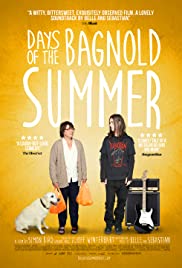
 Greetings again from the darkness. If most people realized how obnoxious they were as teenagers, we’d likely have far fewer folks opting to be parents. Actor-turned-director Simon Bird, in his first feature film, portrays the awkward, frustrating, and sometimes bitter relationship between a confused and directionless teenage boy and his divorced, well-meaning, single mom. The screenplay was written by Bird’s wife, Lisa Owens, and adapted from Joff Winterhart’s 2012 graphic novel.

Daniel (a terrific Earl Cave) is a 15 year old boy who is obsessed with heavy-metal music and resents pretty much everything else in life. He’s a droopy boy who can’t be bothered to shampoo his hair, and the only energy he expends is with snarky comments to his devoted mother, Sue (an outstanding Monica Dolan), who is clueless on how to connect with a son who bears little resemblance to the younger boy she fondly recalls raising. Sue is diligent with her work as a librarian, and tries to instill some ambition in Daniel by having his seek employment.

Daniel sinks into an even lower funk when the dad he worships cancels the boy’s much anticipated trip to Florida for a visit. Of course, Sue subtly points out that dear old dad may not be the best idol for her son, but those cautions fall on deaf ears. Instead, Daniel labels Sue, “the most boring person in the world”. Their time together is cringe-inducing, as Sue does her best to convince Daniel they can have fun, despite his disappointment.

The interesting aspect of the film is derived from its structure as a comedy, while the undercurrent of sadness and isolation is ever-present. Sue is thrilled when Douglas (Rob Brydon), a history teacher, asks her out on a date. At the same time, Daniel’s best (only?) friend Ky (Elliott Speller-Gillott) encourages him to pursue his dream as a front man for a local metal band … resulting in one of the film’s funniest and strangest segments. Neither Sue’s date, or the aftermath, nor Ky’s attempt to help his friend go according to plan.

Much of the soundtrack comes courtesy of Belle & Sebastian, and the uses of musical montages actually takes away from the otherwise realistic interactions between these characters. In addition to Brydon and Speller-Gillott, Alice Lowe has a welcome supporting role as Sue’s more socially-inclined sister, but this film belongs to Mr. Cave and Ms. Dolan. Most parents can relate to Sue’s challenges, and most adults who can be honest with themselves in retrospect, will likely recognize some of their own behavior in Daniel. The nuanced behavior and witty humor is handled well, and that deeper emotional level elevates the film for those who care to dig in.

Available in theatres, Virtual Cinema, and streaming platforms on February 19, 2021

WATCH THE TRAILER


BLITHE SPIRIT (2021)

February 20, 2021

 Greetings again from the darkness. Contrary to what one might assume, bringing entertaining, silly slapstick comedy to the screen is actually quite difficult. This is director Edward Hall’s first feature film, as his career has been mostly in TV series work and on stage. That stage work is likely what attracted him to this long-time favorite from Noel Coward. Adding to the difficulty is that Coward’s work was previously brought to the screen by legendary director David Lean in 1945, in a project that featured Rex Harrison, Constance Cummings, Kay Hammond, and Margaret Rutherford. Lean’s film won an Oscar for Special Effects.

Director Hall is working with a script adapted from Coward’s play by Piers Ashworth, Meg Leonard, and Nick Moorcroft. Rather than embrace the witty dialogue of a sophisticated upper class screwball comedy, this one seems committed to a level of silliness that intentionally overshadows the supernatural story line. It’s 1937 England where we first meet crime novelist Charles Condomine (Dan Stevens) in an angry, whisky-laced state of writer’s block. He’s trying to adapt his own novel into his first screenplay, and the pressure is mounting since the movie’s Producer is also his father-in-law. Charles’ second wife Ruth (Isla Fisher) enjoys her life of luxury and can’t understand why her successful husband can’t do it (in more ways than one).

Date night at the theatre inspires Charles to invite the spiritualist medium Madame Arcati (Judi Dench) to their house to conduct a séance. This despite Madame Arcati being exposed as a fraud. He’s simply desperate to break his writer’s block. The story takes a turn when the séance conjures Charles’ first wife Elvira (Leslie Mann). However, he’s the only one who can see her, and neither Elvira nor Ruth are pleased with the presence of the other. On the bright side, Elvira assists Charles with his writing – it turns out she was long his muse (and maybe more).

Leslie Mann and Isla Fisher are two of the most talented comic actresses working today, but even they can’t save this nonsensical barrage of motion. Judi Dench is an Oscar winner, and at 86 years old, she still excels at working a scene. On the other end of the spectrum, Mr. Stevens has neither the charm nor the comedic chops to pull off the Charles character as written. And it does seem the script, and the approach to the material, is what turns this into a vacuous affair, seemingly devoid of any cleverness save what the trio of talented actresses deliver. There are plenty of movies that deal with life after death in various ways, but whether serious or farcical, the best are entertaining. Unfortunately, this one has little to offer, and actually turns from not very funny to downright mean by the end.

Opening in theaters and VOD on February 19, 2021

WATCH THE TRAILER


BEFORE/DURING/AFTER (2021)

February 8, 2021

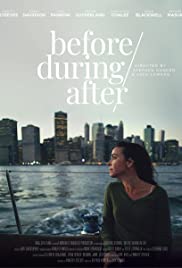
 Greetings again from the darkness. There is no “normal” process for the break-up of a marriage or any relationship. Sometimes it’s even be a relief to both participants. But that’s not what happened to Finnerty Steeves, and she’s written an insightful and grounded script that could hit home (or maybe too close to home) for many. Co-directors Stephen Kunken (who also appears briefly on screen) and Jack Lewars bring the story to life, accentuated by a terrific performance from Ms. Steeves herself.

Jennie (Finnerty Steeves) is a New York stage actress, and one particular audition is used as somewhat of a structural device for the story. The play is (ironically) entitled “To Have and To Hold”, and the scene she is reading cuts right to the core of what Jennie has gone through in her life. Her husband David (Jeremy Davidson) has had an affair. After 15 years of marriage, a lack of communication and differing goals, the couple finds their relationship crumbling. Flashbacks are used to show us different points in the relationship – from their wedding reception, to the arguments about his affair, and to the painful ordeal with her pregnancy. The flashbacks are the ‘replay’ in the mind that anyone would go through in her situation.

We tag along as Jennie and David work their way through a steady stream of frustrating couples therapists, played in order by familiar faces Kate Burton, Richard Masur, Myra Lucretia Taylor, Deborah Rush, and Stephen Kunken (the film’s co-director). We are also in the chair with Jennie as she’s “drilled” on the relationship by her dentist (the always entertaining Austin Pendleton) and his assistant (Kathleen Chalfant); and then again at Ladies Night Out with her friends – as they provide support for each other and exchange horror stories on past relationships.

There is an authentic feel to the situations and the characters, right down to Jennie’s supportive parents played by John Pankow and Kristine Sutherland. On Jennie’s first post-divorce date with Clark (John Ellison Conlee), she provides an example of how adults should act in a scenario that doesn’t go as planned. It really shouldn’t be that difficult to do the right thing, but real life tells us that it evidently is. Divorce often leads one through multiple phases: anger/sadness – acceptance – grief – rebuilding of a life. Noah Baumbach’s Best Picture nominee MARRIAGE STORY (2019) showed us a split that shook the Richter scale, and this film conveys something different.

Ms. Steeves has written a terrific script, and her distinctive hangdog facial expressions are perfectly suited to emotional turmoil, yet some of her best acting here is done in the scenes when she’s not necessarily sad. The number of familiar faces in the cast is quite impressive, and the gentle infusion of humor helps offset some of the pain Jennie feels. The film deserves bonus points for creating ‘hein-hole’, a label you’ll appreciate once you hear the root explained. On an unrelated, trivial side note that might be of interest to fans of the Harlem Globetrotters, Jeremy Davidson’s father, Mickey, played for the Washington Generals.

Available On Demand beginning February 9, 2021

WATCH THE TRAILER


BABY DONE (2021)

January 21, 2021

 Greetings again from the darkness. “I don’t want to not have a baby.” This is just one of the zingers Zoe rattles off during this charming, and often quite funny film from director Curtis Vowell and writer Sophie Henderson. Fellow New Zealander Taika Waititi is an Executive Producer, and his influences are apparent (and always welcome). In a light-hearted way, while still maintaining plenty of heart, the film explores the fear of losing or compromising one’s true self when parenthood strikes.

Rose Matafeo delivers a terrific performance as Zoe, a tree-climbing arborist by profession, and a thrill-seeking adventurer by choice. Her partner in life, and in the tree-trimming business and in the thrill seeking, is Tim (Matthew Lewis). They are the type of couple who go to a friend’s baby shower and peek into the gender reveal box before dominating the party games. Zoe is fed up with losing friends, and describes the life cycle as “Married, house, baby, done”, implying that people aren’t the same after having completing these steps and no longer want to hang out with free-wheelers and the unencumbered like her and Tim.

Denial. That’s the best description of how Zoe reacts to finding out she’s pregnant. Besides not telling Tim (a major relationship gaffe), she continues on with tree-trimming and pursues the “Tree Climbing Championship” she has qualified for (I still wonder if that’s really a thing). When Tim and her friend Molly (Emily Barclay) find out about the secret, feelings are hurt and emotions wreak havoc. Comedy is provided through the prenatal/antenatal class instructor, as well as through Zoe’s new acquaintance Brian (Nic Sampson) whom she connects with online. See, Nic … well, he, uh … has a thing for pregnant women. Not babies, mind you. But pregnant women – which by definition seems to limit the prospects of a long-term relationship.

The always-great Rachel House makes a brief appearance as the headmaster at a local school, and much of what we see is a mess created by pregnant Zoe as she attempts to stay focused on her “bucket list”. The film excels at presenting two versions of anxiety with Zoe and Tim, and it’s loaded with relatively small moments that are quite relatable – some funny, some more serious. Like it or not, parenthood creates life changes, and the topic benefits from New Zealand wit, and a cast that perfectly complements the sharp and insightful script.

In select theaters and VOD on January 22, 2021

WATCH THE TRAILER


SOUL (2020)

December 30, 2020

Greetings again from the darkness. With their first 22 feature films, Pixar excelled at balancing the eye candy and action kids favor with the second level intellect needed to simultaneously keep adults entertained. As proof, one need only think of such classics as TOY STORY, CARS, and THE INCREDIBLES. Surprisingly, film number 23 is the first Pixar film aimed directly at adults. It’s a marvelous companion piece to the brilliant INSIDE OUT (2015), but be forewarned, there is simply nothing, or at least very little, for kids to latch onto.

The film is co-directed by 2 time Oscar winner Pete Docter (INSIDE OUT 2015, UP 2009) and Kemp Powers (the screenplay and stage production of ONE NIGHT IN MIAMI, 2020), and they were joined on the screenplay by Mike Jones. And yes, it’s a brilliant script to go along with the always stunning Pixar visuals and effects. Brace yourself for a metaphysical exploration of the meaning of life and finding one’s purpose. As we’ve come to expect on Pixar projects, the voice cast is deep and filled with well-known folks such as Graham Norton, Rachel House, Alice Braga, Richard Ayoade, Phylicia Rashad, Angela Bassett, Questlove, Daveed Diggs, Wes Studi, and June Squibb. Leading the way is the dynamic duo of Jamie Foxx and Tina Fey.

Mr. Foxx plays Joe, a junior high band teacher still chasing his dream of performing jazz and experiencing the feeling that only music can provide … “the zone”. Instead, the school offers him a full-time teaching job, and his mother demands he seize the stability (and insurance) and give up his silly dream of jazz. As seen in the preview, shortly after an audition lands him his dream jazz gig, a freak accident occurs and Joe finds himself in “The Great Beyond”, where a conveyor belt takes those souls whose time has come to that giant bug zapper in the sky. Joe’s not willing to accept his plight and finagles his way into being a mentor for Soul 22 (Tina Fey) in “The Great Before” where unborn souls search for their “spark”. It’s all very existential.

After a look back at his life, Joe takes 22 to “The Hall of Everything”, which is the one segment in the film which felt underplayed … much could have been done with 22 looking for a reason to live. Instead, it’s a few great punchlines, including a Knicks gag that will surely play well among basketball fans. We learn of the fine line separating “lost souls” from those “in the zone”, and mostly we take in the banter between Joe and 22, as purpose and passion become the subjects of chatter.

As with most Pixar movies, multiple viewings are required to catch all the sight-gags, one-liners, and Easter eggs, however, the first viewing is like unwrapping a giant Christmas present. The opening Disney theme is hilariously played by a junior high school band, and the score is courtesy of Oscar winners Trent Reznor and Atticus Ross (THE SOCIAL NETWORK, 2010). Director Docter claims Pixar good-luck charm John Ratzenberger makes a vocal appearance, but I didn’t catch it. The film leaves us with the message that the meaning of life is simply living life … and keep on jazzing.

Available on Disney+

WATCH THE TRAILER


PROMISING YOUNG WOMAN (2020)

December 23, 2020

 Greetings again from the darkness. “Revenge is a dish best served cold.” The protagonist in writer-director Emerald Fennell’s (“Killing Eve”) feature film debut is a woman on a mission to avenge not just what happened to her friend, but also change the mentality of predatory men … one “nice guy” at a time. She is a #MeToo heat-seeking missile.

Carey Mulligan stars as Cassie, and when we first see her, she appears to be nearing blackout mode while drinking alone on a bench inside a bar. Most people have hobbies like crochet or golf. Cassie’s hobby, or maybe mission is a better word, is to lure men, with the appearance of a drunken easy score, and then scare them straight into respecting boundaries. She’s a non-violent vigilante (as opposed to Beatrix Kiddo) for morality and respect towards women.

As the film progresses, we pick up bits about what traumatized her to this extent. It turns out her best friend Nina was victimized by a group of men from their law school class. See, Cassie is the titular ‘promising young woman’ whose career dreams were dashed over what happened to her friend. Now, Cassie works in a coffee shop with a supportive and wise-cracking friend Gail (Laverne Cox, “Orange is the New Black”), who knows nothing of Cassie’s hobby … and neither do Cassie’s parents (Jennifer Coolidge, Clancy Brown) who can’t help but wonder what happened to their bright, ambitious daughter, and why she still lives at home with them.

Cassie’s mission gets momentarily de-railed when former classmate Ryan (an excellent Bo Burnham, THE BIG SICK) pops in to the coffee shop and awkwardly proclaims his long-time distant crush on her. The two are clumsy and believable together, and their relationship has more ups and downs than a pogo stick. For most movies, this would be enough to hold our attention, but not for ambitious filmmaker Fennell who has much more to offer. There is a cleverness to the presentation with four specific segments: a friend who didn’t believe her (Alison Brie), the law school dean who didn’t want to ruin a boy’s future (Connie Britton), a regretful defense attorney who took the money (Alfred Molina), and a bachelor party that gathers those who make up her nightmare.

Ms. Fennell is also an actor (and has a cameo in this one), and it’s clear she has a real feel for putting actors in the best position to maximize a scene. Of course, Ms. Mulligan is an outstanding actor on her own, but the actors benefit from Ms. Fennell’s work. Other supporting work is provided by Adam Brody, Christopher Mintz-Plasse, Molly Shannon, Max Greenfield, Chris Lowell, and Sam Richardson. The color palette is similar to an early Tim Burton movie, and in fact, Cassie’s home looks like a museum or possibly a middle-class Liberace setting.

There is a lot going on here, and some of it is quite uncomfortable – and sprinkled with dark humor in unexpected moments. Advice like “move on” and excuses like “we were kids” ring hollow to Cassie, who carries some guilt over what happened to Nina, and remains focused on attacking a system that enables inexcusable behavior. Ms. Mulligan embraces a character who possesses raw nerves and emotions she sometimes hides, while other times flashes in neon. This isn’t about a guy here or there who takes advantage, but rather a faulty system that protects these guys at the expense of victims. The ending is unusual and unexpected, and kudos to an exciting new filmmaker.

In theaters December 25, 2020

watch the trailer


FIRST COW (2020)

December 19, 2020

 Greetings again from the darkness. A modern-era woman (Alia Shawkat) is hiking along an Oregon river with her trusty dog. Something catches her eye and she begins tentatively brushing away decades of leaves and soot. Ultimately it turns into an excavation of two human skeletons nestled together. How many years since these two laid down for the last time? Why in this spot?  It’s a terrific way to begin a story, and does justice to what follows … all of which takes place in the early 19th century.

Director Kelly Reichardt has already made her mark with such standouts as CERTAIN WOMEN (2016), MEEK’S CUTOFF (2010), and WENDY AND LUCY (2008), and this time she adapts the screenplay with Jonathan Raymond from his 2004 novel, “The Half-Life”. Cookie (John Magaro, also seen in this year’s SYLVIE’S LOVE) is initially seen traveling west with a band of trappers. Skirting the law as they make their way in this new world, the men act as bullying brutes towards Cookie, a quiet and sensitive man. During one stop for camp, Cookie is rummaging the brush for food when he stumbles upon a naked Chinese man who is hungry and running from Russians (aren’t we all?). Cookie provides King-Lu (played by Orion Lee) with food and shelter, a Golden Rule act that comes full circle not long thereafter.

Cookie and King-Lu begin establishing something more than a friendship. It’s a life bond (but probably not in the way you might be thinking). It’s more natural instinct – a ‘two heads are better than one’ partnership. Despite the hardships of early frontier days, the two men share their version of the American Dream, and it’s about this time that our titular bovine makes her entry stage left. The cow belongs to Chief Factor (Toby Jones) who is eager to create a more refined life in this untamed wilderness. Cookie views the cow’s milk as the key to creating tasty biscuits (a rare treat), and King-Lu immediately recognizes the possibility of profit. The nightly heist features Cookie’s one-directional conversation with Evie the cow … presumably making her first screen appearance.

Ms. Reichardt’s film is not nearly as simple or slow moving as it appears. She fills it with a slow-build tension, especially in the second half. The film requires patience and attention to detail from viewers. How can something so quiet and peaceful be filled with such danger and difficulty? That’s the brilliance of the film. Supporting work is provided by Scott Shepherd as a military officer Factor tries to impress, the late Rene Auberjonois (whose presence seems a tip of the cap to Altman’s classic MCCABE AND MRS MILLER), Ewan Bremner (whose accent requires subtitles for comprehension), and Lily Gladstone as Factor’s Native American wife.

This is the first film I recall where a clarfoutis plays a key role, and there are sprinkles of dark comedy throughout … which plays well off the rugged characters and environment. William Tyler’s score and Christopher Blauvelt’s cinematographer mesh well with the fine performances throughout.  Ms. Reichardt opens the film with a William Black quote, “The bird a nest, the spider a web, man friendship”. We witness the friendship, and by the end, we wonder if it’s also a web.

Available on Showtime and streaming outlets

watch the trailer