DIFF 2019 Day 2

April 13, 2019

2019 Dallas International Film Festival
 Greetings again from the darkness. I missed yesterday’s Opening Night Gala and feature film, but paid my penance today by taking in 5 films on Day 2 of this year’s Dallas International Film Festival. Changes have come to the festival this year, including reserved seats, and a shorter run that omits the encore screenings of award winners on the final weekend (there is no final weekend). The reserved seats policy is especially challenging for those of us who try to catch a couple of dozen films during the festival, but if it helps things run a bit smoother, then it’s something we will work around.

As with other years covering the festival, I will recap the films I see each day. Due to the time involved and the quick turnaround required, these will not be the usual full reviews, but rather an overview of the films and my initial reactions. If you are in the Dallas area, the festival runs through Thursday April 18, and more info can be found at http://www.DallasFilm.org


MS. PURPLE

 Kasie (an excellent Tiffany Chu) lives with her father, who has an unidentified terminal illness and is in an extended coma with no real chance for recovery. Kasie is the primary caregiver, and out of duty, refuses to put him in hospice for professional care. She also works as a Hostess/Escort at a popular Karaoke bar and has a rich boyfriend, although there seems to be no love between the two – it’s more of a business relationship.

Out of necessity, Kasie re-connects with her older brother Carey (Teddy Lee) who bolted from home many years ago after disputes with the father. He seems to have done little with his life, and frequently gets booted from an internet café for lack of cash. Carrying guilt for deserting his sister and father years ago, especially since the mother/wife left home when the kids were very young, he agrees to help Kasie with caregiving, and even takes dad for “road trips” in the neighborhood by pushing the bed through town (a comical sight).

Director and writer Justin Chon (co-written with Chris Dinh) was behind the critically acclaimed GOOK in 2017 (a Korean DO THE RIGHT THING). Here he uses Kasie’s flashbacks to childhood with her dad and brother as a framing device, demonstrating how the father dealt with his wife leaving, and laying out the responsibilities and burdens that family can bring. There are recurring shots of lone palm trees whose significance to Kasie is only explained late in the film … but does provide more insight into the bond with her father. A nice young valet (the car parking type) offers Kasie a taste of normalcy and it slowly brings her back towards center. The film has a terrific score of violin music from Roger Suen, and lets us know that finding one’s self while caring for another can be a breakthrough that may sometimes be loud, and may sometimes be quiet.


LEAVE THE BUS THROUGH THE BROKEN WINDOW (doc)

 Most documentaries explore a topic or an event, or provide a profile of a person or organization. Not this one. It’s an unusual … OK, very odd … documentary that follows Andrew Hevia, a Cuban-American photographer/filmmaker on his trip to Hong Kong to cover the Art Basel fair. His motivation in heading to Hong Kong from the United States is a nasty break-up in a long-term relationship with his girlfriend. It seems more likely that he’s running from rather than towards, and he is described as having a camera and little else.

Mr. Hevia admits to having no real knowledge of Hong Kong art and the initial culture shock he experiences includes securing lodging that can best be describes as “cozy” – a 40 square foot “apartment” that would be a tight closet and inhumane prison cell. Once he has a roof over his head, he hits the street with his camera. It’s at this point where we realize he has no real plan.

On his trek through the city, he crosses paths with fish balls, art galleries, jumpers, a street riot, artists, art collectors, expats, tourists, students, and a ferry ride. People come and go during his days and nights as he interacts with all sorts … often showing us a part of the city we wouldn’t likely see. He searches out different artistic outlets, attractive girls, and just about any party he can crash. The film plays like a travel video-diary narrated by electronic voice that’s a blend of Alexa and the computer voice from WAR GAMES. It’s an unusual viewing experience and one that leaves us feeling a bit empty. Fortunately, its run time is a brisk 68 minutes.


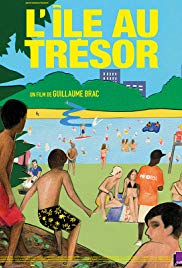
TREASURE ISLAND (doc) L’ile Au Tresor

 Yet another atypical documentary, this one from French director Guillaume Brac, who turns his lens on a water park in suburban Paris. The park is beautiful and wrapped in nature, as the lake offers many differing areas of attraction depending on one’s interests.

Brac presents various segments, some quite short, based on various groups visiting the park. We might be watching a group of underage adolescent boys trying to sneak in, and once caught, try to talk their way out of trouble. In a few segments we see the challenges facing the security guards who have to balance the park’s goal of fun with the need for safety. Of course this is France, so we also get the teenagers flirting and trying to impress each other (“Life is great”). There are families – large and small – enjoying a picnic in the bucolic setting, while young kids splash and frolic during their carefree days. Brac even takes us behind the scenes where park managers work on logistics based on weather, staff, and resources.

This is really more of a social project than a cinematic one, and we sometimes feel like we are snooping on people just having fun or doing their job. One segment with a 10 year old boy and his 3 year old brother is particularly sweet. The beauty of the park setting is contrasted with the pylon jumpers and the after-hours staff partying, but mostly it shows that people are pretty similar no matter the location.


WILD ROSE

 Quick … name all of the female Country music singers from Glasgow, Scotland! That’s the premise for this film from director Tom Harper and writer Nicole Taylor, both best known for their British TV work. Rose-Lynn Harlan is being released after a year in jail on drug charges. She uncomfortably adjusts her white boots over the ankle monitor and sets off to conquer Nashville with her singing.

Of course there are a few problems with her Music City dream. See, she’s a single mother with two kids, and she’s from a working class area where putting food on the table and paying the bills is a significant achievement. Jessie Buckley stars as Rose-Lynn, and by stars I mean she carries the film and flashes great promise as an actress. Her no-nonsense mother Marion is played by 2-time Oscar nominee Julie Walters, and while Rose-Lynn has stars in her eyes, mother Marion pushes her to take a housekeeping job and focus on her kids.

We know where all of this is headed, and it’s a credit to Ms. Buckley and Ms. Taylor’s script that we care enough to follow along. Rose-Lynn is employed by the wealthy Susannah (Sophie Okonedo), and we get one of the funniest vacuum cleaner scenes ever. Susannah soon takes on Rose-Lynn as a pet project with the goal of helping her get to Nashville for her shot.

Some rough language is peppered throughout and it’s spouted with the heaviest of Scottish accents, so much of it sounds a bit comical rather than threatening. The film is a bit uneven, but the mainstream approach keeps it from going too far off track. “Three chords and the truth” is used to describe country music, and if that’s your musical taste, you’ll likely enjoy the songs. However, if you prefer ‘Country and Western’, you’re flat out of luck.


THE DEATH OF DICK LONG

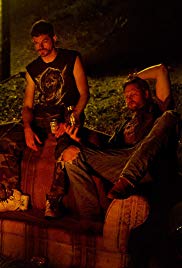
 “It’s been awhile” by Staind is the song we first hear from Pink Freud, a garage band formed by buddies Zeke, Earl and Dick. The music is awful, but “band practice” seems to exist solely for the purpose of getting these slackers together, hanging out, and drinking beer. Daniel Scheinert also directed SWISS ARMY MAN (2016) and this is the first screenplay from Billy Chew. Mr. Scheinert also plays the titular Mr. Long.

One evening, band practice takes a wrong turn, and Dick ends up dead … dumped in a hospital parking lot by his bandmates. If we previously had any doubts as to the intelligence of Zeke and Earl, all of that is cleared up as these two bumbling idiots try to cover up their involvement and what actually happened that night. The cause of death is slow to unfold, but once it does, it surely is the only one of its kind. The Sheriff (Janelle Cochrane) and her deputy (Sarah Baker) prove equally clueless in their attempts to solve the crime, and much of the film’s humor revolves around folks just not asking quite the right question in any situation.

Michael Abbott Jr plays Zeke and Andre Hyland plays Earl, and there scenes together will have you laughing and questioning human existence. Virginia Newcomb plays Lydia (Zeke’s wife), Jess Weixler is the perplexed wife of Dick, and Sunita Mani is hilarious as Earl’s friend Lake Travis (a name nearly as much of a punchline as the film’s titular character).  While the film has many funny and awkward moments, it can also be taken as a statement on testosterone-driven bad decisions and actions with consequences. If nothing else, we learn how to quickly answer when someone asks, “Y’all wanna get weird?”


NETWORK (1976) revisited

March 17, 2019

 Greetings again from the darkness. It was the year after ONE FLEW OVER THE CUCKOO’S NEST and the year before ANNIE HALL. 1976 was good for the underdog as Sylvester Stallone’s ROCKY won the Oscar for Best Picture, edging out such (now) classic films as TAXI DRIVER, ALL THE PRESIDENT’S MEN, and the film we are going to talk about here, NETWORK.

I’m mad as hell, and I’m not going to take this anymore.” That’s the lasting quote most recite when asked about NETWORK. And since those folks are generally energetically emphatic as they recall the line, it says quite a bit about the influence and ongoing impact of the film. In fact, many believe much of what the film warned us about has come to pass – and is even happening right now!

The story begins with (fictional) UBS network news anchor Howard Beale being let go after many years on the job. His personal issues have become a problem, and unlike his competitors Walter Cronkite and John Chancellor, he’s no longer dependable. With two weeks remaining until his final broadcast, Beale goes off script and creates a firestorm of emotion in the viewing audience as he promises on-air suicide and rants about TV programming, journalism, and society as a whole. People across the country take him up on his direction to go to the window and yell out the above mentioned catchphrase. What follows cuts to the core of the film’s theme. Beale’s friends worry about his mental well-being, while others at the network are concerned only with the ratings bump, and how best to capitalize on his revived and re-engaged audience.

What had previously been a respectable newscast, transitions into what we recognize today as a Reality TV show. Beale is provided a pulpit to rail against the establishment and the general public for its acceptance or surrender. He criticizes those who have given up reading books and have allowed TV to guide their thoughts (sound familiar?). Beale proclaims “television is a carnival” even as he becomes its lead barker, and proudly accepts his new label as “an angry prophet denouncing hypocrisies of our time.” It’s now been over 40 years since the film premiered, and the parallels to today’s world are crystal clear.

As with any quality film, there are multiple sub-plots and story lines, as well as numerous characters we get to know. There is an ambitious program director willing to make her mark by any means necessary. All of this turmoil occurs while UBS is going through a corporate takeover, so we get a glimpse at the behind-the-scenes political wranglings of those in power and those striving to be. An inner-office romance blends with the reckoning that accompanies middle age, and the resulting cracks in a long-term marriage. In yet another jab at the TV industry, a brainstorm leads to the birth of the “Death Hour”, an idea for a series based on the illegal and often violent actions of a terrorist group called the Ecumenical Liberation Army. The negotiations with this group are either the funniest or the most dangerous of the film, depending on your perspective. In keeping with the era, we are reminded of the ongoing economic recession, and get news flashes on the situation with kidnapped heiress Patty Hearst, plus the two assassination attempts on then President Gerald Ford. These doses of reality add the necessary gravitas to the film to prevent it from dipping into soap opera territory.

 The cast is stellar and deep. Peter Finch plays Howard Beale. Mr. Finch died in January 1977 at age 60, and a couple of months later was named the Oscar winner for Best Actor, becoming the first acting winner to be so awarded posthumously (later joined by Heath Ledger). He was previously nominated for SUNDAY BLOODY SUNDAY (1971). Although he was talented and had a fine acting career, he might be best remembered in Hollywood lore for his ongoing affair with Vivian Leigh, who was married to Laurence Olivier at the time. Sir Olivier was also Mr. Finch’s acting mentor. In his role as Howard Beale, Finch got to chew scenery at the level every actor dreams of.

Faye Dunaway plays the ambitious program director Diana Christensen. She won the Oscar for Best Actress, and had previously been nominated for BONNIE AND CLYDE (1967, a role she chose over Elaine in THE GRADUATE) and CHINATOWN (1974). She also appeared (with her NETWORK co-star William Holden) in THE TOWERING INFERNO (1974), and is unfortunately remembered for her frightening portrayal of Joan Crawford in MOMMY DEAREST, giving wire hanger nightmares to an entire generation. Her first marriage was to Peter Wolf of the J. Geils Band, and more recently you’ll recall her as co-presenter with Warren Beatty, and part of the calamity at the 2017 Oscars when LA LA LAND was erroneously named Best Picture before the confusion was cleared and MOONLIGHT was awarded the statuette. Dunaway’s Diana is unabashedly ambitious and flounces through the newsroom taking no prisoners. Her relationship with Holden’s character has one of the more unusual on screen love-making sequences, as she continues to talk shop as things heat up.

William Holden plays Max Schumacher, the veteran news director forced out of his job for placing more importance on protecting his friend Howard than in increasing the ratings and revenue of the broadcast. Mr. Holden died in 1981 at age 63 from injuries sustained during a fall. He was a Best Actor Oscar winner for STALAG 17 (1953), and a nominee for NETWORK and SUNSET BOULEVARD (1950). Mr. Holden also appeared in other classic films as PICNIC (1956), THE BRIDGE ON THE RIVER KWAI (1957), THE WILD BUNCH (1969), and THE TOWERING INFERNO (1974). He once shared an apartment with baseball great Hank Greenberg while both were serving in the military (1943), and was Best Man at the wedding of Ronald and Nancy Reagan. As Max, Holden captures the middle-age frustrations of a man unwilling to live with the cultural change of the new conglomerate owner, and equally uneasy with a marriage that has grown too stale. His stereotypical fling with the exciting younger woman ends as expected … only with a world class monologue.

Robert Duvall is Frank Hackett, the cut-throat front line manager brought in by the new owners to shake things up and create some profit.  Mr. Duvall is still working today at age 88, and began his career on TV in 1960. He won a Best Actor Oscar for TENDER MERCIES (1983), and was nominated six other times for performances in THE GODFATHER (1972), APOCALYPSE NOW (1979), THE GREAT SANTINI (1979), THE APOSTLE (1997), A CIVIL ACTION (1998), and THE JUDGE (2014). He also appeared in BULLITT (1968), MASH (as Frank Burns, 1970), THE GODFATHER II (1974), THE NATURAL (1984), and Larry McMurtry’s classic western series “Lonesome Dove” (1989). You might also remember him as Boo Radley, quietly hiding behind the door in TO KILL A MOCKINGBIRD (1962), though he’s likely best remembered for a certain character’s love of napalm in the morning. Duvall’s Hackett is a symbol of blind ambition and thirst for power.

 Beatrice Straight won the Oscar for Best Supporting Actress for playing Louise, Max’s scorned wife. She’s only in only a couple of scenes, and her approximately 5 minutes on screen remains the briefest to win an acting Oscar. Ms. Straight acted in very few movies, and spent most of her acting career in TV projects and on stage, though many will recall her as one of the scientists in POLTERGEIST (1982). When Louise rips into Max, she’s speaking for the untold number of middle-aged women who have been in that situation … simultaneously angry, hurt and afraid.

Ned Beatty plays Arthur Jensen, an eccentric network executive, and with basically one powerful and memorable scene, received the only Oscar nomination of his 45 year career. Mr. Beatty’s first screen appearance was in DELIVERANCE (1972) and his pig squeals haunted many viewers (including yours truly). He has also played delicious villains, the everyman, and buffoons, and appeared in such fine movies as NASHVILLE (1975), ALL THE PRESIDENT’S MEN (NETWORK’s Oscar competition), SILVER STREAK (1976), SUPERMAN (1978), SUPERMAN II (1980), THE BIG EASY (1986), RUDY (1993), and more recently as the voice of Lotso in TOY STORY 3 (2010). He hasn’t acted in the past 5 years, and turns 82 years old this year.

You might think that is already an incredible lineup of acting legends, but we aren’t done yet. Wesley Addy appears as network executive Nelson Chaney, and Mr. Addy was also in one of my favorite film noirs, Robert Aldrich’s KISS ME DEADLY (1955). Kathy Cronkite plays radical activist Mary Ann Gilford, and Ms. Cronkite is the daughter of news icon (and University of Texas graduate) Walter Cronkite (who also appears in clips). Conchata Ferrell is part of the UBS creative team, and Ms. Ferrell is now best known as Berta on “Two and a Half Men” and as the pizza shop proprietor in MYSTIC PIZZA (1988). Ken Kercheval plays Merrill Grant, and “Dallas” fans will recognize him as JR Ewing’s nemesis, Cliff Barnes. Making a brief appearance is Lane Smith, whom we all remember as Joe Pesci’s opposing counsel in MY COUSIN VINNY (1992), and in a blink-and-you’ll miss it role in the terrorist negotiation scene is an uncredited Lance Henriksen. Mr. Henriksen now has a cult following after his chilling role in ALIENS (1986). He’s also appeared in many other classic films over the years: DOG DAY AFTERNOON (1975), CLOSE ENCOUNTERS OF THE THIRD KIND (1977), THE RIGHT STUFF (1983), THE TERMINATOR (1984), and he has over 250 screen credits. Lastly, you might recognize the voice of the film’s narrator. Lee Richardson is an actor and the voice of more than one hundred commercials.

NETWORK was directed by the great Sidney Lumet. He received one of his 5 Best Director Oscar nominations … the other four were 12 ANGRY MEN (1957), DOG DAY AFTERNOON (1975), PRINCE OF THE CITY (1981), and THE VERDICT (1982). He also directed THE HILL (1965), SERPICO (1973), MURDER ON THE ORIENT EXPRESS (1974), RUNNING ON EMPTY (1988), and his final film BEFORE THE DEVIL KNOWS YOU’RE DEAD (2007). Mr. Lumet received an honorary Oscar in 2005, and died in 2007 at age 86. One of Lumet’s four wives was Gloria Vanderbilt, and his book “Making Movies” is a must read for any aspiring filmmaker.

Writer Paddy Chayefsky gets much of the credit for the success of NETWORK, and rightfully so. The script is a work of art, and brought him one of his three Oscars. The other two were MARTY (1955) and THE HOSPITAL (1971), making him one of only five three-time writing winners. He also wrote cult favorite ALTERED STATES (novel and screenplay) and adapted PAINT YOUR WAGON (1969) for the screen. Mr. Chayefsky’s influence can be seen (and especially heard) in the dialogue written by Aaron Sorkin, one of today’s most celebrated writers. Mr. Chayefsky died in 1981 at age 58.

The film won 4 Oscars (Actor, Actress, Supporting Actress, Original Screenplay) and was nominated for six others. The 3 acting wins tie it for most ever with A STREETCAR NAMED DESIRE (1951), and it’s the only movie to date with 5 acting nominations. It’s also highly probable that NETWORK is the only film where the Best Actor and Best Actress don’t share any screen time together. Owen Roizman was nominated for Cinematography, and his other nominations include THE EXORCIST (1973), TOOTSIE (1982), WYATT EARP (1994) and THE FRENCH CONNECTION (1971) … that’s right, he filmed the infamous car chase scene. Alan Heim was nominated for Editing, an Oscar he would later win for ALL THAT JAZZ (1979).

Relevant seems too weak as a description to make the point of how the film’s message stands up today. Television should be a vehicle that informs and educates instead of serving up drivel like dating and quirky personality shows. Of course entertainment is an important piece of the puzzle, but we shouldn’t end up holding an empty bag. One of the final scenes in the film highlights the lack of scruples from the executive team. A final decision is made that at first seems over-the-top, but is it really so hard to believe? Howard Beale is a man who has lost, or is losing, his mind – but the network milks him until that cash cow is dry. We can’t help but note the themes that still hit home today: corporate and personal greed, ambition, grief, mismatched relationships, the misuse of power, the willingness to sit back and accept, and the fear of life with no purpose.

ROCKY was the only 1976 film to eclipse $100 million at the box office, and in addition to the other Oscar nominated films listed in the first paragraph, 1976 also blessed us with horror classics CARRIE and THE OMEN, thrillers like MARATHON MAN (“Is it safe?”) and KING KONG (Jessica Lange and Jeff Bridges), BOUND FOR GLORY (the 5th Best Picture nominee) and Barbra Streisand’s A STAR IS BORN, comedy classics BAD NEWS BEARS and THE PINK PANTHER STRIKES AGAIN, and Alfred Hitchcock’s final film, FAMILY PLOT. 1976 was also the year we lost Agatha Christie, Busby Berkeley, Howard Hughes, Fritz Lang, Dalton Trumbo, Alastair Sim, and Sal Mineo (a still unsolved murder). Forty-three years later, NETWORK lives on as a lesson we have yet to learn.

***NOTE: another thing to notice is the natural teeth of Faye Dunaway, Robert Duvall and Peter Finch. Comparing it to the blindingly bright pearly whites of today’s actors provides quite the contrast.

watch the trailer:


OSCARS 2019 recap

February 25, 2019

OSCARS 2019 recap

 The Academy missed their goal of a 3 hour presentation, but only by 17 minutes! Ratings were up (over last year) and diversity was on full display, so it seems most can agree that things went pretty smoothly without a host. Despite some recent bungled decision-making, followed by a social media outcry which resulted in decision reversals, the Academy deserves credit for a fine presentation that featured more diversity than ever before. The days of #OscarSoWhite seem to be over.

I trust you didn’t come here to read yet another rant about why a certain award proves how out of touch the Academy is. Nope, I like movies and prefer to view the Oscars as a celebration rather than a political statement. By the time the final envelope was opened, all 8 Best Picture nominees had won at least one Oscar. Additionally, two other excellent films, IF BEALE STREET COULD TALK and FIRST MAN, also won awards (Best Supporting Actress and Visual Effects, respectively). Spreading the major award love over 10 different films speaks not just to the diversity, but also the deep lineup of quality filmmaking during 2018.

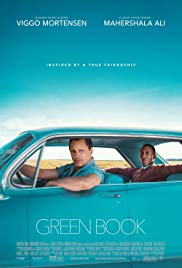
As always, the ceremony provided some fun talking/debating/arguing points. Queen opened the show with Adam Lambert proving how remarkable Freddie Mercury’s voice was, while Brian May showed us he still plays a mean guitar. Best Actor winner Rami Malek fell off the stage after giving his speech. Fortunately, he wasn’t seriously hurt. Melissa McCarthy (and a puppet) and Brian Tyree Henry fully and elaborately committed to their duties as co-presenters of Best Costume. Despite not being present, the omnipotent Oprah made an appearance – via the montage of 2018 films (from her bomb A WRINKLE IN TIME), and we saw a live quasi-reunion of WAYNE’S WORLD with Mike Myers and Dana Carvey (sans wigs and head-bobbing). Spike Lee finally won an Oscar (Adapted Screenplay for BLACKKKLANSMAN), and then proceeded to bogart the microphone from his equally deserving co-writers, before throwing a tantrum when GREEN BOOK was announced as Best Picture.

 Of course, the most Tweeted about moment came when Bradley Cooper and Lady Gaga took the stage to sing their (now Oscar winning song) “Shallow” from A STAR IS BORN. It was a very intimate duet that, had there been one more verse, might have resulted in clothes being shed on stage. The aforementioned diversity resulted in the most presented Oscars for both African-Americans and Women, and with presenter Michael Keaton being the only white male to take the stage solo. Barbra Streisand (presenting BLACKKKLANSMAN rather than A STAR IS BORN) somehow escaped backlash after comparing herself to Spike Lee … see they are both from Brooklyn and like hats; although we aren’t sure if Babs greeted her superfan, nominee Richard E Grant. And poor Christian Bale – no way that room was ever going to vote for Dick Cheney, regardless of how remarkable his transformation and performance.

Olivia Colman (THE FAVOURITE) won the Best Actress Oscar over Glenn Close (THE WIFE). This was Ms. Close’s 7th Oscar nomination without a win, keeping her one ahead of fellow nominee Amy Adams (VICE). However, neither of them gained ground on songwriter Diane Warren whose nomination for “I’ll Fight” (RBG) was her 10th without a win. It should also be noted that Ms. Colman’s acceptance speech was the funniest, most charming and most heartfelt of the evening. In contrast to Ms. Close, Ms. Adams and Ms. Warren, Regina King was thrilled to win the Best Supporting Actress Oscar with her first ever nomination (IF BEALE STREET COULD TALK).  In a show of ultimate class, Congressman John Lewis presented Best Picture nominee GREEN BOOK, and we could be certain a man with his perspective and role in history, would not partake in any tantrum throwing.

 Mahershala Ali (GREEN BOOK) won Best Supporting Actor for the second consecutive year, and Alfonso Cuaron won 3 Oscars (Best Director, Cinematographer, Best Foreign Language Film) for his autobiographical masterpiece ROMA. Also winning 3 Oscars on the night were BLACK PANTHER (Costumes, Production Design, Score) and GREEN BOOK; however, it was BOHEMIAN RHAPSODY with 4 wins that walked away with the most statuettes. Even those who are upset by GREEN BOOK’s Best Picture win must agree that it was a much smoother end to the evening than last year’s debacle and mix-up.

***Note: although there were a few political barbs tossed in throughout the evening, President Trump’s name was never mentioned on the broadcast. This allowed the focus to remain mostly on the nominees and the films … and the plug for the under-construction Academy museum (opening someday). .


Oscar Nominated Live Action Shorts 2019

February 22, 2019

Oscar Nominated Live Action Shorts 2019

Top-to-bottom, this is the strongest shorts category I can recall. The quality of each is such that winning the Oscar would be well-deserved for any of the nominees. Four of the five are tension-packed, while the fifth is just as emotional – only in a more intimate manner. That being said, I have listed these in order of my preference. However, should you ask me tomorrow, the order might change. All five films are that strong. Just a reminder, these are not Oscar predictions, just personal opinion.


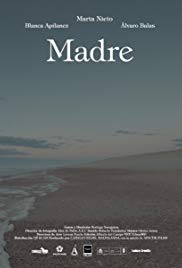
 MADRE (Spain) 19 min

Greetings again from the darkness. Filmmaker Rodrigo Sorogoyen begins his film with a long, slow pan shot across a deserted beach until we see the waves rhythmically rolling in and out. It appears to be a most peaceful setting, but instead it’s actually the set up for one of the most intense and emotionally shattering short films ever.

Marta Nieto and her mother Blanca Apilanez are hanging around the apartment on what’s a typical day for them. When Marta’s answers a call, an unimaginable horror unfolds via cell phone. On the other end is her 6 year old son. He’s on holiday with his father, Marta’s ex. Only her son tells her, as his cell phone battery is dying, that dad left him and now he’s alone on a beach … he thinks it’s France, but could be Spain.

Marta and her mother juggle cell phones as they try to track down the father, while keeping the young boy as calm as possible. It’s a captivating and stunning performance by Marta Nieto, and a brilliant piece of filmmaking from Mr. Sorogoyen. It may be the most unsettling 19 minutes of movie I’ve seen, and if it had gone any longer, it might have become truly unbearable.


 DETAINMENT (Ireland) 30 min

Greetings again from the darkness. Evil personified. That is the only possible way to describe 10 year old boys Robert Thompson and Jon Venables. In February 1993, the British boys skipped school and spent the day doing typically mischievous activities around the local shopping center. Typical that is until they abducted 2 year old James Bulger.

This is writer-director Vincent Lambe’s 4th short film, and it’s based on the disturbingly true story of the abduction-torture-murder of toddler James by the two young boys. The film draws directly from the actual tapes of interviews/interrogations once the boys were identified from the grainy security footage. This dramatization includes the pleas of innocence from the boys, as well as the reactions of both their parents and the police officers. The scenes depicting the questioning of the boys is powerful, and the scenes of the 3 boys together is more than most of us can bear, despite little of the crime being shown (thankfully).

Young actors Ely Solan (Jon) and Leon Hughes (Robert) are both extraordinary in their performances. Director Lambe deftly applies judgment in what is shown on screen and what instead corrupts our thoughts. It’s heart-breaking to see what the parents of these boys must endure, but it’s beyond our comprehension to imagine what Baby James Bulger’s parents must have endured. The boys were tried as adults in 1993, and both subsequently released from incarceration and given assumed identities for their own protection. If somehow Lambe’s short film isn’t disturbing enough, it’s pretty simple to get the full report of what the boys inflicted on that poor child. Evil personified.


 FAUVE (Canada) 19 min

Greetings again from the darkness. Two young boys, obviously good friends, are spending the day just hanging out and exploring the area on the outskirts of town. They are engaged in an ongoing game of one-upmanship as they spontaneously compete over a string of mindless pranks to see who is the bravest or toughest.

Director Jeremy Comte places Tyler (Felix Grenier) and Benjamin (Alexandre Perreault) in common situations that most of us (at least from my generation) easily recognize. A vacant lot or deserted train car are easily turned into a playground as the mischievous boys deal with their unchaperoned independence. We find ourselves chuckling at their harmless teasing … well, harmless until it’s not.

Even with a run time of only 14 minutes, director Comte doesn’t rush the set up. It’s just a lazy, care-free day until the boys make their way into an open-pit mining zone. For someone with a quicksand-phobia (thanks to those early Tarzan movies), the shift in tone delivers an emotional gut-punch. A terrific final scene caps off a powerhouse short film that deserves the festival accolades it has received. From Canada with French dialogue, expect this one to receive even more award consideration.


 MARGUERITE (Canada) 19 min

Greetings again from the darkness. It was after the Oscar nominations were announced that I tracked down this one, the last of the 5 nominated live action shorts in the category that I’ve watched. While the other 4 nominees are tension-packed, this beautiful 18 minute film from writer-director Marianne Farley is serene and both heart-warming and heart-breaking.

Beatrice Picard began her acting career in the 1950’s, and here she is extraordinary in the titular role. Marguerite is a lonely elderly woman in the final stage of life. Understanding that her time is near, she has refused the daily dialysis recommended by her doctor. A window in her living room is literally her window to the world. As her body slowly fails, she is a captive in her home. Her time is spent anxiously awaiting the daily arrival of her in-home caregiver Rachel (Sandrine Bisson), a patient and compassionate woman who provides care, as well as Marguerite’s only human contact.

Bathing Marguerite, shampooing her hair, helping her get dressed, and applying lotion are part of Rachel’s routine. The importance of these moments is obvious by Marguerite’s face. One day she overhears a brief phone conversation between Rachel and her partner, which leads to an innocent question … the answer which ignites a memory in Marguerite that causes much reflection.

Forbidden love left unrequited and unmentioned highlights the generational and societal differences between these two women in ways we don’t often consider. It also brings them closer together. The wound that won’t heal on her foot is truly insignificant to the decades-long pain Marguerite has carried in her heart. Making peace with her past allows her final stage to play out thanks in part to the tender compassion shown by Rachel.

Marianne Farley is a French Canadian known mostly as an actress, yet this, her second short film as director creates a deep connection despite minimal dialogue between the two women. Cinematographer Marc Simpson-Threlford expertly uses lighting, color and framing to guide us through. C’est beau.


 SKIN (USA) 20 min

Greetings again from the darkness. Bestowed with an Oscar nomination for Best Live Action Short Film, this story from Israeli director Guy Nattiv, who co-wrote the script with Sharon Maymon, is stunning and frightening in how much of a punch it packs into 19 minutes. The influence parents have on their kids is at the heart of this devastating tale.

Jackson Robert Scott (Georgie from IT) stars as Troy, the young son of Jeffrey (Jonathan Tucker, “Justified”) and Christa (Danielle Macdonald, PATTI CAKE$). The film opens with dad Jeffrey taking the shears to Troy’s hair on the front porch. Then all 3 hop in the car with friends, singing a horribly inappropriate song on the way to shooting guns at beer bottles. Later, Troy convinces his dad to take him “surfing”. Of course, there are no waves in sight … you just have to see it to believe it.

Two things are abundantly clear: these are stereotypical hillbillies, and Troy loves his dad very much. Soon we learn something else. Dad is a white supremacist. While at the grocery store, a black man (Ashley Thomas) offers a friendly greeting to Troy, and dad snaps into vile racist mode. Seemingly out of nowhere, Jeffrey’s fellow gang of racists join him in violently pummeling the friendly black man. The vicious beating takes place in front of the man’s frantic wife, daughter and son (roughly the same age as Troy). It’s a family that mirrors Troy’s, with one exception – skin color.

It’s not long before a group of African-Americans take revenge on Jeffrey, albeit in a less violent, yet more permanent and clever manner. Bronny (Lonny Chavis, “This is Us”) is allowed to watch as the revenge plays out. The tables have been turned on Jeffrey, and the shocking ending proves that hate only leads to more hate … and sometimes hate is blind. Racism is a self-perpetuating culture that survives only when passed from one generation to the next. Filmmaker Nattiv and his producing partner-wife Jaime Ray Newman remind us that we reap what we sow. They have a feature length film being released later this year based on the true story of Bryon Widner – a story that likely influenced this impactful short.


Oscar Nominate Documentary Shorts 2019

February 22, 2019

Oscar Nominated Documentary Shorts 2019

By definition, films in this category pack a punch with a real life story into a run time of just a few minutes. It’s possible one or two could be transformed into a feature length documentary or narrative interpretation, and yet it’s remarkable how much information or emotion can be relayed with a short film. In an unusual twist, one of the nominated films offers only an edited clip of historical footage – yet it will likely stick with you. Below you will find the five films listed these in order of my preference. Just a reminder, these are not Oscar predictions, just personal opinion.


 PERIOD. END OF SENTENCE (USA) 26 minutes

‘It’s some type of illness that mostly affects girls.’ That’s paraphrasing the answer from a group of young Indian men when asked to define menstruation. Unfortunately, the women aren’t much better educated or informed, and the subject remains taboo in rural India. The Pad Project is designed to empower women by providing a machine that makes low cost pads, far superior and more hygienic than the “cloths” they have used for generations.

Director Rayka Zehtabchi introduces us to the man who invented the machine, but this story is about the women. Not only do the pads improve their life and health, but by marketing the pads, the women experience financial gains that dramatically impact their lifestyle. The film is surprisingly humorous and uplifting, and it’s refreshing to see such a wonderful solution to what’s referred to as “a girl problem”. The film will be available on Netflix beginning February 12.


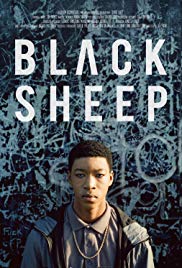
 BLACK SHEEP (UK), 21 minutes

When a young boy, not so dissimilar to her 10 year old Nicaraguan son, is killed on the streets of her London neighborhood, a mother takes steps she feels are necessary to protect her son. They relocate to Essex for safety, unaware that extreme racism exists. With the camera in close-up mode, a now adult Cornelius Walker re-tells his story as reenactments periodically accompany his words.

Director Ed Perkins captures the pain and intimacy of the decisions that led Cornelius to try and fit in … “make friends with monsters”, as he puts it. What a stark reminder of how strong our survival instincts are. We can rationalize actions that wouldn’t typically be considered, even if the long-term price paid for those decisions is to be forever haunted by losing our true self. The reenactments may cost it some votes in this category, but Mr. Walker’s story will stick with you.


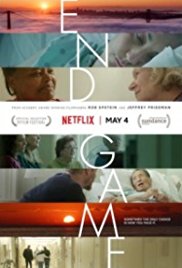
 END GAME (USA), 40 minutes

Though emotions run high in all 5 of the Doc Short nominees, none reach the tearjerker level and gut-punch of this look at palliative care by co-directors Rob Epstein and Jeffrey Friedman. Teams of medical professionals are committed to end of life care and helping patients and families deal with death.

Mr. Epstein is a two time Oscar winner for Doc Feature (THE TIMES OF HARVEY MILK, 1984; COMMON THREADS: STORIES FROM THE QUILTS, 1989) and he and Mr. Friedman previously collaborated on the 2014 doc AND THE OSCAR GOES TO … There is an interesting look at the San Francisco Zen Hospice Guest House, but there is a bit too much time spent on one patient/family and the film is very similar to the previously nominated EXTREMIS (2016).


 A NIGHT AT THE GARDEN (USA), 7 minutes

On February 20, 1939, a Nazi-American rally took place at Madison Square Garden in New York City. Perhaps you were aware of this or not, but either way, this brief 7 minute clip edited from archival footage will surely chill you to the bone.

The rally takes place shortly before WWII begins, and the pomp and circumstance, as well as the scope of the event, are startling. Standing at a podium in front of a giant George Washington portrait, Fritz Kuhn, leader of the German American Bund, spews vile hate-filled words and the crowd of 20,000 cheers.

Director Marshall Curry has been previously nominated twice for Documentary Feature, and his work here is wisely restricted to editing the footage. No commentary or interview is necessary. The name you will want to know after this 7 minutes is Isadore Greenbaum.


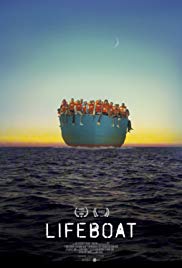
 LIFEBOAT (USA), 34 minutes

Thousands of refugees take to rafts and battered boats in the Mediterranean Sea in hopes of escaping an environment of poverty, torture and/or bombings. They realize it’s a life or death step, yet they believe those odds are better than staying put. This is director Skye Fitzgerald’s follow up to his 2015 doc short 50 FEET FROM SYRIA, and the second of what he plans will be a trilogy.

We follow Sea-Watch Captain Jon Castle as his crew, funded by a German non-profit dedicated to rescuing refugees, strives to save as many as possible before starvation, illness or drowning occurs. Sometimes they succeed. This one would make an interesting double-bill with last year’s winner THE WHITE HELMETS, which focused on rescues on land (after bombings). Captain Castle (who passed away last year) makes the point that the rescues are the right thing to do as humans, as it could easily be us in need of rescue sometime in the future. Director Fitzgerald pays little attention to political arguments, and presents this as a humanitarian issue.


Oscar Nominated Animated Shorts 2019

February 22, 2019

Oscar Nominated Animated Shorts 2019

The difference in production value is quite evident in the animated shorts category, as not all filmmakers are backed by the resources of Pixar or Disney. What really stands out here is the strength of the stories and how they play on our real life emotions and memories. Below you will find these listed in order of my preference. Just a reminder, these are not Oscar predictions, just personal opinion.


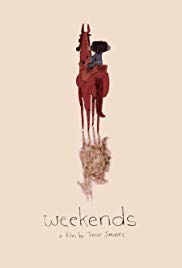
 WEEKENDS (USA) 16 minutes

Familiarity, in fact, all-too-familiar, may be the difference for this story from Trevor Jimenez. A young son gets bounced back and forth between the homes of his divorced parents. Initially the mother keeps things simple, with an emphasis on love. In contrast, trips to dad’s place include scary movies, video games, fast food and plenty of hands-on play time (with weapons and costumes!).

Fittingly, dad’s car radio is on an endless stream of Dire Straits’ “Money for Nothing”, while the other times are covered by the familiar and recognizable chords of Satie. The boy is caught between the two adults trying to put their own lives back together, and some amazing animation takes us through the boy’s imaginative dream and nightmare sequences.

While at Pixar, Mr. Jimenez worked on FINDING DORY and COCO, and this one seems to carry personal memories for him.


 ANIMAL BEHAVIOUR (Canada) 14 minutes

The husband and wife animation team of David Fine and Alison Snowden (two very real, not animated creators) won an Oscar in this category in 1995 for their short BOB’S BIRTHDAY, which was then turned into a TV series “Bob and Margaret”. It’s not a stretch to imagine that the animators have hopes for the same path for their latest.

We enter a group therapy session for an unusual collection of critters, including: a praying mantis, a leech, a bird, and a pig.  The session is led by a dog, and is soon crashed by a newcomer – a boisterous gorilla. The gag here – beyond the obvious – is that each of these critters is dealing with normal traits for their species, though they sound particularly bothersome when stated aloud. Kids are not the target market here given all the talk about sex (stay away from the praying mantis) and orifices. Creativity is on display here, and don’t be surprised if some mutation of this ends up on TV.


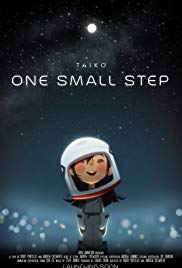
 ONE SMALL STEP (USA, China) 8 minutes

Former Disney animators Andrew Chesworth (animator on MOANA and FROZEN) and Bobby Pontillas co-direct a script co-written with Taiko Studios founder Shaofu Zhang. It’s a story of a single father and his Chinese-American daughter Luna, and takes us through her early childhood dreams of walking on the moon to her college years taking astrophysics classes.

The devoted father is there to encourage his young daughter’s dreams, and later to quietly support her with meals and shoe repair. It’s yet another reminder of how the efforts of parents sometimes go unappreciated, but the commitment never fades. The ending here is predictable, yet no less powerful and emotional.


 BAO – Pixar (USA) 8 minutes

It should come as no surprise that Pixar has a nomination in this category. The premier animation studio employees some immensely talented folks, including Domee Shi (previously a storyboard artist on INCREDIBLES 2), who becomes the first woman to direct a Pixar short film.

As with many Pixar projects, this one will likely resonate with parents as much, if not more, than with kids. Of course there are some exceptional visuals; however, it’s more poignantly a look at the stages of life … especially the trials and tribulations of parenthood (especially the overprotective type). This one is far and away the most viewed entry since it ran before theatrical showings of INCREDIBLES 2, which itself is Oscar nominated for Best Animated Feature.

Some may struggle a bit with the idea of a homemade dumpling coming to life and being raised as a growing kid, but the ending will likely hit home with most every parent.


 LATE AFTERNOON (Ireland) 10 minutes

Louise Bagnall previously worked as an animator on the Oscar nominated SONG OF THE SEA, but this one is all hers. These days there is no shortage of projects putting dementia front and center, and we quickly realize the elderly Emily (voiced by the great Fionnula Flanagan) suffers from this dreaded affliction.

The fantastical dreamlike sequences carry us away in Emily’s memories of life. These snippets of her childhood and adult life tell us much about the woman who now finds happiness in a biscuit with her tea. The past and present are often a jumbled mess for Emily, and although her caretaker’s identity is no real mystery, it is still a wonderful moment when it clicks for Emily … even if we know it’s only for a short while.


Best of 2018

January 6, 2019

Just posted: the BEST OF 2018 film list!

This year’s post has my Top 5 movies of the year, plus the Next Best 14, plus MANY other recommendations in various categories for those of you who enjoy stepping outside of your movie watching comfort zone! Hopefully you can find something on the list that interests you.  Check it out:

Best of 2018


CLUE (1985) revisited

October 12, 2018

 Greetings again from the darkness. All movie watchers have at least two categories of films: those they will watch any time of any day, even if they can only catch a few minutes; and those they can’t imagine ever watching again since the first time through was so painful/miserable/boring/unentertaining. Now you may have other sub-categories as well, but you likely have at least those two. For me, the first category (the good one) includes both GODFATHER movies, PULP FICTION, THE RIGHT STUFF, DOUBLE INDEMNITY, JAWS, THE PRINCESS BRIDE, REAR WINDOW, and well … there are actually far too many to list!  The second category is comprised of: THE BOUNTY HUNTER, PROBLEM CHILD, BORAT, TORCHLIGHT, DEATH BECOMES HER, CADDYSHACK 2, just about every Jerry Lewis movie without Dean Martin, and well … there are plenty more, but I’m getting a bit nauseous thinking about this.

The point is that for 33 years, CLUE has been on my ‘never-watch-again’ list. All these years later, I’m unable to provide any specifics about my initial viewing experience, other than it featured Martin Mull (never been a fan) and was entirely too silly and over-the-top for my ‘highly refined’ tastes (although I like “The Three Stooges” and Peter Sellers’ “Pink Panther movies)  A friend, whose movie judgment I trust, has been encouraging/goading me into giving CLUE another try … to the extreme that she recently gifted me the DVD, thereby removing inconvenience as an excuse for avoiding it any longer. Anyone familiar with my “revisited” blog entries will know that what follows won’t be a traditional movie review. Expect some scattershooting.

So here I sit, pondering the movie universe and the ramifications of my having very much enjoyed this second viewing of CLUE – laughing many times and making note of just how clever it is … even amidst the packaging of silliness and slapstick in which it comes wrapped. There are, as you might imagine, some odd things associated with the film. First of all, it’s based on a Parker Brothers (now Hasbro) board game. Would you be excited about a Checkers movie?  How about Yahtzee or Candyland? Doubtful. Next, few films have a writer/director like Jonathan Lynn. Mr. Lynn is Cambridge educated, has written best-selling books, is known for a popular British TV series, produced and directed many stage plays, is an accomplished actor – he even played Hitler on stage (in a comedy), and has directed other comedy films such as MY COUSIN VINNY (1992) and THE WHOLE NINE YARDS (2000) . In yet another odd twist, Mr. Lynn co-wrote the CLUE screenplay with John Landis, who of course, directed the comedy classics ANMAL HOUSE (1978) and THE BLUES BROTHERS (1980).

Set in a creepy New England mansion on a stormy 1954 evening – replete with on-cue thunder and lightning – the twice Oscar nominated composer John Morris (he co-wrote the BLAZING SADDLES theme with Mel Brooks) greets us with a tongue-in-cheek score seemingly sampled from every late night horror movie from the 1950’s. A group of splendidly dressed guests are arriving for a dinner party after each received a mysterious and provocative letter from the evening’s anonymous host. We soon learn that the letters’ connective tissue is that each of these folks are somehow associated with … GASP … the government!  Even in 1985, this was a sure-fire way to characterize people as villainous.

It doesn’t take long for the first murder to occur, and other dead bodies are soon to follow – each in mysterious ways – leaving much doubt, and no shortage of suspects, as to the identity of the culprit. In fact, no one is to be trusted (other than possibly those already murdered). The confined environment of the mansion adds to the suspense, confusion, and comedy of the proceedings – as does a stellar cast of actors who know how to be funny in a serious kind of way.

Tim Curry stars as Wadsworth, who we assume is the butler and the fast talker and walker who seems to be running the show for the unknown host. Mr. Curry, of course, is forever enshrined in midnight movie lore as Dr. Frank-N-Furter in THE ROCKY HORROR PICTURE SHOW (1975). Wadsworth is assisted in the evening’s affairs by Yvette, played with jiggly wonder by Colleen Camp in a French maid uniform barely able to contain her assets. Ms. Camp has been a hard working actress since the 1970’s, was a two-time Razzie nominee in the 90’s, and can also be seen in this year’s THE HOUSE WITH A CLOCK IN ITS WALLS. The guests include Mrs. Peacock, played by Eileen Brennan, best known as the sadistic Drill Instructor in PRIVATE BENJAMIN (1980) and the heart-of-gold waitress in THE LAST PICTURE SHOW (1971); the dressed in black Mrs. White, played by comedy giant and two-time Oscar nominee Madeline Kahn, so terrific in her memorable roles in BLAZING SADDLES and YOUNG FRANKENSTEIN; Mr. Plum, played by Christopher Lloyd, his shock of white hair highlighting the BACK TO THE FUTURE franchise; Mr. Green, played by Michael McKean who only the year before was David St Hubbins in THIS IS SPINAL TAP, has been recently seen as savant lawyer Chuck McGill on “Better Call Saul”, and is likely the only relative of a signer of the Declaration of Independence in the movie; Colonel Mustard, played by the aforementioned Martin Mull whose career covers stand-up comedy, songwriting, TV series, movies, pro football, and his love of art; Miss Scarlet, played Lesley Ann Warren, nominated the previous year for her role in VICTOR VICTORIA, the star of one of my favorite offbeat 80’s films CHOOSE ME, and whose ex-husband John Peters was executive producer on CLUE; and finally, Mr. Boddy played by Lee Ving, known best for his punk rock band Fear. There are also a few cameos worth noting: Howard Hesseman from “WKRP in Cincinnati” appears as The Chief; Jane Wiedlin, a founding member of the band The Go-Gos who had a mega-hit with “Vacation” has a brief appearance as The Singing Telegram Girl; and Bill Henderson appears as a cop – this after a jazz singing career that crossed paths with the likes of Dizzy Gillespie, Frank Sinatra, Quincy Jones and others. Sharp-eyed viewers might also recognize the stranded motorist as actor Jeffrey Kramer, seen in JAWS as the deputy putting out ‘Beach Closed’ signs.

Filmmakers Lynn and Landis drew inspiration not just from the board game, but also such films as Neil Simon’s MURDER BY DEATH (1976, with Eileen Brennan), Agatha Christie’s AND THEN THERE WERE NONE (1945) and MURDER ON THE ORIENT EXPRESS (1974), TEN LITTLE INDIANS (1965, based on Ms. Christie’s stage version), and William Castle’s classic horror film HOUSE ON HAUNTED HILL (1959). CLUE has a very theatrical look and feel, as something that would work equally well on stage as on screen. The strong presence of Tim Curry almost forces us to notice some similarities to THE ROCKY HORROR PICTURE SHOW, though CLUE offers no musical interludes – other than the exceptional use of the song “Life is But a Dream”.

As far as I know, CLUE was the first film to be distributed to theatres with three different endings (quite a feat for a murder mystery). With the initial release, you were likely to see a different ending than someone at a theatre across town. Fortunately, the Blu-Ray version provides all three – none more likely or reasonable than the other (that’s part of the gag). Fox recently announced a remake of CLUE starring Ryan Reynolds is in the works. Expect it to look much different than the 1985 version. Many of the jokes from the film wouldn’t be acceptable or tolerated in this current age of political correctness, yet Madeline Kahn, with her impeccable comedic delivery offers up the timeless line: “Life after death is as improbable as sex after marriage”. Yes, the film is campy and screwball and filled with slapstick. However, it may also be described as a crackling-dialogue-driven, whip-smart whodunit movie dressed up as an outrageous slapstick comedy … something I failed to recognize on my first viewing more than 30 years ago. Consider that mistake corrected.

watch the trailer:


OSCARS 2018 recap

March 5, 2018

 Given the confluence of high profile issues, expectations and predictions for this year’s Academy Awards ceremony ranged from “revolutionary” to “off the rails”. Racial and gender diversity, the history of sexual abuse, and a room that tilts heavily to the left on the political scale, had the stage set for an out-of-the-ordinary program – or at least one worthy of next day watercooler exchanges. Instead, we were treated to a mostly benign nearly four hours of celebrities on their best public behavior. While the expectations were likely responsible for the significant (19%) drop in viewership over last year, those of us who did watch were rewarded with the awkward transition that accompanies a tradition-based organization’s attempt to change with the times.

After all five Best Actress nominees skipped the Ryan Seacrest E! stop on the Red Carpet in protest of the recent allegations against him, a retro-newsreel style opening revealed host Jimmy Kimmel as the voice on the microphone behind the early jabs. In his second consecutive year as Oscar host, Mr. Kimmel then took the stage and shot through a monologue of jokes that covered: last year’s Best Picture gaffe, Fox News, Harvey Weinstein, young/old Timothy Chalamet vs. Christopher Plummer, Meryl Streep’s 21 nominations, and “a wonderful man” named Guillermo Del Toro. Kimmel kicked off the presentations by offering a brand new Jet Ski to the winner with the shortest acceptance speech, complete with Helen Mirren in the Carol Merrill role as fawning model.

There were very few (if any?) surprises among the coveted statuettes that were handed out, and maybe most noticeable was, other than host Kimmel, the only white male presenters to take the stage alone were previous Oscar winners Christopher Walken and Matthew McConaughey. The other three that I recall all co-presented: Armie Hammer with Gal Gadot, Mark Hamill with his Star Wars co-stars, and Warren Beatty in a do-over with Faye Dunaway. Instead the lineup of presenters was filled with women and people of color. The Academy always tries to honor its history, and since this year was the 90th anniversary, there were some stellar montages utilized, as well as appearances from previous Oscar winners Eva Marie Saint (who cracked “I’m older than the Academy”) and the always entertaining Rita Moreno (age 86).

Speaking of white males, two of my long-time favorite actors – Sam Rockwell (THREE BILLBOARDS OUTSIDE EBBING MISSOURI) and Gary Oldman (DARKEST HOUR) – both won their first Oscars after three decades of consistently fine work, and another hardworking screen vet, Allison Janney also won her first. In what may have been the most tightly-contested category, BLADE RUNNER 2049 bested the film I was quietly rooting for in Best Visual Effects, WAR FOR THE PLANET OF THE APES. Keala Settle owned the stage and the audience with a fantastic live performance of “This is Me” from THE GREATEST SHOWMAN, but neither her voice nor Sufjan Stevens’ choice in jacket, could overcome the catchy and melancholic “Remember Me” from COCO in the Best Song category.

History was made when Rachel Morrison (MUDBOUND) became the first female cinematographer nominated for an Oscar, but it was the great Roger Deakins who was rewarded for his excellent work on BLADE RUNNER 2049, his 14th nomination. Jordan Peele also made history as the first African-American winner for Best Original Screenplay for his influential GET OUT. Another first was Chile’s A FANTASTIC WOMAN winning for Best Foreign Language film, featuring trans actress Daniela Vega, who also introduced Sufjan Stevens’ live performance of “Mystery of Love” from CALL ME BY YOUR NAME.

A personal favorite, THE SILENT CHILD, won Best Narrative Short while Christopher Nolan’s WWII masterpiece DUNKIRK quietly won three Oscars (Sound Editing, Sound Mixing, Editing). More of the attention went to presenters like Ashley Judd, Annabella Sciorra and Salma Hayek (Weinstein victims); Chadwick Boseman (star of the box office dominant BLACK PANTHER); and the wicked comedy of Tiffany Haddish, Maya Rudolph, and Dave Chappelle. Most interesting of the bunch though was Kumail Nanjani (THE BIG SICK), who made his case as a potential replacement when Jimmy Kimmel decides to no longer host. Mr. Nanjani is funny, intelligent and engaging.

After three nominations for Best Director, 89 year old James Ivory won his first Oscar for his adapted screenplay of CALL ME BY YOUR NAME, while the very talented composer Alexandre Desplat won his second (nine nominations) for the score to THE SHAPE OF WATER. The director category was filled with auteurs of the  industry, and the only one over age 50, Guillermo Del Toro, emerged as the winner – a very popular choice. The insanely likeable film nerd Del Toro had a great night, as his creative amphibious tale also won Best Picture, and he even quoted screen legend James Cagney in his acceptance speech.

One of the most powerful montages was a tribute to cinematic soldiers, fighters for freedom, and war movies over the years. Presenting this segment was Vietnam veteran, and terrific and underrated actor Wes Studi, a Native American, who seemed to purposefully poke the privileged audience when he asked “who else?” served their country … a cause that often seems undervalued in that room.

The roster of other presenters included Nicole Kidman, Sandra Bullock, (Capital One spokesperson) Jennifer Garner, Margot Robbie, Emily Blunt, Jennifer Lawrence, Jodie Foster, and the duo of Jane Fonda and Helen Mirren (filling in for Casey Affleck who wisely backed out) to present the Best Actor award. Someone more cynical than I might notice some similar traits in this group of presenters, but we were told this was the year of diversity and empowerment. And on that note, it was Frances McDormand who found a way to unite a segment when she encouraged ALL nominated women to stand up and be noticed … it was a fun and well-deserved moment.

Falling in the “not fun” category was Kimmel’s road (across the street) trip to Mann’s Chinese Theatre to surprise an auditorium of movie watchers with snacks from formally dressed celebrities. Perhaps this was a memorable moment for that group of folks, but for billions of others, it simply added 15 minutes to the ceremony’s run time … and provided no laughs.

The main stage sets seemed exceedingly ornate and intricate this year, with one of the main sets being a take on BEAUTY AND THE BEAST, and another looking like an abundance of rare gems. Perhaps both, though beautiful, were a bit over-the-top given the tone of this year’s ceremony. Costume Designer Mark Bridges (PHANTOM THREAD) won the Jet Ski, and NBA legend Kobe Bryant is now an Oscar winner. It was a transition year and the ceremony showed that, though it came off with nary a glitch (nor an accountant on stage) this time. We will now see if the industry has self-policed to the point where the focus can return to the art.


Confession of a Movie Reviewer (January 2018)

January 25, 2018

 Over the years, I’ve been diligent in my efforts to keep my writing focused on the movies I watch, rather than the personalities and politics of the film industry. In a world that bombards us with daily (seemingly non-stop) irrational, illogical and downright inexplicable occurrences, I’ve attempted to maintain a sense of separation. I strive to consider each film as a self-contained work of art, irrespective of the collective noise and attention that might surround it.

It’s for this reason that I consistently turn down industry interview opportunities and press junkets.  It’s important to me that my viewing experience and analysis of a movie not be influenced by where the lead actor (or actress, or director, or writer) ranks on my personal scale of virtue … or even how tasty the pre-screening buffet and free drinks might be.

A movie should stand – or fall – on its own merits. Perhaps in these times, striving to assess a film as an unencumbered work of art is a near-impossible task. I could simply admit defeat and fall in formation with many who (often unwittingly) allow themselves to be influenced by outside (off-screen) factors. However, this would only rob myself of the one escape from reality I enjoy, and more significantly, would undermine the art form of cinema and what it contributes as societal commentary and pure entertainment.

This is my public confession of acceptance that no ‘bubble’ exists. Movies are made by good folks and bad – just like everything else in life. That’s not something that should be ignored in today’s environment of full disclosure and admirable and necessary movements toward a more civil industry.  However, a line of demarcation can be drawn. My movie reviews and comments will continue to focus on what we see on screen, even though the external noise sometimes deserves to be heard.  While I support the causes and movements towards industry improvements, I also believe that by periodically fighting through that noise, we can still find beauty and grace in the cinematic art form. And that’s a cause I also believe is important.