 Greetings again from the darkness. World War II continues to provide the stories of individuals who were caught up in the horrific events surrounding the war – some folks acted heroically, some despicably, and still others simply did what they could to survive. Director Michael Polish (NORTHFORK, 2003) adapted the screenplay with Vance Owen and Darryl Hicks from the book by Mr. Owen and his father William E. Owen. It’s the nearly forgotten story of an American woman drawn into the powerful Nazi propaganda machine, and subsequently tried for treason.
Mildred Gillars is a name few will be familiar with. Portrayed well here by Meadow Williams, Ms. Gillars was known as Axis Sally by American servicemen during WWII. Her radio broadcasts of Nazi propaganda alternately entertained and enraged Americans, and this depiction of her story shines a light on the lengths to which the Nazis utilized psychological warfare in conjunction with traditional tanks and guns.
Director Polish spends most of the movie’s runtime on Gillars’ trial for treason, which provides a courtroom for Oscar winner Al Pacino (now 81 years old) to play her attorney James Laughlin and chew scenery with an enthusiasm and fervor matched by few actors. Joining Laughlin at the defense table is green-behind-the-ears attorney (and former GI soldier) Billy Owen (Swen Temmell), whose warm approach contrasts well with Laughlin’s gusto. The lead prosecutor John Kelly is played by Mitch Pileggi (“The X-Files”), and other supporting roles are covered by Lala Kent, Jasper Polish, and Carsten Norgaard.
Flashbacks are vital here, as we see Gillars “perform” her act, often in front of Joseph Goebbels, the chief propagandist of the Nazis during the war. Thomas Kretschmann (U-571, 2000) is excellent and sufficiently creepy as Goebbels, and some of the most intense scenes feature Goebbels and Gillars. Filmmaker Polish takes a sympathetic approach to Gillars, an approach surely to ruffle some patriotic feathers. The trial is not often-remembered in the aftermath of the war, but Ms. Gillars’ story makes us wonder just what we might do if our life was threatened … and just as importantly, how would our actions be judged after the fact?
In select theaters and On Demand May 28, 2021


 Posted by David Ferguson
  Greetings again from the darkness. This feature film debut from writer-director Rose Glass made the festival rounds beginning in 2019 and, like so many films, had it’s opening delayed due to COVID. So even though it officially opened in February, I’m just now getting around to seeing it.
 Greetings again from the darkness. Relatively late in life, director Luke Holland discovered his Jewish roots and the history of his grandparents being murdered in concentration camps during the Holocaust. Mr. Holland passed away in 2020, but not before he finished the documentary he started in 2008: interviewing surviving Germans from Hitler’s Third Reich era. This seems like a miserable project to undertake, and an uncomfortable film to watch, but what we see on screen is a case study in human psychology and insight into how these folks live with their memories and past actions.
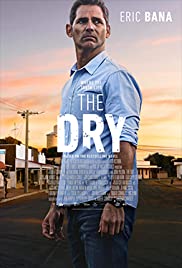 Greetings again from the darkness. Remember when an exonerated OJ Simpson vowed to dedicate his time to finding “the real killer” of Nicole Brown Simpson and Ronald Goldman? For some reason that memory came back in the early stages of this film as a Melbourne-based Australian Federal Police agent returns to his isolated hometown after his childhood friend is implicated in a murder-suicide. See, that agent left town as a teenager when he was suspected of being involved in the murder of a local teenage girl.
 Greetings again from the darkness. Feel-good, underdog sports stories are a dependable addition to the entertainment value many seek from movies. Director Euros Lyn (shout out for the first 3 episodes of “Happy Valley”) and writer Neil McKay take us to South Wales for the unlikely true story of Dream Alliance, a racehorse whose saddle carried the hopes of a downtrodden small town. Only rather than focus on the horse, this is the story of the townspeople who desperately needed something to believe in.
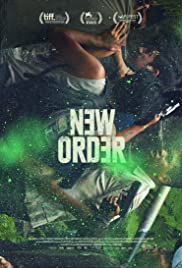 Greetings again from the darkness. “You say you want a revolution … well, you know … we all want to change the world.” Writer-director Michel Franco hits head-on the always hot, and very current topic of the haves versus the have-nots, and I immediately thought of those Beatles’ lyrics.
 Greetings again from the darkness. Certainly I’ve never thought “Dude, just shut up!” more frequently during a movie than while watching this documentary from Neal Thibedeau. That recurring thought had nothing to do with anyone else in the theater (I was watching alone at home), but instead was aimed at the subject of the film, Jonathan Baker. His interminable narcissistic chatter, especially during the first 20 minutes, not only highlights the level of ego we are dealing with, but also tests the patience of any and every viewer.
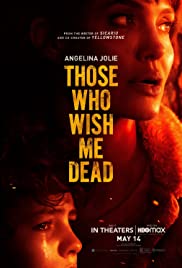 Greetings again from the darkness. Taylor Sheridan was Oscar nominated for his screenplay of the superb
  Greetings again from the darkness. Agoraphobia (the fear of leaving one’s home) has been the topic of a few films over the years, but for whatever reason, none of them have really clicked. Of course, director Alfred Hitchcock brilliantly used a wheelchair-bound James Stewart to create his tension-packed classic
  Greetings again from the darkness. The film opens with a man pointing a gun at a sleeping couple. We hold our breath in anticipation until the tense moment abruptly passes. At its most extreme moments, life can push people to their emotional and physical limits, and that’s what we see with David, played exceptionally well by Clayne Crawford (TV series: “Lethal Weapon”, “Rectify”).
 Movie Reviews from the Dark