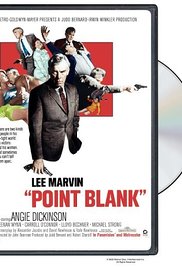
POINT BLANK (1967) revisited

January 31, 2016

point blank Greetings again from the darkness. In the not-inconsequential sub-genre of 1960’s tough guy crime thrillers, it’s tough to beat this neo-noir that carries the lineage of a fine wine, but the taste of a stout beer. Familiar faces are everywhere, bullets fly, double-crossing is expected, Angie flaunts, and revenge is the mission.

While not a box office hit on its release in 1967, the film grew into a cult classic and is now appreciated as one of the era’s best. The set-up is certainly not too complicated. During a heist (filmed at Alcatraz), one of the gang members shoots another at “point blank” range and takes off with both the money and the poor guy’s wife. The shot guy survives and seeks his money ($93,000) and revenge on those who wronged him.

Sure it sounds simple and common, but it’s made special thanks to top notch work from the writer, director, cinematographer, composer and cast. The story (adapted by Alexander Jacobs, David Newhouse, Rafe Newhouse) is based on “The Hunter” from acclaimed crime novelist Donald Westlake (as Richard Stark). The book was also the source material for Mel Gibson’s 1999 movie Payback. Oscar nominated director John Boorman (Deliverance 1972, Hope and Glory 1987) works with Oscar nominated cinematographer Philip H Lathrop (Earthquake 1974) to create a stylish and gritty look and feel, while Oscar winning composer Johnny Mandel (The Sandpiper, MASH theme) adds just the right musical touch.

If that’s not enough for you, Lee Marvin commands attention as the revenge-obsessed tough guy who won’t get fooled again. To call Lee Marvin a tough guy seems redundant and unnecessary, as his screen presence oozed dominance. He was coming off an Oscar win for Cat Ballou and one of his best performances in The Dirty Dozen. In other words, he was an actor at the peak of his Hollywood power.

Joining Mr. Marvin on screen is a prestigious group led by Angie Dickinson and Carroll O’Connor. With a career that spanned more than 50 years, Ms. Dickinson starred in such films as the original Ocean’s 11 and Brian DePalma’s homage to Hitchcock, Dressed to Kill. Of course, she also starred in one of the biggest TV shows of the 1970’s “Police Woman”. And speaking of 1970’s TV, few were more jarring to the culture than “All in the Family” with Carroll O’Connor as Archie Bunker. In this film, Ms. Dickinson plays the sister of Marvin’s double-crossing wife and she gets to flail away in anger at him before the two fall into bed together … a terrific piece of editing. Mr. O’Connor plays Brewster, one of the three heads of “the Organization”, and one of the targets that Marvin chases to retrieve his money.

Playing another of the three heads is Lloyd Bochner, who capitalized on his smooth demeanor and velvety voice during a 7 decade career in TV and movies. Mr. Bochner is the father of Hart Bochner, who (as Ellis) tried to out-smart Hans Gruber in Die Hard. Keenan Wynn appears as a mysterious figure feeding information to Marvin’s character to assist in his quest of taking down the organization. Mr. Wynn is the son of legendary entertainer Ed Wynn who was known for his work in vaudeville, Ziegfeld Follies, TV and movies (Mary Poppins). Keenan also appeared in many TV shows and movies, with Dr. Strangelove: Or How I Learned to Stop Worrying and Love the Bomb being his most famous. Appearing as Lynn, the two-timing wife, Sharon Acker was on the verge of movie stardom … only that stardom never came. By choosing to focus on TV roles, she had a nice long career, but never reached the superstar status many had predicted. Sandra Warner plays the waitress that Marvin talks to, and Ms. Warner simply walked away from the business after this role … despite a successful career that started when she was 18 years old. Yet another familiar face in the cast belongs to John Vernon, who was making his feature film debut. Here he plays the guy pulling the trigger at point blank range, and many will recognize him as Dean Wormer in Animal House. James Sikking plays the sharpshooter employed by the organization, and fans of “Hill Street Blues” will remember him as the slightly annoying Howard.

There are a few other notes of interest regarding actors in the movie … though you’ll have to look quickly. Sid Haig plays a henchman at the hotel. Mr. Haig has had a prolific career as a heavy, bad guy, villain, horror film staple, and even Tarantino favorite. Barbara Feldon, the beloved Agent 99 in “Get Smart” makes an appearance on a Ponds face cream commercial as Marvin watches TV, and Lauren Bacall is seen/heard quickly on a TV set as well. Also, Felix Silla has one scene as a hotel guard. The diminutive Mr. Silla also starred as Cousin Itt in “The Addams Family”. As a final note and shout out to “the Chevies”, it must be noted that Angie Dickinson and Keenan Wynn would also appear together in the deliciously twisted 1971 film Pretty Maids all in a Row from that lover of the female form, director Roger Vadim.

It’s pretty easy to see how all of these factors came together to create this cult favorite. From a filmmaking perspective, the use of flashbacks, editing and sound effects (footsteps) all add to the experience, as does Brewster’s stunning home – which in real life, now belongs to Drew Barrymore. If you are a fan of 1960’s film, it’s one you probably already have seen a few times, but if not, it’s one to watch if for no other reason that Lee Marvin firing shots into an empty bed … I’m still not sure how that was supposed to help him obtain his $93,000, but he really wants his money!

watch the trailer (it’s a hoot!):


MUSTANG (France, 2015)

January 31, 2016

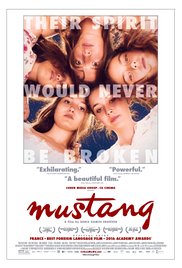
mustang Greetings again from the darkness. Writer/director Deniz Gamze Erguven admits to being inspired by Sophia Coppola’s 1999 The Virgin Suicides (though this is not a remake), and by offering us a rare glimpse into the lives of five sisters in a rural community in Turkey, it’s clear why the film has been so well received at film festivals – culminating in an Oscar nomination for Best Foreign Film. It’s a bit confusing that the film is credited to France (Ms. Erguven’s current place of residence) as it takes place in Turkey and is performed in Turkish. But of course, country of origin is a minor ripple in this year’s uproar over diversity at the Oscars.

Not being any type of expert in Turkey culture or customs, I must accept that the insights provided by Ms. Erguven and her co-writer Alice Winocour are somewhat accurate, which makes the balance between the tradition of female oppression and the amazing spirit of the girls so relatable for many. What begins as a seemingly harmless game of chicken the girls play with some classmates (boys) on the way home after the semester’s last day of classes, turns into a series of events that most will find absolutely unacceptable. The shame brought to the family and the threat of the girls being “spoiled” highlights the extreme reactions from their grandmother (Nihal G Koldas) and Uncle Erol (Ayberk Pekcan).

Lale (Gunes Sensoy) is the youngest of the sisters and in the end proves to be the toughest and most independent. And that’s really saying something. We take in much of what happens through Lale’s expressive eyes, and we as viewers long for reasonableness to enter their lives. After being what can only be described as imprisoned in their own home, the spirit of the girls collectively and individually becomes clear. They find ways, small and large, to rebel … but it’s soon enough clear that the mission is to marry the girls off before it’s too late (there’s that “spoiled” thing again).

As Lale witnesses what her older sisters are subjected to, and how happiness or their own wishes play no role, she becomes more determined to avoid such destiny. With skewed perspective, one might make the argument that Grandmother and Uncle are doing what they think is in the long term best interests of the girls, but the Uncle’s despicable actions void any such thought. Instead we are left to marvel at the strength and spirit of the girls in world that holds them in such low regard as individuals.

Lale’s sisters are Sonay (Ilayda Akdogan), Nur (Doga Zeynep Doguslu), Selma (Tugba Sunguroglu) and Ece (Elit Iscan). The girls are so natural together that we never doubt their sisterly bond. They argue like sisters, defend each other as sisters, and play together like sisters … were it not for their isolated existence, their bond would be a joy to behold. The cinematography throughout the film adds to the discomfort and dread we feel, and the acting is naturalistic and believable.  In the end, it’s the unbridled freedom of the titular creature that Lale defiantly embraces … whatever the consequences may be.

watch the trailer:


THE FINEST HOURS (2015)

January 29, 2016

finest hours Greetings again from the darkness. The U.S. Coast Guard has played a role in many movies over the years, but only a few have placed this service branch directly in the heart of the story … most recently The Guardian (2006), which was little more than a cheesy, too-talkative water-based rip-off of Top Gun.  Director Craig Gillespie (Lars and the Real Girl, 2007) takes a much different approach as he presents a look at one of the most legendary and heroic real-life rescues in Coast Guard history.

The Oscar-nominated writing team behind The Fighter (2010): Scott Silver, Paul Tamasy, and Eric Johnson have collaborated on the screenplay based on the book from Casey Sherman and Michael J Touglas. It’s a worthy tribute (and clearly Disney-influenced) to what is described as the greatest Coast Guard small-boat rescue. It combines a boat-load (sorry) of tension-filled ocean-based sequences with some pretty interesting character-based sub-plots within a Massachusetts community that has become all too familiar with storm-based catastrophes.

Chris Pine stars as Bernie Webber, an awkwardly shy and obsessive rule-follower, who has lived under a cloud of doubt ever since a previous rescue mission failed, resulting in the death of a local fisherman/husband/father. We first meet Bernie as he bungles through a first date with Miriam (Holliday Grainger, a young Gretchen Mol lookalike). The film then jumps ahead to 1952 when they become engaged and Bernie is ordered into a questionable mission by his “not-from-around-here” commanding officer Daniel Cluff (Eric Bana). See, a huge storm has literally ripped apart not one, but two giant tankers, leaving crew members battling for survival. It should be noted that Bana the Australian, tosses out a laughable southern accent that is a joke within the movie and within the theatre (for different reasons).

Bernie and his crew: Richard Livesay (Ben Foster), Andy Fitzgerald (Kyle Gallner), and Ervin Maske (John Magaro), take off against all odds in a too-small boat against too-big waves in a desperate attempt to rescue the tanker crew that includes brilliant engineer (and quiet leader) Ray Sybert (Casey Affleck) and characters played by John Ortiz and Graham McTavish. Affleck excels as what can be termed a quiet leader. Of course, we know how the story ends, but the heroic efforts against a very powerful Mother Nature show-of-force make for compelling movie watching.

The special effects are stout, though not be as spectacular as The Perfect Storm (2010) or In the Heart of the Sea (2015), and it’s the human-factor that provides more than enough thrills, excitement, and tension. In fact, the biggest issue I had was that I saw a 3-D version which is an absolute disservice to the film. Most of the story takes place at night and at sea, so the 3-D consequence of dimmed light and muted colors results in a far too dark and dull look to the film. I spent much of the movie sliding the 3-D glasses down my nose in a simple attempt to enjoy a bit more brightness. The recommendation would be to skip the higher-priced (money grabbing) 3-D version and take in the more pleasing “standard” version.

Disney makes feel-good movies. Their target market is not cynics or the overly critical among us. The romance pushes the “corny” meter, but keeps with tradition of other Disney movies based on true stories like The Rookie (2002) and Dreamer: Inspired by a True Story (2005). Keep this in mind you’ll likely find this one pretty entertaining. Stick around for the closing credits as a slew of real photographs from the actual 1952 event are displayed, as are photos of the real heroes from that night.

watch the trailer:


BEAUTY AND THE BEAST (La belle et le bette, France, 2015)

January 28, 2016

beauty and the beast Greetings again from the darkness. If you are looking for dancing tea cups or singing candelabras, you’ve come to the wrong movie. If you are looking for the Gothic approach to the dark psychological analysis of the original story … again, you’ve come to the wrong movie. Director Christophe Gans (Silent Hill, 2006) offers up a version that is neither animated Disney (1991) nor Jean Cocteau (1946), though his film does have a visual flair that will likely keep audiences (it’s not for very young kids) engaged throughout.

The familiar story was first written by Gabrielle-Suzanne Barbot de Villenueve in 1740, however, it’s the revised version from Jeanne-Marie Leprince de Beaumont in 1756 that provides the fairy tale/fable that has been filmed so many times since. The story’s genealogy based in France instills a bit more hope and responsibility in a project starring Vincent Cassel, Lea Seydoux and Andre Dussolier, and directed by the Frenchman Gans.

Ms. Seydoux is an admirable Belle, and her grace and beauty make for quite the contrast to her needy and entitled sisters. Her time in the castle with the Beast is limited, and therein is the film’s biggest weakness. We never really see the transformation of the Beast to a man who repents, turns over a new leaf, and is worthy of love … it all just kind of happens thanks to the beautiful dresses. Mr. Gans and Sandra Vo-Anh co-wrote the script, and this misstep deflates the core of the story. We are on our own to interpret the messages of class warfare, greed, and judging others by looks. The focus instead is on the visual presentation, which at times is spectacular.

The set design and costumes are especially impressive and elaborate, and though the look of the Beast may not be precisely to your imagination, the film isn’t shy about putting him front and center with the camera. Vincent Cassel’s time as the Prince is pretty well done, and the CGI and explanation of the gold doe, nymph of the forest, magic healing water, pack of beagles and the curse are enough to move the story along … even if some details are lacking.

A bedtime story being read to two young kids is the framing device and might explain why the fantasy world is emphasized over the dark psychological undertones (more prevalent in the Cocteau version). While some might view the ending as somewhat mawkish, it’s really nice to see happily-ever-after is not twisted into some contemporary take on independence.

watch the trailer:


MEET THE PATELS (doc, 2015)

January 24, 2016

meet the patels Greetings again from the darkness. These days the topic of racism is usually only addressed in the form of hatred and closed mindedness. This documentary/comedy looks at how racism within a culture is sometimes not only acceptable, but even encouraged as a tradition … and somehow it makes some sense.

You might recognize Ravi Patel. He is an actor from Transformers and “It’s Always Sunny in Philadelphia”, and here his real life search for a wife is the focus – as is the cultural contrasts between his roots in India and his single life in the United States. Ravi co-directs with his sister Geeta Patel, though Ravi is predominantly on screen while Geeta spend her time operating the camera … while simultaneously jabbing and prodding her 29 year old brother with questions on his dating approach.

The movie picks up when Ravi has recently split with his long time girlfriend, Audrey Wauchope. Despite being very close with his parents, there is one reason Ravi never informed them of the relationship: Audrey is a white girl, not an Indian. Ravi’s parents are the product of an arranged marriage, the long-standing cultural tradition that not only matches male and female Indians, but takes it a step further by only pairing up Patels with roots in the same small geographic area of India. It’s a form of selective mating that dates back many generations.

Things get interesting and the laughs pick up as Ravi agrees to let his parents work the Indian dating network so that he can test out their traditions – in hopes of finding a match as well-suited as what theirs is. This process begins with “biodata”; a type of personal resume submitted by boys and girls – a precursor to the meet-up.

It really plays like a home movie, or a video journal, as Geeta films Ravi on dates and directly after, as he provides feedback on whether it was a good match. There is also a creative use of black & white animation to fill in the interview gaps where only Ravi’s audio is available.

The family quest to find a mate for Ravi provides some interesting and entertaining insight into the culture, but the best parts of the film come courtesy of the parents. The mother and father are exceptionally intelligent and very loving and engaged in supporting the success of their kids. Whenever the film drags a bit, a scene with either parent picks us right back up. It’s their commitment to the cause that highlights the cultural customs and challenges faced by immigrants as they struggle to get in step with American society while holding onto the tradition they so respect.

watch the trailer:


LISTEN TO ME MARLON (doc, 2015)

January 23, 2016

listen to me marlon Greetings again from the darkness. Was he greatest actor of all-time? Or was he a lazy actor only in it for the payday? Was he a defender of Civil Rights and Native American rights? Or was he as disturbed as his Colonel Kurtz? This film from director Stevan Riley addresses all of these questions and more, but what makes it fascinating to watch, is that the only talking head here is that of its subject … Marlon Brando.

Utilizing a treasure trove of Brando’s private audio recordings, and blending those words with some rare photographs and clips, Mr. Riley delivers one of the most unusual posthumous autobiographical documentaries ever released. Bookended by a tragic shooting at Brando’s Mulholland Drive house, the film explores his Omaha childhood with a mother who taught him about nature and music, and a father who was abusive and not a loving man. Both parents were alcoholics, and seemed to set Marlon up for a lifetime of family issues.

Brando’s movie career can be divided into two different chapters. He burst onto the scene in 1951’s A Streetcar Named Desire, and maintained the rebellious sex-symbol status through The Wild One (1953) and On The Waterfront (1954) and Mutiny on the Bounty (1962). Ten years later, a career resurgence brought The Godfather (1972), Last Tango in Paris (1972), Superman (1978), and Apocalypse Now (1978). This second phase solidified his reputation as difficult to work with and as a man with questionable mental stability (and creative use of a hearing aid). Listening to Brando’s self-analysis during these eras provides insight into the enigma … we learn some of what was going on with the troubled genius.

Some of the film’s best segments: learning about his acting (and life) mentor Stella Adler, hearing Brando discuss his “I coulda been a contender” speech and why the masses so closely related, an explanation of his love/fascination with Tahiti (started in Military School and continued while filming Mutiny on the Bounty), and especially a glimpse into his pain-gone-public during the ordeals with his divorce, and his son and daughter (Christian and Cheyenne).

These audio tapes are more intimate and revealing than diaries would be, as we hear Brando’s unbridled emotions in his voice. He was internationally famous for playing roles, but perhaps no role was harder for him than that of being Marlon Brando. A reclusive man who values his privacy does not easily transition to 40 foot silver screen, and his own words let us in on just how difficult this was for him.

watch the trailer:


SON OF SAUL (Saul fia, Hungary, 2015)

January 21, 2016

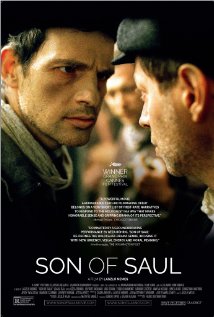
son of saul Greetings again from the darkness. Not wanting to watch another movie related to the Holocaust is understandable. Why should you purposefully agree to experience the misery and unfathomable horror that occurred? The simple answer is that we should never forget one of the darkest and inexcusable periods in human history. Director Laszlo Nemes delivers a new approach … a different viewpoint … and it grabs us and doesn’t let go.

The startling opening is a long-tracking shot featuring Saul Auslander (played by Geza Rohrig) and his duties as part of the Sonderkommando unit at 1944 Auschwitz-Birkenau concentration camp. The red X on his jacket relegates Saul to corralling the next round of Jews into the gas chamber and then cleaning up for the next group. The reward of this position means the delay of his own inevitable death. It’s a closer, more intimate look at a process that we have not prevented ourselves to think much on.

What we soon realize is that dialogue is minimal and most of what we see is as if we were standing right beside or just behind Saul. The shallow focus means much in our sight line is blurred, and we are exceptionally dependent on the sound – what we hear often conveys more of the message than what we see. Cinematographer Matyas Erdely never allows our eyes to drift … he shows us only so much, forcing our brain to process and interpret so many more clues.

The horrific proceedings may be blurred, but it’s a devastating experience nonetheless. Saul’s stoic face masks his true emotions and disgust, and prevents him from drawing any unwanted attention. Saul’s dependability as a Sonderkommando changes in the blink of an eye – he sees the body of a young boy whom he claims is his own son. He becomes obsessed with finding a Rabbi to allow for a proper burial for the boy. It seems clear that this mission is a chance to break from his soul-crushing duties and grab a bit of redemption before it’s too late. Unfortunately, the timing of this mission conflicts with a planned prisoner uprising … adding more complexity to a nearly impossible quest.

This is the feature film debut of director Laszlo Nemes, who also co-wrote the story with Clara Royer. Some of the specifics are drawn from “Voices from Beneath the Ashes” (edited by Ber Mark) and “Auschwitz: A Doctor’s Eyewitness Account” by Miklos Nyiszli. It’s a fearless vision for Holocaust storytelling with many open-ended issues (we don’t always know identities and positions of those we see) and few conclusions provided. But then we all know the ultimate conclusion, and this look may be the most devastatingly intimate look we have ever had.

It’s not a movie that allows you to kick back on the sofa and simultaneously catch up with Facebook. It demands and deserves attention and patience. Nothing here is designed to allow us a “hands off” view from a safe distance. In fact, the lack of traditional story structure and dialogue direction forces us to face the ugliest reality through a different perspective than we’ve ever considered. Powerful stuff.

watch the trailer:


PRESCRIPTION THUGS (doc, 2016)

January 21, 2016

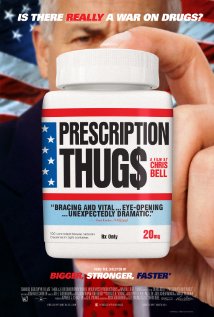
prescription thugs Greetings again from the darkness. United States citizens are living in a culture of addiction. That’s the key message that director Chris Bell and his co-directors Josh Alexander (also the film’s writer) and Greg Young wish to get across. Of course, this one’s not about cocaine or heroin, but rather the more rampant societal problem of overmedication via prescription drugs. It’s not really a revelation or shock-inducing theme, but it’s certainly a worthy and important topic.

The movie begins with Chris Bell introducing himself and reminding us of his first movie, the well received documentary Bigger Stronger Faster (2008). In that one, he focused on the use of steroids and Performance Enhancing Drugs (PED’s) throughout competitive bodybuilding – including him and his brother. Bell connects the two docs by explaining that the steroids lead to pain killers and other prescription drugs … legal drugs prescribed by doctors. To the detriment of the message, he chooses to focus on this for an extended period by speaking with WWE wrestlers, MMA fighters and by explaining that he believes the drugs are at least partially responsible for the death of his brother, known in the wrestling world as Mike “Mad Dog” Bell.

It’s this overly-personalized approach that limits the film’s effectiveness. Chris Bell takes the Michael Moore/Morgan Spurlock approach by putting himself smack dab in the middle of most every segment, and even using cutesy sidebars like animation and a Scarface clip. The result is a somewhat amateurish look and feel to a topic that deserves better.

In case there are doubters, Bell provides some startling statistics … the U.S. is 5% of the world’s population, but consumes 75% of the prescription drugs. One in ten American adults are on antidepressants. Keep that last statistic in mind the next time you stroll through your office, church or the neighborhood shopping mall.

Bell devotes time to “Big Pharma” and its army of lobbyists. He takes us back to the deregulation initiatives of the 1980’s which kicked off what has become the onslaught of “ask your doctor” TV ads that permeate the airwaves. The implied message is simple: if your doctor says the drug is OK, then it must be safe and effective. Our society is being marketed right into addiction. Oxycontin, Vicodin, and Codeine are all part of the Opiate family … the same as heroin. The reality is that the business of prescription drugs has evolved into a money-printing industry. Profits are the goal, which is why treatment is emphasized over cure. An addicted patient is profitable patient, and in a best case scenario for Big Pharma, the side effects of one drug lead that patient right into another drug … sometimes both are produced by the same pharmaceutical manufacturer!

The second half of the film is structured significantly better than the first, and includes what is the most impactful sequence. Bell visits with California Congressman Ted Lieu, who is jolted into action when he is sees that Oxy is readily available on Craigslist. This section also leads to a not-so-surprising confession from Bell – a confession that helps explain why he is so intent on being the center of the movie. A key point that is mentioned, but underplayed, is the admission by a doctor that an entire generation of medical school graduates has been taught that there is no downside to prescribing whatever level of pain medication is required for a patient, and even more frightening is the concern that doctors are being misled by drug companies in regards to efficacy and side effects. It’s another link in the seemingly unbreakable chain that doesn’t address the underlying issue.

This culture of addiction is now self-perpetuating. Pressure to maintain profits far outweighs the rewards of curing a disease, and the FDA approval process is highly politicized. This despite the high-profile celebrity deaths of which Bell reminds us: Michael Jackson, Heath Ledger, Whitney Houston. Prescription drugs played a role in each those deaths, as well as countless others who never had a hit record or movie. While much has been made of the failures of the “War on Drugs”, you may question why more focus isn’t given to the Rx addictions. To help in dealing with this conundrum, there are probably drugs available … just “ask your doctor.”

watch the trailer:


MOJAVE (2016)

January 21, 2016

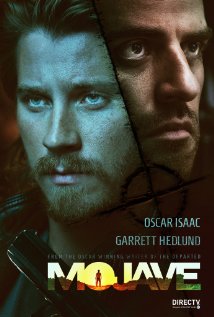
mojave Greetings again from the darkness. The isolation of the desert seems the perfect place for an artist to achieve the existential awakening necessary during a time of personal doubt and crisis. The journey to find one’s true self becomes much more complicated when the one-man desert getaway is interrupted by heavy boozing, self-destructive tendencies, and a serial-killer sociopath. Such is the case with writer/director William Monahan’s (Oscar winner for his screenplay of The Departed) latest film.

Garrett Hedlund plays Thomas, a very successful filmmaker, who seems to take no joy from his life of luxury … a mansion in the hills, cool cars, a wife and daughter, and endless adulation. Sporting the ultra-cool celebrity look of sunglasses and long hair, Thomas heads off into the desert to either clear his mind or end his life. We aren’t really sure which, and neither is he. Lots of Vodka and reckless Jeep driving leave Thomas in a showdown of wits and machismo across a campfire from a sinister yet articulate drifter.

The drifter is Jack, played by Oscar Isaac, and it’s no surprise when we learn he is a serial killer … the sociopath part we figured out quickly, right along with Thomas. Their under-the-stars confrontation leads to a tragic accident the next day, and pits these two in a B-movie game of cat and mouse with a tone that reminds a bit of Cape Fear (1991) and U-Turn (1997).

Heading back to L.A., Thomas comes up with an incredibly stupid plan to cover his tracks. Being famous “since I was 19 years old” and having financial success with movies hasn’t trained Thomas on facing off against a clever nemesis. Even his discussion with his manager (played by an unusually low-key Walton Goggins) comes across as literary-speak rather than real advice. “Worry about what seems to be” is the advice Thomas rolls with.

Monahan fills the screen with tough-guy dialogue for these two characters that are both simultaneously stupid and smart. Jack and Thomas go at each like a couple of intellects, but it’s the class warfare that stands out. The 99% versus the 1%. The message seems to be that it comes down to circumstance on whether one is an artist or a psychotic felon … and the line separating the two is pretty slim.

It’s also not a very well disguised ripping of the film industry … especially of producers. Mark Wahlberg chews some scenery as a d-bag movie producer who talks loud and fast while accomplishing little. It’s a pretty funny turn for Wahlberg, though unfortunately his character spends limited time on screen. Louise Bourgoin has a couple of scenes, and quickly proves more would have been welcome.

The film may not be much to look at, and doesn’t really make much sense, but some of the dialogue duels and “brother” banter, manage to keep us interested throughout. “Take a left. Take a right.” It doesn’t much matter with these two well-read adversaries from opposite sides of the tracks.

watch the trailer:


WAVES ’98 (animated short film, 2016)

January 21, 2016

waves 98 Greetings again from the darkness. With a prestigious award from Cannes, filmmaker Ely Dagher probably had hopes for an Oscar nomination in the animated short film category. The nomination didn’t happen, but that doesn’t diminish the fine work from the Beirut-born director, who also uses splashes of news reel footage to contrast with the animation.

A teenager in suburban post-war Beirut has become disillusioned with his days of school and mundane home life. He spends hours on a rooftop gazing at downtown Beirut and a world so close, of which he knows so little. One day he is drawn to the unfamiliar urban landscape by a light emanating from the tall buildings … a light encouraging the younger generation to cross the bitter lines of division that have been wrecking the city.

He soon enters a world of imagination and serenity, and finds his bond to his real life slipping away. It’s a reminder that change only occurs with action, not merely dreams of a better world. The recurring theme and the block in his mind are presented to us by these two lines: “I’m tired of hearing the same story over and over again”; and “It feels like everything is stuck.” These feelings are not uncommon in teenagers all over the globe, but especially poignant given this setting.