Greetings again from the darkness. Marlon Brando was a true Hollywood legend. Renowned for his performances in such movies as A STREETCAR NAMED DESIRE (1951), ON THE WATERFRONT (1954), and of course, THE GODFATHER (1972). He was nominated for eight Oscars, winning three. Despite his on-screen fame, Brando was an enigma in life. Sexual escapades, a commitment to causes, a neighbor and friend to Jack Nicholson, and his own French Polynesian island contributed to the mystique. It’s that private island which writer-director Bill Fishman (nearly a 40-year career of music videos) focuses on here.
The film is adapted from the 2011 book, “Waltzing with Brando: Planning a Paradise in Tahiti”, written by Bernard Judge, who is not just a big part of the story, it is in fact, his story being told. We first meet Bernard Judge (played by Jon Heder, NAPOLEON DYNAMITE, 2004) as a California-based architect with an interest in ecologically friendly and sustainable construction. It’s this interest that draws the attention of Marlon Brando (Billy Zane, TITANIC 1997; TOMBSTONE 1993, the underrated DEAD CALM 1989), who wants to develop something special on his remote island, Tetioroa. The two men hit it off and Bernard, with input from Brando, develops a comprehensive master plan and design.
Now if all that sounds a bit serious, you should know that director Fishman takes a light-handed, comedic approach to most of it. Zane’s Brando is both charming and manipulative, while Heder’s acting as Bernard is more suited to the man who finally takes to the relaxed Tahiti lifestyle, rather than the starched-shirt architect we first meet. Zane is made to look very much like Brando, yet he doesn’t limit his performance to posing and side-eyes. He even gets to deliver his Brando in “cuts” from THE GODFATHER, LAST TANGO IN PARIS, APOCALYPSE NOW, and SUPERMAN.
We learn developing a private island is not easy, even for Hollywood royalty. It’s also not cheap, and Brando, despite feeling tired of acting, continued taking jobs to pay for his dream … his restructuring of his “Gangster Movie” (THE GODFATHER) ended up costing him millions of dollars. The supporting cast includes Rob Corddry as Brando’s Business Partner, Richard Dreyfuss as the Money Manager, Alaina Huffman as Bernard’s wife, Camille Razat as a special friend. There are also appearances from Tia Carrere, David Guerira (as Francis Ford Coppola), and Heiae Touniou. Thanks to CGI, we see clips of Brando with Dick Cavett and Johnny Carson, and in keeping with the light-handed approach, there is a significant amount of speaking to the camera (breaking the 4th wall).
Billy Zane makes an excellent Brando (with a unique doorstop), while Jon Heder seems a bit miscast (or trying too hard). The story emphasizes Brando’s relaxed island style, purposefully avoiding the dark side. For Bernard Judge, these four or five years were life-altering, and we even see him looking back in 2010 during an interview for the book. Bernard passed away in 2021, so he didn’t get to see the film. It’s not a movie you can’t refuse, but for movie fans, it’s certainly fun to see Billy Zane as the icon.
Greetings again from the darkness. Thanks to (or maybe because of) Stallone, Schwarzenegger, Bruce Willis, and Liam Neeson, we are rarely without a senior citizen action film. However, it’s a bit surprising for most of us to see Oscar winner Richard Dreyfuss (THE GOODBYE GIRL, 1977) load up his gun and take to the streets for revenge. Writer-director Adam Lipsius scored a double Oscar coup by also casting Mira Sorvino (MIGHTY APHRODITE, 1995) as Dreyfuss’ detective-daughter.
“Based on actual events”, Mr. Lipsius bookends the film with the elderly Ben Myers (Dreyfuss) riding in the back of a limousine. He’s barely coherent, but in the opening we can make out, “If I wake up, I’ll choose different.” We then flashback 12 hours to re-live what is likely Ben Myers’ worst day ever. He’s been diagnosed with terminal cancer, and though he’s a former mobster, he says he went “legit” 12 years ago, and runs a local bar with his loyal-to-a-fault sidekick Tommy (the always interesting Pruitt Taylor Vince). Ben’s estranged daughter (Sorvino) hits him up for money she says is for the daughter and grandkids that Ben has never acknowledged. Next thing we know, Ben’s house has been robbed of all his cash (a quite substantial amount) and trashed by 3 men who take advantage of Ben’s beloved dementia-stricken wife Nan (Megan McFarland).
This kicks off Ben’s mission of revenge. Gun by Glock, body by Devito. His daughter is concerned he’s taking this on by himself, and there is the added complication of her working for a politician that Ben once helped out of what would have been a career-ending jam. In fact, there are so many sub-plots, sub-sub-plots and characters who come and go, that much of this makes little sense. It works best when focusing on an aging (former) mobster trying to even the score, and gets a bit shaky when it reverts to dysfunctional family stuff. I believe there are five crying scenes, which is entirely too many for any movie not named SOPHIE’S CHOICE.
For those of us who recall Dreyfuss from his early TV days, a brief appearance in THE GRADUATE (1967), and of course in AMERICAN GRAFFITI (1973) and JAWS (1975), there is some enjoyment to be had in watching ‘Mr. Holland’ take a violent approach to revenge … though he’s certainly no AARP reincarnation of John Wick. Overall, it’s a pretty generic take on geriatric anger, with bonus points for a spot on description of what it feels like when one’s spouse is ravaged by dementia.
Arrives August 13, 2021 in select theaters, On Demand, and on Digital
Greetings again from the darkness. Despite my fascination and quasi-obsession with movies, the Science Fiction genre has never really appealed to me. Sure, there have been a few dozen exceptions over the years (and it depends how you categorize certain movies), but it’s the non-classics in the genre that just never seem to connect with my love of film. So when Steven Spielberg states that he doesn’t consider his beloved CLOSE ENCOUNTER OF THE THIRD KIND(CE3K) to be a “sci-fi” film, you won’t see me get offended, or even offer a contrary argument. Of course, the difference is that Mr. Spielberg makes his claim based on his belief of life “out there”, while I simply have no desire to defend the category label.
For its 40th anniversary, the film is making the rounds in selected theatres, and the big screen is a must for this gem. Released in the same year and just a few months after George Lucas’ groundbreaking STAR WARS, Spielberg’s follow-up to JAWSconfirmed his status as a revolutionary filmmaker, and cemented 1977 as one of the finest movie years of all-time (including ANNIE HALL, SATURDAY NIGHT FEVER, A BRIDGE TOO FAR, JULIA). CE3K would become the first of 7 Best Director Oscar nominations for Spielberg (inexplicably only one win to date).
Spielberg is credited as the writer, though many contributors are “uncredited”: Hal Barwood (now known for video games), Jerry Belson (Emmy winner for “The Odd Couple” and his work with Tracey Ullman), and John Hill (QUIGLEY DOWN UNDER), and Matthew Robbins (CRIMSON PEAK). Paul Schrader and Walter Hill also contributed to the script, making this the veritable vegetable soup of screenplays. The film came at a time when Columbia Pictures was struggling, so in order to remain under budget, Spielberg had to make some compromises on the final version. In a highly unusual development in the movie industry, Spielberg was able to revise, re-edit, and add new scenes to a 1980 re-release of the film – realizing his original vision.
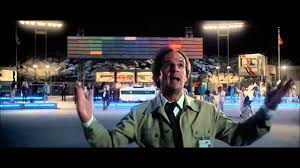
Richard Dreyfuss stars as Roy Neary, a blue collar family man from Muncie, Indiana. With an acting career spanning more than 50 years (many recognize his baby face in THE GRADUATEas he offers to call the cops), it was AMERICAN GRAFFITIthat caused his career to take off, leading to JAWS in 1975, and his stellar 1977 with both CE3K and THE GOODBYE GIRL. He later overcame a severe drug habit to star in such crowd favorites as WHAT ABOUT BOB?,MR. HOLLAND’S OPUSand “Madoff”. His wife Ronnie in CE3K is played by Teri Garr, whose acting career also covers more than 50 years, including small roles in five different Elvis movies in the 1960’s and her best known roles in YOUNG FRANKENSTEINand TOOTSIE (for which she received a Best Supporting Actress Oscar nomination). In recent years, she has had to turn her energy and attention to health issues.
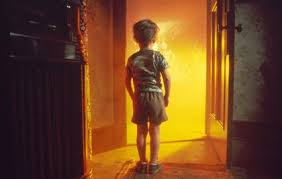
Melinda Dillon stars as Jillian, mother to young Barry (Cary Guffey) who is abducted by the aliens. Ms. Dillon received her first (of two) Oscar nomination for her work in the film, and is still seen annually breaking a leg lamp in the holiday favorite A CHRISTMAS STORY, although she retired from acting ten years ago. Young Mr. Guffey is now 45 years old and hasn’t acted since 1985. Director Stanley Kubrick considered him for the role of Danny in THE SHINING, but ultimately decided on Danny Lloyd, another youngster who decided against remaining in showbiz.
Francois Truffaut was an Oscar nominated director known for kicking off the French New Wave of Cinema with his all-time classics THE 400 BLOWSand JULES AND JIM, and it was quite surprising to see him cast in the role of UFO expert Claude Lecombe. It’s likely that cinephile Spielberg loved the idea of working with a peer whose work he so admired. Truffaut is a significant screen presence despite his challenges with the English language (which led to “dialogue cheat sheets” throughout filming). Bob Balaban, so familiar to “Seinfeld” fans, plays the translator, while Justin Dreyfuss (Richard’s real life nephew) is the noisy and obnoxious son during the hectic family scene. Roberts Blossom is the one in the film who admits to spotting Bigfoot, and is best known as Kevin’s neighbor in HOME ALONE and the braced-up car seller in CHRISTINE. He was also a well-respected poet before passing away in 2011. Other familiar faces include Lance Henrikson (ALIENS), George DiCenzo (BACK TO THE FUTURE), Carl Weathers (ROCKY), CY YOUNG (OK, more a name than a face), Bill Thurman (Coach Popper from THE LAST PICTURE SHOW), and gas mask salesman Gene Rader, who hails from Paris, Texas.
Desert discoveries are a key here, and offer more insight into Spielberg’s attention to history. The “lost” plane is a tribute to real life Flight 19 which disappeared in 1945, and The Cotopaxi was a real cargo ship that sunk … both becoming part of Bermuda Triangle lore. Devil’s Tower in Wyoming is also significant here, and it’s Spielberg’s nod to John Ford’s frequent use of Monument Valley in his westerns. Spielberg has admitted to watching Ford’s THE SEARCHERSdozens of times while filming CE3K. Another tribute comes in the form of a wind-up monkey with cymbals. It was previously seen in REBEL WITHOUT A CAUSE, and can also be viewed as a precursor to the infamous clown in POLTERGEIST.
Spielberg acknowledges being inspired by President Nixon and the Watergate scandal. He wondered what else the government might be hiding from us. Remarkably, he gets his point across with a total absence of modern day cynicism. As opposed to what we usually see these days, the military isn’t trying to bomb the mothership and citizens aren’t retreating in a panic to bunkers. Instead, the military is working to keep the public safe (albeit through some sneaky strategy), the scientists are approaching communication through a protocol steeped in research and data gathering, and Dreyfuss and Dillon are trying to figure out why they were “chosen”. Spielberg delivers sweetness and warmth rather than a show of power and might. It’s such a pleasant viewing experience to watch people we like and to whom we can relate.
Some points of interest related to the film include a cameo from famed UFOologist J Allen Hynek, who is seen smoking a pipe as the abductees are released from the mothership. Mr. Hynek actually created the phrases Close Encounters of the First, Second, and Third Kinds. ABC news anchor Howard K Smith is seen since CBS would not grant permission for Walter Cronkite to appear. The film’s stunning visual effects come courtesy of Douglas Trumball, who also collaborated with Stanley Kubrick on 2001: A SPACE ODYSSEY. Of course, the Visual Effects Oscar that year went to STAR WARS, and that speaks to the contrast between the films. STAR WARSis clearly a special effects movie, while CE3K is much more of a character study … a study of human emotions.
As for other Oscar categories, the film was nominated for 9 total, with the only win going to Cinematographer Vilmos Zsigmond, though it was also awarded a Special Achievement Oscar for Sound Effects Editing. Spielberg was nominated, but Woody Allen won Best Director for ANNIE HALL, and Richard Dreyfuss actually won the Best Actor Oscar that year for THE GOODBYE GIRL. The great John Williams was of course nominated for his iconic 5 note melody (following up his immortal JAWS theme), and he instead won the Oscar that year for … repeat after me … STAR WARS. A quirky note on the music – the “voice” of the mothership was a tuba, not an instrument that typically gets much publicity.
While Stanley Kubrick opted not to show aliens in 2001: A SPACE ODYSSEY, this film not only puts the aliens front and center, it reminds us to keep an open mind to those unfamiliar to us … a lesson that is still important today. The film was named to the National Film Registry in 2007, and seeing it on the big screen allows for the full impact of awe and wonderment. It’s rated PG and can be enjoyed by most ages. Spielberg only asks that you leave the cynicism at home.
Greetings again from the darkness. Jason Priestley is well known for his acting career, and his first feature film as a director combines two of the more familiar movie paths – the odd couple and the road trip. Writer Jessie Gabe jolts the screenplay with enough comedy and poignancy that we overlook the air of familiarity and instead concentrate on the mismatched titular characters. Ms. Gabe also makes a memorable onscreen appearance as a snippy receptionist.
Richard Dreyfuss plays Dr. Cas Pepper … yep, he is Dr. Pepper (I suspect that’s why he goes by Cas). Thanks to the narration and early scenes, we quickly learn Cas is a widower, a 30 year doctor, and recently discovered to be terminally ill. Cas has perfectly worked out a plan to “head west” and go out on his own terms … if only he wasn’t experiencing writer’s block on his suicide note.
Worlds collide as Cas agrees to give Dylan Morgan (Tatiana Maslany, “Orphan Black”) a ride to her boyfriend’s trailer. Cas wrongly assumes that the energetic and fast-talking Dylan was visiting a relative at the hospital, and soon learns that she was experiencing “suffering vicariously through patients”. See, Dylan fancies herself a writer and has developed a new genre, Action Romanture, which she is convinced will secure a publishing deal and rescue her from a world that doesn’t appreciate her in the least.
An unexpected turn leaves Cas and Dylan on the road together, and quibbling like an old (and odd) couple. Nothing that follows is especially ground-breaking, and in fact, is mostly quite familiar; yet the two leads somehow captivate us with their banter and the understanding that this is leading right where we know it must lead.
Director Priestley wisely utilizes the stunning landscapes of western Canada, and allows the two actors to go at each other in a way that two different generations must – all the while building a friendship that we see long before they do. There are some interesting and effective song choices, but it’s Ms. Maslany’s spunk and depth as Dylan that allows the interactions to click. The legacy note may be the goal here, but the lesson is that no one should be alone … no matter if they be a 22 year old social misfit, or a sixty-something doctor near the end of life.
Greetings again from the darkness. It’s the 45th anniversary of this film’s release and it was awarded a limited theatrical re-release, which I took advantage of last evening. Unlike so many films, the big screen doesn’t really bring anything special here, but then, it really doesn’t require any assistance. I fall into the category of those who consider this one of the all-time best films. Not only is it off-the-charts entertaining, the dialogue is brilliant, the performances are pitch perfect, and the camera work and soundtrack are highly complimentary.
As my number of viewings have increased over the years, I have become a true admirer of the performance of Anne Bancroft as Mrs. Robinson. It is heart-breaking and emotional. The first glimpse of her always makes me smile … she is in the background as Ben (Dustin Hoffman) pinballs through the party trying to avoid the clutches of his parents’ friends. In her scene in bed when she tells Ben about her college background in art and how her dreams came crashing down, her voice and facial features are filled with pain. Watch the movie from Mrs. Robinson’s point of view and my guess is you too will have a renewed understanding.
Of course, the age differences of the lead actors breaks all of my “movie pet peeve” rules. Dustin Hoffman was 30 at the time and he is playing a soon to turn 21 year old Ben. Anne Bancroft has a line to Ben where she says she is “twice your age“. Actually, she was only 36 at the time, and Katharine Ross (Elaine) was 27. Also, William Daniels who plays Ben’s dad, was only 10 years older than Hoffman.
The movie is based on the Charles Webb novel and the screenplay was written by Buck Henry, who also plays the hotel clerk with whom Ben has an ongoing dialogue. Calder Willingham is also credited thanks to a lawsuit brought after the fact. The director, Mike Nichols has had a terrific career, and was also a co-founder of Chicago’s Second City Improv. He is also one of only 12 EGOT’s: winners of an Emmy, Grammy, Oscar and Tony. One of Mr. Nichols’ most famous collaborators is Elaine May, who plays the roommate delivering the note to Ben … and is the target of a most interesting camera angle.
There are so many iconic moments and shots from the film. Everyone is aware of Mr. McGuire’s “Plastics” advice to Ben, and we see Norman Fell as Ben’s landlord who has no appreciation for “agitators“. It’s also fun to note that we see a glimpse of a young Richard Dreyfuss who says he’ll “get the cops“, and Mike Farrell (from “MASH”) makes his film debut as a bellhop at the hotel. It’s also the final screen performance for Alice Ghostley, who many know from “Bewitched”. One of the most famous film posters in history shows Dustin Hoffman photographed through the leg of Mrs. Robinson. Actually, that leg belongs to Linda Gray, who went on to fame as Sue Ellen Ewing in the “Dallas” TV series. It should also be noted that the pivotal Taft Hotel in the film is actually the very famous Ambassador Hotel, which of course, is where Presidential candidate Robert F Kennedy was assassinated in 1968. The hotel was later demolished in 2005.
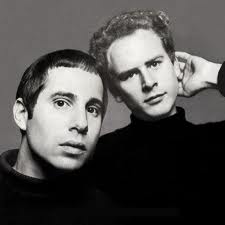
On a personal note, some of my favorite moments in the film include the shot of Mrs Robinson reflected in the glass top table as she arrives for her first night with Ben. Also, director Nichols allows the camera to linger on a furious and disgusted Bancroft as Hoffman shows up for his date with Elaine. And yes, it should be mentioned that Katharine Ross became the “dream girl” of the 1960’s thanks to this role and her role in Butch Cassidy and the Sundance Kid. As for the Simon and Garfunkel music, the most interesting piece is the unfinished “Mrs. Robinson” song that Nichols selected, even though Paul Simon presented it to him as “Mrs. Roosevelt” (as in Eleanor). Singing only the chorus and relying on acoustic guitar and an endless supply of Di-di-di’s, the unfinished version is a perfect fit for Ben’s pursuit of Elaine. One of my guilty pleasures from the film is courtesy of Murray Hamilton who seems to just choke on his lines as he spits them out to Ben – in both of their key scenes together. Hamilton went on to be Mayor of Amity in Jaws, but his career peak was in not shaking hands with Ben.
Though it’s not technically the final shot, the faces of Elaine and Ben on the bus is one of the most memorable endings in movie history … the cherry on top for one of my absolute favorite films.
Mrs Robinson opening up her personal life for Benjamin:
Greetings again from the darkness. Ba-dum. Two of the more recognizable notes from any movie musical score are courtesy of 5-time Academy Award winner (45 nominations!), composer John Williams. A truly great score plays a vital role in the emotional connection that a viewer makes with a movie. In some movies, we barely notice the music. Not so with the Jaws theme. In 1975, it signaled an immediate jump in our blood pressure and has since glided right into becoming part of our societal lexicon – musical slang for “danger is on the way”.
You are probably wondering why I am writing about a 36-year old movie … especially one that revolves around shark attacks. Haven’t we had more than our share of monster and disaster flicks? Well, my friends, it’s time for you to re-discover the wonderment, joy, anxiety, humor and humanity of Jaws. I did just that last evening at a screening provided by the Dallas Film Society, Dallas Morning News and film critic Chris Vognar.
When Jaws was first released in 1975, I saw it three times over three consecutive days. I couldn’t get enough! It was, after all, the first “summer blockbuster”. At the time, I was the ultimate beach lover, and along came a movie that was so frightening, it convinced people to stay out of the water! Over the years, I have watched it quite a few times on cable/tape/DVD, but not until last evening was I able to re-live that theatrical experience from the summer that changed movies forever. Last night the theatre was full, and nearly a third of those in attendance claimed to have never before seen the movie. So my hope is that you will make time for this classic film … whether it’s your first time, or your twentieth. Introduce it to your kids, grandkids, nieces and nephews (if they are ready). Talk about what makes it great, and about all the movies it has since influenced.
Rather than “review” the movie, I will point out some interesting details on how it was made, its legacy and even some of my favorite moments from the movie.
Director Steven Spielberg was 28 years old when the movie was released. He had already made some noise as a filmmaker with Duel and Sugarland Express, but it was the success of Jaws that labeled him wunderkind. The now-legendary Spielberg went on to direct such classics as Close Encounters of the Third Kind, three Indiana Jones movies, The Color Purple, the first two Jurassic Park‘s, Schindler’s List, and Saving Private Ryan. He is also listed as Producer on more than 120 other projects. He is the ultimate ‘mover and shaker’ in Hollywood. But Jaws was his last movie where the burden of expectations and box office results were minimal. Jaws went on to gross almost a half billion dollars worldwide … an unheard of level at the time (movie tickets cost about $2.oo each in 1975).
The story is based on the first novel by Peter Benchley, who would later write “The Deep” and “The Island“. Mr. Benchley also appears briefly in the film version of Jaws as a reporter on the Amity beach. The novel was a best seller, but much darker in tone than the Spielberg film. Spielberg turned the book’s key characters into less abrasive personalities, while maintaining the colorful attitudes.
Speaking of characters, many people tend to focus on Roy Scheider‘s Martin Brody, Chief of Police on Amity Island. He really does a nice job as the no-nonsense non-islander attempting to fit in without poking too much fun at the “problems” of the locals. Others are drawn to the performance of Richard Dreyfuss as Oceanographer Matt Hooper. Dreyfuss is far and away the most energetic of the actors, and his cocky, know-it-all, rich boy makes for a terrific contrast with the other more subdued characters.
The guy to really watch in this movie is the great Robert Shaw as Quint, the crusty local fisherman who vows to kill the shark for a huge fee. Spielberg originally wanted Lee Marvin for the role, but it’s difficult to imagine anyone other than Shaw as the tough-as-nails Quint. His sililoquy regarding his USS Indianapolis ordeal is mesmerizing and fascinating … and that scene alone should have won him the Best Supporting Actor. Yet somehow, he wasn’t even nominated in the year that had, yes, George Burns winning for The Sunshine Boys. Shaw’s character comes across as true salt of the sea, and watching him co-exist on a small boat with Scheider and Dreyfuss for the entire second half is movie-watching glory. As they compare scars and enjoy an adult beverage, we are afforded a brief laugh outloud moment. And don’t miss Scheider giving momentary consideration to flaunting his appendix scar.
Much has been written over the years about the animatronic shark. It was nicknamed Bruce, after Spielberg’s attorney. Bruce gave the filmmakers a great deal of trouble and, because of that, the film works even better. We don’t glimpse the shark until well into the movie, giving tension and anticipation much time to build. Until the last few minutes, we really don’t get a full-on view of the shark, but it SEEMS like we do!
The Mayor of Amity is played by Murray Hamilton. Mr. Hamilton is well remembered as Mr. Robinson … husband to THAT Mrs. Robinson … in The Graduate (1967). In that movie, he refused to shake Dustin Hoffman‘s hand. Here, he refuses to close the beaches, for fear of losing tourist revenue. He only has a hand full of scenes in Jaws, but each is quite memorable. Watching him speechify to the cameras, politicize to the citizens, and nearly break down while smoking in the hospital, adds depth and intensity to the film.
The trivia associated with Jaws is abundant. What’s really important is that this is an incredibly well made movie that holds up extremely well today. When you watch it, notice how you immediately understand the feelings of the locals at the town hall meeting, the desperation of the deputy, the shame of the Medical Examiner, the bravado of the fishermen and the confusion of Brody’s wife. Notice the camerawork as it varies between the viewpoint of the shark, the viewpoint of a character, or interested onlooker to the beach happenings. Check out the masterful film editing with three characters battling for space aboard the Orca. Great stuff.
Jaws was nominated for Best Picture, but lost out to One Flew Over the Cuckoo’s Nest. It did win for Best Editing, Best Sound, and Best Music (score). Its lasting impact includes the genius of Spielberg, turning Summer into Movie time, and that iconic score. Ba-dum. Stay out of the water!
 Greetings again from the darkness. Marlon Brando was a true Hollywood legend. Renowned for his performances in such movies as A STREETCAR NAMED DESIRE (1951), ON THE WATERFRONT (1954), and of course, THE GODFATHER (1972). He was nominated for eight Oscars, winning three. Despite his on-screen fame, Brando was an enigma in life. Sexual escapades, a commitment to causes, a neighbor and friend to Jack Nicholson, and his own French Polynesian island contributed to the mystique. It’s that private island which writer-director Bill Fishman (nearly a 40-year career of music videos) focuses on here.


 Posted by David Ferguson
  Greetings again from the darkness. Thanks to (or maybe because of) Stallone, Schwarzenegger, Bruce Willis, and Liam Neeson, we are rarely without a senior citizen action film. However, it’s a bit surprising for most of us to see Oscar winner Richard Dreyfuss (









 Movie Reviews from the Dark