NUREMBERG (2025)

November 6, 2025

Greetings again from the darkness. Skipping the many films based on and around WWII and the Holocaust is understandable. Even the uplifting stories of heroism and survival are unsettling and tough to watch. However, so many lives lost in the name of a power-hungry madman means these stories must continue to be told – as a reminder to folks how dangerous and tragic it can be to blindly follow an authoritarian. Writer-director James Vanderbilt’s (TRUTH, 2015) second time directing is based on the writing of Jack El-Hai in “The Nazi and the Psychiatrist”.

Vanderbilt opens the film by stating it’s “based on the accounts of those who lived through it and those who didn’t”. It’s May 7, 1945. Hitler and many other Nazi officers are dead from suicide. The last day of the war finds Reichsmarschall Hermann Goring (Oscar winner Russell Crowe) surrendering to Allied troops. We are immediately struck by Crowe’s ability to create an air of superiority around Goring, even as he surrenders. Goring is imprisoned at Nuremberg, and what happens next is a reminder of how crucial humanity and justice are, even in times of war and in the face of atrocious activities by others.

While many want Goring and any remaining Nazi officials immediately executed, Supreme Court Justice Robert H Jackson (Michael Shannon) believes a tribunal and public trial are crucial for the allied nations to send the message that justice matters, no matter how heinous the crimes (or the criminals). A U.S. Army psychiatrist, Dr. Douglas Kelley (Oscar winner Rami Malek) is charged with interviewing Goring to ensure he is capable of being tried in court. It turns out that Goring is more than capable and we are drawn in watching the verbal and psychological duel play out between Goring and Kelley. These scenes (Crowe and Malek) are mesmerizing, and Crowe delivers a towering performance – his best in years, and certainly worthy of Oscar consideration.  Sgt Howie Triest (Leo Woodall) is present as a translator, though his place carries more weight later in the story.

Prior to the trial, another excellent scene plays out at the Vatican as (now) lead prosecutor Jackson strong arms the Catholic church into supporting the trial. Unlike Stanley Kramer’s fantastic 1961 film, JUDGMENT AT NUREMBERG, most of this one takes place outside of the courtroom. However, once it moves to trial, Jackson and co-counsel Sir David Maxwell-Ffyfe (Richard E Grant) find going toe-to-toe with Goring is every bit as challenging as Kelley had reported. Devastating concentration camp footage is shown to display the shock of those seeing it for the first time. The last bit of the story is about Kelley and his book centered on his sessions with Goring. Overall, the historical accounts have been scaled back for accessibility and brevity (despite the film’s 148-minute run), yet we never lose sight of the importance of the trials.

Opens in theaters on November 7, 2025

WATCH THE TRAILER


OPPENHEIMER (2023)

July 22, 2023

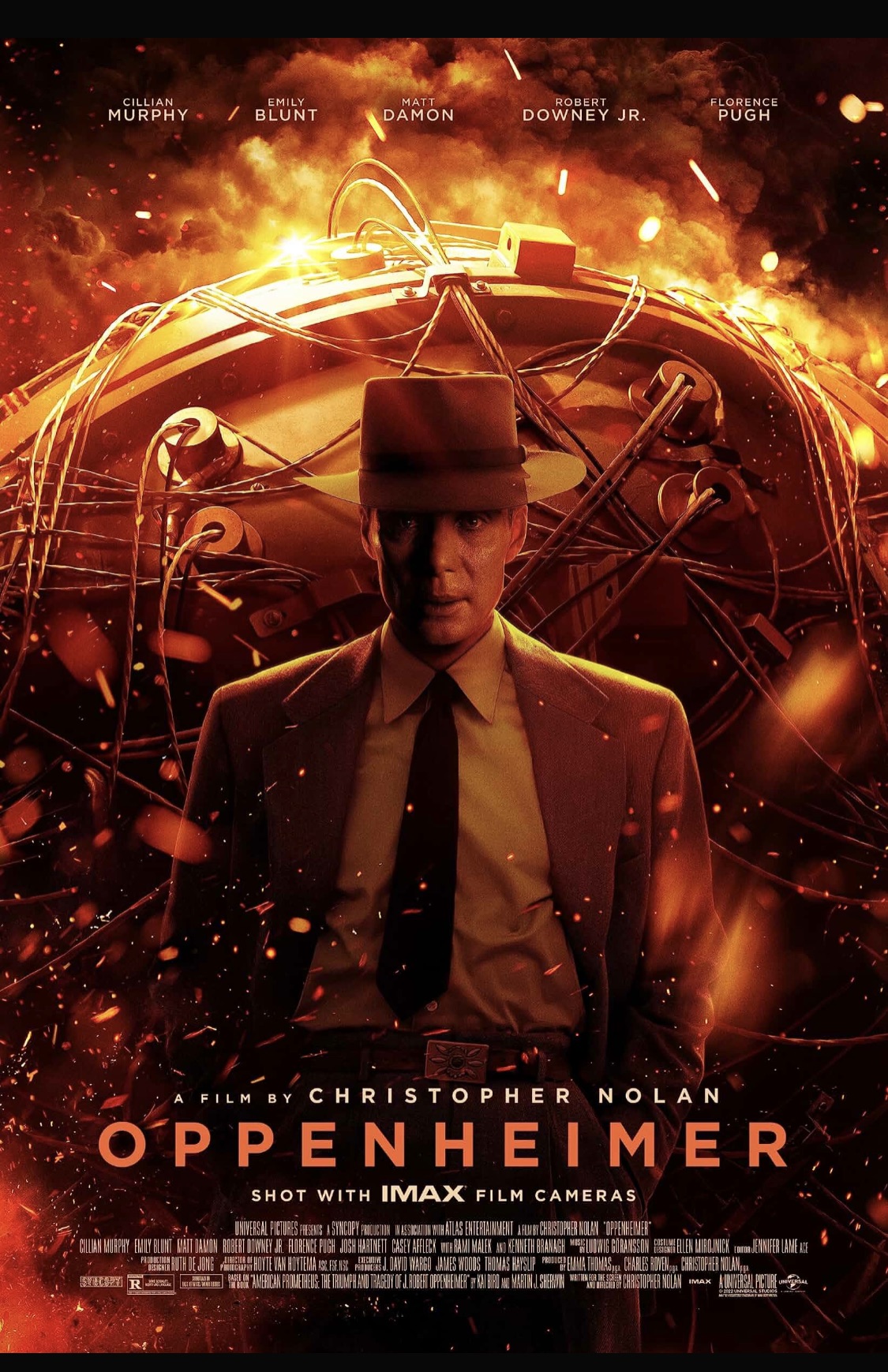
Greetings again from the darkness. As pupils slouched in our school desks during history class, we easily and naturally disassociated with the many stories of war. World War II was lumped in with WWI, the Civil War, and The Revolutionary War. There were names and dates to memorize for quizzes and final exams, yet even with relatives recounting stories of kin, a personal connection was rare. As we aged and experienced modern-day warfare, the personal connection became all too real. Reality struck that soldiers are human beings with families, and despite their missions and marching orders, most are as innocent as the ‘tragic civilian casualties’ reported on the newswires. Along these lines, an aspect of war that has often remained overlooked is the behind-closed-doors decision-making of politicians and military leaders. Filmmaker-extraordinaire Christopher Nolan takes us behind those doors through the eyes of J Robert Oppenheimer, the Father of the Atomic Bomb. What we see is quite frightening.

Prepare yourself. At a full three hours in length, Nolan’s film is a hefty undertaking for viewers. It demands full focus and attention to details and nuance, as you spend significant time listening to brilliant men talk amongst themselves. Nolan adapted the screenplay from the 2005 biography, “American Prometheus: The Triumph and Tragedy of J Robert Oppenheimer”, written by Kai Bird and Martin Sherman. The end result is a film centered on complex physics and mathematics, yet presented in a simplified manner such that it’s much more a character study than a science class. The key is what characters say to each other, how they say it, and how they debate and rationalize the morality of the objective … building a bomb designed to kill people.

The morality of The Manhattan Project is under the microscope here, as is the motivation and concern of Oppenheimer. We get some early background establishing him as an upcoming mind in the world of physics from his academic stops around the globe. Some know Cillian Murphy from “Peaky Blinders” or as Scarecrow in Nolan’s Batman movies. I’d also recommend a couple of Murphy’s underrated gems: FREE FIRE (2016) and RED EYE (2005). It’s hard to overstate how spot on Murphy is as Oppenheimer. He lost weight for the role and captures the distinctive movements and speech patterns, as well as the familiar poses and deep-in-thought eyes. We never once question whether this is Oppenheimer, the leader of the science team at the Los Alamos Lab and the Father of the Atomic bomb … the one who “sees beyond the world we live in.”

Once Major Groves (Oscar winner Matt Damon) recruits Oppenheimer to run and assemble the great scientific minds, the obvious question to those involved is … even if we can create this bomb, should we do it? This weighs heavily on Oppenheimer – a man so engulfed by science that his haunting visions are that of atoms and particles and experimental reactions (perhaps a bit too heavy in the first act). Groves is the military leader of the project and the liaison between the scientists, the military, and the government. It’s also clear that while Oppenheimer’s brilliance is recognized and necessary to the project, almost no one outside of the scientists trusts him. This is where antisemitism and fears of communism arise. Oppenheimer was Jewish and, though he never joined the communist party, was associated with many who did. This included his love interest, Psychiatrist Jean Tatlock (the fabulous rising star Florence Pugh), his wife Kitty (Emily Blunt), and his brother Frank (Dylan Arnold).  

The teamwork and stress involved with building the bomb in Los Alamos is conveyed as rooms full of brilliant minds determine the future path of the country and the world. This culminates in the stunning sequence of The Trinity Test near Alamogordo. A blending of complete silence, along with spectacular sound and light, is truly a technical highlight of the film. The initial celebration of success initially overshadows the true meaning … the bomb is now ready for Hiroshima and Nagasaki, killing two hundred thousand people and essentially ending WWII, less than four years after the bombing of Pearl Harbor by the Japanese (never mentioned here).

The bombings are heard via radio news reports, and it’s at this point where the weight of what the scientists have done is fully realized. Oppenheimer became a national hero and his Time Magazine cover proves it. A meeting with President Harry S Truman (Oscar winner Gary Oldman sporting a Missouri accent) doesn’t go well, as Oppenheimer is introduced to political gamesmanship, something he would face even more directly in the near future. Lewis Strauss (Oscar winner Robert Downey Jr) is a key player as chairman of the US Atomic Energy Commission, and through him, we witness ego, ambition, and petty behavior that leads to a level of vindictiveness typically only seen at the junior high level.

Multiple timelines are covered. There is the background information on Oppenheimer’s early years, his well-rounded academia, his love life (lives), his building of the Los Alamos lab team, the overseeing of the bomb development, his time as a hero, the later backroom kangaroo court designed to disgrace him, and Strauss’ Senate Confirmation hearing for Secretary of Commerce. All of these tie together, and it’s those final two that make up the last act of the film – giving us a taste of just how nasty politics was 70 years ago (not unlike these days).

Nolan has assembled a deep cast with numerous Oscar winners and a roster of talented actors. Among the familiar faces not already named above are: Oscar winner Kenneth Branagh as Danish Physicist Neils Bohr, Oscar winner Rami Malek as experimental physicist David Hill, Oscar winner Casey Affleck as Military security advisor Boris Pash, Tom Conti as Albert Einstein, Benny Safdie, Dane DeHaan, Jason Clarke, Josh Hartnett, David Krumholtz, Matthew Modine, Alden Ehrenreich, Scott Grimes, Tony Goldwyn, James D’Arcy, James Urbaniak, Olivia Thirlby, James Remar, and (Nolan regular) David Dastmalchian.

The film is a historical biopic and also an unconventional thriller. Is this about unparalleled advancement in science or is it about the moral dilemma of mass destruction and death? Politics, military, ego, power, science, love, revenge, and redemption are all displayed as Oppenheimer struggles with the power he has created and the lack of power in how it’s used. My favorite line in the film is aimed at Oppenheimer when someone informs him that he’s now “not just self-important, but actually important.” The stakes are clear during the test when it’s stated that there is a “near zero” chance of destroying the world.

Cillian Murphy is a shoe-in for a Best Actor nomination, and his performance mesmerizes us. It’s nice to see Robert Downey Jr remind us of his true talent, and he should be rewarded with a Best Supporting Actor nomination. Florence Pugh and Emily Blunt, in the only two substantive women roles, should both receive consideration as well. Pugh’s role is limited but memorable, while Blunt shines in her best scene during the security hearing.

Christopher Nolan has delivered near perfection in technical movie-making, and on top of that, the story and characters are real life, and the performances are top notch. His use of Black & White film for Strauss’ perspective allows the viewer to differentiate the Oppenheimer viewpoint. Impressively, while there are some visual effects, Nolan has stated that no CGI was used in the film, and that’s most evident in the relatively short closing credit roll – where we typically get dozens if not hundreds of technical experts listed. Ludwig Goransson’s (Oscar winner for BLACK PANTHER) score packs an emotional punch, and Jennifer Lame’s editing is excellent and vital. Lastly, cinematographer (and regular Nolan collaborator) Hoyte Van Hoytema drives home the power of smart men in a room, as well as the devastation of the bomb test. This is excellent filmmaking and a reminder that the only thing we love more than lifting new heroes onto the pedestal of worship is tearing down those same heroes with a dose of humility. These types of movies rarely get produced these days, so here’s hoping enough people go back to the theater to see it to inspire more filmmakers to take a shot.

Opened nationally July 21, 2023

WATCH THE TRAILER


AMSTERDAM (2022)

October 7, 2022

Greetings again from the darkness. Sometimes no matter how hard we try to like a movie, it simply doesn’t work for us. In those instances, I typically attempt to focus on what I did like and offer an explanation of why it fell short of expectations. And it’s that word, “expectations”, that is usually the culprit. High expectations often lead to disappointment, whereas ‘low’ or ‘no’ expectations at least have a shot of ending up a pleasant surprise. So when the writer-director of SILVER LININGS PLAYBOOK (2012) and THE FIGHTER (2010) rolls out his first film in seven years, and his cast is filled with Oscar winners, Oscar nominees, and other talented actors … well, high expectations are in order. Unfortunately, so is the disappointment.
David O Russell is the filmmaker noted above, and despite some disturbing accusations made against him recently, his cinematic track record and ability to attract deep and talented casts and crews make his new project something to check out. This one is inspired by the true story of a1933 political conspiracy, and that’s where the story begins before flashing back to 1918 and ultimately returning to 1933. It’s during the flashback where we see the beginnings of the friendship between Burt Berendsen (Oscar winner Christian Bale) and Harold Woodman (John David Washington). It’s here that we also witness the presence of racism in the military during the Great War. When Burt and Harold are injured, they are cared for by nurse Valerie Voze (Margot Robbie). Harold and Valerie fall in love, and third wheel Burt joins them as a roommate in Amsterdam, where they live a blissful bohemian existence … right up until Burt returns home to his wife and Valerie vanishes.

Returning to 1933, we find Burt is a doctor experimenting with multiple medical options focused on injured war veterans, and Harold is a distinguished lawyer. Burt has a scarred face and glass eye from his war injuries, and Harold has been contacted by the daughter (Taylor Swift) of their former commanding officer (Ed Begley Jr). The daughter suspects foul play in the death of her father, who was scheduled to give a speech at an upcoming military reunion gala. Ms. Swift’s appearance is in fact swift, and leads to the murder and scandalous autopsy findings.

Going through all that happens next would be as convoluted on paper as it was on screen. There are so many characters and so many story lines and so many familiar faces that the film couldn’t possibly be expected to flow smoothly. And it doesn’t. A mention of some of the supporting cast includes standout Anya Taylor-Joy as the wife of filthy rich Tom Voze played by (Oscar winner) Rami Malek. When the murder occurs, Burt and Harold are the prime suspects of the detectives played by Matthias Schoenaerts and Alessandro Nivola. Andrea Riseborough plays Burt’s estranged and ultra-snobby wife Beatrice, while Chris Rock is another old war buddy of our wrongfully accused murder suspects. Robert DeNiro (another Oscar winner) plays General Gil Dillenbeck (who we learn is based on real life Major General Smedley Butler). Others making an appearance include: Michael Shannon and Mike Myers as American and British spies, Timothy Olyphant as an undefined henchman, Zoe Saldana as the autopsy nurse, and the always dependable Colleen Camp and Beth Grant. Now you understand what I mean by so many characters and familiar faces.

All of the actors are as strong as you would expect. Mr. Bale and Ms. Robbie go “big”, while Mr. Washington stays in a low-key mode for balance. The film has an unusual look through the camera of 3-time Oscar winning cinematographer Emmanuel Lubezki, and seems to be filled with an endless stream of close-ups shot upward at the subject’s face. It’s not a whodunnit since we see the crime happen, and instead is more of a “we must solve the case to avoid prison” – kind of a quasi-comedy caper film, only they aren’t trying to get away with anything. It’s also not quite a farce, and is a madcap with a shortage of “mad”. We see the power play between various factions that catches the unsuspecting types in the crosshairs, while raising points of fascism, antisemitism, and racism. The film meanders when it’s not downright choppy, and it often plays like a scripted series trying too hard to appear improvisational. I believe the message is the power of friendship and love wins over the lust for power, however it’s hard to know for sure. Drake as an Executive Producer adds an element of interest, but as a movie, this one mostly falls flat despite the efforts of a sterling cast.

Opens in theaters on October 7, 2022

WATCH THE TRAILER


NO TIME TO DIE (2021)

October 10, 2021

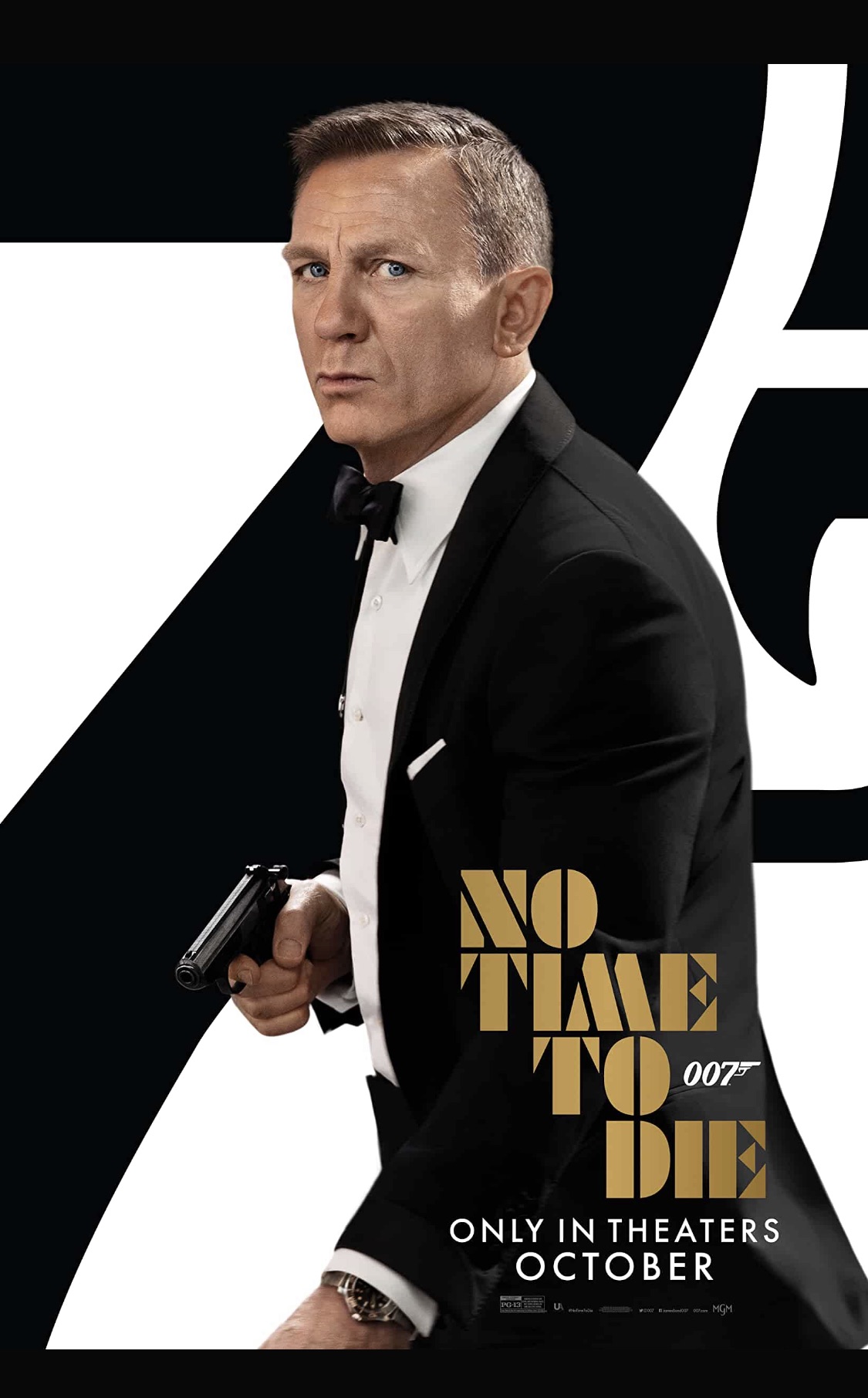
Greetings again from the darkness. Bond 25 is here, and it’s quite a curtain call for actor Daniel Craig. The film’s release has been postponed numerous times since September 2019, which has caused expectations and anxiety to build amongst Bond fans. It’s been almost six years since SPECTRE (2015), and this is Daniel Craig’s fifth and final turn as 007. This production faced challenges even before the pandemic hit. Cary Joji Fukunaga (best known for “True Detective” and BEASTS OF NO NATION, 2015) was hired to direct after Danny Boyle stepped down (or whatever happened), and Phoebe Waller-Bridge was brought in to spice up the dialogue on the script from Fukunaga, Neal Purvis, and Robert Wade (the latter two having been involved in writing all five Bond movies for Craig). Of course, it’s Ian Fleming to whom we stand eternally grateful for the original characters.
For those accustomed to the James Bond cinematic formula, you’ll notice quite a few differences – beginning with the opening scenes. Traditionally, breathtaking action kicks off the film; but this time a shift in tone and style serves up a tension-filled opening that occurs a few years prior to the rest of the story. It takes a few minutes before we get the first true action sequence. Of course, we must keep in mind that we are dealing with a “retired” James Bond (don’t worry, it’s not like “fat Thor”) … in fact, there’s already a replacement 007 and she (Lashana Lynch, CAPTAIN MARVEL, 2019) packs quite an attitude and skill set.

It’s his old CIA buddy, Felix Leiter (Jeffrey Wright), who draws Bond back into the espionage game, and of course, the reason is to save the world (what else could it be?). This year’s world-domination-seeking villain is the cleverly named Lyutsifer Safin, and he’s played by Oscar winner Rami Malek (BOHEMIAN RHAPSODY, 2018). Safin is a low-key baddie whose weapon is a DNA-altering chemical that’s probably a bit overly complex for a Bond movie, and it’s also a bit strange that Safin/Malek only has a few substantive scenes. For those who saw SPECTRE, you’ll recognize many of the faces, including Lea Seydoux as Madeleine Swann, Ralph Fiennes as M, Ben Whishaw as Q, Rory Kinnear as Tanner, and Naomie Harris as Moneypenny. Also back for a terrific scene is Oscar winner Christoph Waltz as Blofield. The new faces include the aforementioned Lashana Lynch as Nomi, Billy Magnusson as Logan Ash, and Craig’s KNIVES OUT co-star Ana de Armas as Paloma. Ms. de Armas brings a jolt of energy and some smiles to the proceedings, and it’s a shame her appearance is so short.

It’s unusual for a Bond song to win its Grammy before the movie is ever released, but that’s exactly what happened for Billie Eilish’s achingly somber title song. Oscar winner Hans Zimmer (THE LION KIING) delivers a wonderful score in his first Bond outing (you’ll hear how he incorporates the Eilish song), and the cinematography from Oscar winner Linus Sandgren (LA LA LAND) is everything we could hope for in the action sequences (there is no shortage of bombs), as well as the quiet moments.

Speaking of the quiet moments, this is undoubtedly the most sentimental and emotional of all Bond films. Sure, we get the amazing set pieces, the crazy stunts, the awesome Aston Martin (until it isn’t), the cool gadgets, the wisecracks, and the shootouts – but we also get Bond at his most reflective and personal. There is a line in the film, “Letting go is hard.” And it is … both for Bond and for us. So welcome back and adieu, Mr. Bond. Craig. Daniel Craig.

The film opens in U.S. theaters on October 8, 2021

WATCH THE TRAILER


THE LITTLE THINGS (2021)

January 30, 2021

 Greetings again from the darkness. When a script has bounced around Hollywood for 30 years without getting produced, there is usually a good reason why. Written by John Lee Hancock in the early 1990s, a handful of directors have been attached at various times, but it’s the writer himself who has managed to get it on screen all these years later. Mr. Hancock has found his niche as a director by targeting the precise middle of mainstream with such films as SAVING MR BANKS (2013) and THE BLIND SIDE (2009), an approach more challenging when the topic is chasing a brutal serial killer.

Of course, casting three Oscar winning actors is always a wise choice. Two-time Oscar winner Denzel Washington (TRAINING DAY, 2001, GLORY, 1989) stars as Joe Deacon, a defrocked L.A. homicide detective banished to the California desert as a Deputy Sheriff in Kern County. “Deke” suffered a heart attack, went through a divorce, and lost his job as a result of being haunted by an especially grisly unsolved case. When Deacon is tasked to pick up evidence in Los Angeles, he stumbles into a case being worked by his hotshot replacement, Jim Baxter. Oscar winner Rami Malek (BOHEMIAN RHAPSODY, 2018) brings his unorthodox mannerisms to the role and soon (and unsurprisingly) the ‘old school’ and ‘next gen’ detectives are teaming up to work a serial killer case with (unsurprising) similarities to Deke’s old case.

Denzel is especially effective in the first half of the film. His Deke is a quiet man with extraordinary observational and listening skills, and he brings none of his patented histrionics to the role. Deke’s ‘little things’ process quickly identifies a suspect, and it’s a doozy. Oscar winner Jared Leto (DALLAS BUYERS CLUB, 2013) is Albert Sparma, a greasy-haired appliance repair man (who let’s this guy in their house?) with a penchant for following news of the city’s crimes. Soon enough he’s taunting Deke and Baxter, and enjoying every minute of their frustration at the lack of evidence. It’s the cat and mouse game we’ve seen many times.

I’m a fan of retro movies, and Hancock announces upfront that this one is set in 1990. There are two reasons for this: that’s the era when he wrote the script, and it corresponds to a time when the Night Stalker was fresh on the minds of L.A. citizens. (side note: Netflix is currently showing the superb docuseries, “Night Stalker: The Hunt for a Serial Killer”). The idea of mismatched partners with polar opposite personalities is another aspect that we are quite familiar with, and Hancock even uses flashbacks to show us exactly what haunts Deke.

Supporting work comes from Chris Bauer, Terry Kinney, Glenn Morshower, Natalie Morales, and Michael Hyatt, with the latter two providing a non-victim female presence – although neither is given much to do. The most interesting aspect of the story is how Baxter is falling into the same emotional void as his new mentor, but unfortunately, not much time is devoted to this. In fact, the story has very little to keep us interested, and instead that burden falls to Washington, Malek, and Leto. Hancock has delivered a dark, brooding crime thriller that fails to deliver the thrills. It certainly pales in the obvious comparisons to David Fincher’s Fincher’s SE7EN (1995) and ZODIAC (2007), but is fine for killing time while stuck at home during a pandemic.

Now available on HBO Max

WATCH THE TRAILER


OSCARS 2019 recap

February 25, 2019

OSCARS 2019 recap

 The Academy missed their goal of a 3 hour presentation, but only by 17 minutes! Ratings were up (over last year) and diversity was on full display, so it seems most can agree that things went pretty smoothly without a host. Despite some recent bungled decision-making, followed by a social media outcry which resulted in decision reversals, the Academy deserves credit for a fine presentation that featured more diversity than ever before. The days of #OscarSoWhite seem to be over.

I trust you didn’t come here to read yet another rant about why a certain award proves how out of touch the Academy is. Nope, I like movies and prefer to view the Oscars as a celebration rather than a political statement. By the time the final envelope was opened, all 8 Best Picture nominees had won at least one Oscar. Additionally, two other excellent films, IF BEALE STREET COULD TALK and FIRST MAN, also won awards (Best Supporting Actress and Visual Effects, respectively). Spreading the major award love over 10 different films speaks not just to the diversity, but also the deep lineup of quality filmmaking during 2018.

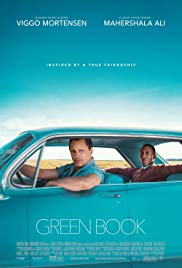
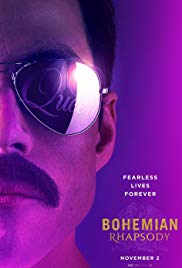
As always, the ceremony provided some fun talking/debating/arguing points. Queen opened the show with Adam Lambert proving how remarkable Freddie Mercury’s voice was, while Brian May showed us he still plays a mean guitar. Best Actor winner Rami Malek fell off the stage after giving his speech. Fortunately, he wasn’t seriously hurt. Melissa McCarthy (and a puppet) and Brian Tyree Henry fully and elaborately committed to their duties as co-presenters of Best Costume. Despite not being present, the omnipotent Oprah made an appearance – via the montage of 2018 films (from her bomb A WRINKLE IN TIME), and we saw a live quasi-reunion of WAYNE’S WORLD with Mike Myers and Dana Carvey (sans wigs and head-bobbing). Spike Lee finally won an Oscar (Adapted Screenplay for BLACKKKLANSMAN), and then proceeded to bogart the microphone from his equally deserving co-writers, before throwing a tantrum when GREEN BOOK was announced as Best Picture.

 Of course, the most Tweeted about moment came when Bradley Cooper and Lady Gaga took the stage to sing their (now Oscar winning song) “Shallow” from A STAR IS BORN. It was a very intimate duet that, had there been one more verse, might have resulted in clothes being shed on stage. The aforementioned diversity resulted in the most presented Oscars for both African-Americans and Women, and with presenter Michael Keaton being the only white male to take the stage solo. Barbra Streisand (presenting BLACKKKLANSMAN rather than A STAR IS BORN) somehow escaped backlash after comparing herself to Spike Lee … see they are both from Brooklyn and like hats; although we aren’t sure if Babs greeted her superfan, nominee Richard E Grant. And poor Christian Bale – no way that room was ever going to vote for Dick Cheney, regardless of how remarkable his transformation and performance.

Olivia Colman (THE FAVOURITE) won the Best Actress Oscar over Glenn Close (THE WIFE). This was Ms. Close’s 7th Oscar nomination without a win, keeping her one ahead of fellow nominee Amy Adams (VICE). However, neither of them gained ground on songwriter Diane Warren whose nomination for “I’ll Fight” (RBG) was her 10th without a win. It should also be noted that Ms. Colman’s acceptance speech was the funniest, most charming and most heartfelt of the evening. In contrast to Ms. Close, Ms. Adams and Ms. Warren, Regina King was thrilled to win the Best Supporting Actress Oscar with her first ever nomination (IF BEALE STREET COULD TALK).  In a show of ultimate class, Congressman John Lewis presented Best Picture nominee GREEN BOOK, and we could be certain a man with his perspective and role in history, would not partake in any tantrum throwing.

 Mahershala Ali (GREEN BOOK) won Best Supporting Actor for the second consecutive year, and Alfonso Cuaron won 3 Oscars (Best Director, Cinematographer, Best Foreign Language Film) for his autobiographical masterpiece ROMA. Also winning 3 Oscars on the night were BLACK PANTHER (Costumes, Production Design, Score) and GREEN BOOK; however, it was BOHEMIAN RHAPSODY with 4 wins that walked away with the most statuettes. Even those who are upset by GREEN BOOK’s Best Picture win must agree that it was a much smoother end to the evening than last year’s debacle and mix-up.

***Note: although there were a few political barbs tossed in throughout the evening, President Trump’s name was never mentioned on the broadcast. This allowed the focus to remain mostly on the nominees and the films … and the plug for the under-construction Academy museum (opening someday). .


BOHEMIAN RHAPSODY (2018)

October 25, 2018

 Greetings again from the darkness. That VOICE! During my life, I’ve been fortunate enough to see many of rock’s greatest bands live in concert, including: The Who, The Rolling Stones, Bad Company, Led Zeppelin, Pink Floyd, and AC/DC. Each of these bands are amazing, but no other concert combined the energy, showmanship and musicianship as Queen (two different tours). And certainly no other lead singer donned a Harlequin leotard … only Freddie Mercury could make that look seem natural.

This is such an odd movie, and one that is somewhat difficult to discuss. It’s billed as an “inspiring story”, though one wonders how self-destructive living, an acrimonious band break-up, and dying young of AIDS could be considered inspiring. It’s not supposed to be a biopic, but the vast majority of the screen time is devoted to Freddie Mercury. And to really confound us, the film kind of drags (pun possibly intended) during the personal story times … and then explodes with greatness during the band and live performance segments.

Rami Malek plays Freddie Mercury, and he perfectly captures the swagger and strut of one of rock’s greatest theatrical showmen. Mercury was born Farrokh Bulsari in Zanzibar, and the film shows us his conservative family and time spent working as a baggage handler at Heathrow. Of course, things change quickly once he joins up with guitarist Brian May (played here by Gwylim Lee) and drummer Roger Taylor (Ben Hardy, MARY SHELLEY). When bassist John Deacon (Joseph Mazzello) is added, Queen is born.

With a story and script from two Oscar nominated writers, Peter Morgan (THE QUEEN, ironically) and Anthony McCarten (THE THEORY OF EVERYTHING), it’s surprising that much of the film is downright slow – especially the bits with frenemy Paul (Allen Leach). Perhaps this is more a factor of the issues with the director’s chair, where Bryan Singer is credited despite being fired during production. Cinematographer Newton Thomas Sigel filled in until Dexter Fletcher (next year’s Elton John biopic ROCKETMAN) was hired to complete the film. Lucy Boynton (so good in SING STREET) holds her own as Mercury’s wife and friend Mary Austin, and Mike Myers plays producer Ray Foster (with a tip of the cap to WAYNE’S WORLD). Other supporting work comes courtesy of Dickie Beau as influential DJ Kenny Everett, Aiden Gillen, Tom Hollander and Aaron McCusker.

The 20th Century Fox opening fanfare has its own Queen version, and is not to be missed as the film begins. Of course, it’s the infamous 1985 Live Aid performance that is the film’s highlight and one that will leave every audience member pumped up, smiling, and singing along. It’s a stunning sequence on a custom built Wembley Stadium stage, and it helps erase much of the tedium of the film’s non-band scenes. Erasing any doubt as to whether the film is worth the price of admission … hearing that VOICE at full volume on today’s theatrical sound systems. Killer Queen.

watch the trailer:


PAPILLON (2018)

August 23, 2018

 Greetings again from the darkness. It seems like most every remake that comes around begs the question, “Why?” This is especially true when the film being remade is a favorite such as 1973’s PAPILLON. The original was directed by Oscar winner Franklin J. Schaffner (PATTON, THE PLANET OF THE APES, THE BOYS FROM BRAZIL), and starred two legendary actors, Steve McQueen and Dustin Hoffman. The screenplay was written by Dalton Trumbo and Lorenzo Semple Jr, and was based on the Henri Carriere books “Papillon” and “Banco”. Mr. Carriere was, of course, the titular Papillon himself, and though the specifics of his stories have been met with skepticism over the years, he nonetheless delivered some fascinating material.

So why make the film again 45 years later? Well this is a kinder, gentler version and features two of today’s most popular actors: Charlie Hunnam (“Sons of Anarchy”) and Rami Malek (“Mr. Robot”) as Papillon and Louis Dega, respectively. The screenplay from Aaron Guzikowski (PRISONERS) focuses more on the friendship and less on the brutal prison environment. Director Michael Noer (I’m admittedly unfamiliar with his previous work) delivers a movie that looks very good and works as an example of loyalty and bonding.

The film opens in 1931 Paris and we witness Papillon (so known because of the butterfly tattoo on his chest) doing what he does … safecracking for a powerful mobster. He seems to be living the good life with his girlfriend (played by Eve Hewson, Bono’s daughter) and they have plans to escape this life of crime – always an ominous sign in movies. Sure enough, he is framed for murder and sent to the penal colony in French Guiana. It’s there that he meets Louis Dega (Malek), a master counterfeiter. Dega is a soft and slight man, and the wad of cash hidden in his nether-regions puts a target squarely on his back. So Papillon’s brawn and need for cash to grease the wheels of his escape, and Dega’s need for protection, make this the match made in heaven (or in this case, hell).

Being a man of eternal optimism, Papillon never loses faith that he will escape, even when the warden (a terrific Yorick van Wageningen from Fincher’s THE GIRL WITH THE DRAGON TATTOO) explains that hope is his enemy. The years spent in solitary confinement rob Papillon of years and weight, but never hope. A final stint on Devil’s Island reunites the two men who share a bond that only such harsh circumstances could build. Since we know that Henri Carriere wrote the manuscripts for the books in 1969, the ending is known before we start; however it’s the telling of the story that allows us to come to know both Papillon and Dega.

This latest script does a better job of developing the friendship, as well as providing Papi’s past and reason to live. The original nailed a man’s commitment to surviving, while this one makes hope more of a philosophy. Lacking the magic of McQueen, Mr. Noer’s version doesn’t quite compare, but for those who have never seen the 1973 film, this one should prove quite engaging – even if we old-timers don’t buy into the kinder/gentler approach.

Watch the trailer:


DIFF 2017: Day Six

April 8, 2017

The Dallas International Film Festival runs March 31 – April 9, 2017

 It’s hump day Wednesday and I’m feeling a bit refreshed after only two movies yesterday. Flashing the wisdom that should accompany my age, I have followed up two-for-Tuesday with another two movie day today. Both films are narratives, so my documentary addiction is on hold until tomorrow. Below is a recap of the two films I watched on Wednesday April 5, 2017:


BUSTER’S MAL HEART

A film festival wouldn’t be complete without at least one mind-blowing avant-garde cinematic experience. I’m not the kind that needs every ending neatly bow-wrapped, and I often enjoy having conventional story structure challenged and even dissolved. Writer/director Sarah Adina Smith seems to thrive in such an environment in this twisty psychological thriller covering three timelines (one of which may be a dream) … or a split personality … or two/three men from one … or some combination … or something else entirely that I might have missed. (I’m not too proud to admit this distinct possibility).

When a filmmaker bravely dives into the bizarre, casting becomes crucial. Ms. Smith nails it with Rami Malek, DJ Qualls and Kate Lyn Sheil. Thanks to the popularity of TV’s “Mr. Robot”, Malek is now a leading man – albeit a tad unconventional. Here he plays Jonah, a struggling family man with a wife (Ms. Sheil) and young child. Working as a night Concierge at a hotel, Jonah tries to make the best of the lack of sleep and minimal contact with his family. In addition to Jonah, Malek plays Buster, a slippery and hirsute mountain man who negotiates his way through the Montana mountains by hanging out in the multi-million dollar vacation homes vacated by their owners for the snowy winter months.

The film bounces between 3 periods for Jonah/Buster: the elusive mountain man running from the law, the bleak nights of the family man, and a dream-like sequence where he is adrift at sea in a row boat. Throughout the film, references to “sphincter” and multiple proclamations that “The Inversion is coming” lead us to believe there could be a sci-fi connection or an apocalyptic ending headed our way. Instead, it’s “the belly of the whale” that might unlock the mystery or mysteries serenaded by the thunderous techno-bass bass. It’s a head-scratcher for sure, but one that manages to keep us engaged despite our whirlwind of theories and uncertainly.


KATIE SAYS GOODBYE

The latest exciting new filmmaker to burst on the scene is writer/director Wayne Roberts, whose wonderful indie is my favorite narrative of the festival so far. Of course there will be those who decry yet another film exploitation of women as a victim of society. However, there is definitely another way to view the story of Katie, the good-hearted dreamer played beautifully by Olivia Cooke (“Bates Motel”).

Initially, Katie’s unflappable optimism seems unlikely, if not impossible. She walks miles to work along a dusty highway. She lives in a trailer park with her deadbeat mother (Mireille Enos), whom she supports both financially and emotionally. She works double-shifts as a waitress at a truck stop, where she’s known to toss in a couple extra bucks when a particularly frugal customer stiffs the other waitress. She also works a side job as a prostitute for locals and a regular trucker named Bear (Jim Belushi). Despite a life filled with *stuff*, Katie doggedly pursues her dream of saving enough money to move to San Francisco and become a hair stylist. Of course, she has to save enough money for her trip AND for her mother to live on. Her dream seems lofty, yet almost achievable.

When Katie falls for Bruno (Christopher Abbott), the new guy in town, she tries her best to fall in love and pull him into her dreams for a better life. It doesn’t take long before Bruno is made aware of Katie’s side job, and her fantasy world begins to crumble. On a daily basis, Katie happily (of course) drinks up the truck stop wisdom of diner owner Maybelle (Mary Steenburgen), who spouts such gems as “A man with a smile will hurt you”. Good intentions abound here, but we realize … even if Katie doesn’t … that the reality of people’s self-interest is the immovable object that so often tears down the dreamers of the world.

As with much of life, one’s enjoyment of the film is likely contingent upon the perspective you bring. A caustic, cynical view will have you waving off Katie’s lot in life as exploitive movie-making; while those who can share even a spoonful of Katie’s spirit, will find themselves rooting exuberantly for her dreams to come true … or at least to sustain her refreshing outlook on life and people.


THE MASTER (2012)

September 24, 2012

 Greetings again from the darkness. Critics seem to love it, while movie goers seem to be left grasping for meaning. This is director Paul Thomas Anderson‘s sixth film, and could be either his best or worst, depending on your tastes. What is clear, however, is that all the hoopla over this being an expose’ of Scientology was for nothing. In fact, the cult/religion in the film plays second fiddle to a mentally unstable drifter who you will find no real interest in following (yet unable to take your eyes off).

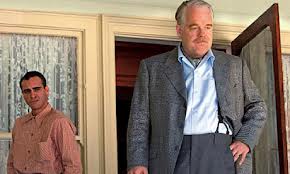
On the plus side, there are three terrific performances in the film. Joaquin Phoenix delivers a frightening, off beat character named Freddie Quell. Freddie suffers from PTSD after WWII and is some kind of freaky genius when it comes to moonshine and hooch. We see him utilize missile fuel, paint thinner, photographic chemicals, coconuts and Lysol. Never accept a drink from Freddie. Philip Seymour Hoffman is pure charisma and power as Lancaster Dodd, the character supposedly modeled on L Ron Hubbard, the writer and (some would say) con man who developed Scientology through his Dianetics theories. Hoffman is fascinating to watch and totally believable as a guy who draws in the suckers. His staunchest follower is his ice queen wife played with quiet intensity by Amy Adams. This is quite a different role for her and she really delivers the goods.

 Joaquin Phoenix deserves a few words. His physicality here approaches deformity and his sexual perversion is clear early on thanks to a beach scene. Phoenix looks emaciated, and somehow inverts his shoulders and wears a constant grimace that would make Michael Shannon proud. Much of his performance reminded me of a young Marlon Brando … high praise indeed. Many of director Anderson’s films deal with the surrogate father/son relationship, and Phoenix is at his best when desperately seeking acceptance from his would-be father figure, Lancaster Dodd.

 Though Scientology is never mentioned, the “processing” demonstrated certainly fits right in with the early methods. Still, the weakness of the movie stems from the story. Following Freddie leaves a gaping hole in substance. There’s just not much to this broken man. On the other hand, we constantly want to know more about The Master, Lancaster Dodd.

Technically, it’s a stunning and beautiful movie with moments of cinematic greatness. From an entertainment perspective, some might find the second half downright boring and uninteresting. If not for the Oscar worthy performances and the stellar camera work and interesting camera angles, even more people probably would have walked out during the film. Jonny Greenwood is back (There Will Be Blood) with Anderson, and again delivers the perfect accompaniment. With some script work, this could have been a truly great film. Instead, we get just-missed greatness from a true auteur.

SEE THIS MOVIE IF: you want to see 3 Oscar worthy performances OR unusual filmmaking and story telling is worth a couple hours of your time … especially when presented by an auteur like Paul Thomas Anderson

SKIP THIS MOVIE IF: oddball characters and expert technical filmmaking are not enough to maintain your interest

watch the trailer:

http://www.youtube.com/watch?v=fJ1O1vb9AUU