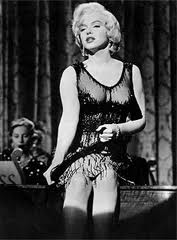
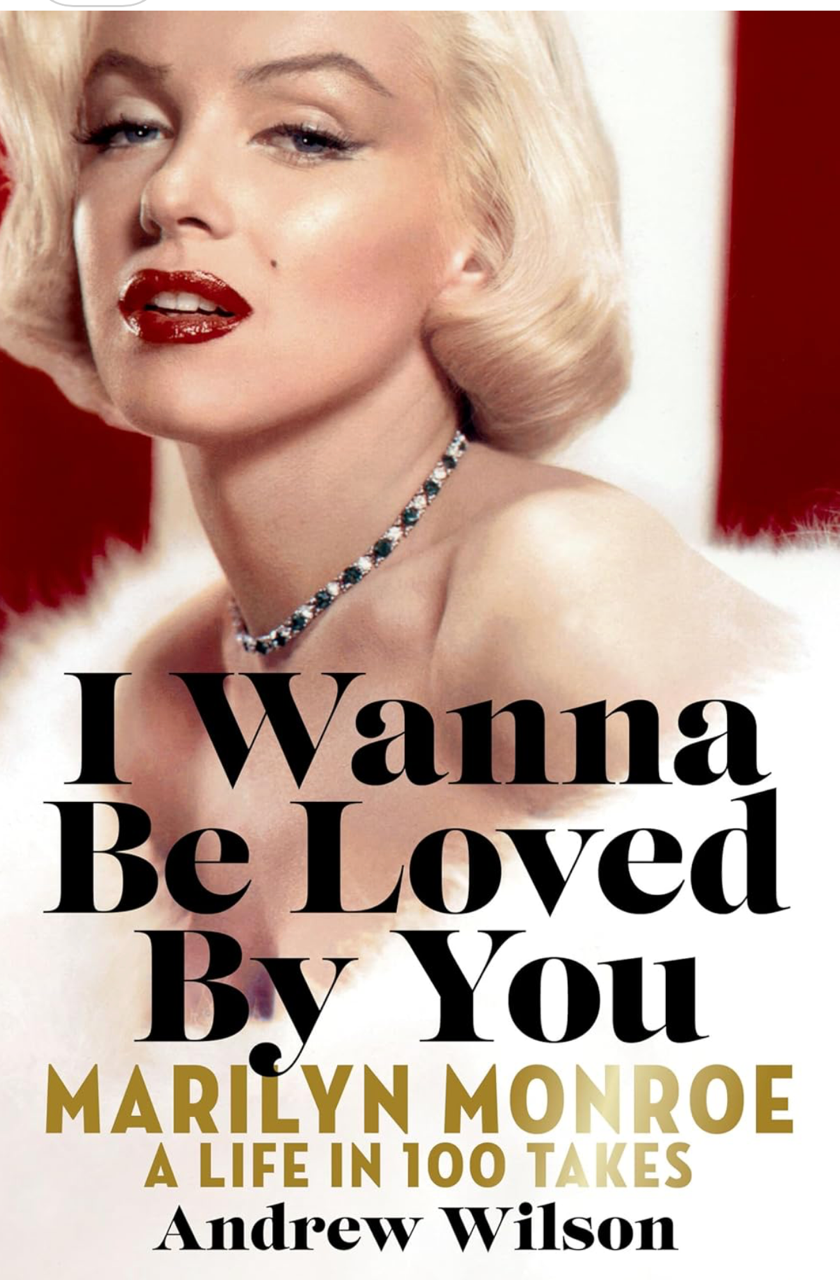
 Glamour is the descriptive word that comes to mind when we think back to Hollywood’s Golden Age. The stars shone brightly in the days of Cary Grant, Clark Gable, Grace Kelly, and Elizabeth Taylor. However, many would agree that the brightest star and the most glamorous was Marilyn Monroe. She might also have been the most tragic. This detailed and intricately researched book from author Andrew Wilson pulls back the curtain on Marilyn’s façade of glamour, while serving up specifics about her childhood, her desire to be loved, and her recurring depression. The book may not be a traditional tribute, but in fact it serves as proof of how she struggled to overcome her personal challenges.
Wilson’s book is timed to release in celebration of what would have been Marilyn’s 100th birthday. Of course, it’s a tragedy that she only lived for 36 years, and we discover even more tragedy and sadness as the book guides us through a childhood (as Norma Jeane) we wouldn’t wish on anyone … foster homes and orphanages. This led to her foundation of fear and insecurity. Wilson describes how her need to be loved and wanted was often at odds with her public image of glamorous blonde bombshell, as was her commitment to reading and learning – despite being a high school dropout.
As proof of her iconic image as a movie star and celebrity, it’s truly fascinating to note the number of legends, rumors, and conspiracies linked to Marilyn. Wilson discloses his access to the archives (tapes, interviews, documents, letters) of 1985 biographer Anthony Summers, who wrote “Goddess: The Secret Life of Marilyn Monroe”. Additionally, Wilson researched so much more on his own, making this work truly stand out despite the dozens of books already published profiling Marilyn. What we learn is that stories and tales and memories of Marilyn are easy to come by. The difficult part is separating fact from fiction, especially when so much of the fiction has been fed to us over the years. Wilson lays out the facts and admits when he’s drawing his own conclusions. This is in stark contrast to how he feels about Norman Mailer’s 1973 “Marilyn: A Biography”, which Wilson describes as ‘sloppily researched.’
When it comes to beloved icons, the real money makers are conspiracy theories and rumors when trying to sell one of those many Marilyn books. Wilson methodically addresses the facts as applied to such items as her being sexually assaulted as a minor, the white piano, multiple miscarriages, her endometriosis, the clashes with Laurence Olivier, the ‘wrong door raid’, her conversion to Judaism, that infamous dress from “Happy Birthday, Mr. President”, her three marriages (the first at age 16), brothers John and Bobby Kennedy (each get their own chapter), and of course, her death at such a young age and under mysterious circumstances. Also included is the story behind Hugh Hefner obtaining the Marilyn photos he used in the 1953 launch of “Playboy” magazine.
For those interested in Marilyn’s three marriages, Wilson includes plenty. First husband Jim Doughterty, a police officer, wrote two books about her, while neither Hall of Famer Joe DiMaggio nor Pulitzer Prize winner Arthur Miller did. In fact, the latter two remained quite close-lipped when it came to discussing Marilyn after her death. Specifics on the marriages are included, and as you’d suspect, it wasn’t all rosy for Marilyn. Other romances and rumored romances are part of her story. This includes Frank Sinatra and Yves Montand, as well as screenwriter Jose Bolanos, supposedly her final lover.
Famed acting coach Lee Strasburg not only worked with Marilyn, but also became one of the few she trusted implicitly. Wilson covers her lifelong connection to therapists, including her time with Anna Freud, daughter of Sigmund. Marilyn’s struggles with mental health and depression were a constant battle, and given her childhood and fame, it’s actually understandable. Arthur Miller is quoted as telling her, “You’re the saddest girl I ever met.” Compare that to what Oscar winning director Billy Wilder said: “When I met her, she did not impress me. When I saw what the camera saw, I knew she was special.” Wilder directed Marilyn on THE SEVEN YEAR ITCH (1955) and SOME LIKE IT HOT (1959), the former included the iconic scene of Marilyn standing on the grille as the wind blows her skirt up. It’s that transformation in front of the camera that Wilson notes a few times.
Clark Gable passed away twelve days after filming wrapped on THE MISFITS (1961 screenplay by Arthur Miller), and it became the final feature film released for both Gable and Marilyn Monroe. The last public photos of her were taken at Dodger Stadium for a charity game with kids, and yes, writer Andrew Wilson covers her death and funeral and how those have been analyzed and debated since. It’s interesting to note that Marilyn lived in more than fifty different places during her short life, and the only house she purchased had an inset in the tiled doorway that read “Cursum Perficio”, translated to ‘My journey ends here’. And what a journey it was … despite ending much too soon. Marilyn’s cover story is glamour, but Andrew Wilson separates the person from the star.
The book by Andrew Wilson is available on Amazon beginning June 2, 2026


 Posted by David Ferguson