OSCARS 2024 recap

March 13, 2024

OSCARS 2024 recap

The year of “Barbenheimer” concluded with one of the best and best-paced Oscars ceremonies in recent history. Of course, there were ups and downs … even an awkward Best Picture finale (which isn’t far off from becoming a tradition). Despite the bumps, the show served up plenty of entertainment for movie lovers and very few surprises for followers of the awards circuit.

Talk show host (and overall nasty comedian) Jimmy Kimmel returned as emcee, and his opening monologue set the tone with very little political commentary (other than his support of industry unions) – an approach that most presenters and winners maintained throughout, with only a couple of exceptions. The ceremony was what it should be: a celebration of the year in movies. And as my “Best of 2023” showed, it was an excellent year for a wide variety of film genres.
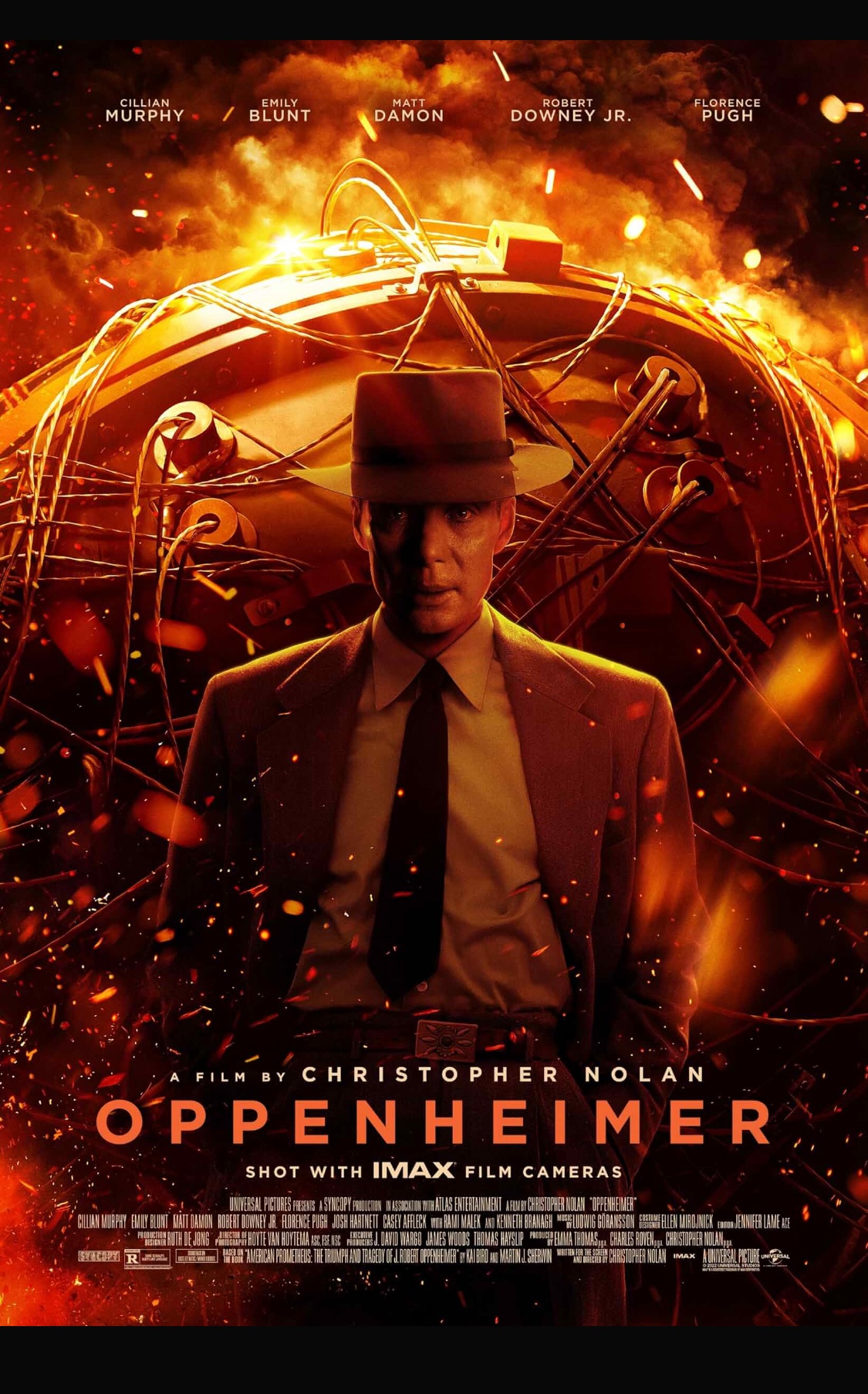
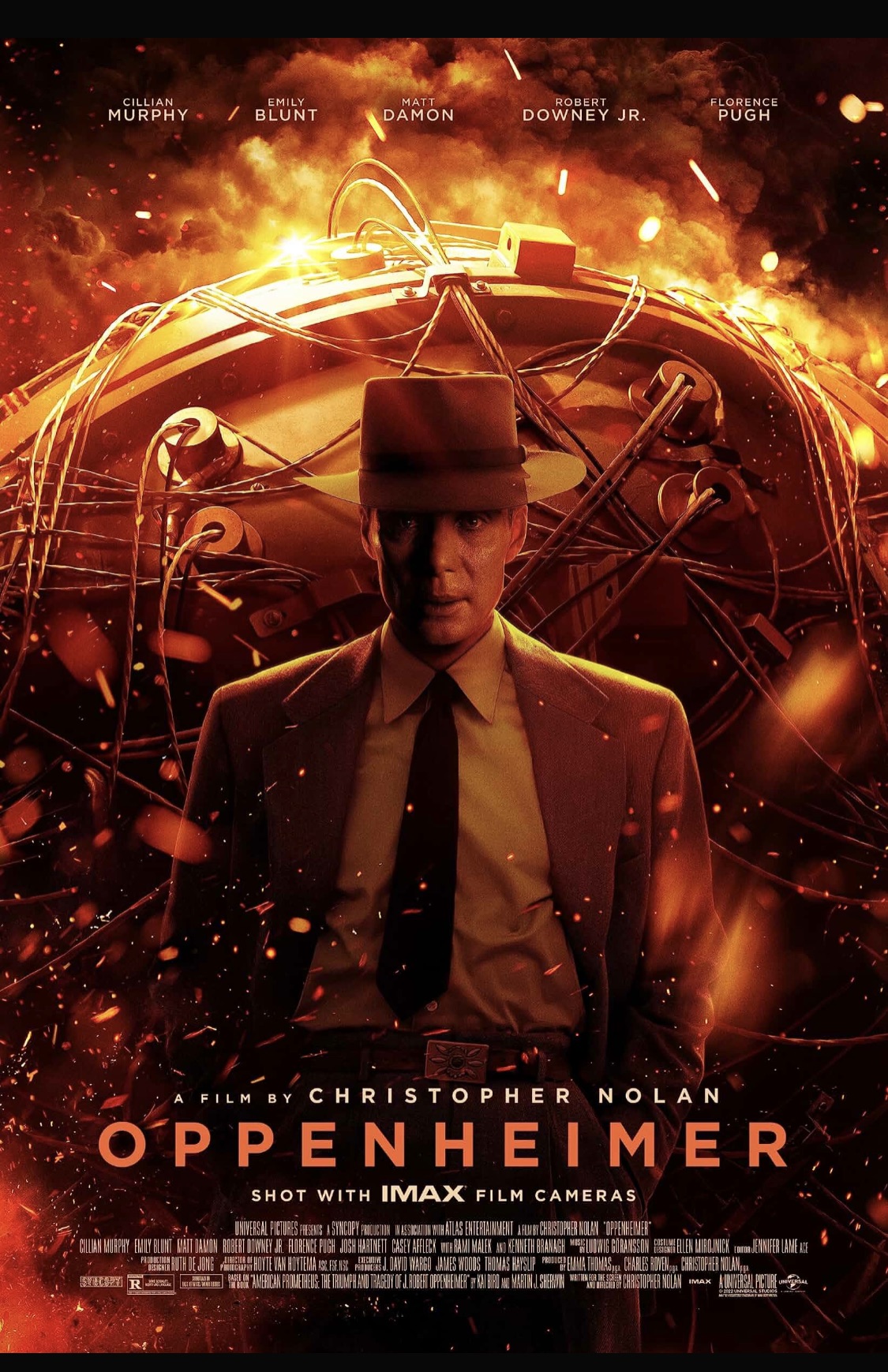
My favorite movie of the year, OPPENHEIMER, was the night’s big winner with 7 Oscars, including Best Picture. Christopher Nolan’s film is quite an achievement, juggling history, a deep roster of actors, and an era that now seems foreign to most people under 40. However, this film is only half of the “Barbenheimer” label, and the BARBIE faction delivered the showstopper thanks to sparkly pink suit attired Ryan Gosling and his rousing “I’m Just Ken”. It was the kind of spectacle and audience participation moment that will go down in Oscars lore.

There were plenty of other moments worth mentioning. How about Robert DeNiro and Jodie Foster both being nominated again – just like in 1976 (48 years ago for TAXI DRIVER)? Best actress nominee Sandra Huller starred in two foreign language films that were both nominated for Best Features this year. The Academy made the absolutely brilliant decision to replace clips of each acting nominee with a short tribute given live by a previous winner in the category. Let’s hope this tradition is back to stay as it lends an air of intimacy and professionalism. The evening’s first announced winner, Da’Vine Joy Randolph (THE HOLDOVERS), had one of the most heartfelt and emotional responses one will ever witness at an awards show. Hands down, my two favorite scripts of the year won both writing categories, Original (ANATOMY OF A FALL) and Adapted (AMERICAN FICTION). Billie Eilish and her brother and co-writer Finneas O’Connell gave a nice performance (with Barbie pink backlighting) of their nominated and ultimately winning song, “What was I Made For?”.

Comedy kicked in when nominees Emily Blunt and Ryan Gosling offered a tribute to Stunt performers in the form of a competitive rivalry between OPPENHEIMER and BARBIE (their two movies). Two other comedy bits also stood out, one for falling so flat. Presenters Melissa McCarthy and Octavia Spencer pushed an unfunny gag based on Chippendale/Chip ‘n Dale, while John Cena nailed it in his faux-streaker bit. In a touching moment with a comedy background, Robert Downey Jr became the first former “Saturday Night Live” cast member to win an acting Oscar, and his long-overdue recognition reinforced his real-life comeback (thus overshadowing Jimmy Kimmel’s went-too-far monologue attack). The show ended with three of the final four “big” awards going to OPPENHEIMER (Actor, the humble Cillian Murphy; Director, the brilliant Christopher Nolan; and Best Picture). The extraordinary performance Emma Stone gave in POOR THINGS was justly rewarded with the Best Actress award.

As for surprises, I missed out on two winners in my predictions. In the Special Effects category, GODZILLA MINUS ONE bested my pick MISSION: IMPOSSIBLE – DEAD RECKONING PART ONE, and for Cinematography, Hoyte Van Hoytema (OPPENHEIMER) edged out my choice, Rodrigo Prieto (KILLERS OF THE FLOWER MOON).  The latter film, directed by Martin Scorsese, was shut out despite ten nominations, (remarkably) making it the esteemed filmmaker’s third film to go O-for-10 at Oscar. Many expected Lily Gladstone to take home the award for Best Actress in a Leading Role, and as important has her performance was to the film, I remain solid in my belief that Emma Stone’s Oscar-winning performance was transformative and will stand the test of time. 

Overall, I would rate the presentation as pretty darn good, and fitting for a year that featured so many fine films (and, perhaps not coincidentally, so few superhero movies). TV ratings were up, and we hope the Academy can actually stimulate some box office action, rather than exist for the sole purpose of critical bashing. And yes, acting legend Al Pacino gave us a near-MOONLIGHTING disaster as he skipped the listing of nominees and just blurted out “Oppenheimer” to end things. This is one trending tradition that could be skipped and no one outside of the media would mind.


OPPENHEIMER (2023)

July 22, 2023

Greetings again from the darkness. As pupils slouched in our school desks during history class, we easily and naturally disassociated with the many stories of war. World War II was lumped in with WWI, the Civil War, and The Revolutionary War. There were names and dates to memorize for quizzes and final exams, yet even with relatives recounting stories of kin, a personal connection was rare. As we aged and experienced modern-day warfare, the personal connection became all too real. Reality struck that soldiers are human beings with families, and despite their missions and marching orders, most are as innocent as the ‘tragic civilian casualties’ reported on the newswires. Along these lines, an aspect of war that has often remained overlooked is the behind-closed-doors decision-making of politicians and military leaders. Filmmaker-extraordinaire Christopher Nolan takes us behind those doors through the eyes of J Robert Oppenheimer, the Father of the Atomic Bomb. What we see is quite frightening.

Prepare yourself. At a full three hours in length, Nolan’s film is a hefty undertaking for viewers. It demands full focus and attention to details and nuance, as you spend significant time listening to brilliant men talk amongst themselves. Nolan adapted the screenplay from the 2005 biography, “American Prometheus: The Triumph and Tragedy of J Robert Oppenheimer”, written by Kai Bird and Martin Sherman. The end result is a film centered on complex physics and mathematics, yet presented in a simplified manner such that it’s much more a character study than a science class. The key is what characters say to each other, how they say it, and how they debate and rationalize the morality of the objective … building a bomb designed to kill people.

The morality of The Manhattan Project is under the microscope here, as is the motivation and concern of Oppenheimer. We get some early background establishing him as an upcoming mind in the world of physics from his academic stops around the globe. Some know Cillian Murphy from “Peaky Blinders” or as Scarecrow in Nolan’s Batman movies. I’d also recommend a couple of Murphy’s underrated gems: FREE FIRE (2016) and RED EYE (2005). It’s hard to overstate how spot on Murphy is as Oppenheimer. He lost weight for the role and captures the distinctive movements and speech patterns, as well as the familiar poses and deep-in-thought eyes. We never once question whether this is Oppenheimer, the leader of the science team at the Los Alamos Lab and the Father of the Atomic bomb … the one who “sees beyond the world we live in.”

Once Major Groves (Oscar winner Matt Damon) recruits Oppenheimer to run and assemble the great scientific minds, the obvious question to those involved is … even if we can create this bomb, should we do it? This weighs heavily on Oppenheimer – a man so engulfed by science that his haunting visions are that of atoms and particles and experimental reactions (perhaps a bit too heavy in the first act). Groves is the military leader of the project and the liaison between the scientists, the military, and the government. It’s also clear that while Oppenheimer’s brilliance is recognized and necessary to the project, almost no one outside of the scientists trusts him. This is where antisemitism and fears of communism arise. Oppenheimer was Jewish and, though he never joined the communist party, was associated with many who did. This included his love interest, Psychiatrist Jean Tatlock (the fabulous rising star Florence Pugh), his wife Kitty (Emily Blunt), and his brother Frank (Dylan Arnold).  

The teamwork and stress involved with building the bomb in Los Alamos is conveyed as rooms full of brilliant minds determine the future path of the country and the world. This culminates in the stunning sequence of The Trinity Test near Alamogordo. A blending of complete silence, along with spectacular sound and light, is truly a technical highlight of the film. The initial celebration of success initially overshadows the true meaning … the bomb is now ready for Hiroshima and Nagasaki, killing two hundred thousand people and essentially ending WWII, less than four years after the bombing of Pearl Harbor by the Japanese (never mentioned here).

The bombings are heard via radio news reports, and it’s at this point where the weight of what the scientists have done is fully realized. Oppenheimer became a national hero and his Time Magazine cover proves it. A meeting with President Harry S Truman (Oscar winner Gary Oldman sporting a Missouri accent) doesn’t go well, as Oppenheimer is introduced to political gamesmanship, something he would face even more directly in the near future. Lewis Strauss (Oscar winner Robert Downey Jr) is a key player as chairman of the US Atomic Energy Commission, and through him, we witness ego, ambition, and petty behavior that leads to a level of vindictiveness typically only seen at the junior high level.

Multiple timelines are covered. There is the background information on Oppenheimer’s early years, his well-rounded academia, his love life (lives), his building of the Los Alamos lab team, the overseeing of the bomb development, his time as a hero, the later backroom kangaroo court designed to disgrace him, and Strauss’ Senate Confirmation hearing for Secretary of Commerce. All of these tie together, and it’s those final two that make up the last act of the film – giving us a taste of just how nasty politics was 70 years ago (not unlike these days).

Nolan has assembled a deep cast with numerous Oscar winners and a roster of talented actors. Among the familiar faces not already named above are: Oscar winner Kenneth Branagh as Danish Physicist Neils Bohr, Oscar winner Rami Malek as experimental physicist David Hill, Oscar winner Casey Affleck as Military security advisor Boris Pash, Tom Conti as Albert Einstein, Benny Safdie, Dane DeHaan, Jason Clarke, Josh Hartnett, David Krumholtz, Matthew Modine, Alden Ehrenreich, Scott Grimes, Tony Goldwyn, James D’Arcy, James Urbaniak, Olivia Thirlby, James Remar, and (Nolan regular) David Dastmalchian.

The film is a historical biopic and also an unconventional thriller. Is this about unparalleled advancement in science or is it about the moral dilemma of mass destruction and death? Politics, military, ego, power, science, love, revenge, and redemption are all displayed as Oppenheimer struggles with the power he has created and the lack of power in how it’s used. My favorite line in the film is aimed at Oppenheimer when someone informs him that he’s now “not just self-important, but actually important.” The stakes are clear during the test when it’s stated that there is a “near zero” chance of destroying the world.

Cillian Murphy is a shoe-in for a Best Actor nomination, and his performance mesmerizes us. It’s nice to see Robert Downey Jr remind us of his true talent, and he should be rewarded with a Best Supporting Actor nomination. Florence Pugh and Emily Blunt, in the only two substantive women roles, should both receive consideration as well. Pugh’s role is limited but memorable, while Blunt shines in her best scene during the security hearing.

Christopher Nolan has delivered near perfection in technical movie-making, and on top of that, the story and characters are real life, and the performances are top notch. His use of Black & White film for Strauss’ perspective allows the viewer to differentiate the Oppenheimer viewpoint. Impressively, while there are some visual effects, Nolan has stated that no CGI was used in the film, and that’s most evident in the relatively short closing credit roll – where we typically get dozens if not hundreds of technical experts listed. Ludwig Goransson’s (Oscar winner for BLACK PANTHER) score packs an emotional punch, and Jennifer Lame’s editing is excellent and vital. Lastly, cinematographer (and regular Nolan collaborator) Hoyte Van Hoytema drives home the power of smart men in a room, as well as the devastation of the bomb test. This is excellent filmmaking and a reminder that the only thing we love more than lifting new heroes onto the pedestal of worship is tearing down those same heroes with a dose of humility. These types of movies rarely get produced these days, so here’s hoping enough people go back to the theater to see it to inspire more filmmakers to take a shot.

Opened nationally July 21, 2023

WATCH THE TRAILER


NOPE (2022)

July 20, 2022

Greetings again from the darkness. With his first two films, GET OUT (2017) and US (2019), writer-director-producer Jordan Peele already has an Oscar and has firmly established himself as one of the most innovative and visionary filmmakers working today. He has entered the revered class of directors whose new films are automatically ‘must see’. This is in spite of our knowing full well that he doesn’t strive for mass accessibility, and typically seems less focused on character development and more focused on what’s happening to those characters and how they react. Mr. Peele’s latest is a unique blend of Science Fiction, Horror, and Comedy, with a dose of horses, UFOs, and box store employees. At its core, the film is about chasing the spectacle of a spectacle, so that one might also become a spectacle.
A cold opening is a bit of ‘found footage’ from a horrific event on the set of a TV show featuring a chimp named Gordy. We have no idea how this fits in to what we are about to watch, but it’s shocking and disturbing. We then shift to find Otis Haywood Sr (Keith David) working the horses on a ranch with his son, OJ Jr (Oscar winner Daniel Kaluuya, JUDAS AND THE BLACK MESSIAH, 2021). Dad founded the Haywood Hollywood Ranch to train and handle horses for the entertainment industry – movies, TV shows, advertisements. A mysterious death means OJ Jr and his sister Emerald (Keke Palmer, AKEELAH AND THE BEE, 2006) must take over running the ranch; however, a hilarious scene on set highlights the differences between big brother and little sister. OJ understands horses, but is laconic and reserved. Emerald is hungry for personal fame and is bursting with energy and dreams. She has little use for the ranch, while OJ is devoted to carrying on dad’s work – knowing he needs Emerald’s personality.

The suspense is turned up to 11 when strange things begin happening on the ranch and in the sky. OJ (his name is a running gag) and Emerald recognize this is their opportunity to cash in by securing photographic evidence of UFO (or UAP) and alien activity. Joining in on the mission is Angel (a terrific Brandon Perea), a tech nerd from Fry’s Electronics. The trio is joined later by renowned cinematographer Antlers Holst (Michael Wincott using a Tom Waits voice), who understands the importance of capturing what OJ and Emerald call “the Oprah shot”. Obviously, this is Peele’s commentary on how folks today long for their chance to shine in the spotlight – and capitalize monetarily on the moment. Also recognizing this shot at fame is Ricky “Jupe” Park (Steven Yeun), the owner of a local western-themed amusement park. Jupe is a former child actor whose career included “Kid Sheriff” and a role in the sitcom featured in the opening sequence with Gordy the chimp. He has tapped into the skyward activities, but longs for more.

Purposefully vague is my approach in writing about this, as director Peele and cinematographer extraordinaire, Hoyte Van Hoytema (frequent collaborator with Christopher Nolan) serve up some incredible visuals and high-suspense sequences, and it’s best if you know as little as possible going in. It’s easy to spot influences of CLOSE ENCOUNTERS OF THE THIRD KIND (1977), “The Twilight Zone”, and other Sci-Fi classics, as well as directors Steven Spielberg and Alfred Hitchcock. In a tip of the cap to film history, Peele ties in the early moving picture work of Eadweard Muybridge and his 1878 clip, “The Horse in Motion.” It’s a brilliant touch that cinephiles will appreciate.

Supporting work comes from Donna Mills, Oz Perkins, Eddie Jemison, and Terry Notary as Gordy the Chimp, but it’s the chemistry between Kaluuya and Palmer that make a relatively thin story succeed as commentary on society. Peele even gets in a few pot shots at the media (TMZ) and the oversaturation of celebrity. The desolate setting of the hills and valleys outside of Los Angeles make for a perfect setting, as does the contrasting use of daytime and nighttime for certain shots. Peele proves yet again that he has a real feel for serving up commentary disguised as tension, or is it tension doused with commentary? Either way, I’m lining up now for his next film, whatever that may be.

Opening in theaters July 22, 2022

WATCH THE TRAILER


AD ASTRA (2019)

September 19, 2019

 Greetings again from the darkness. Astronaut Roy McBride’s pulse rate may never go above 80 bpm, but mine certainly did during the opening sequence which features a stunning and spectacular space fall. It’s unlike anything we’ve seen before. Roy has trained his entire life for this work; however his true mental state is only revealed slowly throughout the film’s run. After witnessing his actions and hearing (through narration) his thoughts, we are left to decide what we think of Roy … stoic hero or simmering psychopath? Either way, he’s haunted by a past that has rendered him mission-focused and the world’s worst party guest. The film takes place in the not-too-distant future.

Brad Pitt stars as Roy McBride, in what may be his career best (and most inward-looking) performance. Roy is the son of NASA hero Clifford McBride (Tommy Lee Jones), the leader of The Lima Project – a decades old mission to Neptune tasked with searching for extraterrestrial life. The elder McBride has long been assumed dead with no signals or response signs in many years. A recent power surge that threatens humanity has been traced to Neptune, and now Roy is being used as bait to track down his rogue astronaut father and prevent him from causing further damage.

Roy’s assignment requires him to journey from Earth to the Moon to Mars and, ultimately, on to Neptune. Along the way, he travels with Colonel Pruitt (Donald Sutherland), an old friend of Clifford’s, who is sent along to make sure the son doesn’t acquiesce to the father. Of course, it’s a nice touch to have Tommy Lee Jones and Donald Sutherland together again in a space movie 20 years after SPACE COWBOYS, a more upbeat adventure. Here we see a populated moon – yet another place we humans have messed up – replete with turf wars. There is also a shootout in a space capsule, and an unscheduled stop that provides shocking visuals and causes a shift in the crew.

James Gray, who directed the vastly underrated THE LOST CITY OF Z (2016) delivers a space film with terrific visuals and a script he co-wrote with Ethan Gross, that examines how a father can affect the life of his son even when he’s not present. The film has an unusual pace to it. There are a few action sequences, but the core of the film is the psychological state of son versus absent father. Roy’s inability to connect with loved ones is displayed through flashbacks involving Liv Tyler, and it’s his own narration that provides us much more insight than his regularly scheduled psychological tests.

Ruth Negga (LOVING) has a nice turn as Helen Lantos, one of the key officials at the Mars space station, and her encounter with Roy provides him with yet more background on his father. It’s easy to recall both APOCALYPSE NOW (only with Tommy Lee Jones as Colonel Kurtz) and 2001: A SPACE ODYSSEY given the isolation, questionable mental state, and mission-gone-wrong. The cinematography Hoyte Van Hoytema (DUNKIRK) is outstanding, and never allows us to forget Roy is in space … with danger present in every moment. The title translates “to the stars”, and it’s true in every sense.

Mr. Gray has delivered a thought-provoking big budget science fiction film. It has incredible special effects, but the personal story packs even more punch than the galactic adventure. Many will compare this to other space films like CONTACT, GRAVITY, and FIRST MAN, but this one requires more investment from the viewer, as it’s the character study that resonates. This is Brad Pitt’s movie (he’s in most every scene), and the ties to his father are never more evident than when he (and we) see The Nicholas Brothers performing in black and white on that monitor. If a daily psychological profile was required for each of us, it would be interesting to see how much work would actually be accomplished. Now, imagine yourself stationed in space and just try to keep your heartrate below 80!

watch the trailer:


DUNKIRK (2017)

July 19, 2017

 Greetings again from the darkness. Even for us frequent movie-goers, a truly great film is a rare and emotional experience. Leave it to Christopher Nolan, one of the finest film makers working today, to deliver a World War II masterpiece centered on a remarkable and historic evacuation, rather than one of the epic battles that more directly led to an Allied victory. The result is a spectacular, stunning and relentlessly intense assault on our eyes, ears and emotions … it’s a horrific thing of artistic beauty.

Mr. Nolan chooses a triptych approach to tell the May/June 1940 Dunkirk story from three distinctly different perspectives: The Mole, The Sea, and The Air. The Mole (term for protective sea walls) is the “by land” segment, and it shows nearly 400,000 soldiers lined up on the beach – nervously waiting to be either rescued or massacred. The Sea puts us not on the deck of the Navy destroyers, but rather alongside the citizen volunteers who answered the call to ferry men off the beach with own pleasure vessels. The Air plops us inside the Spitfire cockpits of two Royal Air Force pilots battling low fuel as they attempt to protect their fellow soldiers below. This 3-part film harmony expertly captures the disorientation of war by shuffling between the three segments, and varying the timelines and sequence of each.

This all happened pretty early in the war, as Winston Churchill had only become Prime Minister a few weeks prior. It should be noted that Mr. Nolan purposefully avoids the usual war room blustery (we see neither Churchill nor Hitler, and there is little mention of the infamous Halt Order) and allows the action to tell the story. Instead, his focus on the (very) young men being sent to battle makes a clear political statement on the absurdity of war. One of “The Sea” volunteers (an excellent Mark Rylance) delivers the message when he states it’s the old men running the war, so he can’t be expected to just sit back as young sons are sent to fight and die.

Despite the epic look, feel and sound of the film and the massive scale of the event, this film is surprisingly at its best in the small moments of heroism and the dogged determination of individuals to survive. Minimal dialogue allows the horrors of war to take center screen. Danger and death are at every turn – bombings, torpedoes, drowning, gunfire, and most any imaginable peril is ever-present. We witness PTSD (shell-shock) in the form of Cillian Murphy’s shivering rescued soldier, and are reminded that every young man present will be either dead or scarred for life. No one escapes war unscathed.

The opening sequence finds young Fionn Whitehead and his squad being targeted with gunfire as German leaflets fall from the sky. The leaflets are maps outlining the hopelessness as German forces have them surrounded. The film is meticulously researched and historically based, though the few characters we get to know are fictionalized accounts. The practical effects throughout are breath-taking and much of it was filmed on location at the Dunkirk beach. There will likely be some complaints regarding the scarcity of female characters and those of color, but the technical aspects of the film are beyond reproach – although the French might have preferred their military receive a bit more attention. Hans Zimmer’s score is unique and searing as it perfectly captures the intensity of the film. His use of a ticking watch only perpetuates the constant feeling of running out of time. Cinematographer Hoyte Van Hoytema and Editor Lee Smith prove why they are among the best at their profession.

Given the spectacle of the action (if possible, see it in IMAX or 70mm), it’s remarkable how we still manage to get to know some of the characters. From The Mole segment, Fionn Whitehead, Aneurin Barnard and Harry Styles represent the young soldiers, while Kenneth Branagh and James D’Arcy play officers. Tom Hardy and Jack Lowden are piloting the Spitfires, while Mark Rylance, Barry Keoghan, Tom Glynn-Carney, and Cillian Murphy are aboard the rescue yacht. Nolan regular and good luck charm Michael Caine can be recognized as the voice on Air Force radio. There is a 1958 film with the same title, and it stars John Mills and Richard Attenborough. The connection (other than the Dunkirk title) is Sir Attenborough’s grandson Will appears in this current film.

The horrors and impact of World War II continue to be an abundant garden – ripe for the picking when it comes to movies. Over the past 70 years there have been numerous approaches to telling part of the story that redefined the world: Judgment at Nuremberg (legal aftermath), Casablanca (romance), I Was a Male War Bride (comedy), Tora! Tora! Tora! and From Here to Eternity (Pearl Harbor), Shoah (documentary), Schindler’s List and Son of Saul (holocaust), Downfall (Hitler), The Great Escape (entertainment), Patton (bio), The Pianist (personal), Saving Private Ryan (Normandy), Das Boot (U-boat), The Thin Red Line (Guadalcanal), and Letter From Iwo Jima (two opposing perspectives). Each of these, and many others, have their place in War movie history, and now Christopher Nolan’s film belongs among the best.

watch the trailer: