 Six weeks ago was The Godfather in a theatre setting. This time it was the exceptional sequel, which generated an equal amount of movie bliss. Experiencing these two classic movies on the big screen almost 40 years after release reinforces what great films they are … and how few truly great films get made. We are reminded that a powerful well-written story, world class cast, visionary director, brilliant photographer and stunning composer are all necessary components for movie greatness.
This sequel explores three time periods: the journey of 9 year old Vito to the U.S., his rise to power in Little Italy, and Corleone life after Vito’s death. Some find the cuts to varying timelines to be distracting. Personally, I find it fascinating and a very effective way to tell the entire story. Watching an almost mute 9 year old Vito land on Ellis Island and transform into a twenty-something community “leader” is one of the more powerful and unlikely events ever seen on screen. Mixing that with Al Pacino holding little back as a power-mongering Michael is downright frightening. If you doubt this, look at it from the perspective of Diane Keaton‘s May, or John Cazale‘s Fredo.
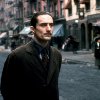 The film received 11 Oscar nominations and won 6, including Best Picture. Robert DeNiro won for his tremendous turn as young Vito, in a performance with very little English. This is early DeNiro … the Mean Streets, Taxi Driver era. DeNiro and Marlon Brando remain the only two actors to have won Oscars for playing the same character. DeNiro’s Supporting Actor competition came from two other cast members: Lee Strasberg as Hyman Roth (supposedly based on Meyer Lansky) and Michael V Gazzo as Pentangeli. Mr. Strasberg was the famed acting teacher whose prized pupils included none other than Al Pacino (who talked him into taking this role). Strasberg was also bequeathed 75% of the
  Marilyn Monroe estate and there was much scandal after his death when his widow auctioned off most of it. Gazzo’s grizzled look and voice dominate his scenes and leave you feeling uneasy about what’s really going on with him.
Here are a few other interesting points. Most of this script was original for the film, though the background story of Vito was drawn from Mario Puzo‘s novel. Director Francis Ford Coppola considered casting Joe Pesci as the young Clemenza, but ultimately decided on Bruno Kirby. Dominic Chianese plays Hyman Roth’s right hand man Johnny Ola. Chianese has been recently seen in both The Sopranos and Boardwalk Empire. B-Movie mogul Roger Corman plays one of the Senators on the committee interrogating  Michael and Pentangeli. Harry Dean Stanton plays one of the FBI bodyguards, and former heartthrob Troy Donahue plays Connie’s (Talia Shire) goofy boyfriend Merle. One of my favorite characters in the film is Don Fanucci, robustly played by Gastone Moschin. His strutting and preening always creeps me out and makes me laugh.
Besides being the first sequel to win a Best Picture Oscar, The Godfather II is simply one of the finest films ever made. At 200 minutes, it requires both a time and mental commitment, but along with The Godfather, Coppola and Puzo have provided us exemplary story telling through expert filmmaking … and a piece of movie history.
here is a link to my comments on the original: https://moviereviewsfromthedark.wordpress.com/2012/03/03/the-godfather-1972-revisited/
below is a link to the trailer, but be warned … it contains 3 plus minutes of actual footage. If you have not seen the film, I would not recommend watching the trailer:


 Posted by David Ferguson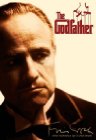


 Movie Reviews from the Dark